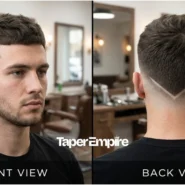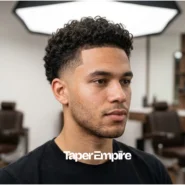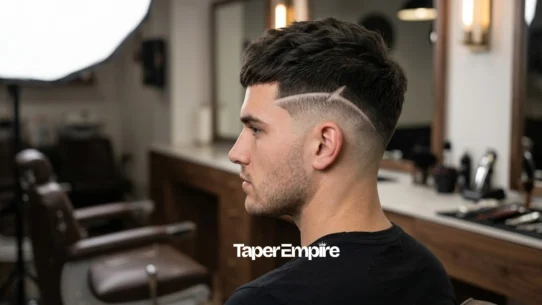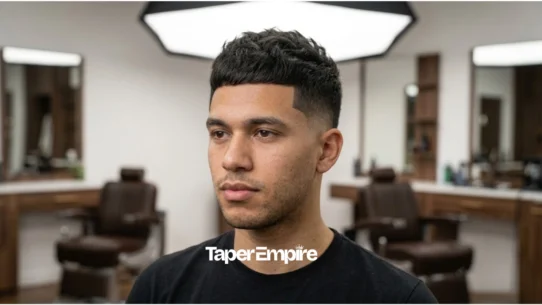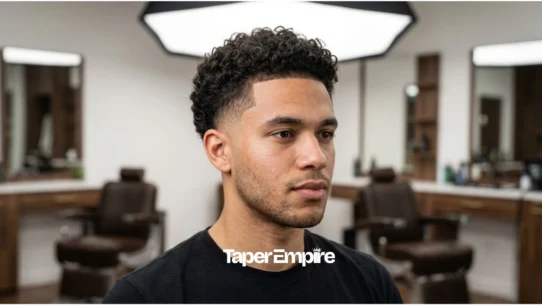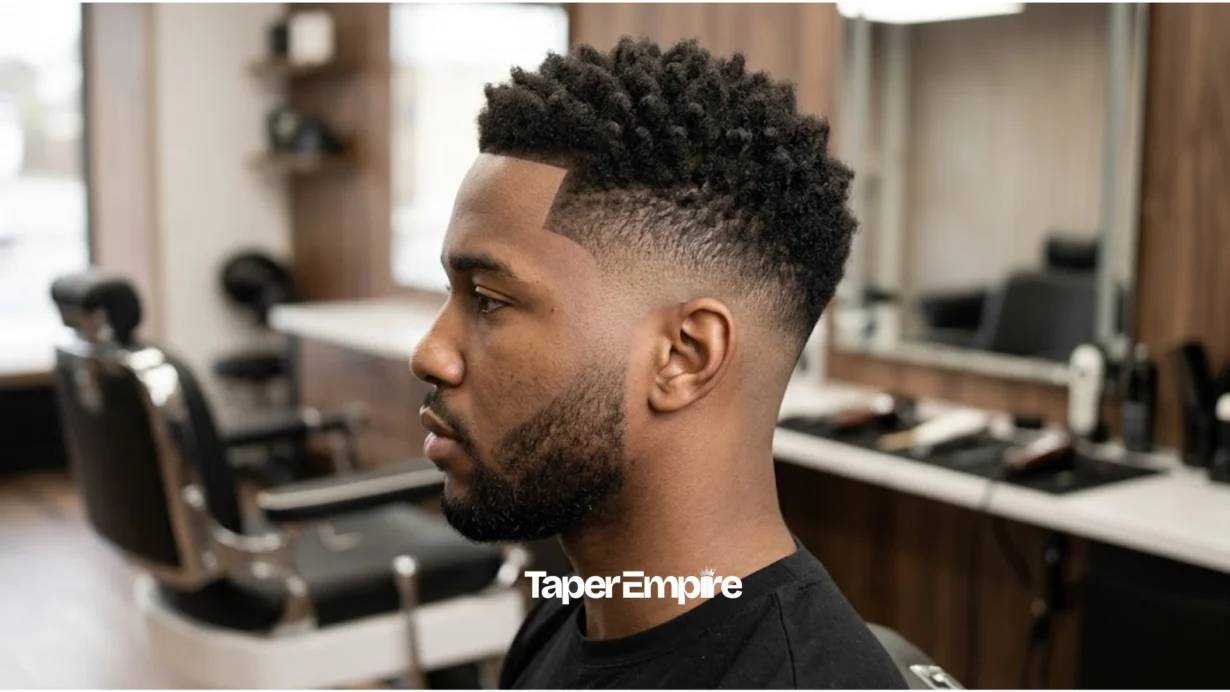

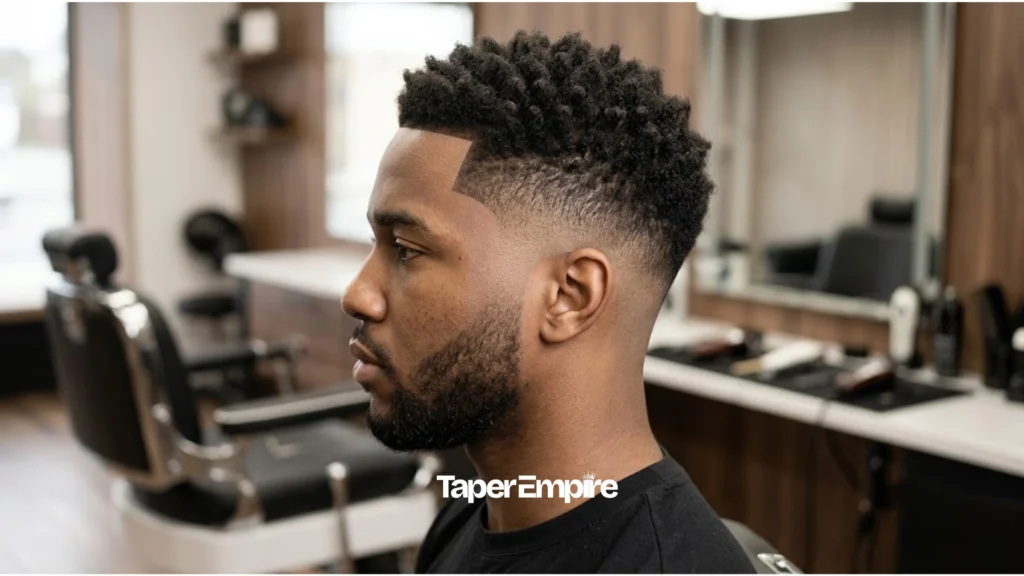
A high taper fade is a Black barbershop staple that starts the fade above the temple bone, leaving length on top while the sides graduate to skin or near-skin through a smooth, controlled blend. This guide breaks the style down by hair texture: coils, curls, waves, locs, and braids, so you can pick a version that actually works on your head. You’ll also get exact clipper guard numbers, a barber script you can read straight from your phone, and a maintenance plan built around how fast your hair grows.
What is a high taper fade for Black men?
A high taper fade starts the fade above the temple bone, blending the sides down to skin or a low guard while leaving length on top for coils, curls, waves, or locs. It works with every Black hair texture when paired with the right guard number guidance.
Key Points
- High contrast on top
- Works with all textures
- Needs precise guard numbers
- Pairs well with beard blends
Table of Contents
What Is a High Taper Fade?
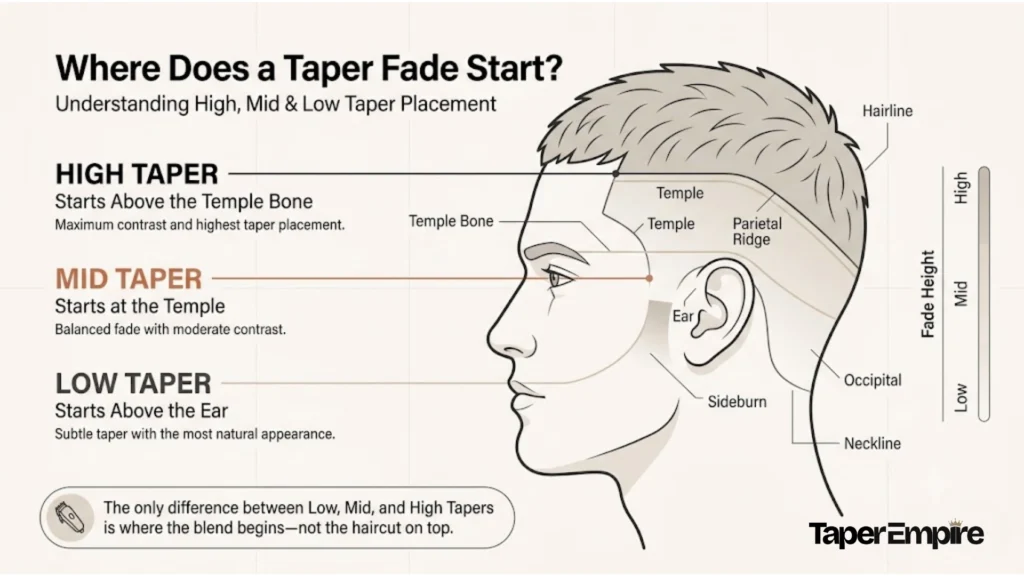
A high taper fade begins its gradient at or above the temple bone, then blends down toward the ear and neckline until the hair meets skin or a very low guard. The top stays long enough to hold curls, coils, waves, twists, or locs, which is why the cut reads as bold on the sides and expressive on top.
The word “high” refers to a specific starting point, not a general vibe. Barbers use the temple as the landmark: a fade that begins right at or above this point is high, one that begins at the temple itself is mid, and one that starts closer to the ear is low. Readers comparing all three heights side by side can see how a low taper, mid taper, or high taper changes the silhouette before locking in a decision.
A taper and a fade are technically two different techniques, and the high taper fade combines both. A taper shortens hair gradually without ever exposing the scalp. A fade continues all the way down to bare skin. When a barber blends these two ideas starting from a high point on the head, the result is the high taper fade: maximum length retention on top, maximum contrast on the sides. The exact mechanics behind this blend are covered in more depth in a breakdown of taper vs. fade technique.
High Taper Fade vs. Adjacent Cuts
| Cut | Fade Starts At | Reaches Skin? | Contrast Level | Best Described As |
|---|---|---|---|---|
| High Taper Fade | Above the temple bone | Yes, at the base | Very high | Gradual blend starting high |
| High Fade | At or above the temple | Yes, almost immediately | Highest | Abrupt skin transition |
| Mid Taper | At the temples | Sometimes | Medium | Balanced and versatile |
| Low Taper | Above the ear | Rarely | Low | Subtle and natural |
| Temp Fade | Temple and sideburn area only | Sometimes | Medium-high | Focused on the front |
| Drop Fade | Curves behind the ear | Yes | High | Curved silhouette |
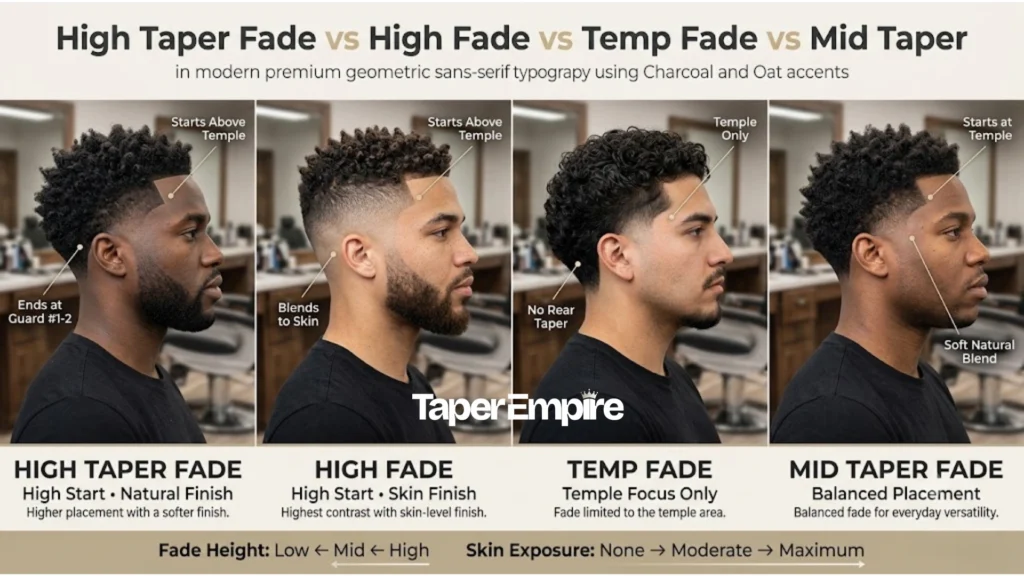
Professional barbers often use visual landmarks around the temple and ear to determine where a high taper fade should begin, although the exact starting point varies depending on the client’s head shape, hair density, and the desired finish.
A high taper fade sits on the more dramatic end of the taper family, and it isn’t the only option worth considering. The broader taper haircut guide walks through how all taper heights compare if you’re still weighing your options before committing to “high.”
High Taper Fade vs. High Fade vs. Temp Fade
A high taper fade and a high fade look similar in photos but feel different in the chair. The high taper fade blends gradually from length on top down to skin, while the high fade jumps to skin almost immediately, producing a sharper, more abrupt line near the top of the head.
The temp fade is a separate cut entirely, even though barbers sometimes use the two names loosely. A temp fade also called a temple fade or Brooklyn fade, only fades the hair around the temples and sideburns. The back and crown stay largely untouched. A high taper fade, by contrast, fades the entire side and back of the head starting from that same high point.
The Naming Confusion Problem
Regional and shop-to-shop differences mean “high taper fade,” “high fade,” and even “skin taper” get used interchangeably in some barbershops. This is not a sign that any of these terms are wrong; it’s a sign that barbering’s naming conventions were never standardized nationally. The safest fix is to describe the anatomical starting point directly (“start it above my temple”) rather than relying on a single label the barber might interpret differently. A full side-by-side of temp fade vs. taper vs. taper fade clarifies exactly where each one starts and ends.
A drop fade is a related but visually distinct option. Instead of following a straight line around the head, it curves downward behind the ear, creating a rounder silhouette than a high taper fade’s straighter path. If you’re deciding between a straight taper line and a curved one, taper fade vs. drop fade vs. burst fade breaks down how each shape reads on different head shapes.
The base finish matters as much as the height. A skin fade takes the sides down to bare scalp using clippers and often a razor. A guard finish stops at a very short but visible length. Both can be paired with a high starting point, and the practical differences between a skin fade, a taper, and a taper fade come down to tools used and how close to the skin the cut actually goes.
For a full glossary covering every named variation in the fade family burst, drop, shadow, and beyond the complete taper fade types reference lays out the entire naming system in one place.
Which Style Fits Your Hair Texture?
Hair texture determines which high taper fade variation will actually look like the photo you show your barber. A style built for loose curls behaves differently on tightly coiled hair, and a wave pattern needs training time that an afro doesn’t.
The table below maps common Black hair textures to the top styles that pair best with a high taper fade.
Texture-to-Style Matrix
| Hair Type | Texture Description | Recommended Top Styles | Achievability Note |
|---|---|---|---|
| Type 3A–3B | Loose to medium spirals | Textured crop, curly top, slick back | Works at 3+ inches on top |
| Type 3C | Tight spirals | Curly afro, sponge curl top, textured crop | Allow extra length for shrinkage |
| Type 4A | Defined coils | Afro, sponge curls, twist-out top | Moisture protocol needed after cutting |
| Type 4B | Z-pattern coils | Afro, coil top, braided top | Plan for significant shrinkage |
| Type 4C | Tightly packed coils | Box afro, loc base, protective style | Longest grow-out to reach top styles |
| 360 Waves | Trained wave pattern | Waves on top with high skin taper | Durag needed after every appointment |
| Locs | Formed or growing locs | Loc top with faded sides | See the future-planning section below |
| Braids/Cornrows | Braided top | Braided high taper | See the future-planning section below |
If your texture leans straighter or finer and doesn’t map cleanly to this chart, the broader high taper haircut guide covers styling approaches tailored to those textures.
High Taper Fade with Afro or Natural Top
A box afro paired with a high taper fade creates a flat-top silhouette with sharply defined sides. The contrast between the shaved temples and the fuller crown gives the coils a more structured, deliberate look rather than a loose, undefined shape.
This pairing works especially well with Type 4A and Type 4B coils, where the density at the top holds its shape against the sharp fade line. A beard blend finishes the look by connecting the faded sides into the jawline instead of leaving a visible break.
High Taper Fade with 360 Waves
360 waves need a trained pattern before the cut will show them off properly, and a high taper fade gives that pattern maximum visual contrast against the skin. The higher the fade starts, the more the wave pattern appears to spin toward the crown.
After the appointment, the scalp along the fade line is freshly exposed and needs moisture. Wearing a durag or wave cap for several hours after cutting helps set the pattern and protects the freshly faded skin from drying out.
High Taper Fade with Coils (Type 4A–4C)
Tightly packed coils create the highest contrast against a skin or near-skin high-taper fade because the density on top visually separates from the bare sides almost immediately. This is one of the most requested combinations in barbershops serving Black clientele.
Post-cut care matters more here than with looser textures. A simple three-step routine keeps both the top and the newly faded sides healthy:
- Apply a water-based moisturizer to the faded sides and nape within 24 hours of the cut.
- Use a curl-defining cream on top to reactivate the coil pattern if the cutting process disrupted it.
- Sleep in a satin bonnet or durag to prevent moisture loss and edge breakage overnight.
High Taper Fade with Locs or Twists
Locs and twists can sit atop a high taper fade, but the sides need to be addressed carefully before cutting. Barbers typically gather and braid or clip back any hair that can be gripped, then fade only the remaining length at the temples and nape.
This combination looks sharp immediately after a cut, but it comes with a trade-off worth understanding before you book, which is covered in detail in the section on future protective styling below.
High Taper Fade with Textured Crop or Short Top
A textured crop keeps the top short enough to require minimal styling while still contrasting sharply with a high taper fade. This is one of the most common requests for Black men who want a low-maintenance top paired with a bold side silhouette.
Professional barbering guidance recommends 1.5 to 2 inches (3.8–5 cm) of top length for a textured crop to achieve proper texture and fringe definition. Below that length, the barber can still execute a high taper fade on the sides, but the top will read more like a buzz cut than a defined crop.
Quick Tip
Charts like this one help you narrow down a category, but seeing exactly which taper height and top style balance your specific face shape is a different question. TaperMatch scans your facial geometry and returns a structural recommendation in under 60 seconds.
30 High Taper Fade Styles for Black Men
Every style below lists a top guard, a base finish, a face-shape fit, and a one-line instruction you can hand directly to your barber. Guard numbers are standard starting points your barber may adjust slightly based on your natural density and growth pattern.
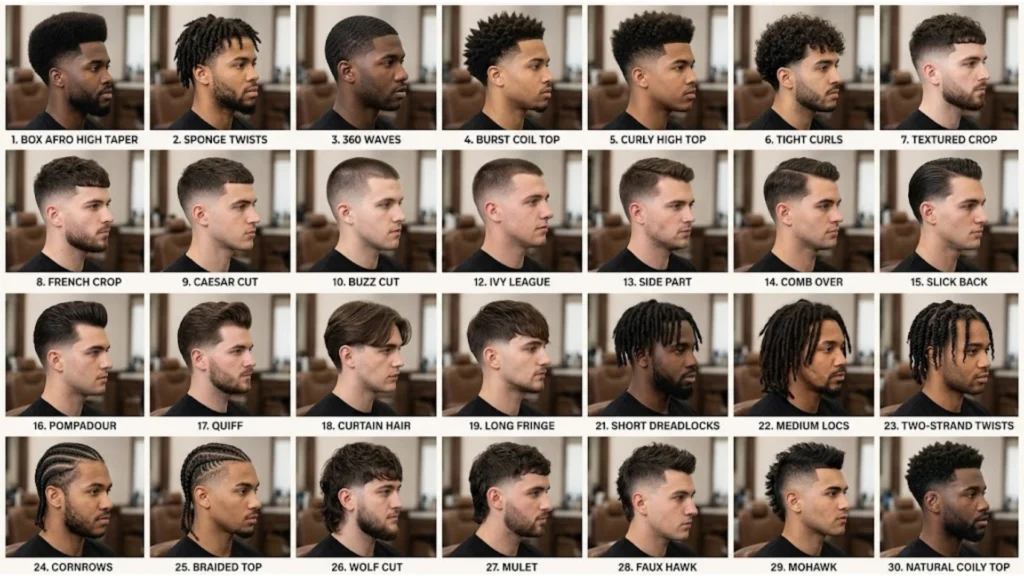
Group A: Afro & Natural Top
- Box Afro High Taper — Best for: Type 4B–4C coils. Face shape: square, oval. Top: natural length, unguarded. Sides: #2 to skin. Tell your barber: “Keep the top full and flat, fade the sides high and tight.”
- Rounded Afro High Taper — Best for: Type 4A coils. Face shape: oval, heart. Top: natural, rounded shape. Sides: #1 to skin. Tell your barber: “Round the top instead of squaring it off.”
- Tapered Afro Puff — Best for: Type 4C coils. Face shape: round, oval. Top: natural volume. Sides: #2 guard. Tell your barber: “Leave more volume on top, don’t go too tight on the sides.”
- Curly Afro Fade — Best for: Type 3C–4A curls. Face shape: any. Top: 2–3 inches. Sides: #1 to skin. Tell your barber: “Keep the curl definition visible on top.”
- Textured Natural Top — Best for: Type 4A coils. Face shape: square. Top: 1.5–2 inches, matte finish. Sides: skin. Tell your barber: “Matte texture on top, high skin fade on the sides.”
- High-Volume Afro Taper — Best for: Type 4B coils, dense hair. Face shape: long, oval. Top: full volume. Sides: #2 guard. Tell your barber: “Don’t compress the top, just clean up the sides high.”
Group B: Coil & Sponge Curl Top
- Sponge Curl High Taper — Best for: Type 4A–4B coils. Face shape: any. Top: coil-sponge finish. Sides: #1 to skin. Tell your barber: “Keep enough length on top to sponge-curl it.”
- Defined Coil Crop — Best for: Type 4A coils. Face shape: oval, square. Top: 1–1.5 inches. Sides: skin. Tell your barber: “Short and defined on top, high skin fade on the sides.”
- Twist-Out High Taper — Best for: Type 4B–4C coils. Face shape: round, oval. Top: 2+ inches for twisting. Sides: #2 guard. Tell your barber: “Leave enough length to twist the top.”
- Coily Crown Fade — Best for: Type 4C coils. Face shape: square. Top: natural crown shape. Sides: #1 to skin. Tell your barber: “Build height in the crown, taper the sides high.”
- Loose Coil Taper — Best for: Type 3C–4A curls. Face shape: any. Top: 2 inches, loose definition. Sides: #2 guard. Tell your barber: “Keep it loose on top, not too structured.”
Group C: 360 Waves Top
- High Skin Taper with Waves — Best for: trained 360 waves, any texture. Face shape: oval, square. Top: short, brushed. Sides: skin. Tell your barber: “Skin fade high, don’t disturb my wave pattern on top.”
- 540 Wave High Taper — Best for: advanced wave pattern. Face shape: any. Top: very short, brushed flat. Sides: #0.5 to skin. Tell your barber: “Keep the top brushed flat, high fade on the sides.”
- Wave Pattern Crop — Best for: developing 360 waves. Face shape: square. Top: 1 inch. Sides: #1 guard. Tell your barber: “Don’t cut against my wave direction.”
- Textured Wave Taper — Best for: mixed straight-and-wave pattern. Face shape: oval. Top: 1.5 inches. Sides: #2 guard. Tell your barber: “Keep some texture on top, moderate contrast on the sides.”
Group D: Textured Crop & Short Top
- Classic Textured Crop — Best for: Type 3A–3C curls. Face shape: any. Top: 1–1.5 inches. Sides: skin. Tell your barber: “Textured crop on top, high skin taper on the sides.”
- French Crop High Taper — Best for: straighter or wavy hair. Face shape: square, oval. Top: fringe forward. Sides: #1 to skin. Tell your barber: “Fringe forward, sharp high taper on the sides.”
- Buzz Cut High Taper — Best for: any texture. Face shape: any. Top: #3 guard. Sides: skin. Tell your barber: “Even buzz on top, high skin fade on the sides.”
- Caesar Cut High Taper — Best for: straight to wavy hair. Face shape: round, square. Top: #2 guard, horizontal fringe. Sides: #1 to skin. Tell your barber: “Straight fringe, high taper blending into it.”
- Short Curly Crop — Best for: Type 3B–3C curls. Face shape: oval. Top: 1 inch, curl-defined. Sides: skin. Tell your barber: “Keep the curl pattern visible but short.”
Group E: Locs Top
- Loc High Taper — Best for: established locs. Face shape: any. Top: full locs. Sides: #1 to skin. Tell your barber: “Fade only the sides and nape, leave the loc base untouched.”
- Faded Sides with Loc Bun — Best for: longer locs, styled up. Face shape: square, oval. Top: gathered locs. Sides: #2 guard. Tell your barber: “Fade the sides high, I’ll style the locs myself.”
- Starter Loc Fade — Best for: early-stage locs. Face shape: any. Top: short, forming locs. Sides: #2 guard. Tell your barber: “Go easy on the sides, my locs are still forming.”
Group F: Braids & Twists Top
- Braided Top High Taper — Best for: cornrows or straight-back braids. Face shape: any. Top: braided pattern. Sides: skin. Tell your barber: “Braid the top first, then fade high and tight.”
- Two-Strand Twist Taper — Best for: medium-length twists. Face shape: oval, round. Top: twisted sections. Sides: #1 to skin. Tell your barber: “Keep my twist length, just clean up the sides.”
- Flat Twist High Taper — Best for: flat twist styles. Face shape: square. Top: flat-twisted pattern. Sides: #2 guard. Tell your barber: “Fade around the flat twists, don’t disturb the pattern.”
Group G: Beard Blend Pairings
- High Taper with Full Beard Blend — Best for: any top style with a full beard. Face shape: long, oval. Sides: skin, blended into beard. Tell your barber: “Connect the fade straight into my beard line.”
- High Taper with Line-Up and Beard — Best for: any top texture. Face shape: square, round. Sides: #1 to skin. Tell your barber: “Sharp line-up up front, smooth beard blend on the sides.”
- High Taper with Goatee Blend — Best for: shorter facial hair. Face shape: round, oval. Sides: skin. Tell your barber: “Taper high, keep the goatee connection clean.”
Group H: Design & Line-Up Variations
- High Taper with Shaved Design — Best for any texture and any face shape. Sides: skin with a shaved line or pattern above the ear. Tell your barber: “Add a single shaved line into the high taper before it fades to skin.”
The guard number recommendations are based on professional barber education and widely used barbershop practices for textured hair.
Does Your Hair Length Support This Cut?
Most high-taper fade styles require a minimum top length to hold their shape, and that minimum varies depending on the top style you’re after. A textured crop can work at just over an inch, while a full afro or twist-out needs several inches even before shrinkage is factored in.
Minimum Length by Style
| Top Style | Minimum Length Needed | Notes |
|---|---|---|
| Textured Crop | About 1–1.5 inches | Can be cut immediately at this length |
| Sponge Curl Top | About 1.5–2 inches | Needs enough length to form the coil |
| Afro Top | About 2–3 inches after shrinkage | Type 4C hair may need extra length to compensate |
| 360 Waves | About 1–1.5 inches | Wave pattern must already be trained |
| Braided Top | About 2.5–3 inches | Needs enough length to grip and braid |
| Loc Top | Locs already formed | Side locs may need to be sacrificed |
If your current length can’t yet support the style you want, a lower-contrast option might suit you better in the meantime. Readers who decide a high taper is too dramatic for their current length sometimes find that mid taper fade styles for Black men or a low taper fade delivers a similar clean silhouette with less length required on top. Length constraints aren’t unique to the high taper; the same logic applies whether your hair is currently short or growing toward a longer top.
Quick Tip
Instead of guessing whether your current length can support a specific style, TaperMatch scans your head’s proportions and tells you which taper height and top length combination is structurally right for you right now.
What Should You Tell Your Barber?
The fastest way to get an accurate high-taper fade is to specify the exact starting point, base finish, and top length in one sentence rather than relying on the name alone. Barbers work faster and more accurately with specifics than with a single style name, which can mean different things in different shops.
Copy this script and fill in your preferences:
“I want a high taper fade. Start the fade above the temple bone; keep it high. On the sides, fade it down to [a #1 guard/skin] at the base. Leave [length/guard number] on top. Shape the neckline [squared/rounded/tapered]. Keep my line-up [sharp and straight/with a natural arc]. Here’s a reference photo.”
A reference photo makes this script even more reliable. Bring a side-angle photo, not just a front-facing one; a front view hides exactly how high the fade starts and how much taper the sides actually show.
Three mistakes to avoid:
- Saying “high taper” without a base finish. Skin and a #1 guard look different enough that leaving this unspecified means the barber has to guess.
- Showing only a front-facing photo. Side-angle photos communicate taper height far more clearly than a straight-on shot.
- Skipping the neckline preference. Squared, rounded, and tapered necklines change the entire back silhouette, and barbers default to their own preference if you don’t specify.
The most common miscommunication in the chair isn’t about style it’s about length versus height. A client who says “not too short on the sides” might mean they want more length retained, but a barber can interpret that as a request to start the fade lower on the head. These are two different instructions, and naming the exact starting point removes the ambiguity entirely.
How Often Does It Need a Touch-Up?
A high taper fade with a skin base looks sharpest for about five to seven days before it starts to show growth, while a version cut with a #1 guard at the base holds its shape closer to ten to fourteen days. The lower the guard number at the base, the sooner the line will need attention.
Maintenance Window by Fade Base
| Fade Base | Looks Sharp For | Starts to Grow Out | Full Reset Needed |
|---|---|---|---|
| Skin / 0 Guard | 5–7 days | 10–12 days | 2–3 weeks |
| #0.5 Guard | 7–10 days | 12–14 days | 2–3 weeks |
| #1 Guard | 10–14 days | About 2.5 weeks | 3–4 weeks |
| #2 Guard | About 2 weeks | About 3 weeks | 4–5 weeks |
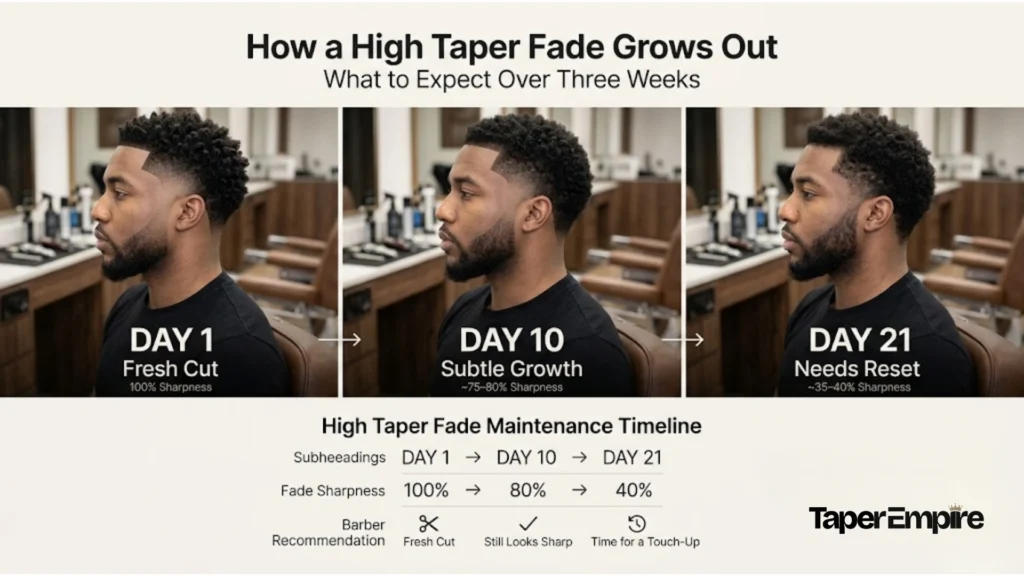
At one week, the fade line is still crisp but the top has started to soften slightly. At two weeks, the base of the fade begins to show visible regrowth, especially on faster-growing hair. By three to four weeks, most high taper fades need a full reset to restore the sharp contrast between the top and sides.
If you’re maintaining multiple taper heights across different appointments some weeks a high taper, other weeks something lower-contrast general upkeep habits like clipper care and touch-up timing carry over. A broader look at how to maintain a mid taper fade covers those transferable habits in more detail.
Will It Work With Future Locs or Braids?
A high taper fade removes a significant amount of side hair, and that matters if you’re planning to start locs, braids, or twists down the road. The base finish you choose today directly affects how much growth foundation you’ll have to work with later.
If You Want Locs Later
A skin fade at the base removes side hair almost completely, which means starting locs later requires waiting for that hair to regrow from scratch. Choosing a #1 or #2 guard instead of skin preserves more of the side hair while still delivering the high-contrast look, giving you a head start when you’re ready to loc.
If You Want Braids or Cornrows Later
Braids need enough length to grip, typically a couple of inches at minimum. A high taper fade cut with a higher guard base rather than skin keeps the side hair closer to that braidable length, cutting down the wait time before your next protective style.
If You Want Twists Later
Twists have similar length requirements to braids. The same guard-based approach applies a #1 or #2 guard base instead of a skin finish keeps more usable length on the sides for when you’re ready to twist.
Many barbers refer to this approach informally as a “soft high taper” starting the fade high but stopping at a guard instead of skin, specifically for clients who rotate between a tapered look and a protective style. It keeps the high-taper silhouette without sacrificing the growth your next style needs.
How Do You Maintain It at Home?
Between barbershop visits, a few home habits keep a high taper fade looking sharp and keep the scalp underneath healthy, especially on textures that dry out faster after clipper work.
Home Maintenance for Waves
Freshly faded skin along a 360-wave taper needs moisture right away, since the shaft has been cut close to the follicle. Apply a light, water-based moisturizer to the exposed sides, then wear a durag for several hours after your appointment to help set the wave pattern and protect the skin from drying out.
Home Maintenance for Coils (Type 4)
Coily hair on top benefits from a curl-defining cream to reactivate the pattern if clipper work has flattened it. On the sides, a fragrance-free water-based moisturizer applied within a day of the cut reduces dryness on the newly exposed scalp. Sleeping in a satin bonnet protects both the moisture and the shape overnight.
Home Touch-Ups: When and How
A trimmer is useful for cleaning up the neckline and the line-up between appointments, but it should stay away from the actual fade gradient on the sides. Anything touching the blended part of the fade is better left to the barber, since a single uneven pass with a home trimmer can create a visible line that’s hard to fix without cutting shorter than planned.
Home Maintenance Checklist
| Tool | Purpose | Who Needs It |
|---|---|---|
| T-blade Trimmer | Edge and line-up clean-up | Everyone |
| Durag or Wave Cap | Wave pattern protection | Wave wearers |
| Satin Bonnet | Overnight moisture retention | Coil and loc wearers |
| Water-based Moisturizer | Scalp hydration on faded sides | Type 4 hair |
| Curl-defining Cream | Reactivating the coil pattern on top | Type 3–4 curls |
| Light Finishing Oil | Shine and frizz control on top | All textured tops |
Frequently Asked Questions
What is the difference between a high taper fade and a high fade?
A high taper fade starts above the temple bone and blends gradually to skin at the base. A high fade also starts high but jumps to skin almost immediately, creating a sharper, higher-contrast line with no gradual blend in between.
What clipper guard numbers are used for a high taper fade?
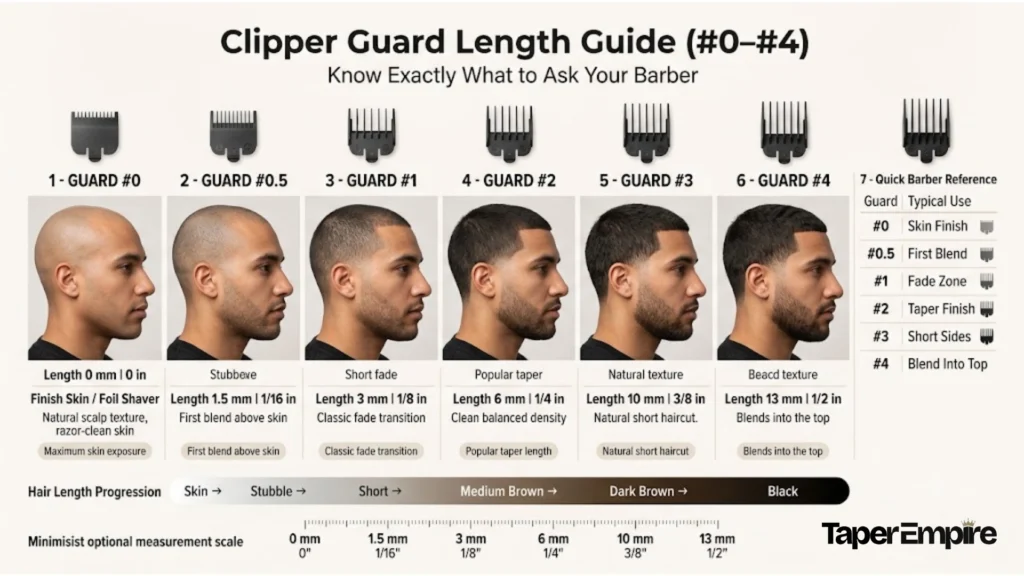
A standard high-taper fade typically uses a #3 or #4 guard on top, a #2 at the midsection, a #1 near the base, and skin at the lowest point. Exact numbers vary by barber and desired contrast.
Does a high taper fade work for Type 4C hair?
Yes. Type 4C coils create high contrast against a skin or low-guard taper, since the tight curl pattern on top emphasizes the sharp fade line on the sides. Keeping the faded sides moisturized and using a curl-defining cream on top completes the look.
How long will a high taper fade stay sharp?
A skin-base high taper fade stays sharp for about five to seven days and starts showing growth by ten to twelve days. A #1 guard base extends that window to ten to fourteen days. Most barbers recommend a touch-up every two to three weeks.
Can I get a high taper fade if I want locs later?
Yes, if you choose the right base finish. A skin fade removes almost all side hair, while a #1 or #2 guard base preserves enough growth to start locs sooner. Tell your barber this preference before the appointment begins.
What should I say to get a high taper fade?
Say: “I want a high taper fade. Start the fade above my temple bone. Fade the sides to [skin or a guard number] at the base. Leave [length] on top.” Bring a side-angle reference photo for the clearest result.
Key Takeaways
A high taper fade gives Black men a high-contrast, texture-flexible cut that works across coils, curls, waves, locs, and braids once you match the right guard numbers and top length to your hair. The details that separate a great result from a disappointing one are small: naming the exact starting point, choosing a base finish that fits your future plans, and giving your barber a side-angle photo instead of relying on the name alone.
If you’re still unsure which taper height or top style fits your face shape and hair growth pattern, TaperMatch can scan your geometry and provide a direct recommendation before your next appointment.