

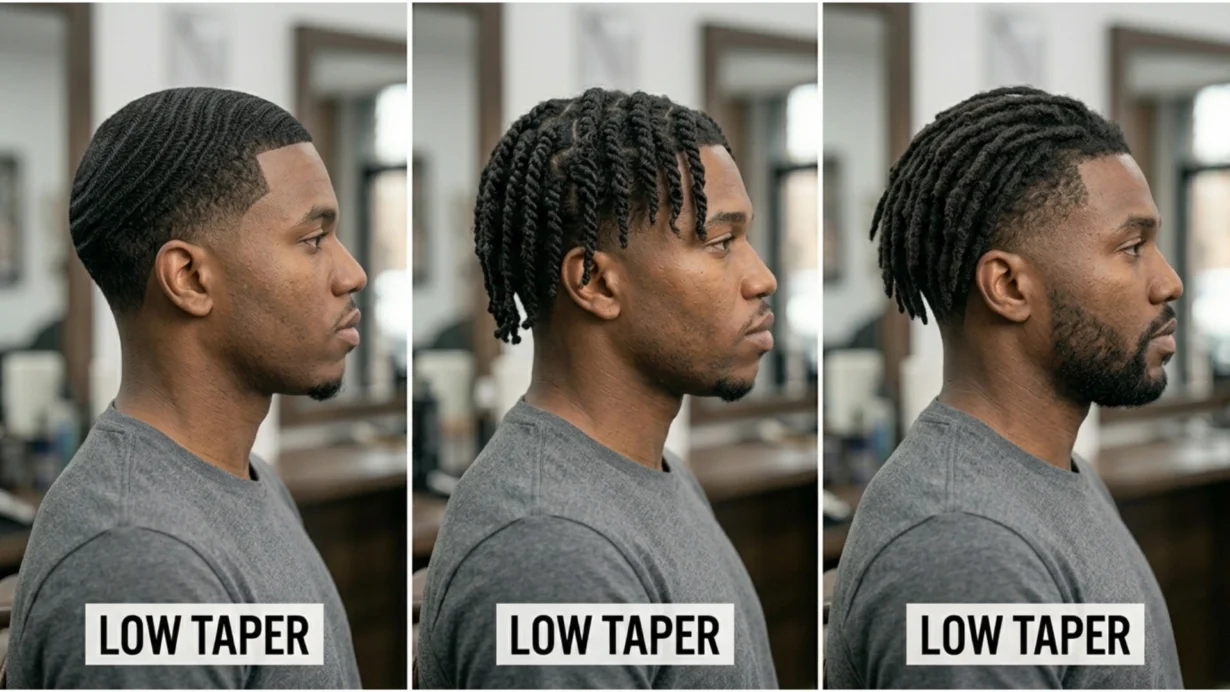

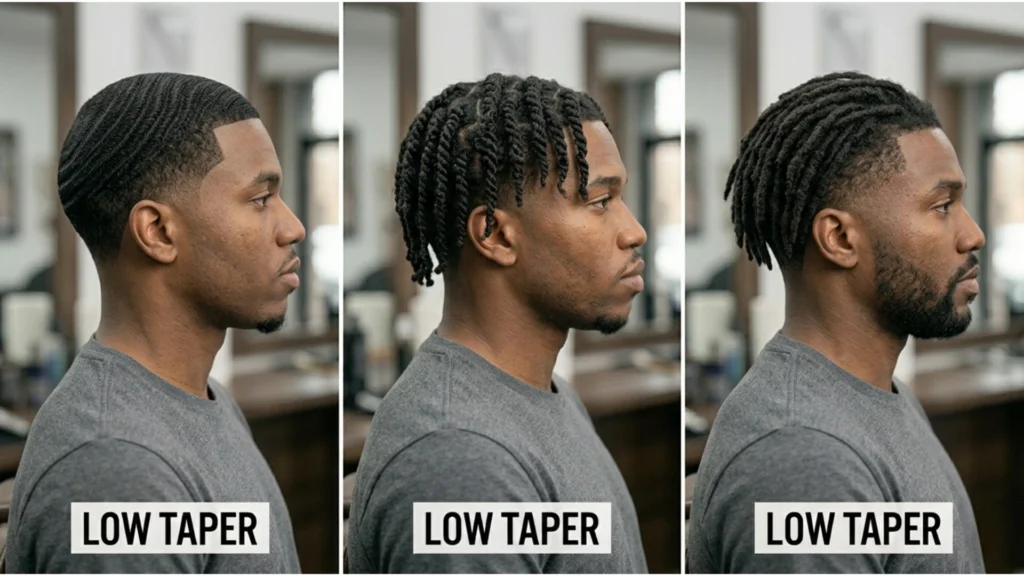
Getting a fresh cut feels like hitting a reset button. And for Black men across the United States, there is no cut that delivers that feeling better than the low taper fade.
It does not matter if you rock 360 waves, a full afro, natural coils, braids, locs, or just short curly hair the low taper fade works with your natural texture instead of against it. That is the secret behind why it is the most-requested haircut in Black barbershops across the country.
This guide covers everything you need to know 30+ style ideas specifically for Black men and boys, a complete comparison of fade types, a face shape guide, a hair texture breakdown for 3C through 4C hair, an easy barber script so you get exactly what you want in the chair, and a full maintenance routine to keep your cut fresh.
What Is a Low Taper Fade for Black Men and Why Does It Work So Well?
A low taper fade for Black men gradually blends the sides and back starting just above the ears, creating a clean transition from the full natural hair on top to shorter tapered sides. It works exceptionally well on 3C through 4C hair because the natural density and volume create sharp, defined contrast that no other hair type produces as naturally. It pairs with waves, curls, afros, braids, locs, and every protective style.
KEY POINTS:
– Starts just above the ears and blends down using #3 through #0.5 clipper guards
– Works beautifully on all Black hair textures from Type 3C to 4C
– Pairs with 360 waves, afros, twists, cornrows, locs, braids, and sponge curls
– Needs a full taper touch-up every 2 to 3 weeks with line-ups in between
– The most professional and versatile fade for any workplace or setting
Table of Contents
Your hair type already suits a low taper fade your face shape decides which variation looks best on you.
The Taper Style Tool is built for coily and afro-textured hair. Match your face shape and hair texture to the low taper fade style that works in your favour before your next appointment.
What Is a Low Taper Fade for Black Men?
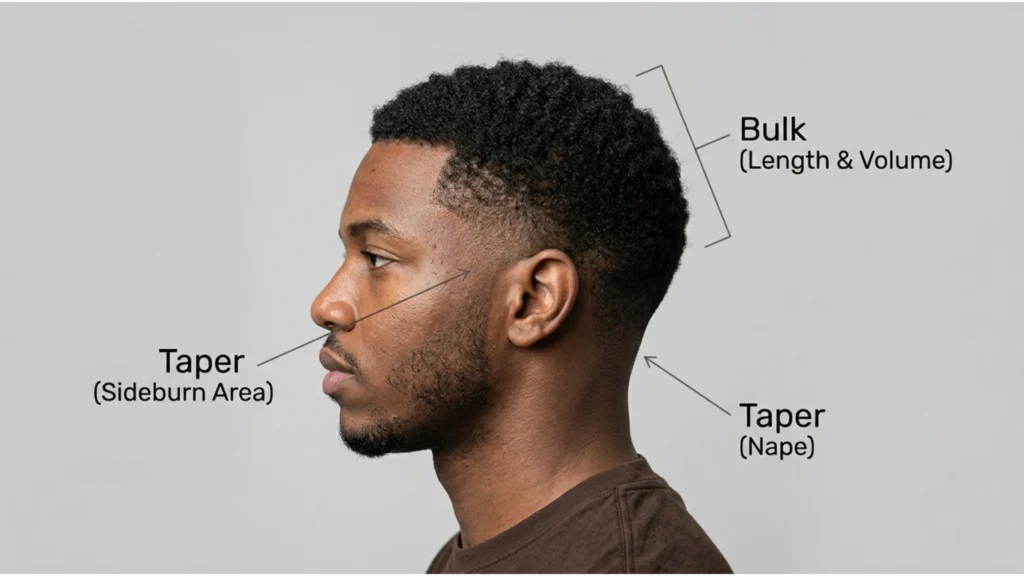
A low taper fade for Black men is a haircut where the hair gradually shortens near the sideburns and neckline, creating a smooth, blended transition from the full-length natural hair on top to shorter sides. The taper begins just above the ears, blending cleanly downward toward the neckline. It works especially well with afro-textured, coily, kinky, and curly hair types from Type 3C all the way through 4C because the natural density and volume of Black hair create a sharp, defined contrast between the full top and the clean, tapered sides.
The barber creates this look by using progressively shorter clipper guards starting around a #3 or #2 on the sides and blending downward to a #1, #0.5, or #0 near the neckline. The result is a smooth gradient, not a harsh line. That gradual blending is what separates the low taper from more dramatic fade styles.
What makes this cut so popular for Black men is the way it frames your natural texture. Whether your top is a short afro, 360 waves, loose curls, sponge twists, cornrows, or free-flowing locs — the low taper creates a clean, structured outline around it without removing what makes your hair uniquely yours.
This cut is also one of the most versatile out there. It works at the office on a Monday, at a family cookout on Saturday, and at a wedding on Sunday. That kind of flexibility is hard to find in any other men’s haircut.
Fact #1: The fade haircut originated in the U.S. military around the 1940s and 1950s. Since the military is known for having strict grooming standards, the fade became popular among military men, the harsh lines and angles signaled discipline and professionalism. It was not long before the fade crossed over into mainstream culture, particularly within the African American community, where it became a canvas for creative expression, and by the 1980s, it had become a staple of hip-hop culture.
Why Does This Cut Work So Well on Black Hair?
Black barbers in the 1950s through 1970s transformed the original military taper into an art form. They introduced more dramatic contrasts in length, creative temple designs, and personalized variations based on hair texture. That innovation is still alive in every barbershop today.
Black hair types 4A through 4C have some of the densest and most tightly coiled strands of any hair type on the planet. That density is not a limitation; it is an advantage for the low-taper fade. The thick, full texture on top creates maximum contrast against the clean, blended sides. No other hair type produces that kind of sharp, defined silhouette as naturally as Black hair does.
Low Taper Fade vs. Other Fades: What Every Black Man Needs to Know
The most common problem at the barbershop is asking for one thing and getting another. A lot of Black men sit down and say, “Give me a fade,” without knowing there are at least six different types of fades, each looking very different.
Here is a clear breakdown so you always know exactly what you are asking for:
| Fade Type | Where It Starts | Skin Exposure | Best Occasion |
|---|---|---|---|
| Low Taper Fade | Just above the ears and the neckline | Minimal | Professional, school, and everyday |
| Low Fade | Above ears, slightly higher coverage | Moderate | Clean look, everyday |
| Mid Taper Fade | Temple level | Moderate | Balanced everyday look |
| High Taper Fade | Near the top of the sides | High | Bold, dramatic style |
| Skin Fade / Bald Fade | Any height, blends to bare skin | Maximum | Edgy, sharp, creative |
| Drop Fade | Curves behind the ear downward | Varies | Unique curved silhouette |
| Burst Fade | Arcs around the ear in a semicircle | Moderate to high | Mohawks, frohawks |
| Temple Fade | Temple area only | Minimal | Conservative, subtle change |
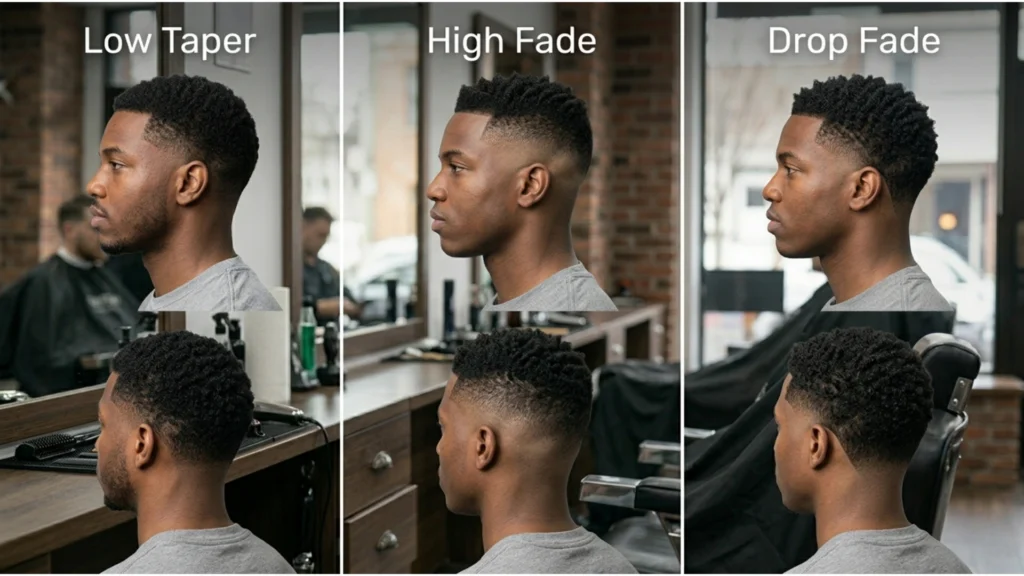
Low Taper Fade vs. Low Fade
These two are the most commonly confused. The low taper uses a gradual blending technique that keeps some hair visible throughout the blend zone. A low fade is more abrupt it drops the length faster on the sides. For Black men with dense, coily hair, the low taper produces a smoother, more natural-looking gradient because the thick texture fills the transition zone beautifully. If you want something subtle that grows out cleanly, go with the low taper.
Low Taper Fade vs. Mid Taper Fade
The mid taper starts at the temple level noticeably higher on the side of your head. This creates stronger visual contrast between the top and sides. For Black men with round faces who want to add height and structure, a mid taper can help elongate the silhouette. For men who want something professional and conservative, the low taper is the safer, cleaner choice.
Low Taper Fade vs. High Taper Fade
The high taper starts near the top of the sides it is the most dramatic option. It works well for Black men who want maximum contrast between a full afro, waves, or a curly top and nearly bare sides. However, it requires more frequent barbershop visits roughly every 1.5 to 2 weeks to stay looking sharp.
Taper vs. Fade: What Is Actually the Difference?
This confuses a lot of guys. Here is the simple answer:
A taper is a gradual reduction in hair length. It never reaches bare skin. There is always some hair left.
A fade is more aggressive. It can transition all the way down to bare skin (skin fade or bald fade).
A taper fade combines both the gradual blending of a taper with the tight, precise finish of a fade.
Fact #2: According to GQ, 1988 marked the peak of fade popularity, with 63% of Black men and 41% of Latino men sporting some fade variation. The Men’s Health 1995 Barber Survey found that taper fades became the most requested men’s haircut in America. This era also saw the rise of fade variations by guard size low, mid, and high) that remain standard today.
Barber Tip: When in doubt between a low and mid taper, always start low. Your barber can always go higher, but once the hair is cut higher, it cannot come back until it grows out. Start conservative and adjust at your next visit.
30+ Best Low Taper Fade Black Male Styles
This is the big one. Below you will find 30+ low-taper fade styles organized by category, all proven looks that work specifically for Black men’s natural hair textures. Each style includes the best hair-type match, a face-shape recommendation, a product tip, and a maintenance schedule.
Short & Classic Styles
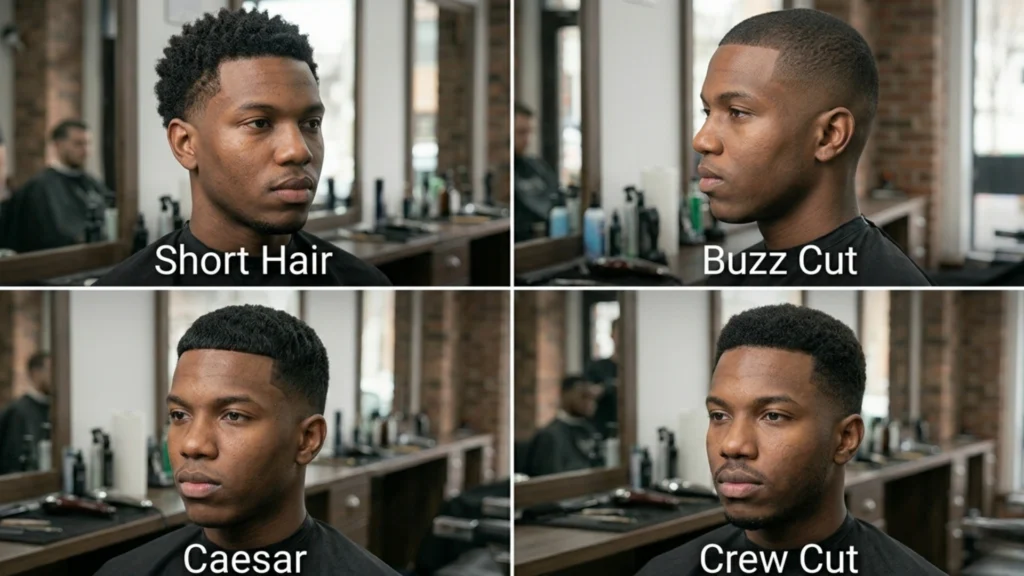
1. Low Taper Fade Black Male Short Hair
The short low taper is clean, sharp, and completely no-fuss. The top stays between half an inch and one inch just enough to show your natural curl or coil pattern without adding bulk. This style works on every hair type from 3C to 4C and suits every face shape because its neutral, low-profile silhouette does not compete with your features. It is the go-to choice for work, school, and everyday life.
Best for: All face shapes · All 4-type hair textures Styling tip: A small amount of edge control keeps the hairline crisp between visits. Maintenance: Every 2 weeks
2. Low Taper Fade Buzz Cut
The buzz cut with low taper is the ultimate minimalist look. The top is cut at one uniform guard length, usually a #1 or #2, while the sides blend down through the taper. It requires almost zero styling time every morning. This is also a smart option for Black men with M-shaped hairlines or thinning edges, since the short uniform length minimizes visible thinning.
Best for: Oval, square, diamond face shapes · All hair types Styling tip: Apply a light scalp moisturizer daily to prevent dryness on the close-cut skin Maintenance: Every 2 weeks
3. Low Taper Fade Caesar Cut
The Caesar cut is a Black barbershop classic. Short, horizontal fringe across the forehead with a clean low taper on the sides it has been a staple style for decades. Works exceptionally well on 4B and 4C kinky hair because the tight fringe beautifully showcases the natural, dense texture. Add a clean line-up at the front and you have one of the sharpest looks in the game.
Best for: Oval, round face shapes · 4B, 4C hair types Styling tip: Light pomade for a soft, low-shine hold on the fringe Maintenance: Every 2–3 weeks
4. Low Taper Fade Crew Cut
The crew cut keeps the top slightly longer at the front, tapering naturally from front to back with clean sides. It is one of the most workplace-appropriate hairstyles a Black man can wear. The low taper adds the finishing detail that elevates it above a basic short haircut.
Best for: Square, oval face shapes · All hair types Styling tip: Texture clay for subtle definition without shine Maintenance: Every 2–3 weeks
5. Low Taper Fade Textured Crop
Short, choppy layers on top with a slightly forward-styled fringe and clean low taper on the sides. This is one of the most popular styles for Black men with 3C to 4A curl patterns, because the loose texture creates natural movement through the choppy layers. It looks effortlessly cool without trying too hard.
Best for: Oval, heart, diamond face shapes · 3C, 4A hair types Styling tip: Curl cream applied to damp hair, then air-dried or diffused for maximum definition Maintenance: Every 2–3 weeks
Waves & Curl Styles
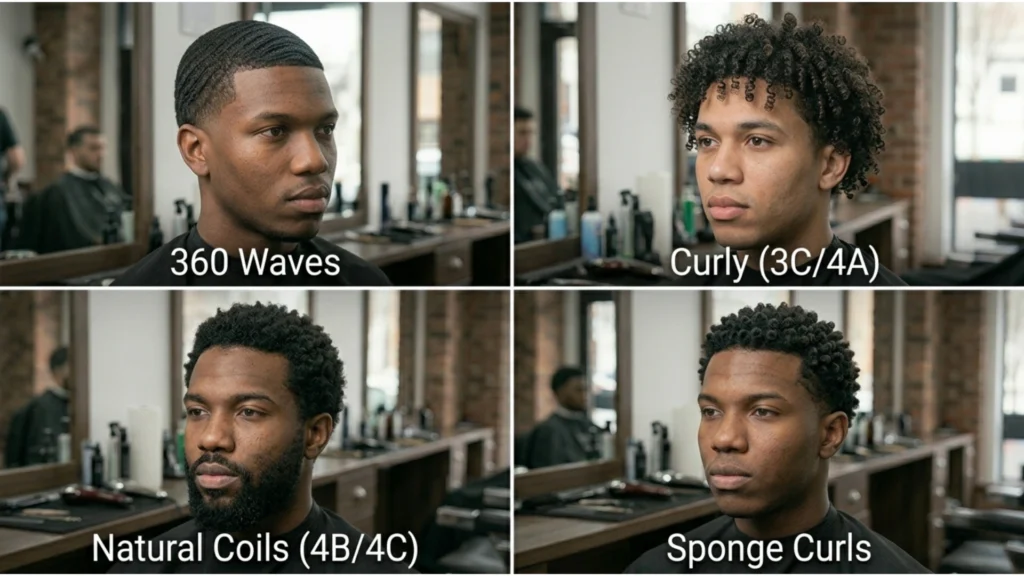
6. Low Taper Fade with 360 Waves
This is one of the most iconic combinations in Black men’s haircut history. The low taper begins just above the ears and blends downward, allowing the 360 wave pattern on top to sit front and center as the undisputed focal point of the entire look. When the waves are deep and the edges are clean, this cut commands attention in any room.
Fact #3: 360 waves are created through a dedicated brushing technique where hair is brushed in a circular pattern from the crown outward, training the natural coil pattern to lay flat in a uniform ripple formation. Building visible, consistent waves typically takes 4 to 8 weeks of daily brushing sessions. The curl pattern classification system ranges from Type 3 (loose curls) to Type 4C (tight coils). Most Black men fall between 4A and 4C, with 4C being the tightest, most fragile pattern requiring extra moisture and gentle handling.
Best for: Oval, square face shapes · 4A, 4B, 4C hair types Styling tip: Wave pomade or wave grease applied after brushing, with nightly durag compression to lock in the wave pattern
Maintenance: Taper touch-up every 2 weeks; daily home brushing sessions (20–30 minutes)
7. Low Taper Fade Curly Hair
Full natural curls on top, bouncy, defined, and full of life with clean tapered sides. This is the everyday natural hair look done right. The key is to let the curls define themselves rather than fight them. Works best on 3C to 4A curl patterns where individual curls are loose enough to be visible and bouncy.
Best for: Oval, round, diamond face shapes · 3C, 4A hair types Styling tip: Apply curl activator cream to damp hair, then use a diffuser attachment on your blow-dryer to boost volume without disrupting the curl pattern Maintenance: Every 2–3 weeks
8. Low Taper Fade with Natural Coils
For Black men with the tightest coil patterns, 4B and 4C the low taper creates an incredibly sharp silhouette. The dense, tightly packed coils on top produce maximum contrast against the clean, blended sides. There is nothing quite like it. The key maintenance need for this style is consistent moisture, because Type 4C hair is characterized by tightly coiled curls with a zigzag pattern and is the most fragile among Black hair types, with significant shrinkage and high porosity.
Best for: All face shapes · 4B, 4C hair types Styling tip: Leave-in conditioner followed by shea butter applied on damp hair to lock in moisture and reduce breakage Maintenance: Every 2–3 weeks
9. Low Taper Fade with Sponge Curls
Take a hair sponge the double-sided kind and rub it in small circular motions over short to medium afro-textured hair. The result is a head full of uniform, defined coils that look like they took an hour to create. In reality, it takes about 5 minutes. The low taper frames this look with precision, resulting in one of the freshest, most effortless styles in the Black barbershop catalog.
Best for: Round, oval face shapes · 4A, 4B hair types Styling tip: Light curl cream on damp hair before sponging for better coil definition Maintenance: Taper every 2–3 weeks; re-sponge daily or every other day
Afro Styles
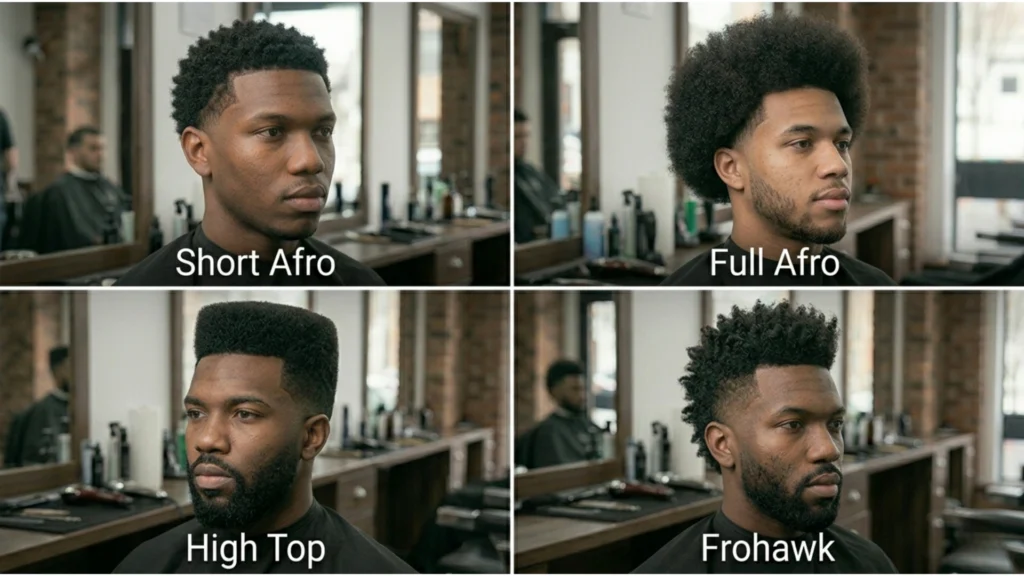
10. Low Taper Fade Afro (Short)
The short afro with low taper is arguably the most classic Black male haircut of all time 1 to 2 inches of natural texture on top, rounded into a full, even silhouette, with clean tapered sides. It is workplace-appropriate, socially accepted everywhere, and requires very little morning styling time. This is the style that bridges generations grandfathers and grandsons have both worn it with pride.
Best for: All face shapes · All 4-type hair textures Styling tip: Argan oil applied daily to maintain moisture and add a healthy shine Maintenance: Every 2–3 weeks
11. Low Taper Fade Afro (Medium to Full)
Turn up the volume. Three to five inches of natural afro on top with clean, blended taper sides the contrast between the full, round crown and the smooth sides is one of the most visually striking looks in men’s grooming. Use an afro pick to shape the crown and add height. This is the afro taper fade that most Black men picture when they hear the phrase.
Best for: Round, oval face shapes · 4A, 4B, 4C hair types Styling tip: Moisturizing conditioner and shea butter to keep the afro hydrated and prevent dryness and breakage; shape with an afro pick daily Maintenance: Taper touch-up every 2–3 weeks; afro shape trim every 4–6 weeks
12. Low Taper Fade High Top
The high top uses the natural vertical growth direction of 4B and 4C hair letting the dense, coily texture grow straight up and shape into a tall, structured flat-top silhouette. It is a 1990s classic that has come back strong in 2025–2026 with cleaner lines and more modern proportions. The low taper on the sides makes the height on top even more dramatic.
Best for: Long, oblong face shapes · 4B, 4C hair types Styling tip: Strong hold gel to maintain vertical structure throughout the day Maintenance: Every 1.5–2 weeks to keep the top shape precise
13. Low Taper Fade Frohawk
The frohawk takes the mohawk concept and executes it using natural afro texture — the center strip stays full and voluminous while the sides taper cleanly. It is bolder than the classic afro but not as dramatic as a skin-fade mohawk. For Black men who want to stand out while still using their natural texture, this is the move.
Best for: Oval, square, heart face shapes · 4A, 4B, 4C hair types Styling tip: Edge control on the sides for clean definition, curl cream on the center strip for moisture and shape Maintenance: Every 2–3 weeks
Protective & Long Styles
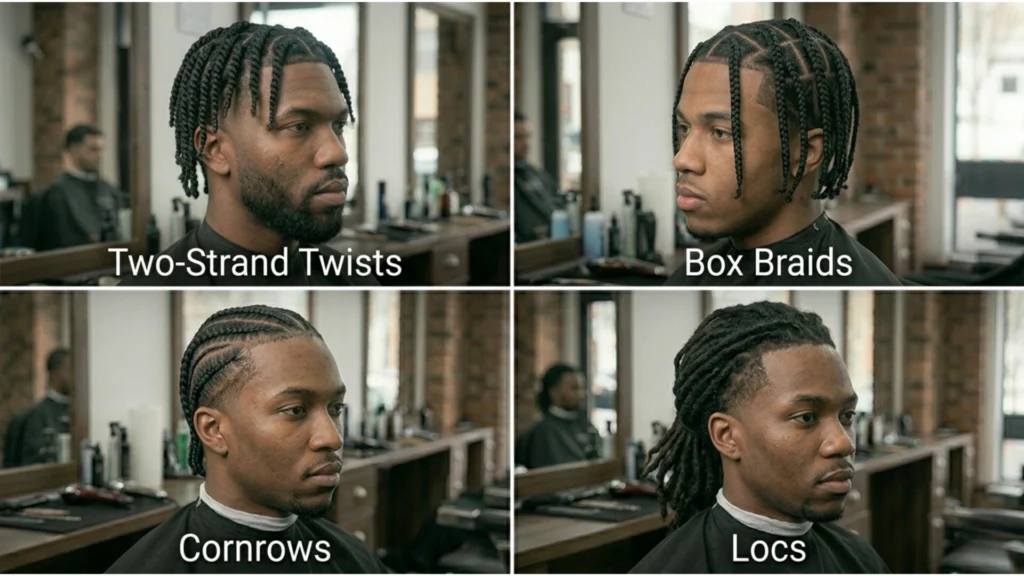
14. Low Taper Fade with Two-Strand Twists
Two-strand twists protect the natural hair from damage while the low taper keeps the sides clean and structured. The contrast between the twisted, textured top and the smooth blended sides creates a balanced, intentional look. This style is also great for Black men growing their hair out; twists minimize breakage, while the low taper keeps the overall look tidy and polished.
Best for: All face shapes · 3C, 4A, 4B, 4C hair types Styling tip: Twisting butter or twisting cream applied to damp, stretched hair for defined, long-lasting twists; follow with leave-in conditioner Maintenance: Taper every 2–3 weeks; retwist every 2–4 weeks as hair grows
15. Low Taper Fade with Sponge Twists
Created with a double-sided sponge tool on short hair, this technique produces uniform, defined twists across the entire top in minutes. It is a low-maintenance version of hand-twisted styles, and it looks great on Black boys and teens who want texture and character without spending a lot of time on their hair every morning.
Best for: All face shapes · 4A, 4B hair types Styling tip: Light curl cream applied before sponging for better definition Maintenance: Taper every 2–3 weeks; re-sponge daily
16. Low Taper Fade with Box Braids
Box braids on top with tapered sides, the contrast between the intricate, structured braiding and the smooth, blended taper is genuinely eye-catching. This is also a protective style, meaning it shields the natural hair from daily manipulation and environmental stress. Keep the scalp moisturized under braids to prevent dryness, itching, and flaking.
Best for: Oval, round, diamond face shapes · All hair types Styling tip: Hydrating spray and argan oil applied directly to the scalp every few days while braids are in Maintenance: Taper every 2–3 weeks; box braids last 4–6 weeks
17. Low Taper Fade with Cornrows
Cornrows are a deeply cultural Black hairstyle, flat-braided rows pressed against the scalp in clean, parallel lines, and the low taper adds a modern, precise edge to the look. Patterns can run straight back, in curved lines, or in geometric designs, depending on your barber’s skill level. A clean, low taper paired with sharp cornrow lines is a combination that never goes out of style.
Best for: Oval, square, heart face shapes · All hair types Styling tip: Edge control for baby hairs along the hairline; hydrating spray on the scalp to prevent dryness under braids Maintenance: Taper every 2–3 weeks; cornrows last 2–4 weeks
18. Low Taper Fade with Locs (Dreadlocks)
Locs on top with tapered sides free, natural, and clean all at once. The low taper prevents the sides from looking bushy or unkempt as the locs grow, keeping the overall silhouette structured and intentional. Locs can be worn down, pulled into a bun, or tied back, and the taper works with all of these options.
Best for: Oval, diamond, square face shapes · All hair types Styling tip: Argan oil applied to locs for hydration and frizz reduction; light styling cream on the tapered sides to maintain the blend Maintenance: Taper every 2–3 weeks; loc retwist every 4–6 weeks
19. Low Taper Fade with Finger Coils
Each coil is individually defined by twisting a small section of damp hair around a finger. The result is a deliberately sculpted, uniform pattern of perfectly formed coils across the entire top. It is time-intensive expect 30 to 60 minutes per session but the visual payoff is exceptional. Paired with a clean low taper, this style makes a genuine impression.
Best for: Oval, heart, diamond face shapes · 3C, 4A, 4B hair types Styling tip: Curl defining cream plus a light setting gel applied to damp, section-by-section hair before coiling Maintenance: Taper every 2–3 weeks; recoil weekly
Beard Combination Styles
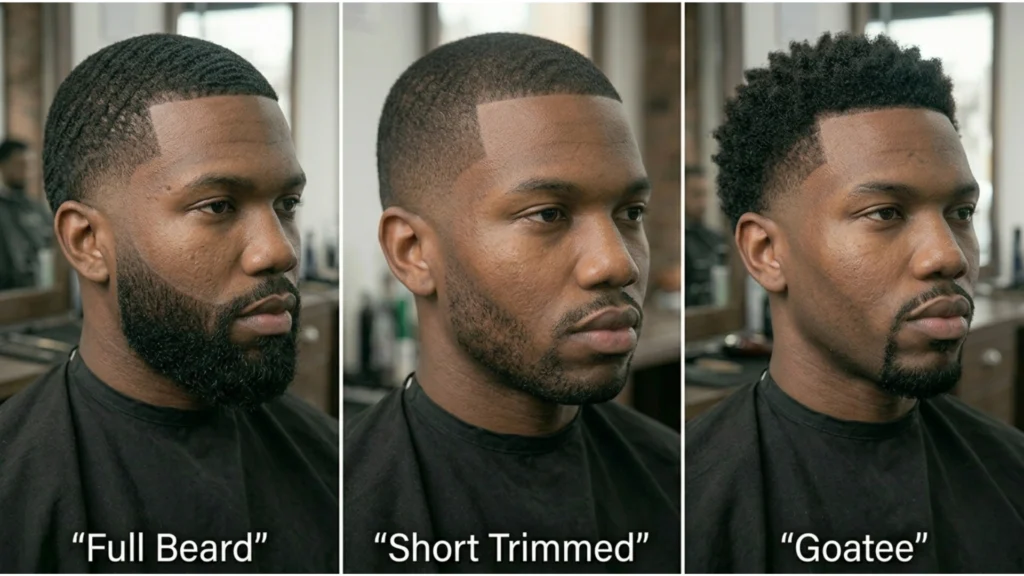
20. Low Taper Fade with Full Beard
The low taper fade with full beard is one of the most powerful grooming combinations available to Black men. The barber blends the taper on the sides seamlessly into the beard line, creating one continuous gradient from the crown all the way down to the chin. The result is a unified, masculine look where no hard line separates the hair from the beard. Clean up the cheek line and neckline of the beard to define the jawline.
Best for: All face shapes especially oval, square, and diamond · All hair types Styling tip: Beard oil to soften and condition the beard; styling cream on the tapered sides to maintain the blend Maintenance: Full taper and beard trim every 2 weeks
21. Low Taper Fade with Short Trimmed Beard
A short, closely trimmed beard kept at 3 to 5mm paired with a clean low taper creates a sharp, structured look that works in every setting from the boardroom to the barbecue. The short beard adds jawline definition without the maintenance demands of a full beard.
Best for: Square, oval, oblong face shapes · All hair types Styling tip: Beard balm for hold and moisture; edge control on the hairline Maintenance: Taper and beard trim every 2 weeks
22. Low Taper Fade with Goatee
A goatee on a Black man with a clean low taper creates a focused, angular look. The chin beard draws attention downward, adding a strong focal point at the jaw. This combination is especially good for diamond and triangle-shaped faces, where chin definition balances wider cheekbones or a broader forehead.
Best for: Diamond, triangle, heart face shapes · All hair types Styling tip: Beard oil for softness; a precision trimmer to keep goatee edges sharp Maintenance: Taper every 2–3 weeks; goatee edge-up at least once a week
Bold & Creative Styles
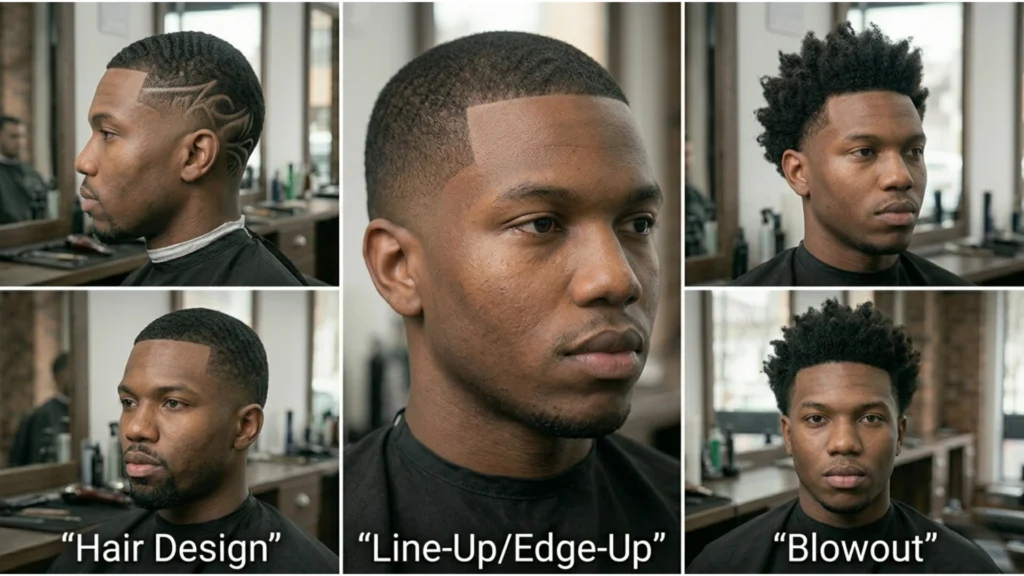
23. Low Taper Fade with Hair Design
A creative pattern carved into the fade zone using a straight razor, from a single clean line to intricate geometric designs, waves, tribal motifs, or initials. This is a specialty barbering skill. Not every barber can execute precision designs, so always ask to see examples of their design work before requesting one. When done well, it transforms a standard low-taper fade into a genuine work of art.
Best for: All face shapes · All hair types Styling tip: Edge control to keep the design lines sharp between barbershop visits; designs grow out within 1–2 weeks Maintenance: Design refresh every 1–2 weeks
24. Low Taper Fade with Line-Up (Shape-Up / Edge-Up)
The line-up also called a shape-up or edge-up, is the most popular add-on service with the low taper fade. A T-Outliner or detail trimmer defines the front hairline, temples, and sideburns with razor-sharp straight lines. The combination of a clean, low taper and a crisp line-up gives that iconic “fresh cut” look that turns heads wherever you go.
Best for: All face shapes · All hair types Styling tip: Edge control gel applied daily to the hairline keeps the line-up looking sharp between visits Maintenance: Line-up touch-up every 1–2 weeks as a standalone service
25. Low Taper Fade Blowout
The blowout stretches natural afro-textured hair using heat from a blow-dryer and a comb attachment, creating maximum volume and vertical length on top while the low taper keeps the sides sharp. For men with 4A through 4C hair, the blowout reveals just how much length is actually there. The hair that normally shows heavy shrinkage opens up dramatically under the heat. This is a great event style.
Fact #4: Type 4C hair may appear up to 75% shorter when dry compared to its actual length. 4C hair can shrink up to 75% of its actual length. This hair type is the tightest and most fragile within the curl spectrum. This is exactly why the blowout is such a powerful reveal stretching out 4C hair shows length that is completely invisible in its natural state.
Best for: Oval, square, oblong face shapes · 4A, 4B, 4C hair types Styling tip: Thickening spray applied before blow-drying for extra volume and lift; always use a heat protectant to prevent damage to the curl pattern Maintenance: Taper every 2–3 weeks; blowout styled per occasion
Styles for Black Boys and Teens
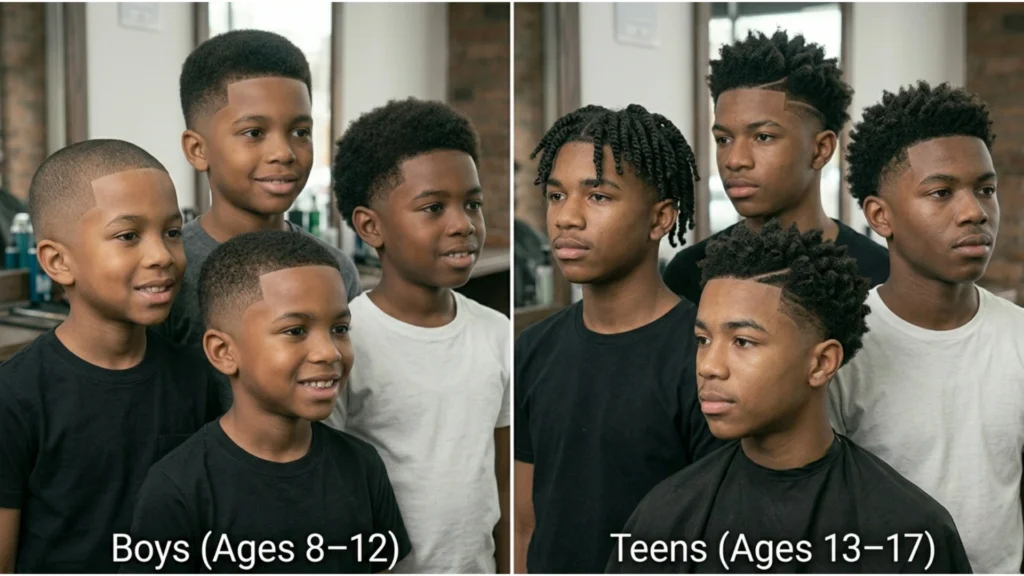
26. Low Taper Fade for Black Boys (Ages 8–12)
Clean, simple, and easy for parents to maintain, the low taper for Black boys typically keeps the top short with natural tight curls or a small afro visible on top. The taper cleans up the sideburns and neckline without getting anywhere near bare skin, making it school-appropriate and dress-code-friendly. It is the “starter” cut for young Black males getting their first real experience with a barber.
Best for: All face shapes · All hair types Styling tip: Light daily moisturizer to keep hair soft and healthy; no heavy products needed Maintenance: Every 3–4 weeks
27. Low Taper Fade for Black Teens (Ages 13–17)
Teens want to look current, social-media-ready, and like themselves. The low taper fade gives them the clean, structured base they need while leaving the top wide open for whatever style fits their personality sponge curls, waves, a mini afro, twists, or even a bold design. It is the perfect compromise between the statement a teenager wants and the appropriate presentation a parent is comfortable with.
Best for: All face shapes · All hair types Styling tip: Based on chosen top style refer to the corresponding style section above for specific product recommendations Maintenance: Every 2–3 weeks
More Styles to Try
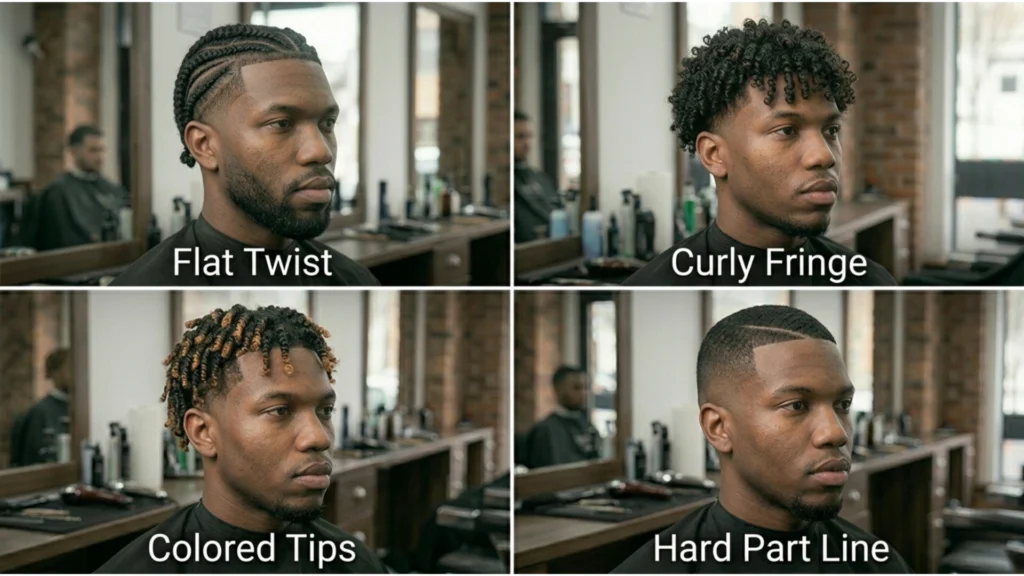
28. Low Taper Fade with Flat Twist
Flat twists are pressed against the scalp in rows, similar to cornrows, but created with a two-strand twist technique instead of braiding. They create a textured, layered look on top with clean tapered sides. A great alternative for Black men who want protective styling without the weight of box braids.
Best for: Oval, heart face shapes · 3C, 4A, 4B hair types Maintenance: Every 2–3 weeks for the taper; retwist every 2–3 weeks
29. Low Taper Fade with Curly Fringe
Loose natural curls fall forward across the forehead while the sides taper cleanly. It is a modern, casual look that balances natural texture up front with sharp, structured sides. Works especially well for Black men with 3C to 4A curl patterns where the curls are loose enough to have noticeable forward movement.
Best for: Round, heart, diamond face shapes · 3C, 4A hair types Maintenance: Every 2–3 weeks
30. Low Taper Fade with Colored Tips
A trending look in 2026 is natural hair on top with color applied to the tips. Blonde, copper, and platinum are the most requested colors for Black men right now. The contrast between the natural base color and the lighter tips creates dimension and visual interest. The low taper keeps the foundation clean so the color becomes the focal point.
Best for: All face shapes · 3C, 4A, 4B hair types (color works best on looser textures) Styling tip: Color-protecting conditioner to maintain vibrancy; deep conditioning weekly to prevent dryness from the coloring process Maintenance: Every 2–3 weeks for the taper; color touch-up every 6–8 weeks
31. Classic Low Taper Fade (Natural Length, No Top Style)
Sometimes, simple wins. This is just the low taper no extra styling on top, no product, no defined pattern. Just natural hair at its own length with clean, tapered sides and a sharp neckline. It is timeless, honest, and effortless. For the Black man who values simplicity and speed, this is the daily go-to.
Best for: All face shapes · All hair types Maintenance: Every 2–3 weeks
32. Low Taper Fade with Hard Part Line
A razor-shaved part line carved into the top’s side creates an instant focal point and structural element. The part separates the top from the sides with a sharp, intentional line that communicates precision. Pair it with any top style waves, curls, a short afro, or a textured crop and it immediately elevates the overall look.
Best for: Oval, square, diamond face shapes · All hair types Styling tip: Edge control to maintain the part line sharpness between visits Maintenance: Partline touch-up every 1–2 weeks
Thirty-two styles are a lot of inspiration. If you’d rather know which ones are actually built for your face structure, TaperMatch scans your facial geometry and returns the top three matches with a barber brief already written for the chair.
Best Low Taper Fade Style for Your Face Shape
Choosing the right low taper variation depends on more than just your hair texture. Your face shape determines how tall, how full, and how structured the top should be. Here is the breakdown:
| Face Shape | Best Low Taper Style | Why |
|---|---|---|
| Oval | Any variation — fully versatile | Natural proportions balance every style |
| Round | Afro, high top, blowout | Vertical volume elongates the face |
| Square | Waves, short afro, crew cut | Clean sides enhance the strong jawline |
| Diamond | Medium curls, textured top | Softens wide cheekbones |
| Heart/Triangle | Short afro, textured crop | Balances a wider forehead |
| Oblong/Long | Waves, short styles | Avoids adding further length |
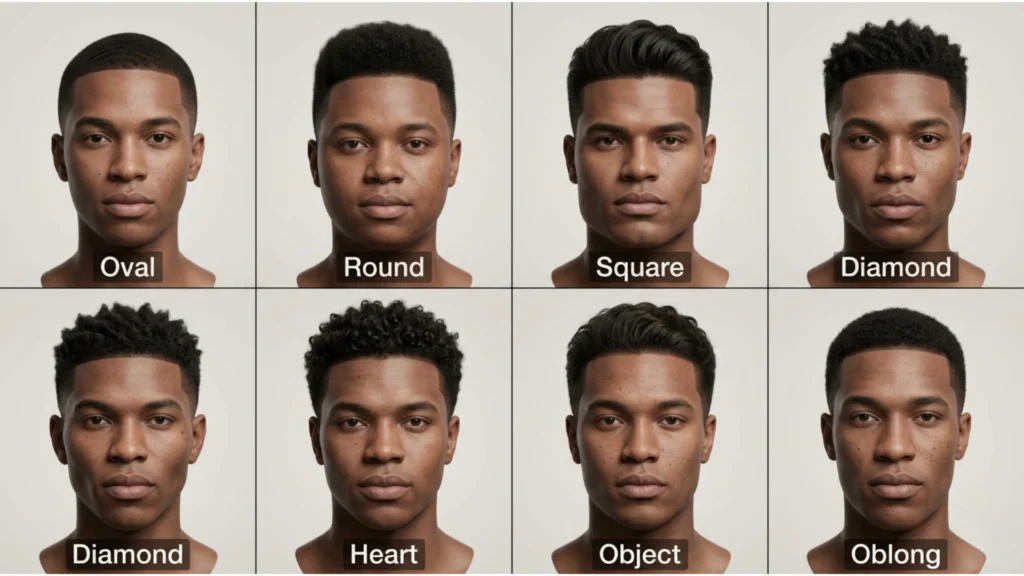
Oval Face
You have the most freedom of any face shape. Almost every low taper variation will look balanced on an oval face the natural proportions work with everything from a short buzz cut to a full afro to long locs with a tapered base. Pick based on personality, not face shape.
Round Face
Go for height. Styles that add 2 to 3 inches of vertical volume on top like a short afro, high top, or blowout elongate the face and create the illusion of a longer silhouette. Avoid very short, flat top styles that emphasize the roundness of the face.
Square Face
Your jawline is already one of your strongest features; the low taper cleans up the sides, letting it breathe and show clearly. Waves, a clean short afro, or a crew cut all complement a square face without competing with it. Avoid styles that add too much width on the sides.
Diamond Face
A medium-length curly top or textured crop on top softens the wide cheekbone area by adding dimension rather than contrast. The low taper on the sides brings the overall silhouette back to balance.
Heart/Triangle Face
You have a wider forehead and a narrower chin. The best approach is to avoid adding extra volume at the crown and instead focus on styles that sit closer to the head, like a textured crop or short afro letting the natural face shape speak for itself.
Oblong/Long Face
Avoid tall, high-volume styles like a full afro or high top; they will make your face appear even longer. Go for styles that add width rather than height: waves, a short crew cut, or a textured crop sitting close to the sides.
Pro Tip: Not sure about your face shape? Pull your hair back, stand close to a mirror, and trace the outline of your face with your finger in the air. The shape you see whether it is round, square, oval, or long, is your face shape guide.
The mirror method works, but a biometric scan is more precise. TaperMatch maps your jaw angle, facial width, and symmetry then tells you which low taper variation balances your specific proportions. Takes about 60 seconds.
How Black Hair Textures Work with the Low Taper Fade
This is where most haircut guides completely drop the ball. They treat Black hair like one thing. It is not. Black men’s hair ranges from Type 3C to Type 4C, and each curl and coil type behaves, responds to products, and pairs differently with the low taper fade.
Knowing your hair type helps you pick the right style variation and the right products to care for it.
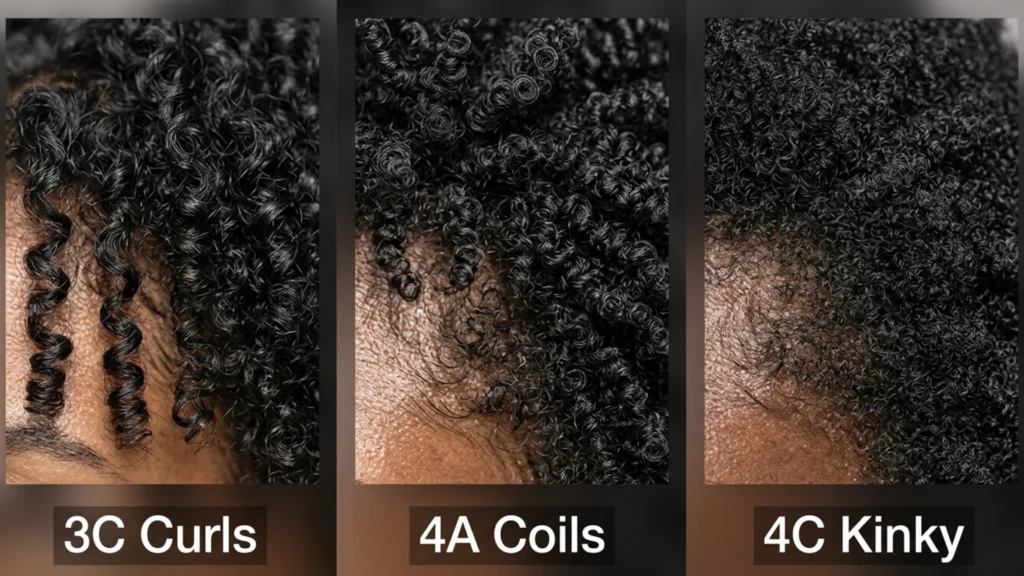
Type 3C Hair with Low Taper Fade
Type 3C hair has tight corkscrew curls that are visible, springy, and well-defined. When paired with a low taper, the curls on top create natural movement and dimension while the clean sides provide structure. Best paired with a curly crop, finger coils, or a medium curly top. Curl cream applied to wet hair, then air-dried or diffused, brings out the best in 3C curls.
Type 4A Hair with Low Taper Fade
Type 4A has soft, densely packed coils in a tight S-shaped pattern. Look for S-patterns to identify 4A hair. The coils have visible definition and good moisture retention. The low taper works exceptionally well with 4A hair the coils create a beautiful, full top with clear texture. Best paired with sponge curls, a twist-out, or a rounded short afro.
Type 4B Hair with Low Taper Fade
Type 4B has a Z-shaped coil pattern that is less defined than 4A and more angular. Due to its shrinkage ability of about 70% of its actual length, 4B hair looks short when dry. Despite looking smaller when dry, 4B hair is incredibly full and dense. The low taper creates outstanding contrast with the thick, textured top. Best paired with an afro, two-strand twists, or 360 waves.
Type 4C Hair with Low Taper Fade
Type 4C is the tightest, most densely packed coil pattern. The structure of 4C hair creates unique characteristics notably, it experiences more significant shrinkage than other Type 4 patterns, with the ability to contract up to 75% of its length. The tightly packed nature of these strands results in a naturally voluminous texture, though the individual strands remain quite delicate.
That density is exactly what makes 4C hair produce the most dramatic, sharpest contrast in a low taper fade. The thick, voluminous top against the clean sides is stunning. Best paired with a short afro, buzz cut, high top, locs, or a blowout. 4C hair needs consistent moisture apply leave-in conditioner or shea butter every 1 to 2 days to prevent breakage.
Fact #5: Most 4C hair shrinks 50–75% from its actual length. This means hair that is 4 inches long when stretched can appear to be only 1 to 2 inches on the head. This is completely normal; it is actually a sign of healthy, elastic hair. Shrinkage is actually a sign of healthy, elastic hair it means your hair is properly moisturized.
Moisture Tip: All 4-type hair textures are naturally prone to dryness. This is because the fragility of natural afro hair can be linked to sebum production the bends in afro hair limit the flow of sebum from the scalp to the shaft. Apply leave-in conditioner, argan oil, or shea butter every 1–2 days to keep your hair soft and healthy, especially along the taper blend zone where the hair is shortest.
How to Ask Your Barber for a Low Taper Fade
This section might be the most valuable thing in this entire guide. Knowing your style means nothing if you cannot communicate it. The number one reason Black men walk out of the barbershop unhappy is not the barber’s skill but vague instructions.
Here is exactly how to get what you want every single time.
Step 1: Bring a Reference Photo
Save 2 to 3 photos to your phone before your appointment. Get a front angle, a side angle, and a back angle if possible. Show your barber all three. A reference photo eliminates every interpretation guess the barber has to make.
Get a “goal photo” of the exact style you want and if possible, find a photo of a Black man with similar hair texture. That context matters. A photo of a low taper on straight hair does not communicate how it will look on 4B coils.
Step 2: Use the Right Barber Language
The clearer and more specific you are, the better your cut will be. Here is the exact script to use:
Your Exact Barber Script:
“I want a low taper fade. Start the taper just above my ears and blend down toward the neckline. Keep it [skin / #0.5 / #1] at the base. Leave the top [natural / my waves / my afro / X inches / my curls / my braids / my locs]. I also want [a sharp line-up / a beard fade / a part line / no design]. Keep the neckline [natural/tapered/rounded/squared].“
Step 3: Specify Your Neckline Shape
Most Black men do not think about the neckline until after the cut, and then they notice it right away. There are three options:
Natural/tapered neckline: The hair at the base of your neck is left to taper gradually without a hard edge. It grows out clean and low-maintenance. Best for most low taper fades.
Rounded neckline: The barber shapes the neckline into a soft, curved line. Looks clean and polished.
Squared neckline: A straight horizontal line across the neckline. Creates a boxy finish that can look sharp immediately after the cut but becomes uneven quickly as the hair grows.
For most Black men getting a low taper, the natural or rounded neckline is the best choice. It grows out more gracefully.
Step 4: Describe Your Add-Ons
Always mention your add-ons explicitly. Barbers do not automatically assume:
Line-up (edge-up/shape-up): Do you want a clean edge along the front hairline and temples?
Beard fade: Do you want the taper to blend into your beard?
Design: Do you want a creative pattern in the fade zone?
Part line: Do you want a razor-shaved part carved in?
Say each one out loud. It takes 10 seconds and saves a lot of frustration.
Common Mistakes to Avoid at the Barbershop
Saying “just give me a fade” is too vague. Every barber interprets that differently
Not specifying fade height, low, mid, and high, result in very different results
Skipping the reference photo and relying on words alone
Forgetting to mention the beard fade if you wear a beard
Not mentioning the line-up if you want clean, sharp edges
Not bringing updated photos, your taste from two years ago may not be your taste today
Fact #6: A good barber will ask lots of questions when cutting a client’s hair for the first time. According to Tone McGill, Andis educator and owner of the Ultimate Barber Lounge in Charlotte, North Carolina, not using clippers designed for a client’s natural hair texture can ruin a potentially good fade. This is why communicating your hair texture, including your curl type and density, is just as important as describing the style itself.
Every mistake on that list comes from the same root cause: vague communication. TaperMatch eliminates it entirely by generating a Barber-Ready Brief from your face scan, exact guard numbers, neckline preference, add-ons, and a verbatim script to read aloud. Just show your barber the screen.
How to Maintain Your Low Taper Fade
Getting a great cut is step one. Keeping it looking great is step two, and a lot of Black men skip this entirely. Here is everything you need to stay fresh between visits.
Maintenance Schedule
| Task | Frequency | Why It Matters |
|---|---|---|
| Full taper touch-up at the barber | Every 2–3 weeks | Restores the blend and sharp fade |
| Line-up / edge-up | Every 1–2 weeks | Keeps the hairline crisp |
| Moisturize hair and scalp | Daily or every other day | Prevents dryness and breakage |
| Wash with sulfate-free shampoo | 1–2 times per week | Cleanses without stripping natural oils |
| Deep conditioning treatment | Once per week | Intensive moisture for 4-type hair |
| Edge control on the hairline | Daily as needed | Maintains line-up sharpness at home |
| Wave brushing (if applicable) | Daily, 20–30 minutes | Trains and maintains the 360 wave pattern |
| Durag compression at night | Every night (waves) | Locks in and protects the wave pattern |
| Clarifying shampoo | Once per month | Removes product buildup from the scalp |
Barbershop Visit Schedule
Most Black men should schedule a full taper touch-up every 2 to 3 weeks. The low taper is actually more forgiving than a mid- or high-fade; it grows out more naturally and stays presentable longer. If budget is a concern, you can stretch the full cut to 3 to 4 weeks and go in for just a line-up between visits. A standalone edge-up is faster and cheaper than a full cut, and it keeps the hairline looking sharp even when the taper has grown slightly.
Daily Hair Care Routine for Black Hair with a Taper
A simple 3-minute routine every morning makes a big difference in the long run:
- Lightly dampen your hair with a spray bottle or hydrating mist
- Apply leave-in conditioner, argan oil, or shea butter from roots to tips
- Use edge control on the hairline to maintain the clean edges
- Apply your style-specific product (curl cream for curls, wave pomade for waves, light styling cream for afros)
For weekly care:
- Wash day (1–2x per week): Sulfate-free shampoo followed by conditioner
- Weekly deep condition: Deep conditioning mask left on for 15–20 minutes under a shower cap
- Monthly reset: Clarifying shampoo to strip product buildup and refresh the scalp
Products Every Black Man Needs for His Low Taper Fade
| Product | Purpose | Best For |
|---|---|---|
| Leave-In Conditioner | Daily moisture | All hair types |
| Curl Cream / Curl Activator | Curl and coil definition | 3C–4A curl types |
| Shea Butter | Deep, rich moisture | 4B–4C coil types |
| Wave Pomade / Wave Grease | Wave training and hold | 360 waves |
| Edge Control | Sharp hairline maintenance | All styles |
| Argan Oil | Hydration and healthy shine | All hair types |
| Sulfate-Free Shampoo | Gentle, moisturizing cleanse | All hair types |
| Deep Conditioner | Weekly intensive moisture | All hair types |
| Durag / Wave Cap | Wave compression and protection | 360 waves |
| Texture Clay | Matte hold, shape | Short styles, textured crops |
| Hair Mousse | Volume and curl definition | Afros, blowouts |
| Twisting Butter | Moisture and twist definition | Twists, flat twists |
Budget Tip: Learn to do your own line-up at home using a T-Outliner trimmer. There are excellent barber tutorial videos specific to Black hair available on YouTube. Mastering your own edge-up can save you between $15 and $25 per visit while keeping your look fresh between full cuts.
The Cultural Significance of the Low Taper Fade for Black Men
If you have made it this far in this guide, you deserve to know something important: the low taper fade is not just a haircut. For Black men in America, it is a cultural institution.
The hairstyle originated in the U.S. military around the 1940s and 1950s. By the time the mid-1980s rolled around, a reworked, edgier version of the fade was emerging thanks to Black barbers, and it would soon become a standard in hip-hop culture during its golden era.
Artists like Big Daddy Kane, Kid ‘n Play, and DJ Jazzy Jeff and the Fresh Prince wore the fade as a cultural badge during hip-hop’s most formative years. 4Although the fade stems from the military, the Black community elevated it with the hi-top, which helped revive the original fade years later and made it more appealing to people who may have never considered wearing it as an everyday style.
Barbershops during this era began to serve as cultural hubs where community, fashion, and music intersected. These barbershops were more than just places to get a haircut — they became venues for social interaction and artistic expression.
That is still true today. The barbershop is not just a service. It is a gathering place — somewhere Black men talk, laugh, debate, mentor, and connect. The haircut is the reason you walk in. The community is the reason you keep coming back.
The humor and meaning behind the low taper fade stem from the idea that getting a fresh haircut especially a precise one feels like hitting a reset button. It is a tangible action tied to intangible emotional shifts. That is not an exaggeration. Ask any Black man who walks out of a barbershop fresh, and there is a confidence, a posture, a presence that follows a clean cut.
Fact #7: Shows like Atlanta and Insecure routinely feature young men with stylish low-taper fades, reflecting real-life trends. In all these cultural examples, the low fade and taper fade are not just background details; they often carry meaning. They can signify a character’s modernity, affiliation with hip-hop and street culture, or simply a commitment to looking sharp.
Low Taper Fade Black Male: 2026 Trends
The low taper fade is not standing still. Here is what is trending right now among Black men in 2026:
Hybrid Texture Combinations
Mixing two different textures on one head, sponge curls on the front section with flat twists on the back, for example, all over a clean, low taper base. This is a 2026 move that leans into individuality and shows serious creativity without sacrificing the clean structure that makes the low taper great.
Micro-Designs in the Fade Zone
Ultra-small, highly detailed razor designs within the taper zone, geometric lines, wave patterns, initials, and tribal-inspired motifs. Barber artistry is at an all-time high in 2026, and Black men are leading the charge. If you want one, ask to see your barber’s design portfolio first.
Low Taper Fade with Color
Blonde tips, copper highlights, and platinum streaks on natural Black hair are having a major moment. The contrast between the natural dark base and the lighter tips adds dimension that photographs beautifully. The low taper underneath keeps the overall look polished and intentional rather than chaotic.
The “Black Ninja” Low Taper
Sharp, aggressive, angular edge lines with a dramatic drop behind the ear, geometric, precise, bold. This style takes the clean lines of the low taper and amplifies them into an intentional, edgy statement. It is a barbershop battle aesthetic now making its way into everyday wear.
Virtual Try-On Tools
Apps like HairHunt and similar augmented reality (AR) tools now let you preview how a low taper fade will look on your actual face before you sit down in the chair. If you are deciding between style variations, a virtual try-on session on your phone can save a lot of guesswork and post-haircut disappointment.
Frequently Asked Questions
How often should a Black man get his low taper fade touched up?
Most Black men should plan for a full taper touch-up every 2 to 3 weeks. The low taper grows out more gracefully than mid or high fades, so you can stretch to 3 to 4 weeks if needed. For the sharpest look, get a standalone line-up every 1 to 2 weeks between full cuts to keep the hairline crisp.
What is the difference between a taper and a fade?
A taper is a gradual reduction in hair length that never reaches bare skin there is always some hair left throughout the blend. A fade is more aggressive, and it can transition all the way down to skin level. A taper fade combines both: the gradual blending technique of a taper with the tight, precise finish of a fade.
Does a low taper fade work with 360 waves?
Yes, the low taper fade is the most popular foundation for 360 waves. The taper begins just above the ears and blends downward, leaving the wave pattern on top completely uninterrupted as the visual star of the look. Maintain waves with 20 to 30 minutes of daily brushing using a medium-bristle wave brush and nightly durag compression.
Can you get a low taper fade with braids or locs?
Absolutely. The low taper pairs beautifully with box braids, cornrows, two-strand twists, flat twists, and locs of every length and stage. The clean tapered sides create sharp contrast against the textured, braided, or loc’d top. This combination is one of the most requested styles in 2026 among Black men who wear protective styles.
Is a low taper fade professional enough for the workplace?
Yes, the low taper fade is widely considered the most professional and versatile fade option available. Because the taper starts low and only affects the sideburns and neckline area, it removes minimal hair and creates a subtle, clean silhouette that is appropriate for corporate offices, job interviews, formal events, graduations, and any professional environment.
What products should Black men use to maintain a low taper fade?
The essential daily product for all hair types is a leave-in conditioner or argan oil to maintain moisture. For cleansing, use a sulfate-free shampoo one to two times per week. Edge control keeps the hairline sharp between visits. For your specific top style: curl cream or curl activator for curls, wave pomade plus a durag for 360 waves, shea butter for 4B and 4C coils, and texture clay for short styles and textured crops.
What is the best low taper fade for a round face?
For a round face, the best low taper fade styles add vertical height on top to elongate and balance the face shape. The short afro, high top, frohawk, and blowout all add 2 to 3 inches of upward volume that counterbalances the width of a round face. Avoid flat, very short styles with no top volume, as they emphasize roundness rather than balancing it.
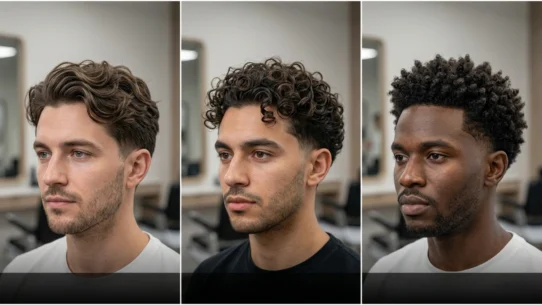
[…] High Taper + Afro […]
[…] and afro hair pairs best with skin fades, especially temple fades and burst fades. They preserve your natural […]