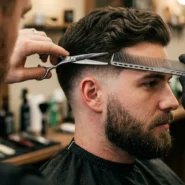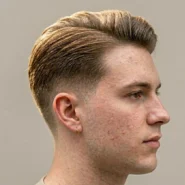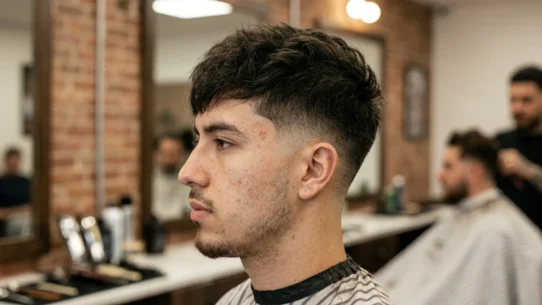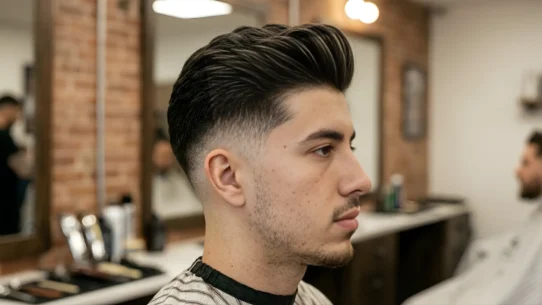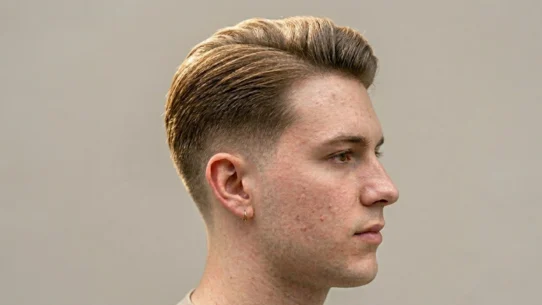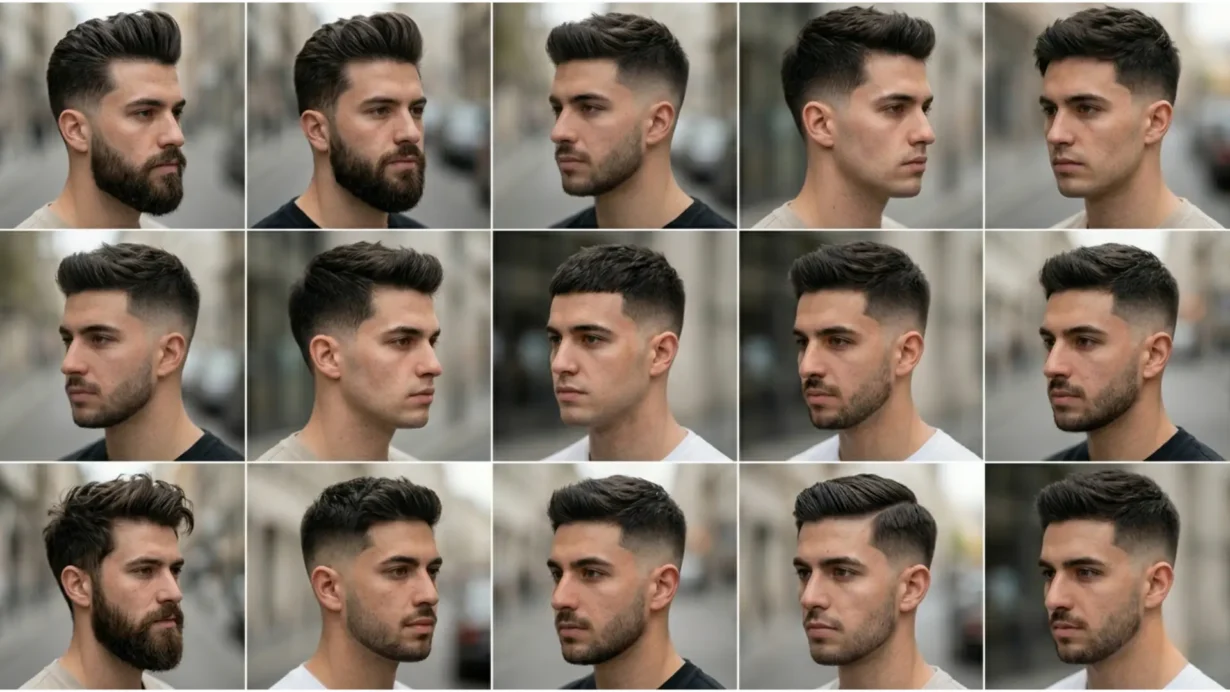

A taper fade is a men’s haircut featuring a gradual reduction in hair length from longer on top to shorter at the sides and neckline, creating clean, sculpted definition. The three foundational types, low taper fade, mid taper fade, and high taper fade, differ by fade start point and blend zone placement.
Beyond these core classifications, advanced technique variants like burst fade, drop fade, skin fade, shadow taper, and temple fade offer specialized styling options. As a licensed master barber with 12 years of professional experience executing thousands of taper fades across all hair textures, straight, wavy, curly, coily, and afro.
Go through this comprehensive guide covering every taper fade variation, maintenance requirements, face shape compatibility, barber communication strategies, and styling techniques. Discover which taper fade type matches your hair texture, facial structure, and lifestyle below.
What Are the Main Types of Taper Fade?
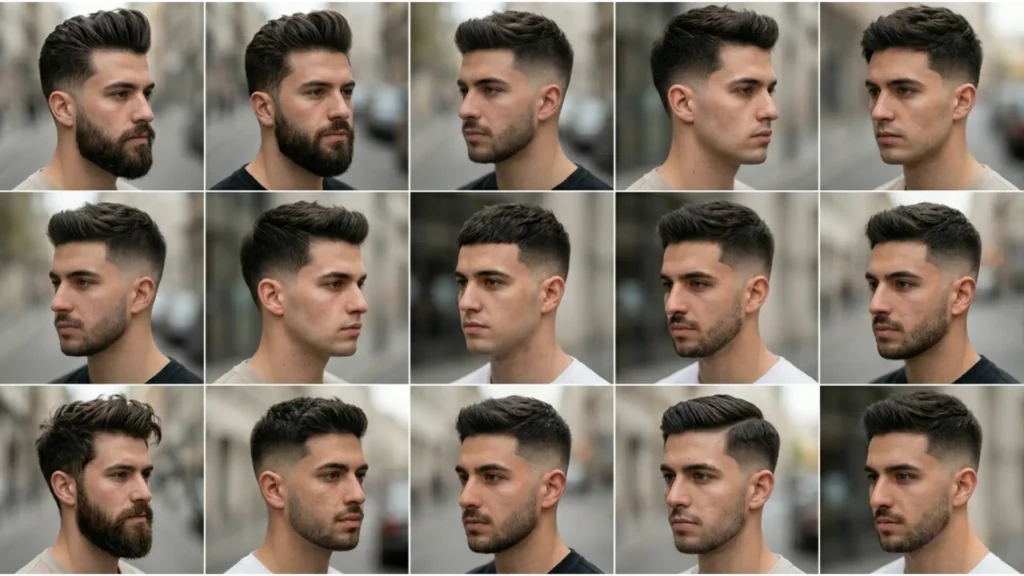
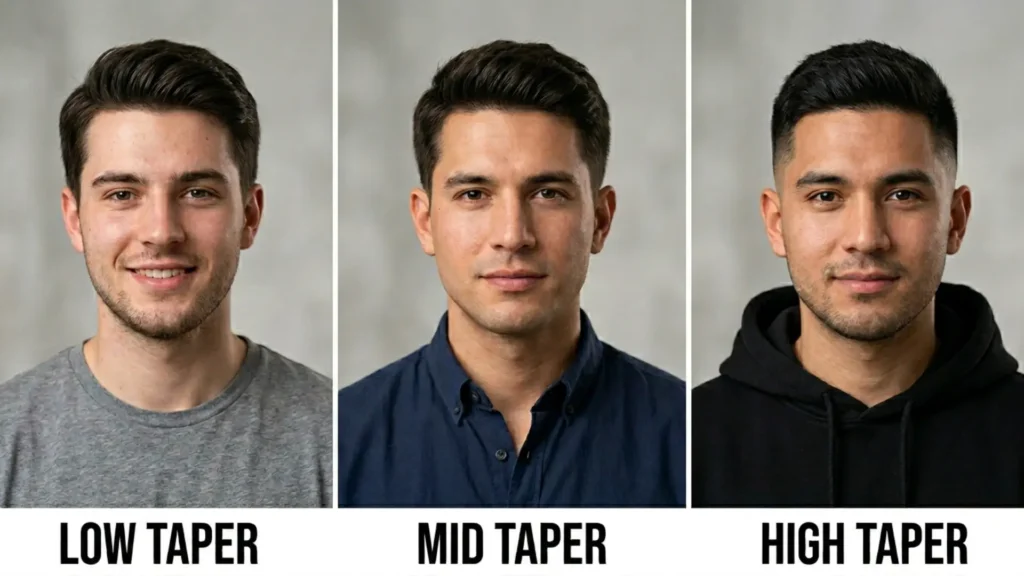
There are three main types of taper fade based on where the fade starts on your head. A low taper fade begins just above the ears for a subtle, professional look. A mid taper fade starts about an inch higher for a balanced, modern style. A high taper fade begins near the temples for maximum contrast and bold definition.
KEY POINTS:
– Low taper fades are the most versatile and last 3–4 weeks between cuts
– Mid taper fades offer the best balance of style and professionalism
– High taper fades create the boldest contrast but need touch-ups every 1–2 weeks
– Advanced variants include skin fade, burst fade, drop fade, and shadow taper
KEY POINTS:
– Low taper fades are the most versatile and last 3–4 weeks between cuts
– Mid taper fades offer the best balance of style and professionalism
– High taper fades create the boldest contrast but need touch-ups every 1–2 weeks
– Advanced variants include skin fade, burst fade, drop fade, and shadow taper
What Are the Main Types of Taper Fade?
Table of Contents
Browsing all 12, which one actually suits your face shape?
The Taper Style Tool filters by face shape, hair type, and fade height, so you can find your match without manually going through every style.
Quick Navigation: Types of Taper Fade at a Glance
Before we dive deep, here’s a quick comparison of the main taper fade types to help you decide which one fits your needs:
| Type | Fade Start Point | Best For | Maintenance | Formality Level |
|---|---|---|---|---|
| Low Taper Fade | Just above ears/nape | All face shapes, professional settings | 3–4 weeks | High |
| Mid Taper Fade | ~1 inch above ears | Balanced look, most versatile | 2–3 weeks | Medium-High |
| High Taper Fade | Near temples | Bold statement, angular faces | 2 weeks | Medium |
| Skin/Bald Fade | Razor to skin | Maximum contrast | 1–2 weeks | Medium-Low |
| Burst Taper | Arc behind the ear | Curly/thick hair | 2 weeks | Medium |
| Drop Fade | Curves down behind the ear | Natural head shape | 2–3 weeks | Medium |
| Shadow Taper | No skin exposure | Dense textures, subtle look | 3–4 weeks | High |
Use this table to quickly identify which taper fade matches your maintenance tolerance and personal style. Now, let’s explore each type in detail.
If the table raises more questions than it answers, that’s normal. Run your face through TaperMatch and get a ranked result specific to your geometry, no chart-reading required.
What Is a Taper Fade?
A taper fade is a men’s haircut where hair gradually shortens from longer on top to shorter at the sides and neckline, creating a clean, sculpted look. There are three main types of taper fade: low, mid, and high, each starting at different heights on the head, plus numerous techniques and style variations.
The beauty of a taper fade lies in how it combines two barbering techniques. Tapering means the barber gradually shortens the hair as they move down your head. Fading means blending the hair to even shorter lengths, sometimes all the way down to the skin. When you put these two together, you get a taper fade, a style that keeps more length on top while the sides and back smoothly transition to much shorter hair.
Here’s what makes taper fades special: they work with almost any hair type, face shape, and personal style. Whether you have straight hair, tight curls, or an afro, there’s a taper fade that will enhance your natural texture. According to industry reports, taper fades account for approximately 40% of all men’s haircut requests in North America, making them the most popular fade variation.
The hair on top typically stays between 1 and 4 inches long, giving you plenty of styling options. You can slick it back, spike it up, leave it curly, or keep it short and simple. Meanwhile, the sides and back gradually blend from that longer top section down to your sideburns and neckline.
Taper vs. Fade: What’s the Difference?
People often get confused about the difference between a taper and a fade. Here’s the simple breakdown:
A taper is a gradual reduction in hair length that keeps your natural hairline and creates a subtle transition. It’s conservative and grows out naturally.
A fade is more dramatic. It often goes all the way down to skin level, creating a stark contrast between the shortest and longest sections of hair.
A taper fade combines both techniques; you get the gradual blending of a taper with the shortness of a fade at the base. Think of it this way: all fades use tapering techniques, but not all tapers are aggressive enough to be called fades.
One more important distinction: taper fades focus mainly on your sideburns and the nape of your neck. A full fade goes completely around your entire head. This gives taper fades a more versatile, professional appearance that works in settings where full skin fades might look too edgy.
Not sure which side of that line your face falls on? TaperMatch reads your facial geometry and returns the exact taper style built for your structure plus the verbatim brief to hand your barber.
The 3 Foundation Types of Taper Fade
All taper fades start with three foundational types based on where the fade begins on your head. Understanding these three classifications is essential before exploring style combinations and technique variants. Let’s break down each one.
Low Taper Fade
The low taper fade starts just above the ears and at the natural neckline, creating the most subtle and professional-looking variation. The blend point, where your shortest hair meets the longer hair, sits approximately 1 to 2 inches from the bottom of your hairline.
Key Characteristics:
- Fade start point: Just above the ear line and nape of the neck
- Transition: Most gradual of all types, with a 2 to 3-inch blend zone
- Contrast level: Low to moderate
- Hair left on sides: More length retained compared to mid or high fades
- Growth pattern: Grows out most naturally, maintaining a clean shape for 3 to 4 weeks
This is the most forgiving taper fade you can get. Because the fade starts so low on your head, the gradual transition looks natural even as your hair grows. You won’t have harsh lines appearing after two weeks, like you might with higher fades.
Who Should Get a Low Taper Fade:
Low tapers work for everyone, but they’re especially great if you:
- Need a professional, conservative haircut for work or school
- Have a round face (the subtle vertical lines help elongate your face)
- Want a low-maintenance style that lasts 3 to 4 weeks between cuts
- Prefer classic, timeless looks over trendy, bold styles
- Are you trying a taper fade for the first time
All hair types work with low taper fades: straight, wavy, curly, or coily. The extended length on the sides means you won’t lose volume or texture, which is especially important if you have curly or thick hair.
How to Ask Your Barber:
“I’d like a low taper fade starting just above my ears. Keep the blend gradual with a natural taper at my neckline. Leave [specify your desired length] on top.”
Your barber will typically use clipper guards blended from a #1 or #2 at the base up to a #3 or #4 at the blend point. This creates that smooth, gradual transition.
Styling Tips:
Low taper fades require minimal effort. If you have straight hair, simply towel-dry and apply a small amount of matte paste for light hold. For curly or wavy textures, work curl-defining cream into damp hair and let it air-dry or use a diffuser on low heat.
The beauty of this cut is that you can literally wash and go. The clean sides and back keep you looking polished even with minimal styling on top.
Mid Taper Fade
The mid taper fade begins approximately 1 inch above the ears and blends toward eye level, striking a perfect balance between subtle and bold. This is the most versatile taper fade type, offering clean definition without the high-maintenance demands of a high fade.
Key Characteristics:
- Fade start point: About 1 inch above the earline
- Transition: Moderate gradient with a 1.5 to 2-inch blend zone
- Contrast level: Medium, you’ll see a clearly visible fade line
- Defined line: There’s a distinct meeting point between the short and long sections
- Growth pattern: Maintains a sharp shape for 2 to 3 weeks before needing a touch-up
The mid taper creates more visual impact than a low fade without going to extremes. You’ll notice the definition, and so will everyone else, but it still maintains a polished, appropriate appearance for most settings.
Who Should Get a Mid Taper Fade:
Mid tapers are ideal if you:
- Want a modern, stylish look that’s still office-appropriate
- Have an oval or square face shape (the balanced height complements these shapes perfectly)
- Have thick, straight hair or light waves
- Work in creative industries or business casual environments
- Like noticeable style definition without dramatic contrast
According to barber trend data, mid-taper fades are most popular among men aged 18 to 35 who want a contemporary style that stands out without looking too aggressive.
How to Ask Your Barber:
“I want a mid taper fade starting about an inch above my ears, fading up toward eye level. Blend it with a [#1, #2, etc.] at the base.”
Most barbers will use a #0.5 or #1 guard at the base and blend upward to a #2 or #3. The tighter gradient creates that defined line that makes mid-tapers so visually appealing.
Styling Tips:
Mid taper fades pair beautifully with textured tops that need light styling. Use molding paste for flexible hold on medium-length hair, or pomade for slicked-back styles. The defined line makes this cut ideal for side parts, French crops, and textured fringes.
Plan for barber visits every 2 to 3 weeks to keep that fade line crisp and clean. The mid-height placement means grow-out becomes noticeable faster than with low tapers.
High Taper Fade
The high taper fade starts near the temples, approximately 2 inches from the hairline, creating the boldest and most dramatic variation. This cut produces maximum contrast between the faded sides and the volume on top, making it a true statement style.
Key Characteristics:
- Fade start point: Near temples, roughly at or above eye level
- Transition: Rapid gradient with just a 1 to 1.5-inch blend zone
- Contrast level: High creates striking visual separation
- Exposure: Significant scalp visibility on the sides
- Growth pattern: Loses definition within 1 to 2 weeks and requires frequent touch-ups
High taper fades are bold, edgy, and impossible to ignore. The high placement creates sharp vertical lines that dramatically frame your face and draw attention to your top styling.
Who Should Get a High Taper Fade:
High tapers work best if you:
- Have angular faces, strong jawlines, or square faces (the high placement softens sharp features)
- Have dark, thick hair black or dark brown (this shows maximum contrast)
- Work in creative fields or fashion-forward environments
- Are between the ages of 16 and 30 (the most popular age range for this style)
- Can commit to barber visits every 1 to 2 weeks
Important consideration: High-taper fades work best on dark hair, where the contrast between faded sides and a longer top is most visible. If you have blonde, gray, or light brown hair, a high fade may create an unintentionally bare look rather than a stylish contrast.
How to Ask Your Barber:
“I’d like a high taper fade starting near my temples. Take it down to a [#0, #0.5, or skin] at the base and blend it tight.”
Barbers often start with a #0 guard or go straight to skin at the base, then blend quickly upward to a #1.5 or #2. The compact blend zone creates that dramatic, high-contrast look.
Styling Tips:
High taper fades work best with shorter top styles like crew cuts, buzz cuts, or short textured crops. You can also go dramatic with height pompadours and quiffs, which look incredible with high tapers. Use firm-hold products like texture clay or strong-hold pomade.
The extensive scalp exposure means you’ll need touch-ups every 10 to 14 days. Budget both time and money for this maintenance commitment.
Advanced Technique Variants: Beyond Basic Height
Beyond the three foundational heights, barbers use specialized techniques to create distinct taper fade variations. These technique-driven styles alter the fade’s shape, contour, and finish, offering unique aesthetics that go beyond simple height classification.
Skin Fade / Bald Fade Taper
A skin fade (also called a bald fade) tapers the hair down to the bare scalp using a razor or a bladeless clipper. This creates the highest possible contrast and the sharpest visual definition you can get.
Key Characteristics:
- Technique: Your barber uses a razor or foil shaver at the base instead of standard clippers
- Result: Smooth, completely exposed scalp at the fade’s lowest point
- Contrast: Maximum the most dramatic of all taper variations
- Maintenance: Every 7 to 10 days (exposed skin grows visible stubble quickly)
- Blend: Requires expert blending to avoid harsh lines between skin and hair
Skin fades create incredible visual impact. The stark transition from bare skin to full hair makes any top style pop. This is why you often see skin fades paired with designs, hard parts, or intricate line work. The clean canvas shows off detail beautifully.
Best Applications:
- Athletes and active individuals (the cooling effect and minimal styling are practical benefits)
- Pairing with hair designs, hard parts, or artistic line work
- Dark hair with thick density (shows maximum contrast)
- Modern, fashion-forward styles
How to Ask Your Barber:
“I want a [low/mid/high] skin fade; take it down to bare skin at the base with a razor finish.”
Burst Taper Fade
The burst taper fade features a unique semi-circular fade arc that radiates behind the ear like a sunburst. Unlike traditional tapers that run straight from top to bottom, the burst curves around the ear while leaving length at the back of the neck.
Key Characteristics:
- Shape: Semi-circle or arc pattern centered behind the ear
- Back retention: Hair at the nape remains longer, creating natural flow or even a mullet effect
- Complexity: This is a challenging cut that requires a skilled barber
- Best pairing: Medium to long hair on top, mohawks, faux hawks, and curly styles
- Grow-out: Irregular arc grows out unevenly, requiring maintenance every 2 weeks
The burst fade originated in Black barbershop culture and remains popular in urban and hip-hop styling. It’s distinctive, artistic, and definitely makes a statement.
Best Applications:
- Mohawks and faux hawks (the burst emphasizes the center strip beautifully)
- Curly and textured hair (the burst frames natural volume)
- Modern mullet styles (preserves that length at the nape)
How to Ask Your Barber:
“I’d like a burst fade to create a semi-circle arc behind my ears and leave length at the back.”
Drop Fade Taper
A drop fade follows the natural curve of your head, with the fade line dropping lower behind the ear rather than running straight around. This technique creates a more organic, flowing appearance that complements your natural head shape.
Key Characteristics:
- Contour: The fade line curves downward, following your skull’s shape
- Arc: You’ll see a visible “drop” behind the ear that creates dimension
- Natural appearance: Follows your head’s occipital curve (the natural bump at the back of your head)
- Versatility: Works as a low, mid, or high drop fade
- Subtlety: Less aggressive than straight horizontal fade lines
Visual Distinction:
While a traditional taper fade maintains a horizontal line around your head, a drop fade creates a downward arc. Imagine drawing a line from your temple instead of going straight across to the back; it gradually drops down behind your ear before reaching the nape. This follows your head’s natural contour instead of fighting against it.
Best Applications:
- Men with prominent occipital bones (if the back of your head has a noticeable protrusion)
- Pairing with longer top styles like slick backs or pompadours
- Anyone seeking subtle, sophisticated fades with natural flow
How to Ask Your Barber:
“I want a drop fade with the fade line curve down behind my ears, following my head shape.”
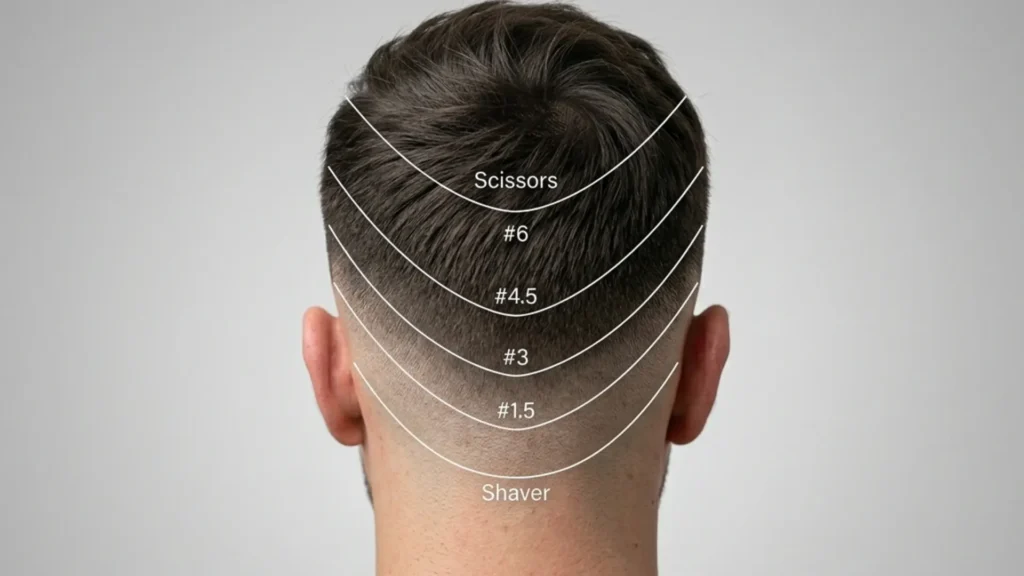
Shadow Taper Fade
The shadow taper fade creates subtle graduation without exposing skin, resulting in a soft, natural appearance. Instead of blending down to a #0 guard or razor finish, the shortest point remains at a #1 or #2, creating a “shadow” effect.
Key Characteristics:
- Shortest length: #1 or #2 guard (never goes to skin)
- Contrast: Minimal this is the most subtle of all fade types
- Blend: Extremely gradual transition that’s barely noticeable
- Professional appeal: Highly appropriate for conservative settings
- Longevity: Lasts 3 to 4 weeks before looking overgrown
Shadow tapers are perfect when you want the structure and clean lines of a fade without the dramatic exposure. They maintain a refined, mature appearance that works in the most conservative professional environments.
Best Applications:
- Dense, coarse hair textures afros, tight curls, or thick straight hair
- Professional corporate environments (law, finance, medicine, education)
- Mature men aged 35 and up seeking refined styles
- Anyone with a sensitive scalp who wants to avoid razor irritation
How to Ask Your Barber:
“I want a shadow taper fade blend it gradually but don’t take it down to skin. Keep the shortest section at a #1 or #2.”
Temple Fade (Brooklyn Fade)
A temple fade also called a Brooklyn fade or temp fade, isolates the taper to just the temple area and nape, leaving the hair over and behind your ears at full length. This creates a distinctive “frame” effect around your face.
Key Characteristics:
- Location: Only temples and nape are tapered sides are left long
- Frame effect: Creates sharp angles at the temples that frame your face
- Cultural roots: Popular in Black barbershop culture and hip-hop styling
- Versatility: Works with short or long hair on top
- Maintenance: Every 2 to 3 weeks (temples grow out quickly)
Temple fades are all about creating definition where it matters most around your face while preserving volume and texture everywhere else. This makes them ideal for natural hairstyles that rely on that side volume.
Best Applications:
- Afros and natural textured styles
- Box fades and flat tops
- Tight curls and coils (preserve that crucial side volume)
- Styles where you want facial framing without overall bulk removal
How to Ask Your Barber:
“I want a temple fade, just fade the temples and nape, keep the length over my ears.”
Taper Fade Styles by Hair Type & Texture
Your natural hair texture significantly influences which taper fade type works best and how it should be cut. Here’s how to match taper fades to your specific hair type for optimal results.
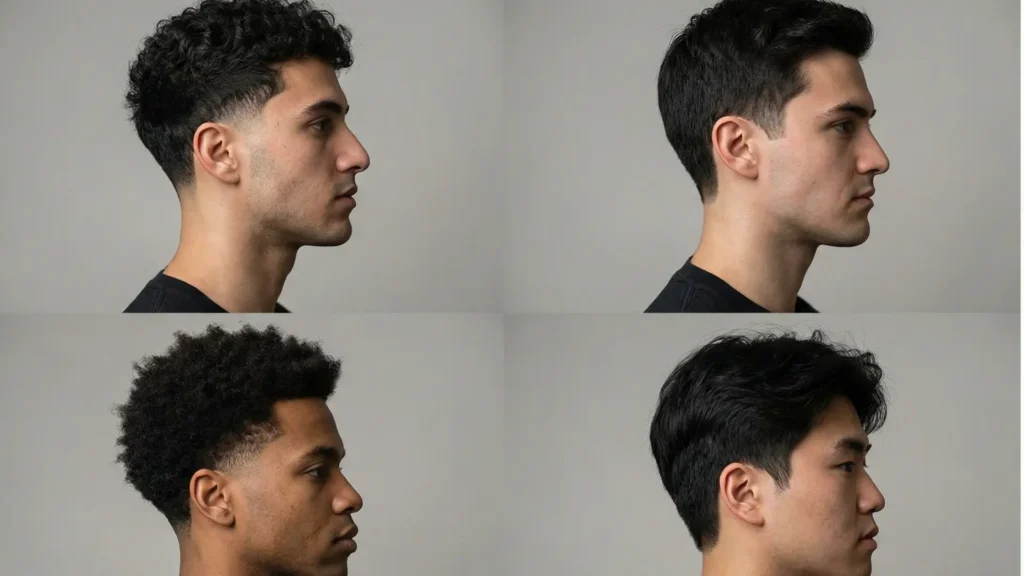
Taper Fade for Curly Hair
Curly hair pairs exceptionally well with taper fades because the contrast between tight, voluminous curls on top and clean faded sides creates natural definition. The key is choosing a fade height that enhances your curl pattern without removing too much weight.
Key Considerations:
- Best fade types: Low to mid taper (preserves curl weight and volume)
- Top length: Keep at least 2 to 4 inches on top (this allows curls to form properly)
- Blend approach: Gradual blending prevents harsh lines that fight your curl texture
- Maintenance: Every 3 to 4 weeks (curls disguise grow-out better than straight hair)
- Common mistake: Cutting curls too short on top creates an unflattering mushroom shape
Styling Guidance:
Use curl-defining cream on damp hair, scrunching from ends to roots. Never brush or comb dry curls; finger-comb only. Let your hair air-dry or use a diffuser attachment on low heat. The taper removes weight from the sides, allowing your top curls to spring up naturally with beautiful volume.
Refresh curls between washes with a light mist of water and leave-in conditioner. This reactivates the curl pattern without requiring a full wash.
Product Recommendations:
- Curl-defining cream (medium hold)
- Leave-in conditioner (moisture retention)
- Lightweight gel (optional, for extra curl hold)
Taper Fade for Straight Hair
Straight hair shows taper fades with maximum clarity since there’s no curl pattern to soften the lines. This hair type works with any fade height and demonstrates the cleanest, sharpest contrast, but it also shows growth-out more quickly than textured hair.
Key Considerations:
- Best fade types: All types work, but mid to high-fades show the best definition
- Top length: Flexible works from buzz cuts all the way to 4+ inches
- Blend approach: Clean, defined lines look excellent on straight texture
- Maintenance: Every 2 to 3 weeks (grow-out is highly visible)
- Styling versatility: Side parts, slick backs, pompadours, and French crops all pair perfectly
Styling Guidance:
Straight hair offers maximum styling flexibility with taper fades. Blow-dry the top while brushing in your desired direction to add volume and shape. Use pomade for slicked styles, matte clay for textured looks, or sea salt spray for natural movement. Straight hair holds styled shapes well throughout the day with proper product application.
Product Recommendations:
- Pomade (for slicked styles with shine)
- Matte clay (for textured, natural-looking styles)
- Sea salt spray (for natural volume and movement)
Taper Fade for Afro Hair
Afro textured hair and taper fades create one of the most iconic combinations in barbering. The contrast between a rounded, voluminous afro and precisely faded sides is both timeless and modern. However, afro hair requires specialized cutting techniques and barber expertise.
Key Considerations:
- Best fade types: Low to mid taper, shadow fades, and temple fades (these preserve natural texture)
- Technique requirement: Your barber must understand coily hair structure and proper cutting angles
- Shape focus: Maintaining a rounded afro silhouette while cleaning up the edges
- Maintenance: Every 2 to 3 weeks for maintaining the fade shape; longer intervals for growing the afro
- Cultural significance: Rooted in Black barbershop tradition and style evolution
Styling Guidance:
Maintain moisture daily with a leave-in conditioner or curl cream. Pick out your afro for shape, never use a brush, which can damage the curl pattern. Keep faded sides clean with regular touch-ups. Many men choose to combine afro tapers with edge-ups (sharp hairline definition) for maximum contrast and precision.
Taper Fade for Asian Hair
Asian hair is typically straight, thick, and coarse with a circular follicle shape. This creates strong, straight-growing hair that holds shape well but can appear heavy without proper tapering. Taper fades remove bulk while maintaining the clean, structured aesthetic Asian hair naturally provides.
Key Considerations:
- Hair properties: Thicker diameter per strand, straight growth pattern, dense coverage
- Best fade types: Low to mid taper (controls bulk without over-thinning)
- Common styles: French crops, textured fringes, side parts, and slick backs
- Stubborn growth: Hair often grows straight out rather than lying flat, which requires strategic cutting
- Maintenance: Every 3 to 4 weeks (thick density disguises grow-out well)
Styling Guidance:
Asian hair’s straight, strong texture holds styles exceptionally well. Use a blow-dryer to direct the growth pattern while the hair is still damp. Matte paste or clay works best for textured styles; pomade works for slicked looks. Because of the natural thickness, you may need less product than the guides suggest. Start with a small amount and add more only if needed.
Still narrowing it down? TaperMatch analyzes your face shape, hair texture, and maintenance preference in under 60 seconds, then gives you three ranked matches and the exact words to say at the chair.
Frequently Asked Questions
1. What are the 3 main types of taper fade?
The three main types are low, mid, and high taper fades, classified by where the fade starts. Low begins just above the ears (3-4 weeks of maintenance), mid begins 1 inch above the ears (2-3 weeks), and high begins near the temples (1-2 weeks).
2. Which taper fade is best for beginners?
Low taper fade is best for beginners. It’s the most subtle, lasts 3-4 weeks between cuts, works with all face shapes and hair types, and is appropriate for any setting.
3. How often do you need to cut a taper fade?
Low taper fades last 3-4 weeks, mid tapers 2-3 weeks, and high/skin fades 1-2 weeks. Your hair growth speed and texture (curly vs. straight) also affect maintenance frequency.
4. What’s the difference between a taper and a taper fade?
A taper is a gradual length reduction, stopping at #2-#3 guard; a taper fade is more aggressive, going to #0 or skin. Taper fades create dramatic contrast while tapers stay subtle.
5. Can you get a taper fade with curly hair?
Yes, curly hair works excellently with taper fades. Choose low to mid tapers to preserve curl volume, and always ask your barber to cut curls when dry, not wet.
6. What face shape suits a high taper fade?
High taper fades suit angular faces, square jaws, and round faces. Avoid if you have a long face or a receding hairline; it works best on dark hair for maximum contrast.
7. Is a taper fade professional enough for work?
Yes, low and mid-taper fades are professional in corporate environments. Low tapers suit conservative fields like law and finance; mid tapers suit business-casual and creative settings.
8. What should I tell my barber for a taper fade?
Specify fade height, bottom finish length, and top length. Example: “Low taper fade starting above my ears, blended to #1, with 3 inches on top.” Always bring reference photos.
9. How do you maintain a taper fade at home?
Trim neckline and sideburns with a trimmer between barber visits using the same guard length. Never attempt to recreate the fade blend yourself; only touch up edges.
10. Does hair type matter for taper fades?
Yes, hair type is critical. Curly hair needs low- to mid-tapers; thick hair benefits from mid- to high fades; thin hair requires low tapers; and afro-textured hair needs specialized barber expertise.