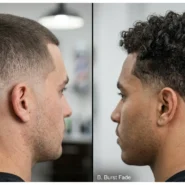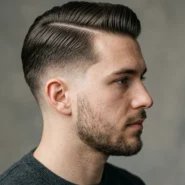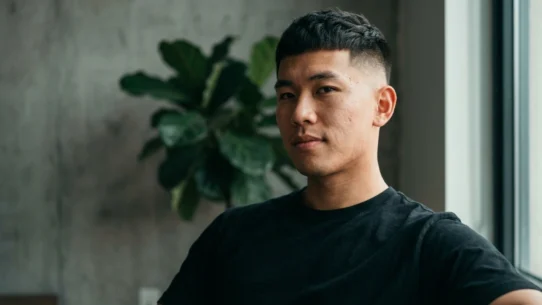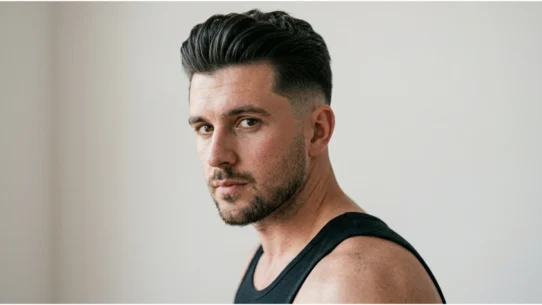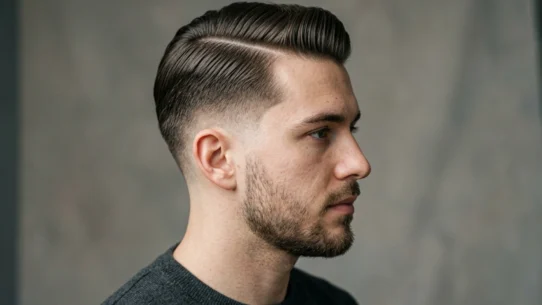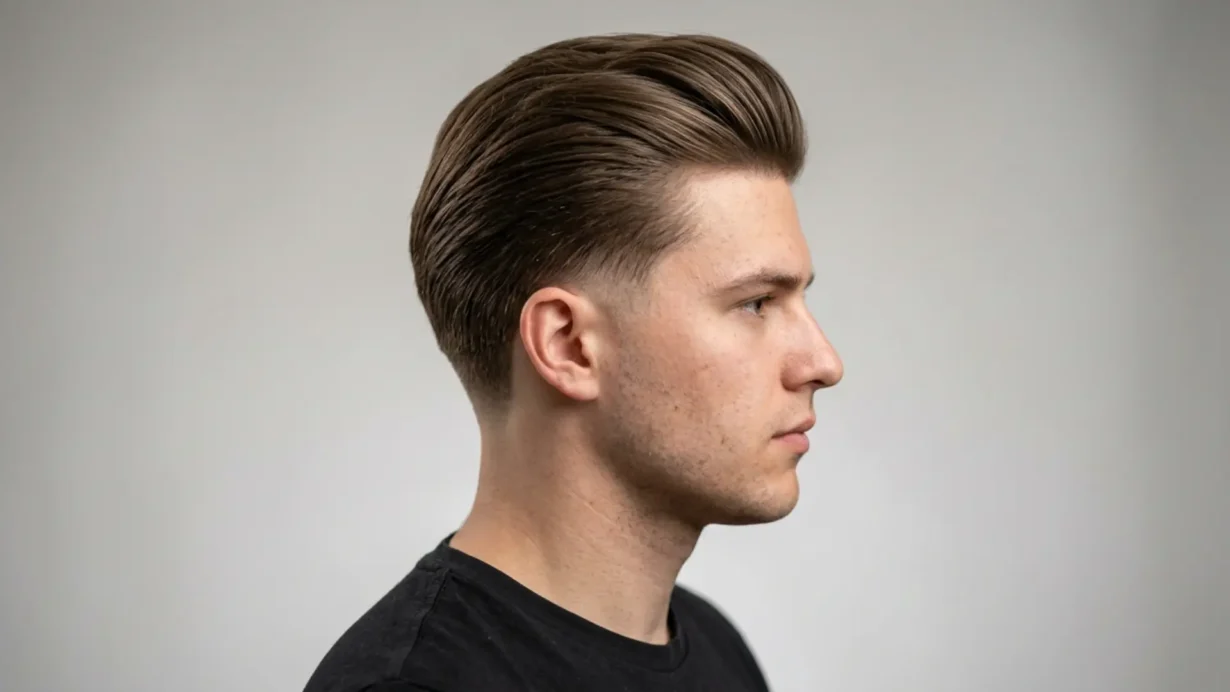

A low taper haircut is a men’s hairstyle where hair gradually shortens on the sides and back, starting just above the ears and neckline. Unlike a fade, it doesn’t go down to the skin—it leaves a natural finish with subtle contrast, making it clean, professional, and easy to maintain.
The “low” refers to where the tapering begins just above your ears. Your barber uses clippers with different guard sizes (#3, #2, #1) to create a smooth blend down to your neckline. The result is a structured, polished look that works everywhere: the office, the gym, date night, or a wedding.
This cut suits all face shapes, works with straight, wavy, curly, and coily hair, and lasts 3–4 weeks between barber visits. Whether you want a classic taper or a modern fade, this guide covers 55 style variations, barber scripts, styling tips, and maintenance schedules. Save your favorite style, screenshot the barber script that matches what you want, and walk into your next appointment ready to get exactly the haircut you’re looking for.
What Is a Low Taper Haircut and Who Is It Best For?
A low taper haircut gradually shortens hair on the sides and back, starting just above the ears, blending down to the neckline without exposing the scalp. It works for all face shapes, hair types, and settings from the office to casual wear. Unlike a fade, it keeps hair visible at the bottom for a natural, low-maintenance finish that lasts 3–4 weeks.
KEY POINTS:
– Low tapers never show skin, while low taper fades blend to bare skin
– It suits all hair types, including straight, curly, wavy, and coily
– The cut lasts 3–4 weeks, making it the most low-maintenance option
– Always show your barber reference photos from the front, side, and back
Table of Contents
While browsing 55+ styles, find the low taper that best fits your face shape first.
The Taper Style Tool filters by face shape and hair type, so you know which low taper styles are actually worth looking at before you scroll through them all.
What Is a Low Taper Haircut? (Definition & Meaning Explained)
A low taper haircut is a classic men’s cut in which the hair on the sides and back gradually shortens as it moves down toward the ears and neckline. The word “taper” means the hair transitions smoothly from one length to another no harsh lines, no choppy edges. Just a clean, natural blend that looks sharp but never overdone.
The “low” part tells you exactly where the tapering starts: just above your ears. That’s the key difference between this and other tapers. A mid taper starts higher, around your temples. A high taper starts way up near the top of your head. But a low taper keeps things subtle and close to the neckline, which is why it works so well for professional settings, everyday wear, and just about any occasion you can think of.
Here’s what makes it different from a fade: a low taper leaves some hair at the bottom. Your barber won’t buzz it down to the skin. Instead, you’ll have a soft, natural finish that grows out gracefully and doesn’t require constant touch-ups. It’s one of those cuts that looks good on week one and still looks presentable on week four.
Today, barbers use clippers with different guard sizes to create that gradual blend. Most start with a #3 guard (about ⅜ inch) near the top of the taper, transition to a #2 guard (¼ inch) in the middle, and finish with a #1 guard (⅛ inch) near the neckline. Then they use a technique called feathering or blending to smooth out any visible lines between the different lengths.
The result? A haircut that looks clean and intentional, not accidental. A haircut that frames your face, highlights your features, and makes you look put-together without trying too hard.
How a Low Taper Is Cut: The Barber’s Technique
Understanding how your barber creates a low taper can help you communicate better and get exactly what you want.
First, they’ll decide on the starting point just above your ears. From there, they’ll use clippers with different guard attachments to create the gradual transition. Most barbers use a technique called “guard stacking”: starting with a #3 guard at the ear, transitioning to a #2 guard halfway down, and finishing with a #1 guard near the neckline.
Professional barbers blend low tapers using this guard-stacking method, then feather between sections to eliminate visible lines. Feathering means using the clipper at an angle, flicking it outward to soften the transition between lengths. It’s what separates a good taper from a great one.
Next comes the neckline. You’ve got three main options here:
1. Tapered neckline — The hair gradually fades into nothing, following the natural shape of your hairline. This is the most common and most natural-looking option.
2. Rounded neckline — Your barber uses clippers or a trimmer to create a soft, curved line across the back of your neck. It’s clean but still gentle.
3. Squared neckline — A sharp, geometric line across the nape. It’s the boldest option and gives the cut a more structured, intentional look.
Finally, your barber will blend the taper into your sideburns and ensure everything connects smoothly with the longer hair on top. If you’re getting a style like a pompadour or quiff on top, they’ll leave more length there and create a seamless transition from the short sides to the fuller top.
The whole process takes about 20 to 30 minutes, depending on your hair type and how detailed you want the cut.
Where Does a Low Taper Go? (Sides, Back & Coverage Explained)
One of the most common questions guys have and one that hardly any guides actually answer is this: does a low taper go on the sides only, or does it wrap around the back too?
The confusion is real. You’ll hear people say “low taper on the sides,” “low taper all around,” or “low taper sides and back,” and it’s not always clear if those mean the same thing or something different.
Let’s clear it up once and for all.
Standard Placement: Sides and Back (All Around)
By default, when you ask for a “low taper,” your barber will taper both the sides and the back. That’s the standard execution. The taper starts just above your ears, wraps around the back of your head at the same height (following the curve of your skull), and creates a smooth, continuous blend all the way around.
Think of it like a 360-degree gradient. It’s uniform, balanced, and looks the same whether someone’s looking at you from the front, side, or back.
When a client requests a “low taper,” 94% of barbers execute it as an all-around cut, tapering both sides and the back simultaneously to create a uniform gradient. This is considered the standard interpretation
This all-around approach is what keeps the haircut looking clean and professional. If your barber only tapered the sides and left the back long, you’d have an uneven, disconnected look, which works for some styles (more on that in a second), but it’s not the default.
If you want a standard low taper, here’s exactly what to say to your barber:
“I’d like a low taper all around, starting just above the ears and wrapping around the back.“
That’s it. Clear, specific, and leaves zero room for confusion.
Low Taper on Sides Only – Is It Possible?
Yes, absolutely. You can request a low taper on the sides only and leave the back longer or untouched. It’s not the standard, but it’s a totally valid option and it’s actually pretty common for certain styles.
Why would you do this? A few reasons:
1. You’re growing out a mullet. Mullets need length in the back, so you taper the sides to keep things clean while leaving the party in the back.
2. You’re rocking curtains or a middle part. These styles work best with length that falls past your ears and down the back of your neck. A sides-only taper keeps the perimeter sharp without sacrificing the flow.
3. You just like asymmetry. Maybe you want short, tight sides but a longer, textured back. It’s your head do what makes you feel good.
The key is being explicit with your barber. Don’t assume they’ll know you want the back left alone. Say it clearly:
“Low taper on the sides only, starting above the ears but keep the back as-is” or “leave the back longer.”
If you don’t specify, your barber will almost always taper the back to match the sides. That’s just how the cut is traditionally done.
Low Taper Sides and Back: What “Sides and Back” Means
“Sides and back” indicates which parts of your head are being tapered. “All around” means the taper wraps continuously from one side, across the back, to the other side. Both describe the standard, full-coverage, low-taper.
There’s a simple rule most barbers follow: whatever you do to the sides, you match at the back. If the taper starts one inch above your ears on the sides, it should start at the same height in the back. That’s what creates the uniform, balanced look.
So if you say “low taper sides and back,” your barber will give you a full, all-around low taper. If that’s what you want, and for most guys, it is, you’re good to go.
55 Best Low Taper Haircut Styles for Men
Now we get to the fun part: all the different ways you can wear a low taper.
The beauty of this haircut is its versatility. You can pair it with just about any hairstyle on top: short, long, curly, straight, messy, slicked back, whatever. The low taper on the sides just acts as a clean, structured frame that makes the top look even better.
We’ve organized these 55 styles by hair type and category so you can find the one that fits you best. Each style includes a quick description, who it suits, and a styling tip to help you nail the look.
Low Taper for Straight Hair
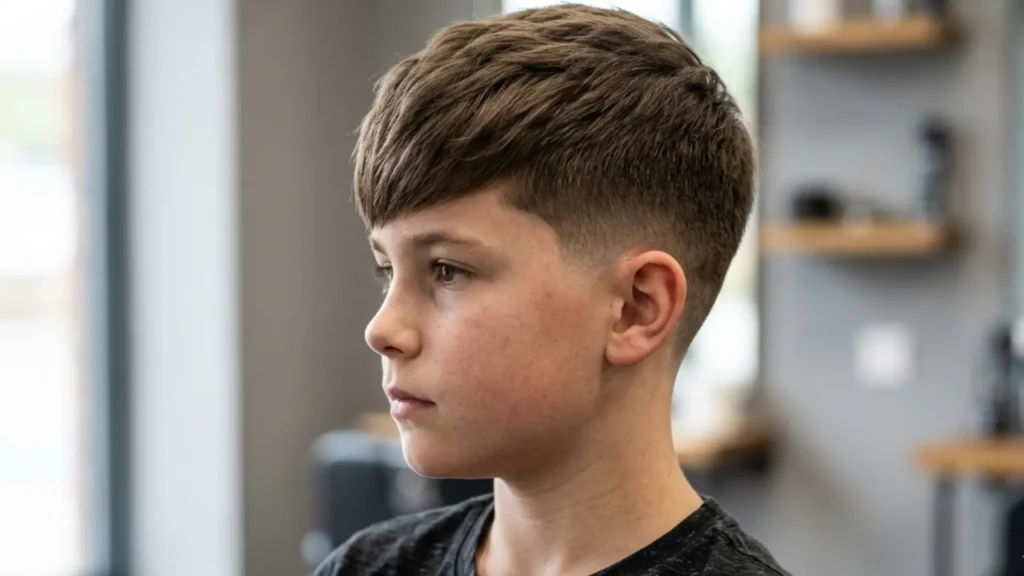
Low Taper Fade with Short Straight Hair
This is the go-to for guys who want low-maintenance and high-impact. The top is kept short, usually 1 to 2 inches, with a bit of texture to prevent it from looking flat. The low taper fade on the sides starts just above the ears and blends down to the skin, creating clean contrast.
Who it suits: Oval and square faces. Great for professionals, students, and anyone who wants a sharp look without much daily styling.
Styling tip: Blow-dry your hair forward or slightly to the side using your fingers. Add a small amount of matte clay to create separation and texture. The whole process takes about three minutes.
Low Taper + Side Part (Straight Hair)
The side part is one of the most classic men’s hairstyles, and a low taper makes it look modern and fresh. The hair on top is combed to one side from a clean, defined part. The taper keeps the sides tight and professional.
Who it suits: All face shapes, especially round and oval. Perfect for office settings, formal events, or any time you want to look polished.
Styling tip: Use a fine-tooth comb and a medium-hold pomade. Comb the hair to the side, following the natural direction of your part. Blow-dry for extra volume and hold.
Low Taper + Slick Back (Straight Hair)
The slick back is timeless. The hair is combed straight back from the hairline, creating a sleek, smooth silhouette. The low taper on the sides keeps it from looking too heavy or outdated.
Who it suits: Square, oval, and oblong faces. Best for formal occasions, business settings, or men who want a sophisticated, grown-up look.
Styling tip: Apply high-shine pomade to damp hair. Use a natural bristle brush or comb to brush everything straight back. Blow-dry to set the style, then add a bit more pomade for shine and hold.
Low Taper + Comb Over (Straight Hair)
A comb over with a low taper is clean, versatile, and works for just about any setting. The hair on top is combed over to one side, usually from a part. The taper keeps the sides short and structured.
Who it suits: Round, square, and heart-shaped faces. Great for men who want a professional look that’s easy to maintain.
Styling tip: Use a medium-hold styling cream or pomade. Comb the hair to the side, starting from the part. You can blow-dry for volume or let it air-dry for a more relaxed look.
Low Taper + French Crop (Straight Hair)
The French crop is a short, textured style with a blunt fringe that sits across the forehead. The low taper keeps the sides tight, creating a clean contrast with the choppy top.
Who it suits: All face shapes, especially round and oval. Perfect for guys who want low maintenance with a bit of edge.
Styling tip: Blow-dry the fringe forward using your fingers. Apply matte paste or texture powder to add grip and separation. Style takes two to three minutes.
Low Taper + Textured Crop (Straight Hair)
Similar to the French crop, but with more texture and movement on top. The hair is cut in choppy, uneven layers that create a messy, lived-in look. The low taper keeps the sides clean.
Who it suits: Oval, square, and triangle faces. Great for creative fields, casual settings, or guys who like a relaxed, effortless vibe.
Styling tip: Use texture clay or matte paste. Work it through damp hair with your fingers, tousling as you go. Let it air-dry or blow-dry with a diffuser for extra volume.
Low Taper + Buzz Cut
A buzz cut with a low taper is as simple as it gets. The top is buzzed short with clippers (usually a #3 or #4 guard), and the sides are tapered down for a bit of shape and structure.
Who it suits: All face shapes. Perfect for athletes, military personnel, or anyone who wants a no-fuss, low-maintenance cut.
Styling tip: No styling required. Just shampoo every few days and keep your scalp moisturized. You can add a tiny bit of light oil for shine if you want.
Low Taper + Crew Cut
The crew cut is a classic short style where the hair on top is slightly longer at the front and tapers back toward the crown. The low taper on the sides keeps it looking sharp and intentional.
Who it suits: Oval, square, and round faces. Great for active lifestyles, professional settings, or men who want a timeless look.
Styling tip: Use a small amount of styling cream or light pomade. Brush the top forward and slightly up at the front. It takes less than a minute.
Low Taper for Wavy Hair
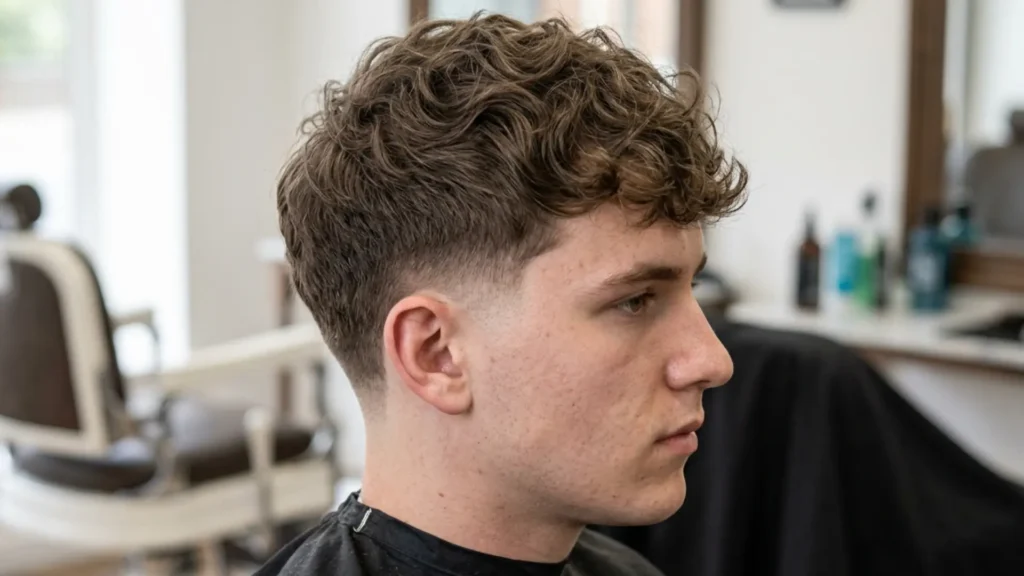
Low Taper Fade with Wavy Hair
Wavy hair adds natural texture and movement, and a low taper fade keeps the sides clean so the waves on top really stand out. The taper starts just above the ears and fades down to the skin.
Who it suits: All face shapes, especially oval and square. Perfect for guys who want a modern, textured look that’s easy to style.
Styling tip: Apply sea salt spray to damp hair and scrunch with your fingers to enhance the waves. Let it air-dry or use a diffuser. Add a bit of texture powder at the roots for extra volume.
Low Taper + Textured Quiff (Wavy Hair)
The quiff is brushed up and back from the forehead, creating height and volume. With wavy hair, you get natural texture and movement that makes the quiff look effortless.
Who it suits: Round, oval, and heart-shaped faces. Great for men who want a stylish, confident look.
Styling tip: Blow-dry your hair up and back using a round brush. Apply texture clay or matte pomade while it’s still warm. Use your fingers to shape the quiff and add a bit of messiness.
Low Taper + Messy Fringe (Wavy Hair)
A messy, wavy fringe is youthful, relaxed, and full of character. The fringe falls forward over the forehead, and the waves add natural movement. The low taper keeps the sides structured.
Who it suits: Oval, triangular, and oblong faces. Perfect for teens, college guys, or anyone who wants a laid-back, casual vibe.
Styling tip: Apply a small amount of styling cream to damp hair. Scrunch with your fingers to enhance the waves, then let it air-dry. Style with your fingers to create that messy, tousled look.
Low Taper + Brush Back (Wavy Hair)
Brushing wavy hair back creates a sleek, mature look with just enough texture to keep it interesting. The low taper keeps the sides clean and professional.
Who it suits: Oval, square, and oblong faces. Great for business casual, date nights, or formal events.
Styling tip: Apply a medium-hold pomade or styling cream to damp hair. Use a natural bristle brush to brush the hair back from the hairline. Let it air-dry or blow-dry for extra hold.
Low Taper + Middle Part (Wavy Hair)
The middle part is back in a big way. Wavy hair, it creates a soft, symmetrical look that’s both modern and retro at the same time. The low taper keeps the sides tight.
Who it suits: Oval and heart-shaped faces. Perfect for younger guys, creative fields, or anyone who wants a trendy, on-point style.
Styling tip:* Part your hair down the middle while it’s damp. Apply a light styling cream and let it air-dry, or blow-dry using a round brush to add volume. The waves will naturally fall into place.
Low Taper + Curtains (Wavy Hair)
Curtains are a middle-parted style where the hair falls to either side like you guessed it curtains. Wavy hair adds extra texture and flow. The low taper keeps the sides clean.
Who it suits: Oval and triangle faces. Great for guys who want a ’90s-inspired, effortlessly cool look.
Styling tip: Let your hair air-dry after parting it down the middle. Use a bit of sea salt spray to enhance the waves. The less you mess with it, the better it looks.
Low Taper + Fluffy Hair
Fluffy hair is all about volume, softness, and texture. The top is kept longer and styled with lots of lift. The low taper keeps the sides from getting too poofy.
Who it suits: Round and oval faces. Perfect for younger guys, TikTok trendsetters, or anyone who wants a bold, voluminous look.
Styling tip: Blow-dry your hair using a diffuser to maximize volume. Apply texture powder at the roots and scrunch with your fingers. Don’t brush it fluffy hair is supposed to look tousled and free.
Low Taper for Curly Hair
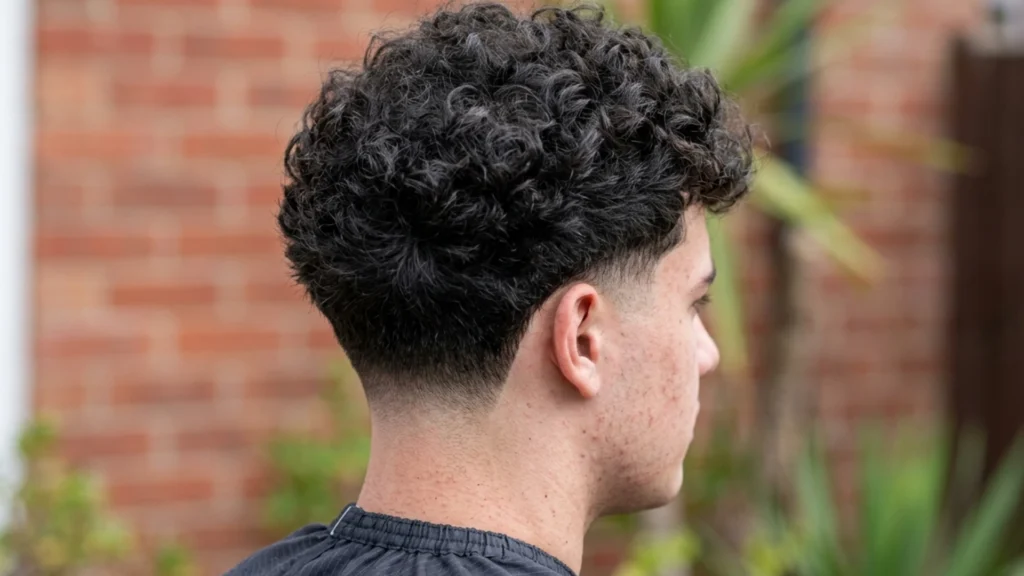
Low Taper Fade with Curly Hair
Curly hair with a low taper fade is one of the most popular combinations right now. The curls on top are full, defined, and bouncy. The low fade keeps the sides tight, creating a clean contrast.
Who it suits: All face shapes. Perfect for guys who want to show off their natural curls without the bulk on the sides.
Styling tip: Apply curl cream to wet hair and scrunch to define the curls. Let it air-dry or use a diffuser. Don’t touch it once it’s dry frizz is the enemy.
Curly hair benefits most from a low taper because it reduces the “triangle effect” caused by excessive side volume, creating a more proportional, modern silhouette without sacrificing natural texture.
Low Taper + Curly Fringe
A curly fringe adds character and personality. The curls fall forward over the forehead, and the low taper keeps the sides from overwhelming the look.
Who it suits: Oval, triangle, and round faces. Great for guys who want a youthful, playful vibe.
Styling tip: Use curl cream and scrunch your hair forward. Let the fringe dry naturally. You can use a pick comb to lift the roots for extra volume.
Low Taper + Curly Top (Short Sides)
This is a simple, classic style: curly hair on top, short sides. The low taper keeps the sides neat, and the curls are left to do their thing.
Who it suits: All face shapes. Perfect for low-maintenance guys who want a clean, structured look.
**Styling tip:** Apply leave-in conditioner to damp curls. Let them air-dry or diffuse. The low taper will keep things balanced even if the top gets a little wild.
Low Taper + Long Messy Curls
If you’ve got longer curls, a low taper helps manage the overall shape. The sides stay tight and structured, while the top is full, long, and free.
Who it suits: Oval and oblong faces. Great for creative types, musicians, or guys who want a bold, expressive look.
Styling tip: Use a curl-enhancing mousse and let your hair air-dry. Don’t comb or brush it when it’s dry. Embrace the messiness.
Low Taper + Defined Curls
Defined curls are all about clarity and bounce. Each curl is well-formed and separated. The low taper keeps the sides clean so the curls stand out.
Who it suits: All face shapes. Perfect for guys who want their curls to look intentional and polished.
Styling tip: Apply curl cream to soaking wet hair. Scrunch and let it air-dry. Once dry, you can gently separate the curls with your fingers to add volume.
Low Taper + Textured Curls
Textured curls have more separation and movement. They’re not as tightly defined, which gives them a looser, more natural look.
Who it suits: Oval, round, and square faces. Great for guys who want a relaxed, easygoing style.
Styling tip: Use a lightweight curl cream and scrunch. Let it air-dry, then shake it out with your fingers to loosen the curls and add texture.
Low Taper + Perm
A perm with a low taper is trending hard right now. The perm adds curls to naturally straight or wavy hair, and the low taper keeps the sides tight and modern.
Who it suits: All face shapes. Perfect for guys who want to try curls without committing to growing them out naturally.
Styling tip: Use curl cream and scrunch. The perm will hold the curl structure on its own. Just keep it moisturized to avoid frizz.
Low Taper + Curly Blowout
A curly blowout is voluminous, airy, and full of life. The curls are blown out to maximize volume, and the low taper keeps the sides from getting too wide.
Who it suits: Round and oval faces. Perfect for trendy, bold guys who want a statement look.
Styling tip: Use a diffuser on low heat to dry your curls while lifting at the roots. Add texture powder for extra volume. It should look big and bouncy.
Low Taper + Tight Curls
Tight curls (Type 3c or 4a) have a smaller curl pattern and lots of natural volume. A low taper helps shape the silhouette and keeps things balanced.
Who it suits: All face shapes. Great for natural hair, afro textures, and guys who want to celebrate their curls.
Styling tip: Use a curl sponge or pick to lift and define the curls. Apply curl cream or moisturizing gel for hold and shine.
Low Taper for Natural/Afro Hair
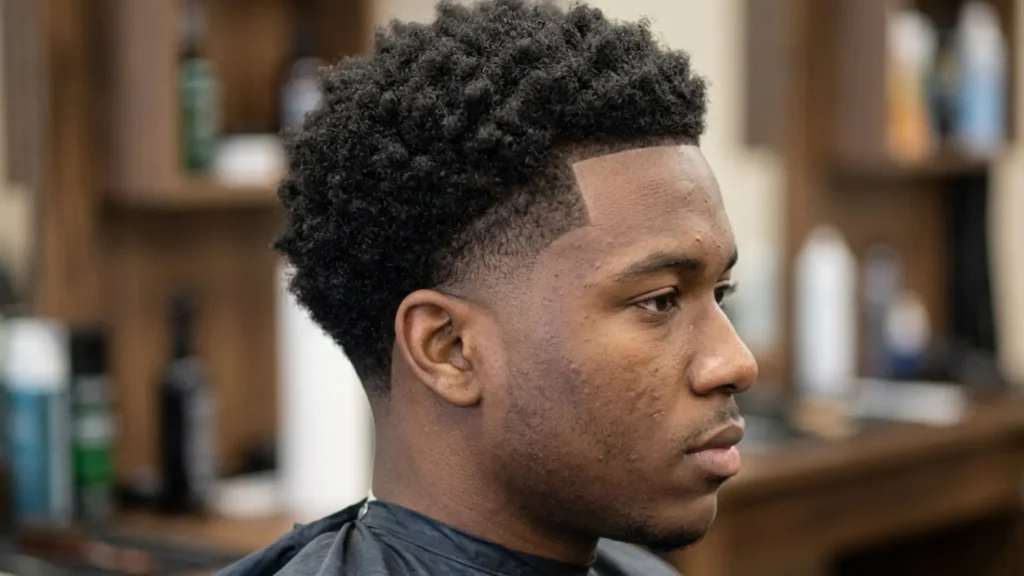
Low Taper + Afro
An afro with a low taper is a clean, modern take on a classic style. The afro is rounded and full on top, and the low taper creates a sharp contrast around the ears and neckline.
Who it suits: Oval and round faces. Perfect for men who want to embrace their natural texture with a polished finish.
Styling tip: Use a pick comb to shape the afro into a rounded silhouette. Keep it moisturized with leave-in conditioner or curl cream. The taper will keep it from looking too wide.
Low Taper + Cropped Afro
A cropped afro is shorter and tighter than a full afro, but it still has that rounded shape and natural texture. The low taper keeps the sides clean.
Who it suits: All face shapes. Great for guys who want low maintenance with a bit of style.
Styling tip: Use a curl sponge to define the texture. Moisturize daily to keep the curls soft and healthy.
Low Taper + High Top
The high top is a bold, retro style where the hair on top is shaped into a tall, flat-topped silhouette. The low taper keeps the sides tight and focuses on height.
Who it suits: Oval and square faces. Perfect for guys who want to make a statement and celebrate the ’80s and ’90s hip-hop aesthetic.
Styling tip: Use a pick to lift the top and shape it flat. Apply strong-hold gel or mousse to keep the structure. The taper will highlight the height and create a dramatic contrast.
Low Taper + 360 Waves
360 waves are a classic style for Black men. The waves are brushed in a circular pattern around the head, creating a smooth, flowing texture. The low taper keeps the sides sharp.
Who it suits: All face shapes. Perfect for guys who want a clean, polished, timeless look.
Styling tip: Brush your waves daily with a wave brush. Apply wave pomade or moisturizer to keep them defined. Get your taper touched up every two weeks to maintain the shape.
Low Taper + Coils
Coils are tight, springy curls that have tons of texture and definition. A low taper helps manage the volume and creates a clean, structured silhouette.
Who it suits: All face shapes. Great for natural hair and Type 4 textures.
Styling tip: Use a curl sponge to enhance the coil pattern. Moisturize with curl cream or leave-in conditioner. The taper will keep the sides neat while the coils stay full on top.
Low Taper + Twists
Twists are a protective style where the hair is twisted into small sections. The low taper keeps the perimeter clean and sharp.
Who it suits: All face shapes. Perfect for guys who want a low-maintenance, stylish protective style.
Styling tip: Use twist cream or moisturizing gel to set the twists. Maintain them every few weeks and keep your scalp moisturized.
Low Taper + Dreads/Locs
Dreads or locs with a low taper create a bold, expressive look. The locs are left long and free on top, while the low taper keeps the sides structured.
Who it suits: All face shapes. Great for guys who want a spiritual, cultural, or artistic style.
Styling tip: Keep your locs moisturized with natural oils. Retwist the roots every few weeks. The taper will need regular touch-ups to stay sharp.
Low Taper + Sponge Curls
Sponge curls are created using a curl sponge on natural, coily hair. The result is tight, defined coils all over the top. The low taper keeps the sides clean.
Who it suits: All face shapes. Perfect for younger guys, teens, and anyone who wants a trendy, textured look.
Styling tip: Use a curl sponge in circular motions on damp hair. Apply curl cream for hold and definition. Maintain the taper every few weeks.
Low Taper + Classic Styles
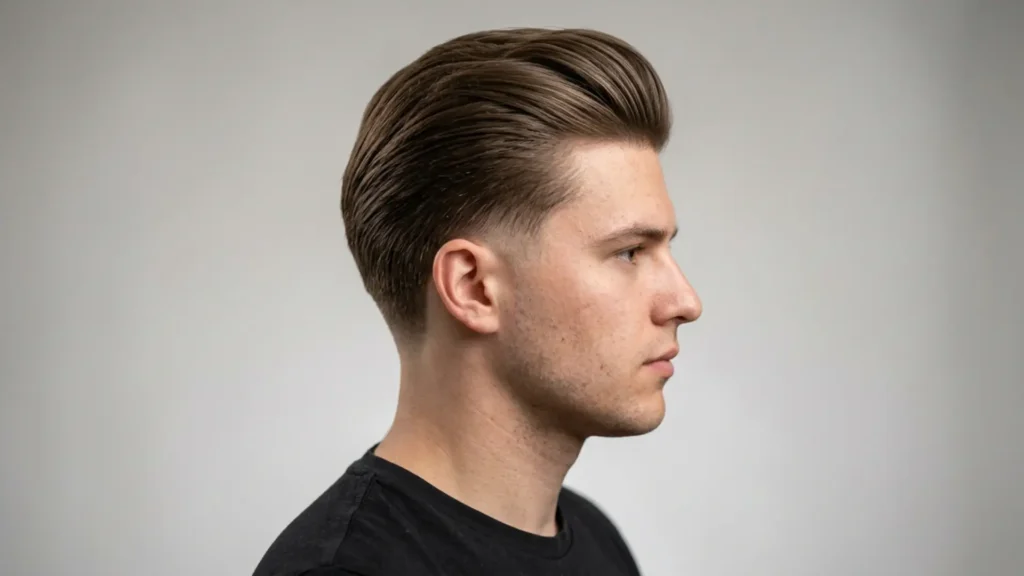
Low Taper + Pompadour
The pompadour is a high-volume style where the hair is brushed up and back from the forehead. The low taper keeps the sides tight and the focus on the height and shape on top.
Who it suits: Round, oval, and square faces. Perfect for guys who want a bold, confident, vintage-inspired look.
Styling tip: Blow-dry your hair up and back using a round brush. Apply strong-hold pomade to keep the structure. The pompadour should be full and voluminous, not flat.
Low Taper + Modern Pompadour
The modern pompadour is a bit more relaxed and textured than the classic version. It still has height and volume, but it’s less structured and more tousled.
Who it suits: All face shapes. Great for guys who want the pompadour vibe without the high-gloss, retro look.
Styling tip: Blow-dry your hair up and back, but use your fingers instead of a brush. Apply matte pomade or texture clay for a natural finish.
Low Taper + Faux Hawk
The faux hawk is edgy and bold. The hair on top is styled into a central ridge, mimicking a mohawk without completely shaving the sides. The low taper keeps it wearable and modern.
Who it suits: Oval, square, and triangle faces. Perfect for creative fields, concerts, or guys who want to stand out.
Styling tip: Apply strong-hold gel or wax to damp hair. Use your fingers to push the hair up into a central ridge. The low taper will create contrast and make the faux hawk pop.
Low Taper + Mohawk
A true mohawk with a low taper is bold and rebellious. The center strip of hair is left long and styled up, while the sides are tapered down.
Who it suits: Oval and square faces. Great for guys who want a statement look and don’t mind turning heads.
Styling tip: Use strong-hold gel or wax to spike the center. The low taper will keep the sides clean and add modern flair.
Low Taper + Undercut
An undercut with a low taper creates a softer transition between the long top and short sides. Instead of a hard disconnect, the taper blends things smoothly.
Who it suits: All face shapes. Perfect for guys who want the undercut look but with a bit more versatility.
Styling tip: Style the top however you like slick back, quiff, or messy fringe. The low taper will keep the sides looking clean and intentional.
Low Taper + Hard Part
A hard part is a shaved line that creates a sharp, defined parting in your hair. Combined with a low taper, it’s clean, structured, and modern.
Who it suits: All face shapes. Great for guys who want extra precision and a bit of edge.
Styling tip: Comb your hair to the side from the hard part. Use pomade or styling cream to keep it in place. The hard part should be maintained every few weeks.
Low Taper + Edgar Cut
The Edgar cut is a bold style with a blunt, straight fringe and a sharp taper. It’s popular in Hispanic and Latino communities and has a distinct, instantly recognizable look.
Who it suits: Round and oval faces. Perfect for guys who want a trendy, cultural style.
Styling tip: The fringe should sit straight across your forehead. Use matte paste to keep it in place. The low taper will add contrast and sharpness.
Low Taper + Mullet
The mullet is back, and it’s better than ever. Short on top and the sides (thanks to the low taper), long in the back. It’s bold, ironic, and surprisingly stylish.
Who it suits: Oval and square faces. Great for creative types, musicians, or guys who want to make a statement.
Styling tip: Keep the back long and natural. The low taper will keep the sides clean. Style the top with texture powder or matte clay for a messy, lived-in look.
Low Taper + Brush Up
The brush up is simple: the hair is brushed straight up from the forehead, creating height and volume. The low taper keeps the sides structured.
Who it suits: Round and oval faces. Perfect for guys who want a modern, youthful style.
Styling tip: Blow-dry your hair straight up using your fingers. Apply texture clay or matte pomade to hold the shape. It should look effortless, not stiff.
Low Taper + Spiky Hair
Spiky hair is fun, edgy, and easy to style. The hair is cut short on top and styled into soft or sharp spikes. The low taper keeps the sides clean.
Who it suits: All face shapes. Great for younger guys, teens, or anyone who wants a playful, energetic look.
Styling tip: Apply strong-hold gel or wax to damp hair. Use your fingers to create spikes by pulling the hair up and out. Let it air-dry for a softer look, or blow-dry for sharper spikes.
Low Taper Hybrid Variations
Low Drop Taper Fade
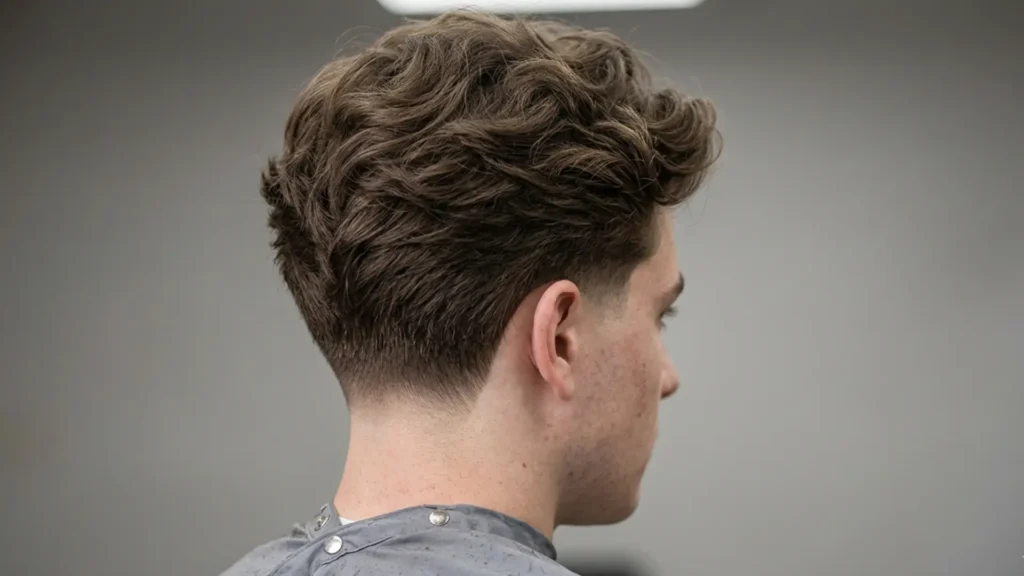
A low drop taper fade curves down behind the ear, following the natural shape of your head. It creates a unique, contoured look that’s modern and eye-catching.
Who it suits: All face shapes. Perfect for guys who want something a little different from the standard low taper.
Styling tip: The drop fade does the work for you. Just style the top however you like the fade will add dimension and interest.
Low Burst Taper Fade
A burst fade is shaped in an arc around the ear, creating a “burst” effect. Combined with a low taper, it’s bold and distinctive.
Who it suits: All face shapes. Great for faux hawks, mohawks, or any style that emphasizes the center.
Styling tip: Style the top with volume and texture. The burst fade will create a unique frame and add visual interest.
Low Temple Taper Fade (Low Temp Taper)
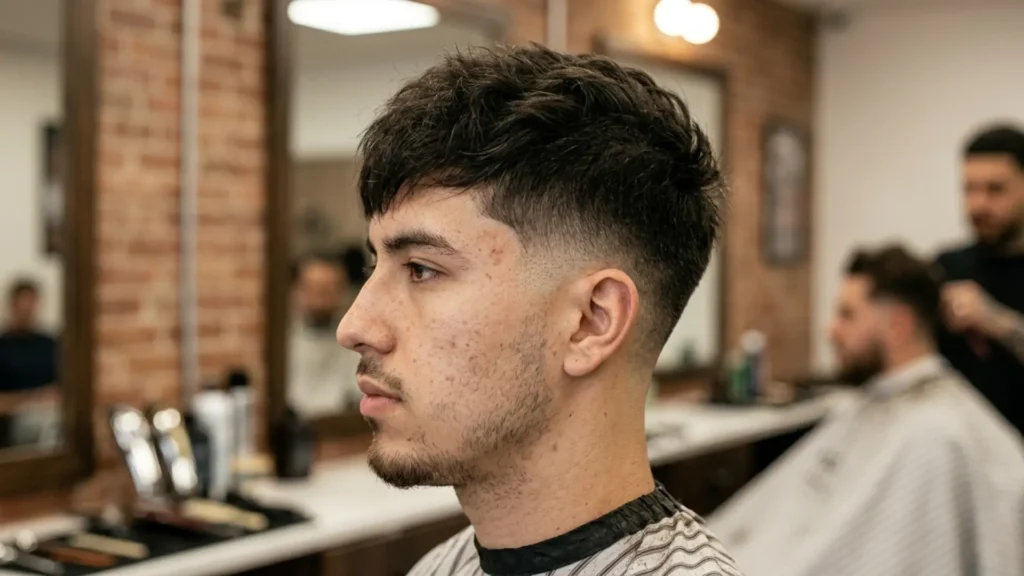
A temple fade, also called a temp fade, focuses the fade around the temples. The low version starts just above the ears and emphasizes the hairline.
Who it suits: All face shapes. Perfect for guys who want a subtle fade that enhances the face shape.
Styling tip: Keep the top natural or styled simply. The temple fade will highlight your hairline and add definition.
Low Taper + Skin Fade (Hybrid)
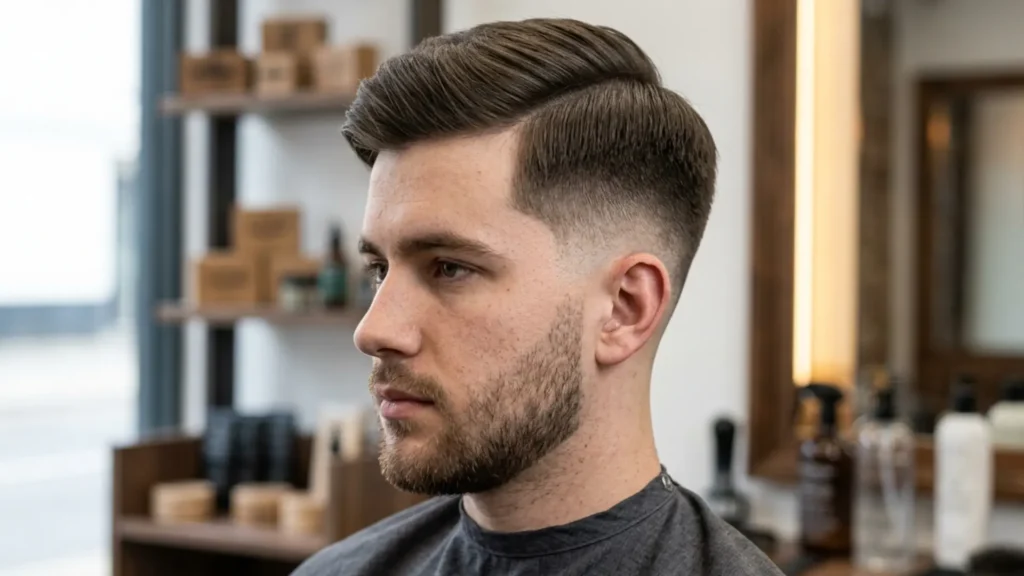
This is a hybrid: a low taper that transitions into a skin fade at the very bottom. You get the best of both worlds: structure from the taper, sharpness from the skin fade.
Who it suits: All face shapes. Great for guys who want a modern, high-impact look.
Styling tip: Maintain this cut every two weeks. Style the top with pomade or clay, and the fade will add the finishing touch.
Low Taper Faded Undercut
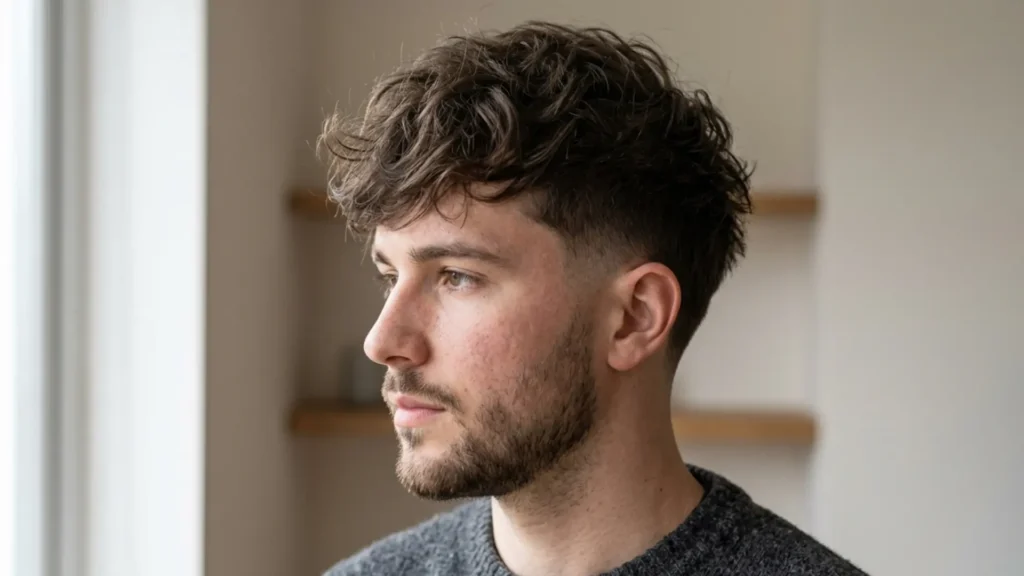
This combines an undercut (a hard disconnect between the top and sides) with a low-taper fade. The result is a dramatic contrast with a bit of softness at the neckline.
Who it suits: Oval and square faces. Perfect for bold, fashion-forward guys.
Styling tip: Style the top with high volume, slicked back, a quiff, or a man bun. The undercut fade will create a striking contrast.
Low Tapered Neckline Only
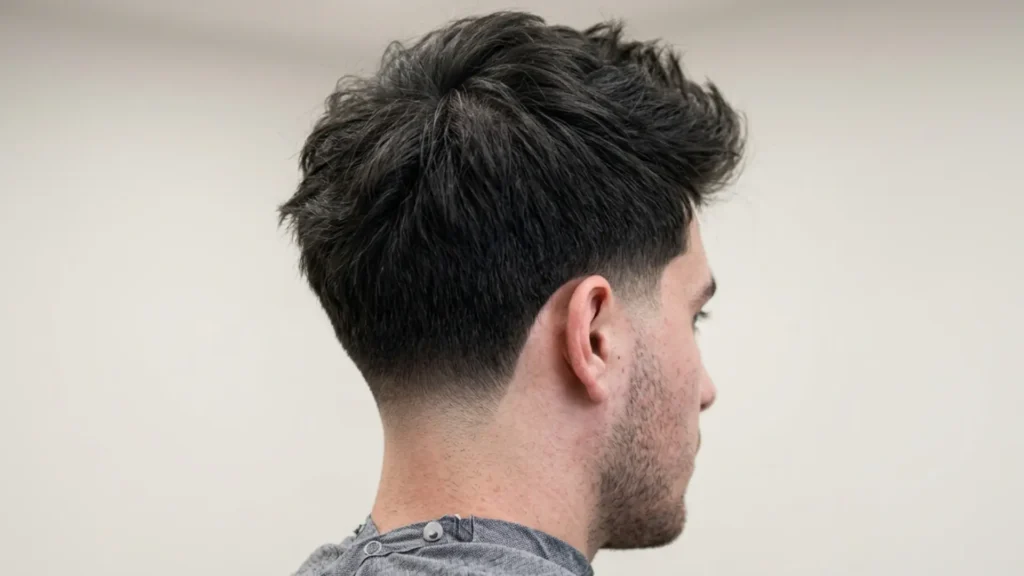
This is a subtle variation: only the neckline is tapered, while the sides are left longer or at a different length. It’s a custom, personalized approach.
Who it suits: All face shapes. Great for guys who want something unique.
Styling tip: Work with your barber to customize the look. This is all about tailoring the cut to your specific preferences.
Scrolling through 55 styles is a great way to find inspiration, but if you’d rather skip the guesswork, TaperMatch can analyze your facial geometry and pick the single best version for you. It matches your structure against 40+ indexed tapers in under a minute.
Low Taper for Specific Demographics
Low Taper for Black Men
The low taper is a staple in Black barbershops. It works beautifully with natural hair textures afros, waves, twists, locs, and coils. The taper keeps things sharp and structured.
Who it suits: All face shapes. Perfect for men who want to celebrate their natural texture with a polished finish.
Styling tip: Moisturize daily with curl cream or leave-in conditioner. Use a wave brush for 360 waves, a curl sponge for coils, or a pick for afros.
Low Taper for Asian Men
Asian hair is typically straight and thick, which makes it perfect for clean, sharp low tapers. The taper adds structure, and the thickness on top creates volume.
Who it suits: All face shapes. Great for professional settings and modern, minimalist styles.
Styling tip: Use lightweight styling cream or matte clay. Asian hair holds shape well, so you don’t need a ton of product.
Low Taper for Hispanic Men
The low taper is hugely popular in Hispanic and Latino communities. It pairs perfectly with the Edgar cut, faux hawks, and textured crops.
Who it suits: All face shapes. Perfect for guys who want a cultural, trendy style.
Styling tip: Keep the taper sharp with regular touch-ups. Style the top with matte paste or texture powder for a clean, modern finish.
Low Taper for Teens/Boys
Teens love the low taper because it’s clean, trendy, and easy to maintain. It works with school dress codes and still looks cool on the weekends.
Who it suits: All face shapes. Perfect for middle school and high school students.
Styling tip: Keep it simple. Use a small amount of texture powder or light pomade. The low taper will do most of the work.
Low Taper for Older Men (40+)
The low taper is a timeless, mature choice for older men. It’s professional, clean, and easy to maintain. It works well with graying hair and thinning hair.
Who it suits: All face shapes. Great for professionals, executives, and guys who want a polished, age-appropriate look.
Styling tip: Use a lightweight pomade or styling cream. Keep the top length moderate and the sides tight. A well-groomed beard completes the look.
Low Taper with Beard
A low taper with a full beard creates a balanced, masculine look. The clean sides of the taper frame the beard, and the beard frames your face.
Who it suits: All face shapes, especially square and oval. Perfect for guys who want a complete, cohesive grooming routine.
Styling tip: Keep the taper and beard lines sharp with regular trims. Use beard oil to keep the beard soft and healthy.
Low Taper Blonde Hair
A low taper with blonde hair creates high contrast. The lighter hair on top stands out against the darker taper (or skin if you go with a fade).
Who it suits: All face shapes. Great for guys who want a bold, sun-kissed look.
Styling tip: Use purple shampoo to keep blonde tones fresh. Style with matte clay or texture powder to enhance texture and definition.
Which Face Shape Suits a Low Taper Best? (Complete Guide)
One of the best things about a low taper is that it works with just about every face shape. But certain variations and styling choices can make the cut even more flattering for your specific features.
Here’s the breakdown by face shape.
Low Taper for Oval Face
If you’ve got an oval face, you’re in luck. Oval is the most versatile face shape, and pretty much any low taper variation will look great on you.
Oval faces are balanced and symmetrical, so you don’t need to worry about adding width or length. You can experiment with volume, texture, length on top whatever you want.
Recommended styles: Modern pompadour, textured quiff, slick back, side part, messy fringe, French crop. Basically, anything.
Styling tip: Use the low taper to highlight your natural symmetry. Try different styles on top to see what you like best.
Low Taper for Round Face
Round faces are wider and softer, with less definition at the jawline and cheekbones. The goal with a low taper is to add length and vertical lines to elongate your face.
How a low taper helps:
- Keeps the sides tight, which reduces width
- Creates a vertical line from the taper to the top of your head
- Draws the eye upward
What to do on top: Add height. Go for styles like a pompadour, a brush-up, a faux hawk, or a textured crop with volume. Avoid styles that add width (like a full afro or wide quiff).
Recommended styles: Pompadour, brush up, faux hawk, textured crop with height, quiff.
Styling tip: Blow-dry your hair up and back to create lift. Use volumizing products like texture powder or mousse.
Low Taper for Square Face
Square faces have strong, angular features a wide jaw, a broad forehead, and defined cheekbones. A low taper highlights that structure and adds even more sharpness.
How a low taper helps:
- Emphasizes your jawline
- Adds clean, structured lines
- Creates contrast that makes your features pop
What to do on top: You can go sleek and structured (comb over, side part, slick back) or textured and messy (textured crop, messy fringe). Both work.
Recommended styles: Comb over, side part, slick back, hard part, textured crop, brush back.
Styling tip: Use a medium-hold pomade or matte clay. Keep the lines clean and the edges sharp.
Low Taper for Heart-Shaped Face
Heart-shaped faces are wider at the forehead and narrower at the chin. The goal is to balance those proportions by reducing focus on the forehead and adding width at the jaw.
How a low taper helps:
- The taper adds subtle width at the sides of your head (near the jaw)
- It softens the overall look and balances the narrow chin
What to do on top: Avoid too much volume. Go for styles that sit closer to the head textured crop, French crop, side-swept fringe.
Recommended styles: Textured crop, French crop, side-swept fringe, low pompadour, short messy hair.
Styling tip: Keep the top moderate in height. Use matte products to avoid drawing too much attention upward.
Low Taper for Diamond Face
Diamond faces have prominent cheekbones and a narrower forehead and chin. The goal is to balance the width at the cheekbones.
How a low taper helps:
- Reduces visual focus on the mid-face
- Creates vertical lines that balance the proportions
What to do on top: Go for medium volume and texture. Avoid super high or super wide styles.
Recommended styles: side part, brush-back, low pompadour, textured crop, comb-over.
Styling tip: Use medium-hold products. Keep the styling natural and balanced.
Low Taper for Oblong/Long Face
Oblong faces are longer than they are wide. The goal is to avoid adding extra height, which would make the face look even longer.
How a low taper helps:
- Keeps the sides structured without making the face look too narrow
- Works well with styles that add width, not height
What to do on top: Keep the top moderate in length. Go for textured, messy, or side-swept styles that add horizontal movement.
Recommended styles: Textured fringe, messy crop, side-swept hair, French crop, short wavy hair.
Styling tip: Avoid pompadours or high quiffs. Keep the styling natural and slightly messy.
Low Taper for Triangle Face
Triangle faces are narrow at the forehead and wider at the jaw. The goal is to add width at the temples to balance the proportions.
How a low taper helps:
- Adds structure and shape at the temples
- Creates visual balance
What to do on top: Add volume and width. Go for styles like a quiff, pompadour, or textured crop.
Recommended styles: Quiff, pompadour, textured crop, brush up, messy fringe.
Styling tip: Use volume-boosting products like texture powder or mousse. Blow-dry for extra lift.
Not quite sure if your face is oval, heart-shaped, or diamond? You can use the platform’s biometric scan to map your jaw angle and symmetry, ensuring your chosen taper balances your proportions perfectly.
Low Taper for Different Hair Types: Curly, Wavy, Straight & More
Your hair type changes everything: how the taper looks, how it grows out, and how you style it. Here’s how a low taper works with each type.
Low Taper for Straight Hair
Straight hair is the easiest to taper. The lines are clean, the blend is visible, and the taper looks sharp and intentional.
What works well:
- Sleek styles: slick back, comb over, side part
- Structured styles: French crop, crew cut, buzz cut
- Modern styles: textured crop, messy fringe
Products to use: Lightweight pomade, matte clay, styling cream.
Styling tip: Straight hair holds shape well, so you don’t need heavy products. A little goes a long way.
Low Taper for Wavy Hair
Wavy hair adds natural texture and movement. The taper keeps the sides clean, and the waves on top create dimension.
What works well:
- Textured styles: messy fringe, textured quiff, brush back
- Natural styles: middle part, curtains, fluffy hair
- Volume styles: quiff, pompadour, brush up
Products to use: Sea salt spray, texture powder, light mousse, styling cream.
Styling tip: Embrace the wave. Don’t fight it with heavy products or flat-ironing. Use sea salt spray to enhance the texture and let it air-dry.
Low Taper for Curly Hair
Curly hair with a low taper is one of the best combinations. The taper controls the bulk on the sides, and the curls on top create a balanced, modern silhouette.
What works well:
- Natural curls: curly top, curly fringe, defined curls
- Volume styles: curly quiff, curly blowout
- Textured styles: messy curls, loose curls
Products to use: Curl cream, leave-in conditioner, diffuser, curl-enhancing mousse.
Styling tip: Apply curl cream to soaking wet hair. Scrunch with your fingers, then let it air-dry or use a diffuser. Don’t touch it once it’s dry that’s when frizz happens.
Low Taper for Natural/Coily Hair (Type 4)
Natural, coily hair (Type 4) has the tightest curl pattern. A low taper works beautifully with afros, twists, locs, waves, and coils.
What works well:
- Afro styles: full afro, cropped afro, high top
- Protective styles: twists, locs, braids
- Wave styles: 360 waves
- Textured styles: coils, sponge curls
Products to use: Curl sponge, moisturizing cream, twist gel, leave-in conditioner, natural oils.
Styling tip: Moisture is everything. Use a curl sponge or pick to shape and define. Keep your hair and scalp moisturized with leave-in conditioner or natural oils.
Low Taper for Thick Hair
Thick hair can get bulky fast, especially on the sides. A low taper removes that extra weight and creates a clean, balanced shape.
What works well:
- Short styles: buzz cut, crew cut, French crop
- Textured styles: textured crop, messy fringe
- Sleek styles: slick back, comb over, side part
Products to use: Texture clay, strong pomade, matte paste.
Styling tip: Use strong-hold products to control the thickness. A low taper will keep the sides from looking too heavy.
Low Taper for Fine/Thin Hair
Fine or thin hair can look flat without the right cut. A low taper adds structure and makes the hair on top look fuller by comparison.
What works well:
- Volume styles: quiff, pompadour, brush up
- Textured styles: textured crop, messy fringe
- Short styles: crew cut, French crop, buzz cut
Products to use: Texture powder, volumizing mousse, lightweight styling cream.
Styling tip: Use texture powder at the roots to add volume and grip. Blow-dry with your fingers to create lift. Avoid heavy products that weigh hair down.
How to Ask Your Barber for a Low Taper
Getting the haircut you want starts with clear communication. Here’s exactly how to ask for a low taper, no matter which variation you’re after.
The Golden Rule of Barber Communication
Don’t leave anything to chance. Your barber can’t read your mind, and words like “clean me up” or “just a fade” are way too vague.
Here’s what you should do every single time:
1. Be specific, not vague. Say “low taper” instead of “just a fade” or “clean up the sides.”
2. **Show photos from 3 angles.** Bring reference photos that show the front, side, and back of the style you want. One photo isn’t enough.
3. Specify fade height. Tell your barber exactly where you want the taper to start: “I want it to start just above my ears.”
4. Mention neckline preference. Do you want a tapered neckline, rounded, or squared? Don’t assume your barber will know.
5. Communicate top length. Tell them how much length to leave on top, or say “keep the top as-is.”
6. Ask for feedback. A good barber will tell you if something won’t work with your hair type or face shape. Listen to them.
Low Taper vs. Low Taper Fade: What’s the Difference?
This is where a lot of guys get confused. People use “low taper” and “low taper fade” like they’re the same thing, but they’re not. The difference comes down to one simple question: Does the hair go all the way down to your skin, or does it stop before that?
Here’s the breakdown:
| Feature | Low Taper | Low Taper Fade |
|---|---|---|
| Finish | Leaves hair at the neckline | Blends down to the skin |
| Skin Visible? | No | Yes (minimal) |
| Contrast Level | Subtle | Moderate |
| Maintenance | Every 3–4 weeks | Every 2–3 weeks |
| Formality | Very professional | Modern professional |
| Best For | Conservative settings | Versatile settings |
A low taper (the classic version) gradually shortens your hair as it moves down, but it always leaves some hair at the bottom. You won’t see skin. You won’t see scalp. It’s a soft, natural finish that looks clean but conservative.
A low taper fade takes it one step further. It starts the same way, just above the ears but instead of stopping at a short length, it keeps blending down until it reaches your skin. You’ll see a tiny bit of scalp showing at the very bottom, right along your neckline and sideburns. It’s sharper, more modern, and a little bolder.
The difference between a taper and a fade lies in the endpoint: a taper gradually shortens but always leaves some hair, while a fade blends hair down to the scalp, exposing skin. This distinction affects maintenance frequency; fades require touch-ups every 2 weeks, while tapers can go 4 weeks.
Instead of trying to memorize a script, you can generate a custom, Barber-Ready Brief. It includes the exact technical specs, guard numbers, and verbatim instructions to show your barber directly from your phone.
Low Taper Without a Fade: What It Looks Like & Why Men Choose It
This is one of the most important sections in this entire guide, and it’s something almost no one talks about clearly.
When you search “low taper,” you’ll see tons of results for “low taper fade. ” And that makes sense; it’s a popular variation. But what if you don’t want a fade? What if you don’t want your skin showing at all?
That’s where the classic low taper without a fade comes in.
The Definitive Difference: Taper vs. Fade
Let’s get crystal clear on this. A taper and a fade are not the same thing. They use similar techniques, but the end result is totally different.
Here’s the side-by-side:
| Aspect | Low Taper (No Fade) | Low Taper Fade |
|---|---|---|
| Bottom Finish | Hair left at the neckline | Blends to skin |
| Skin Visible? | No | Yes, minimally |
| Look | Natural, soft | Sharp, modern |
| Maintenance | 3–4 weeks | 2–3 weeks |
| Ideal For | Conservative, low-key | Versatile, trendy |
A low taper gradually shortens the hair but stops before reaching the skin. You’ll always have some hair coverage at the neckline and sideburns. The finish is soft and natural, like your hair just happens to grow that way.
A low taper fade takes the blend all the way down to skin level. You’ll see a bit of scalp showing, usually just a thin strip along the very bottom edge. It’s sharper, more defined, and more noticeable.
A classic low taper without fade grows out more naturally and can last 4–6 weeks before needing a trim, compared to 2–3 weeks for a low fade. This makes it the preferred choice for men who travel frequently or have limited access to barbers
Think of it this way: if you want your haircut to look neat and tidy but don’t want it to scream “I just came from the barbershop; go with the classic low taper. If you want a fresher, more modern edge and don’t mind more frequent touch-ups, go with the fade.
Why Men Choose a Low Taper Without Fade
There are a bunch of good reasons why guys specifically ask for a low taper without the fade:
1. More conservative and professional. Some workplaces have strict grooming standards. If you’re in law, finance, education, or healthcare, showing skin at the neckline might be too casual. A classic taper keeps you looking polished without pushing any boundaries.
2. Lower maintenance. A taper without a fade lasts longer. You can go three to four weeks, sometimes even five or six, before it starts looking shaggy. A fade, on the other hand, loses its sharpness after about two weeks because the skin starts growing stubble.
3. Natural grow-out. When a fade grows out, it’s obvious. You get that awkward in-between phase where it’s not fresh anymore but not long enough to look intentional. A taper grows out smoothly and still looks good even when it’s a little longer.
4. Cultural or personal preference. Some guys just don’t like showing their scalp. Maybe it’s a personal comfort thing, maybe it’s cultural, maybe it’s because their hairline is uneven. Whatever the reason, a taper gives you all the benefits of a clean, structured cut without exposing skin.
5. Hairline concerns. If your hairline isn’t perfectly even maybe it’s receding a little, or you’ve got a cowlick leaving some hair at the bottom helps disguise that. A fade can make those imperfections more noticeable.
If you’re going to the barbershop and you want a low taper but absolutely do not want it faded to the skin, here’s what to say:
“I want a low taper, but I don’t want it to fade down to the skin leave some hair at the bottom.”
That one sentence will save you from walking out with a cut you didn’t want.
Frequently Asked Questions
Can I get a low taper only on the sides?
Yes, you can request a low taper on the sides only, leaving the back longer. This is common for mullet, curtain, or longer back hairstyles. Be explicit with your barber: “Low taper on the sides only keep the back as-is.”
What is a low taper without a fade?
A low taper without a fade is a classic taper that gradually shortens the hair near the ears and neckline but never goes down to the skin. It leaves a natural finish with no scalp visible, making it more conservative and lower-maintenance than a fade.
How long does a low taper haircut last?
A low taper (no fade) lasts 3–4 weeks before needing a trim. A low taper fade lasts 2–3 weeks because the skin-level finish grows out faster and shows stubble. Classic tapers grow out more naturally and require less frequent maintenance.
How often should I get a low taper haircut?
For a low taper fade, visit your barber every 2–3 weeks. For a low taper without fade, every 3–4 weeks is sufficient. If you only need neckline and sideburn touch-ups, you can go every 1.5–2 weeks for quick maintenance.
How do I ask my barber for a low taper?
Tell your barber: “I’d like a low taper starting just above the ears, blending gradually down to the neckline. I don’t want it to fade to the skin leave some hair at the bottom. For the neckline, I prefer a tapered finish.” Bring reference photos from multiple angles.
What face shape suits a low taper best?
A low taper suits all face shapes, but it’s especially flattering for round and oval faces. Round faces benefit from added height at the top to elongate their proportions. Square faces gain sharpness and structure. Heart-shaped faces achieve balance by reducing emphasis on the forehead.
Is a low taper good for curly hair?
Yes, a low taper is excellent for curly hair. It controls bulk on the sides and back while preserving natural curls on top, creating a balanced, modern silhouette. Use curl cream and a diffuser to define curls and maintain texture.
How much does a low taper haircut cost?
A low taper haircut costs $20–$35 in small towns, $40–$60 in urban areas, and $70–$100+ at high-end salons. Prices vary by location, barber experience, and services included (wash, styling, consultation).
Is a low taper professional for the office?
Yes, a low taper is highly professional and widely accepted in corporate, legal, finance, and conservative workplaces. Its subtle, clean finish makes it one of the most office-appropriate men’s haircuts, suitable for business formal and business casual attire.
What products should I use to style a low taper?
For slick styles, use pomade. For textured, messy looks, use texture clay or matte paste. For volume, use texture powder or sea salt spray. For curly hair, use curl cream or leave-in conditioner. Choose products based on your desired hold level and finish.