

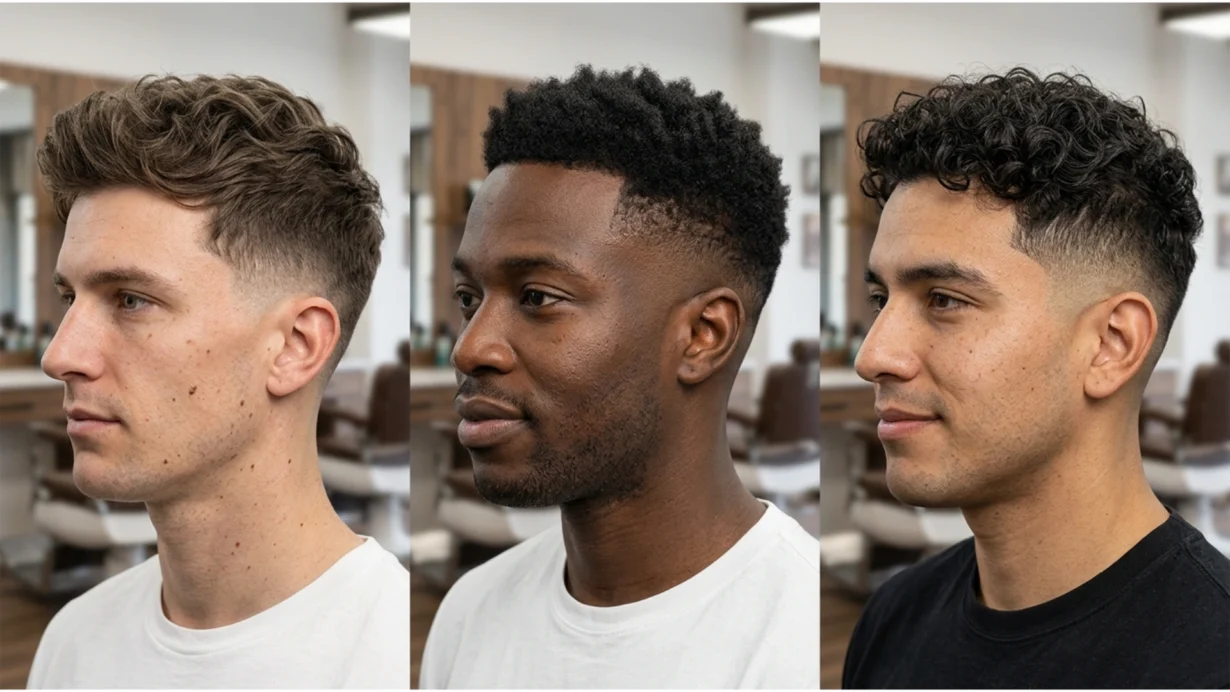

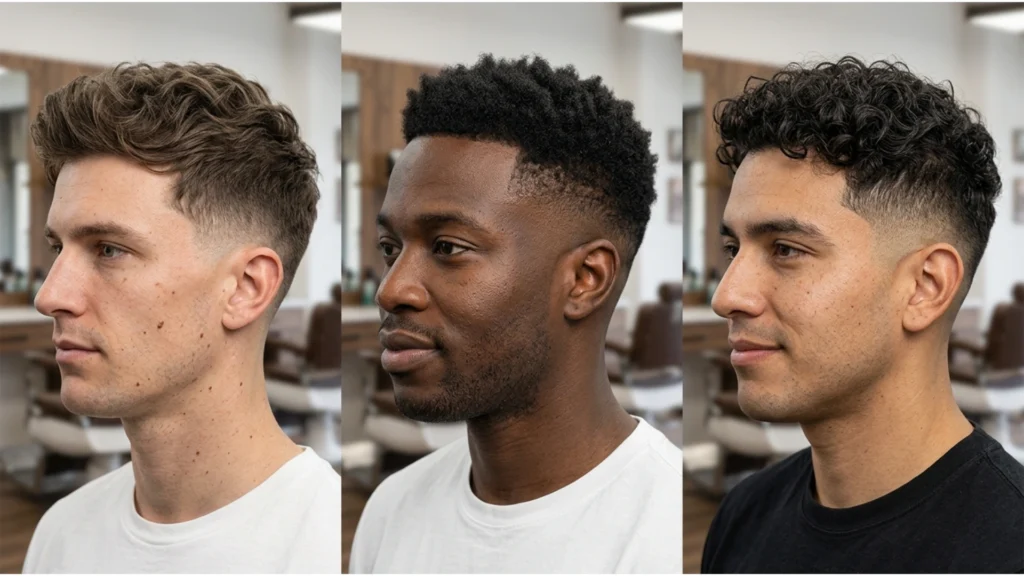
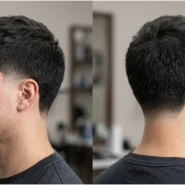
A skin taper fade is a men’s haircut where the hair on the sides and back gradually blends down to bare skin, but only in the lower section of the head. It’s cleaner than a regular taper and more subtle than a full skin fade. The result? A sharp, fresh, defined look that works for almost any style, occasion, or hair type.
Whether you’re heading to the barbershop for the first time or looking for a new variation to try, this guide covers everything: what the cut is, how it differs from similar styles, all the variations, style pairings, beard fades, how to ask your barber, and how to keep it looking fresh.
What Is a Skin Taper Fade and How Is It Different from a Regular Fade?
A skin taper fade is a men’s haircut where the sides and back gradually blend all the way down to bare skin, but only in the lower section of the head. It’s sharper than a classic taper because it reaches the skin, but more contained than a full skin fade because the blending stays low. The result is a clean, defined finish that works for nearly any style, face shape, or setting.
KEY POINTS:
- The skin-level blending remains low on the head, unlike a full skin fade.
- Low, mid, and high variations let you control how bold or subtle the contrast looks
- Needs a barber visit every 2 to 3 weeks to stay sharp and clean
- Works on all hair textures, including straight, wavy, curly, coily, and thick hair
- Pairs seamlessly with a beard fade for a continuous, flowing look from head to jaw
Table of Contents
A skin taper fade exposes more of your face than any other cut; your face shape determines whether it works for you.
The higher contrast of a skin fade makes your facial proportions read more dramatically than a standard taper. The Taper Style Tool checks your face shape and hair type before you commit to one of the sharpest cuts on the list.
What Is a Skin Taper Fade?
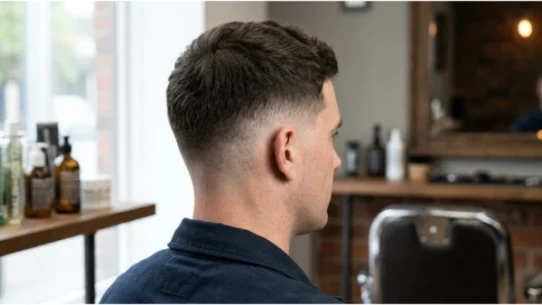
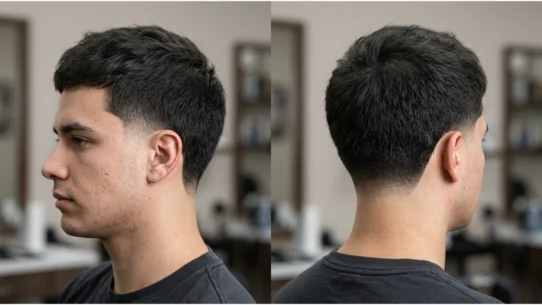
A skin taper fade, also called a bald taper fade or bald taper, is a haircut that takes the sides and back of your head down to the skin (bare scalp) in a gradual, seamless blend. The hair gradually shortens from the top down to completely shaved or skin-level around the sides and neckline.
Here’s what makes it different from other fades: the skin-level blending stays low on the head typically below the temples. It doesn’t rise as high as a full skin fade. The transition from shorter to longer hair is smooth and controlled, not abrupt.
The blending is smooth, clean, and precise, giving the haircut a fresh finish.
Think of it as the best of both worlds. You get the sharp, clean finish of a skin fade combined with the more natural, refined shape of a taper. It looks bold without being too extreme. It looks professional without being boring.
Skin Taper Fade vs. Skin Fade vs. Taper: What’s the Difference?
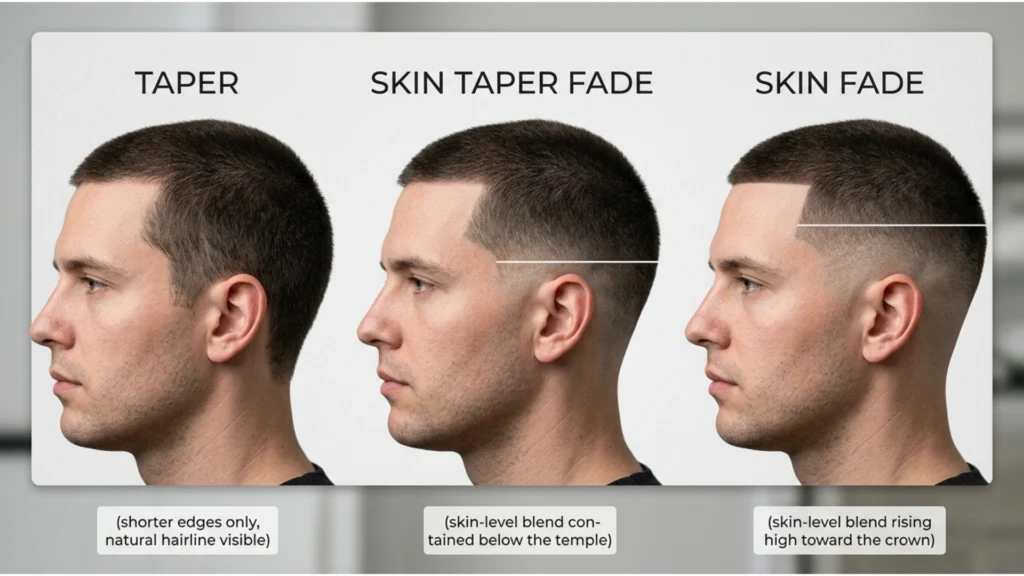
Lots of people, even barbers, use these names interchangeably. That’s one of the biggest sources of confusion in barbershops. Here’s a clear breakdown so you always know exactly what to ask for.
Taper vs. Fade
A taper is a gradation between longer and shorter hair down to the hairline. A fade differs because it fades down to skin level and finishes above the natural hairline. A fade often goes down to skin; a taper keeps some length. Fades rise higher up the head, while tapers stay at the edges. Fades are bold and eye-catching; tapers are understated and conservative.
Skin Taper Fade vs. Skin Fade (Bald Fade)
A skin fade is also known as a bald fade. Like the skin taper, the skin fade shaves hair close to the skin, stopping before the natural hairline. The difference is placement and height. A skin fade can rise much higher on the head all the way to the temple or above. A skin taper fade keeps the skin-level blending lower and more contained.
This technique differs from a full skin fade or a bald fade because the shortest point sits lower, giving a more natural finish.
Quick Comparison Table
| Style | Goes to Skin? | Placement | Contrast Level | Best For |
|---|---|---|---|---|
| Regular taper | No | Sideburns & neckline only | Low | Office, conservative settings |
| Taper fade | Partially | Lower sides | Medium | Balanced, versatile look |
| Skin taper fade | Yes | Low on the sides | Medium-High | Clean, sharp look with more edge |
| Skin fade (bald fade) | Yes | Anywhere, low, mid, or high | High | Bold, dramatic looks |
| Shadow fade | No | Varies | Low-Medium | Softer, blurred finish |
Key Facts About the Skin Taper Fade
Before we dive into the variations and styles, here are some fast facts that will help you make better decisions at the barbershop.
Fact 1: A skin fade is shorter than guard #0
Yes, a skin fade is shorter than 0. It tapers down to bare skin using a razor or foil shaver, creating a clean-shaven look at the neckline and sides.
A fade, especially a skin fade, can start to lose its sharpness in about 2 weeks. Plan your barber visits accordingly.
Fact 3: Maintenance frequency differs by fade type
Skin fades need a fresh trim every 2–3 weeks to keep that sharp, fresh look. Taper fades can stretch to every 4–6 weeks as they grow out more naturally.
Fact 4: The modern mullet with a skin taper is one of the most requested cuts in barbershops
Thanks to social media and modern barbering techniques, the mullet is no longer seen as outdated; it’s now one of the most requested styles in barbershops worldwide. The skin taper is one of the most popular ways to pair it.
Fact 5: Fades work for all ages
Not at all fades work for all ages. In fact, many older men prefer fades for their fresh, youthful appeal.
Fact 6: The clipper technique for achieving a skin fade uses a specific guard sequence
Clippers are used with higher guards to remove bulk and create the first guideline. The barber then works down through guard sizes, blending gradually until reaching a #0.5 or zero guard. A foil shaver removes the remaining hair for a smooth finish.
All Variations of the Skin Taper Fade
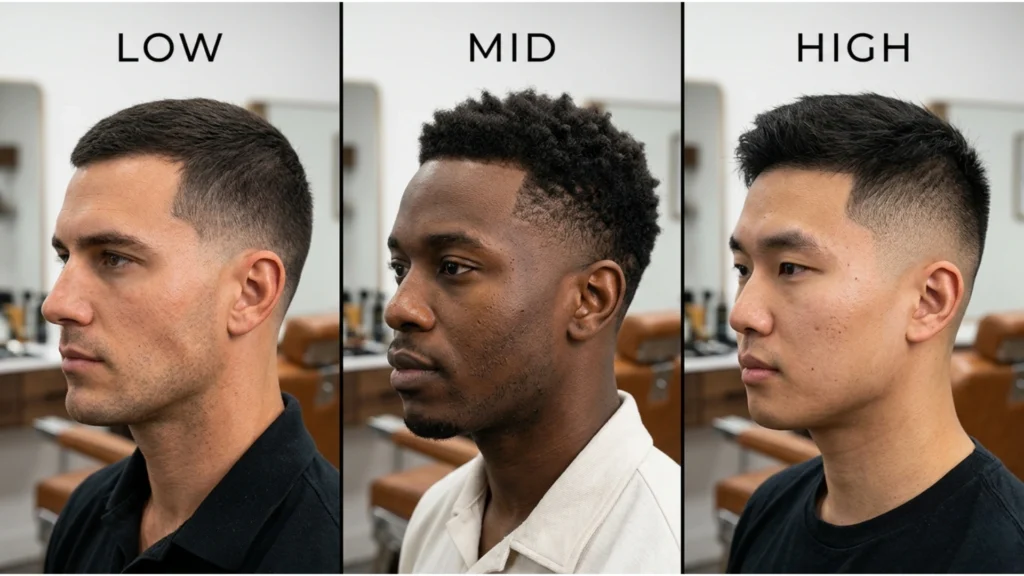
The skin taper fade isn’t one single look. Where the skin-level blending starts on your head changes the entire vibe of the haircut. Here are the three main height variations.
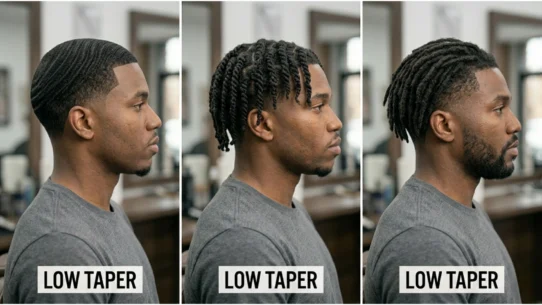
Low Skin Taper Fade
The low skin taper is the most popular and widely requested variation. A low skin fade shows roughly an inch or less of skin above the natural hairline. The fade drops down behind the ears and around the back of the head, keeping an inch of skin shown relatively even all the way around.
This is the most conservative version of the skin taper fade. It’s subtle enough for professional settings, yet still gives you a crisp, defined finish that makes you look put-together.
Best for:
- Office and work environments
- Men who want a clean look without too much contrast
- First-timers trying a skin taper for the first time
What to tell your barber: “I want a low skin taper fade, taking the sides down to the skin just above the natural hairline, blended clean with a foil shaver.”
Mid Skin Taper Fade
The mid-skin taper fade starts higher, around the temples. Mid fade blends around the temple level. This gives more contrast than a low fade while still looking balanced and modern. It’s the sweet spot between conservative and bold.
The mid skin taper works beautifully with textured crops, curly tops, and pompadours because the higher starting point of the skin-level blending creates a natural visual frame for whatever style you wear on top.
Best for:
- Men who want a noticeable but not extreme fade
- Works across face shapes, especially oval and square faces
- Style-forward professionals and creative environments
What to tell your barber: “Give me a mid skin taper fade, starting at the temple level, blended down to skin with a foil finish. Keep the top at [your preferred length].”
High Skin Taper Fade
The high skin taper fade starts near the crown, near the top of the head, for dramatic contrast. This is the boldest version of the skin taper family. The skin-level blending rises highest on the head, creating a striking difference between the length on top and the bare skin on the sides.
This version requires more frequent maintenance because the contrast is so pronounced that even a few days of regrowth become noticeable.
Best for:
- Men who want a bold, fashion-forward statement
- Pairs best with a thick, textured, or voluminous top style (faux hawk, pompadour, curly top)
- Men with round faces often suit higher tapers because they add height and structure.
What to tell your barber: “I want a high skin taper fade start the skin-level blending above the temple, blend it all the way down to bare skin, and give me a clean foil finish.”
Low, mid, or high the right answer depends on your facial structure, not just your preference. TaperMatch reads your face geometry and tells you which variation creates the best balance for your specific proportions.
Face Shape Guide: Which Skin Taper Fade Height Suits You?
The best cut for you depends on your face shape, style, and the look you want. Here’s a simple breakdown:
| Face Shape | Recommended Variation | Why It Works |
|---|---|---|
| Round | High skin taper fade | Fades, particularly high fades, can elongate the face, making them ideal for rounder face shapes. |
| Oval | Low, mid, or high all work | Either cut works choose the look that matches your mood. |
| Square | Low or mid skin taper | A taper can soften strong jawlines, while a fade will enhance them. |
| Heart | Low skin taper | A low taper balances width across the forehead. |
| Oblong/Long | Low skin taper (avoid height) | Keeps the look proportional without adding length |
| Diamond | Mid skin taper | Balances the wider cheekbones and narrow forehead |
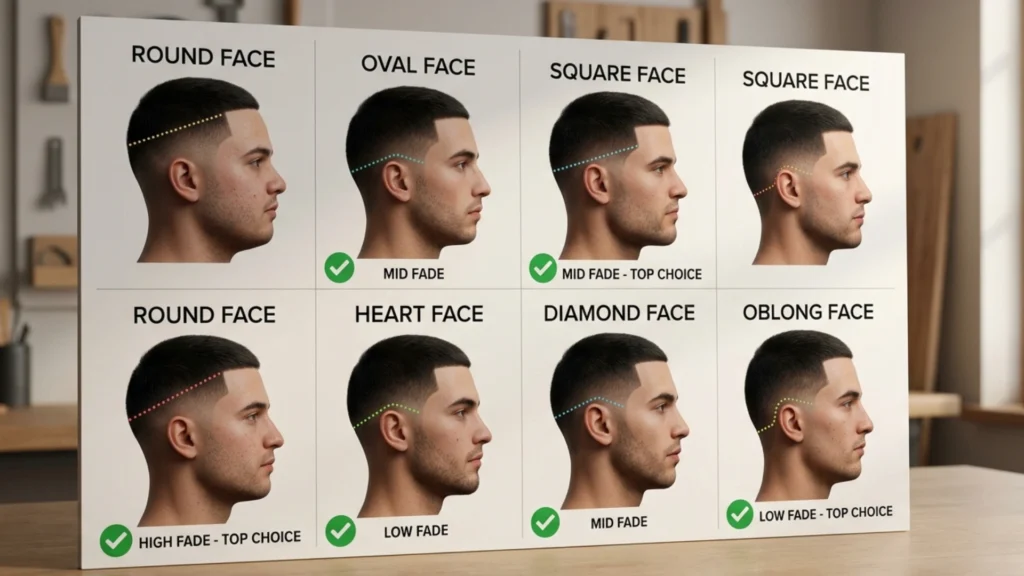
Not sure where your face falls on that chart? TaperMatch runs a structural biometric scan of jaw width, symmetry, and facial proportions and maps your geometry to the right variation automatically.
Hair Type Suitability
One of the great things about a skin taper fade is that it works across virtually all hair textures.
Whether you have straight, wavy, curly, or thick hair, both skin fades and taper fades can be customized to suit your hair type.
Here’s how it breaks down:
- Straight hair: The clean lines of a skin taper really pop on straight hair. The contrast between the skin and the top is crisp and defined. Use a matte clay to add texture to the top.
- Wavy hair: A mid- or high-skin taper looks sharp with wavy tops. The natural texture of the wave adds movement and dimension.
- Curly hair: Fades look especially striking with textured or curly hair, adding definition and shape. The skin-level sides make curls on top pop.
- Coily / Afro-textured hair: Afro-textured hair is perfect for taper skin fades because it shapes naturally and holds definition. Sharp line-ups, razor detailing, and edge control create a crisp outline. This fade is a core part of modern Black men’s grooming because it enhances the face structure and complements waves, curls, or sponge-twist tops.
- Thick hair: Fades often work better with thick or curly textures, as they reduce bulk and create a cleaner profile. Skin fades, or high fades, can manage volume while keeping the style crisp.
- Fine/thinning hair: A taper might be better, as it retains more length and density. It creates the illusion of fuller hair while avoiding excessive scalp exposure. If you do want a skin taper, keep it low.
Style Pairings: What to Wear on Top
The skin taper fade is a technique applied to the sides and back. What you do on top is entirely up to you. Here are the most popular style pairings:
Pompadour + Skin Taper Fade
Skin fade + pompadour classic meets modern; a voluminous top with razor-sharp sides. This is one of the most timeless pairings in men’s grooming. A high-skin-taper fade with a pompadour on top gives you serious old-school style with modern precision.
Textured Crop + Skin Taper Fade
The textured crop paired with a low or mid skin taper is the go-to look for men who want a low-maintenance but sharp style. Go for a low skin fade or taper fade with a neat crop. Easy to style with matte clay or texture spray.
Curly Top + Drop Fade + Skin Taper
Drop fade + curly top natural texture elevated with clean edges. This is a great option for men with naturally curly hair who want to show off their texture while keeping the sides tight.
Buzz Cut + Mid Skin Taper Fade
Mid fade and buzz cut, minimalist but impactful. Low effort, high style.
Afro + Temple Fade + Skin Taper
Temple fade + afro beautiful contrast between soft volume and precise taper.
Faux Hawk + Skin Taper Fade
A faux hawk fade will definitely stand out because of its subtle contrast in height and length. Pair a high skin taper with a faux hawk strip on top for a bold, modern look.
Slicked Back + Skin Taper Fade
A slicked-back top with a low or mid skin taper is clean, polished, and works great for professional and formal settings alike. Use a water-soluble pomade or styling gel for a sleek finish.
Skin Taper Mullet: The Trending Style Pairing of 2026
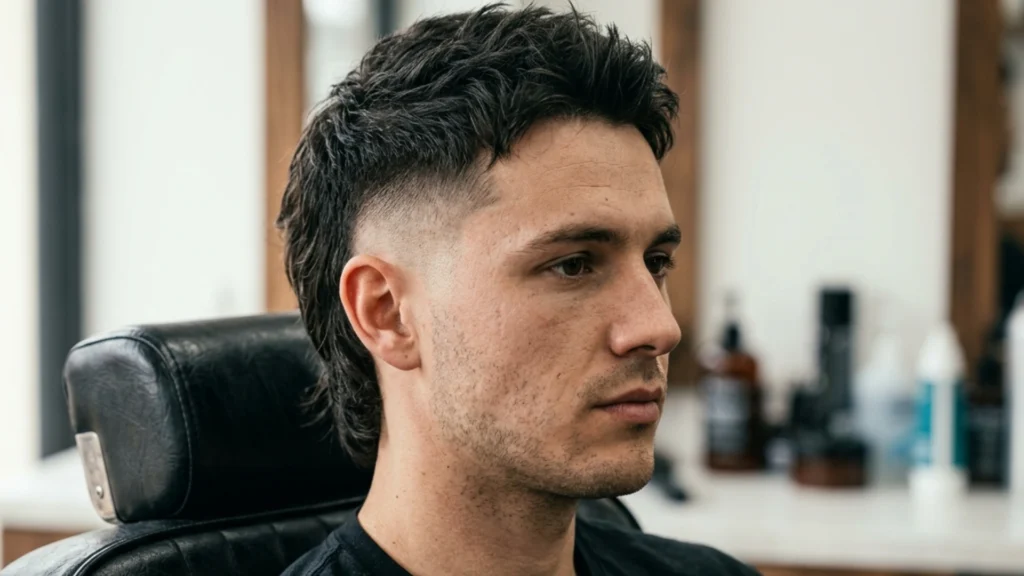
The skin-taper mullet is one of the biggest trending style combinations right now. It pairs the “business in the front, party in the back” structure of the modern mullet with the crisp, clean sides of a skin taper fade.
In the 2020s, the modern mullet, with tapered, faded sides and textured styling, became trendy again, embraced by younger generations who liked its retro charm and effortless vibe.
The modern mullet with a skin or taper fade on the sides is the most popular today. It retains the classic mullet’s back length and attitude but adds cleaner lines and better blending, making it easier to wear in everyday settings.
What Makes the Skin Taper Mullet Work
Unlike its retro predecessor, the modern mullet avoids bulky or disconnected sides. Instead, it incorporates a low taper fade or skin fade, ensuring a clean and polished appearance that blends seamlessly into the longer back.
The skin taper gives the sides a razor-clean finish, creating a sharp contrast with the longer back. The back can be worn at any length: short, medium, or long. Add texture to the top with sea salt spray or texturizing clay, and the whole look comes together effortlessly.
Low skin taper mullet: The low taper mullet offers a subtle fade around the ears and neckline, creating a clean finish without too much contrast. This style is perfect for men who want to try a mullet without going too bold. It’s easy to maintain and works well in both professional and casual settings.
High-skin-taper mullet: This is the bolder version; the skin-level blending rises higher on the sides, creating a dramatic contrast that makes the longer back really stand out. High fade mullets are especially popular with athletes, models, and influencers who play with contrasts.
What to tell your barber: “I want a modern mullet with a low (or mid) skin taper fade on the sides, taken down to bare skin. Keep the top textured, and leave the back longer around [your preferred length].”
Skin Taper Beard Fade: How to Connect Your Fade to Your Beard
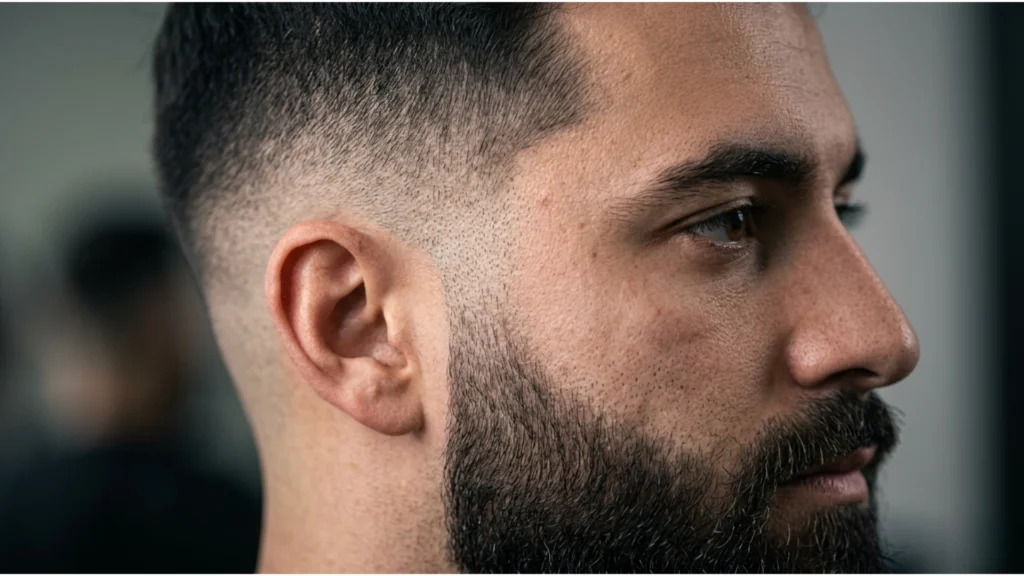
If you have facial hair, the skin taper beard fade is the most important element to get right. This is where the skin taper on the sides of your head seamlessly connects to your beard, creating a unified, flowing look rather than two separate things sitting next to each other.
A beard fade seamlessly connects the haircut to the beard. The barber gradually reduces the beard length near the sideburns, making the jawline look sharper and more defined. Different beard shapes pair well with this technique, including full beards, chin straps, and goatees.
How a Barber Creates the Skin Taper Beard Fade
A barber blends a taper fade into a beard by working the clipper lever at the sideburn transition point. The lever opens the blade gap, leaving slightly more hair and creating a gradient between the shortest part of the fade and the top of the beard.
The boldest version of the skin taper beard fade takes the lowest point of the fade all the way to bare skin before transitioning into the beard. The contrast between exposed skin and the beard is sharp and visible. This is the boldest version and works well with dense, dark beards where the contrast stands out.
It needs a barber visit every 10 to 14 days because regrowth at the skin line shows fast.
Beard Shape Recommendations by Face Shape
Square beards suit round faces, while low beard fades suit longer or more angular face shapes. A well-blended beard fade keeps the entire look clean, balanced, and structured.
What to Tell Your Barber
“I want the skin taper fade on the sides to blend into my beard. Keep the beard at [your preferred length] and transition it clean at the sideburn, no hard lines between the fade and the beard.“
The Clipper Guard Progression: What Actually Happens During the Cut
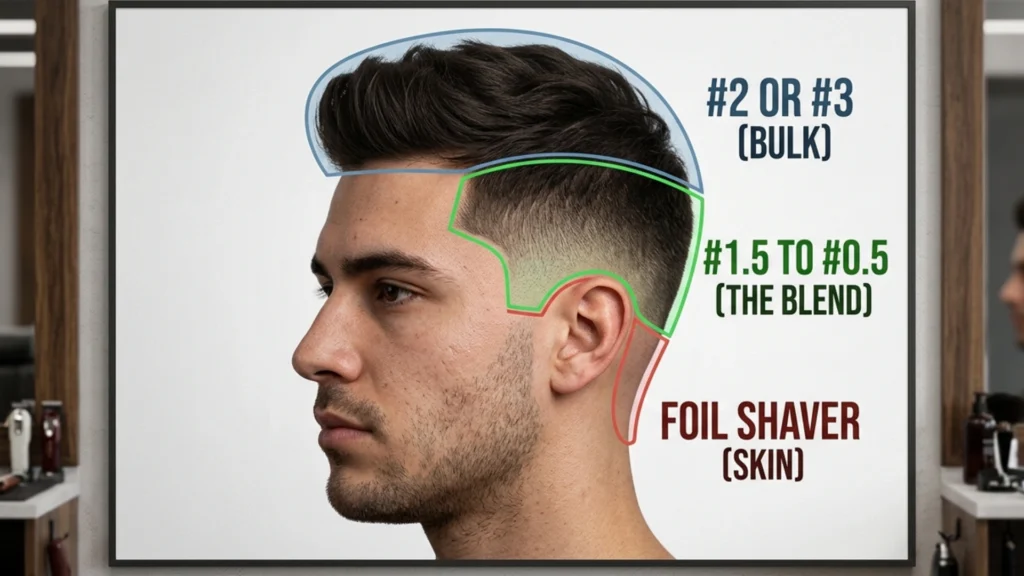
Most articles leave this out. Here’s exactly what a skilled barber does with the clippers when creating a skin taper fade:
Barbers usually rely on clippers, trimmers, edgers, guards such as #2, #1, #0.5, and a foil shaver for a smooth skin finish.
| Step | Guard | What It Does |
|---|---|---|
| 1 | #2 or #3 | Removes bulk, establishes the top guideline |
| 2 | #1.5 | Begins the gradient below the guideline |
| 3 | #1 | Shortens further toward the lower fade zone |
| 4 | #0.5 | Gets very close to skin in the transition zone |
| 5 | #0 (no guard) | Brings it to near-skin level |
| 6 | Foil shaver | Finishes to true bare skin at the lowest point |
Razor detailing completes the haircut and defines the edges.
5 Pro Tips to Keep Your Skin Taper Fade Looking Fresh
Tip 1: Book Your Touch-Up on Time
A fade grows out faster and usually needs a touch-up every 2–3 weeks. A taper can stretch 4–6 weeks between cuts. The skin taper fade falls between these two aim to do it every 2–3 weeks to keep it looking sharp.
Tip 2: Moisturize Your Scalp
A skin fade exposes more scalp, so use a Tea Tree Conditioner or similar scalp moisturizer to keep the skin hydrated and flake-free.
Tip 3: Protect from Sun Damage
Wear a cap or use a UV-protectant spray to prevent sun damage, especially with skin fades. The exposed scalp at the sides is vulnerable to sunburn.
Tip 4: Use the Right Product for Your Top Style
- Textured/matte look: Use a matte clay or texture clay
- Slicked back: Use a water-based pomade or styling gel
- Natural texture: Use a sea salt spray or light cream
- Curly top: Use curl cream or leave-in conditioner
Curly hair needs moisture, while straight hair often benefits from matte styling products for added movement.
Tip 5: Maintain the Hairline at Home Between Visits
Keeping the hairline fresh makes a big difference, especially if you have a sharp line-up. Use a trimmer or electric razor to clean up the hairline between barbershop visits, but leave the actual fading and blending to your barber.
How to Ask Your Barber for a Skin Taper Fade
Understanding the differences between these cuts is the key to communicating with your barber and getting the look you want.
Here are clear, ready-to-use scripts depending on what you want:
Low Skin Taper Fade
“I want a low skin taper fade, fade it down to bare skin just above the natural hairline. Keep it contained below the temple. Clean it up with a foil shaver, and give me a sharp line-up.”
Mid Skin Taper Fade
“Give me a mid skin taper fade starting at the temple. Take the sides down to skin level and blend them upward from there. Keep the top at [your length] and textured.”
High Skin Taper Fade
“I want a high skin taper fade, starting the blending above the temple, and taking it all the way down to bare skin. Keep the top full for contrast.”
Skin Taper with Beard Fade
“I want a low (or mid) skin taper fade that blends into my beard at the sideburns. No hard lines, let the fade transition smooth into the beard at [your preferred beard length].”
Skin Taper Mullet
“Modern mullet with a low (or mid) skin taper on the sides. Take the sides down to bare skin, keep the top textured, and leave the back longer around [your preferred length]. Clean it up with a foil finish.”
Pro Tip: Be specific. Bringing a photo or photos is the best way to ensure the match aligns with your vision. Always mention how high or low you want the fade and what you’d like on top.
Or skip the scripting entirely. TaperMatch generates a custom Barber-Ready Brief from your face scan with your exact variation, guard progression, and a verbatim phrase your barber can execute immediately.
How Long Does a Skin Taper Fade Last?
Here’s an honest breakdown of how your skin taper fade will look over time:
| Timeline | How It Looks |
|---|---|
| Day 1–3 | Razor-sharp. Skin-level areas look perfectly clean. This is the best the cut will ever look. |
| Week 1 | Still very clean. Slight regrowth visible on the skin level areas upon close inspection. |
| Week 2 | The fade can start to lose its sharpness in about 2 weeks. The skin-level blending softens. Still presentable. |
| Week 3 | Noticeably grown out. The gradient starts to look less defined. Good time to book your appointment. |
Is a Skin Taper Fade Right for You?
This haircut suits almost everyone: students, professionals, creatives, and athletes. It’s adaptable, clean, and always looks intentional.
Ask yourself these questions:
- Do you want a clean, sharp look? ✅ Yes — go for it.
- Is your workplace conservative? ✅ Yes — choose the low skin taper fade. It’s subtle enough for any environment.
- Do you have a beard? ✅ Yes — ask your barber to blend the skin taper into a beard fade.
- Do you want a trendy, bold style? ✅ Yes — consider the high skin taper fade or the skin taper mullet.
- Is your hair fine or thinning? ⚠️ A low skin taper works, but avoid going too high it can emphasize scalp visibility.
Frequently Asked Questions
What is a skin taper fade?
A skin taper fade, also called a bald taper, is a men’s haircut in which the sides and back are gradually blended down to bare skin. The hair gradually shortens from the top down to completely shaved or skin-level around the sides and neckline. The blending is smooth, clean, and precise, giving the haircut a fresh finish.
What is the difference between a skin taper fade and a skin fade?
The main difference is placement. A taper uses skin exposure only in the lower areas, while a full skin fade exposes the skin much higher up along the sides. A skin taper fade is more contained and conservative. A skin fade can go anywhere on the head low, mid, or high.
What is the difference between a skin taper fade and a bald taper fade?
They are exactly the same thing. A skin fade is also known as a bald fade. The terms “skin” and “bald” are used interchangeably by barbers and clients. Both mean the hair is faded all the way down to bare, visible scalp.
How often should I get a skin taper fade?
Skin fades need a fresh trim every 2–3 weeks to keep that sharp, fresh look. If you have a high skin taper, you may need to visit your barber even more frequently, closer to every 1–2 weeks, because the dramatic contrast makes regrowth more visible.
Can a skin taper fade work with a beard?
Yes, and it looks incredible when done right. A beard fade seamlessly connects the haircut to the beard. The barber gradually reduces the beard length near the sideburns, making the jawline look sharper and more defined. Ask for a “skin taper beard fade” to get the blended transition.
What is a skin-taper mullet?
A skin taper mullet is a modern mullet haircut with a skin taper fade on the sides. A modern mullet fade blends the length of a mullet with the close sides of a fade. The sides taper down to the skin, creating a clean canvas for the top and back to shine. It’s one of the biggest trending men’s hairstyles right now.
Which face shape suits a skin taper fade best?
The taper skin fade works well for all hair textures, face shapes, and personal styles. However, specific heights suit specific face shapes better. Round faces benefit most from a high skin taper because it adds height. Oval faces can pull off any variation. Square and heart-shaped faces generally look best with a low or mid skin taper.
Is a skin taper fade appropriate for a professional or corporate setting?
Yes, especially the low skin taper variation. Is a taper skin fade suitable for formal environments? Yes, especially the low- and mid-taper styles that remain subtle and neat. The low skin taper is clean and refined enough for any office environment.
Does a skin taper fade work on curly hair?
Absolutely. A skin fade can work well with curly hair, creating contrast and definition. In fact, the contrast between the skin-level sides and a curly top is one of the most visually striking combinations in men’s grooming.
What guard numbers are used in a skin taper fade?
Your barber will typically use a progressive sequence: starting with a #2 or #3 guard to remove bulk, stepping down through #1.5, #1, #0.5, and then no guard to reach near-skin level. A foil shaver removes the remaining hair for a smooth, skin-level finish.

[…] is a hybrid: a low taper that transitions into a skin fade at the very bottom. You get the best of both worlds: structure from the taper, sharpness from the […]
[…] skin taper fade takes the concept to its cleanest extreme; the bottom edges blend all the way down to completely […]
[…] Yes. Switching from a low taper to a low fade is straightforward because it only requires cutting hair shorter. Tell your barber you want to take your current low taper down to skin using a #0 guard. The reverse is not possible; switching from a low fade to a low taper requires waiting for hair to grow back. A low taper requires visible hair length at the edges, which takes approximately 2–4 weeks to grow after a skin fade. […]