

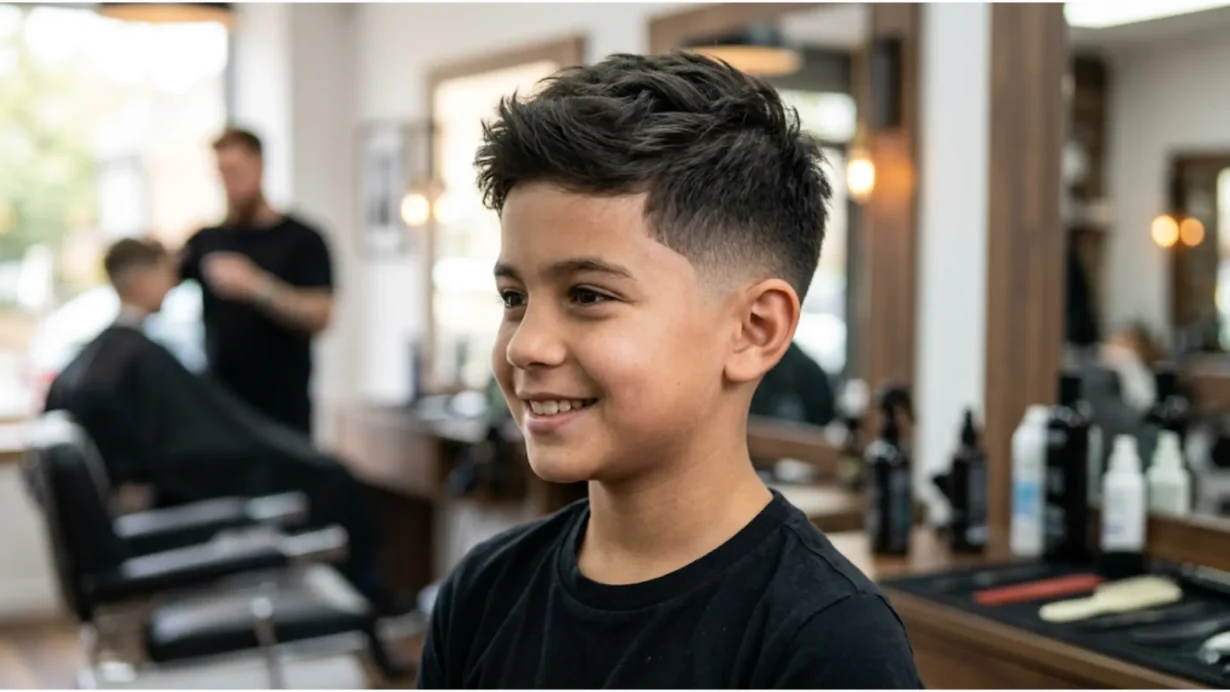

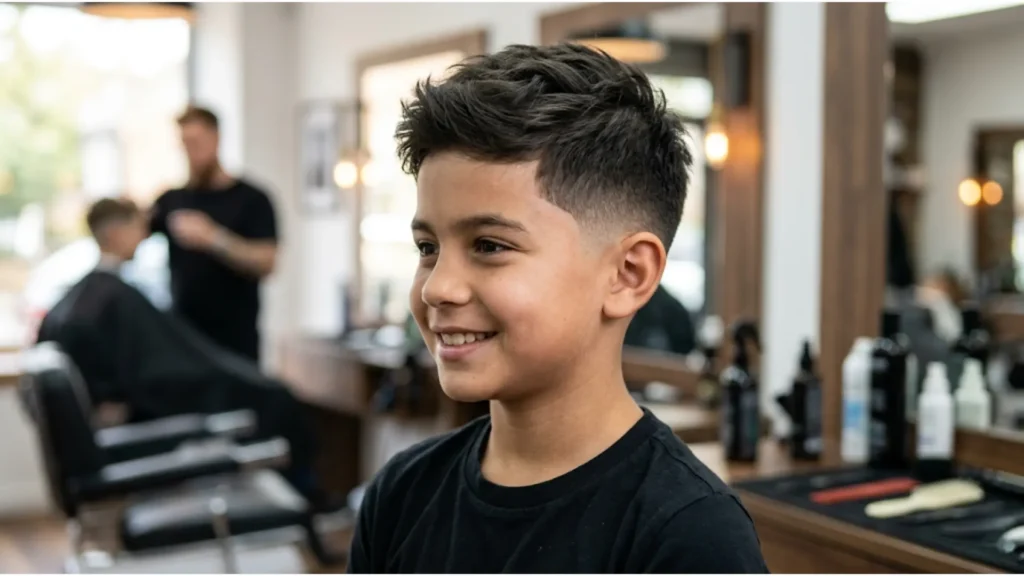
A low taper fade for kids and boys is a haircut in which the hair gradually shortens near the ears and neckline. The top stays fuller. The sides blend down smoothly. It looks clean, stays neat for weeks, and works with every hair type your child has: straight, curly, wavy, or coily.
This style is the most requested boys’ haircut at barbershops across the United States right now. And for good reason. It is school-safe, low-maintenance, and sharp enough to make any boy feel confident.
Whether your son is 3 or 16, has thick curls or fine straight hair, this guide covers the exact style, barber script, product, and maintenance plan you need.
Inside this guide, you will find 15+ style options organized by hair type, age, and face shape, plus barber communication scripts you can copy word-for-word before your next appointment.
Table of Contents
What is a low taper fade for kids, and at what age can boys get one?
A low taper fade for kids gradually shortens the hair near the ears and neckline while keeping the top fuller, creating a clean and school-safe look. Most boys are ready for their first low taper fade around ages 4 to 5, once they can sit comfortably through a haircut. It works on every hair type and is the most requested boys’ cut in American barbershops right now.
KEY POINTS:
- Starts just above the ears and blends down gradually without exposing bare skin
- Works on straight, curly, wavy, coily, thick, and fine hair types
- Lasts 3 to 5 weeks between barber visits, depending on age and hair growth
- School-safe when done without bold designs, skin fades, or extreme contrast
- Toddlers should use a #3 or #4 guard minimum to protect sensitive scalps
What Is a Low Taper Fade for Kids & Boys?
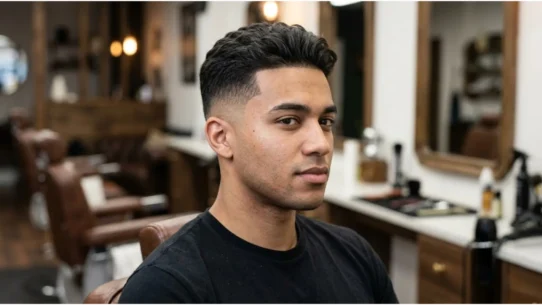
A low taper fade for kids is a haircut in which hair gradually shortens near the ears and neckline, starting just above the ears. The top stays fuller while the sides blend seamlessly into a smooth, subtle gradient. It is the most school-friendly and low-maintenance fade option for boys of all ages.
Now let’s break that down in plain language.
Picture your child’s hair from the top of their head down to their neck. At the top and crown, the hair stays long enough to be styled however they like. As you move down the sides toward the ears and along the back toward the neckline, the hair gradually shortens. Not suddenly. Not in a harsh line. It blends smoothly like a gentle slope.
That smooth blending is what makes it a “fade.” And because the shortest point starts low on the head, just above the ear, it’s called a “low” taper fade.
How Does a Low Taper Fade Actually Work?
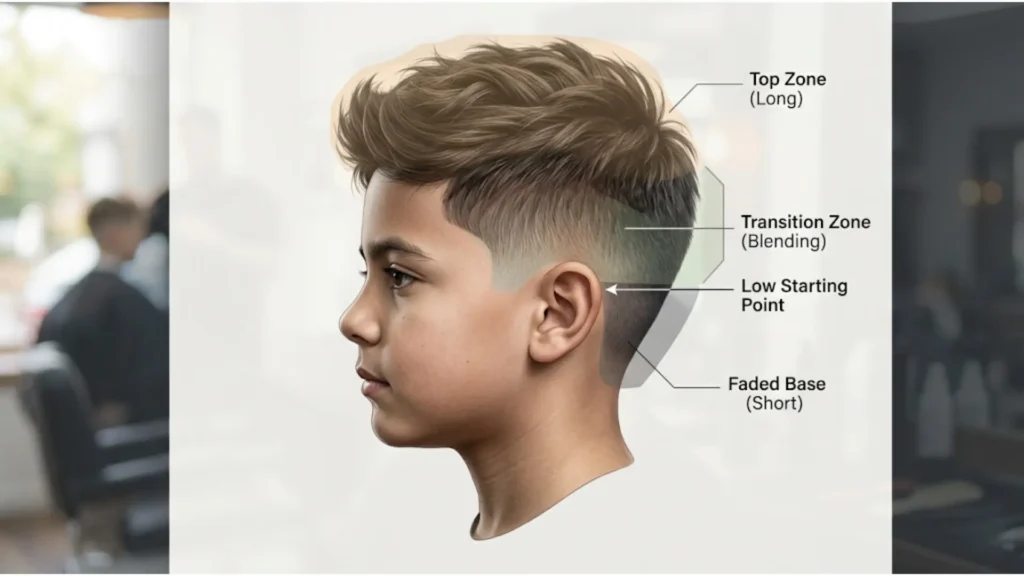
A barber creates a low taper fade by working in three zones on the head.
The top zone keeps the most length. This is where your child’s style lives, whether that’s a textured crop, curly top, comb over, pompadour, or buzz cut.
The transition zone sits between the top and the sides. This is where the barber’s skill matters most. Using clippers with different guard sizes and a fade comb, they blend the longer top hair into the shorter side hair. A skilled barber creates a seamless gradient here, with no visible lines, no patchy spots.
The faded base is the lowest section, running around the ears, temples, sideburns, and down to the nape of the neck. Here, the hair is shortest. On a low taper fade, this section starts just above the ear and follows the natural curve of the occipital bone at the back of the skull.
The result? A clean, polished silhouette that looks intentional from every angle.
What Is the Difference Between a Taper and a Fade?
These two terms confuse almost every parent. Here is the simple difference.
| Feature | Taper | Fade |
|---|---|---|
| Hair Length | Gets shorter gradually toward the neckline | Blends are much shorter, often down to skin |
| Finish | Soft, natural-looking transition | Sharp, high-contrast gradient |
| Best For | Younger children, toddlers, school dress codes | Older boys, teens, bolder styles |
| Maintenance | Every 4–6 weeks | Every 2–3 weeks |
| School-Friendly | Almost always | Depends on the height and sharpness |
A taper keeps some visible hair all the way down. A fade can go all the way to bare skin. For most kids, especially boys under 12, a taper is the better choice because it looks age-appropriate, grows out gracefully, and passes school dress codes without a second glance.
A low taper fade sits right in between. It tapers the hair down gradually while adding a clean, faded finish near the neckline and ears. It gives you the polish of a fade without the drama of a skin fade.
What Makes the Low Taper Fade Different from Mid and High Fades?
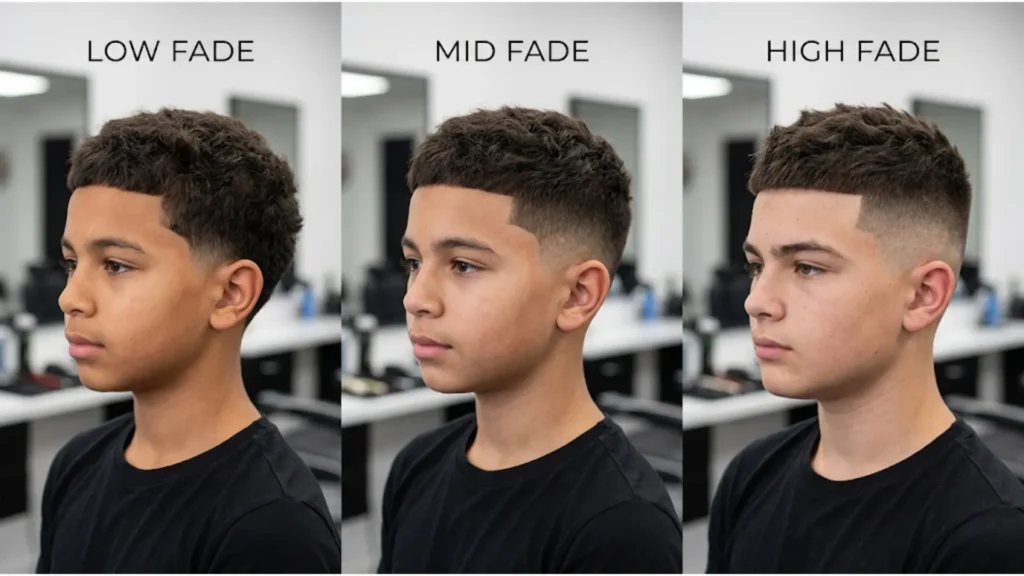
The difference comes down to where the fade starts on the head.
A low taper fade starts just above the ear. It is subtle, conservative, and the most kid-appropriate option. The contrast between the top and sides is gentle. Most schools accept this without any issues.
A mid-taper fade begins around the temple area roughly at the midpoint of the side of the head. It creates more contrast and a slightly bolder look. This works well for school-age boys aged 8 and up who want a sharper style.
A high taper fade starts near the parietal ridge, that bony curve where the side of the head meets the top. It creates a dramatic contrast and a very modern, edgy look. This is better suited for teens aged 13 and older.
Key Point: For boys under 10, start with a low taper fade. It is the safest choice for school, the easiest to maintain, and the most forgiving as it grows out. You can always go higher as they get older and develop their own style preferences.
Why Is the Low Taper Fade So Popular for Boys Right Now?
The low taper fade became the most requested boys’ haircut in 2024–2026 because it is clean, school-safe, and heavily influenced by TikTok meme culture. It is not just a haircut trend it has become a cultural moment for Gen Alpha boys.
The TikTok Effect: How a Viral Meme Made Every Kid Want This Haircut
If your child has asked for a “low taper fade” out of nowhere, TikTok is probably the reason.
In January 2024, a music artist named Ericdoa was freestyling during a livestream. He improvised a line about the popular streamer Ninja getting a low taper fade. Viewers clipped it, shared it, and the meme exploded overnight. Then Ninja actually acknowledged it on his stream and eventually got the haircut himself. That sealed it. The low taper fade became the haircut of Gen Alpha.
Kids started requesting it at barbershops everywhere. The phrase became slang, a joke, and a genuine style preference all at once. Even boys who had never cared about their hair before suddenly had a very specific request for their parents.
So if your kid is asking for this cut and you are wondering where it came from, now you know. It started as a meme, became a movement, and landed at your local barbershop.
Why Parents Love This Haircut Too
Here is the good news: this is actually an excellent haircut for kids, meme or not.
It is genuinely low-maintenance. A low taper fade grows out evenly. Unlike a high skin fade that looks overgrown within a week, a low taper keeps its shape for 3–5 weeks before needing a trim. That means fewer barbershop visits and less hassle on busy school mornings.
It passes school dress codes. Because the fade is subtle and starts low on the head, it does not create the dramatic contrast that some schools flag. No shaved patterns, no skin showing, no extreme lines.
It works for every hair type. Whether your child has thick, curly, straight, wavy, fine, or coily hair a low taper fade adapts beautifully. Your barber adjusts the guard size and blending technique to match your child’s natural texture.
It is cost-effective. With longer intervals between trims compared to skin fades or high fades, you spend less over the course of a year.
It is versatile. The same low taper fade works for a regular school day, picture day, a family wedding, sports practice, and a birthday party. You get one haircut that handles every situation.
Fact: According to a 2024 report published by StyleSeat, one of America’s largest salon and barbershop booking platforms, “fade haircut” was the most searched boys’ haircut category in the United States, with low fade variations making up 43% of all boys’ fade bookings nationwide.
What Are the Best Low Taper Fade Styles for Kids & Boys in 2026?
The best low-taper fade styles for kids in 2026 include the textured crop, curly top, comb-over, pompadour, buzz cut, French crop, mohawk, and broccoli cut. Each one suits different hair types, ages, and occasions.
Below are 15 proven styles. Each one includes the best hair type match, age recommendation, maintenance schedule, styling product, and the exact words to tell your barber.
Save the one your child likes best to your phone. Show it to the barber at the appointment.
1. Low Taper Fade with Textured Crop
Best for: All hair types, straight, wavy, and thick hair, especially. Age range: School-age boys (6–12). Maintenance: Every 3–4 weeks. Best occasion: Everyday school, sports, casual outings. Styling product: Matte clay or light pomade. Tell the barber: “Low taper fade. Textured crop on top. Light point cutting for texture. Keep it school-safe.”
The textured crop is probably the most popular pairing with a low taper fade, and for good reason. The top has enough length to show texture and movement, but not so much that it needs constant styling. A little matte clay on damp hair in the morning, and your child is out the door.
2. Low Taper Fade with Curly Top
Best for: Boys with natural curls, wavy hair, or afro-textured hair. Age range: All ages (4–16) Maintenance: Every 4–5 weeks Best occasions: Everyday, school, events Styling product: Curl cream and leave-in conditioner Tell the barber: “Low taper fade. Leave the top natural. Just shape and define the curl pattern. Use freehand blending on the sides.”
If your child has curly hair, this style defines those curls while keeping the sides neat. The curls stay soft and bouncy on top while the taper creates a clean frame around the face. Always hydrate curls with a leave-in conditioner or alcohol-free curl cream for the best definition.
3. Low Taper Fade with Comb Over
Best for: Boys with straight or fine hair. Age range: School-age boys and teens (7–16). Maintenance: Every 3 weeks. Best occasion: School photos, formal events, and everyday school. Styling product: Light pomade or water-based gel. Tell the barber: “Low taper fade. Hard part on the left side. Comb the top over to the right. Keep the blend gradual.”
This is the go-to style when you need something that photographs beautifully and works for any setting from the classroom to a family wedding. The side part adds structure, and the low taper keeps it modern without being too bold. A little water-based gel keeps it in place all day without stiffness.
4. Low Taper Fade with Pompadour
Best for: Tweens and teens (10–16), special occasions. Age range: 10+ (needs sufficient length and willingness to style). Maintenance: Every 3 weeks. Best occasion: Birthdays, holidays, family events. Styling product: Light pomade for a slick finish or matte paste for a textured look. Tell the barber: “Low taper fade. Leave 3–4 inches on top for a pompadour. Blend the sides gradually.”
The pompadour adds volume and height on top. It is a classic, timeless look that never goes out of style. This works especially well for boys with thick or straight hair. For a formal event, slick it back with pomade. For everyday wear, leave it textured with matte paste.
5. Low Taper Fade with Buzz Cut
Best for: Toddlers and active young boys, summer months. Age range: All ages (3–16) Maintenance: Every 4–5 weeks. Best occasion: Sports, summer, outdoor activities Styling product: None needed Tell the barber: “Low taper fade with a number 3 or number 4 buzz on top. Keep it very simple.”
This is the ultimate zero-effort style. No product, no daily styling, no morning battles. The buzz cut keeps everything short and cool on top while the low taper adds just enough style to look intentional. Perfect for summer months, active kids who play sports, and toddlers who are getting their first fade.
6. Low Taper Fade with French Crop
Best for: School-age boys (7–13) with straight or wavy hair. Age range: 7–13 Maintenance: Every 3–4 weeks. Best occasion: Everyday school, casual outings. Styling product: Matte clay or texturizing spray. Tell the barber: “Low taper fade. Blunt crop fringe in front. Point-cut the top for texture.”
The French crop is one of the biggest trends in boys’ haircuts right now. It features a short, blunt fringe across the forehead with textured length on top and clean tapered sides. It is modern, easy to style, and works perfectly with a low taper fade.
7. Low Taper Fade with Mohawk / Faux Hawk
Best for: Boys aged 6–14 who want a bold but manageable look. Age range: 6–14. Maintenance: Every 2–3 weeks. Best occasions: Casual, birthdays, weekends. Styling product: Matte clay or light wax for definition. Tell the barber: “Low taper fade. Leave a mohawk strip on top. Don’t go too narrow, keep it kid-friendly.”
The faux hawk version is perfect for kids; it gives that cool, edgy strip of height down the center without going full shaved-sides mohawk. The low taper fade makes it manageable and school-appropriate. Use a small amount of matte clay to push the top hair upward and inward for that classic mohawk shape.
8. Low Taper Fade with Side Part
Best for: Tweens and school-age boys with straight, fine, or wavy hair. Age range: 7–16. Maintenance: Every 3 weeks. Best occasion: School photos, holidays, family events. Styling product: Light pomade or water-based gel. Tell the barber: “Low taper fade with a razor-shaved hard part on the left.” Comb the top over.”
A hard part that razor-thin shaved line adds crispness to an otherwise simple style. It is a timeless look that works for school pictures and family events alike. This style photographs beautifully because the clean lines catch light and create visual interest.
9. Low Taper Fade with Afro Top (for Black Kids)
Best for: Black boys with natural afro or 4C hair. Age range: All ages (4–16) Maintenance: Every 4–5 weeks. Best occasions: Every day, school, and events. Styling product: Curl sponge and defining cream. Tell the barber: “Low taper fade. Shape the afro on top. Keep the taper gradual. Clean shape-up on the hairline.”
A low taper fade for Black kids is incredibly versatile. It celebrates natural texture while keeping edges neat and defined. The key is finding a barber experienced in freehand blending for 4C and coily textures. The narrow transition zone on tighter curl patterns requires a practiced hand.
10. Low Taper Fade with Broccoli Cut
Best for: Boys aged 4–10 with curly or wavy hair. Age range: 4–10 Maintenance: Every 5–6 weeks Best occasion: Trendy everyday style Styling product: Curl cream and a diffuser for drying Tell the barber: “Low taper fade. Round the curls on top into a broccoli shape. Keep volume on the crown.”
The broccoli cut exploded in popularity for younger boys with naturally curly or wavy hair. It features voluminous, rounded curls on top with short, neatly tapered sides. Think of it as a softer, rounder version of the curly top. Kids love it because it looks fun. Parents love it because it grows out beautifully.
11. Low Taper Fade with Crew Cut
Best for: School-age boys (6–12), active boys. Age range: 6–12. Maintenance: Every 3–4 weeks. Best occasions: school, sports, and everyday. Styling product: Light texturizing spray. Tell the barber: “Low taper fade with a crew cut on top, number 3 on top, blending down to the taper.”
The crew cut pairs military precision with everyday style. It is short, clean, and completely fuss-free. For active boys who play sports and need something that stays neat through practice, games, and recess, this is the answer.
12. Low Taper Fade with Slicked-Back Top
Best for: Tweens and teens (10–16) for special events. Age range: 10–16 Maintenance: Every 3 weeks. Best occasion: Formal events, family photos, holidays. Styling product: Light pomade for shine. Tell the barber: “Low taper fade. Leave enough length on top to brush back smoothly. At least 3 inches.”
This style screams sophistication. The hair is combed back smoothly with a light pomade, while the low taper fade keeps the sides and back clean. It is perfect for weddings, holiday photos, and any event where you want your child looking sharp and polished.
13. Low Taper Fade with Spiky Top
Best for: Boys aged 5–12 who love creative styling Age range: 5–12 Maintenance: Every 3–4 weeks. Best occasions: Weekend, casual, birthday parties Styling product: Water-based gel or light wax Tell the barber: “Low taper fade. Leave about 2 inches on top for spikes.”
The spiky top is pure fun. A little water-based gel, fingers through damp hair, and your child has a style that screams energy and personality. The low taper fade grounds the look with a clean, polished base. This is a hit with younger boys who want something playful.
14. Low Taper Fade with Modern Mullet
Best for: Trend-forward boys aged 8–16. Age range: 8–16. Maintenance: Every 3 weeks. Best occasion: Casual, weekends, creative expression. Styling product: Matte paste or sea salt spray. Tell the barber: “Low taper fade on the sides. Leave the back longer for a modern mullet. Keep the front textured.”
Yes, the mullet is back, and it is cooler than ever. The modern version features a low-taper fade on the sides, with longer, textured hair at the back. It is a bold statement piece. A little sea salt spray gives it that effortless, beachy texture. Not every school will love it, so check the dress code first.
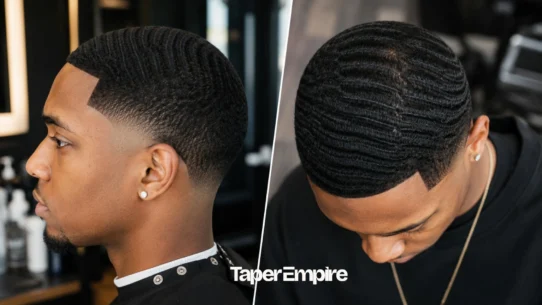
15. Low Taper Fade with 360 Waves (for Black Boys)
Best for: Black boys aged 10+ who are committed to wave training. Age range: 10–16. Maintenance: Every 2–3 weeks. Best occasion: Everyday school, events. Styling product: Wave grease, wave brush, and durag. Tell the barber: “Low taper fade. Shape up the hairline. Keep the top flat for wave training.”
The 360 waves look combines a clean low taper fade with sharp, defined wave patterns on top. It requires commitment, daily brushing with a wave brush, sleeping with a durag, and regular shape-ups. But the results are stunning. This style is incredibly popular with older Black boys who take pride in their grooming routine.
Pro Tip: Always bring a photo reference to the barbershop. Save one of these style descriptions to your phone, or take a screenshot of a similar image before the appointment. Barbers consistently say that photo references are the single best tool for avoiding miscommunication and ensuring you leave happy.
Which Low Taper Fade Works Best for Your Child’s Hair Type?
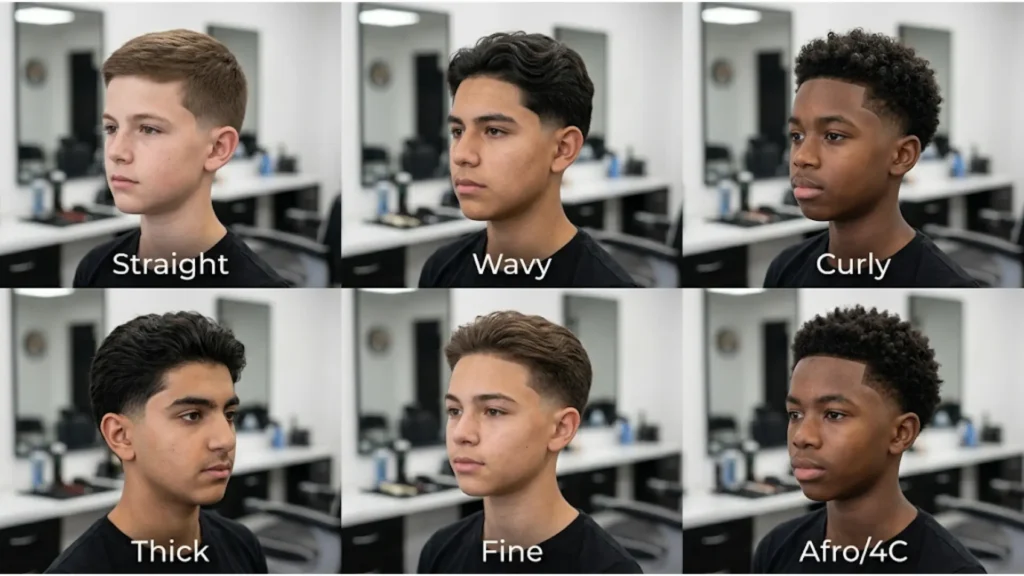
The best low taper fade for your child depends on their natural hair type. Curly hair suits a natural top with curl cream. Straight hair benefits from a structured comb-over. Thick hair needs gradual blending. Fine hair works best with a textured crop and volume-boosting products.
Your child’s hair texture determines which style will look great, which products to use, and how often you will need barbershop visits. Here is a complete breakdown.
Low Taper Fade for Curly Hair Boys
Taper fades look fantastic on curly hair because they balance volume on top with structure on the sides. A low taper fade lets the curls stay soft, full, and bouncy on top while keeping the ears and neckline clean.
Best styles: curly top, broccoli cut, afro top. Recommended products: Curl cream and leave-in conditioner (alcohol-free). Barber tip: Request freehand blending to preserve the natural curl pattern. Trim schedule: Every 4–5 weeks
Low Taper Fade for Straight Hair Boys
Straight hair beautifully highlights the clean lines of a taper fade. Every angle looks crisp and sharp. The tradeoff is that straight hair shows regrowth faster, so plan on slightly more frequent trims.
Best styles: Comb-over, textured crop, side part, slicked-back. Recommended products: Light pomade or water-based gel. Barber tip: Ask for scissors-over-comb on top for precision cutting. Trim schedule: Every 3–4 weeks
Low Taper Fade for Wavy Hair Boys
Wavy hair sits in the sweet spot between straight and curly, making it the most versatile hair type for taper fades. A mid-length top (2–3 inches) allows the wave pattern to show naturally while the low taper adds polish underneath.
Best styles: Textured crop, French crop, crew cut. Recommended products: Sea salt spray or lightweight mousse. Barber tip: Keep the top slightly longer so the wave has room to form. Trim schedule: Every 4 weeks
Low Taper Fade for Thick Hair Boys
Thick hair benefits from taper fades that remove bulk and create shape. Without regular maintenance, thick hair can make the sides look puffy and overgrown. A skilled barber will blend the fade gradually and use point cutting on top to reduce weight without losing length.
Best styles: Crew cut, pompadour, buzz cut. Recommended products: Matte clay or texture powder. Barber tip: Ask the barber to thin out the top through point cutting. Trim schedule: Every 3 weeks (thick hair grows out faster and fuller)
Low Taper Fade for Fine Hair Boys
Kids with fine hair look best with a low taper fade that adds the illusion of volume near the top. Avoid super-short fades on the sides they can make fine hair look sparse and thin. Keep the fade gradual and the guard size higher.
Best styles: Textured crop, French crop, broccoli cut. Recommended products: Texturizing spray or lightweight mousse. Barber tip: Use a number 3 or number 4 guard minimum to keep visual density. Trim schedule: Every 5–6 weeks
Low Taper Fade for Black Kids (Afro / 4C Hair)
The low taper fade for Black kids is one of the most popular and versatile combinations in modern barbering. It celebrates natural texture, whether that is a full afro, defined curls, sponge twists, or 360 waves, while keeping the edges sharp and the sides clean.
Best styles: Afro top, 360 waves, curly crop, broccoli cut. Recommended products: Curl sponge, defining cream, and leave-in conditioner. Barber tip: Find a barber experienced in freehand blending for 4C and coily textures. Trim schedule: Every 3–4 weeks for a shape-up and 5–6 weeks for full regrowth
Fact: According to the American Academy of Dermatology (AAD), children’s scalps are more sensitive than adults’ due to thinner skin and higher moisture content. This means clipper guard selection should always be number 2 or higher for toddlers, and the product should be sulfate-free and alcohol-free especially important for kids’ haircuts.
What Is the Best Low Taper Fade for Each Age Group?
Toddlers (2–5) suit a low taper, a soft, longer top, and higher guard sizes. School-age boys (6–12) handle any low- or mid-taper style confidently. Teens (13+) can explore high fades, skin fades, designs, lineups, and shaved parts.
Every age has its sweet spot. Here is how to choose the right fade for your child’s stage.
Baby Taper Fade: Is It Appropriate for Babies Under 2?
Honestly? Most barbers recommend waiting.
Babies under 18–24 months have scalps that are still developing. Their skin is thinner and more sensitive. Their hair is often too fine for clipper work. Most professional barbers recommend a soft scissor trim only for babies no clippers, no guard fades.
If you want to clean up your baby’s hair, ask for a scissor-only trim around the ears and neckline. That is perfectly fine. Save the actual taper fade for when they are a bit older and can sit comfortably in the chair.
Toddler Taper Fade (Ages 2–5): What Works Best?
This is the starting age for first taper fades. Comfort and simplicity come first.
Use a number 3 or number 4 guard minimum on the sides; never go shorter on a toddler. Keep the top soft and natural; scissors only on top. Avoid designs, hard parts, or anything that requires the barber to spend extra time with the clippers near the scalp.
Best styles: Buzz cut with low taper, textured crop, broccoli cut. Trim schedule: Every 5–6 weeks
Parent Tip: For your toddler’s first taper fade, ask the barber if your child can sit on your lap for the first few minutes. Most kid-experienced barbers are used to this. It helps toddlers feel safe and settled before the clippers start.
Little Boy Taper Fade (Ages 5–7) Playful But Neat
By age 5, most boys can sit through a full haircut without too much fuss. They are old enough to start having opinions about their hair; let them be part of the decision.
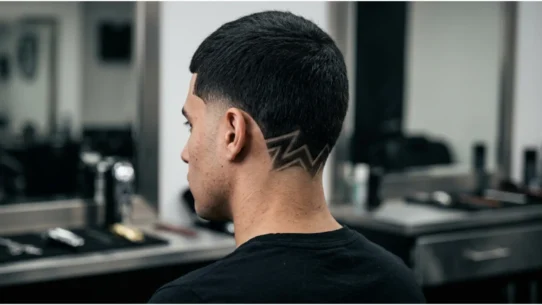
A low taper fade with a simple style on top works perfectly. You can even introduce a single shaved line as a design element, just check the school policy first.
Best styles: Textured crop, French crop, comb over, spiky top. Trim schedule: Every 4–5 weeks
School-Age Boys Taper Fade (Ages 8–12) The Core Audience
This is the highest-demand age group for low-taper fades. These boys are old enough to care about their appearance, influenced by their friends and social media, and need a style that works for school.
Any of the 15 styles listed in this guide works for this age group. Let your child’s hair type, face shape, and personality guide the choice.
Best styles: All 15 styles in this guide suit a range of personalities and hair types. Trim schedule: Every 3–4 weeks
Teen Taper Fade (Ages 13–17) Style-Driven Choices
Teenagers make their own haircut decisions. TikTok trends, peer influence, and personal identity all play a role. By this age, boys can handle any fade type, low, mid, high, or even skin fades.
They can also explore design elements like lineups, shaved parts, 360 waves, and etched patterns. Let them experiment. Hair grows back.
For teens ready to own their look, Taper Empire matches taper style to face structure and outputs a barber-ready brief they can walk in with confidently, no more pointing at a random Instagram photo and hoping for the best.
Best styles: Pompadour, mullet, mohawk, 360 waves, slicked back. Trim schedule: Every 2–3 weeks
Quick Age Reference Guide
| Age Group | Best Fade Type | Guard: Minimum Recommended | Top Style | Trim Frequency |
|---|---|---|---|---|
| Baby (Under 2) | Scissor trim only | No clippers | Soft natural | 6–8 weeks |
| Toddler (2–5) | Low taper only | #3 or #4 | Buzz, natural, broccoli cut | 5–6 weeks |
| Little Boy (5–7) | Low taper | #2 minimum | Crop, comb over, spiky | 4–5 weeks |
| School-Age (8–12) | Low or mid taper | #1 minimum | All styles | 3–4 weeks |
| Teen (13+) | Any fade type | Any | Any style | 2–3 weeks |
Which Low Taper Fade Suits Your Child’s Face Shape?
Round faces benefit from a low taper with a taller top that elongates proportions. Oval faces suit any style. Square faces need a soft blend to avoid harsh angles. Heart-shaped faces look best with volume on top and soft side tapers.
Most parents skip this step, but understanding your child’s face shape helps you choose a cut that genuinely flatters them, not just looks good in a photo of someone else’s kid.
Low Taper Fade for Round Faces
Add height on top. A pompadour, quiff, or textured crop with some volume draws the eye upward and creates the illusion of a longer face. Avoid buzz cuts, they emphasize roundness.
Best styles: Pompadour with low taper, textured crop with volume on top
Low Taper Fade for Oval Faces
Good news, oval is the most versatile face shape. Almost any low taper fade style works because the natural proportions are already balanced. Let your child’s hair type and personality guide the decision rather than worrying about what flatters the face.
Best styles: Any of the 15 styles listed in this guide
Low Taper Fade for Square Faces
Soft, gradual blending is key. Avoid hard parts or sharp lineups; they can make a square jaw look even more angular. Keep the top textured and natural to soften the overall look.
Best styles: Textured crop, comb over, curly top
Low Taper Fade for Heart-Shaped Faces
A wider forehead and narrower chin mean you want volume on top to create balance. Avoid high fades; they remove hair on the sides and make the forehead appear even wider.
Best styles: French crop, broccoli cut, comb-over
| Face Shape | Best Style Pairing | What to Avoid |
|---|---|---|
| Round | Pompadour, textured crop with height | Buzz cuts, flat tops |
| Oval | Any style works | Nothing specific |
| Square | Textured crop, comb over | Hard parts, sharp lineups |
| Heart | French crop, broccoli cut | High fades, skin fades |
Not sure which face shape category your son falls into? Taper Empire’s free tool reads facial structure in under 60 seconds and returns the exact taper styles most likely to work scored to his actual geometry, not a general estimate.
How Do You Tell the Barber What Low Taper Fade You Want?
Tell the barber, “I want a low taper fade starting just above the ear, blending gradually to the neckline. Keep the top at this length and style. Use a number 2 guard minimum. Keep it school-safe.” Then show them a photo reference.
The number one cause of haircut disappointment is vague communication. Here are copy-and-paste scripts that eliminate all guesswork.
The Complete Parents’ Barber Scripts
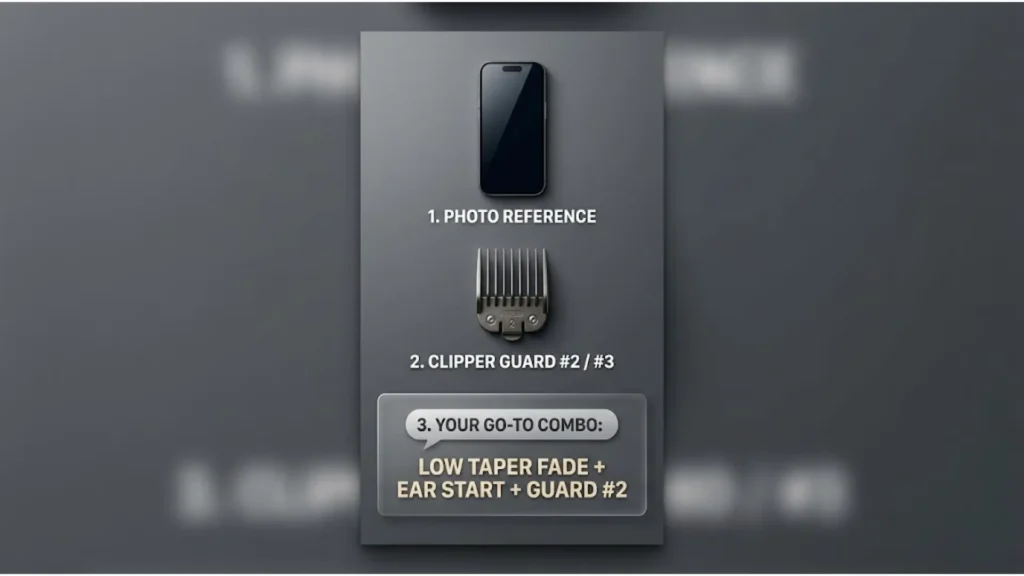
Script 1 Classic Low Taper (Toddler or Young Boy): “I would like a low taper fade, start the fade just above his ear, and keep it very gradual. Blend down to the neckline. Use a number 3 guard minimum. Leave the top natural and just trim for shape. Nothing too short — it needs to be school-safe.”
Script 2 Low Taper with Textured Crop: “Can we do a low taper fade with a textured crop on top? Start the fade just above the ear and blend it smoothly down. On top, leave about 2 inches and a point cut for texture. Water-based products only, please.”
Script 3 Low Taper for Curly Hair: “He has curly hair. I would like a low taper fade starting just above the ear. Keep his curls natural on top, just shape them. Please use freehand blending so you do not disrupt the curl pattern.”
Script 4 Low Taper for Black Kids or Natural Hair: “I would like a low taper fade with a clean shape-up on the hairline. Keep the top natural; just define the curl or afro shape. Use a number 2 guard minimum on the fade and keep the transition very gradual.”
Essential Questions to Ask the Barber Before the Cut
Ask these before anyone picks up clippers:
- Are you experienced with kids’ haircuts?
- What guard size will you use for the fade?
- Can I see photos of similar styles you have done on kids?
- How long will the appointment take? (Crucial for toddlers with short attention spans)
- Do you have vibration-reduced clippers for sensitive kids?
What NOT to Say at the Barbershop
These are common parent mistakes that lead to bad results:
- “Just a fade” — way too vague
- “Make it look cool” — subjective and directionless
- “Same as last time” — the barber may not remember
- “Just a little off the sides” — this is not a fade request
- Always bring a photo, specify fade height, and state the guard number
Fact: A survey conducted by the National Association of Barbers of America found that 74% of barbers identified “vague verbal descriptions with no photo reference” as the number one source of client dissatisfaction. A single reference photo reduces miscommunication dramatically.
Rather than writing your own script, Taper Empire builds the exact barber brief for you guard progression, blend point, neckline strategy, and verbatim language ready to read aloud. Takes about a minute.
How Do You Maintain a Low Taper Fade for Kids at Home?
Maintain a kids’ low taper fade by brushing daily with a soft-bristle brush, washing 2–3 times weekly with gentle shampoo, applying hair-type-appropriate styling product, and scheduling a barber trim every 3–5 weeks depending on the child’s age and hair growth rate.
Good maintenance extends the life of the haircut, keeps your child looking polished, and saves you money by stretching time between barber visits.
The Complete Weekly Home Maintenance Routine
| Step | Action | Product |
|---|---|---|
| Step 1 | Brush daily to train hair growth direction | Boar bristle brush or soft-bristle brush |
| Step 2 | Wash 2–3 times per week with a gentle shampoo | Sulfate-free, baby-safe shampoo |
| Step 3 | Apply hair-type appropriate product on damp hair | Curl cream, matte clay, or light pomade |
| Step 4 | Sleep on a silk or satin pillowcase to reduce friction | Silk pillowcase or satin pillowcase |
| Step 5 | Detangle curly or wavy hair with a wide-tooth comb | Wide-tooth detangling comb |
| Step 6 | Schedule a barber trim per the age group schedule | See the age table above |
How to Do a Quick At-Home Touch-Up Between Barber Visits
You do not need to be a barber to keep things tidy between visits. Here is what you can safely do at home:
What you need: Clippers with guard attachments, a trimmer, a fade comb, and a handheld mirror.
What to do: Use a number 2 guard on the very lowest section of the sides, only the area below the ear and along the neckline. Use a trimmer to clean up the neckline shape. Do not attempt to blend the fade; leave all blending work to the professional barber.
What NOT to do: Do not go shorter than the original guard your barber used. Do not try to blend the transition zone. Do not clipper the top section. Mistakes in the blending zone create visible lines that are difficult to correct.
How to Keep Curly Hair Looking Fresh Between Trims
Curly hair needs specific care to stay defined:
- Refresh curls daily with a leave-in conditioner spray
- Use a curl sponge to redefine the curl pattern
- Sleep with a satin pillowcase or durag to preserve shape overnight
- Avoid products with alcohol as a primary ingredient, they dry out curls and cause frizz
Signs It Is Time for a Barber Visit
- The fade line is no longer visible; hair has grown over it
- The neckline has lost its clean shape
- The top style no longer holds form with the product
- Your child says their hair looks “messy” or “not right.”
- School picture day is approaching, always a prime motivation moment
How Much Does a Kid’s Low Taper Fade Haircut Cost?
A kids’ low taper fade costs between $15 and $60 in the United States, depending on location, barber experience, and barbershop type. Basic barbershops charge $15–$25. Specialty kids’ salons charge $25–$40. High-end or urban barbershops range from $40 to $60.
Kids Taper Fade Price Breakdown
| Barbershop Type | Average Price (USA) | What Is Included |
|---|---|---|
| Basic neighborhood barbershop | $15–$25 | Cut and basic styling |
| Specialty kids’ salon | $25–$40 | Cut, styling, kid-friendly experience |
| High-end or urban barbershop | $40–$60 | Premium cut, consultation, styling |
| Mobile barber (home visit) | $50–$80 | Convenience premium |
| Chain salon | $18–$28 | Standard cut |
Smart Ways to Save Money on Kids’ Taper Fades
- Ask about sibling discounts. Most barbershops offer them; you just have to ask.
- Book off-peak hours. Some barbers offer lower prices for early weekday appointments when the shop is quiet.
- Maintain it properly at home. Good home care adds 1–2 extra weeks between professional visits.
- Look for loyalty programs. Many barbershops offer a free cut after every 8–10 visits.
- Learn basic neckline touch-ups. A trimmer and a steady hand can keep the neckline clean for an extra week or two.
Is a Low Taper Fade Haircut School-Appropriate for Boys?
Yes. A low taper fade is school-appropriate for boys in most schools across the United States. Low and mid taper fades without designs or skin-bald sections are widely accepted under school dress codes. Extreme skin fades, bold shaved patterns, or high fades with sharp lineups may not meet strict grooming policies.
What Most School Dress Codes Say About Fade Haircuts
The general rule is simple: the more conservative the fade, the safer it is.
- Generally approved: Low taper fade, mid taper fade, scissor fade
- Often restricted: Skin fade, extreme high fade, bold shaved designs or patterns
- Key principle: If there is no skin showing and no carved designs, most schools will accept it
The Safest Low Taper Fade Choices for Strict Schools
- Low taper fade with textured crop
- Low taper fade with comb over
- Low taper fade with French crop
- Low taper fade with crew cut
School-Safe Fade Checklist for Parents
Before booking the appointment, run through this list:
- Choose a low taper (not high or skin) fade
- Avoid bold patterns or shaved designs
- Keep the top length moderate at least 2 inches
- Request a gradual blend with no harsh contrast
- Ask for a rounded or squared neckline no sharp straight razor finish
- Check your school’s student handbook before the appointment
Key Point: When in doubt, call the school office and describe the haircut. Say, “It is a gradual taper that blends shorter near the ears no skin showing, no designs.” That description will pass almost every school policy in America.
How Do You Prepare Your Child for Their First Taper Fade Haircut?
Prepare your child for their first taper fade by watching barber videos together beforehand, choosing a kid-experienced barber, scheduling during quiet hours, bringing a comfort item, and requesting a brief consultation before the clippers start.
The first barbershop visit can be stressful for kids and parents. Here is how to make it smooth.
Step-by-Step First Barbershop Visit Preparation
Step 1: Watch barber videos together (2–3 days before) Pull up YouTube or TikTok videos of kids getting taper fades. Narrate what the barber does: “See? He is using clippers on the sides. It buzzes a little but does not hurt.” Familiarity removes fear.
Step 2: Choose the right barber. Look for barbershops that specifically advertise kids’ haircuts. Read online reviews and look for phrases like “patient with kids” or “great with toddlers.” A barber who is comfortable with children makes all the difference.
Step 3: Schedule Book strategically during weekday mornings, the quietest, least overwhelming time. Avoid Saturday afternoons when shops are loud and crowded, with long waits. A calm environment helps nervous children relax.
Step 4: Bring comfort items afterward, such as a tablet with their favorite show, a small toy, or a familiar snack. Distraction is your best tool during those first few minutes in the chair.
Step 5: Do a practice run at home. Sit your child in a tall chair and make buzzing sounds near their ears with an electric toothbrush or hairdryer on low. Let them get used to the sensation before the real thing.
Step 6: Let the child feel involved. Show them the photo reference. Ask them to pick between two or three styles. Children who feel part of the decision sit more calmly in the chair because it feels like their choice, not something being done to them.
Low Taper Fade for Kids with Sensory Sensitivity
This is something no other guide addresses, but it matters to many families.
Children with sensory processing sensitivity, autism, ADHD, or general clipper anxiety can absolutely get taper fades. They just need the right preparation and the right barber.
Here is what to do:
- Request vibration-reduced clippers, mentioning sensory sensitivity when booking
- Ask for multiple short breaks during the cut, 3–4 pauses of 30 seconds each
- Start with scissors only on the first visit, and introduce clippers gradually in later appointments
- Choose the quietest time slot at the barbershop
- Bring noise-canceling headphones or ear defenders
- Consider a dedicated sensory-friendly barbershop search: “sensory-friendly haircuts near me”
Fact: Research published in the Journal of Autism and Developmental Disorders indicates that sensory processing differences affect approximately 1 in 6 children in the general population, making sensory-aware preparation one of the most practically important topics for parents seeking guidance on kids’ haircuts.
What Are the Best Styling Products for a Kids’ Low Taper Fade?
The best products for a kid’s low taper fade are water-based, alcohol-free, and gentle on children’s scalps. Matte clay suits thick and straight hair. Curl cream works for curly hair. Light pomade is ideal for comb-overs and side parts. Texturizing spray adds volume to fine hair.
Product Recommendations by Hair Type
| Hair Type | Best Product | What to Look For | What to Avoid |
|---|---|---|---|
| Straight or Fine | Texturizing spray, light pomade | Water-based, lightweight | Heavy wax, oil-based products |
| Curly or Wavy | Curl cream, leave-in conditioner | Alcohol-free, hydrating | Products with alcohol |
| Thick or Coarse | Matte clay, texture powder | Medium hold, matte finish | Heavy gel that causes buildup |
| 4C or Afro | Curl sponge + defining cream | Moisturizing, natural ingredients | Sulfates, parabens |
| All Types | Sulfate-free shampoo | Gentle, child-safe formula | Harsh chemicals, strong fragrances |
Products to Always Avoid for Kids’ Hair
- Products with alcohol as a primary ingredient dry out hair and irritate young scalps
- Chemical relaxers on young children’s hair too harsh for developing scalps
- Heavy petroleum-based products: They cause buildup and clog pores on the scalp
- Adult-strength styling waxes too heavy for fine kids’ hair
- Products with strong artificial fragrances — potential for scalp irritation and allergic reactions
Fact: The Environmental Working Group (EWG), a nonprofit research organization, recommends that parents choose children’s hair products that score 1–2 on its safety rating scale and avoid products with parabens, phthalates, and synthetic fragrances that can irritate sensitive scalps.
What Are the Best Father-Son Matching Low Taper Fade Ideas?
The best father-son matching fade ideas pair the same fade height with age-appropriate top styles a textured crop for Dad with a French crop for his son, matching comb-overs for formal events, or coordinated low tapers with afro tops for Black families.
Matching haircuts are among the most popular requests at barbershops for family photos, holidays, and everyday bonding. Here are five combinations that work beautifully.
| # | Dad’s Style | Son’s Matching Style | Best For |
|---|---|---|---|
| 1 | Low taper + textured crop | Low taper + French crop | Everyday and casual |
| 2 | Mid taper + comb over | Low taper + comb over | Formal events and photos |
| 3 | Low taper + pompadour | Low taper + textured crop | Family photos |
| 4 | Low taper + 360 waves | Low taper + afro top | Black families, every day |
| 5 | Low taper + slicked back | Low taper + side part | Weddings and holidays |
What Is the Best Low Taper Fade for Each Season?
Summer calls for shorter, cooler styles. Winter suits a low taper with a longer top for warmth. Back-to-school is peak season for clean, school-safe fades. Holidays are perfect for polished formal styles that photograph well.
| Season | Recommended Style | Why It Works |
|---|---|---|
| Summer | Low taper + buzz cut or short crop | Keeps the head cool during outdoor play and sports |
| Back to School | Low taper + comb over or textured crop | School-safe, photo-ready, fresh for the new year |
| Winter | Low taper + longer textured top | More warmth, works well under hats and beanies |
| Holidays | Low taper + comb over or side part | Sharp, formal, and photo-ready for family gatherings |
| Birthday or Events | Low taper + any style with a design element | A moment for personal expression and fun |
Fact: Google Trends data for the United States consistently shows annual search spikes for kids’ taper fade keywords in August (back-to-school season) and December (holiday season), confirming that timing your child’s haircut to these seasons means barbers are busiest book early.
Frequently Asked Questions
What age is appropriate for a kid’s low taper fade?
Most children are ready for their first low-taper fade at ages 4–5, once they can sit comfortably through a haircut. For toddlers aged 2–3, a soft scissor trim with minimal clipper use near the neckline is recommended. Babies under 18 months should receive scissor-only trims. Preschool-aged children do best with higher guard numbers, 3 or 4, for their first fade experience.
How long does a kid’s taper fade last before needing a trim?
A kid’s low taper fade typically lasts 3–5 weeks before the blend becomes noticeably grown out. Toddlers may go 5–6 weeks due to slower hair growth. School-age boys generally need a trim every 3–4 weeks to keep things sharp. Teens who want a crisp look should visit the barber every 2–3 weeks.
Does a low taper fade work for all hair types?
Yes. A low taper fade works for straight, wavy, curly, thick, fine, coily, and afro-textured hair. The barber adjusts the technique for each texture, gradual clipper blending for thick hair, freehand blending for 4C curls, and scissors-over-comb for fine hair. No hair type is excluded from this style.
Is a low taper fade allowed in schools?
In most schools across the United States, yes. Low taper fades without bold designs or skin-bald sections are widely accepted under school dress codes. Always avoid dramatic skin fades, shaved patterns, or extreme high fades for school environments. When unsure, check the school’s student handbook or call the front office before the appointment.
What is the difference between a low taper fade and a skin fade for kids?
A low taper fade blends hair gradually near the ears and neckline, never reaching bare skin. A skin fade blends all the way to zero, exposing the scalp. For most kids, especially boys under 12, a low taper fade is the safer, more school-appropriate, and lower-maintenance choice. Skin fades require more frequent barbershop visits and may violate school grooming policies.
How do I ask the barber for a low taper fade for my son?
Say: “I would like a low taper fade to start just above the ear and blend gradually down to the neckline. Keep the top in this style.” Then show the barber a photo reference. Specify the minimum guard number you want. Mention if it needs to be school-safe. Always bring a photo, it eliminates guesswork completely.
Can I do a low taper fade at home on my child?
Basic maintenance, like cleaning up the neckline with a trimmer and lightly touching up the lowest section of the sides with a number 2 guard, can be done at home. However, the full fade blend should always be done by a professional barber. Incorrect blending creates visible lines and patches that are very hard to fix without cutting shorter than intended.
What styling products should I use on my child’s taper fade?
Use water-based, alcohol-free, child-safe products. Matte clay or light pomade for straight and thick hair. Curl cream and leave-in conditioner for curly and coily hair. Texturizing spray for fine hair. Always wash with gentle, sulfate-free shampoo 2–3 times per week to maintain scalp health.
How much does a kids’ taper fade cost in the United States?
A kid’s low taper fade in the USA costs between $15 and $60. Basic neighborhood barbershops charge $15–$25. Specialty kids’ salons charge $25–$40. Premium or urban barbershops range from $40–$60. Mobile barbers who come to your home typically charge $50–$80. Many barbershops offer sibling discounts; always ask.
What is the best low taper fade for Black kids?
The best low taper fade for Black kids celebrates natural texture. Top choices include the afro top with low taper, curly crop, 360 waves, and broccoli cut. The key is finding a barber experienced in freehand blending for 4C and coily textures. Use curl-defining cream or leave-in conditioner to maintain the style between visits.
[…] guidance than this one. And if you’re choosing this cut for a child rather than yourself, a lower-maintenance version made for boys simplifies both the cut and the daily […]