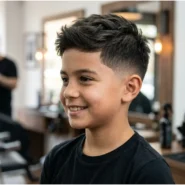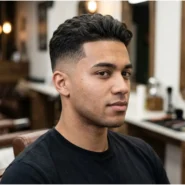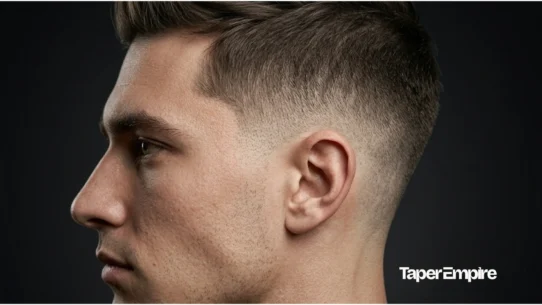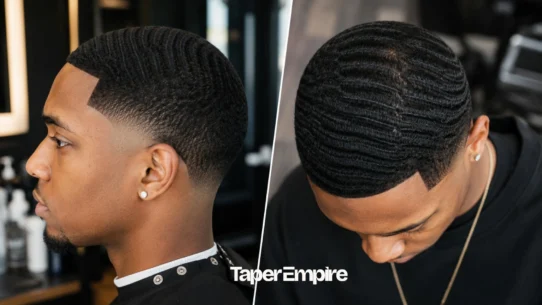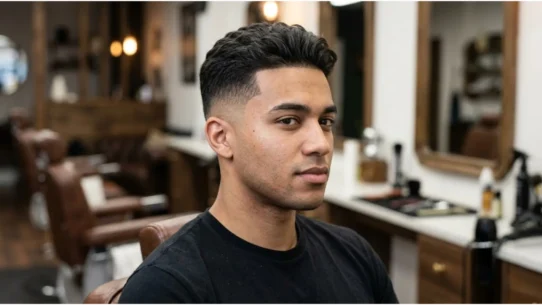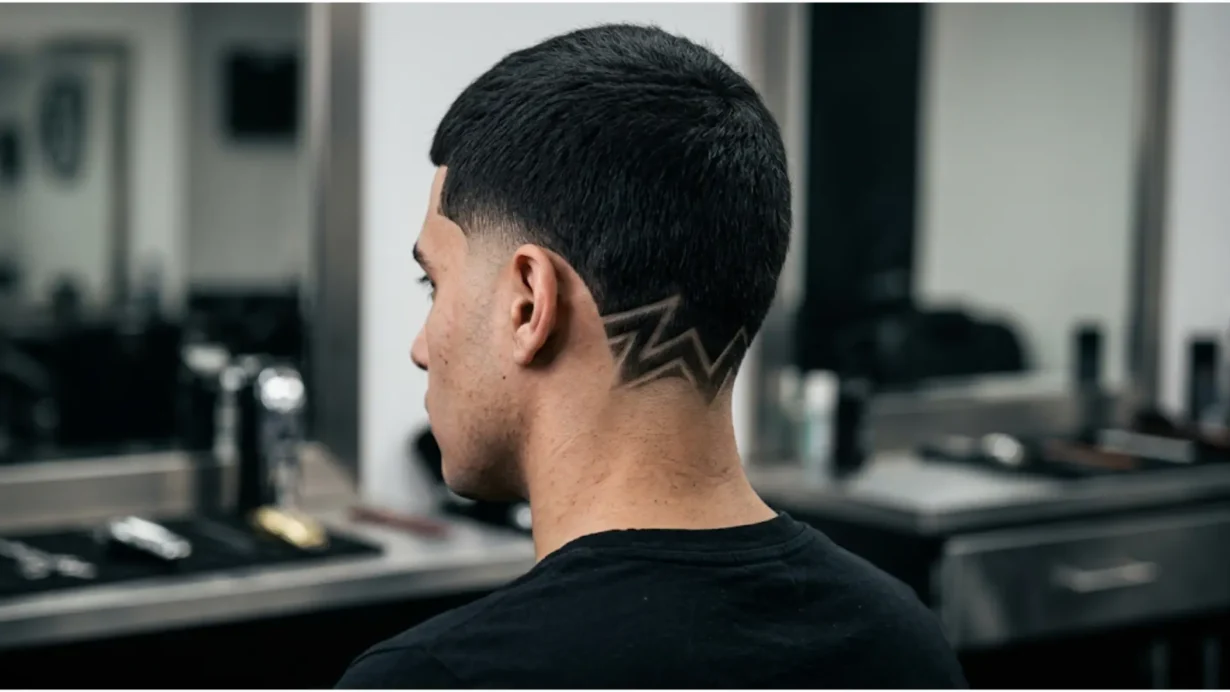

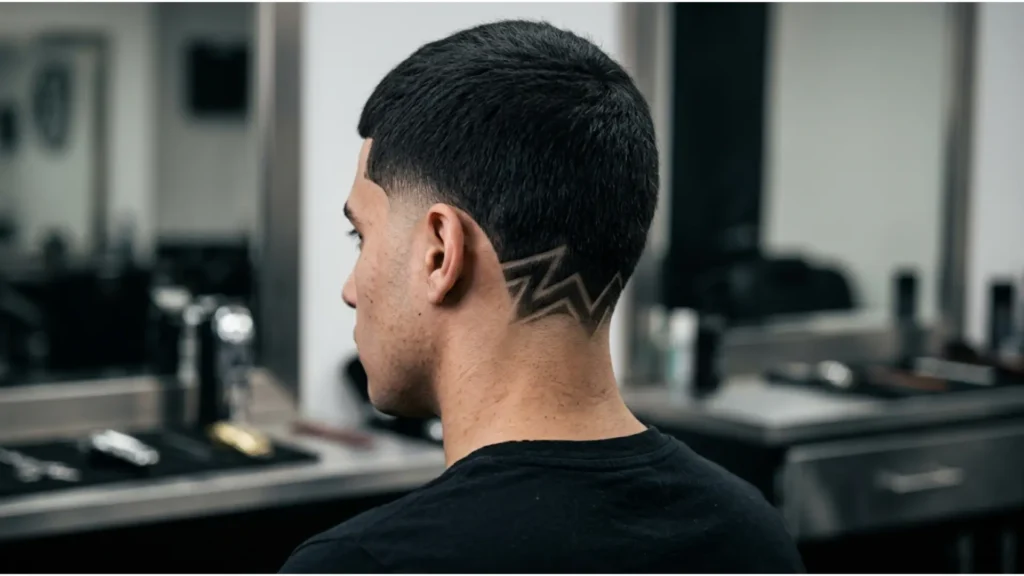
You already know what a low taper fade is. But when you add a carved design to it a crisp line, a bold zigzag, or a freestyle art piece, that’s when a great haircut becomes your haircut.
Low taper fade designs are everywhere right now. The low taper fade has become more than just a haircut; it’s a cultural icon, a trend that went viral when Twitch streamer Ninja was humorously imagined with the cut. And it’s only gotten bigger since.
Whether you’re looking for a small, subtle line or a bold, freestyle back design, this guide covers all 50 of the best ideas organized by placement, style, and hair type so you can walk into any barbershop knowing exactly what you want.
Keep reading. Your next haircut is in here.
What Is a Low Taper Fade Design and How Long Does It Last?
A low taper fade design is a men’s haircut that combines a smooth, gradual fade starting just above the ears with a custom pattern carved into the faded zone using a T-outliner or straight razor. Designs range from simple single lines to bold freestyle art pieces. Most designs stay crisp for 7 to 10 days before natural hair regrowth begins, softening the carved edges.
KEY POINTS:
- The back nape area is the most popular placement because it has the sharpest fade contrast
- Simple line designs hold definition longer while complex freestyle patterns fade faster
- Adding a design typically costs an extra $10 to $30 on top of the standard fade price
- Works on all hair types but shows the boldest contrast on dark and afro-textured hair
Table of Contents
Browsing all 12, which one actually suits your face shape?
The Taper Style Tool filters by face shape, hair type, and fade height, so you can find your match without manually going through every style.
What Is a Low Taper Fade Design?
A low taper fade design is a precision haircut that combines the smooth, gradual graduation of a low taper fade starting just above the ears and around the neckline with a custom pattern, line, or motif carved directly into the hair. This design can be a simple, clean line or a detailed pattern that showcases the barber’s artistry.
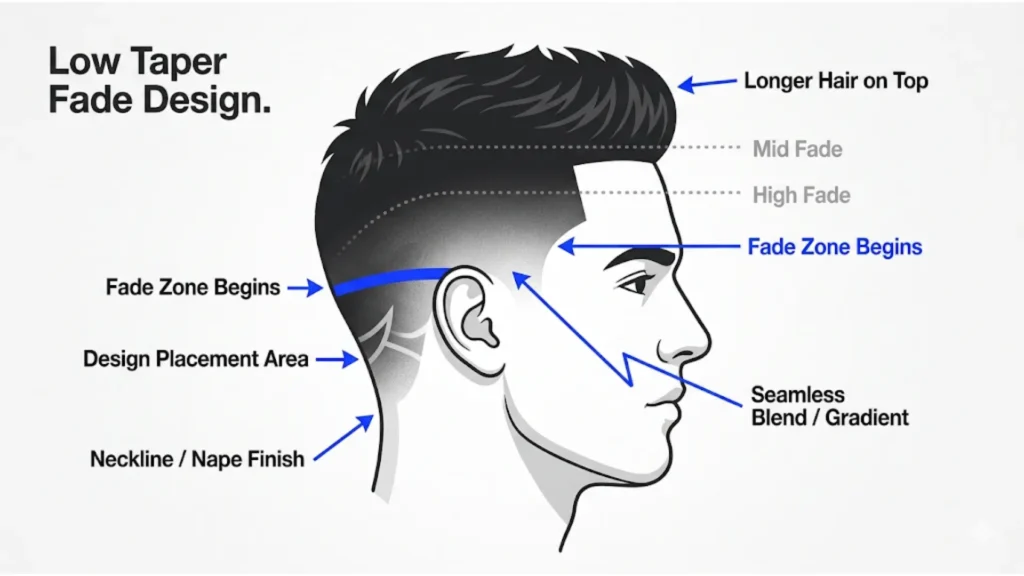
The fade itself creates the canvas. This haircut tapers the hair gradually around the sides and back, starting low near the ears, and blends it smoothly into longer hair on top. Once that seamless gradient is in place, a skilled barber uses a T-outliner, detailer trimmer, or straight razor to etch the design into the faded zone.
From subtle temple lines to bold freestyle fades, a low taper fade design lets you express personality, creativity, and individuality, whether you’re going for geometric shapes, lightning bolts, waves, or pure barber art.
Quick Fact: The low taper fade has become more than just a hairstyle; it’s a symbol of modern pop culture. From memes to music and social media trends, it’s a style that represents both humor and a cutting-edge look.
Low Taper Fade vs. Skin Fade: Which Is Better for Designs?
Before you pick a design, you need to understand the foundation it sits on.
The low taper fade is a modern haircut for men, starting to fade from just above the ears and neckline. The word “taper” indicates a smooth transition from long to shorter hair on the back and sides, whereas “fade” means very short hair at the bottom without any harsh line.
A skin fade, on the other hand, blends all the way down to the scalp giving a completely bald finish at the base. Both styles work great with designs, but they give different results.
| Feature | Low Taper Fade | Skin Fade |
|---|---|---|
| Fade Start Point | Just above the ears / nape | Anywhere on head |
| Hair at Bottom | Yes, soft, natural finish | No, bare scalp visible |
| Best for Designs | ✅ Ideal — clean contrast zone | ✅ Works with a more dramatic contrast |
| Maintenance | Every 3–4 weeks | Every 2–3 weeks |
| Professional-Friendly | ✅ Highly | ⚠️ Depends on design |
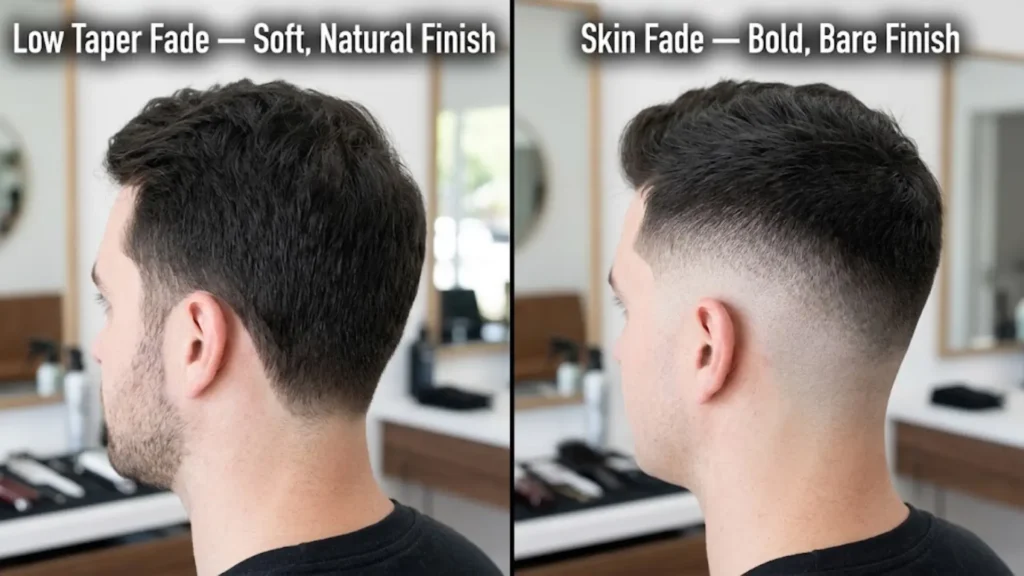
Key Tip #1: If you’re getting your first taper design, go with a low-taper fade. The low-taper fade is subtle by design. If you want people to notice your fade from across the room, consider a low skin fade or a high fade instead. For most guys, though, the low taper hits the sweet spot sharp but not extreme.
50 Best Low Taper Fade Designs for Men (2026 Gallery)
Here are 50 of the best low-taper fade designs, broken down by placement, style, and hair type. For every design, you’ll find who it suits best and a quick barber tip so you can ask for it the right way.
Back Low Taper Fade Designs
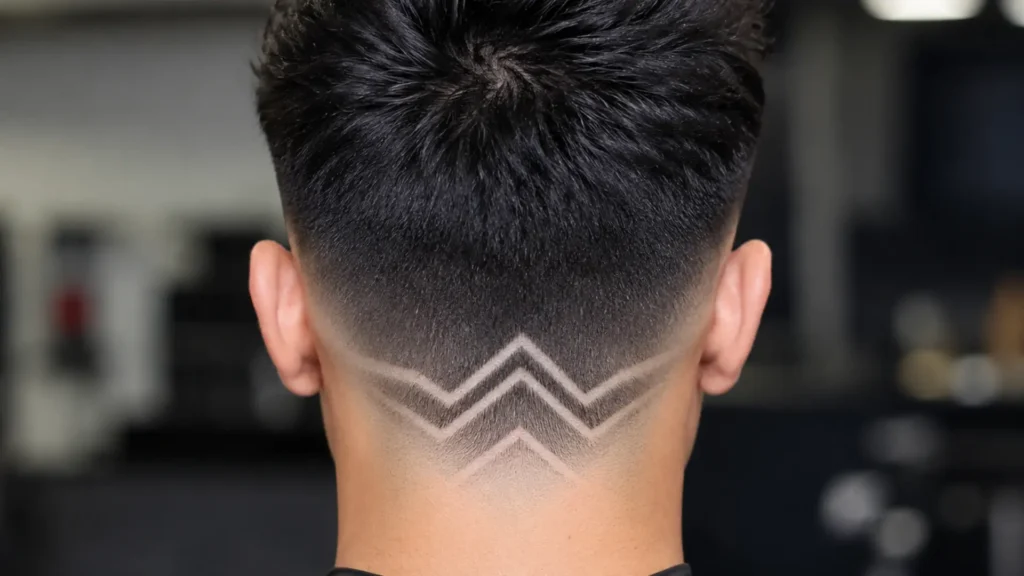
The back of the head is the most popular placement for a carved design, and for good reason. The nape area has the sharpest fade gradient, which makes designs pop with maximum contrast. V-shaped and pattern-based designs from behind are easily recognizable at the nape of the neck a very visual design that speaks of detail and a barber who has taken the time to craft it.
These 10 designs are carved into the back and nape area.
1. Zigzag / Z-Pattern Back Design
The zigzag is the most-searched-back design on the internet right now. A sharp Z-pattern carved just above the nape creates instant visual drama. It looks especially bold on dark hair because the contrast between the etched skin and the surrounding fade is crisp and clean.
- Best For: Thick hair, dark hair, afro-textured hair
- Barber Tip: Ask for “a zigzag pattern etched into the nape; keep the lines symmetrical and the fade blended around it.”
2. Single Line Back Design
One clean, straight razor line carved horizontally across the nape. It’s minimal, sleek, and one of the easiest designs to maintain. This is the go-to design for guys who want something subtle at the back.
- Best For: All hair types, professional settings
- Barber Tip: “One horizontal line at the nape, thin and precise; keep it clean.”
3. Double Line Back Design
Two parallel lines are etched just above the neckline. The double line adds rhythm and structure to the fade without going overboard. It looks sharp from behind and holds up well between touch-ups.
- Best For: Straight hair, wavy hair
- Barber Tip: Ask for “two thin parallel lines at the nape, evenly spaced.”
4. Triple Line Back Design
Three crisp lines carved in a row above the neckline. This one leans more toward street style and works best when the top is kept simple, crew-cut, textured-crop, or buzz-cut.
- Best For: Curly hair, wavy hair, dark hair
- Barber Tip: “Three parallel lines, uniform spacing, clean razor edges.”
5. Star / Starburst Back Design
A starburst pattern centered at the nape, with clean lines radiating outward from a central point. This design requires a skilled barber and a steady hand. Show up with a clear reference photo.
- Best For: Close-cropped tops, buzz cuts
- Barber Tip: Bring a clear photo from behind. Ask your barber if they’ve done starburst designs before. Experience matters here.
6. Geometric Shape Back Design
Triangles, diamonds, and cross patterns are carved symmetrically at the back. Geometric shapes such as triangles or zigzags appear bold and structured, making them a favorite for guys who want a design that looks intentional.
- Best For: Dark hair, short tops
- Barber Tip: “A symmetrical diamond pattern at the nape keeps the edges crisp.”
7. Wave Pattern Back Design
Curved, flowing lines that run along the back of the head, mimicking wave motion. This design flows naturally with wavy and curly hair textures; the hair’s natural movement complements the carved pattern.
- Best For: Wavy hair, curly hair
- Barber Tip: Ask for “fluid curved lines at the nape that echo wave movement.”
8. Arrow Design Back
A downward-pointing arrow is carved at the center of the nape. Simple, masculine, directional. It looks sharp on short, clean tops and holds definition well for 1–2 weeks.
- Best For: Straight hair, close-cropped tops
- Barber Tip: “A centered arrow pointing down at the nape thin lines, clean tip.”
9. Lightning Bolt Back Design
Bold and expressive, the lightning bolt carved into the back of the neck creates immediate visual impact. Creative symbols like the lightning bolt are often seen in fashion shows and influencer looks, perfect for bold personalities and special occasions, and can even be combined with color highlights for extra impact.
- Best For: Dark afro-textured hair, curly hair
- Barber Tip: Bring an image reference. The bolt shape requires symmetry; left and right angles must mirror each other.
10. Cross / X Pattern Back Design
A symmetrical X or cross pattern at the nape. Elegant in its simplicity. This one works well even on fine or thin hair because the geometry holds even with a less dramatic fade gradient.
- Best For: Fine hair, straight hair
- Barber Tip: “A clean cross or X pattern centered at the nape equal arm lengths.”
Key Point #1: Back designs are the most requested design placement in barbershops today. The nape zone has the sharpest fade gradient, making carved patterns appear most crisp and defined, making it the ideal canvas for both first-timers and design veterans.
Side Low Taper Fade Designs
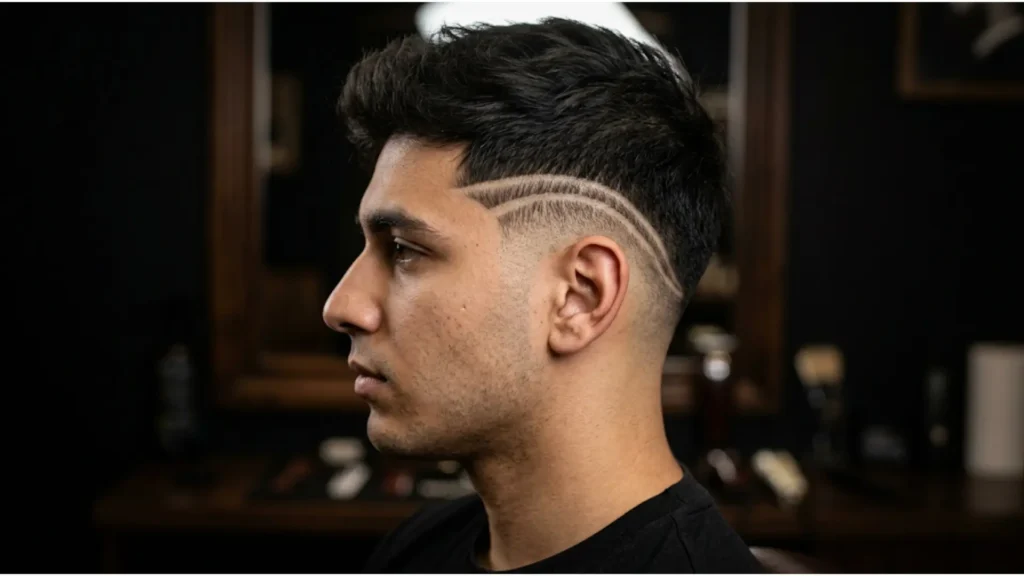
Side designs sit above the ear and along the temple area, the most face-forward placement you can get. Every time you turn your head, or someone looks at you straight on, a side design makes a statement. A low fade with a hard part or design element works perfectly when subtlety isn’t your speed, while still maintaining professionalism.
These 8 designs are carved into the side or temple area.
11. Single Temple Line Design
The most popular side design. If it’s your first time, start small, with a single temple line. Once you’re comfortable, go for full side or back designs. One fine razor line above the ear. Clean, understated, and professional.
- Best For: All hair types, office environments, first-timers
- Barber Tip: “A single thin line above my left/right ear follows the natural curve of the hairline.”
12. Double Temple Line Design
Two parallel lines carved above the ear. It’s a small upgrade over the single line, but it makes a noticeably bigger impression. Works great on both sides simultaneously for a balanced look.
- Best For: All hair types
- Barber Tip: “Double line above the ear, thin lines, equal spacing.”
13. Curved Temple Line Design
Instead of a straight line, this design uses an arc that follows the natural curve of the hairline above the ear. The result feels softer and more fluid,, less rigid than a straight line, more organic.
- Best For: Oval and round face shapes
- Barber Tip: “A curved arc above the ear, following my natural hairline, keep it subtle.”
14. Lightning Bolt Side Design
A zigzag or bolt pattern etched above the ear. This is one of the most social-media-ready side designs out there it photographs well and turns heads in person.
- Best For: Dark hair, Gen Z style, casual occasions
- Barber Tip: Bring a photo. Ask for “a small lightning bolt above the ear with sharp angles, and thin lines.”
15. Geometric Side Pattern
A small diamond or triangle above the ear. Minimal, precise, and gives the impression of craftsmanship without being loud. This design is one of the most versatile options for professional environments.
- Best For: All hair types, professional settings
- Barber Tip: “A small diamond shape above the ear, symmetrical edges, clean corners.”
16. Side Design + Beard Fade Combo
A temple line or geometric design that flows seamlessly into a faded beard. This combination creates one cohesive visual line from the haircut down to the face. Tell your barber: “Low fade on the sides, and I want you to blend the fade into my beard. ” Taper the sideburns so there is no hard line where the head hair stops, and the beard starts.”
- Best For: Guys with beard growth and oval and square face shapes
- Barber Tip: Let your barber know you want the temple design to connect visually with your beard fade.
17. Behind-Ear Design
A small pattern carved just behind the ear is barely visible until someone looks closely or you turn your head. It’s the most discreet design placement available. Perfect for corporate guys who still want a little personality.
- Best For: Professional environments, conservative dress codes
- Barber Tip: “A small line or symbol behind my right ear; keep it small and discreet.”
18. Full-Side Wrap Design
A design that runs from the temple area all the way behind the ear. This is a bold commitment full side art that wraps the side of the head. Best suited for creative professionals, artists, or guys who use their hair as self-expression.
- Best For: Dark hair, curly hair, casual/streetwear lifestyle
- Barber Tip: Have a full reference image showing the wrap path from multiple angles.
Freestyle Low Taper Fade Designs
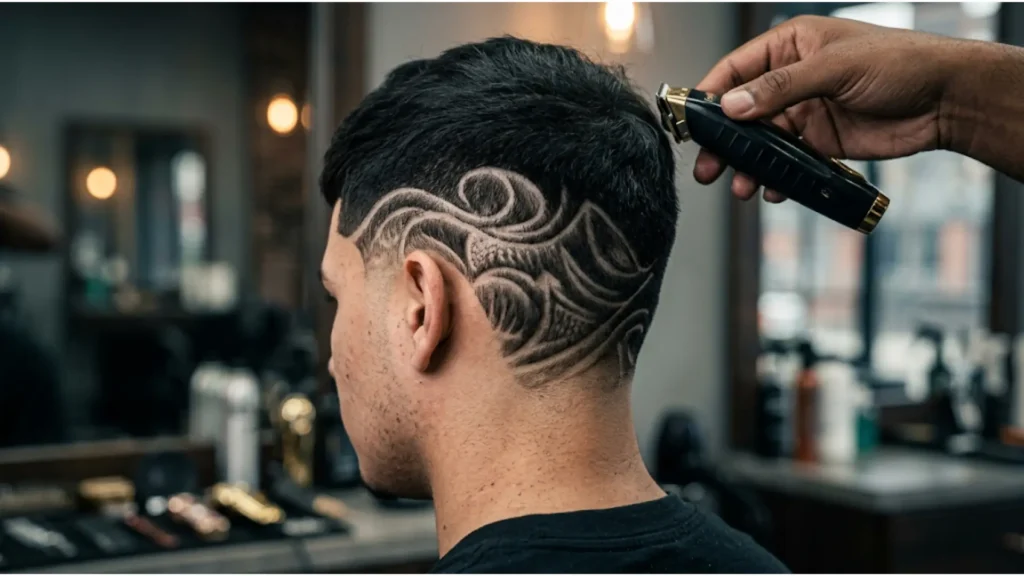
Freestyle designs are where the barber’s artistry truly comes into play. The freestyle design taper is a variation on the classic taper fade. First, the barber creates a smooth fade from longer hair on top to shorter hair on the sides and back. Then, artistic patterns are shaved into the faded area.
No rules here, your barber creates a custom art piece with curves, edges, or unique shapes. Each cut is one-of-a-kind and perfect for artists, creators, or anyone who loves to stand out.
These 8 freestyle designs push creative limits.
19. Abstract Freehand Design
No template, no fixed pattern, just your barber’s creativity and a T-outliner. The result is a completely unique design that no one else in the room will have. This is the definition of wearable art.
- Best For: Curly hair, afro-textured hair, dark hair
- Barber Tip: Give your barber a mood direction: “Something fluid and modern” or “Bold and geometric you choose.”
20. Swirl / Spiral Design
Circular, radiating lines carved from a central focal point. The swirl pattern looks especially striking on the back of the head and creates a hypnotic visual effect on close-cut tops.
- Best For: Close-cropped tops, buzz cuts, and afro texture
- Barber Tip: “A spiral design at the nape starting from a center point, radiating outward.”
21. Wave / Fluid Curve Design
Curved and wave patterns add motion. Because these shapes flow naturally, they create a dynamic effect. Wave designs work especially well on wavy and curly hair because the carved pattern echoes the hair’s natural texture.
- Best For: Wavy hair, curly hair
- Barber Tip: “Flowing wave lines, no sharp angles; keep it smooth and curved.”
22. Nature-Inspired Freestyle Design
Flame patterns, leaf shapes, and water ripple designs were etched freehand into the fade zone. These designs require a barber with strong freehand etching skills. The result, when done right, is genuinely striking.
- Best For: Dark afro-textured hair, creative lifestyles
- Barber Tip: Bring multiple reference images and discuss the exact shape with your barber before they start.
23. Pop Culture / Symbol Design
Logos, game icons, and brand symbols carved directly into the fade. Some barbers carve initials, letters, or even logos like “23” for Jordan fans. It’s the ultimate personalization, adding meaning behind the design of your name, brand, or vibe.
- Best For: Bold personalities, special occasions, events
- Barber Tip: Keep the symbol simple enough for clean clipper lines. Overly detailed symbols blur quickly.
24. Initial / Letter Design
Your initial or a meaningful letter carved into the fade zone. It’s personal, expressive, and immediately tells people something about who you are. Initial letters or custom shapes make the haircut meaningful.
- Best For: All hair types; works best on dark, thick hair
- Barber Tip: “My initial [letter] carved into the left temple, clean edges, bold lines.”
25. Number Design
A meaningful number carved into the fade jersey numbers, birth years, and lucky numbers. The “23” Jordan-inspired design is one of the most recognized number carvings in barbershop culture.
- Best For: Sports fans, cultural expression, all hair types
- Barber Tip: Keep numbers to 1–2 digits for the cleanest result. Complex multi-digit numbers lose definition fast.
26. Portrait / Miniature Art Design
The most advanced barber artistry available. Ultra-fine facial features, logos, or miniature scenes carved into the fade zone. This requires an exceptionally skilled barber and is best suited for social media showcases, competitions, or special events.
- Best For: Special occasions, showcase cuts
- Barber Tip: Only attempt this with a barber who has a proven portfolio of portrait-level work. Always bring a print reference photo.
Key Tip #2: For freestyle designs, always bring a clear reference photo from multiple angles front, side, and back. Show photos from multiple angles, one front-facing pic won’t capture the fade you actually want. The clearer your brief, the sharper your result.
Edgar Cut with Low Taper Fade Designs
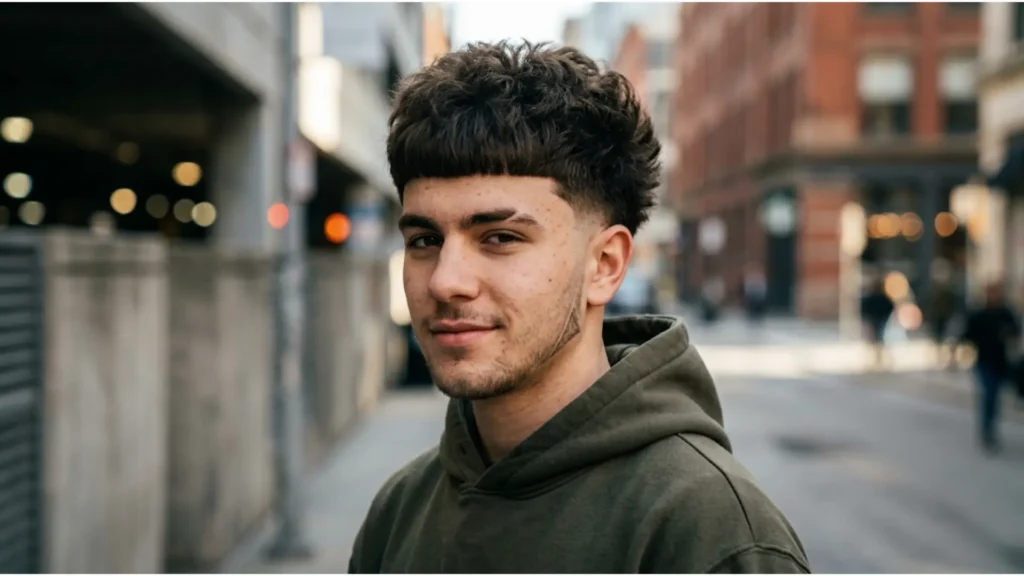
The Edgar cut, with its blunt, flat fringe, has become one of the most-searched haircuts on TikTok. The low taper with a freestyle design, paired with the Edgar cut, has become a staple on social media, with hashtags like #edgar, #lowtaper, and #hairdesign driving millions of views.
This combination is especially popular within Gen Z and Latino barbering culture. The flat top of the Edgar creates a sharp contrast with the tapered sides, and when you add a carved design, the result is next level.
27. Edgar + Back Zigzag Design
The most viral Edgar design combo. Fluffy or textured top, crisp low taper sides, and a Z-pattern carved at the back nape. Clean on top, artistic at the back, a complete haircut.
- Best For: Thick hair, curly hair, dark hair
- Barber Tip: “Edgar cut on top, low taper sides, and zigzag at the back nape blended, not bald.”
28. Edgar + Double Line Side Design
The “school-to-street” Edgar. Blunt fringe on top, double line carved above one ear. Smart enough for school, sharp enough for weekends.
- Best For: Straight or wavy hair, teenagers, and young adults
- Barber Tip: “Edgar cut, low taper, double line above the right ear.”
29. Edgar + Star Back Design
Bold starburst at the nape under a flat Edgar top. The geometric design at the back contrasts perfectly with the clean horizontal line of the Edgar fringe.
- Best For: Dark hair, afro-textured hair
- Barber Tip: Bring a photo. Ask for the starburst to be centered at the nape.
30. Edgar + Freestyle Temple Design
Blunt fringe meets freehand side art. This combination works when the top is relatively simple, let the freestyle temple design do the talking on the sides.
- Best For: Dark, thick, curly hair
- Barber Tip: “Edgar cut, low taper, freehand design above the left temple, you choose the pattern.”
31. Fluffy Edgar + Freestyle Back Design
Voluminous fluffy top, tight low taper sides, and a custom freehand back design. This fluffy hair look blends soft texture with clean edges for a modern, stylish finish. The fluffy top adds natural volume with a messy, tousled shape, while the low taper fade above the ears and nape keeps the cut neat and sharp. Add a freestyle back design, and you’ve got the ultimate Gen Z haircut.
- Best For: Thick, voluminous hair
- Barber Tip: “Fluffy Edgar on top, blow-dry with a diffuser. Low taper sides, freestyle design at the back.”
32. Edgar + Geometric Side Pattern
A small geometric shape, such as a triangle, diamond, or cross, carved above the ear under an Edgar cut. The precision of the geometric design mirrors the precision of Edgar’s blunt fringe. Everything is intentional, everything is clean.
- Best For: All hair types
- Barber Tip: “Edgar cut with a small diamond above the ear to match the sharpness of the fringe.”
Small & Subtle Low Taper Fade Designs
Not every design needs to be a statement. Simple line patterns remain the most common option. These lines follow the fade and highlight shape; they look clean and sharp.
Small designs are perfect for first-timers, students, guys in corporate jobs, or anyone who wants a hint of personality without going all in.
33. Micro Single Line
The most minimal design you can get. One fine razor line barely 1.5 inches long at the temple. So discreet that most people won’t notice unless they’re looking for it. But you’ll know it’s there.
- Best For: Professional environments, first-time design wearers
- Barber Tip: “The thinnest, cleanest single line you can do above my right ear.”
34. Subtle Nape Line
A single horizontal line across the neckline at the base of the fade. It frames the nape and defines the bottom of the cut without being flashy.
- Best For: All hair types, professional settings
- Barber Tip: “One clean line right at the nape, thin and precise.”
35. Small Diamond
A tiny geometric diamond carved above one ear. Small enough to be subtle but precise enough to look intentional. One of the cleanest minimal designs available.
- Best For: Fine or straight hair, office-friendly
- Barber Tip: “A small diamond above my left ear, equal sides, sharp corners.”
36. Short Arc Line
A brief curved line above the ear, under 2 inches. Softer than a straight line. Works especially well on guys with round or oval face shapes because the arc echoes the natural curve of the head.
- Best For: Oval and round face shapes
- Barber Tip: “A short arc above the ear follows my hairline curve.”
37. Dot Pattern
Small staggered dots etched into the fade. Unusual and textured, yet completely subtle. Most people won’t even recognize it as a design, it just looks like part of the haircut.
- Best For: Dark hair, close-cut tops
- Barber Tip: “A small cluster of dots above the ear spaced evenly, not too large.”
38. Mini Hard Part
A razor-sharp side part shaved into the hairline. Not a traditional design, but a precision element that elevates the overall cut. A shaved line near the temple adds a cool, edgy touch, stylish but not too wild.
- Best For: Comb-over styles, slick-back tops
- Barber Tip: “A clean-shaven hard part on the left side, sharp and defined.”
39. Subtle Behind-Ear Line
A small line carved behind the ear invisible in most situations until you tilt your head. The ultimate “I know it’s there” design. Perfect for professional environments where visible designs aren’t appropriate.
- Best For: Corporate professionals, formal settings
- Barber Tip: “A short line behind my right ear; keep it small and hidden.”
40. Single Curved Temple Line
One soft arc above the ear the most professional-friendly design option available. Clean, refined, and easy to maintain. The low taper fade is subtle by design; a single curved temple line takes that subtlety and adds one intentional detail.
- Best For: All face shapes, all hair types, all settings
- Barber Tip: “A curved single line above the ear follows the natural shape, nothing too dramatic.”
Low Taper Fade Designs by Hair Type
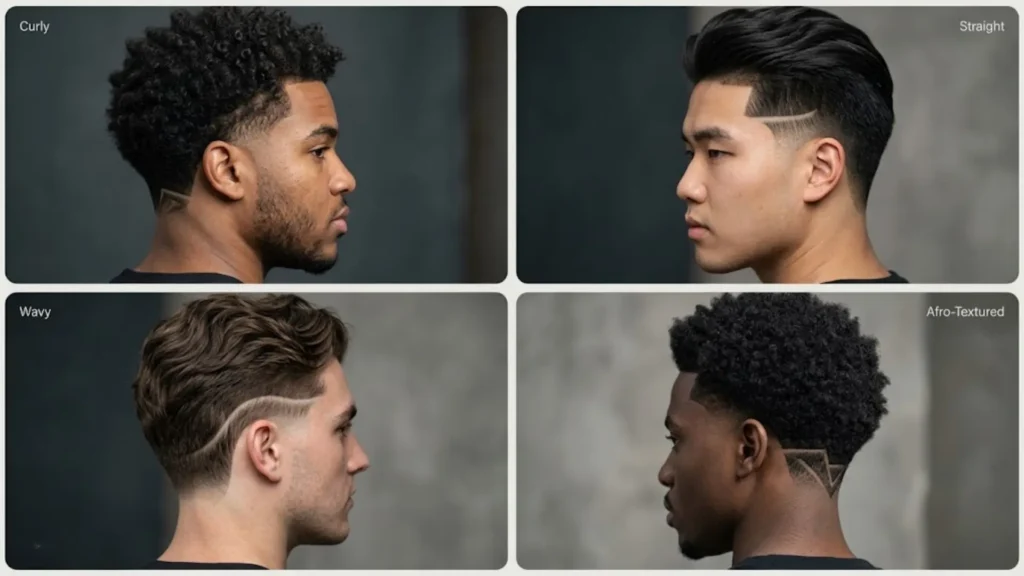
The best design for you depends on your hair texture. Your hair type is just as important as your face shape. The same haircut can look completely different depending on your hair texture and thickness. Here’s exactly what works best for each texture.
Low Taper Fade Designs for Curly Hair
Curly hair naturally adds volume and personality. The goal is to control it without losing its shape. This natural volume creates a stunning contrast with carved, precise lines. The more defined the curl, the sharper the design appears.
Best Designs:
- 41. Back Geometric + Curly Top: A clean geometric pattern at the nape under a full curly top. The curls and the geometric shapes create a bold contrast.
- 42. Starburst + Curly Afro: A centered starburst nape design under a shaped afro. The rounded afro mirrors the starburst’s radiating structure.
- 43. Freestyle Curly Blowout + Back Design: A voluminous blowout taper on top with a freestyle back design. The contrast between the fluffy top and the precision carving at the nape is visually striking.
Styling Tip for Curly Hair: Use curl cream or leave-in conditioner on top to define your curls without weighing them down. Keep the product away from the fade zone.
Low Taper Fade Designs for Straight Hair
Straight hair shows design clarity most crisply. Curly, straight, thick, or wavy, the low taper fade works with all of them; you can keep it simple or make it trendy depending on how you style the top.
Best Designs:
- 44. Double Line Temple + Comb-Over Top: Two clean temple lines paired with a sleek side-swept comb-over. Polished, professional, precise.
- 45. Single Back Line + Slick Back: A clean nape line paired with a slicked-back top. The most refined combination in this list is boardroom-ready but still sharp.
Styling Tip for Straight Hair: Use a water-based pomade or texture clay to add dimension to the top. Straight hair can look flat without product, give it some movement.
Low Taper Fade Designs for Wavy Hair
The wavy hairstyle keeps your natural waves on top while the sides and neckline taper down smoothly for a fresh, modern shape. The top lasts longer and is messier, with a soft texture that gives your hair bounce, volume, and movement.
Best Designs:
- 46. Wave Pattern + Natural Wavy Top: A carved wave pattern at the back echoes the natural wave texture of the top. The result feels cohesive and designed.
- 47. Curved Arc Side Design + Textured Top: A soft arc above the ear paired with a textured, airy top. The curved design mirrors the natural movement of waves.
Styling Tip for Wavy Hair: Ask your barber for a low taper that blends neatly around the ears without taking off too much bulk. Blow-dry while scrunching with your fingers to lift the waves, then apply texture powder to add grip and airy definition.
Low Taper Fade Designs for Afro-Textured Hair
Customers with afro-textured hair usually prefer to pair their trim with custom designs, making an appearance more versatile and heritage-inspired. Black barbers choose this style to create a classic yet modern look.
Best Designs:
- 48. Bold Geometric Back + Shaped Afro: A bold diamond or cross design at the nape under a shaped afro. Maximum contrast, maximum impact.
- 49. Lightning Bolt Side + Natural Afro: A lightning bolt carved above the ear under a full natural afro. The design is perfectly visible because the tight texture of the afro doesn’t cover the fade zone.
- 50. Starburst Nape + Blowout Taper: A starburst etched at the nape under a blowout taper. One of the most visually dynamic combinations in this entire list.
You’ve seen all 50 designs, but which ones actually suit your face? Taper Empire’s free tool reads your facial structure and returns the taper styles scored to your geometry, so you’re not just choosing what looks good on someone else.
Styling Tip for Afro-Textured Hair: Use twist cream or a curl-defining product to maintain your top’s shape. Sulfate-free shampoo helps balance moisture levels and keeps the fade zone looking clean and fresh.
How Are Low Taper Fade Designs Created? (Step-by-Step)
Here’s exactly how a skilled barber brings a low-taper fade to life. Every step matters; skip one and the result suffers.
Key Fact: Professional barbers trust Andis or Wahl clippers for precision blending — they hold their edge and deliver consistent guard sizes that beginner trimmers can’t match.
Step 1 — Consultation: Talk about face shape, hair type, and lifestyle. 2Clearly explain how short you want the fade, where it should start and end, and how you want the top styled. Clear communication ensures you leave the barbershop with your ideal haircut. Show reference photos from multiple angles.
Step 2 — Initial Clipper Pass The barber starts with a #2 or #3 clipper guard to remove bulk and set the length. The fade line is established just above the ears and around the nape low, never higher than an inch above the ear.
Step 3 — Blending the Fade Gradient Guard sizes are graduated downward — #3 → #2 → #1.5 → #1 → #0.5 → #0. Clipper-over-comb and scissor-over-comb techniques create the smooth, seamless gradient that defines a high-quality low-taper fade.
Step 4 — Creating the Design Once the fade is fully blended, the barber switches to a T-outliner or detailer trimmer for precision etching. For geometric patterns, the design is mapped first. For freestyle designs, freehand carving begins directly on the blended fade zone. A straight razor is used for ultra-fine detail work.
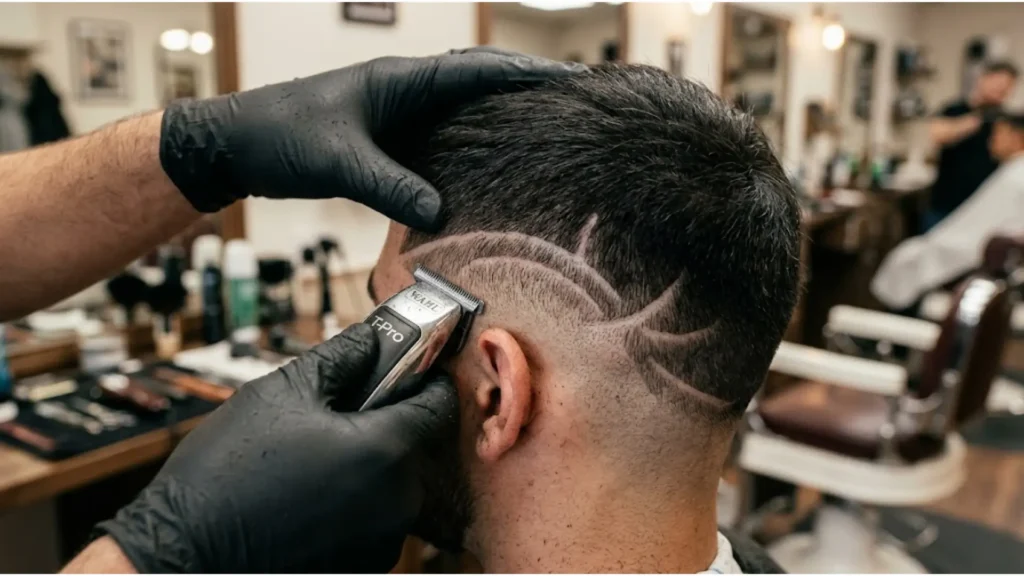
Step 5 — Neckline Finish: The neckline is defined as squared, rounded, or tapered, depending on preference. A foil shaver cleans up any stray hairs.
Step 6 — Final Styling: The barber checks the design from all angles, then applies the appropriate styling product, texture, clay, pomade, or molding paste based on hair type.
Key Tip #3: The design is always carved AFTER the fade is fully blended. Etching a design into an unblended fade creates uneven contrast. Fade first, design second; that’s the rule.
How to Ask Your Barber for a Low Taper Fade Design
The difference between a great low taper fade design and a disappointing one is almost always communication, not skill.
Key Fact: Adding a custom design to a low taper fade typically costs an extra $10–$30 at most barbershops. Complex freestyle or portrait-style designs can run higher depending on the barber’s expertise and the pattern’s intricacy.
Here’s exactly how to communicate your design in six steps:
Step 1 — Bring 3 reference photos (front, side, and back)
Always bring reference photos. Save two or three images on your phone that show the variation you want from the side and from the back. Find photos of someone with a similar hair texture. When you show a barber a photo, the conversation shifts from vocabulary to visual agreement.
Step 2 — Specify your fade height clearly Say: “I want a low fade starting just above the ears, not going higher than an inch above them.”Specify your fade height “low” means different things to different barbers.
Step 3 — Name the design type Say: “I want a zigzag pattern etched into the back of my nape” or “I want a double line above my left temple.”
Step 4 — Confirm the placement Back, side, temple, behind-ear, or both sides be specific about exactly where the design goes.
Step 5 — Describe the size “Small and subtle” vs. “Bold and visible” vs. “Freehand I trust your creativity.”
Step 6 — Confirm your top style Do you want a textured top, Edgar cut, crop, buzz cut, or natural curls on top? The top style affects how the overall design reads.
Example Barber Script: “I want a low taper fade, keep it low, just above the ears. Add a double line design on both sides at the temple. Keep the neckline clean and squared. Leave the top textured with natural movement.”
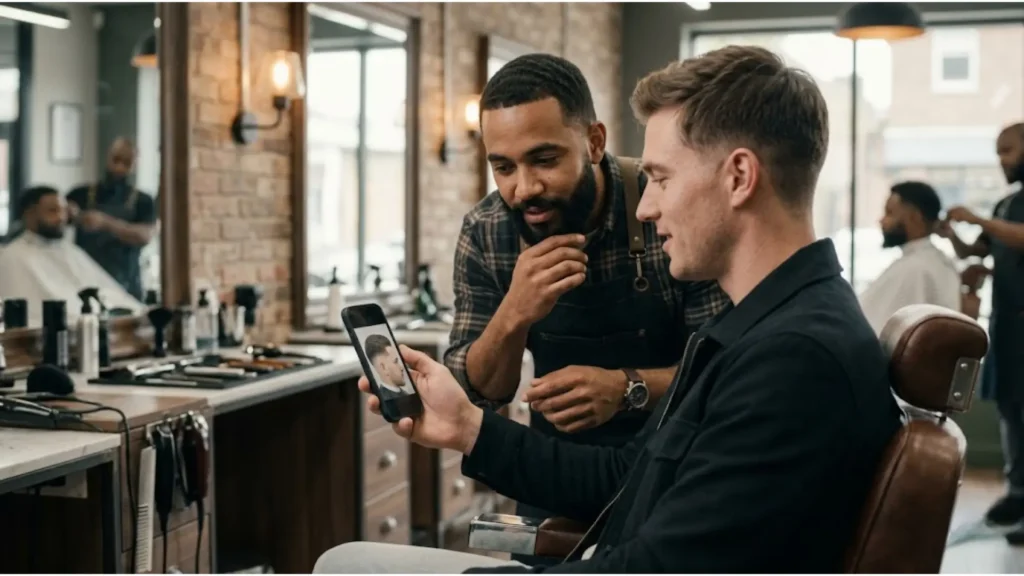
Key Tip #4: Book morning appointments; your barber’s steadiest hand comes before noon, not after six clients. A fresh barber means a sharper design.
Writing the perfect barber script takes effort. Taper Empire builds one for you guard progression, blend point, neckline strategy, and verbatim language matched to your face, delivered in about 60 seconds.
Best Styling Products for Low Taper Fade Designs
The right product keeps your top looking great and your design visible. Avoid heavy gels. Thick products can fill the carved lines and reduce sharpness.
Key Fact: The biggest product shift in 2026 is toward matte, natural finishes. Clay-based products, texture powders, and sea salt sprays dominate the market. (Source: blumaan.com/blogs/learn/best-mens-hairstyles-2026)
For Curly Hair
- Curl cream — defines your curl pattern without weighing it down
- Leave-in conditioner — hydrates curls and reduces frizz around the fade line
- Argan oil — seals moisture, adds natural shine
For Straight Hair
- Texture clay — matte finish, light hold, adds structure to flat hair
- Water-based pomade — flexible hold for comb-over or slick-back styles
- Molding paste — natural finish, medium hold
For Wavy Hair
- Sea salt spray — enhances your natural wave texture
- Texture powder — adds volume and grip to wavy tops
- Styling cream — light hold for natural wave movement
For Afro-Textured Hair
- Twist cream — defines coils and separates texture cleanly
- Sulfate-free shampoo — maintains moisture balance
- Clarifying shampoo — deep cleans before styling for a fresher-looking fade
Key Tip #5: Apply styling product only on the top section of your hair. Keep pomade, clay, and paste away from the fade zone and the carved design area. Product buildup in the design lines blurs the pattern and makes it look older faster.
How to Maintain a Low Taper Fade Design
Low taper fade designs look their sharpest in the first 7–10 days. After that, natural hair regrowth begins to soften the carved edges.
Key Fact: Low taper fade designs typically last 1–2 weeks before fading due to hair growth. The simpler the design, the longer it holds definition between visits.
Maintenance Timeline:
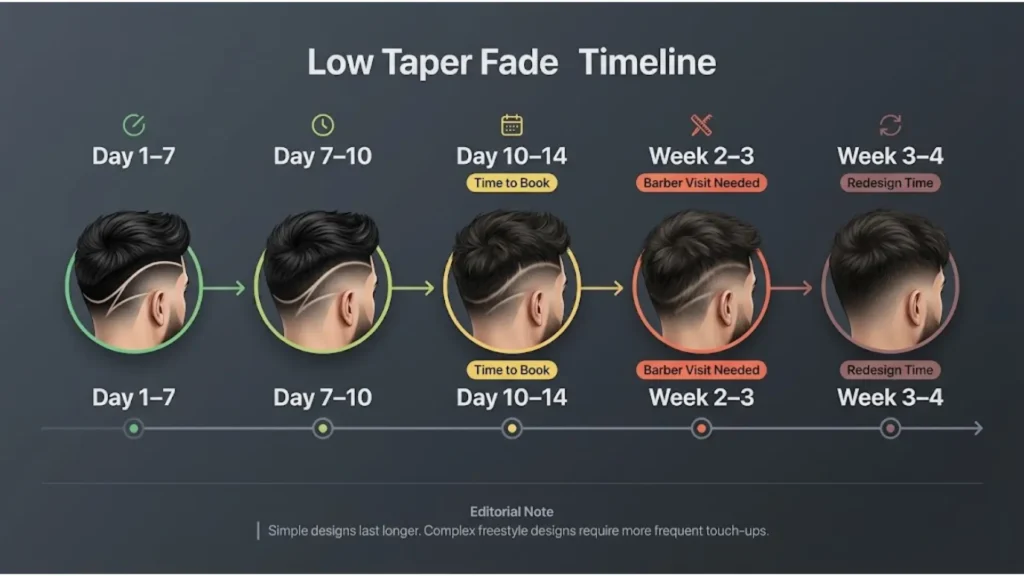
| Time After Cut | Design Appearance | Recommended Action |
|---|---|---|
| Day 1–7 | Crisp, sharp, full contrast | Enjoy, no action needed |
| Day 7–10 | Slight softening at design edges | Optional at-home trimmer touch-up |
| Day 10–14 | Design beginning to blur | Book a barber touch-up appointment |
| Week 2–3 | Significant regrowth | Full barber visit recommended |
| Week 3–4 | Design has largely grown out | Full re-cut and redesign |
6 Maintenance Steps:
- Touch up weekly designs fade fast; book weekly neckline cleanups with your barber if possible
- Use a T-outliner at home for line designs, and a quality detailer trimmer can freshen the edges between barber visits
- Keep the product away from the fade zone buildup accelerates design blur
- Moisturize the scalp in the fade area, which is especially important for skin-level fade zones
- Using a durag or wave cap at night protects design alignment while you sleep
- Schedule barber visits every 2–3 weeks. Visit the barber every 2–3 weeks. This is the ideal time frame for fade styles to maintain their shape. Any longer and the outline will become blurred.
Low Taper Fade Design Mistakes to Avoid
Even the cleanest design can be ruined by avoidable errors. Here are the most common ones:
1. Placing the design too high The design should sit within the fade zone, not above it. A design placed too high looks like a separate element rather than part of the haircut.
2. Over-detailing with too many lines More isn’t always better. Detailed patterns require more maintenance. Choosing the right level of detail matters. Cluttered designs lose visual clarity within days.
3. Cutting design before the fade is blended The fade must be fully blended before any design is carved. Etching lines into an unblended fade creates uneven contrast.
4. Skipping the reference photo
A reference image of the style you want helps your barber understand exactly what you’re looking for. Without clear guidance, there may be misunderstandings about how short or long you want the fade or taper.
5. Using only one front-facing photo
Show photos from multiple angles; one front-facing pic won’t capture the fade you actually want.
6. Using the wrong tools at home Regular clippers cannot create crisp design lines. A T-outliner or detailer trimmer is required for any home touch-up.
7. Ignoring hair type compatibility A fine geometric design on thick afro-textured hair without proper fade foundation loses its definition fast. Match the design complexity to your hair texture.
8. Neglecting maintenance
The freestyle design taper depends on sharp contrast between shaved lines and faded hair. Regrowth can blur the design quickly. Don’t skip your touch-up appointments.
Frequently Asked Questions
How long does a low taper fade design last?
A low taper fade design typically stays crisp and sharp for 7–10 days before natural hair regrowth begins to soften the carved edges. Designs typically last 1–2 weeks before fading due to hair growth. Simpler designs like single lines hold definition longer than complex freestyle patterns.
What is the difference between a low taper fade and a skin fade?
The low taper fade starts to fade from just above the ears and neckline the word “taper” indicates a smooth transition from long to shorter hair, whereas “fade” means very short hair at the bottom without any harsh line. A skin fade blends completely to the scalp with a bald finish. For designs, both work skin fades produce more dramatic contrast while low tapers look more professional and understated.
Can I get a low taper fade design on curly hair?
Yes, and curly hair is actually one of the best textures for carved designs. 8The low taper fade works very well with curly hair. It provides structure while still allowing your natural curls to shine on top. The natural volume and density of curly hair creates a striking contrast against precision-etched patterns, geometric designs and zigzag lines look especially bold.
How much does a low taper fade with a design cost?
A standard low taper fade typically costs $25–$50 depending on your location and barbershop. Adding a carved design usually runs an extra $10–$30. Complex freehand or portrait-style freestyle designs can cost more depending on the barber’s skill level and the detail of the pattern requested.
What is a freestyle low taper fade design?
A freestyle low taper design means no rules; your barber creates a custom art piece with curves, edges, or unique shapes. Each cut is completely one-of-a-kind. It includes abstract patterns, swirls, waves, custom motifs, and artistic carvings. It requires a highly skilled barber with strong freehand detailing experience.
What is an Edgar cut with a low taper design?
The Edgar cut combines a flat, blunt top with low-tapered sides, and when you add a carved design at the back or temple, it becomes one of the most viral haircut combinations on TikTok. The low taper with freestyle design paired with the Edgar cut dominates social media with hashtags like #edgar, #lowtaper, and #hairdesign. It’s particularly popular within Gen Z and Latino barbering culture.
Are low taper fade designs professional or work-appropriate?
Small, subtle designs, such as a single temple line or a discreet nape line, are widely considered professional and appropriate for most workplaces. A low fade with a design element works well when subtle isn’t your speed but professional is still required. Bold freestyle or full-wrap designs may not suit corporate environments. When in doubt, start with a minimalist single line.
What is a small taper design?
A small taper design is a minimalist carved pattern, typically a single line, micro-diamond, or short arc, placed subtly within the fade zone. It’s the ideal choice for first-time design wearers, students, and professionals who want a personal touch without full commitment. If it’s your first time, start small a single temple line. Once you’re comfortable, go for full side or back designs. Small designs also tend to hold clarity longer between touch-ups.
How do I choose the right low taper fade design for my face shape?
Oval faces work well with most patterns; both simple and bold designs look good. Round faces benefit from vertical or angular lines, as these create height and structure. Square faces pair nicely with geometric designs the sharp angles complement strong jawlines. Meanwhile, heart-shaped faces often look better with side patterns that balance the forehead area.
Still unsure which taper style fits your face shape? Instead of guessing between oval, round, or square recommendations, let the system read your geometry and return ranked matches with barber-ready specs. Free, private, under a minute.