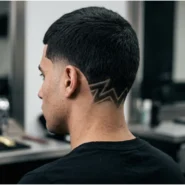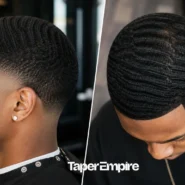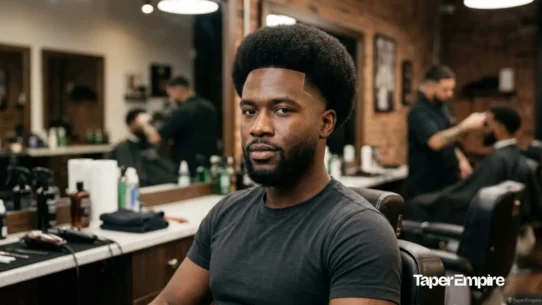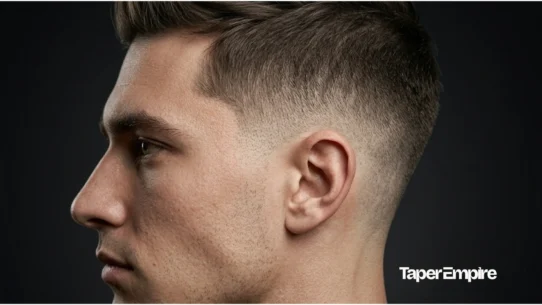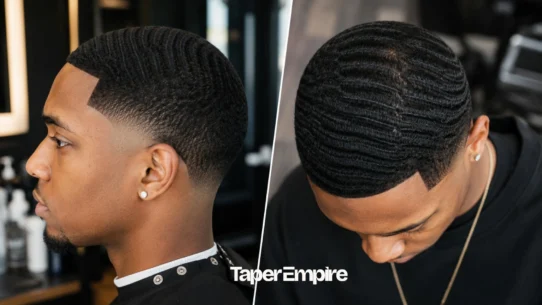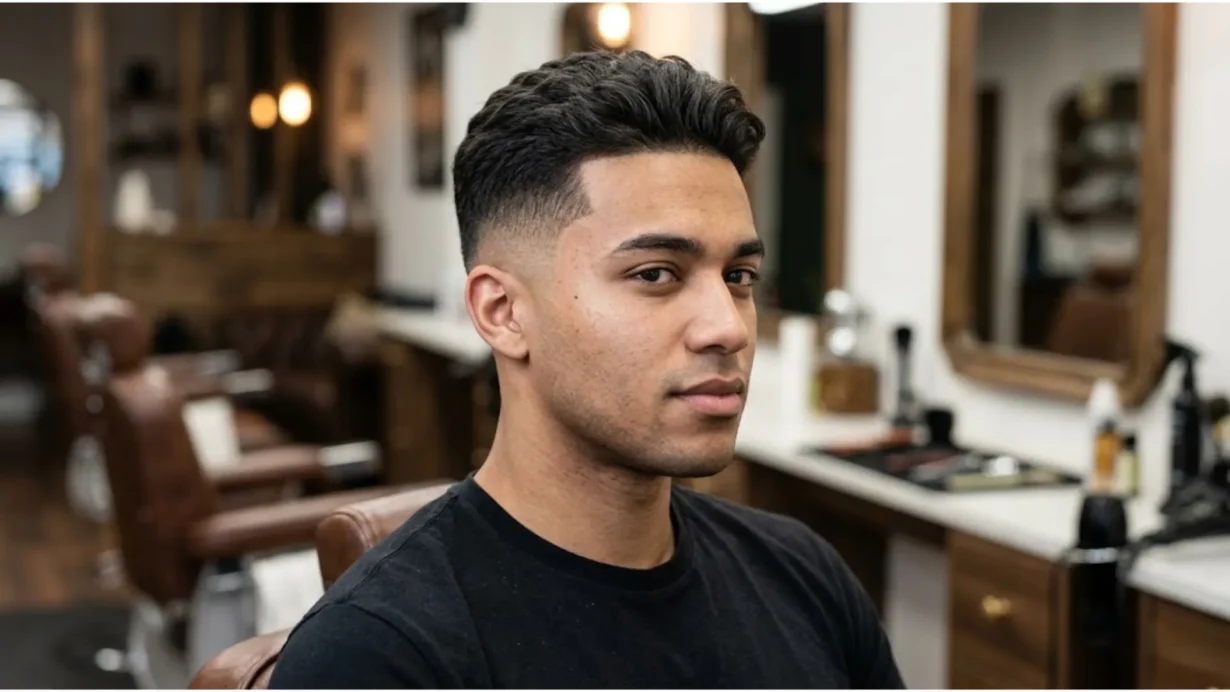

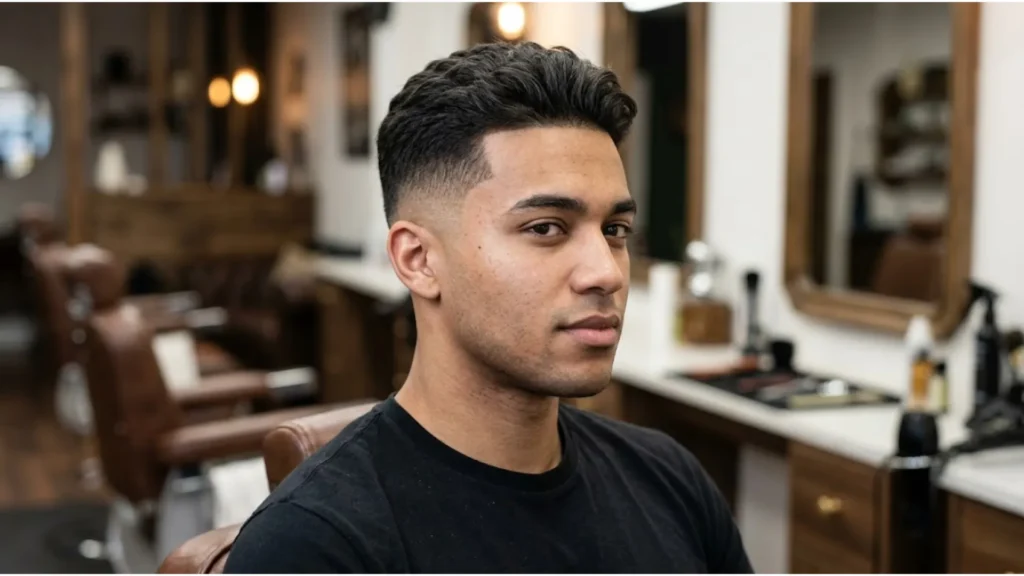
The low skin taper fade is not just a haircut; it is the haircut every man wants right now. Clean, sharp, subtle, and incredibly versatile, this style works in the boardroom on Monday and at the barbecue on Saturday without skipping a beat. Whether you call it a low bald taper, a skin fade, or a low taper skin fade, you are talking about the same crisp, head-turning cut. But here is the thing: most guys sit in the barber’s chair and have no idea what to ask for or how to describe what they want. That ends today.
This guide gives you everything: a clear definition, 40+ styles for every hair type, a face-shape guide, a clipper-guard breakdown, and the exact words to say to your barber. Let’s get into it.
Table of Contents
What Is a Low Skin Taper Fade and How Is It Different from a Regular Taper?
A low skin taper fade gradually blends the sides and back from full length down to bare skin, starting just above the ears and neckline. A regular taper shortens hair gradually but always leaves some visible hair at the base. The skin-level finish at the lowest point is what makes the low skin taper fade sharper, crisper, and more defined.
KEY POINTS:
- Blends all the way to bare skin at the neckline using a #0 guard or foil shaver
- “Low skin taper fade” and “low bald taper fade” are the exact same haircut
- Needs a touch-up every 2 to 3 weeks since stubble appears within 3 to 5 days
- Works on straight, wavy, curly, coily, thick, and most fine hair types
- Men with coily hair should request a foil shaver finish to reduce razor bump risk
What Is a Low Skin Taper Fade?
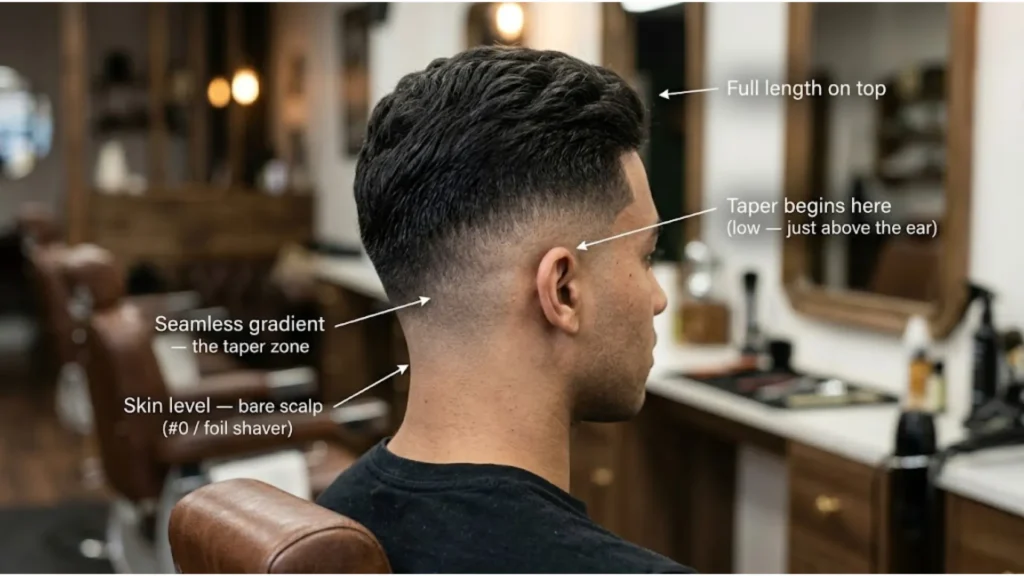
A low skin taper fade is a men’s haircut where the hair gradually blends from full length on top down to bare skin at the sides and back. The fade starts low, just above the ear and around the neckline, and uses clipper guards, stepping from a #2 down to a #0, or a foil shaver, to achieve a completely clean, skin-level finish at the lowest point.
Let’s break down each word so there is zero confusion:
Low means the fade starts and ends low on the head, right above the ears, and down toward the neckline. It does not climb high up the sides like a mid-fade or high-fade. This keeps the look subtle and conservative, which is exactly why it works for every setting from the office to a night out.
“Skin” means the hair is blended all the way down to the bare scalp at its shortest point. You can actually see the skin at the neckline and sideburn area. This is the defining feature that separates a skin fade from a regular taper.
“Taper” means the hair gradually gets shorter as it moves down the sides and back. The change is smooth and gradual, never sudden or harsh. A taper is all about a natural, seamless transition from longer on top to shorter at the sides.
“Fade” refers to the clipper technique used to create a gradient that goes from full-length hair at the top down to skin level at the bottom, using progressively smaller clipper guard numbers.
Put it all together, and you get one of the cleanest, sharpest, most universally flattering haircuts men can get in 2026.
Key Takeaway
A low skin taper fade is a men’s haircut in which the sides and back are blended gradually from full length down to bare skin, with the fade starting low, just above the ear. The skin-level finish at the bottom is the signature detail that makes it sharper than a regular low taper fade.
Is a Low Skin Taper Fade the Same as a Low Bald Taper?
Yes completely. A low skin taper fade and a low bald taper are the exact same haircut. In barbershops across America, barbers use “skin” and “bald” interchangeably when talking about a fade that goes all the way down to the scalp. Whether your barber calls it a bald fade, a skin fade, a low bald taper fade, or a low taper bald fade, they all describe one thing: hair that is shaved completely to zero at its shortest point.
Terminology Cheat Sheet: Skin Fade = Bald Fade = Zero Fade = Bald Taper = Bare Skin Fade. Same haircut. Different barbershops just use different words.
The word “bald” comes from the traditional barbershop vocabulary, where shaving to the skin was described as going “bald” on the sides. Over time, “skin fade” became the more modern and widely used term, especially as the style spread beyond its Black and Latino barbershop origins into mainstream grooming culture. So if you walk into any barbershop in the USA and say “low bald taper fade” or “low skin taper fade,” your barber will know exactly what you mean.
Low Skin Taper Fade vs. Other Fades: What Is the Difference?
Men get confused between a taper, a fade, a skin fade, a shadow fade, and all the other variations. Here is a simple breakdown so you always know what you are asking for.
Taper vs. Fade: The Real Difference
A taper is when the hair gradually gets shorter as it moves toward the neckline and sideburns, but it never completely disappears. There is always some hair left at the bottom. It is a soft, conservative look.
A fade goes further. It takes the concept of a taper and pushes it all the way to skin level or very close to it. The shorter the guard used at the bottom, the more dramatic the fade looks.
Think of it this way: a taper is a gradient that stops short. A fade is a gradient that goes all the way to zero.
A taper fade is a hybrid of both; it uses the smooth blending technique of a taper but finishes with the skin-level crispness of a fade. When you add “low skin” to the front, you are specifying exactly where it sits and how short it is at the bottom.
Master Comparison Table
| Haircut Style | Fade Height | Shortest Point | Contrast Level | Best For |
|---|---|---|---|---|
| Low Skin Taper Fade | Just above the ear | Bare skin (#0 / foil shaver) | Subtle to moderate | All settings: office, casual, formal |
| Low Taper Fade | Just above the ear | Near-skin (#1 to #2) | Very subtle | First-timers, conservative styles |
| Shadow Fade | Low to mid | Stubble (#0.5) | Soft and subtle | Natural look, thin hair |
| Mid Fade | Temple level | Skin or near-skin | Moderate | Balanced everyday look |
| High Fade | Near the crown | Skin or near-skin | Bold and dramatic | Statement looks, streetwear |
| Drop Fade | Low, curved arc behind the ear | Skin or near-skin | Moderate | Modern curved aesthetic |
| Burst Fade | Semi-circle around the ear | Skin or near-skin | Bold | Editorial, Mohawk styles |
| Bald Fade | Any height | Bare skin (#0 / foil) | Depends on height | Synonym for skin fade |
Low Skin Taper Fade vs. Shadow Fade
A shadow fade uses the exact same low placement as a low skin taper fade, but it never goes below a #0.5 clipper guard at its shortest point. Instead of bare skin, it leaves a soft layer of stubble like a five o’clock shadow on the scalp. This creates a slightly softer, more subtle finish.
Choose a low skin taper fade if you want maximum crispness, the sharpest possible edges, and a clean skin-level finish.
Choose a shadow fade if you have very fine or sparse hair, or if you are getting a fade for the first time and want to ease into it before committing to bare skin.
Low Fade vs. Mid Fade vs. High Fade
| Fade Type | Where It Starts | Visual Impact | Workplace Friendly? |
|---|---|---|---|
| Low fade | About 1 inch above the ear | Subtle and conservative | ✅ Yes |
| Mid-fade | At the temple level | Balanced, not too bold | ✅ Yes |
| High fade | Near the crown | Bold and dramatic | Depends on the setting |
The low skin taper fade wins for versatility because it keeps more hair on the sides, making it appropriate for nearly every environment and occasion.
How a Low Skin Taper Fade Is Cut: A Barber’s Step-by-Step Breakdown
Understanding how this haircut is actually done helps you know what to look for when choosing a barber and confirms that your barber is doing it right.
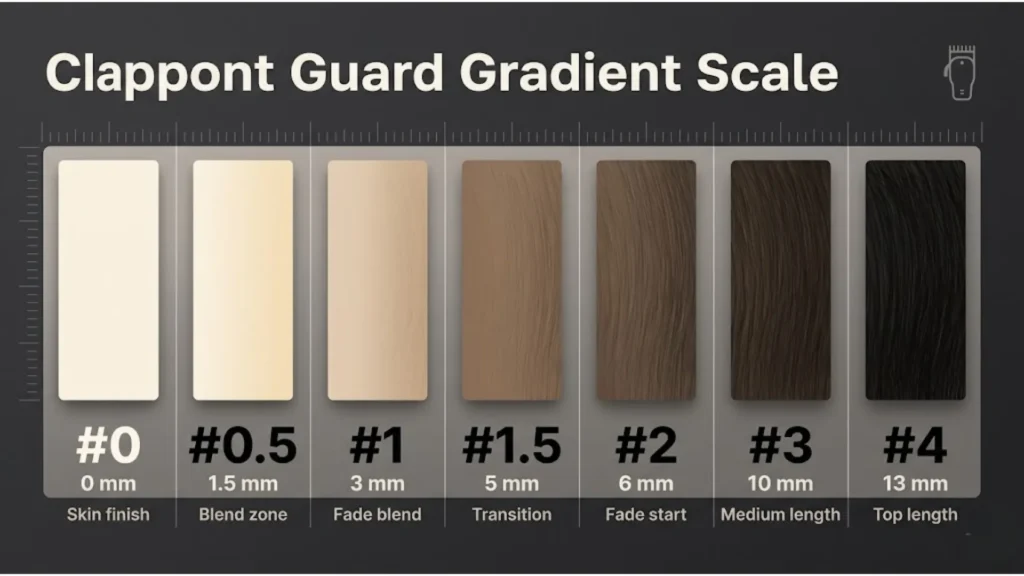
The Clipper Guard Number Breakdown
| Guard Number | Hair Length | Role in the Low Skin Taper Fade |
|---|---|---|
| #0 (bare blade) | 0mm — skin level | The lowest point, creates the skin finish at the neckline |
| #0.5 | 1.5mm | First step above the skin, creates the shadow blend |
| #1 | 3mm | First visible stubble, early fade zone |
| #1.5 | 5mm | Mid-blend transition, smooths the gradient |
| #2 | 6mm | Starting guard where the fade begins just above the ear |
| #3 | 10mm | Transition to full sides on thicker or denser hair |
| #4 and above | 13mm+ | Top blending guard for shorter top styles |
Step-by-Step: How Your Barber Executes the Cut
- Consultation first. Your barber will ask about fade height, top length, neckline shape, and whether you have a beard to blend. This is when you show your reference photos.
- Setting the baseline. A clean guideline is established just above the ear and along the nape. This is the starting point of the entire fade.
- First pass with a #2 guard. The barber removes the bulk from the fade zone, establishing the first layer of the gradient above the ear.
- Guard stepping downward. Guards are switched progressively from #1.5 to #1 using an open-lever technique between sizes, creating a smooth, invisible transition.
- The skin pass. Using a bare clipper blade or zero-gapped trimmer, the barber shaves the area below the neckline completely to the skin. This is the defining moment in the low-skin taper fade when the bald finish is created.
- Foil shaver finish. A foil shaver cleans up the skin portion for a flawless, irritation-free result. This is especially important for men with coily or sensitive skin.
- Scissor-over-comb on top. The top is shaped using the scissor-over-comb technique, giving precise length control without harsh clipper lines.
- Edge-up and line-up. The hairline, temples, and sideburns are defined with a trimmer or straight razor to achieve sharp, clean, geometric edges.
- Final blend check. The barber steps back, looks for any harsh lines, and softens them using blending shears for a seamless finish.
- Styling and product. The barber applies your chosen product and styles the top to complete the look.
The Most Critical Element: The Blend Point
The blend point is the exact spot where your sideburns and edges meet the fade, the transition zone. A well-executed blend point is completely invisible: you cannot see where one length ends and another begins. A poor blend point shows visible lines or harsh jumps in length. This is the number one thing that separates an average fade from an elite one.
Fact Box #1 Professional barbers widely rely on Andis and Wahl clippers for precision fade work. The Andis Master and Andis Fade Master are consistently ranked among the top tools for achieving a seamless, skin-level finish in the transition zone of a skin fade.
40+ Low Skin Taper Fade Styles for Every Hair Type and Occasion
The low-skin-taper fade works on every hair type: straight, wavy, curly, coily, thick, or fine. The styles below are organized by hair type so you can find exactly what works for you, save a photo, and show it to your barber.
Low Skin Taper Fade for Straight Hair
Straight hair shows the cleanest, sharpest fade lines of any hair type. Every blend is visible, which means the barber needs to be precise, but the reward is a haircut that looks razor-sharp.
1. Low Skin Taper Fade + Crew Cut The crew cut with a low skin taper fade is the definition of clean and professional. Short, structured, and effortless to maintain. This is the go-to style for men in corporate environments who want a polished look without trying too hard.
2. Low Skin Taper Fade + Slick Back Slicking the hair straight back over a low skin fade gives you an old-money, sophisticated look. The contrast between the clean-shaven sides and the glossy, slicked-back top is striking. Use a medium-hold pomade with a light shine finish.
3. Low Skin Taper Fade + Comb Over A comb over with a low skin taper fade is one of the most popular professional haircuts in the USA right now. The hair is parted on one side and combed over neatly, while the sides fade down to the skin. Timeless, work-appropriate, and always sharp.
4. Low Skin Taper Fade + French Crop The French crop keeps the top short with choppy, textured layers and a straight fringe sitting over the forehead. Combined with a low skin fade, this is one of the most requested modern cuts in 2026 barbershops.
5. Low Skin Taper Fade + Textured Crop The textured crop gives you a low-maintenance, modern look that works everywhere. The choppy, forward-falling top paired with the subtle low fade creates strong visual contrast with zero effort in the morning.
Pro Tip – Straight Hair: Straight hair shows every single blend line, which means there is no hiding a poorly executed fade. Always book with a barber who specializes in skin fades. Ask them to finish the skin portion with a foil shaver, which gives a glass-smooth finish and reduces irritation. Touch-ups every 2–3 weeks will keep the lines looking crisp.
Low Skin Taper Fade for Curly and Wavy Hair
Curly and wavy hair adds natural volume and texture that pairs beautifully with a low skin taper fade. The contrast between the shaved sides and the textured top is bold, masculine, and seriously eye-catching.
6. Low Skin Taper Fade + Natural Curly Top Let the curls do the work on top while the sides stay clean and faded down to skin. This effortless pairing is perfect for men with Type 2 or Type 3 curl patterns who want to embrace their natural texture.
7. Low Skin Taper Fade + Quiff The quiff brings volume to the front of the hair, sweeping upward and backward. Paired with a low skin fade, the height on top creates a strong visual impact, while the subtle low fade keeps it refined and polished.
8. Low Skin Taper Fade + Faux Hawk For men who want to make a statement, the faux hawk with a low skin-taper fade delivers bold personality without being too extreme. The hair is styled toward the center of the head, while the sides stay cleanly faded. Great for weekends and nights out.
9. Low Skin Taper Fade + Textured Blowout A low skin taper fade keeps the sides neat while creating movement and height on top. Blow-dry with a diffuser and finish with a lightweight texturizing spray for a beachy, effortless look.
10. Low Skin Taper Fade + Side-Swept Curls Side-swept curls with a low skin-taper fade look naturally relaxed and stylish. The curls fall naturally to one side while the clean fade frames the face. No heavy products needed, just a curl cream on damp hair.
Pro Tip: Curly and Wavy Hair: Use a curl cream or mousse on damp hair and scrunch upward to define your natural curl pattern. Avoid thick, heavy products that weigh curls down. The natural volume of curly hair creates a stunning contrast against a skin-level fade, letting the texture speak for itself.
Low Skin Taper Fade for Thick Hair
Thick hair holds a fade exceptionally well. The density creates razor-sharp transitions that look defined and clean for longer between barber visits.
11. Low Skin Taper Fade + Buzz Cut The buzz cut with a low skin taper fade is the ultimate no-fuss, low-maintenance cut. Military-inspired and universally clean. The contrast between the buzzed top and the skin-faded sides gives it just enough edge to look intentional.
12. Low Skin Taper Fade + Pompadour The pompadour with a low skin taper fade is bold and unapologetically stylish. Volume swept high at the front, with clean, faded sides. Use a strong-hold pomade for maximum height and definition.
13. Low Skin Taper Fade + Hard Part Comb Over A hard part, a razor-shaved line dividing the top from the side, adds a professional, detailed finish to the comb over and low skin fade combination. It is subtle enough for the office and stylish enough for a dinner out.
Pro Tip: Thick Hair: Ask your barber to use the clipper-over-comb technique to remove bulk from the top, then finish the sides with a foil shaver for maximum definition. Thick hair can sometimes look heavy, so removing bulk from the sides and top creates better balance and shape.
Low Skin Taper Fade for Fine and Thin Hair
Fact Box #2 Men with very fine or sparse hair (hair Type 1A or 1B) should consider requesting a shadow fade rather than a full skin fade. Exposing the bare scalp through a skin-level fade can make thin hair appear even thinner by increasing the contrast between the hair and scalp.
14. Low Skin Taper Fade + Textured Crop (Best for Thin Hair) The textured crop creates the illusion of more volume and density on fine hair. The choppy layers add visual weight to the top, while the low skin fade on the sides keeps everything balanced and clean.
15. Low Shadow Fade + Comb Over (Recommended Alternative) If you have very fine hair, the shadow fade is the better choice. It gives you the same clean, polished look as the skin fade without fully exposing the scalp. The #0.5 finish creates a soft, subtle gradient that suits finer hair perfectly.
16. Low Skin Taper Fade + Short Buzz Cut For men who are embracing thinner hair confidently, the buzz cut with a low skin fade is a bold, no-apology look. It works with the hair you have rather than trying to hide it.
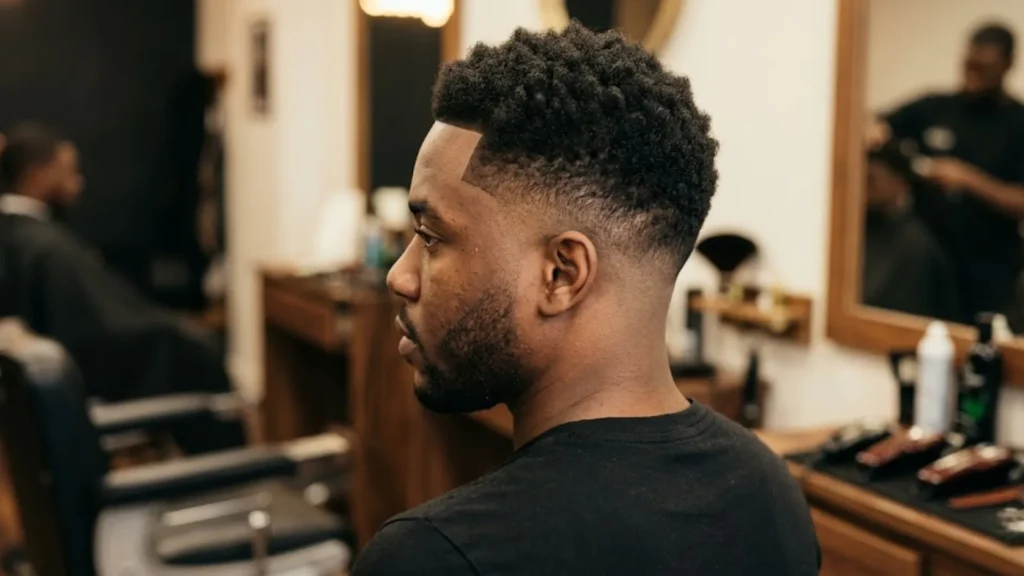
Low Skin Taper Fade for Black Men: The Bald Taper Fade
This section deserves its own space. The low skin taper fade, also called the bald taper fade, is one of the most culturally rooted, historically significant, and widely requested haircuts in Black barbershop culture.
Fact Box #3 The fade haircut has deep cultural roots in Black and Latino communities in the United States. It rose to mainstream prominence in the 1980s and 1990s through the influence of hip-hop culture, sports icons, and community barbershops. Barbershops in the Black community have historically served as more than places for haircuts; they are spaces for community, art, conversation, and culture.
Why Afro-Textured Hair Needs a Specialist Barber
Afro-textured hair, especially Type 4 hair with 4B and 4C curl patterns, has a unique biological structure that requires specific barbering skills. The follicles of Type 4 hair are flat and ribbon-like, which creates tightly coiled strands that grow in a distinctive Z-shaped pattern. This density and coil pattern mean the hair behaves very differently with clippers than it does with straight or wavy hair.
Here is what you need to know: 4C hair can shrink up to 70% of its actual length when dry. Six inches of 4C hair may only appear as two inches. This affects how a barber measures and executes the fade.
The tightly coiled structure also means that cut hairs can curl back into the skin after a close shave, causing razor bumps (a condition known medically as pseudofolliculitis barbae). This is why finding a barber with specific experience with afro-textured hair is critical.
Fact Box #4 Pseudofolliculitis barbae, commonly known as razor bumps, affects up to 60% of Black men who shave regularly. The condition is caused by the curved follicle structure of coily hair, which causes cut hairs to re-enter the skin after shaving. Using a foil shaver instead of a direct straight razor for the skin portion of a fade significantly reduces the risk of irritation and ingrown hairs for men with Type 3C to 4C hair.
Best Low Skin Taper Fade Styles for Black Men
17. Low Skin Taper Fade + 360 Waves. This is one of the most iconic and clean combinations in Black men’s grooming. The low skin taper fade keeps the neckline and temple area sharp while the 360 wave pattern stays smooth and evenly defined across the crown. To maintain the waves, keep up your wave brush routine, wear a durag or satin cap after each barber visit, and book touch-ups every two weeks.
18. Low Skin Taper Fade + Afro with Shape-Up A low-skin taper fade frames a natural afro beautifully. The clean, shaved sides create a structured silhouette around the afro without disturbing the natural volume on top. A sharp shape-up, also called an edge-up along the hairline adds geometric definition, making the entire look intentional and polished.
19. Low Skin Taper Fade + Sponge Twists / Coil Twists Sponge twists and coil twists on top with a low skin taper fade create a textured, culturally rich look. The faded sides keep everything clean while the twists on top add personality and depth.
20. Low Skin Taper Fade + Cornrows Cornrows with a clean low skin taper fade is a statement look that balances traditional technique with modern barbering. The low fade keeps the sides neat and defined while the cornrows add detail and artistry on top.
21. Low Skin Taper Fade + High Top The high top with a low skin taper fade brings bold volume and structure together. The structured, rounded high top adds height and confidence, while the skin-level sides create strong visual contrast.
22. Low Skin Taper Fade + Two-Strand Twists. Created by dividing the hair into small sections and twisting them with two strands, this top style pairs naturally with a low bald taper. The soft, textured appearance on top, against the sharp, faded sides, creates a balanced, stylish look.
23. Low Skin Taper Fade + Dreadlocks / Locs. Locs paired with a clean, low-skin taper fade are bold and sophisticated. The faded sides add modern barbering contrast to the locs, creating a look that bridges traditional style with contemporary grooming.
24. Low Skin Taper Fade + Line-Up and Design A sharp line-up with a precise design, such as a geometric pattern or simple logo cut into the fade zone, is a popular choice among Black men who want to express individuality through their haircut.
Pro Tip: Black Men / Afro-Textured Hair: Always confirm that your barber has hands-on experience with type 4 afro-textured hair before your appointment. Ask specifically about how they handle the skin portion. A foil shaver is strongly preferred over a straight razor for coily hair types to minimize razor bumps. For 360 waves, communicate clearly that you want the fade to preserve the wave pattern on top and ask them not to disturb the wave structure during the cut.
Low Skin Taper Fade with Beard: Black Men
Pairing a low-skin-taper fade with a beard creates a seamless, masculine look that completely frames the face. Ask your barber specifically to blend the fade into the beard line rather than leaving a hard, unnatural line where the fade ends and the beard begins. This technique creates a smooth gradient from your hairline through the fade into the beard for a professional, put-together finish.
Best beard styles to pair with a low skin taper fade for Black men: a full beard with a clean shape-up, a tapered stubble beard, or a goatee with defined edges.
Low Skin Taper Fade with a Beard: All Hair Types
The skin taper fade naturally transitions into beard stubble when blended correctly along the jaw and neckline. For all hair types, this combination creates one of the most complete masculine grooming looks available. Tell your barber: “Blend the fade into my beard; I don’t want a hard line.”
Low Skin Taper Fade by Occasion
Which Face Shape Suits a Low Skin Taper Fade?
The low-skin-taper fade is one of the most universally flattering haircuts for men. But the top style you pair it with should complement your face shape for the best result.
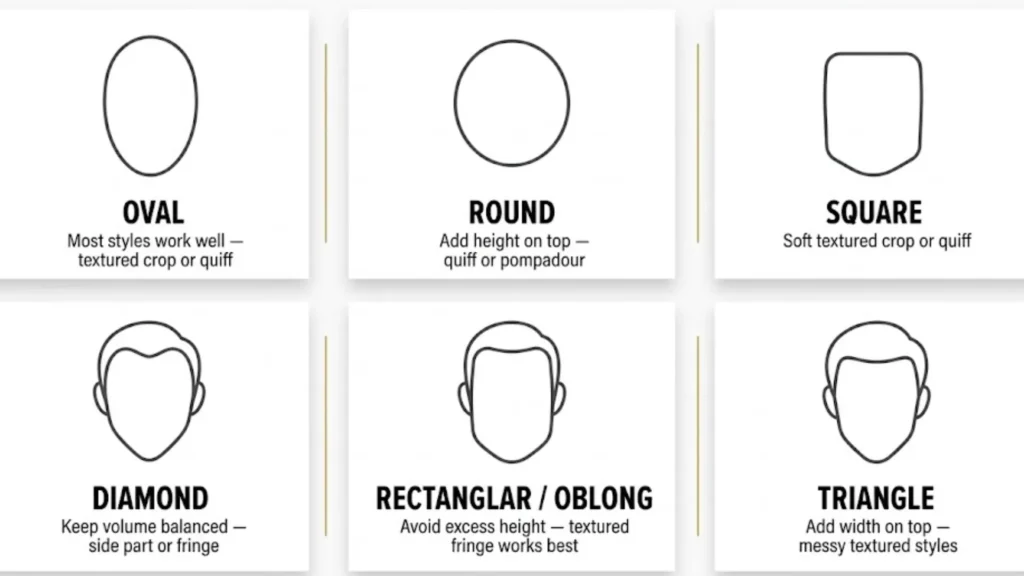
Face Shape Matching Guide
| Face Shape | Key Features | Best Top Style | What to Avoid |
|---|---|---|---|
| Oval | Balanced proportions | Any style works, most versatile | Extreme volume on top |
| Round | Equal width and height, soft angles | Add height: quiff, pompadour, faux hawk | Volume on the sides makes the face appear rounder |
| Square | Strong jaw, equal width | Soft quiff, textured crop | A buzz cut can overemphasize the squareness |
| Heart-shaped | Wide forehead, narrow chin | French crop, textured crop | High pompadour adds forehead width |
| Diamond | Wide cheekbones, narrow forehead and chin | Comb over, side part, natural curls | Extreme high top |
| Rectangular / Oblong | Long and narrow face | Side-swept, comb over, blowout | A very tall quiff adds excessive length to the face |
| Triangle | Narrow forehead, wide jaw | Volume on top: quiff, faux hawk | Tight sides with a flat top |
How to Find Your Face Shape Before Your Barber Visit
Pull all your hair back so your full face is visible. Look directly into a mirror and trace the outline of your face from hairline to jawline. Compare the width of your forehead, cheekbones, and jaw, then measure your face from forehead to chin. The longest and widest measurements will tell you your face shape. When in doubt, take a photo of your face and show it to your barber; they will recommend the right top style for you.
Not confident in identifying your own face shape? Taper Empire’s free tool analyzes your facial structure jaw angle, width, symmetry and returns ranked taper styles scored to your geometry, so you skip the guesswork entirely.
Exactly What to Tell Your Barber: How to Ask for a Low Skin Taper Fade
This is the section most guides skip entirely, but it is arguably the most important one. Knowing what you want is useless if you cannot communicate it clearly to your barber. Here is the exact script to use.
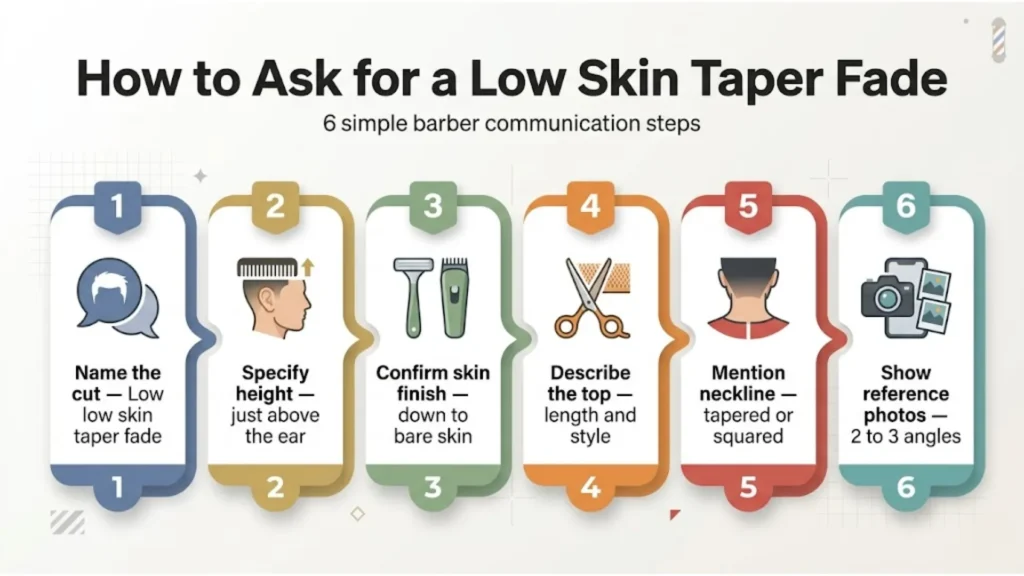
The Barber Script: Step by Step
Step 1 — Name the cut: “I want a low skin taper fade, please.” You can also say “low bald taper fade” or “low taper skin fade”; all three communicate the same thing clearly to any experienced barber.
Step 2 — Specify the height: “Keep the fade low, start just above the ear and down toward the neckline.” This tells your barber where to place the blend point so it stays low and conservative, not climbing up toward the temple.
Step 3 — Confirm the skin finish: “Take it all the way down to bare skin and please use a foil shaver for the bottom if you have one.” This confirms you want the bald or skin-level finish at the lowest point, not just a short taper.
Step 4 — Describe the top: “Leave about [X] inches on top I want a [crew cut / textured crop/comb over / natural curls].” Be as specific as possible about the top length and desired style. Show a reference photo at this point.
Step 5 — Mention the neckline: “Keep the neckline tapered, not squared off.” Or: “Give me a squared neckline at the back.” The neckline shape affects the overall finish dramatically. Always specify your preference.
Step 6 — Bring reference photos: Show 2 to 3 photos from different angles, front, side, and back. Do not just show one front-facing photo. Barbers need to see the full picture.
What NOT to Say to Your Barber
| ❌ What to Avoid | ✅ What to Say Instead |
|---|---|
| “Just a fade” | “Low skin taper fade — just above the ear, down to bare skin” |
| “Whatever looks good on me.” | “Here are the reference photos I want to match this style.” |
| “Take a little off the sides.” | “Fade the sides down to skin, keeping the fade low.” |
| “Make it clean.” | “Clean neckline tapered finish at the back.” |
| “You know what I mean.” | “Be specific every single time, great barbers appreciate clear direction” |
Pro Tips for Your Barber Visit:
Book a morning appointment, barbers are freshest and most focused early in the day
Show photos from multiple angles, not just one front-facing photo
Always ask if your barber has experience with your specific hair type, especially if you have Type 4 afro-textured hair
Book your next appointment before you leave the chair; low-skin fades need touch-ups every 2 to 3 weeks
If you have a beard, ask your barber to blend the fade into your beard line for a seamless finish
Want the barber script written for you? Taper Empire generates a complete brief guard numbers, blend point, neckline finish, and verbatim chair language matched to your face in under 60 seconds.
How to Maintain Your Low Skin Taper Fade: Complete Aftercare Guide
Getting the cut is step one. Keeping it looking sharp is step two and most men skip it entirely.
How Long Does a Low Skin Taper Fade Last?
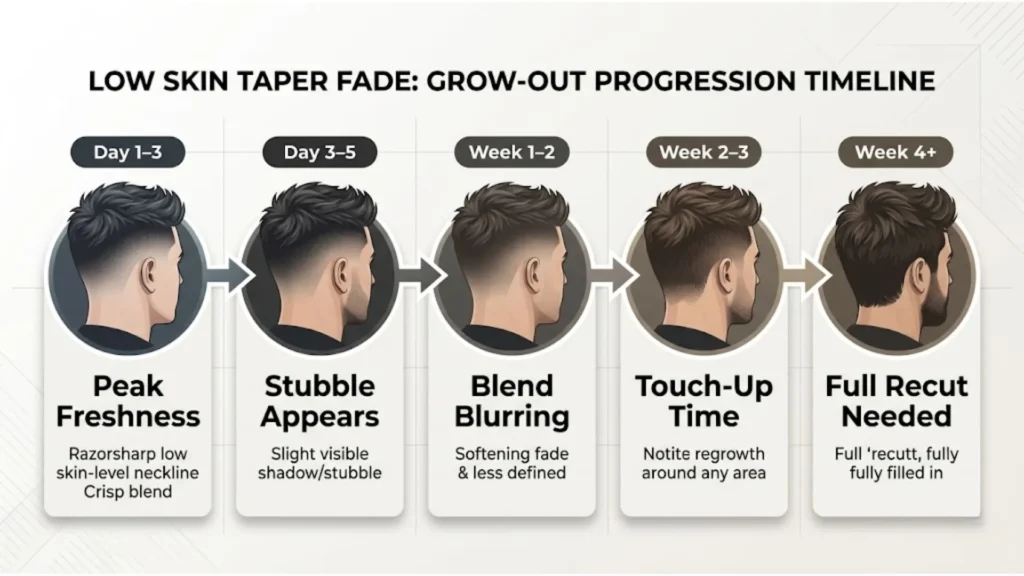
A low skin taper fade typically requires a touch-up every 2 to 3 weeks to maintain its crisp, skin-level appearance. Stubble becomes visible on the skin portion within 3 to 5 days of the cut. The fade line begins to blur after 7 to 10 days. Men with faster hair growth may need to visit every 2 weeks; those with slower growth can comfortably stretch to 3 weeks.
Week-by-Week Grow-Out Timeline
| Days After the Cut | What You Will Notice | What to Do |
|---|---|---|
| Day 1 to 3 | Fresh, sharp, perfect skin-level finish | Enjoy it, this is the peak |
| Day 3 to 5 | Stubble appears on the shaved skin area | Moisturize the scalp daily |
| Day 5 to 7 | Fade begins to soften very slightly | Clean up the neckline with a home trimmer |
| Week 2 | Visible regrowth — blend starts blurring | Schedule your barber visit |
| Week 2 to 3 | Fade line blurs — skin finish no longer visible | Time for a touch-up |
| Week 4 and beyond | Significant regrowth — style has changed considerably | Full recut needed |
Daily and Weekly Aftercare Routine
| Frequency | Action | Product or Tool | Why It Matters |
|---|---|---|---|
| Daily | Moisturize the exposed scalp area | Scalp oil or lightweight hydrating serum | Prevents dryness, flaking, and tightness |
| Daily | Style top hair | Pomade, matte clay, or curl cream | Maintains your look |
| 2 to 3 times per week | Wash hair and scalp | Sulfate-free shampoo | Removes product buildup, keeps scalp healthy |
| After every wash | Condition hair | Leave-in conditioner | Keeps hair hydrated and manageable |
| Weekly | Clean up the neckline | At-home trimmer | Maintains clean edges between barber visits |
| Nightly | Protect hair while sleeping | Satin or silk pillowcase, silk durag | Prevents friction and maintains curl and wave patterns |
| Outdoors | Protect the exposed scalp from the sun | SPF moisturizer or a hat | Prevents UV damage to bare scalp skin |
Best Styling Products for Your Low Skin Taper Fade
| Top Style | Best Product | Hold Level | Finish |
|---|---|---|---|
| Slick back or comb over | Pomade | High | Shiny |
| Textured crop or messy look | Matte clay or wax | Medium | Matte |
| Curly or wavy hair | Curl cream or mousse | Light to medium | Natural |
| 360 Waves (Black men) | Wave butter or light pomade | Medium | Natural shine |
| Quiff or pompadour | Strong-hold pomade or molding paste | High | Shiny to matte |
| Buzz cut | Scalp oil (minimal product) | None | Natural |
| Faux hawk or spiky styles | Texturizing spray or paste | Medium to high | Matte |
Scalp Care After a Skin Fade
When your hair is shaved down to bare skin, your scalp loses its natural protection. Here is how to take care of it:
- Apply a non-greasy scalp oil or hydrating serum to the shaved area every day, especially in dry weather
- Wash with a gentle, sulfate-free shampoo two to three times per week to remove product buildup without stripping natural oils
- Avoid aftershaves with high alcohol content, as they will dry out and tighten the skin
- Use a soothing aftershave balm if your barber used a razor during the cut, as this reduces irritation and redness
- Apply an SPF moisturizer to the exposed scalp whenever you are spending time outdoors
Fact Box #5 The American Academy of Dermatology recommends applying SPF 30 or higher to any area of the scalp that is exposed through shaving or hair loss. Hair follicles shaved to skin level provide zero UV protection, and repeated sun exposure on an unprotected scalp increases the risk of sunburn and long-term skin damage.
Avoiding Razor Bumps and Ingrown Hairs
Men with coily or kinky hair, particularly Type 3C to 4C, are most at risk of razor bumps after a skin fade because of the curved structure of their hair follicles. Here is how to reduce the risk:
- Ask your barber to use a foil shaver rather than a straight razor for the skin portion whenever possible
- Gently exfoliate the shaved area two to three days after the cut using a mild scrub
- Apply a lightweight, non-comedogenic moisturizer to the skin area daily
- Never dry shave at home always use shaving cream or a shaving gel if cleaning up the neckline yourself
- If bumps appear, apply a warm compress and a soothing aloe vera gel do not pick or scratch
Is a Low Skin Taper Fade Right for You?
Who It Works Best For
All hair types: straight, wavy, curly, coily, thick, and most fine hair types
All face shapes: with the right top style pairing
Professional environments: it is the most conservative fade option available
First-time fade clients: the low height means minimal commitment
Men who need versatility: works seamlessly from the office to the weekend
Black men who want a culture-rooted, sharply executed fade with maximum definition
Men with beards: the skin fade blends seamlessly into facial hair
Who Should Consider an Alternative
Men with very fine or sparse hair (Type 1A) → Shadow fade is a better option it achieves a similar look without fully exposing a thinning scalp
Men with active scalp conditions such as psoriasis or eczema on the scalp → Consult a dermatologist before getting a skin-level shave in affected areas
Men severely prone to razor bumps → Discuss the foil shaver option with your barber and consider a shadow fade instead
Men who want a truly low-maintenance cut → A regular taper (no skin finish) grows out more naturally and lasts longer between visits
Still deciding between a skin fade, shadow fade, or regular taper? Taper Empire scores each option against your actual face structure and hair profile so the decision is based on data, not guesswork. Free and private.
Why the Low Skin Taper Fade Is the Defining Haircut of 2026
The Cultural Roots of the Fade
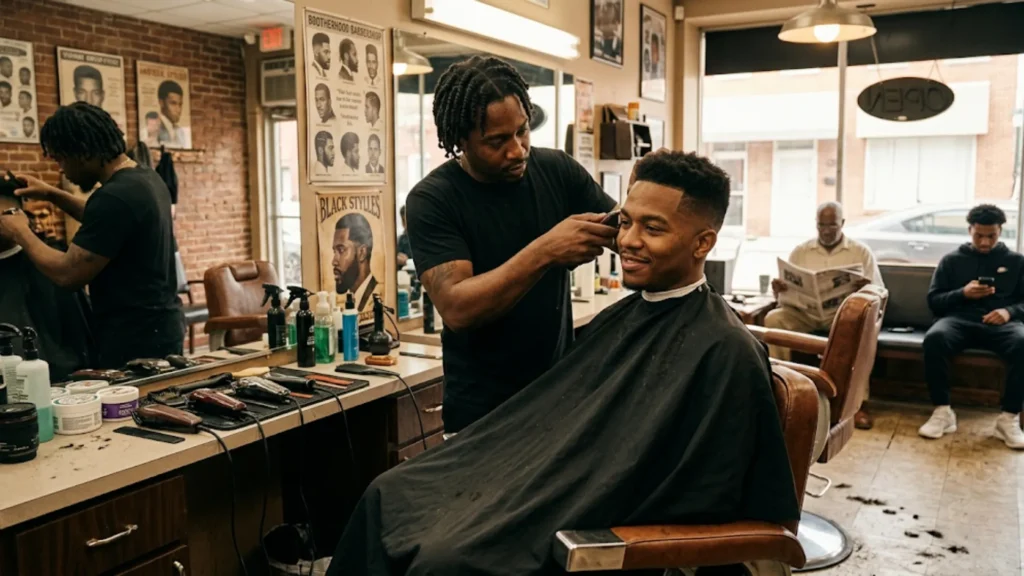
The fade haircut did not appear out of nowhere. It has deep, meaningful roots in Black and Latino communities in the United States communities where the barbershop was never just a place to get a haircut. It was a social space, a cultural hub, and a community institution.
In the 1980s and 1990s, the fade rose to national prominence through hip-hop music, basketball courts, and the streets of New York, Los Angeles, and Chicago. Artists, athletes, and cultural icons wore fades as a statement of identity and pride. Over the decades, the style evolved, moving from very high, dramatic military-style fades to the more subtle, universally wearable low-skin-taper fade that dominates barbershops across America in 2026.
Fact Box #6: According to research published by the Smithsonian Institution, the Black barbershop has served as a cornerstone of African American community life for over 150 years, a space for political discussion, cultural expression, mentorship, and grooming. The fade haircut is one of the most visible cultural contributions to emerge from this tradition.
The Low Taper Fade Meme: What It Tells Us
If you have spent any time on TikTok in the last two years, you have seen the low taper fade meme. Men post side-by-side before-and-after transformation photos disheveled before, razor-sharp low skin taper fade after, and the internet goes wild every single time. The hashtag has generated hundreds of millions of views across TikTok and Instagram combined.
What does this tell us? The low-skin-taper fade is not just a haircut. It is associated with self-improvement, confidence, and personal transformation. When people see a before-and-after with this cut, the reaction is universal because the haircut is universally recognizable as sharp, clean, and put-together.
Low Skin Taper Fade Trends to Watch in 2026
- The fade-and-beard combination continues to dominate barbershop request lists. The seamless blend from hair to beard is one of the most requested finishing techniques
- Mullet revival, low skin taper fades on the sides with longer length at the back, are trending across all demographics
- Design fades geometric patterns and custom designs cut into the fade zone are growing in popularity, particularly among younger clients
- The clean comb-over + low skin fade remains the single most requested professional haircut combination in USA barbershops
Frequently Asked Questions
How much does a low skin taper fade cost in the USA?
The average cost of a low skin taper fade in the United States ranges from $25 to $65. The price depends on the barbershop location, the barber’s experience level, and any additional services such as a beard trim, line-up, or design work. Premium barbershops in major cities like New York City, Los Angeles, and Chicago typically charge between $50 and $80 or more.
How long does a low-skin taper fade take to cut?
A professional low skin taper fade typically takes between 30 and 60 minutes from start to finish. Skin blending, foil shaver work, and line-up take more time than a basic trim. Complex top styles like a sculpted pompadour or a shaped afro may push the total time to 75 minutes or more.
Can I get a low skin taper fade with a line-up?
Yes, and it looks incredible. A lineup, also called an edge-up or shape-up, pairs perfectly with a low-skin-taper fade. The razor-sharp edges defined at the hairline and temples create a geometric frame that enhances the smooth gradient of the taper. This combination is especially popular among Black men and is one of the most requested finishing touches in urban barbershops across America.
Is a low-skin-taper fade professional and work-appropriate?
Absolutely. The low skin taper fade is one of the most workplace-friendly fade options available. Because the fade starts low just above the ear, the sides retain significant hair length, making the overall look conservative and appropriate for professional environments. For the most formal look, pair it with a neatly combed comb over or a classic crew cut on top.
Can I maintain a low skin taper fade at home between barber visits?
You can handle basic edge maintenance at home using a personal trimmer to clean up the neckline and sideburns. However, replicating the precise skin-level blending of a full low skin taper fade requires professional tools, including zero-gapped clippers and a foil shaver, and professional skill. Attempting the full fade at home without proper experience usually results in uneven lines and visible mistakes. Stick to barber touch-ups every 2 to 3 weeks for best results.
Does a low-skin-taper fade work on all hair types?
Yes, the low-skin-taper fade works on straight, wavy, curly, coily, thick, and most fine hair types. The technique adapts to any texture, though the visual result varies. Men with afro-textured hair should look for a barber with hands-on experience with coily hair to ensure proper blending and reduce the risk of razor bumps.
What is the difference between a low skin taper fade and a regular taper?
A regular taper gradually shortens the hair toward the neckline but always leaves some hair at the base; it never reaches bare skin. A low skin taper fade takes this process all the way to zero, blending the hair completely down to the scalp at the lowest point. The result is sharper, crisper, and more defined than a regular taper, with visible skin at the neckline and sideburn area.
How often should I get a low skin taper fade touched up?
Most men need a touch-up every 2 to 3 weeks to keep a low-skin, taper fade looking sharp. The skin portion shows visible stubble within 3 to 5 days of the cut, and the blend line begins to soften after about 7 to 10 days. If you want to maintain that fresh-from-the-barber look consistently, a 2-week touch-up schedule is ideal.