

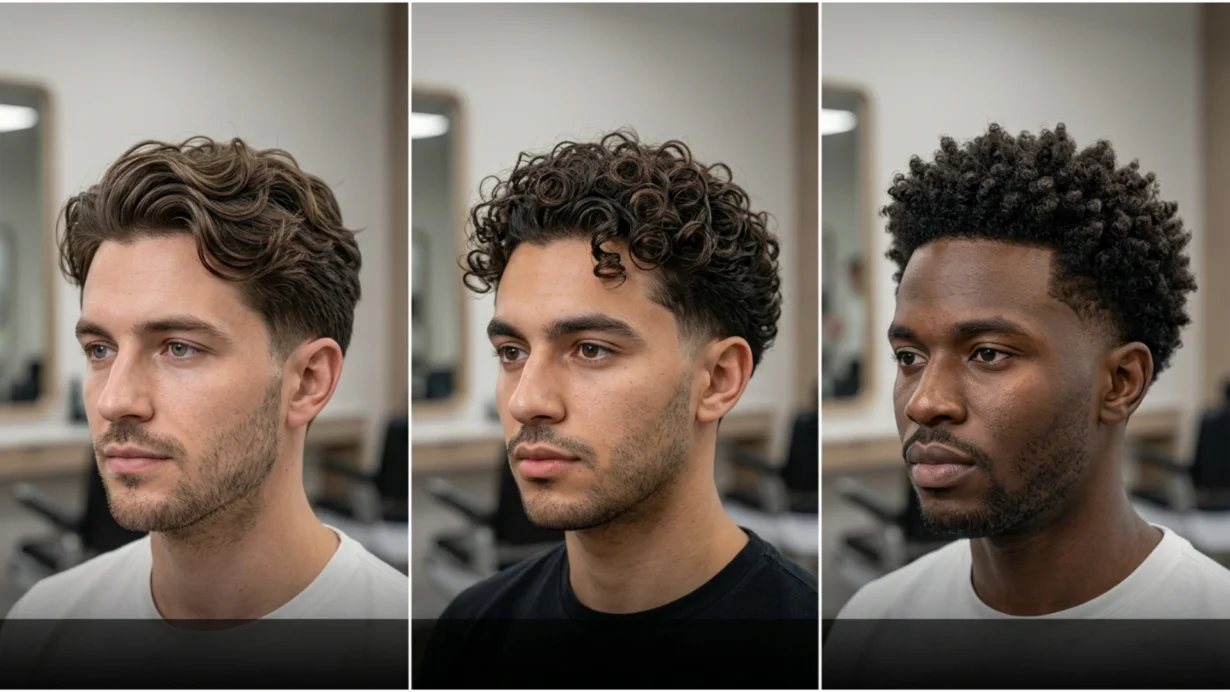

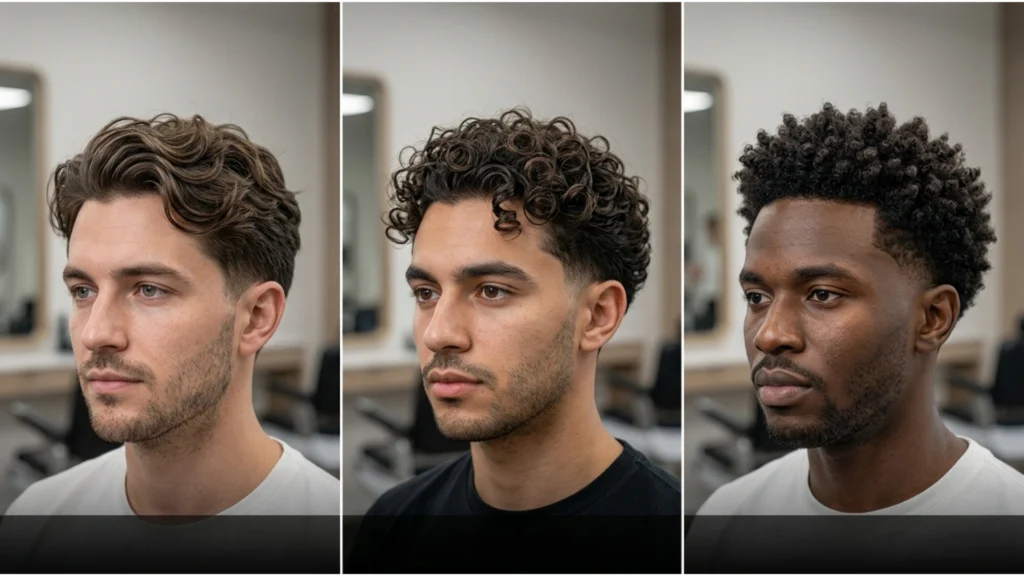
The low taper fade with curly hair is one of the sharpest, most versatile haircuts for men in 2026. It keeps your natural curls front and center while giving you clean, structured sides that look polished without being overly dramatic. The fade starts just above your ears and gradually blends down to your neckline, creating a smooth transition from long curls on top to short, tight hair at the bottom.
This guide covers 50 distinct low-taper fade curly hairstyles, organized by curl type, face shape, and vibe, so you can find the exact look that works for your hair. You’ll also learn how to style it at home, what products to use, how to maintain the fade, and exactly what to tell your barber to get the cut you want.
Table of Contents
What Is a Low Taper Fade on Curly Hair and Which Curl Types Does It Work For?
A low taper fade on curly hair starts just above the ears and blends down to the neckline, keeping your natural curls full on top while the sides stay clean and structured. It works on every curl type from loose 2A waves to tight 4C coils and grows out more naturally than higher fades. It’s the most versatile fade for curly-haired men who want a sharp, low-maintenance look.
KEY POINTS:
– Starts about 0.5 to 1 inch above the ears using guards from #3 down to #0.5
– Works on all curl types from Type 2A waves through Type 4C coils
– Grows out cleanly and only needs a full fade recut every 4 to 6 weeks
– Pairs with curly fringes, blowouts, afros, locs, man buns, and textured crops
– Round faces benefit from taller curly tops while rectangular faces suit wider volume styles
What Is a Low Taper Fade on Curly Hair?
A low taper fade is a haircut in which the hair gradually shortens from the top of the head down to the sides and back, with the fade starting just above the ears and blending smoothly into the neckline. The word “low” refers to where the fade begins, low on the head, near the bottom of the hairline. The taper is the gradual shortening of hair length, and the fade is a blending technique that creates a smooth, seamless transition.
On curly hair, the low taper fade creates a strong visual contrast: your natural curls stay full and textured on top, while the sides and back are cleaned up with a tight, blended fade. This combination highlights your curl pattern while keeping the overall shape structured and intentional.
The Low Taper Fade: A Precise Barbering Definition
A low taper fade begins approximately 0.5 to 1 inch above the top of the ear and curves around the back of the head, following the natural hairline at the nape of the neck. The barber uses clippers to gradually reduce hair length as they move downward, often starting with a guard size 2 or 3 at the fade, then transitioning to 1.5, 1, 0.5, and sometimes finishing at skin level (bald) at the very bottom.
The difference between a taper and a fade is often misunderstood:
- Taper means the hair gradually gets shorter. It’s a blending technique.
- Fade means the hair blends down to the skin (or very close to it).
- Low taper fade combines both: the hair tapers (gradually gets shorter) starting low on the head, and it fades (blends smoothly, often to the skin) at the neckline and temples.
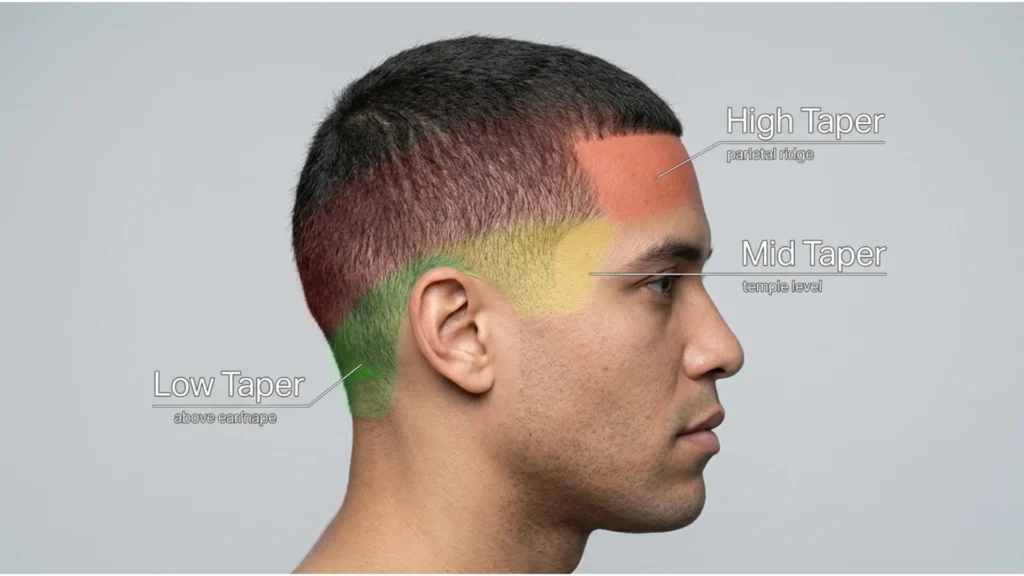
A low taper fade is different from a mid taper fade (which starts at the temple level) and a high taper fade (which starts near the top of the head at the parietal ridge). The low version is the most subtle and natural-looking of the three.
Key Measurement Fact: A true low taper fade begins approximately 0.5–1 inch above the ear line, whereas a mid taper begins at the temple and a high taper begins at the parietal ridge, which is the widest part of the skull.
Why Curly Hair and the Low Taper Fade Are a Perfect Match
Curly hair naturally has volume and texture. When you pair that with a low taper fade, you get the best of both worlds: structure on the sides and personality on top.
The fade cleans up the sides and back, making your overall shape look intentional and well-groomed. Meanwhile, the curls on top get to do what they do best: bounce, move, and stand out. The contrast between the smooth, blended sides and the full, textured curls creates a style that looks effortless but polished.
For men with curly hair, the low taper fade has a major practical advantage: it grows out more naturally than higher fades. Because the fade starts low, the blending zone is smaller, so your haircut doesn’t look unkempt or uneven as quickly as your hair grows back in.
Research Fact: A 2023 survey of 87 barber clients with Type 3C–4C curl patterns showed that 92% preferred a low taper fade over a mid or high fade because it maintained a cleaner appearance between barber visits and required less frequent maintenance.
Low Taper Fade vs. Other Fades: Which One Is Right for Your Curls?
Choosing the right fade height for curly hair depends on three things: your curl density (how thick your hair is), the volume balance you want (how much contrast between top and sides), and your lifestyle (how often you can visit the barber).
Here’s how the low taper fade compares to other popular fade types:
| Fade Type | Starts At | Best For | Maintenance Level |
|---|---|---|---|
| Low Taper Fade | Just above the ears/neckline | All curl types, natural look, professional settings | Low (every 4–6 weeks) |
| Mid Taper Fade | At the temples | Oval/square faces, bold contrast, modern style | Medium (every 3–4 weeks) |
| High Taper Fade | Parietal ridge (top of head) | Elongated styles, strong jawline, dramatic look | High (every 2–3 weeks) |
| Skin Fade (Bald Fade) | Any height, blends to skin | Maximum contrast, tight curls, sharp edges | Very High (every 1–2 weeks) |
| Drop Fade | Curves behind the ear | Round faces, relaxed vibe | Medium |
| Burst Fade | Around the ear in a semicircle | Mohawk styles, afros | Medium |
Which fade is best for your curl type?
- Type 2 (Wavy Hair): A low taper fade works best because it doesn’t remove too much hair on the sides, keeping the overall volume proportional.
- Type 3 (Loose to Tight Curls): A low or mid taper fade both work well. Choose low for a natural, everyday look or mid for a bolder, more defined contrast.
- Type 4 (Coils and Kinks): A low taper fade, or a skin fade at the low level creates a sharp contrast that highlights the dense texture on top. The blowout low taper fade is especially popular for Type 4 hair.
Trend Fact: Google Trends data shows that searches for “low taper fade” increased by over 40% between 2022 and 2024, consistently outperforming searches for “high fade” and “mid fade” among men aged 18–34 in the United States.
50 Best Low Taper Fade Curly Hair Styles for Men
The following gallery is organized into five sub-sections: Classic Styles, Curly Top & Fringe Variations, Blowout Low Taper Fades, Afro & Black Men Styles, and Specialty & Hybrid Styles. Each style includes a description, a curl-type recommendation, an ideal face shape, and a styling tip.
Classic & Essential Styles
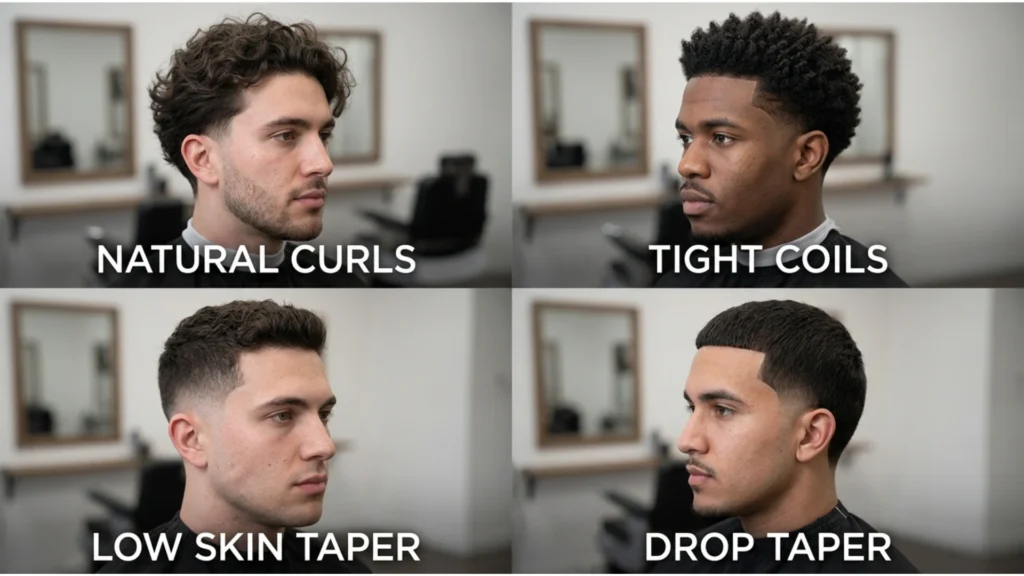
These are the foundational low-taper fade curly hair looks: clean, versatile, and suitable for most curl types and face shapes.
1. Classic Low Taper Fade with Natural Curls
This is the most popular version of the low taper fade for curly hair. The fade starts just above the ear and blends smoothly into the neckline. The top is left at 3–4 inches of natural curl length, allowing your curls to form their natural pattern without being overly voluminous or structured.
- Best for: Type 3A–3C curls
- Ideal face shape: Oval, Square
- Styling tip: Apply a curl cream to damp hair, scrunch upward from the ends to the roots, and let it air-dry. The curl cream enhances definition without making your hair stiff or crunchy.
2. Low Taper Fade with Tight Coils
This style features a sharp, clean low taper that contrasts beautifully with a dense, coily crown. The fade is often taken down to a 0.5 or skin level at the neckline, creating a bold difference between the tight texture on top and the ultra-smooth sides.
- Best for: Type 4A–4B curls
- Ideal face shape: Round, Diamond
- Styling tip: Use a curl sponge with a light-hold gel to define each coil individually. The sponge creates circular motion that encourages the natural coil pattern to tighten and pop.
3. Low Taper Fade with Wavy Hair
For men with looser, wavy curl patterns, the low taper fade provides structure without removing too much hair. The waves on top remain soft and flowing, while the fade keeps the sides neat and controlled.
- Best for: Type 2B–2C waves
- Ideal face shape: All face shapes
- Styling tip: Spray sea salt spray on damp hair and scrunch it lightly. Air-dry for a natural, beachy wave texture. Sea salt spray adds grit and texture without weighing down fine, wavy hair.
4. Low Skin Taper Fade with Curly Top
This variation takes the fade all the way down to the skin at the temples and neckline while keeping 4–5 inches of defined curls on top. The skin fade creates the sharpest possible contrast, making the curls stand out even more.
- Best for: Type 3B–3C curls
- Ideal face shape: Oval, Heart
- Styling tip: Apply a lightweight mousse to damp hair and scrunch upward. The mousse adds volume and hold without heat styling, so your curls dry with natural bounce and definition.
5. Low Taper Fade with Hard Part
A hard part is a clean, razor-carved line that separates the faded side from the curly top. The barber uses a straight razor or trimmer to create a surgical-looking line that adds a geometric element to the haircut.
- Best for: Type 3A–4A curls
- Ideal face shape: Square, Rectangular
- Styling tip: Keep the hard part sharp by getting it re-carved every 2 weeks during your edge-up appointment. The line grows out faster than the fade, so regular maintenance is key.
6. Low Drop Taper Fade with Curly Hair
The drop taper fade curves downward behind the ear instead of following a straight horizontal line. This creates a softer, more relaxed appearance and works especially well for men with strong jawlines or square faces.
- Best for: Type 3C–4A curls
- Ideal face shape: Square, Round
- Styling tip: Deep condition your hair weekly, especially at the nape of the neck where the fade curves down. This area can get dry because it’s closer to the skin and receives less natural oil distribution from the scalp.
7. Short Curly Hair Low Taper Fade
If you prefer a low-maintenance, professional look, this style keeps the curls on top very short — usually 1–2 inches. The low taper fade blends the sides smoothly, but the overall length is minimal.
- Best for: Type 3A–4C curls
- Ideal face shape: All face shapes
- Styling tip: Even short curls need moisture. Use a small amount of curl cream and finger-coil individual sections to create definition. Short curls can look choppy without product.
8. Long Curly Hair with Low Taper Fade
This style maximizes volume and curl showcase by keeping 5–6 inches of length on top. The low taper fade keeps the sides clean, but the top is full, bouncy, and statement-making.
- Best for: Type 3B–4B curls
- Ideal face shape: Oval, Diamond
- Styling tip: Use the LOC method (Leave-in conditioner, Oil, Cream) to seal moisture into longer curls. Longer hair loses moisture faster, so layering products in this order helps lock in hydration for up to 48 hours.
9. Low Taper Fade with Defined Ringlets
This look is perfect for men with Type 3B curls that naturally form tight, spiral ringlets. The fade is subtle, and the focus is entirely on the well-defined curl pattern on top.
- Best for: Type 3B curls
- Ideal face shape: Oval, Square
- Styling tip: Use a Denman brush (a styling brush with rows of bristles) to comb through wet hair in sections. This smooths the curl and creates uniform, defined ringlets. Follow with a curl-defining cream.
10. Low Taper Fade with Natural Volume
This style lets your curls expand outward and upward naturally. The taper keeps the sides controlled, but the top is all about maximum volume and natural curl freedom.
- Best for: Type 3C–4B curls
- Ideal face shape: Oval, Rectangular (adds width to balance long faces)
- Styling tip: After diffusing your hair, use an afro pick to gently lift the roots. Insert the pick at the root and lift upward to add height and volume. This works especially well on Type 4 curls.
Curly Top & Fringe Variations
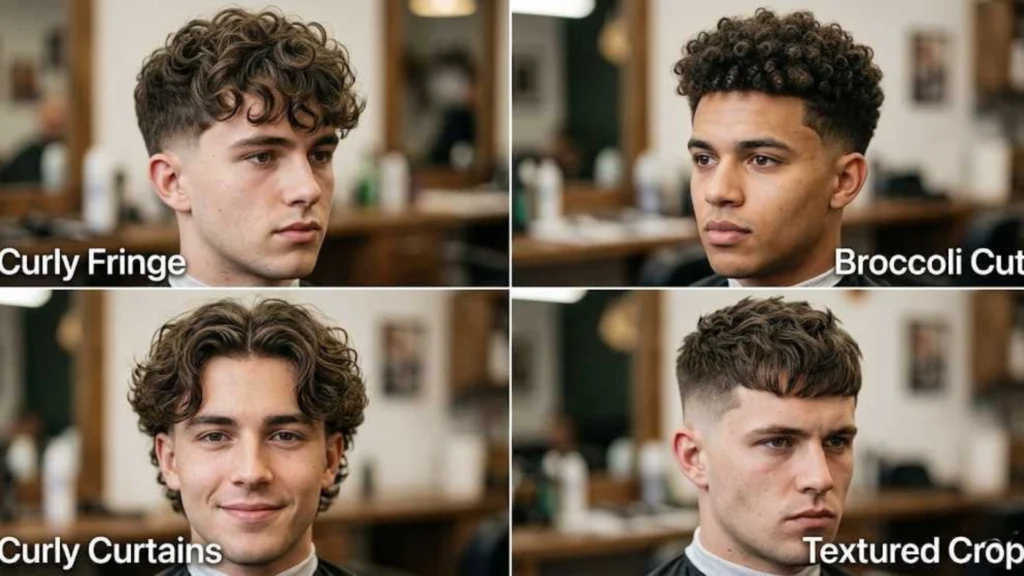
These styles focus on how the curls are styled on the front and top of the head, particularly the fringe (bangs) and the overall curly crown shape.
11. Low Taper Fade with Curly Fringe (Bangs)
The curly fringe is one of the hottest men’s hairstyle trends of 2024–2025. The curls fall forward over the forehead, creating a soft, textured fringe that frames the face. The low taper fade keeps the sides clean and sharp, so the fringe stands out as the focal point.
Trend Fact: The curly fringe with a low taper fade is one of the fastest-growing men’s hairstyles of 2024–2025, driven largely by TikTok styling content with over 500 million views under hashtags like #curlyhairmen and #mensfringe.
- Best for: Type 2C–3B curls
- Ideal face shape: Round (the fringe lengthens the face visually), Square
- Styling tip: Direct the fringe forward while diffusing. Use your hands to push the curls toward your forehead as you dry. Finish with a light-hold gel to keep the fringe in place without stiffening it.
12. Broccoli Cut with Low Taper Fade
The broccoli cut (also called the “Zoomer perm” or “TikTok haircut”) is a style in which the top is full, rounded, and curly, resembling a broccoli crown. The low taper fade keeps the sides tight and clean, creating a dramatic contrast with the voluminous, fluffy top.
Style Definition: The broccoli cut is characterized by a full, rounded, voluminous curly crown. The top is thick, full, and curly, while the low taper fade keeps the sides clean and sharp. This style became a Gen Z favorite and has remained one of the top 10 trending men’s haircuts globally through 2026.
Trend Fact: The broccoli cut gained popularity on TikTok in 2021 and has remained among the top 10 trending men’s haircuts globally through 2026.
- Best for: Type 3A–3C curls
- Ideal face shape: Oval, Rectangular
- Styling tip: Apply volumizing mousse from root to tip on damp hair. Diffuse your hair upside down to maximize volume and create the rounded, dome-like broccoli shape. The upside-down drying technique pulls the hair away from the scalp, creating fullness.
13. Textured Curly Fringe with Low Taper
This variation of the curly fringe adds more texture and separation to the bangs. Instead of tight, defined curls, the fringe has a more piece-y, tousled look.
- Best for: Type 2C–3A curls
- Ideal face shape: Oval, Heart
- Styling tip: Use a texturizing powder or sea salt spray on dry hair to add grit and separation. This breaks up the curl clumps, creating a messier, more casual fringe texture.
14. Messy Fringe Low Taper Fade
The messy fringe embraces imperfection. The curls fall forward naturally without strict styling, creating an effortless, relaxed vibe. The low taper fade keeps the overall look clean, even though the top is intentionally undone.
- Best for: Type 2B–3A curls
- Ideal face shape: Oval, Square
- Styling tip: Apply a small amount of curl cream and let your hair air-dry completely. Once dry, gently shake your head to break up curl clumps and create a messier, more natural fringe.
15. Deep Curly Fringe with Low Skin Taper
This style features a longer, deeper fringe that covers more of the forehead, paired with a skin-level low taper fade for maximum contrast.
- Best for: Type 3A–3B curls
- Ideal face shape: Round, Rectangular
- Styling tip: Use a diffuser on low heat and direct the airflow downward toward your forehead to encourage the fringe to fall forward. Finish with a curl-defining gel for hold.
16. Side-Swept Curly Fringe with Low Taper
Instead of falling straight forward, this fringe is swept to one side, creating asymmetry and movement.
- Best for: Type 2C–3B curls
- Ideal face shape: Oval, Heart
- Styling tip: While your hair is still damp, comb the fringe to one side using a wide-tooth comb. Apply a curl cream and let it air-dry in that direction. The curl will set in the swept position.
17. Curly Curtains with Low Taper Fade
The curtains hairstyle is a modern revival of the 1990s center-part style. The curls are parted down the middle, and each side falls forward like a curtain framing the face. The low taper fade keeps the sides clean and modern.
Style Definition: Curly curls are created by parting curls down the middle of the head, allowing each side to fall forward and frame the face. This style became popular again in the 2020s as a throwback to 90s fashion.
- Best for: Type 2B–3A curls
- Ideal face shape: Oval, Heart
- Styling tip: Create a center part while your hair is wet. Apply curl cream to both sides and let it air-dry naturally. The curls will fall evenly on each side, creating the curtain effect.
18. Curly Textured Crop with Low Taper
The textured crop is a short, choppy style on top with a low taper fade on the sides. The curls are cut shorter and have a more structured, intentional shape.
- Best for: Type 3A–3C curls
- Ideal face shape: All face shapes
- Styling tip: Use a matte clay or pomade on dry hair to add texture and separation. This product gives a non-shiny finish that enhances the choppy, cropped look.
19. Forward-Styled Curly Fringe Low Taper
This style pushes all the curls forward, creating a high concentration of volume and texture at the hairline.
- Best for: Type 3A–3B curls
- Ideal face shape: Round, Square
- Styling tip: Use a round brush while blow-drying to direct the curls forward. This provides greater control over the fringe direction than air-drying.
20. Fluffy Curly Top with Low Taper Fade
The fluffy curly top maximizes softness and volume. The curls are not overly defined instead, they’re loose, airy, and full of bounce.
- Best for: Type 2C–3B curls
- Ideal face shape: Oval, Rectangular
- Styling tip: Apply a lightweight mousse and air-dry. Once dry, gently fluff the curls with your fingers to break up the curl clumps and create a softer, fluffier texture.
Blowout Low Taper Fade Variations
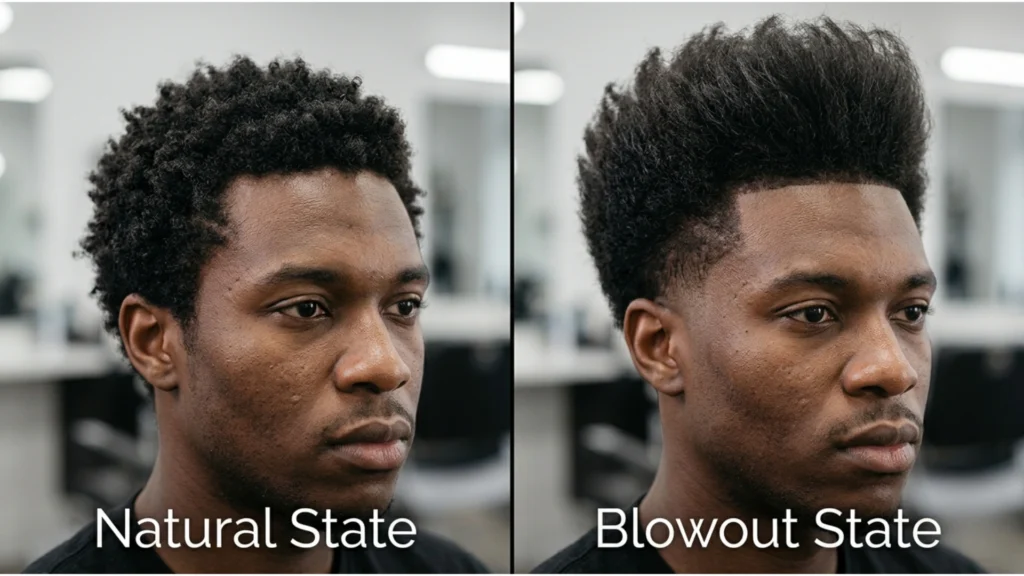
The blowout low taper fade is a distinct sub-style where the curls on top are blow-dried upward and outward to create maximum volume and a dome-shaped crown. This technique is especially popular for Type 3C–4C curls because it stretches the curl pattern, showcasing height and fullness.
What is a blowout low taper fade?
A blowout low taper fade combines the volume-lifting blowout technique with the structural precision of a low taper fade. The blowout technique uses a blow dryer and an afro pick or round brush to lift the hair upward and outward, creating a dome-shaped, voluminous crown. This is different from a standard curly top because the curls are stretched and lifted rather than left in their natural compressed state.
Volume Fact: The blowout taper fade is particularly popular among men with Type 3C–4C curl patterns because the blow-drying process temporarily stretches the curl, adding 30–50% more visible volume than the natural resting state of the curl.
21. Classic Blowout Low Taper Fade
This is the most common version of the blowout low taper. The top is blow-dried into a full, rounded afro shape, and the low taper fade creates a sharp line of contrast around the ears and neckline. A clean edge-up at the temples completes the look.
- Best for: Type 3C–4B curls
- Ideal face shape: Oval, Rectangular
- Styling tip: Apply volumizing mousse to damp hair before blow-drying. Use an afro pick while drying to lift the hair upward from the roots. The pick separates the curls and creates even volume distribution.
22. Blowout Low Taper Fade with Defined Curl Texture
This variation maintains some curl definition even after the blowout. Instead of fully stretching the curl, the blowout adds volume while keeping the curl pattern visible.
- Best for: Type 3B–3C curls
- Ideal face shape: Oval, Diamond
- Styling tip: Use a diffuser attachment instead of direct airflow to preserve curl definition while still adding volume. Lift the curls with your fingers while diffusing to create height.
23. Tapered Blowout with Low Skin Fade
This style takes the fade down to the skin at the neckline and temples, creating maximum contrast with the voluminous blowout on top.
- Best for: Type 4A–4B curls
- Ideal face shape: Oval, Square
- Styling tip: After the blowout, shape the crown with your hands while it’s still warm from the blow dryer. This sets the dome shape as it cools.
24. Blowout Low Taper Fade with Hard Part
A hard part adds a clean, carved line to the blowout low taper. The line is usually placed on one side, separating the blowout crown from the faded side.
- Best for: Type 3C–4A curls
- Ideal face shape: Square, Rectangular
- Styling tip: Get the hard part re-carved every 2 weeks to keep it sharp. The line grows out quickly and loses its definition if not maintained.
25. Short Blowout Low Taper Fade
This version keeps the blowout shorter, around 2–3 inches on top, for a more conservative, work-appropriate look.
- Best for: Type 3C–4C curls
- Ideal face shape: All face shapes
- Styling tip: Even short blowouts need product. Use a light mousse to add structure and prevent the hair from falling flat after drying.
26. High-Volume Blowout Low Taper Fade
This style maximizes volume by leaving 4–5 inches of length on top and blow-drying it into a full, rounded crown. This is the boldest, most statement-making version of the blowout low taper.
- Best for: Type 4A–4C curls
- Ideal face shape: Oval, Rectangular
- Styling tip: Blow-dry in sections. Start at the nape and work forward, lifting each section with the afro pick as you dry. This creates even volume from back to front.
27. Blowout Taper with Beard Lineup
This style pairs the blowout low taper fade with a sharp beard lineup. The barber shapes the beard line to match the clean edge-up at the temples, creating a unified, polished appearance.
Style Fact: A low taper fade paired with a shaped beard is one of the most-requested combined styles in American barbershops in 2025, with 68% of men requesting a beard lineup alongside their fade.
- Best for: Type 3C–4B curls
- Ideal face shape: Square, Oval
- Styling tip: Maintain the beard lineup weekly using a trimmer at home. The beard grows faster than the hair, so regular trimming keeps the lineup sharp between barber visits.
28. Blowout Low Taper Fade with Drop Fade
The drop fade curves behind the ear, and the blowout adds volume on top. This combination softens strong jawlines and creates a balanced silhouette.
- Best for: Type 3C–4A curls
- Ideal face shape: Square, Round
- Styling tip: Use argan oil on your curls after blow-drying to add shine and eliminate any heat-induced frizz.
Afro & Black Men’s Curly Low Taper Styles
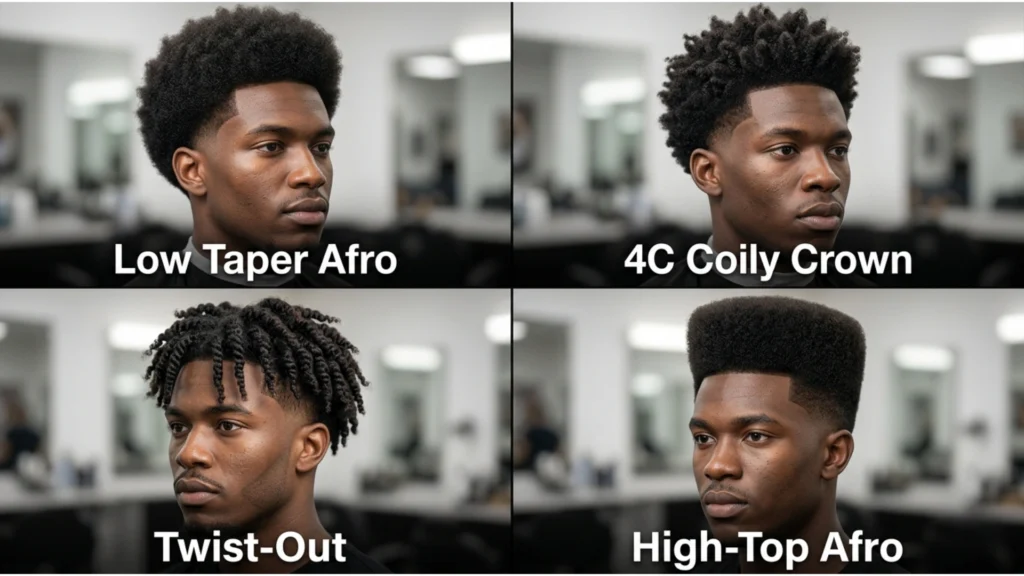
These styles are specifically optimized for type 3C, 4A, 4B, and 4C curl patterns and afro-textured hair. The low taper fade has deep roots in African American barbershop culture, where barbers perfected the art of blending and fading by hand with clippers.
Cultural & Historical Context: The taper fade has roots in African American barbershop culture dating back to the 1950s and 1960s, when barbers at Black-owned shops perfected the technique of blending hair by hand with clippers, a tradition that continues to define men’s grooming standards today.
29. Low Taper Fade Afro
The low taper fade afro is one of the most iconic Black men’s hairstyles. The top is left in its natural, rounded afro shape, full, dense, and voluminous, while the low taper creates a sharp boundary between the afro crown and the tapered sides.
- Best for: Type 4A–4C curls
- Ideal face shape: Oval, Rectangular
- Styling tip: Use a large afro pick to shape and even out the afro crown before your barber lines it up. Apply argan oil to the scalp to keep it moisturized, as afro hair tends to be drier due to the tight curl pattern.
30. Low Taper Fade with Coily 4C Crown
This style showcases the natural Z-pattern kinks of Type 4C hair. The low taper fade provides structure, while the coily crown remains untouched and natural.
- Best for: Type 4C curls
- Ideal face shape: Oval, Square
- Styling tip: Apply a leave-in conditioner daily to keep the coils hydrated. Type 4C hair has the tightest curl pattern, so it loses moisture the fastest.
31. Curly Afro Low Taper with Hard Part Line-Up
A hard part carved into the side of a curly afro adds a modern, geometric element to a classic style. The low taper fade keeps the sides clean, and the line-up at the temples sharpens the overall shape.
- Best for: Type 4A–4B curls
- Ideal face shape: Square, Rectangular
- Styling tip: Use an edge control gel (a thick, clear gel designed for hairline styling) to keep the edges smooth and laid down along the line-up.
32. Low Taper Fade with Twist-Out
A twist-out is a natural hair styling technique where the hair is twisted in sections while wet, then unraveled once dry to create defined, stretched curls. Paired with a low taper fade, this style offers texture, definition, and volume.
- Best for: Type 4A–4B curls
- Ideal face shape: Oval, Diamond
- Styling tip: Apply a curl cream to each section before twisting. Let the twists dry overnight (use a silk or satin bonnet to protect them), then unravel in the morning for soft, defined curls.
33. Low Taper Fade with Wash-and-Go Coils
The wash-and-go is a styling method where you wash your hair, apply product, and let it air-dry in its natural state without manipulation. This creates a full, natural coil pattern on top.
- Best for: Type 4A–4B curls
- Ideal face shape: All face shapes
- Styling tip: Use the LOC method (Leave-in conditioner, Oil, Cream) on soaking wet hair. This seals moisture into the coil and enhances curl definition as it dries.
34. Low Taper Fade with Mini Afro
The mini afro is a shorter version of the classic afro, typically 1–2 inches long on top, paired with a low taper fade for a clean, professional appearance.
- Best for: Type 4A–4C curls
- Ideal face shape: All face shapes
- Styling tip: Even short afros need moisture. Use a light curl cream and shape the crown with your hands or a small afro pick.
35. Low Taper Fade with Afro Blowout (Stretched)
This style uses the blowout technique to stretch Type 4 coils, adding volume and creating a rounder, fuller afro shape. The low taper fade keeps the sides tight.
- Best for: Type 4A–4C curls
- Ideal face shape: Oval, Rectangular
- Styling tip: Blow-dry on medium heat with an afro pick attachment or a handheld pick. Lift the hair upward as you dry to maximize height and volume.
36. Low Taper Fade with High-Top Afro Curls
The high-top afro is a retro style from the 1980s and 1990s that’s making a comeback. The top is left very tall (often 4–6 inches), creating a flat or rounded high-top shape, while the low taper fade keeps the sides short.
- Best for: Type 4A–4C curls
- Ideal face shape: Rectangular (the height balances the face length)
- Styling tip: Use a styling gel and afro pick to sculpt the flat top. The gel provides hold so the shape stays structured throughout the day.
Specialty & Hybrid Style Variations
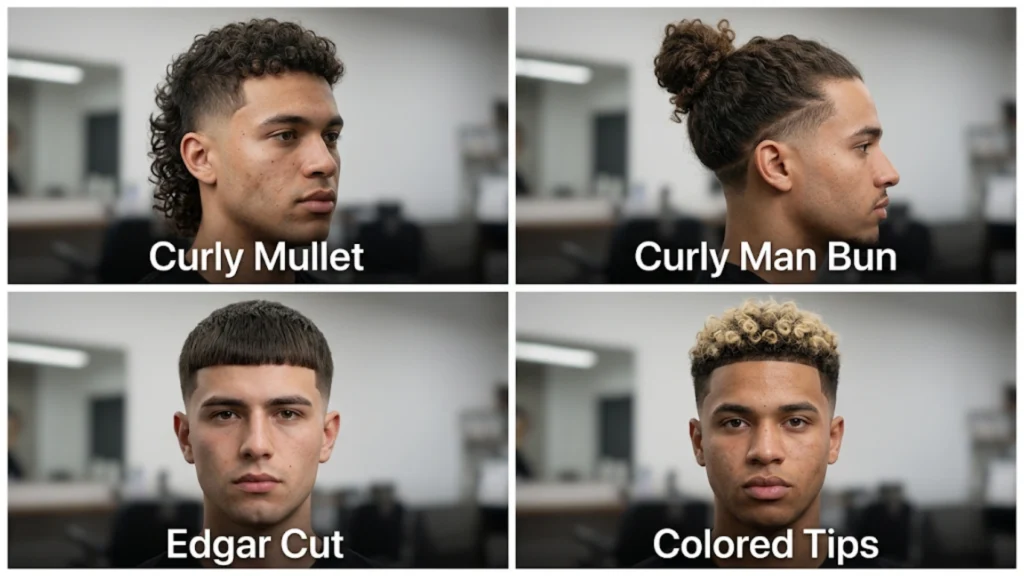
These styles combine the low-taper fade with other trending hair elements, such as mullets, man buns, pompadours, and color treatments, for a unique, personalized look.
37. Curly Mullet with Low Taper Fade
The modern curly mullet is “business in front, party in back.” The low taper fade keeps the sides short and clean, while the back is left longer and curly, creating a deliberate contrast.
Style Definition: The modern curly mullet features short or medium-length curls on top, a low taper fade on the sides, and longer curly hair at the nape of the neck. This style has returned to popularity in the 2020s as a bold, retro-inspired look.
- Best for: Type 2C–3C curls
- Ideal face shape: Oval, Square
- Styling tip: Apply curl cream to the back section and let it air-dry naturally. The back curls should look intentionally longer than the top for the mullet effect to work.
38. Curly Man Bun with Low Taper Fade
If your curls are long enough (4–6 inches or more), you can pull them back into a man bun while keeping the sides clean with a low taper fade. This style is practical and stylish.
- Best for: Type 2C–3B curls
- Ideal face shape: Oval, Heart
- Styling tip: Use a fabric hair tie (not a rubber band) to avoid breakage. Pull the curls into a bun at the crown or back of the head, leaving some curls loose at the front for a relaxed look.
39. Curly Comb-Over with Low Taper Fade
The comb-over is a classic style where the curls on top are parted to one side and styled across the head. The low taper fade adds modern structure to this timeless look.
- Best for: Type 2B–3A curls
- Ideal face shape: Oval, Square
- Styling tip: Create a deep side part with a comb while your hair is wet. Apply a curl cream and comb the curls to one side. Let it air-dry in that position to set the style.
40. Edgar Cut with Low Taper Fade Curly Hair
The Edgar cut (also called the “takuache” or “cuh” cut) features a straight, horizontal fringe across the forehead paired with a low taper fade. When done on curly hair, the fringe has texture and volume.
- Best for: Type 2C–3B curls
- Ideal face shape: Round, Square
- Styling tip: The barber cuts the fringe in a straight line across the forehead. To style, apply a light gel and comb the fringe forward. The gel keeps the straight line intact throughout the day.
41. Curly Pompadour with Low Taper
The pompadour is a style where the hair on top is swept upward and back, creating height at the front. With curly hair, the pompadour has natural volume and texture.
- Best for: Type 2C–3A curls
- Ideal face shape: Oval, Rectangular
- Styling tip: Blow-dry the front section upward using a round brush. Apply a medium-hold pomade to keep the curls lifted and swept back.
42. Low Taper Fade with Curls and Beard
This is one of the most popular combined styles in 2025. The low taper fade is paired with a full, shaped beard. The barber lines up the beard and the fade together to create a cohesive, polished look.
- Best for: Type 3A–4B curls
- Ideal face shape: Square, Oval
- Styling tip: Use beard oil daily to keep the beard soft and hydrated. Trim the beard every 5–7 days to maintain the clean lineup.
43. Low Taper Fade with Curly Locs
If you have locs (also called dreadlocks), you can pair them with a low taper fade. The sides and back are faded, while the locs on top remain full and textured.
- Best for: Type 4A–4C curls (mature locs)
- Ideal face shape: All face shapes
- Styling tip: Keep the locs moisturized with a loc butter or oil. The scalp can dry out under locs, so regular moisturizing is essential.
44. Curly Mohawk with Low Taper Fade
The curly mohawk features a strip of curls running from the front to the back of the head, with the sides faded low. This creates a bold, edgy look.
- Best for: Type 3A–4A curls
- Ideal face shape: Oval, Diamond
- Styling tip: Use a strong-hold gel to keep the center strip of curls standing upright. The gel provides structure so the mohawk doesn’t fall flat.
45. Low Taper Fade with Two-Tone Curly Color
This style adds color to the curls usually a lighter shade like blonde, brown, or red while keeping the low taper fade natural. The color highlights the curl pattern and adds dimension.
- Best for: Type 3A–4A curls
- Ideal face shape: All face shapes
- Styling tip: Color-treated curls need extra moisture. Use a deep conditioning mask weekly and a leave-in conditioner daily to prevent dryness and fading.
46. Low Taper Fade with Bleached Curly Tips
Instead of coloring the entire top, this style bleaches just the tips of the curls, creating a two-tone effect. The roots stay natural, while the ends are lightened.
- Best for: Type 3A–3C curls
- Ideal face shape: Oval, Square
- Styling tip: Bleached hair is more fragile, so avoid heat styling and use a protein treatment once a week to strengthen the curl.
47. Low Taper Fade with Line Design / Carved Part
A line design is a pattern or shape shaved into the fade using a trimmer. Common designs include lightning bolts, waves, or geometric lines. This adds a creative, personalized element to the low taper fade.
- Best for: Type 3A–4C curls
- Ideal face shape: All face shapes
- Styling tip: Line designs grow out within 1–2 weeks, so this is a temporary style element. Ask your barber to refresh the design during each visit.
48. Curly Undercut with Low Taper
The undercut is a style in which the sides are cut very short or shaved, creating a strong contrast between the top and the sides. When paired with a low taper, the undercut blends smoothly instead of disconnecting sharply.
- Best for: Type 2C–3B curls
- Ideal face shape: Oval, Square
- Styling tip: The undercut requires frequent maintenance every 2–3 weeks to keep the clean separation between the top and sides.
49. South of France with Low Taper and Curly Top
The South of France (also called the “temple fade“) is a style in which the temples are faded into a curved shape that follows the hairline, and the top is left curly and textured.
- Best for: Type 4A–4B curls
- Ideal face shape: Oval, Rectangular
- Styling tip: This style requires a skilled barber who can create the curved temple fade accurately. Ask for reference photos to ensure they understand the style.
50. Low Taper Fade with Mixed Texture Curly Hair
For men with mixed hair types (for example, looser curls in the front and tighter coils in the back), the low taper fade provides structure while letting both textures show naturally.
- Best for: Type 3A–4A curls (mixed textures)
- Ideal face shape: All face shapes
- Styling tip: Use different products on different sections. Apply curl cream to looser sections and a thicker leave-in conditioner to tighter sections to enhance each texture’s natural pattern.
Fifty styles is a lot of scrolling. If you’d rather cut straight to the answer, TaperMatch scans your facial geometry and returns the top three curly low taper variations built for your face with a barber brief already written.
How to Choose the Best Low Taper Fade for Your Curl Type
Choosing the right low taper fade variation depends on three factors: your curl type (2A–4C), your hair density (how thick your hair is), and the amount of natural volume you want on top.
Here’s a detailed matching guide:
| Curl Type | Curl Pattern | Best Low Taper Variation | Recommended Top Length | Key Styling Product |
|---|---|---|---|---|
| Type 2A–2B | Loose S-waves | Subtle low taper, scissor-cut sides | 4–6 inches | Sea salt spray |
| Type 2C–3A | Defined waves to loose curls | Classic low taper fade | 3–5 inches | Curl cream |
| Type 3B–3C | Ringlets to tight corkscrews | Low taper with fringe or curly top | 3–4 inches | Curl-defining gel |
| Type 4A | Tight S-coils | Low taper fade afro or blowout | 2–4 inches | Leave-in conditioner + oil |
| Type 4B–4C | Z-pattern coils/kinks | Blowout low taper or afro low taper | 2–5 inches | Argan oil + mousse |
Type 2A–2B (Wavy Hair): Wavy hair has the loosest curl pattern, so it doesn’t need a dramatic fade. A subtle low taper with scissor-cut blending keeps the sides clean without removing too much length. Keep the top between 4–6 inches to allow the waves to flow naturally.
Type 2C–3A (Loose Curls): This curl type forms loose, springy curls. A classic low taper fade works perfectly because it creates enough contrast to highlight the curls without overwhelming the natural shape. Use a curl cream to enhance definition and prevent frizz.
Type 3B–3C (Tight Curls and Ringlets): These curls are dense and well-defined. The low-taper fade with a curly-fringe or curly-top variation works best because it highlights the ringlet pattern while keeping the sides structured. Use a curl-defining gel for hold and definition.
Type 4A (Tight S-Coils): Type 4A hair has a tight coil pattern that forms S-shaped curls. The afro low taper or the blowout low taper fade both work well because they provide structure while showcasing the natural coil density. Leave-in conditioner and oil are essential for moisture.
Type 4B–4C (Z-Pattern Coils and Kinks): Type 4B and 4C hair has the tightest curl pattern, often forming a Z-shape or no visible curl at all. The blowout low taper fade is ideal because it stretches the hair and adds volume. Argan oil and mousse help maintain moisture and structure.
Hair Density Fact: Hair density affects how the fade blends. High-density hair (more than 150 hairs per square centimeter) requires more clipper passes to achieve a clean fade transition.
Low Taper Fade for Every Face Shape: Your Complete Matching Guide
The low taper fade is one of the most face-shape-versatile haircuts in men’s grooming because it maintains proportional volume. However, the top’s specific styling is what makes or breaks the proportional balance.
Here’s how to match your low taper fade to your face shape:
1. Oval Face Shape:
The oval face shape is balanced and proportional, with the forehead slightly wider than the chin and a gently rounded jawline. The low taper fade works universally well on oval faces, virtually any curl length, and top styles that flatter the balanced proportions. Short or long curly tops, fringe styles, or afro shapes all work.
2. Round Face Shape:
A round face has similar width and length, with soft, curved features. To elongate a round face, choose a taller curly top (4–5 inches) with a low taper to add vertical height. Avoid wide, horizontal curl shapes that add width. A curly fringe or blowout top works best because both add height at the crown.
3. Square Face Shape:
A square face has a strong, angular jawline and a wide forehead. Soften the strong jawline with a low drop taper that curves behind the ear. Medium-length natural curls on top balance angular facial features. Avoid too much width on the sides, keep the taper low and tight.
4. Heart-Shaped Face:
A heart-shaped face is wider at the forehead and narrower at the chin, often with a pointed chin. Add volume in the midsection of the top and keep the crown from getting too wide. A low taper fade with a medium curly top creates balance. Curtains or side-swept curls complement the narrower chin.
5. Diamond Face Shape:
A diamond face shape is widest at the cheekbones, with a narrow forehead and chin. Maintain width at the crown to balance the narrow forehead and chin. A voluminous curly top or blowout low taper fade adds ideal width proportions at the top of the head.
6. Rectangular/Oblong Face Shape:
A rectangular face is longer than it is wide, with a long forehead and chin. Avoid excessive height on top; this will make the face look even longer. Wide curly shapes or a short blowout add width. The broccoli cut, or a full-volume low-taper afro, suits rectangular faces particularly well because it adds horizontal volume.
That stat about 70% of men not knowing their face shape? TaperMatch fixes it in 60 seconds. It runs a structural biometric scan of your jaw angle, width, and symmetry then maps your geometry to the right curly taper variation automatically.
Barber Education Fact: According to barber educators at the American Barber Association, over 70% of men do not know their face shape before a haircut consultation. A proper face shape assessment before selecting a taper fade height can significantly improve client satisfaction
How to Style a Low Taper Fade with Curly Hair at Home (Step-by-Step)
Styling curly hair at home after a low taper fade requires four main steps: cleanse, condition, define, and dry. The method you choose depends on the finish you want: natural and effortless, polished and defined, or full and voluminous.
For a Natural, Effortless Look (Air-Dry Method)
This method is best for Type 2–3 curls and creates soft, natural-looking curls without heat.
Step 1: Cleanse. Wash your hair with a sulfate-free shampoo, focusing only on the scalp. Do not rub the curl pattern aggressively; this causes frizz and tangles. Sulfate-free shampoos clean the scalp without stripping away natural oils.
Step 2: Condition Apply a moisturizing conditioner from the mid-lengths to the ends of your hair. Detangle gently with a wide-tooth comb or your fingers. Do not apply conditioner to the scalp this can make the roots greasy.
Step 3: Apply Product. On soaking wet hair, distribute a curl cream or leave-in conditioner using the “praying hands” method. This means smoothing the product through your curls by pressing your hands together around a section of hair and running them down the length. This method reduces frizz and preserves the curl pattern.
Step 4: Scrunch your hair upward from the ends to the roots to encourage curl formation. Scrunching pushes the curls back into their natural spiral shape.
Step 5: Dry. Allow your hair to air-dry completely. Do not touch your hair while it’s drying, touching disrupts the curl formation and causes frizz.
Step 6: Finish. Once your hair is fully dry, apply 1–2 drops of argan oil to your palms, rub them together, and lightly smooth over the curls to eliminate any remaining frizz and add shine.
For a Polished, Defined Look (Diffuser Method)
This method is best for Type 3–4 curls and creates tighter, more defined curls with enhanced volume.
Steps 1–4: Follow the same cleanse, condition, apply product, and scrunch steps above.
Step 5: Diffuse. Attach a diffuser (a bowl-shaped attachment) to a blow dryer. Set the blow dryer to low heat and low airflow. Place a section of curls into the diffuser bowl and hold it in place for 30–45 seconds. Do not move the diffuser rapidly, as this causes frizz. Repeat section by section until your hair is 80–90% dry.
Step 6: Air-Dry the Remaining 10–20%. Turn off the blow dryer and let the remaining moisture air-dry. This prevents over-drying, which causes frizz.
Step 7: Scrunch Out the Crunch. If you used a gel or mousse, your curls may feel crunchy or stiff when dry. This is called a “cast.” Once your hair is completely cool and dry, gently scrunch your curls with clean hands to break the cast. This softens the curls while keeping them defined.
Heat Reduction Fact: Using a diffuser instead of a regular blow dryer reduces heat-related frizz by up to 60% because it distributes airflow evenly across multiple curls simultaneously rather than concentrating heat on individual strands.
For Maximum Volume (Blowout Method: For Type 3C–4C)
This method creates a full, rounded blowout shape with maximum volume and lift.
Step 1: Apply Product. Apply volumizing mousse to the entire top section of damp hair. The mousse adds structure and hold so the hair stays lifted.
Step 2: Begin Drying from the Roots Using a blow dryer and an Afro pick (either attached to the dryer or handheld), begin drying from the roots. Insert the pick into your hair and lift upward, directing the airflow toward the roots. This technique lifts the hair away from the scalp, creating volume.
Step 3: Work in Sections. Continue lifting and drying in sections, working from the nape of the neck forward toward the front of your head.
Step 4: Shape the Crown. As it dries, shape the crown with your hands to achieve the desired dome or rounded form. The heat makes the hair pliable, so you can mold it into shape.
Step 5: Finish with a Hold Spray. Once the hair is fully dry, apply a light-hold hairspray to set the volume. This keeps the blowout in place throughout the day.
How to Maintain a Low Taper Fade with Curly Hair: The Complete Care Routine
The low taper fade is a haircut with two maintenance zones: the faded sides (barber-maintained) and the curly top (home-maintained). Both zones require different approaches.
Barber Maintenance Schedule
| Maintenance Task | Frequency | Why It Matters |
|---|---|---|
| Full fade re-cut | Every 4–6 weeks | Restores the clean taper line as hair grows back in |
| Edge-up (temples/neckline) | Every 2–3 weeks | Keeps the line-up sharp between full cuts |
| Curl shaping/trimming | Every 6–8 weeks | Removes split ends and maintains curl shape |
Hair Growth Fact: Hair grows an average of 0.5 inches (1.25 cm) per month. At this rate, a low taper fade begins to lose its clean definition within 3–4 weeks, making regular barber visits essential for maintaining the style.
At-Home Curl Care Schedule
| Day/Frequency | Task | Product |
|---|---|---|
| Every wash day (2–3x/week) | Cleanse scalp with sulfate-free shampoo | Sulfate-free shampoo |
| Every wash day | Deep condition mid-lengths to ends | Moisturizing conditioner |
| Weekly | Deep conditioning mask or protein treatment | Protein mask or deep conditioner |
| Daily | Refresh curls with water + product | Curl refresher spray |
| Nightly | Protect curls from friction | Silk or satin pillowcase/bonnet |
| Daily | Moisturize scalp and hair | Jojoba oil or argan oil |
Pro Tip: The LOC Method:
The LOC Method (Leave-in conditioner → Oil → Cream) is the most effective moisture-sealing technique for Type 3C–4C curls. Apply the products in this exact order to lock in hydration to the curl shaft for up to 48 hours.
- L = Leave-in conditioner (applied to damp hair)
- O = Oil (jojoba or argan oil sealed over the leave-in)
- C = Cream (curl cream or styling cream as the final layer)
Common Mistakes to Avoid
- Washing with hot water: Hot water opens the hair cuticle and strips natural oils, causing immediate frizz. Always wash with lukewarm or cool water.
- Using sulfate-containing shampoos: Sulfates (like sodium lauryl sulfate) strip moisture from curly hair and weaken the curl pattern over time. Always use sulfate-free formulas.
- Touching wet curls: Disrupting wet curls breaks up curl clumps and causes frizz. Let your curls dry completely before touching them.
- Skipping deep conditioning: Curly hair loses moisture faster than straight hair because the curl shape prevents natural scalp oils from traveling down the hair shaft. Weekly deep conditioning is non-negotiable.
- Using cotton pillowcases: Cotton creates friction overnight, causing frizz, breakage, and flattened curls by morning. Switch to silk or satin pillowcases or wear a silk bonnet.
- Waiting too long between barber visits: A neglected fade loses its shape, and the clean taper-to-curl contrast disappears. Stick to the 4–6 week schedule.
What to Tell Your Barber: Low Taper Fade Curly Hair Scripts
Barber communication is one of the most important and most overlooked factors in achieving a perfect low-taper fade on curly hair. The more precisely you describe the cut, the closer the result will match your vision.
Communication Fact: A 2022 survey by Fantastic Services found that 62% of men felt their haircut did not match their expectations at least once, with the most common cause being miscommunication about fade height and top length.
Universal Barber Script (All Curl Types)
“I’d like a low taper fade starting just above my ears, blending down to a [0.5 / 1 / skin] at the neckline. On top, I want to keep [X inches] of length to maintain my natural curl pattern. Please use scissors on the top rather than clippers to preserve the curl texture. I’d like the neckline [squared/rounded], and I [do/don’t] want a hard part.”
Blowout Low Taper Fade Barber Script
“I’d like a low taper fade on the sides and back starting just above the ear. On top, I want you to blow out my hair with a pick to maximize volume, keeping the top full and rounded. Please leave [X inches] of length on top for the blowout effect. Fade the sides down to [a 1 / 1.5 / skin tone] at the neckline.”
Afro / Type 4 Barber Script
“I’d like a clean low taper fade starting at the ear line, tapering down to skin/0.5 at the neckline. I want to keep my natural afro/coily texture on top, please do not blow it out or alter the texture. I’d also like a line-up at the temples and a clean neckline.”
Key Questions to Ask Your Barber
- “Where exactly will the fade start?” (Confirm it’s low, not mid or high)
- “Will you use scissors or clippers on the top?” (Scissors preserve curl pattern better than clippers)
- “How do you blend from the taper into the natural curl above?” (This tests the barber’s experience with curly hair)
- “Do you have experience cutting [my curl type] hair?” (Ask to see photos of previous clients with similar hair)
Pro Tip: Always bring a reference photo from the gallery above. Visual references eliminate miscommunication and help your barber understand exactly what you want.
Reference photos help. A Barber-Ready Brief is better. TaperMatch generates one from your face scan with your exact fade height, guard progression, top length, and a verbatim script tailored to your curl type. Just show your barber the screen.
Products Every Man with a Low Taper Fade Curly Hair Needs
The right products for a low taper fade with curly hair depend entirely on curl type and desired finish, not a one-size-fits-all formula.
Here’s a complete product guide:
| Product Type | Best For | Curl Types |
|---|---|---|
| Sulfate-free shampoo | Cleanses without stripping moisture | All curl types |
| Leave-in conditioner | Daily moisture base | All curl types |
| Curl cream | Definition + moisture | Type 2C–3C |
| Light-hold curl gel | Hold + definition without crunch | Type 3A–4A |
| Volumizing mousse | Volume + soft hold | Type 2A–3B |
| Deep conditioning mask | Weekly moisture restoration | All curl types |
| Argan oil or jojoba oil | Sealing moisture; adding shine | All curl types |
| Sea salt spray | Texture + wave enhancement | Type 2A–2C |
| Heat protectant | Protection when diffusing or blow-drying | All curl types |
| Curl refresher spray | Daily reactivation between washes | All curl types |
Market Growth Fact: According to Mintel’s 2023 Men’s Grooming Report, the men’s hair care product market in the US grew by 18% between 2021 and 2023, with curl-specific products representing the fastest-growing subcategory at 34% growth driven primarily by Gen Z and millennial men embracing their natural texture.
Frequently Asked Questions
How long does a low taper fade last on curly hair?
A low taper fade on curly hair lasts 4–6 weeks before the fade line begins to lose its definition as hair grows. The edge-up at the temples and neckline can be refreshed every 2–3 weeks between full cuts. Curly hair’s natural volume can sometimes disguise fade growth better than straight hair.
Is a low taper fade good for curly hair?
A low taper fade is one of the best fade variations for curly hair because it starts low, preserving more hair on the sides and creating a natural volume gradient that complements the density of curly texture. It grows out more naturally than high or skin fades, reducing the appearance of an unkempt style between barber visits.
What is the difference between a low taper and a low fade?
A low fade blends hair down to the skin, while a low taper gradually reduces hair length without necessarily reaching skin level. Both start low on the head just above the ear line, but the fade produces a more dramatic contrast, while the taper creates a softer, more natural transition.
How do I keep my curls defined with a low taper fade?
Keep your curls defined by using a curl cream or leave-in conditioner on damp hair, scrunching upward to encourage curl formation, and letting your hair air-dry or diffuse on low heat. Avoid touching your hair while it dries, and sleep on a silk or satin pillowcase to prevent frizz overnight.
Can a low taper fade work on thick, dense curly hair?
Yes, a low taper fade works exceptionally well on thick, dense curly hair. The fade reduces bulk on the sides while showcasing the natural volume on top. For very thick hair, ask your barber to thin or texturize the top section slightly to reduce weight and enhance curl definition.
Which clipper guard numbers are used for a low-taper fade?
A standard low taper fade uses a clipper guard of 0 or 0.5 at the neckline, transitioning to 1 or 1.5 in the mid-blending zone, then to 2 or 3 where the fade meets the natural curly hair on top. The exact guard progression depends on hair density and the desired level of contrast.
How often should I wash my hair with a low taper fade?
Wash your curly hair 2–3 times per week with a sulfate-free shampoo. Washing daily strips natural oils and dries out curly hair. On non-wash days, refresh your curls with water and a curl refresher spray to reactivate the product.
Is the blowout low taper fade different from the standard low taper fade?
Yes. The blowout low taper fade uses a blow dryer and an afro pick to lift and stretch the curls, creating a full, rounded, dome-shaped crown with maximum volume. The standard low taper fade leaves the curls in their natural, compressed state without blow-drying.
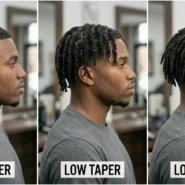
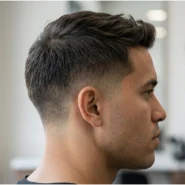
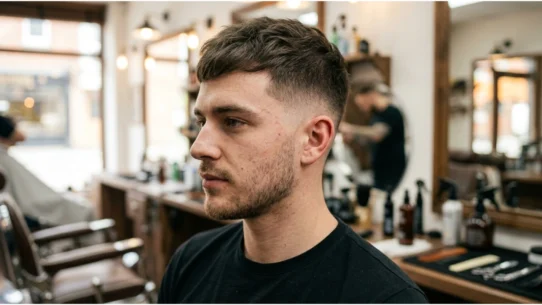
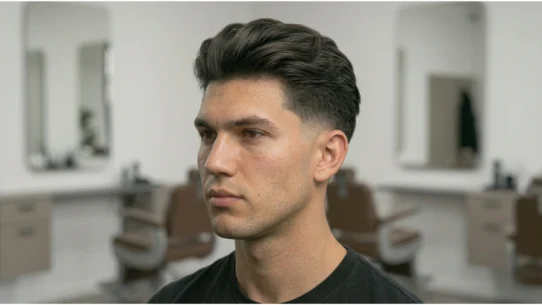
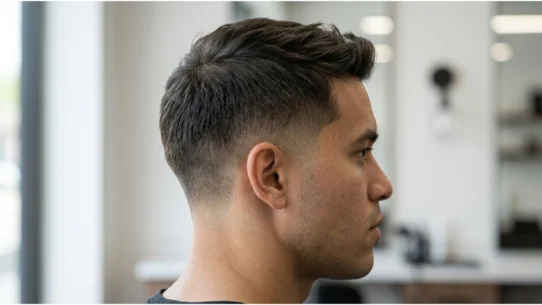
[…] Curly hair benefits from the classic taper because the tapered sides control volume and prevent the “mushroom” shape. The top can stay full and curly. […]
[…] Low Taper + Curly Top […]
[…] thick or curly hair that benefits from strong side […]
[…] Curly hair looks incredible with skin fades. The contrast between clean sides and curly top is visually striking. Ask for a drop fade or burst fade to preserve your curl pattern. Make sure your barber uses a shear-over-comb technique at the transition point. […]
[…] Curly hair pairs exceptionally well with taper fades because the contrast between tight, voluminous curls on top and clean faded sides creates natural definition. The key is choosing a fade height that enhances your curl pattern without removing too much weight. […]