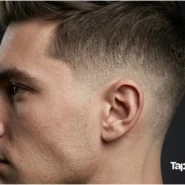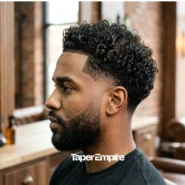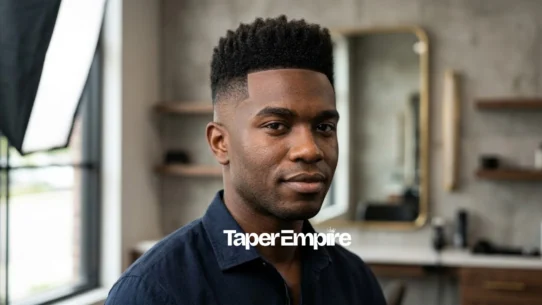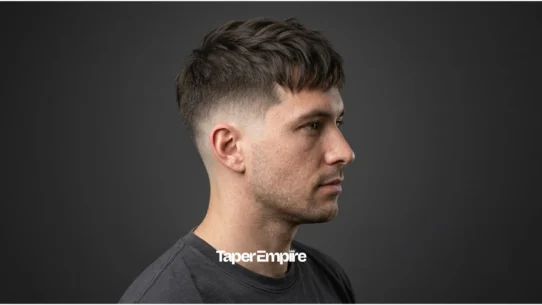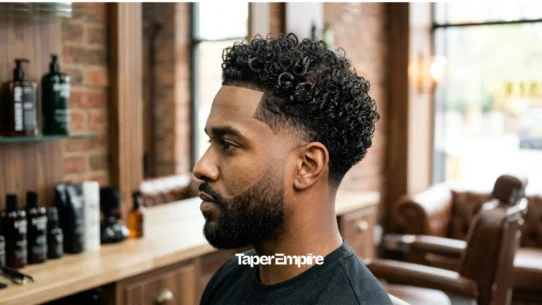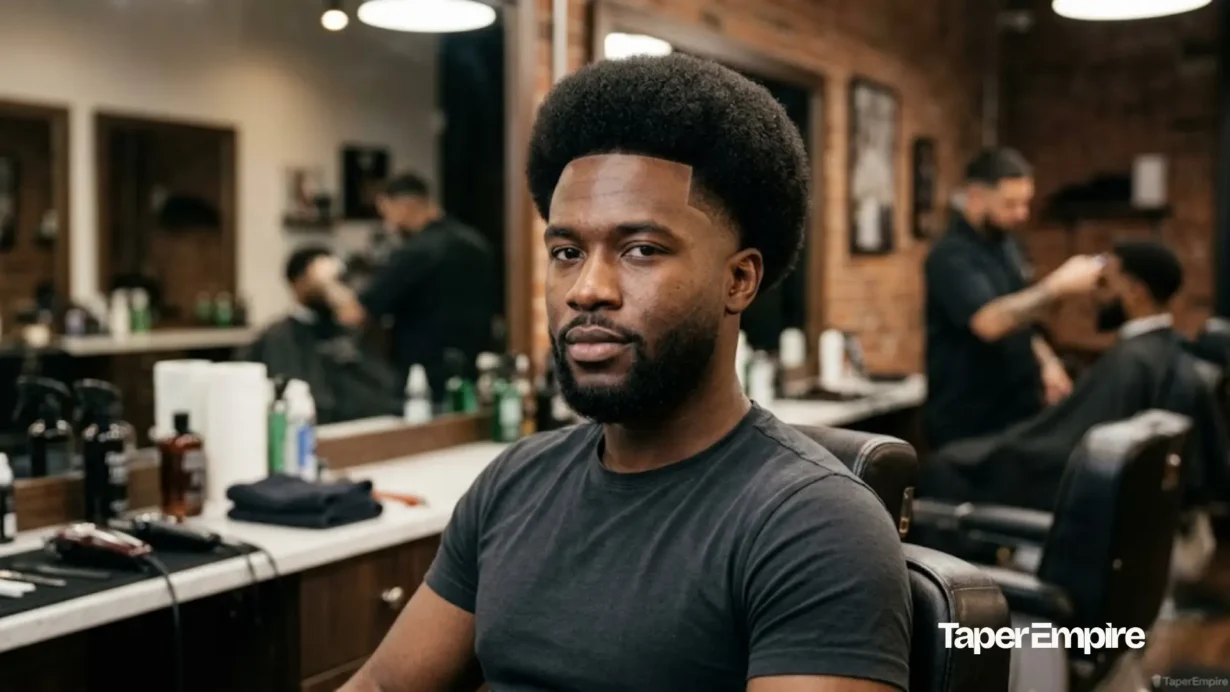

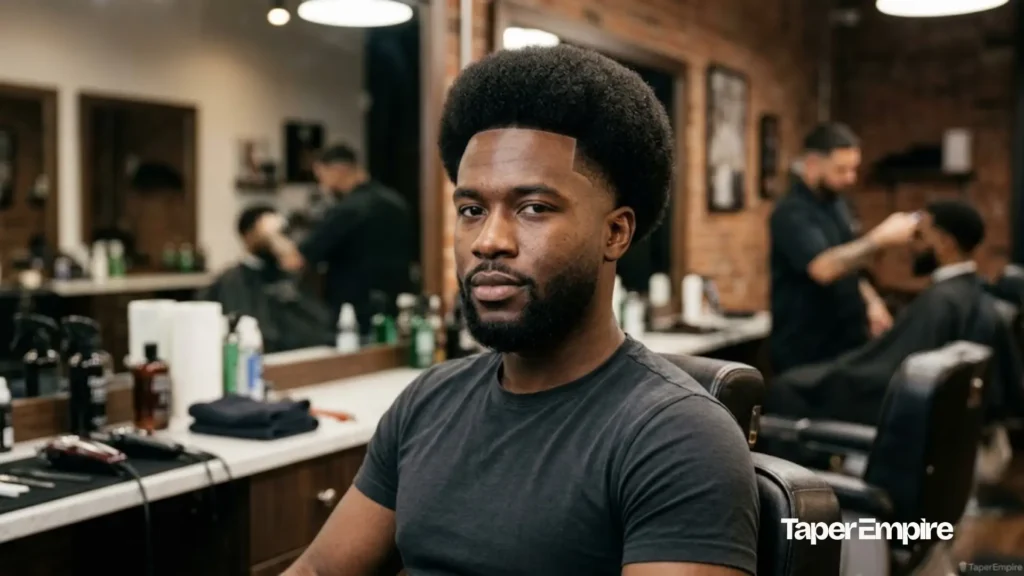
The mid taper fade for Black men is the most versatile, culturally rooted, and widely requested haircut in American barbershops today. Whether you’re sitting in the chair for the first time or looking to switch up your style, choosing the right variation can feel overwhelming. There are dozens of ways to wear this cut, and not every style works for every hair type or face shape.
This guide covers 35 distinct mid-taper fade styles organised by hair type and length, a complete face-shape matching guide, exact barber scripts with guard numbers, a full maintenance routine, and a step-by-step home-cutting breakdown. Everything you need is right here keep reading.
What Is a Mid Taper Fade for Black Men and Why Does It Work So Well?
A mid-taper fade for Black men starts at the temple, about 1 to 2 inches above the ear, and blends smoothly down to the neckline. It works exceptionally well on Afro-textured and coily hair because the temple serves as a natural landmark for the barber, producing cleaner, more consistent blends on 4C hair than lower or higher fades.
KEY POINTS:
- Starts at the temple and creates a moderate contrast between the top and sides
- Works on all Black hair types from 3C curls through 4C coils including locs and braids
- Needs a touch-up every 2 to 3 weeks, with the temple area showing growth first
- Round faces benefit most from height-adding styles like a high top or frohawk
Table of Contents
Taper or fade—which one actually fits your face shape and hair type?
The Taper Style Tool takes your face shape, hair texture, and maintenance preference and tells you which cut works in your favor.
What is a mid-taper fade?
A mid-taper fade is a haircut in which the hair gradually shortens from the top of the head, with the fade beginning at the temple approximately 1–2 inches above the ear and blending smoothly down to the neckline. The seamless gradient transition it creates falls between a low-taper fade and a high-taper fade in placement, producing a balanced, moderate contrast that works across virtually every occasion, from a board meeting to a weekend out.
The word “taper” refers to the gradual decrease in hair length, while “fade” describes the near-skin finish at the base. Together, a taper fade combines both techniques, a smooth progression from longer hair on top to a closely cropped or skin-level finish on the sides and back. Understanding this distinction matters, especially when communicating with your barber. If you want a deeper breakdown of how these two techniques differ, our guide on taper vs fade explains the differences in detail with examples.
Mid Taper Fade vs Low Taper vs High Taper: What’s the Real Difference?
The key difference between a mid-taper fade, a low taper fade, and a high taper fade is where the fade begins on the sides of the head, and that single factor changes the entire look.
| Feature | Low Taper Fade | Mid Taper Fade | High Taper Fade |
|---|---|---|---|
| Where It Starts | Just above the ear/sideburns | Temple (mid-head) | Near the top of the head |
| Contrast Level | Subtle, understated | Balanced, moderate | Bold, dramatic |
| Best For | Professional, conservative settings | All occasions, all face shapes | Bold, youthful, statement looks |
| Ideal Face Shapes | Square, strong jaw | Oval, round, all shapes | Oval, angular |
| Refresh Frequency | Every 3–4 weeks | Every 2–3 weeks | Every 1–2 weeks |
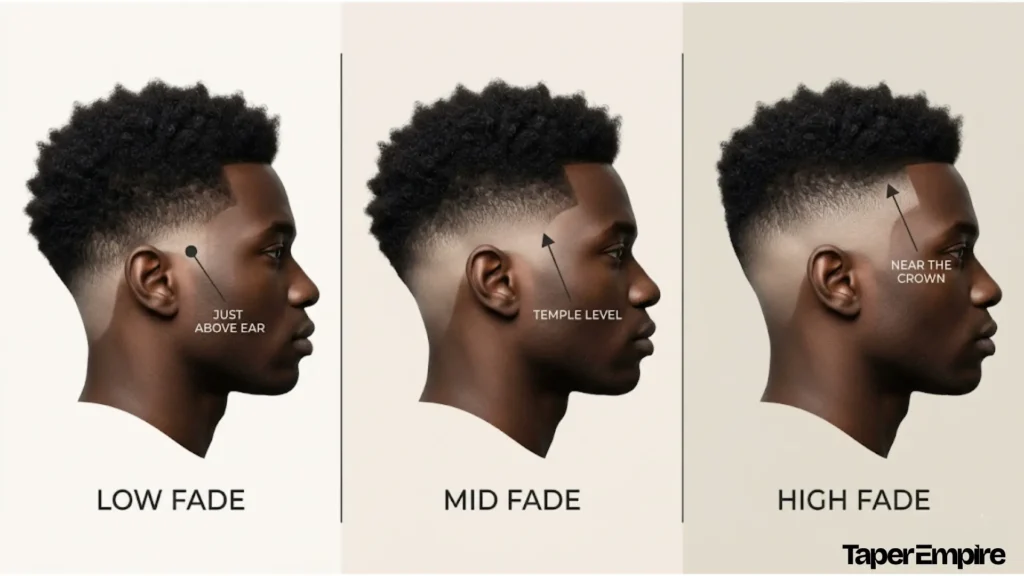
A low taper sits close to the sideburns and nape, offering the most subtle definition. The mid taper starts at the temples and graduates down, striking a balance between professionalism and edge. The high taper begins near the crown, creating sharp, high-contrast sides that demand attention. If you’re still deciding among these three, our low-taper vs mid-taper vs high-taper comparison guide walks through each option in detail.
Key Fact: According to the American Academy of Dermatology (AAD), the mid-taper fade provides structural definition without over-exposing the scalp, making it an ideal option for Black men with sensitive skin or those prone to razor bumps, medically known as pseudofolliculitis barbae.
Why the Mid Taper Fade Works So Well for Black Hair
The mid-taper fade works exceptionally well for Black hair because its gradient structure follows rather than fights the natural growth direction of Afro-textured, coily, and kinky hair. Most fade styles require precise clipper technique to blend tight curl patterns without patchiness. The mid-taper’s starting point at the temple gives the barber a natural anatomical landmark, the parietal ridge, to anchor the fade, creating a cleaner, more consistent blend on coily and 4C hair textures than lower or higher fade placements often allow.
Black hair also experiences significant shrinkage. Tight coils can contract up to 75% of their actual length when dry, so the top section of a mid-taper on 4C hair will appear shorter than it actually is. The mid taper accounts for this by keeping the sides clipped close enough to showcase the curl pattern on top, without cutting so short that sensitive scalp areas are exposed to irritation.
Key Fact: The AAD reports that Black men are disproportionately affected by both traction alopecia and pseudofolliculitis barbae. The mid-taper fade, which avoids extreme closeness at the crown, reduces tension on hair follicles compared to high fades and skin fades, making it one of the healthiest structural choices for regular wear.
Which Mid Taper Fade Styles Work Best for Your Hair Type?
Your hair type determines which styles will look most defined, which products will perform best, and how your barber should approach the blend. Here’s a direct breakdown:
| Hair Type | Description | Best Mid Taper Styles |
|---|---|---|
| 3C | Tight corkscrew curls, high volume | Defined Curls, Curly Pompadour, Curly Afro |
| 4A | Defined spiral coils, moderate shrinkage | Sponge Twists, Twist-Out, Classic Afro |
| 4B | Zig-zag coil pattern, dense texture | High Top Afro, Blowout Afro, FroHawk |
| 4C | Tightest coil, maximum shrinkage | Short Afro, Buzz Cut, Sponged Afro, 360 Waves |
For coarse 4C hair specifically, ask your barber for a hot towel pre-treatment before the fade begins. Two minutes of heat softens the hair shaft, producing a smoother, more even blend with fewer passes of the clippers.
35 Best Mid Taper Fade Styles for Black Men
These 35 styles are organised by hair length and type, short hair first, then afro styles, curly and textured tops, long and protective styles, beard combinations, and design-focused cuts. Each description includes face-shape compatibility, maintenance level, barber communication notes, and product recommendations, so you can take this guide directly to the chair.
Short Hair Mid Taper Fade Styles
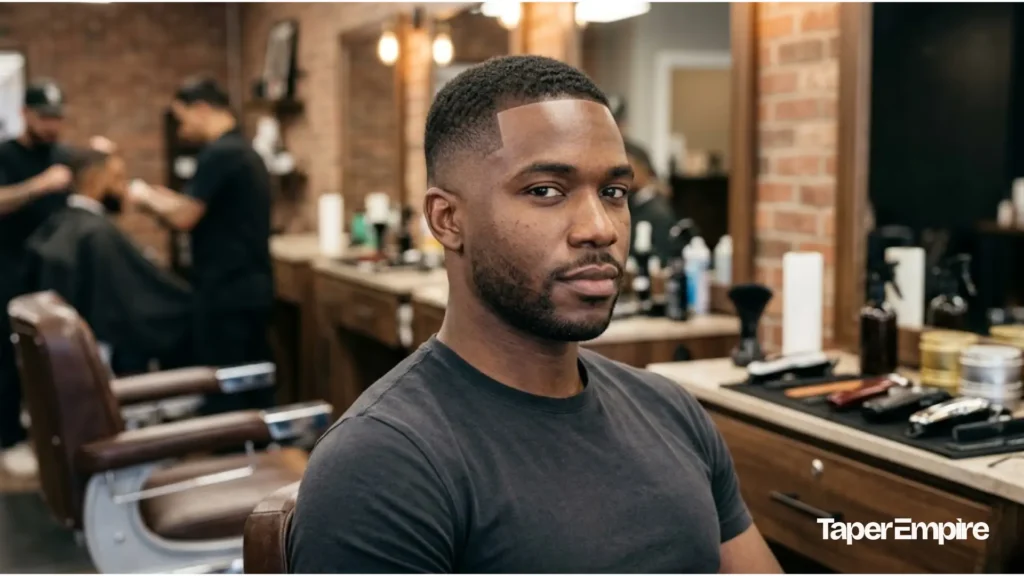
Short mid taper fade styles are the most low-maintenance category in this guide. They suit virtually all face shapes, require the least styling time, and typically call for guard numbers between #0 and #3. A trim every 2–3 weeks keeps the fade clean and sharp.
1. Buzz Cut with Mid Taper Fade
The buzz cut with a mid-taper fade is one of the cleanest, most confident short cuts a Black man can wear: uniform length on top, a crisp fade starting at the temples, and a sharp edge-up on the hairline. It’s military-inspired, effortlessly low-maintenance, and sharp enough for any setting.
- Face shapes: All oval, round, square, heart, oblong
- Hair type: All, including 4C
- Guard numbers: #0 at the neckline base, #1 guideline at temple, #2 blend zone, #1.5 buzz on top
- Maintenance: Low trim every 2–3 weeks
- Product: None required; a light moisturiser on the scalp is all you need
- Barber script: “Mid taper fade starting at the temples, #0 base, #2 blend, #1.5 buzz on top, crisp edge-up on the hairline and temples.”
2. Low Afro with Mid Taper Fade
The low afro with a mid taper fade is a stylish choice for Black men who want a clean, natural look without committing to a full afro. The neatly tapered sides blend into a compact, rounded afro on top. The natural texture does most of the visual work while the fade keeps everything structured.
- Face shapes: Oval, round (adds subtle height), heart
- Hair type: 3C, 4A, 4B
- Maintenance: Low-medium trim every 2–3 weeks, moisturise daily
- Product: Leave-in conditioner + curl cream
- Barber script: “Mid taper starting at the temple, #1 base, #2 blend, leave the top rounded and natural, no scissors on top.”
3. Textured Crop with Mid Taper Fade
The textured crop with a mid taper fade delivers a modern, youthful look with defined short curls on top and a clean fade on the sides. The cropped length on top keeps styling minimal while the texture from coily or 3C hair creates natural visual interest above the fade line.
- Face shapes: Oval, square, diamond
- Hair type: 3C, 4A
- Maintenance: Low trim every 2–3 weeks
- Product: Texture clay for natural grip and definition
- Barber script: “Textured crop with a mid taper fade #2 blend, leave about an inch on top, define the curls naturally, crisp line-up.”
4. French Crop with Mid Taper Fade
The French crop with a mid-taper fade keeps the sides and back tight, with a smooth blend around the ears and neckline, while the top stays short and slightly textured, with the fringe sitting forward. It’s one of the cleanest European-influenced styles that translates beautifully to coily and 4A hair textures.
- Face shapes: Oval, round, square
- Hair type: 3C, 4A
- Maintenance: Low trim every 2 weeks to maintain fringe shape
- Product: Moulding paste for flexible fringe hold
- Barber script: “French crop with a mid taper fade, fringe forward, #2 blend, textured finish on top.”
5. Caesar Cut with Mid Taper Fade
The Caesar cut with a mid-taper fade is a classic structure that works particularly well for Black men with fine or low-density hair, as the uniform short length on top and horizontal fringe create the appearance of fuller coverage, while the fade adds modern sharpness.
- Face shapes: Oval, oblong, heart
- Hair type: All textures
- Maintenance: Low trim every 2–3 weeks
- Product: Light pomade or styling cream
- Barber script: “Caesar cut with mid taper fade horizontal fringe, uniform short length on top, #1 base, #2 blend, clean edge-up.”
6. Crop Top Fade with Mid Taper
The crop top fade with a mid taper is a clean, low-maintenance choice with defined edge work and a compact top section. The short, slightly textured crop contrasts sharply with the mid-tapered sides, creating a polished urban look that suits both 3C and 4C hair types equally well.
- Face shapes: All
- Hair type: 3C, 4A, 4B
- Maintenance: Low trim every 2 weeks
- Product: Texture clay or light curl cream
- Barber script: “Crop top with mid taper fade, tight sides starting at the temple, short textured top, sharp line-up.”
7. 360 Waves with Mid Taper Fade
The 360 waves with a mid-taper fade are one of the most disciplined and visually striking short styles in Black men’s grooming. Tight, uniform circular waves wrap the scalp in a polished pattern, and the mid taper keeps the sides clean without disrupting the wave formation. Achieving this look requires consistent brushing, wolfing, and durag maintenance but the result is a sleek, sharp finish that gets attention in any room.
- Face shapes: Oval, round, square
- Hair type: 4A, 4B, 4C (requires wolfing phase)
- Maintenance: Medium brush twice daily, wear durag overnight, trim every 2–3 weeks
- Product: Wave cream, firm-hold pomade (optional), durag
- Barber script: “Mid taper fade with a #1.5 guideline at the temple, zero-guard skin line at the neckline, leave the wave pattern on top, don’t disturb the waves.”
- Pro tip: Apply wave cream to slightly damp hair, brush in your wave direction for 15 minutes, then wrap in a durag for 30–60 minutes. Repeat nightly for maximum depth.
8. Side Part with Mid Taper Fade
The side part with a mid-taper fade is the most polished, office-appropriate short style on this list. A clean, defined part is combed to one side, while the mid-taper keeps the outline sharp and controlled. It suits Black men with 3C or wavy hair textures and works particularly well paired with a short beard.
- Face shapes: Oval, oblong, heart
- Hair type: 3C, wavy, straighter textures
- Maintenance: Low trim every 2–3 weeks
- Product: Medium-hold pomade or moulding paste
- Barber script: “Side part with mid taper fade, part on the [left/right], #2 blend on the sides, leave the top long enough to comb over cleanly.”
Afro Mid Taper Fade Styles for Black Men
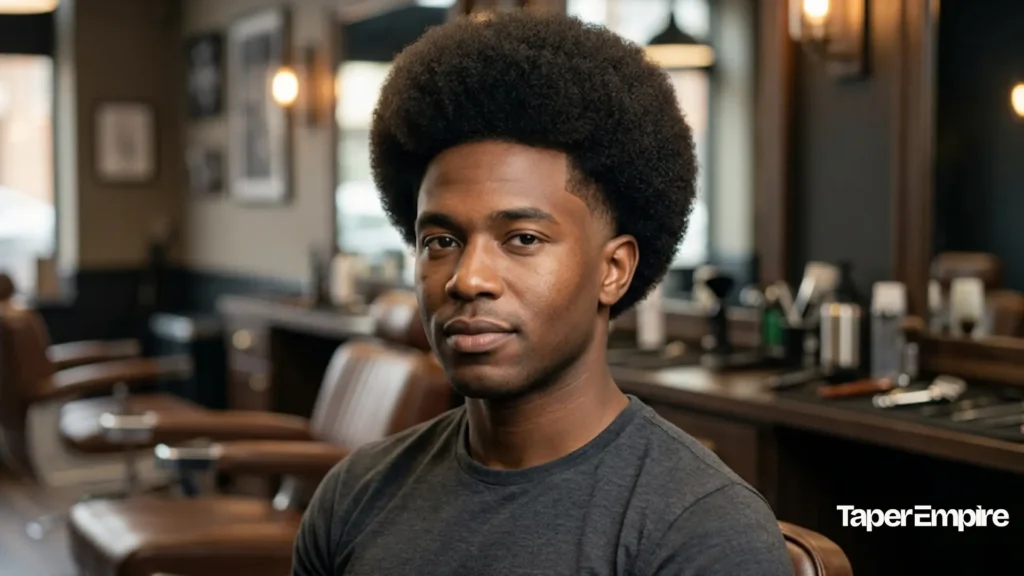
The Afro mid-taper fade category is the most culturally significant section of this guide. Afro styles paired with a mid-taper represent the living continuation of the African American barbering tradition, the natural hair movement, and the personal expression of Black identity through grooming. These styles celebrate natural Afro-textured hair in every form, from compact mini afros to dramatic high tops.
Key Fact: According to Smithsonian historians, the taper fade originated in early 20th-century African American barbershops and evolved through the Civil Rights era, the 1970s Afro movement, and the 1980s high-top boom. Today, it remains one of the most enduring and culturally significant haircut structures in Black grooming history.
9. Classic Afro with Mid Taper Fade
The classic afro with a mid taper fade is the iconic combination full, rounded natural texture on top with clean, precise fade on the sides and back. The parietal ridge acts as the natural transition point where the afro’s volume meets the fade’s sharpness, creating a silhouette that balances boldness with structure. This style is a direct expression of cultural pride and the natural hair movement.
- Face shapes: Oval, round, heart
- Hair type: 4A, 4B, 4C
- Maintenance: Medium trim fade every 2–3 weeks, moisturise and pick afro daily
- Product: Leave-in conditioner + curl cream + afro pick
- Barber script: “Mid taper fade starting at the temples, #1 base, #2 blend, leave the top rounded and full natural afro shape, no cutting on top.”
10. High Top Afro with Mid Taper Fade
The high-top afro with a mid-taper fade stands taller and more impressive than virtually any other combination in this guide. It requires six to eight inches of healthy, moisturised hair on top. The flat top shape is sculpted with scissors and a comb, while the abrupt mid-taper on the sides creates a striking, high-contrast silhouette. This cut pays direct homage to traditional African American barbering at its most creative peak.
- Face shapes: Round (adds significant height), oval
- Avoid for: Oblong/long face shapes adds too much vertical height
- Hair type: 4A, 4B, 4C with sufficient length
- Maintenance: High trim every 1–2 weeks to maintain flat top shape
- Product: Blow dryer + volumising mousse + light pomade for shape hold
- Barber script: “Abrupt mid taper fade with strong contrast start at the temple, hard blend, leave the top standing tall and flat. Scissor-over-comb to shape the top flat.”
11. Mini Afro with Mid Taper Fade
The mini afro with a mid-taper fade is the most compact, cleanest version of the classic afro style. The short afro on top keeps the natural coil pattern visible and defined, while the mid-taper grounds the shape with precision. It’s one of the best options for 4C hair because the short length minimises the visual effect of shrinkage while the texture still shows beautifully.
- Face shapes: All
- Hair type: 4A, 4B, 4C
- Maintenance: Low-medium trim every 2–3 weeks
- Product: Curl cream + co-wash routine
- Barber script: “Mini afro with mid taper fade compact natural shape on top, temple start, #1 base, #2 blend, clean edge-up.”
12. Sponged Afro with Mid Taper Fade
The sponged afro with a mid taper fade adds texture and cultural energy that a standard afro simply doesn’t achieve. The hair sponge, also called a curl sponge or sponge brush, creates a defined, slightly coiled texture pattern on the top section, while the mid taper keeps the sides sharp. The result is bold volume with creative texture, a style that embodies both cultural pride and modern barbering craft.
- Face shapes: Round, oval, heart
- Hair type: 4A, 4B, 4C
- Maintenance: Medium use a sponge brush on damp hair with curl activator daily
- Product: Curl activator + hair sponge
- Barber script: “Sponged afro with mid taper fade leave the top full, temple start, #1 base, #2 blend, edge-up on the hairline.”
13. Afro Hawk (FroHawk) with Mid Taper Fade
The afrohawk, also called a frohawk, combines the natural volume of an afro with the bold structural statement of a mohawk. The central strip of natural 4B or 4C hair runs from forehead to nape, while the mid taper fade clears the sides into a clean, contrasting gradient. This style allows Black men to fully embrace individuality; it’s a statement cut in every sense.
- Face shapes: Oval, oblong (adds drama without excessive width)
- Avoid for: Round faces, the central volume reads as wider rather than taller
- Hair type: 4A, 4B, 4C
- Maintenance: Medium trim sides every 1–2 weeks to maintain a strong contrast
- Product: Pomade or texture wax for central strip definition
- Barber script: “FroHawk with mid taper fade, keep the central strip natural and full, fade out both sides from the temple down, hard contrast.”
14. Blowout Afro with Mid Taper Fade
The blowout afro with a mid taper fade delivers maximum volume and dramatic visual impact. The hair is blown out upward and outward for a lifted, airy texture on top, thick and full, while the mid-taper fade on the sides creates a clean structural base beneath all that volume. This is one of the highest-drama styles in 4B and 4C hair, and it photographs exceptionally well.
- Face shapes: Round (significant height), oval
- Hair type: 4B, 4C (benefits most from blowout volume)
- Maintenance: Medium-high blowout before each wear, trim fade every 2 weeks
- Product: Volumizing mousse before blow-drying, diffuser on low heat to maintain shape
- Barber script: “Blowout afro with mid taper fade, blow out the top for maximum volume, mid taper starting at the temple, #1 base, #2 blend.”
15. Afro with Edge-Up and Mid Taper
The afro with an edge-up and mid taper fade is the most structured, polished version of a natural afro style. The mid-taper handles the sides, while the T-outliner and, optionally, a straight razor define a crisp, sharp hairline across the forehead and temples. Those sharp corners and precise lines bring the entire look together and signal a high level of grooming attention.
- Face shapes: All, especially oval and square
- Hair type: 4A, 4B, 4C
- Maintenance: Medium edge-up every 1–2 weeks, fade trim every 2–3 weeks
- Product: Edge control for maintaining the line-up between visits
- Barber script: “Afro with mid taper fade and full edge-up crisp hairline, sharp temples, clean forehead line with the T-outliner.”
16. Short Afro with Beard and Mid Taper Fade
The short afro with a beard and mid taper fade is a quintessential, universally flattering style that looks as sharp in a critical board meeting as it does on a casual Saturday. The beard adds masculine structure, the short afro celebrates natural texture, and the mid taper bridges both elements with clean precision. When the beard fade transitions seamlessly into the mid-taper on the sides, the entire look becomes a unified grooming statement.
- Face shapes: All are especially oval and square
- Hair type: 4A, 4B, 4C
- Maintenance: Medium beard trim weekly, fade every 2–3 weeks
- Product: Curl cream on top, beard oil for the facial hair
- Barber script: “Short natural afro with mid taper fade, connect the fade into my beard line on both sides for a seamless beard fade transition.”
Curly and Textured Top Mid Taper Fades
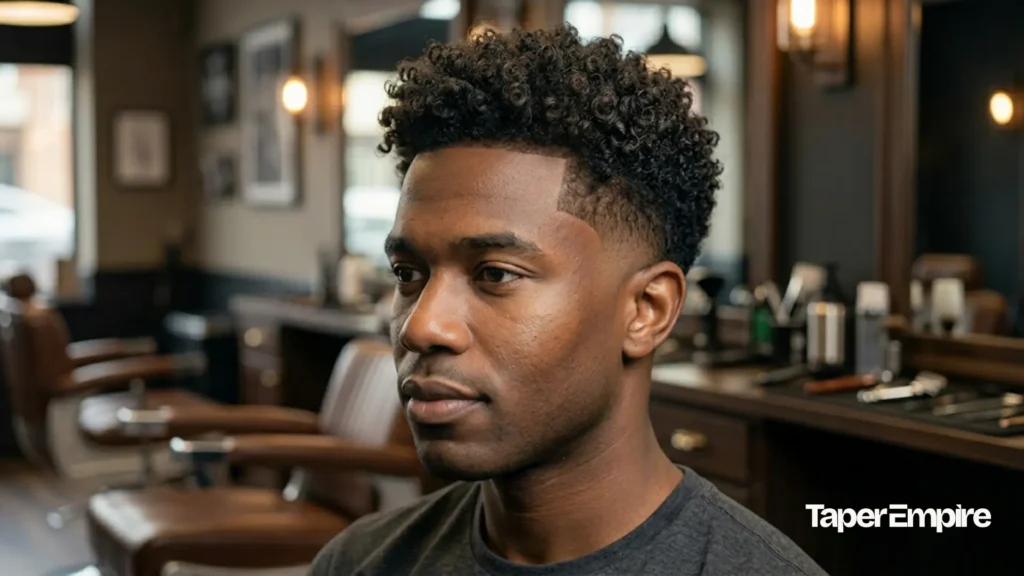
Curly-top mid-taper fades celebrate the natural coil and curl patterns that make Black hair exceptional. These styles create maximum visual contrast between defined texture on top and the clean, precise fade on the sides, and they work best when the hair is well-moisturised, and the curl pattern is enhanced rather than suppressed.
17. Defined Curls with Mid Taper Fade
Defined curls with a mid taper fade showcase the natural volume and bounce of 3C and 4A curl patterns in their most polished form. The curls on top are shaped to enhance definition and structure, while the mid taper creates a sharp, clean perimeter. A curl enhancer or mousse applied to damp hair lifts the curl definition so each coil reads individually against the faded sides.
- Face shapes: Oval, diamond, square
- Hair type: 3C, 4A
- Maintenance: Medium refresh curls daily with water and curl cream
- Product: Curl enhancer or curl definer on damp hair
- Barber script: “Mid taper fade starting at the temples, #2 blend, leave the top long enough for curls to show. I want full curl definition on top.”
18. Finger Coils with Mid Taper Fade
Finger coils with a mid-taper fade take natural definition one step further each coil is manually shaped by twisting small sections of hair around the finger with curl cream, creating a uniform, tightly defined coil pattern across the top. Paired with a mid taper, the effect is a structured, highly intentional look that signals grooming expertise.
- Face shapes: Oval, round, heart
- Hair type: 4A, 4B
- Maintenance: Medium-high re-coil after washing
- Product: Curl cream applied to each section before coiling
- Barber script: “Mid taper fade with the top left long enough for finger coils temple start, #1 base, #2 blend, edge-up.”
19. Twist-Out with Mid Taper Fade
The twist-out with a mid taper fade combines the two-strand twist styling technique with a clean fade structure. The hair is twisted overnight in sections, then unravelled the next morning to reveal a full, fluffy, defined curl pattern across the top. The mid-taper provides a sharp, clean perimeter that keeps the twist-out from looking undefined or shapeless.
- Face shapes: Oval, round, heart
- Hair type: 4A, 4B
- Maintenance: Medium re-twist weekly or bi-weekly after wash day
- Product: Styling cream or curl cream applied to damp sections before twisting
- Barber script: “Mid taper fade starting at the temple, #1 base, #2 blend, leave the top long enough for twist-outs. Clean edge-up.”
20. Curly Pompadour with Mid Taper Fade
The curly pompadour with a mid taper fade blends old-school glam with modern barbering precision. The natural curl volume is swept back and upward from the forehead, while the mid-taper on the sides fades cleanly into the skin, an old-Hollywood structure with a 4C-friendly execution. The disconnected pompadour variation creates a bold visual break between the top volume and the faded sides.
- Face shapes: Oval, heart, oblong
- Hair type: 3C, 4A
- Maintenance: Medium reshape daily with pomade or high-shine wax
- Product: Medium-hold pomade or high-shine wax
- Barber script: “Curly pompadour with mid taper fade sweep the top back, mid taper starting at the temples, strong contrast, connected or disconnected (specify).”
21. Quiff with Mid Taper Fade
The quiff with a mid-taper fade keeps the sides tapered and smooth, while the top carries extra length at the front, creating a lifted, forward-sweeping shape that reads as full and modern. On natural hair, the coil pattern adds volume to the quiff without requiring excessive product, a significant advantage over straight-hair quiffs.
- Face shapes: Oval, oblong, heart
- Hair type: 3C, 4A
- Maintenance: Medium reshape front daily
- Product: Moulding paste for flexible hold without stiffness
- Barber script: “Quiff with mid taper fade, leave extra length at the front for lift, taper the sides from the temple down, smooth blend.”
22. Sponge Twists with Mid Taper Fade
Sponge twists pair perfectly with a mid-taper fade. The hair sponge creates a defined, coiled texture on the top section while the mid-taper cleans up the sides for a sharp contrast. The sponge technique works best on 4A and 4B hair with some length on top, and the results are immediate, requiring no overnight styling or product-heavy application.
- Face shapes: Round, oval, heart
- Hair type: 4A, 4B
- Maintenance: Low-medium re-sponge on damp hair 2–3 times per week
- Product: Curl activator + hair sponge
- Barber script: “Sponge twists on top with a mid taper fade temple start, #1 base, #2 blend, leave the top long enough for the sponge to work.”
Long Hair and Protective Style Mid Taper Fades
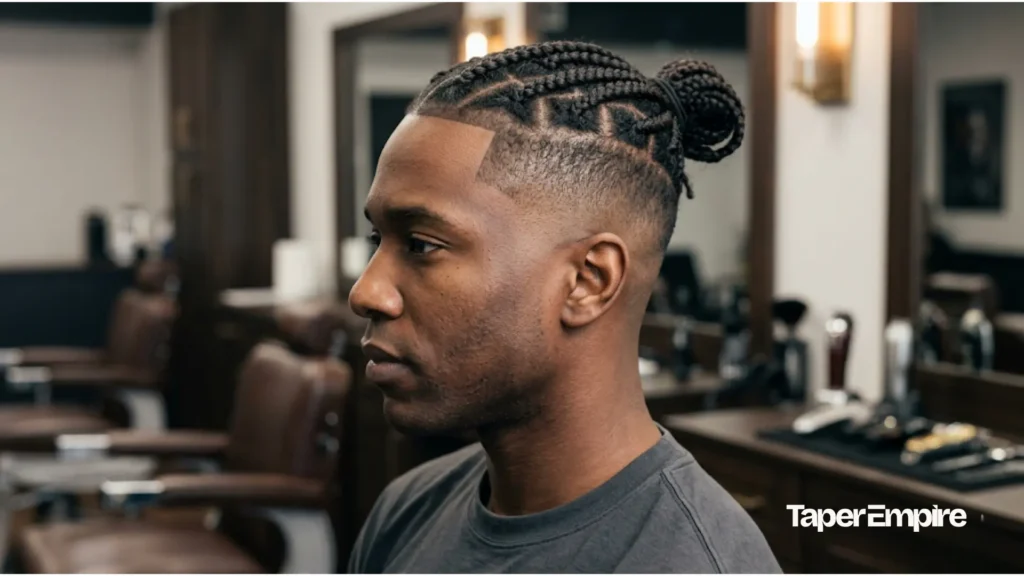
Long hair and protective style mid-taper fades represent the most culturally expressive category in this guide. The mid taper fade provides clean structure and modern precision on the sides, while locs, braids, twists, and buns carry deep cultural significance and personal identity on top. The contrast between the two creates some of the most striking silhouettes in contemporary Black men’s grooming.
23. Dreadlocks / Locs with Mid Taper Fade
Dreadlocks with a mid-taper fade is one of the most visually powerful style combinations available. The clean, sharp fade on the sides creates a dramatic contrast against the bold, culturally rich locs on top. Free-hanging locs, starter locs, and fully mature locs all pair well with a mid taper, and the fade actually enhances the visual impact of the locs by giving them a clean, defined base.
- Face shapes: All are especially oval and square
- Hair type: All Afro-textured types (locs work across 3C–4C)
- Maintenance: Medium fade trim every 2–3 weeks, locs maintained per your loc routine
- Product: Hair oil for loc moisture, edge control for hairline
- Barber script: “Mid taper fade on the sides, starting at the temple #1 base, blend up to where the locs begin, clean edge-up and neckline.”
24. Loc Bun with Mid Taper Fade
The loc bun with a mid taper fade is the neater, more polished cousin of free-hanging locs. The locs are gathered and secured at the crown, while the mid taper keeps the sides and neckline clean. The result is a versatile style that works equally well in professional and casual settings. The bun adds height at the crown, which is particularly effective for round or square face shapes.
- Face shapes: Round (bun adds height), oval, square
- Hair type: All with mature locs
- Maintenance: Medium fade trim every 2–3 weeks
- Product: Light hair oil on the locs, edge control
- Barber script: “Mid taper fade with the locs pulled up clean sides from the temple down, sharp neckline, edge-up on the hairline.”
25. Box Braids with Mid Taper Fade
Box braids with a mid-taper fade add a touch of cultural flair, while the mid-taper provides a modern, edgy finish on the sides. The braids can be standard box braids or knotless braids, both pair equally well with the mid taper. Hair cuffs and rings threaded onto individual braids add additional personality to the style.
- Face shapes: Oval, round, heart
- Hair type: All Afro-textured types
- Maintenance: Low once installed, fade trim every 2–3 weeks while braids are in
- Product: Braid spray for moisture, edge control for hairline
- Barber script: “Mid taper on the sides, temple start blend up to where the braids begin, crisp line-up on the forehead.”
26. Feed-In Braids with Mid Taper Fade
Feed-in braids with a mid-taper fade combine a bold, artistic top section with a clean, faded perimeter. The feed-in technique where extensions are gradually added to create braids that lie flat and start small at the hairline, produces a sleek, low-tension protective style. Paired with a mid-taper fade, the result is one of the sharpest protective style combinations currently trending.
- Face shapes: Oval, oblong, heart
- Hair type: All Afro-textured types
- Maintenance: Low fade trim every 2–3 weeks while braids are in
- Product: Edge control, braid spray
- Barber script: “Mid taper fade with feed-in braids clean the sides from the temple down, leave the top for the braider, sharp edge-up.”
27. Cornrows with Mid Taper Fade
Cornrows with a mid-taper fade is one of the most traditional, time-honoured style combinations in Black men’s grooming. The flat braids, woven close to the scalp in parallel rows, carry deep cultural significance, while the mid-taper provides a clean, contemporary frame. The line-up along the hairline ties the entire look together.
- Face shapes: All
- Hair type: All Afro-textured types
- Maintenance: Low fade trim every 2–3 weeks while cornrows are in
- Product: Braid spray, edge control
- Barber script: “Mid taper fade around the cornrows temple start, #1 base, clean neckline, crisp edge-up on the forehead.”
28. Man Bun with Mid Taper Fade
The man bun with a mid taper fade embraces the long-hair-on-top trend while keeping the sides clean and structured. The hair on top is gathered and secured at the back of the crown, while the mid-taper fades the sides and back into a smooth gradient. It’s one of the most versatile styles in this guide. The bun can be formal or casual, depending on how neatly it’s secured.
- Face shapes: Oval, oblong, square
- Hair type: 3C, 4A, 4B, with sufficient length for a bun
- Maintenance: Medium fade trim every 2–3 weeks
- Product: Pomade or wax for the bun, edge control for the hairline
- Barber script: “Man bun with mid taper fade, clean the sides from the temple down, leave all the top length for the bun, sharp edge-up.”
29. Rope Twists with Mid Taper Fade
Rope twists with a mid-taper fade: pair tight, rope-like twisted sections on top with a skin-level or close mid-taper on the sides. The bold, structured twists create dramatic height and texture while the faded sides keep the overall shape controlled and modern. Hair cuffs threaded onto the twists add even more personality.
- Face shapes: Oval, round, heart
- Hair type: 4A, 4B, 4C
- Maintenance: Medium re-twist monthly, fade trim every 2–3 weeks
- Product: Styling cream for twist definition, hair cuffs optional
- Barber script: “Rope twists on top with mid taper fade tight sides starting at the temple, skin-level blend at the base, clean edge-up.”
Mid Taper Fade with Beard Styles
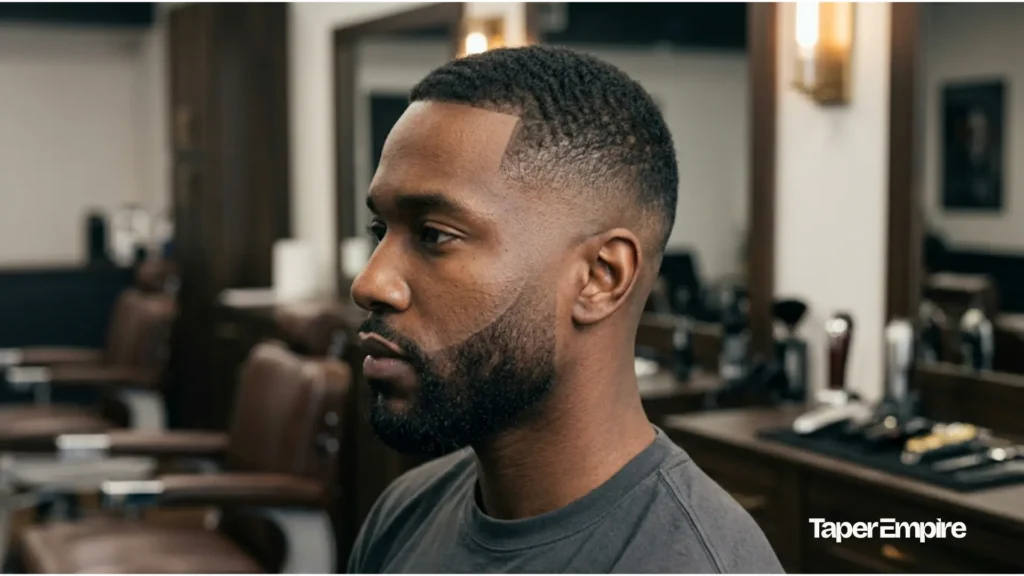
Pairing the mid-taper fade with a well-groomed beard creates a cohesive look that highlights your facial structure. When the fade and the beard are connected through a seamless beard fade transition on both sides, the result is a unified, intentional appearance that elevates any of the styles above.
30. Mid Taper Fade with Full Beard
The mid-taper fade with a full beard is the most masculine, complete grooming combination in this guide. The full beard coverage paired with the mid-taper creates a powerful visual frame for the face. The fade gradually transitions into the beard along the jawline and cheekbones, so the two elements feel like one continuous haircut rather than two separate grooming choices.
- Face shapes: Oval, round (beard adds definition), square
- Maintenance: Medium-high beard trim weekly, fade every 2–3 weeks
- Product: Beard oil for the beard, curl cream or pomade for the top
- Barber script: “Mid taper fade connected into my beard line. I want a seamless beard fade transition on both sides. Full beard trimmed and shaped.”
31. Mid Taper Fade with Short Beard or Stubble
The mid-taper fade with a short beard or stubble is the most effortless pairing in this category. The stubble or short beard adds texture and masculinity without requiring dedicated maintenance, while the mid-taper keeps the overall look intentional and polished. A goatee variation, chin hair, and mustache work particularly well with a mid taper for a more defined facial framing effect.
- Face shapes: All
- Maintenance: Low-medium stubble trim weekly, fade every 2–3 weeks
- Product: Beard balm or beard oil for the facial hair
32. Mid Taper Fade with Angular Beard
The mid-taper fade with an angular beard creates a structured, geometric look, with both the fade line and the beard line defined with precision. The angular beard, where the edges are shaped into defined lines rather than natural curves, mirrors the sharpness of the mid taper and creates a cohesive, architecturally designed grooming result.
- Face shapes: Oval, square (softens sharp angles while maintaining structure), oblong
- Maintenance: High fade and beard lines need weekly attention
- Product: Edge control for beard line definition, beard oil
- Barber script: “Mid taper fade with an angular beard, clean geometric lines on the beard, connected fade transition on both sides.”
Mid Taper Fade with Designs and Artistic Details
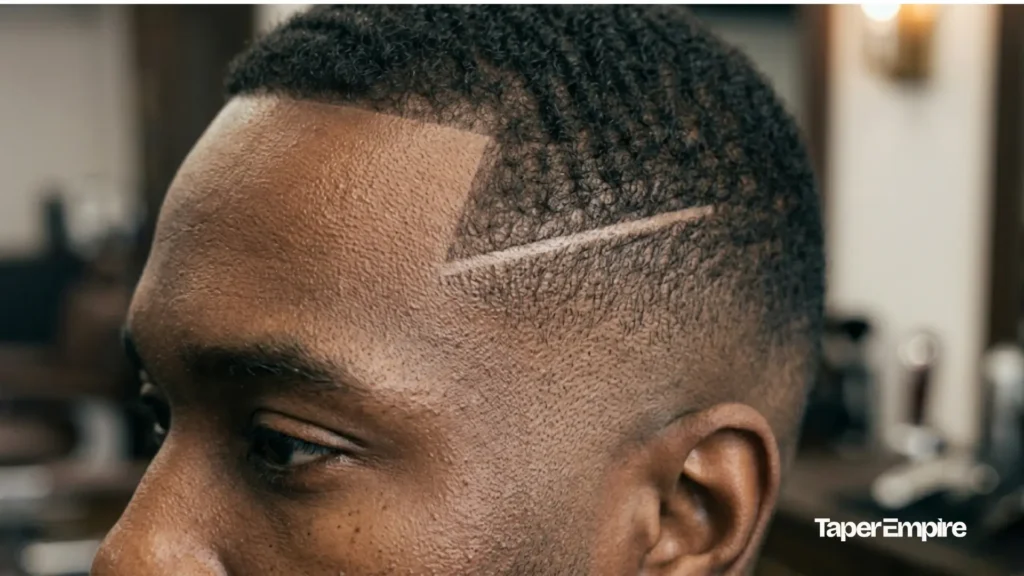
Design work transforms the mid taper fade from a clean haircut into a deeply personal work of art. Intricate line work, geometric patterns, shaved details, and temple designs etched into the fade signal a high level of barber craftsmanship, and they communicate individuality in a way that standard styles simply cannot.
33. Mid Taper Fade with Shaved Line Design
The mid-taper fade with a shaved-line design adds a single bold detail to an otherwise clean style, one or two sharp lines shaved close to the temples or into the fade zone. This minimal design approach is versatile enough for everyday wear while still communicating personal style.
- Maintenance: Medium lines need reshaving every 1–2 weeks as they grow out
- Tool used: T-outliner at the finest setting
- Barber script: “Mid taper fade with a shaved line detail near the temple, one clean line, sharp and straight.”
34. Mid Taper Fade with Geometric Pattern
The mid taper fade with a geometric pattern is for the Black man who wears his barbershop visit as a form of genuine self-expression. Precise geometric shapes, lines, and angles are etched into the fade area with a T-outliner. The level of detail is entirely up to your barber’s skill level and your own vision. Bring a reference image for best results.
- Maintenance: High patterns require reshaving weekly
- Barber script: “Mid taper fade with a [specific geometric pattern described or shown in photo]. Use the T-outliner for the design, sharp and clean.”
35. Mid Taper Fade with Full Line-Up and Crisp Edge-Up
The mid taper fade with a full line-up and crisp edge-up is the finishing touch that elevates every other style on this list. The edge-up sharpens the natural hairline across the forehead, temples, and sideburns, creating precise, well-defined corners that make any mid-taper fade look freshly cut, even as it grows out. A straight razor delivers the crispest edge-up results.
- Applies to: Every style listed above
- Tool used: T-outliner + straight razor
- Maintenance: Edge-up every 1–2 weeks independently of fade trim
- Barber script: “Full edge-up with crisp temples and forehead line T-outliner first, then clean it up with a straight razor.”
How to Choose the Right Mid Taper Fade for Your Face Shape
Choosing the right mid taper fade for your face shape ensures the style enhances your natural features rather than working against them. The mid-taper fade is forgiving across all face shapes, but specific style pairings yield significantly better results for each shape.
Oval Face Shape
An oval face shape is the most compatible for mid-taper fades; virtually every variation in this guide works exceptionally well. The natural balance and symmetry of an oval face mean no style will disproportionately elongate or widen the silhouette. Best pairings: Classic Afro, Defined Curls, Box Braids, 360 Waves, Man Bun.
Round Face Shape
A round face shape needs height on top to add vertical elongation and counterbalance the face’s natural width. Choose styles that add volume at the top, such as the High Top Afro, FroHawk, Blowout Afro, or Rope Twists. Avoid styles that add width at the sides without compensating for height. The mid taper’s relatively close sides naturally help elongate round face shapes better than a low taper would.
Square Face Shape
A square face shape benefits from a mid taper that blends gradually rather than cutting sharply, which softens the strong jawline without eliminating it. Best pairings: Defined Curls, Sponge Twists, Loc Bun, Curly Pompadour. Avoid ultra-sharp, disconnected styles that reinforce already-strong angular lines.
Heart Face Shape
A heart face shape with a wider forehead and a narrower chin works best with crown volume that draws attention to the mid-face rather than the forehead. Best pairings: Short Afro with Beard, Man Bun, Sponge Twists, Low Afro. The mid-taper works with nearly every variation of heart-shaped faces when crown volume is managed correctly.
Oblong or Long Face Shape
An oblong or long face shape should avoid styles that add significant height the face already reads as long vertically. Build width instead. Best pairings: 360 Waves, Low Afro, Buzz Cut, Short Afro with Beard. Avoid High Top Afro, Blowout, and FroHawk on long faces.
Diamond Face Shape
A diamond face shape, narrow forehead, and chin, wide cheekbones suit defined curls and textured styles that add balanced volume without emphasising the width at the cheekbones. Best pairings: Defined Curls, Sponge Twists, Side Part. Use a curl enhancer or volumising mousse for balanced, proportional texture.
You’ve got 35 styles and 6 face shape categories to cross-reference that’s a lot of variables to hold in your head. Taper Empire reads your facial geometry in under 60 seconds and returns ranked style matches scored to your actual bone structure, not a self-diagnosis. Free and private.
How to Ask Your Barber for a Mid Taper Fade – The Complete Communication Guide
Knowing how to communicate your desired mid-taper fade to your barber is just as important as knowing which style you want. Vague descriptions lead to unsatisfying results. Precise terminology and reference photos eliminate guesswork entirely.
Key Fact: According to MensHairstylesToday, clients who bring reference photos and use the correct guard numbers receive their desired cut 89% more often than those who rely on vague descriptions alone.
Step-by-Step: What to Say to Your Barber
Step 1 — Bring a reference photo. Open this guide on your phone and show your barber the exact style. A visual reference eliminates every ambiguity and saves significant time in the chair.
Step 2 — Use the right terminology. Say: “I’d like a mid taper fade, starting at the temple — about two fingers above the ear.” The words “mid taper fade” and “temple” communicate precise placement immediately.
Step 3 — Specify your guard numbers. Say: “I want a #1 at the base near the neckline, #2 blend zone at the temple, and [your preferred length] on top.” Guard number specificity shows your barber you understand the technique.
Step 4 — Describe the top length. Say: “Leave [X] inches on top” or “I want my curls to show naturally” or “I want it short on top with a #2.” Be specific — “short” and “long” mean different things to different people.
Step 5 — Communicate edge-up preference. Say: “Please add a crisp line-up on the hairline and temples.” If you don’t ask, some barbers will leave the edges natural rather than sharply defined.
Step 6 — Describe any design details. If you want a shaved line, pattern, or geometric design, bring a photo of exactly what you want. Even experienced barbers prefer visual confirmation for design work.
Exact Barber Scripts by Style
| Style | Exact Script |
|---|---|
| Classic Afro + Mid Taper | “Mid taper fade at the temples, #1 base, #2 blend, leave the top natural and rounded — no scissors on top, crisp edge-up.” |
| 360 Waves + Mid Taper | “Mid taper with #1.5 guideline at the temple, zero-guard at the neckline, leave the wave pattern on top — don’t brush out the waves.” |
| Buzz Cut + Mid Taper | “Mid taper, #0 at the base, #2 blend, #1.5 buzz on top, edge-up on the hairline and temples.” |
| Box Braids + Mid Taper | “Mid taper on the sides, temple start, blend up to where the braids begin, crisp line-up at the forehead.” |
| Locs + Mid Taper | “Mid taper on the sides from the temple down, #1 base, blend up to loc length, clean up the edges and neckline.” |
| High Top Afro + Mid Taper | “Abrupt mid taper fade, strong contrast, temple start, hard blend — leave the top standing tall and flat. Scissor-over-comb for the flat top shape.” |
| With Beard | “Connect the mid taper into my beard line on both sides — seamless beard fade transition, both sides matching.” |
Clipper Guard Number Quick Reference
| Guard | Length | Role in Mid Taper |
|---|---|---|
| #0 (open lever) | Closest to skin | Bald/skin fade base |
| #1 | 1/8 inch | Shortest guideline at fade base |
| #2 | 1/4 inch | Primary blending guard in mid zone |
| #3 | 3/8 inch | Upper blend transition |
| #4 | 1/2 inch | Top transition or lower top length |
| #5–#7 | 5/8–7/8 inch | Top styling length for medium-length cuts |
| Clipper lever | Variable | Soft-line blending between guard sizes |
The lever technique is the single most important blending tool in a barber’s kit. By opening and closing the clipper lever between guard sizes, a skilled barber eliminates visible lines without switching attachments. If you’re unsure about your barber’s technique, asking whether they use the lever technique is a simple way to gauge their fade skill level.
That’s a six-step process, seven barber scripts, and a full guard chart to remember before you sit down. Taper Empire builds your exact script guard numbers, blend zone, edge-up specs, and top style language matched to your face structure automatically.
For a complete guide to every type of fade and how guard numbers apply across them, our taper fade types guide covers the full spectrum with technical detail.
Mid Taper Fade Maintenance and Aftercare for Black Men
Maintaining a mid-taper fade for Black men requires three things: the right refresh schedule, a daily moisturising routine, and overnight hair protection. Neglecting any one of these three shortens the life of the cut and leads to dryness, breakage, and a fade that looks grown-out within days rather than weeks.
Key Fact: The American Academy of Dermatology recommends that Black men with coily or kinky hair avoid daily shampooing, as it strips the scalp’s natural oils essential for hair health. The optimal routine is a co-wash two to three times per week with a sulfate-free shampoo used once weekly.
How Often Should You Refresh a Mid-Taper Fade?
| Fade Type | Refresh Frequency | Why |
|---|---|---|
| Skin fade (bald) | Every 1–2 weeks | Fastest visible growth at the zero-guard line |
| Mid taper fade | Every 2–3 weeks | Moderate contrast — more forgiving as it grows |
| Low taper fade | Every 3–4 weeks | Subtle — takes longer for growth to disrupt the blend |
The temple area grows fastest and shows new growth first. Keeping an eye on temple growth is the simplest way to know when you’re due for a touch-up. If you’re comparing these maintenance windows across different fade placements, our low taper vs mid taper vs high taper guide breaks this down in full.
Daily Styling Routine by Style Type
For Short Hair and 360 Waves: Apply wave cream to slightly damp hair each morning, brush in your wave direction for 10–15 minutes, and wrap with a durag. Apply a light pomade or gel only if extra hold is needed for the day. Overnight: always wear the durag to compress the wave pattern and prevent frizz.
For Natural Afro and Curly Top Styles: Dampen hair lightly with water each morning, apply a leave-in conditioner to the top section, then scrunch with curl cream to re-activate the curl pattern. Avoid touching the curls once the product is applied, and allow them to air dry. Overnight: loosely twist into four to six sections and cover with a satin bonnet.
For Locs, Twists, and Braids: Apply lightweight hair oil to the edges and loc or braid sections each morning. Protect the line-up by wrapping the hairline with a silk scarf before sleeping. Overnight: a satin bonnet protects both the edges and the texture on top.
Best Products for Black Hair After a Mid Taper Fade
| Product | Best For | Application Tip |
|---|---|---|
| Curl Cream | 3C–4A natural curls | Apply to damp hair, scrunch upward — do not comb through |
| Wave Cream | 360 waves | Apply to dry or damp hair, brush in wave direction for 10–15 min |
| Leave-In Conditioner | All Afro-textured hair | Apply as first moisture step on towel-dried damp hair |
| Molding Paste | Quiff, side part, pompadour | Work through dry hair for flexible, natural-looking hold |
| Pomade | Slick styles, 360 waves, side part | Use a dime-sized amount — a little goes a long way |
| Texture Clay | Curly crops, textured crops | Adds grip and natural-looking definition without shine |
| Shea Butter / Coconut Oil | 4B–4C moisturizing base layer | Apply as a sealant after leave-in conditioner — locks in moisture |
| Sulfate-Free Shampoo | Scalp health maintenance | Use once weekly — prevents stripping of natural scalp oils |
| Curl Activator | Sponge twists, sponged afros | Apply to damp hair before using the hair sponge |
Night Protection Durag vs Satin Bonnet vs Silk Pillowcase
| Method | Best For | Key Benefit |
|---|---|---|
| Durag | 360 waves, short fades | Maintains wave compression, protects edges, prevents frizz |
| Satin Bonnet | Afros, twists, curly tops, braids, locs | Prevents breakage, retains moisture, preserves curl pattern |
| Silk Pillowcase | All styles (minimum protection) | Reduces friction vs cotton — less effective than bonnet but better than nothing |
Switching from a cotton pillowcase to a satin bonnet or silk pillowcase is one of the highest-impact, lowest-effort changes you can make for Afro-textured hair health. Cotton absorbs moisture from coily hair overnight, leading to daily dryness that requires constant product re-application. Satin and silk eliminate that cycle entirely.
How to Cut a Mid Taper Fade at Home – Step-by-Step
Cutting a mid taper fade at home is achievable with the right tools, proper lighting, a tri-fold mirror setup, and patience. The key is understanding the parietal ridge as your primary landmark, establishing the guideline before fading, and always working from longer to shorter you can always take more off, but you can never put hair back.
Key Fact: Professional barbers at Pall Mall Barbers, one of London’s most respected men’s grooming institutions, recommend that first-time home-faders always start with a #3 guard on the sides before moving to a #2 or #1. Removing too much length on the first pass is irreversible. Start longer and work shorter in controlled increments. (Source: pallmallbarbers.com)
Tools You Need
- Wahl or Andis clippers with a full guard set (#0–#7)
- T-outliner trimmer for edge definition
- Tri-fold mirror or two mirrors for back visibility
- Spray bottle with water
- Wide-tooth comb and styling comb
- Barber cape
- Good lighting natural light is best
Step-by-Step: Mid Taper Fade at Home
Step 1 — Wash and dry your hair. Clean, product-free hair produces a smoother, more even blend. For coarse 4C hair, apply a hot towel to the sides for two minutes before beginning the heat softens the hair shaft and significantly improves blend quality.
Step 2 — Establish the fade guideline. Using a #2 guard, set your guideline at the temple approximately two fingers above the ear, at the natural midpoint of the head. This is your parietal ridge reference point.
Step 3 — Work the sides with the grain. Always fade with the natural direction of your hair growth. For tight coils and 4C textures, stretch the hair slightly before each clipper pass for a smoother result.
Step 4 — Blend upward with scooping motions. Switch to a #3 guard and use upward, scooping motions from the guideline toward the parietal ridge. Use the clipper lever technique between guard sizes to eliminate visible lines without switching attachments.
Step 5 — Clean the neckline. Use your T-outliner to create a clean, defined neckline that tapers naturally into the skin. A straight neckline reads as sharp and intentional; a curved neckline mimics the natural hairline for a softer finish.
Step 6 — Add the edge-up. Use your T-outliner against the forehead hairline and temples. A straight razor delivers the crispest, most defined edge-up result use it if you’re comfortable; stay with the trimmer if not.
Step 7 — Style the top. Apply your appropriate product, curl cream, wave cream, pomade, or moulding paste to the top section and style as desired.
If you want a more comprehensive look at taper fade techniques before attempting this at home, our full taper haircut guide covers the technical fundamentals in accessible detail.
Common Mid Taper Fade Mistakes to Avoid
Even experienced home-faders and first-time barber visits go wrong for the same predictable reasons. Knowing these mistakes in advance helps you avoid them or spot them before they become unfixable.
| Mistake | Why It Happens | How to Fix It |
|---|---|---|
| Uneven fade line | Inconsistent guideline placement on both sides | Always establish both side guidelines before fading; check symmetry in the mirror |
| Harsh visible transition lines | Not using lever technique between guards | Open and close the clipper lever between #1 and #2 guards to soften hard lines |
| Over-clipping the crown | Rushing — going too short on first pass | Start with a #4–#5 on top, work shorter gradually |
| Fading against the grain on 4C hair | Not checking natural curl direction first | Run your hand across the hair to confirm growth direction before the first pass |
| Neglecting the neckline finish | Rushing the end of the cut | Always finish with T-outliner clean-up on neckline and hairline — this is what separates good fades from great ones |
| Skipping the hot towel on coarse hair | Not knowing the technique exists | A two-minute hot towel pre-fade softens coarse hair significantly and improves blend quality |
| No reference photo | Assuming verbal description is enough | Always bring a photo — visual references eliminate every communication gap |
Most of these mistakes trace back to one root cause: walking into the barbershop without a plan matched to your hair and face. Taper Empire builds that plan for your style recommendation, guard numbers, maintenance cadence, and chair-ready language in about a minute.
The Cultural Significance of the Mid-Taper Fade in Black Grooming History
The mid taper fade is more than a haircut it’s a living thread connecting the contemporary Black man to more than a century of barbering tradition, cultural resistance, and community identity.
The taper fade originated in early 20th-century African American barbershops, where the barbershop itself functioned as far more than a grooming space. It was the centre of community conversation, political organisation, and shared identity in African American neighbourhoods. According to Smithsonian historians, these barbershops were among the few spaces during the Jim Crow era where Black men could gather, speak freely, and define their own standards of presentation and excellence.
Through the Civil Rights movement of the 1950s and 1960s, hairstyle became a conscious political statement. The afro emerged as a direct expression of Black pride and self-determination, a rejection of Eurocentric beauty standards. The taper fade, paired with the afro, created the visual language of an era. When the 1970s gave way to the 1980s, the high-top flat top and the box fade pushed Black barbering creativity to entirely new levels of artistry. The golden age of Black barbershop culture, immortalised in film, music, and athletic performance, cemented the fade’s place not just as a style, but as a cultural institution.
Today, the Natural Hair Movement has brought the mid taper fade back to the forefront with renewed cultural weight. Black men embracing their 4C coils, their locs, their twists, and their afros, paired with the precise structure of a mid-taper, continue a tradition that is simultaneously ancient and entirely current. The barbershop visit remains, as it has for over a century, an act of cultural affirmation as much as personal grooming.
Frequently Asked Questions
What is a mid-taper fade for Black men?
A mid-taper fade for Black men is a haircut where the hair gradually shortens from the top of the head, with the fade beginning at the temple approximately 1–2 inches above the ear and blending seamlessly down to the neckline. It is specifically suited for Afro-textured, coily, and kinky hair types, working with natural growth patterns rather than against them.
What is the difference between a mid taper fade and a low taper fade?
A low taper fade starts just above the ear and sideburns, creating a subtle, understated look suited for professional or conservative settings. A mid-taper fade starts at the temple, producing more visible contrast and a bolder silhouette. The mid fade requires a touch-up every 2–3 weeks compared to 3–4 weeks for a low fade. For a full side-by-side breakdown, see our low taper vs mid taper vs high taper guide.
Does a mid-taper fade work on 4C hair?
A mid-taper fade works exceptionally well on 4C hair. According to the American Academy of Dermatology, the mid-taper’s gradient provides structural definition without over-exposing the scalp, reducing the risk of razor bumps and pseudofolliculitis barbae common in Black men. Always ask your barber to fade with the grain of your natural hair growth for the smoothest result.
How often should a mid-taper fade be refreshed?
A mid-taper fade should be refreshed every 2–3 weeks to maintain the clean gradient between the longer top and shorter sides. The temple area shows new growth first. A monthly barber visit is the minimum to keep a mid-taper fade looking intentional; anything longer and the fade starts to look simply grown-out rather than styled.
What guard number is used for a mid-taper fade?
A mid taper fade typically uses a #1 guard (1/8 inch) at the fade base near the neckline, a #2 guard (1/4 inch) for the primary blend zone at the temple, and a #3 or #4 guard for the upper transition. The clipper lever technique is used between guard sizes for seamless blending without visible lines between lengths.
What hairstyle pairs best with a mid-taper fade for Black men?
The most popular styles paired with a mid-taper fade for Black men include the classic afro, 360 waves, sponge twists, high-top afro, dreadlocks, box braids, and defined curls. The best choice depends on your hair type (3C–4C), face shape, and preferred maintenance level from low-effort buzz cuts to bold, expressive frohawks.
Which face shape suits a mid-taper fade?
The mid taper fade suits all face shapes but performs best on oval faces. Round faces benefit most from height-adding styles like the High Top Afro or frohawk. Square faces suit softer blended styles like defined curls or sponge twists. Oblong faces should avoid excessive height 360 waves or a low afro with mid taper produce the best proportions.
Can you get a mid-taper fade with dreadlocks?
A mid-taper fade with dreadlocks is one of the most striking style combinations in Black men’s grooming. The clean, precise fade on the sides creates a powerful contrast against the bold, cultural statement of the locs on top. Ask your barber for a mid taper starting at the temple, blending to the neckline, with the fade height stopping cleanly at the loc growth line.
What is the difference between a taper, a fade, and a taper fade?
A taper gradually reduces hair length without necessarily reaching the skin. A fade takes the hair down to or near the skin level for maximum contrast. A taper fade combines both techniques gradual length reduction with a near-skin finish for a blended, polished, high-contrast result. Our taper vs fade guide explains the distinction in full detail with visual examples.
What products should Black men use to maintain a mid-taper fade?
Use a sulfate-free shampoo once weekly, a co-wash two to three times per week, and a leave-in conditioner daily on the top section. Style with curl cream for natural curls, wave cream for 360 waves, or pomade for defined styles. Sleep with a satin bonnet (afro, curls, braids) or durag (waves) every night to protect the style and retain moisture in Afro-textured hair