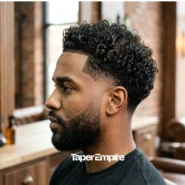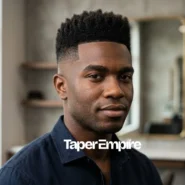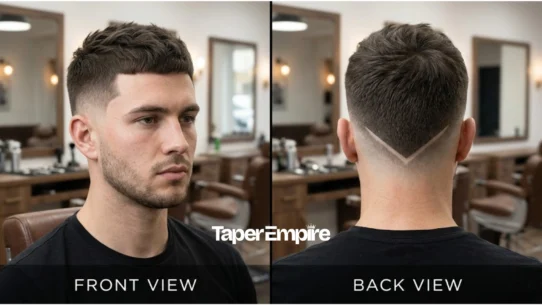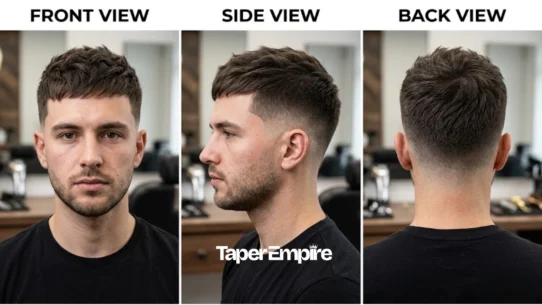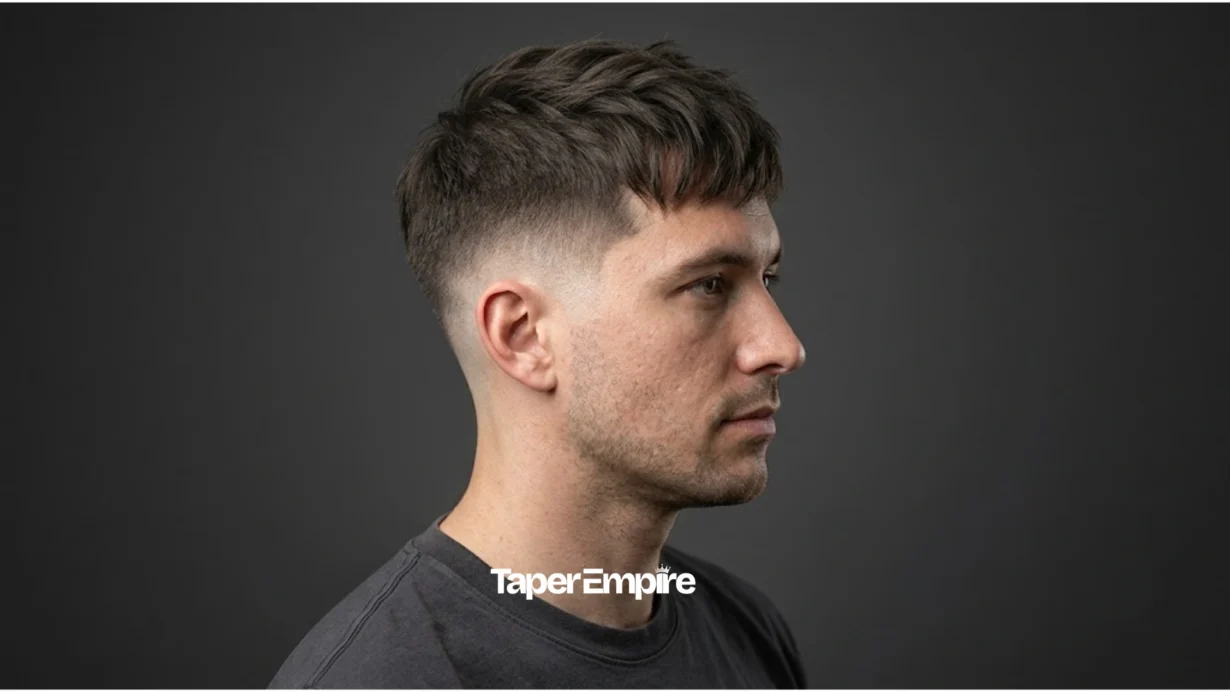

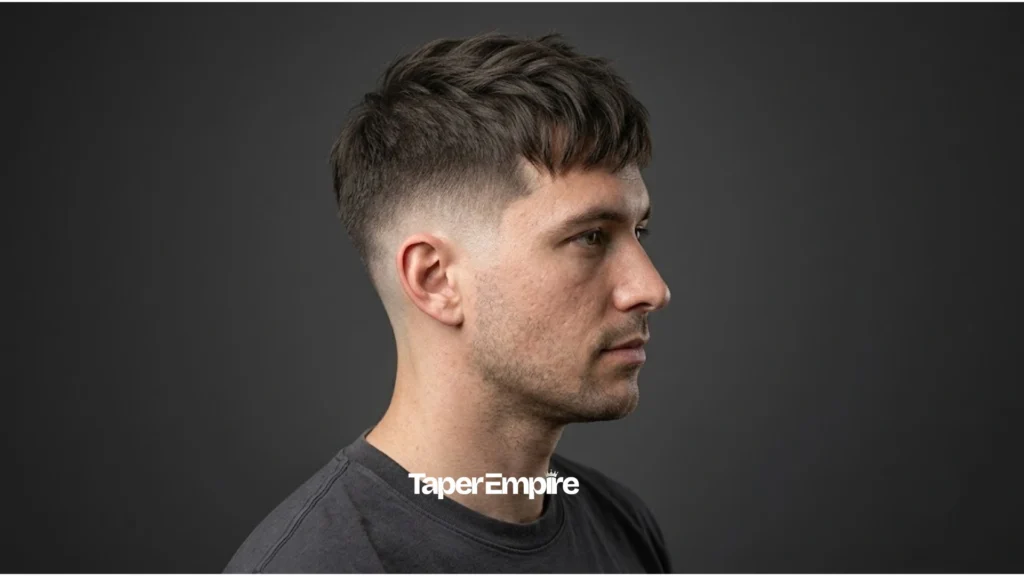
If you have straight hair and you’re trying to figure out which fade actually works for your texture you’re in the right place. The mid-taper fade for straight hair is one of the cleanest, sharpest, and most versatile men’s haircuts available today, and straight hair shows it off better than almost any other texture.
This guide covers 25+ style variations, a step-by-step styling routine, a face shape compatibility guide, exact phrases to tell your barber, a week-by-week growth timeline, and everything in between. By the time you finish reading, you’ll know exactly what to ask for and how to maintain it.
Table of Contents
What Is a Mid Taper Fade for Straight Hair and Why Does It Look So Sharp?
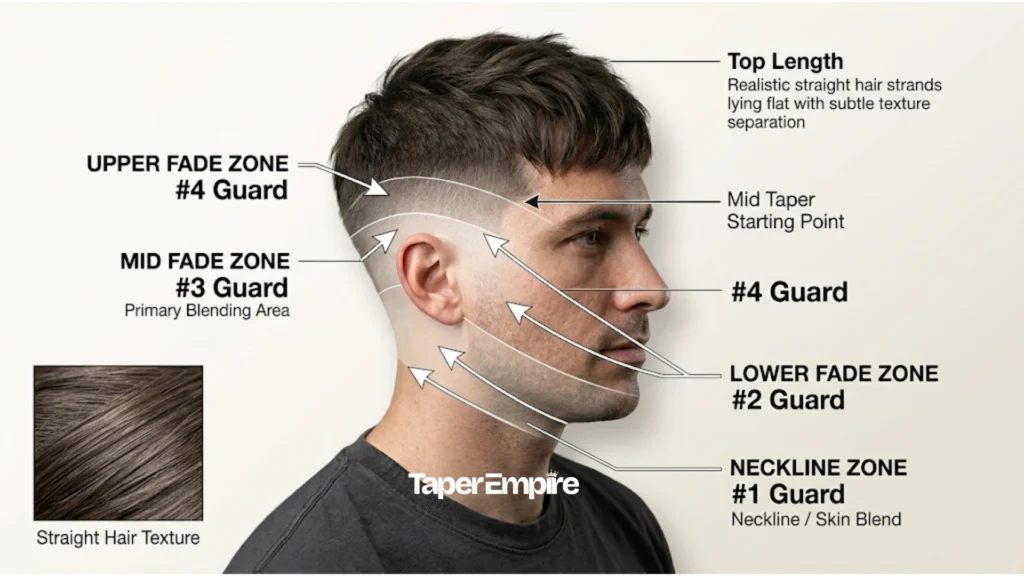
A mid-taper fade for straight hair starts at the temples and gradually blends down to the neckline using a #1 through #4 clipper guard progression. Straight hair makes the fade look sharper than any other texture because the smooth, flat strands display every blend line with razor-level precision. It works for all straight hair densities from thin to thick.
KEY POINTS:
- Starts at the temple level for balanced contrast between the top and sides
- Straight hair shows the cleanest fade lines of any texture
- Needs a touch-up every 2 to 3 weeks to stay crisp
- Thin hair should keep a #1 guard minimum and avoid skin fades
What is a mid-taper fade for Straight Hair?
A mid-taper fade for straight hair is a men’s haircut where the hair gradually blends from a longer length on top to shorter sides and neckline, with the fade beginning at the temples and tapering smoothly downward creating a clean, structured look that straight hair’s natural texture displays with exceptional sharpness and definition.
To fully understand the cut, it helps to break down each term. “Mid” refers to where the fade begins at the temple level, which sits in the middle ground between a low fade (near the ear) and a high fade (above the temples). “Taper” means a gradual decrease in length from top to bottom, not an abrupt cutoff. And “fade” refers to the seamless blending technique your barber uses typically progressing from a #1 guard at the base to a #2, then a #3, and up to a #4 before connecting with the length on top.
Straight hair interacts with this cut in a uniquely powerful way. Because straight strands lie flat and smooth against the head, every transition in the fade gradient is fully visible. There’s no curl pattern to soften an uneven blend, no wave texture to camouflage a choppy transition. Every detail is on display which means when it’s done right, it looks surgeon-precise. If you’re interested in understanding how taper cuts work more broadly before diving into styles, the complete taper haircut guide is a solid starting point.
Key Takeaway: The mid taper fade starts at the temples, blends downward with a clipper guard progression of #1 through #4, and works with the natural smoothness of straight hair to produce some of the sharpest, most defined fade lines of any hair texture.
Why Straight Hair Is Actually Perfect for a Mid Taper Fade
Straight hair is uniquely suited to the mid taper fade and once you understand why, it changes how you approach the cut entirely.
Here’s what makes straight hair such a strong match:
- Clean line visibility: Straight strands lay flat and smooth, which means every fade line, blend zone, and transition zone is fully visible. The cut looks razor-defined rather than blurry.
- Stronger contrast: The smooth texture of straight hair creates a bold, dramatic contrast between the longer top and the tapered sides more visual impact than almost any other texture.
- Precision showcase: Because straight hair has no curl to hide uneven blending, a well-executed mid-taper on straight hair stands out as true craftsmanship. When it’s clean, it really looks clean.
- Sleek, polished finish: The natural smoothness of straight hair delivers a refined aesthetic without much extra effort; the hair itself does the heavy lifting.
- Styling versatility: Straight hair can be blow-dried for volume, slicked back for a formal look, textured for casual days, or styled forward for a messy fringe all with the same base cut.
- Predictable growth pattern: Straight hair grows downward uniformly, meaning the fade maintains its structure for slightly longer between barber visits compared to curly or coily textures.
The fade haircut continues to be one of the most popular styles for men, and this classic cut, which blends hair from short to long offers a clean and sharp look that works for any occasion. Straight hair takes that sharpness and amplifies it.
Pro Tip: If you want your fade gradient to look as defined and razor-sharp as possible, straight hair is your biggest advantage. Lean into it don’t try to add artificial texture before your cut. Let the barber see your natural growth pattern and work with it.
Mid Taper vs Low Taper vs High Taper – Which Is Best for Straight Hair?
Understanding how the mid taper compares to its close relatives is critical before you sit in the barber’s chair. The difference in starting point changes everything the contrast level, the maintenance frequency, and the overall vibe of the cut on straight hair.
| Feature | Low Taper Fade | Mid Taper Fade | High Taper Fade |
|---|---|---|---|
| Starting Point | Just above the ear | At the temples | Above the temples |
| Contrast Level | Subtle | Moderate to Bold | Very Bold |
| Best Face Shapes | Oval, Square | Oval, Round, Heart | Oblong, Narrow |
| Maintenance | Every 3–4 weeks | Every 2–3 weeks | Every 1–2 weeks |
| Style Versatility | Conservative | High — all occasions | Statement-making |
| Straight Hair Look | Clean, subtle lines | Maximum clean contrast | Maximum drama |
| Best For | Office, corporate | All occasions | Bold, fashion-forward |
Low Taper Fade for Straight Hair
The low taper fade starts just above the ear and keeps the overall contrast conservative. It’s the most office-appropriate option and tends to work well for men with thin, straight hair since the limited fade exposure reduces the risk of the scalp showing through. Touch-ups can be spaced 3–4 weeks apart. For a complete look at this option, the low taper fade haircuts guide breaks down all the variations worth knowing.
Mid Taper Fade for Straight Hair
The mid taper fade is the balanced sweet spot. Starting at the temples, it creates a moderate-to-bold contrast that works across all occasions from a Monday business meeting to a Saturday night out. It offers the widest range of top styling options, and straight hair’s natural texture makes the gradient look especially defined. This is the right choice for most men, most of the time.
High Taper Fade for Straight Hair
The high taper fade starts above the temples and creates the boldest, most dramatic contrast of the three. It makes a strong statement and works particularly well on thick straight hair, where the density supports the aggressive gradient. The trade-off is maintenance a high taper on straight hair can start to look overgrown within a week and a half. For men drawn to this level of contrast, the guide to high-taper haircuts for men covers the key considerations.
For a full side-by-side breakdown between all three options, the low taper vs. mid taper vs. high taper comparison is worth reading before you commit to a direction.
Expert Recommendation: For first-time fade wearers with straight hair, the mid taper fade is the ideal entry point. It’s bold enough to make a real impression but subtle enough for any professional environment, and it gives you room to go higher or lower at your next appointment, depending on how you feel.
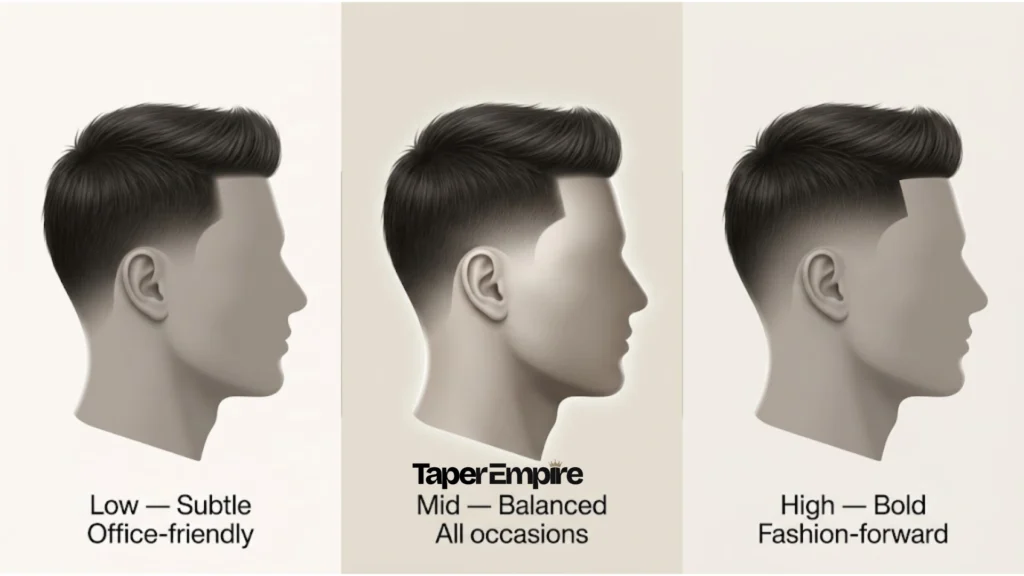
Still not sure whether mid, low, or high taper is right for your face? Instead of flipping a coin, upload a photo and see which taper height and exact top style score highest for your face shape and straight hair texture.
25+ Best Mid Taper Fade Styles for Straight Hair in 2026
Straight hair’s smooth texture makes it one of the most adaptable surfaces for styling. Whether you want a clean, structured look or a loose, textured one, the mid-taper fade provides the foundation for both. Below are 25+ curated style variations, each chosen for how well it works with straight hair specifically.
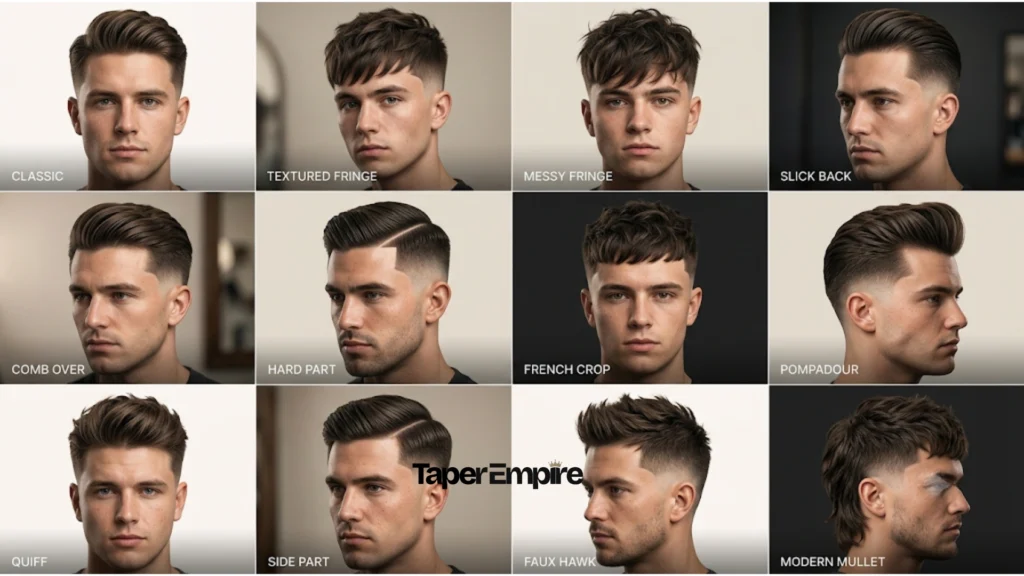
1. Classic Mid-Taper Fade Straight Hair
This is the foundation of every straight hair taper style: clean, balanced, and timeless. The sides taper gradually from the temples downward while the top stays smooth and structured with just enough length to show direction and movement. There is no dramatic fringe, no heavy texture, no bold statement, just a sharp, well-executed cut that works in every setting. The natural smoothness of straight hair makes the gradient look razor-precise without any extra effort. If this is your first time trying a mid-taper fade, start here.
Best for face shape: Oval, square, heart
Best for hair type: All straight hair densities, thin, medium, thick
Occasion: Daily wear, professional, casual, formal
Styling tip: Apply a dime-sized amount of lightweight styling cream to damp hair, blow-dry forward with a vent brush on medium heat, and let the natural sleekness of straight hair do the rest.
2. Textured Fringe Mid-Taper Fade Straight Hair
One of the most popular straight hair styles worldwide right now and for good reason. A choppy, layered fringe is pushed forward over the forehead, creating dimensional movement that counters straight hair’s natural tendency to lie flat and lifeless. The mid taper sides stay sharp and structured, while the top carries all the personality. The textured fringe draws the eye forward and adds visual weight where it matters most, making this a particularly strong choice for men who feel their straight hair looks too thin or flat on top.
Best for face shape: Round, heart, oval
Best for hair type: Medium to thick straight hair
Occasion: Daily wear, work-appropriate with edge, casual social
Styling tip: Blow-dry forward with a vent brush, then work a pea-sized amount of Hanz de Fuko Claymation through dry hair, pinching and piecing out the fringe sections with your fingertips for natural separation and texture.
3. Messy Fringe Mid-Taper Fade Straight Hair
The more relaxed, undone sibling of the textured fringe same forward direction, but is looser, less defined, and more effortless in its energy. The clean mid-taper sides provide enough structure to keep the overall look intentional, while the messy fringe on top carries a casual, weekend-ready vibe. This is the cut for men who want to look like they spent zero time styling but somehow still look sharp. The contrast between the precise fade and the loose top is what makes it work.
Best for face shape: Oval, heart, diamond
Best for hair type: medium-density straight hair
Occasion: Casual weekends, coffee runs, relaxed workplaces, date nights
Styling tip: Rough dry with your hands only no brush. Spray Bumble and Bumble Surf. Spray through the damp hair, tousle the top forward with your fingers, and walk out the door. The imperfection is the point.
4. Mid-Blowout Taper Fade Straight Hair
This is the style built specifically for men with straight hair who want volume they were never born with. The mid-taper sides stay tight and clean, while the top is blown out with a round brush for dramatic height and a rounded, full silhouette. The contrast between the structured, close-cut sides and the voluminous, lifted top is what makes the blowout taper one of the most visually striking cuts in men’s grooming right now. Straight hair naturally resists volume, and this style is engineered to overcome that, making it one of the fastest-growing men’s hairstyles on social media in 2025 and 2026.
Best for face shape: Oval, round
Best for hair type: Medium to thick straight hair, fine hair requires extra product support
Occasion: Going out, nightlife, creative environments, social events, confident casual
Styling tip: Apply Moroccanoil Volumizing Mousse to damp hair, blow-dry upward from root to tip using a round brush in a rolling motion, hit the cold shot button on your dryer to lock the shape, and finish with a light dusting of texture powder at the roots for lasting grit and lift.
5. Curtain Bangs Mid Taper Fade Straight Hair
Center-parted, face-framing bangs with clean tapered sides this is the cut that took TikTok and K-pop culture by storm and shows no signs of slowing down in 2026. Straight hair is uniquely suited to curtain bangs because its smooth texture falls naturally to each side of the face without fighting gravity or requiring heavy product to stay parted. The mid-taper sides provide the modern structure that stops this from feeling like a 90s throwback and makes it feel like a deliberate, contemporary choice.
Best for face shape: Heart, oval
Best for hair type: Medium to thick straight hair works best with 4 to 6 inches of length on top
Occasion: Daily wear, social settings, campus life, casual professional
Styling tip: After blow-drying, direct each side of the bangs outward from the center part using a vent brush, then apply a small amount of light wax or styling cream to the ends for hold and subtle separation.
6. Slick Back Mid Taper Fade Straight Hair
If straight hair had one superpower, this is the cut that unlocks it. Everything on top is combed straight back from the forehead for a sleek, sophisticated finish that radiates confidence. The mid-taper fade on the sides adds modern contrast and prevents the slick back from looking dated or one-dimensional. This is a power haircut it reads professional in the boardroom, polished at dinner, and sharp at any formal event. Straight hair’s natural smoothness is exactly what makes the slick back work as well as it does.
Best for face shape: Square, oval, diamond
Best for hair type: Medium to thick straight hair; thin hair may look flat rather than sleek.
Occasion: Corporate and formal events, date nights, upscale casual, and job interviews.
Styling tip: Apply a medium-hold pomade to towel-dried hair, comb straight back from the forehead with a fine-tooth comb, and blow-dry backward on low heat to set the direction. Finish with a light mist of hairspray for hold that lasts through the evening.
7. Comb-Over Mid-Taper Fade Straight Hair
A timeless style made modern with a clean mid-taper fade. A defined side part is created with a fine-tooth comb, and the hair is swept across the top with smooth, controlled direction, while the tapered sides add contemporary sharpness. This is the cut that works in every decade because the fundamentals never go out of style, and straight hair makes the part line and sweep look as clean as it gets. It is one of the most universally appropriate styles for men over 30 who want to be refined without being boring.
Best for face shape: Oval, heart, oblong.
Best for hair type: All straight hair densities
Occasion: Corporate, business meetings, professional networking, polished daily wear
Styling tip: Create a side part with a fine-tooth comb while hair is damp, apply a medium-hold pomade, and smooth the hair across the top with the comb. Blow-dry on low heat in the direction of the sweep to set the shape.
8. Hard Part Mid Taper Fade Straight Hair
A razor-cut line shaved directly into the scalp at the part line takes the classic side part or comb over and gives it a deliberate, assertive edge. The hard part adds a clean, geometric accent that catches the eye immediately, and straight hair makes it look particularly sharp because the smooth, flat texture lets the shaved line contrast cleanly with the hair surface. This is the upgrade for men who already like the side part but want something with more visual impact and precision.
Best for face shape: Square, diamond, oval
Best for hair type: Medium to thick straight hair, the line shows most cleanly on denser textures
Occasion: Professional with edge, upscale social, creative workplaces, confident casual
Styling tip: Keep the hard part line fresh by asking your barber to re-shave it at every touch-up visit. Style the top with medium-hold pomade in whatever direction you prefer: comb over, slick back, or swept side, and use the hard part as the style’s anchor point.
9. French Crop Mid Taper Fade Straight Hair
Built for the man who values efficiency without sacrificing style. A short, horizontal fringe sits across the forehead at a uniform length, while the mid-taper sides stay clean and tight. Straight hair naturally holds the forward direction that the French crop requires without fighting back, making this one of the lowest-maintenance styles in the entire guide. If your morning routine needs to be under three minutes and you still want to look sharp, this is your cut.
Best for face shape: Round, square, heart
Best for hair type: All straight hair densities are especially effective for thin hair, where the forward fringe creates coverage
Occasion: Active lifestyle, daily wear, gym, casual professional, low-maintenance living
Styling tip: Apply a small amount of light styling cream to damp hair, blow-dry forward with your fingers no brush required and leave it. The French crop is meant to look effortless, so resist the urge to over-style it.
10. Pompadour Mid Taper Fade Straight Hair
Volume swept upward and backward from the forehead, creating a dramatic, elevated silhouette on top, with clean, mid-taper sides providing structure underneath. The pompadour has been a men’s grooming icon for decades, and straight hair delivers the smooth, polished shape that defines the style at its best. There is no frizz breaking the line, no curl pattern distorting the sweep, just a clean, sculpted wave of hair that looks intentional from every angle.
Best for face shape: Oval, oblong
Best for hair type: Medium to thick straight hair needs enough density to hold the height
Occasion: Formal events, upscale social, date nights, weddings, retro-inspired settings
Styling tip: Blow-dry backward from the forehead using a round brush, building height and backward direction simultaneously. Apply a strong-hold pomade while the hair is still slightly warm to lock the shape. The cold shot button on your dryer is your best friend. Here, hit it once the shape is set to freeze the volume in place.
11. Mid Taper Fade for Asian Straight Hair
Asian straight hair typically thick, dense, and with a strong natural downward growth direction creates some of the sharpest, highest-contrast fade lines of any hair type on the planet. The natural density means the hair on top holds its shape with minimal product, and the strong contrast between the fuller top and the clean fade sides produces an exceptionally dramatic, eye-catching gradient. The challenge is volume: the weight and thickness of Asian straight hair naturally resist upward lift, so styles that require height need extra technique.
Best for face shape: All face shapes adjust the top style accordingly
Best for hair type: Thick, dense, straight hair with strong natural direction
Occasion: Adjust top styling for context.
Styling tip: For textured or voluminous looks, texture powder is essential. Apply it to the roots after blow-drying for grit and staying power. For slick or comb-over styles, the natural weight of Asian straight hair works in your favour. Ask your barber to use a #0.5 guard at the base rather than a full skin-fade. This preserves the hairline’s density and makes it look significantly cleaner as it grows out.
12. Mid Taper Fade for Thin Straight Hair
Thin straight hair does not disqualify you from a great mid-taper fade but it does require a few deliberate adjustments. The primary risk with fine hair is scalp exposure at the base of the fade, which can make the cut look patchy rather than clean. The solution is straightforward: keep a minimum #1 guard at the base and avoid going to skin entirely. On top, maintain at least 3 to 4 inches of length, and use the right products to create the illusion of volume and fullness that thin hair lacks naturally.
Best for face shape: Oval, heart
Best for hair type: Fine, thin, straight hair
Occasion: Daily wear, professional, casual, all occasions with the right styling
Styling tip: Apply volumizing mousse to damp hair before blow-drying, then dust texture powder into the roots of dry hair for grit and lift. Avoid any heavy or oil-based products, as they flatten thin, straight hair immediately. Choose messy fringe or textured fringe styles on top for maximum illusion of thickness.
13. Mid Taper Fade for Thick Straight Hair
Thick, straight hair is the dream canvas for the mid-taper fade. The natural density creates bold, dramatic fade lines that look intentional even as the cut grows out, holds its shape between barber visits longer than any other texture, and supports ambitious top styles without heavy product dependency. The only thing you need to manage is bulk uncontrolled thick hair can overwhelm the proportions of the cut and sit like a dense block rather than a styled shape.
Best for face shape: All face shapes
Best for hair type: Thick, dense, coarse straight hair
Occasion: All occasions, the density gives you the most styling versatility of any straight hair type
Styling tip: Ask your barber to texturize the top section with point-cutting or texturizing scissors to reduce weight and let the hair move freely. For daily styling, Hanz de Fuko Claymation or Uppercut Deluxe Matte Clay provides the strong hold thick, straight hair demands without being overpowered by the density.
14. Disconnected Mid Taper Fade Straight Hair
A deliberate visual separation between the longer top and the faded sides, no gradual blending, no soft transition, just a defined line where the two lengths meet. The disconnected look is bold, intentional, and statement-making. Straight hair amplifies the disconnection because the smooth, flat texture creates a hard, clean visual edge at the separation point that curly or wavy hair would naturally soften. This is a creative industry cut, the kind that gets noticed when you walk into a room.
Best for face shape: Oval, diamond
Best for hair type: Medium to thick straight hair; the disconnection shows most dramatically on denser textures
Occasion: Creative workplaces, fashion-forward casual, nightlife, artistic environments
Styling tip: Push the top section straight up or slick it back to maximize the contrast against the faded sides. A strong-hold matte clay keeps the top in place without movement, while the clean disconnect does all the visual work.
15. Edgar Cut Mid Taper Fade Straight Hair
A blunt, horizontal line cut straight across the front of the hair, no layering, no tapering at the fringe, just a sharp, geometric edge that sits at roughly forehead level. Paired with mid-taper sides, the Edgar cut is one of the most visually distinctive trending haircuts of 2025 and 2026. Thick, straight hair is the ideal texture for this style because its natural density supports the clean, blunt line without gaps or unevenness at the fringe.
Best for face shape: Square, round
Best for hair type: Thick straight hair thin hair may not support the blunt fringe cleanly
Occasion: Bold casual, street style, social events, trend-driven settings
Styling tip: Blow-dry the top forward, keep the fringe horizontal and blunt, and trim with regular scissor trims between barber visits. A small amount of light styling cream applied to the underside of the fringe helps it sit flat and clean without looking heavy or stiff.
16. Crew Cut Mid-Taper Fade Straight Hair
Short, disciplined, and universally flattering the crew cut with mid taper sides is the cut that has worked for generations and continues to work today. Straight hair’s natural flatness creates an ultra-neat, clean crew cut shape that looks sharp without any product at all. The mid taper on the sides modernises what might otherwise feel too military and gives the overall silhouette a contemporary edge. This is one of the most low-maintenance styles in the entire guide.
Best for face shape: All face shapes
Best for hair type: All straight hair densities
Occasion: Active lifestyle, gym, sports, military, professional, daily wear
Styling tip: Honestly, you can skip the product entirely with this one if your hair cooperates. If you want a little extra polish, run a tiny amount of light styling cream through the top with your fingertips for subtle direction and a clean finish.
17. Quiff Mid Taper Fade Straight Hair
Height at the front of the hair is brushed upward and slightly forward, creating a youthful, dynamic silhouette that adds vertical emphasis to the face. The quiff is the go-to style for men with round or wide face shapes because the upward volume creates the illusion of a longer, more angular facial structure. Straight hair needs a deliberate blow-dry technique to achieve the lift it will not quiff on its own, but once the shape is built, it holds well with the right product.
Best for face shape: Round, square
Best for hair type: Medium to thick straight hair
Occasion: Social events, daily wear, casual dates, creative professional settings
Styling tip: Direct your blow dryer upward from the roots at the front of the hair, using a vent brush, to build height while the hair is still warm and malleable. Once the shape is set, work a small amount of matte clay through the quiff to lock the lift in place and add texture to the surface.
18. Ivy League Mid Taper Fade Straight Hair
A more refined, longer version of the crew cut with a defined side part, think polished campus energy that transitions seamlessly from a lecture hall to a dinner reservation. The Ivy League carries understated sophistication without ever looking like it is trying too hard, and straight hair delivers the smooth, neat surface this style demands. The mid-taper fade updates the traditionally conservative Ivy League with a contemporary edge that keeps it from feeling dated.
Best for face shape: Oval, oblong
Best for hair type: Medium density straight hair
Occasion: Business casual, academic environments, networking events, polished daily wear
Styling tip: Create a soft side part with a fine-tooth comb, apply a light pomade for a subtle hold and natural shine, and gently smooth the top to one side. Resist the temptation to add too much product. The Ivy League should look effortlessly neat, not sculpted.
19. Side Part Mid Taper Fade Straight Hair
A clean, defined side part with the hair swept to one side is one of the most classically masculine hairstyles in men’s grooming and the addition of a mid taper fade gives it a modern backbone. Straight hair makes the part line look razor-crisp and natural at the same time, and the smooth sweep across the top falls in a clean, predictable direction. This is a cut that works at any age, in any setting, with any dress code.
Best for face shape: All face shapes Best for hair type: All straight hair densities
Occasion: Corporate, professional, casual, formal, daily wear truly all occasions
Styling tip: Part the hair with a fine-tooth comb while still damp, apply a medium-hold pomade, and smooth the top across with the comb in one clean motion. Blow-dry on low heat in the direction of the sweep to set the shape and add lasting hold.
20. Faux Hawk Mid Taper Fade Straight Hair
A central strip of height running from the forehead to the crown, edgier and more daring than the quiff but far more wearable day-to-day than an actual mohawk. The mid-taper fade on the sides narrows the visual focus toward the top, creating a triangular silhouette that reads as bold without being extreme. Straight hair holds the faux hawk shape cleanly once it is blown dry into position, with no curl pattern pulling the strip in unintended directions.
Best for face shape: Oval, diamond
Best for hair type: Medium to thick straight hair
Occasion: Concerts, weekends, nightlife, creative environments, bold casual
Styling tip: Blow-dry the central strip upward from both sides, directing all the hair toward the centre line. Apply a fiber paste for a flexible texture and hold. You want the shape to feel structured yet retain natural movement, not rigid or helmet-like.
21. Spiky Top Mid Taper Fade Straight Hair
Individual spikes are distributed throughout the top section for a fun, bold look that carries real personality. Straight hair is uniquely well-suited to spiky styles because the smooth, defined strands hold spike shapes cleanly, no frizz distorting the points, no curl pattern pulling them apart. The mid-taper sides provide a clean backdrop that makes the textured top pop. This is the cut for men who want their haircut to say something about who they are.
Best for face shape: Round, oval
Best for hair type: Medium density straight hair works best at 1 to 2 inches of length on top
Occasion: Casual weekends, social outings, campus life, younger demographic styling
Styling tip: Apply a strong-hold gel or wax to slightly damp hair, working it into individual sections, and shape each spike upward with your fingertips. Let the hair air-dry or blow-dry on low heat to set the spikes in place without disturbing their direction.
22. Caesar Cut Mid Taper Fade Straight Hair
A short, forward-facing fringe of uniform length historically inspired by the original Roman style but made entirely modern with the addition of clean mid taper sides. The Caesar cut is one of the most practical haircuts for men with receding hairlines because the forward fringe provides natural coverage and draws the eye away from the hairline. Straight hair naturally holds a forward, uniform direction, making this one of the easiest styles on this list to maintain day-to-day.
Best for face shape: Round, square
Best for hair type: All straight hair densities, especially effective for receding hairlines
Occasion: Daily wear, professional, casual, active lifestyle
Styling tip: Blow-dry forward on low heat, apply a small amount of lightweight styling cream, and comb the fringe straight forward with your fingers. The Caesar cut should look neat and deliberate keep the fringe line clean between barber visits with a quick scissor trim if needed.
23. Mid Taper Fade with Beard: Straight Hair
Pairing a mid-taper fade with a well-maintained beard creates one of the most complete, cohesive grooming looks available to men. The critical detail is the transition point at the neckline; the fade should blend seamlessly into the beard’s upper perimeter rather than creating a hard, disconnected line between the two. Short stubble to medium beard lengths pair most naturally with the mid taper’s gradient, and straight hair on top keeps the upper silhouette clean while the beard adds masculine weight to the lower face.
Best for face shape: Square, oval, round, the beard adds definition to softer jawlines
Best for hair type: All straight hair densities
Occasion: All occasions adjust beard length for formality level
Styling tip: Ask your barber to specifically address the fade-to-beard connection point during every visit. Use beard oil daily to keep the lower transition soft and healthy, and trim the cheekline weekly at home to maintain a clean, intentional silhouette.
24. Long Top Mid Taper Fade Straight Hair
Four to six inches of length on top paired with mid taper sides, this is maximum styling versatility from a single base cut. The longer top can be worn forward as a fringe, swept to the side as a comb-over, pushed back as a slick-back, blown out for volume, or left natural for an effortless, casual look. Straight hair’s natural weight gives the longer top clean, predictable movement without the frizz or volume challenges that other textures face at this length.
Best for face shape: Oval, oblong
Best for hair type: Medium to thick straight hair. Thin hair at this length may look wispy rather than intentional
Occasion: Varies by top styling professional, from casual to casual, depending on how you wear it
Styling tip: Blow-dry in your preferred direction with a vent brush, then apply a lightweight cream to add natural movement and hold. The beauty of this length is the versatility experiment with different directions on different days. One cut, multiple identities.
25. Modern Mullet Mid Taper Fade Straight Hair
Shorter at the front and sides, longer at the back, with clean mid taper sides that separate this firmly from the 1980s original. The modern mullet is one of the boldest and most talked-about men’s hairstyles of 2025 and 2026, a full reinvention of a once-ridiculed cut into something genuinely fashion-forward. Straight hair’s smooth texture makes the back section flow cleanly and the contrast between front and back reads as intentional rather than accidental. This is the cut for men who want to be noticed.
Best for face shape: Oval, heart
Best for hair type: Medium to thick straight hair
Occasion: Creative workplaces, social outings, concerts, trend-driven environments, bold casual
Styling tip: Apply a sea salt spray through the back section for natural movement and flow, and use a light matte clay on the shorter front for texture and direction. Keep the mid taper sides tight and clean the sharp fade is what makes the mullet look modern rather than dated.
How to Style Mid Taper Fade Straight Hair: Step-by-Step
Styling a mid taper fade on straight hair comes down to technique. The right approach creates volume, texture, and hold. The wrong approach leaves straight hair flat, heavy, or shapeless by mid-morning.
Daily Styling Routine for Mid-Taper Fade Straight Hair
Step 1 — Towel Dry Gently After showering, gently squeeze the water from your hair with a towel. Never rub vigorously, as this creates unnecessary friction and makes straight hair frizzy, even though it doesn’t look curly. You’re aiming for around 70–80% dry before you touch the blow dryer.
Step 2 — Apply Your Pre-Styler While the hair is still damp, apply your pre-styler product a volumizing mousse for fine straight hair, or a lightweight styling cream for thicker textures. Work it through evenly from roots to ends. A dime to quarter size is enough, depending on thickness. Starting with the product on damp hair gives you the best foundation for the style ahead.
Step 3 — Blow-Dry with a Vent Brush. Direct the airflow of your blow dryer in the direction you want the finished style to fall forward for fringe styles, upward for quiffs and blowouts, backward for slick backs. Keep the dryer about 6 inches from your hair and use low to medium heat. Apply a medium-hold pomade to towel-dried hair and use a blow dryer for extra volume at the roots if you’re going for a slick-back or swept-back finish.
Step 4 — Shape While the Hair Is Warm. This is the step where most people leave time on the table. Hair is most malleable immediately after blow-drying, before it cools and sets. Use your fingers or a vent brush to direct and define the shape while it’s still warm. Whichever direction you establish in these 30–60 seconds is the one the style will hold throughout the day.
Step 5 — Apply Your Finishing Product Once the hair has cooled, work your finishing product through with your fingertips, not your palms. Fingertips give you control and preserve texture. A pea-to-dime-sized amount of matte clay or styling cream is almost always sufficient for straight hair. Start with less than you think you need. You can always add more, but removing it means starting over.
Step 6 — Final Shape and Detail Piece out fringe sections if you’re wearing a textured or messy fringe style. Smooth the sides and neckline with your fingertips. A very light finishing spray can be added if you need extra longevity on a long day.
Blow-Drying Technique for Volume on Straight Hair
Straight hair’s tendency toward flatness is the main styling challenge, and the blow dryer is your best tool to fight it. The technique that works: use a round brush instead of a vent brush for the upward blow-dry, moving from root to tip in a rolling motion to build maximum lift. Apply Moroccanoil Volumizing Mousse before you start it adds body to the hair fiber without weighing it down. Finish with the cold shot button on your dryer to lock the shape in place before the hair cools.
Creating Texture on Naturally Flat Straight Hair
If your straight hair falls flat within an hour of styling, the fix is usually in your product choices. For a relaxed finish that adds texture and movement, sea salt spray is one of the most effective tools apply it to damp hair before blow-drying to create natural separation. For post-dry texture, reach for a texture powder: press it into the roots of dry hair to add grit, lift, and staying power without any heaviness. Matte clay worked into fully dry hair also creates excellent definition and separation. Avoid anything petroleum-based; it coats the hair shaft and makes straight hair look heavy and greasy.
Styling for Different Occasions
- Professional setting: Blow-dry smooth, apply light pomade, comb neatly: clean and authoritative
- Casual weekend: Rough dry with hands, sea salt spray, tousle with fingers: relaxed and effortless
- Date night: Blow-dry for volume, work matte clay through for textured finish: intentional but not overdone
- Formal event: Slick back with medium-hold pomade, crisp side part: polished and refined
Best Products for Mid Taper Fade on Straight Hair
The product selection is where a lot of men get it wrong. Straight hair gets weighed down, coated, or stiffened easily, so the product you choose matters as much as the styling technique.
Best Matte Clays for Straight Hair
Hanz de Fuko Claymation is widely considered the benchmark for thick, straight hair, strong hold, fully matte finish, and enough grit to create real definition and separation without any heaviness. Uppercut Deluxe Matte Clay offers a medium-strong hold with a natural finish that works for most straight hair types and styles. Reuzel Clay Matte Pomade is the best pick for fine or thin straight hair it’s reworkable throughout the day, lightweight, and provides enough hold without dragging fine strands down.
Best Styling Creams for Straight Hair
The rise of professional barbering culture and salon-grade products has redefined hair styling as an everyday ritual, and styling creams from brands like Layrite are at the center of that shift. Layrite Matte Cream is an excellent lightweight option for textured and messy fringe styles. It allows natural movement rather than locking the hair into a rigid position. Jack Black Texture Cream adds texture and body without any crunchiness, making it a strong everyday choice.
Best Texture and Volume Products for Straight Hair
Bumble and Bumble Surf Spray is one of the most versatile tools for straight hair apply it to damp hair before blow-drying for effortless, natural-looking texture and movement. Moroccanoil Volumizing Mousse is the pre-blow-dry essential for men with flat straight hair it adds lasting lift to the hair fiber before any heat is applied. BluMaan Cavalier Clay is a hybrid product that delivers both texture and hold in a single application, ideal for men who want to cut their morning routine to one product.
| Product Type | Best For | Hold Level | Finish |
|---|---|---|---|
| Matte Clay | Thick straight hair | Strong | Matte |
| Styling Cream | All types | Light–Medium | Natural |
| Sea Salt Spray | Texture and movement | Light | Natural |
| Volumizing Mousse | Fine and flat straight hair | Light | Natural |
| Pomade | Slick back, comb over | Medium–Strong | Shine |
| Texture Powder | Adding grit and lift | Light | Matte |
Which Face Shape Suits a mid-taper fade straight hair best?
The mid taper fade is one of the most universally flattering men’s haircuts, but the top styling variation you choose should complement your face shape.
| Face Shape | Suitability | Best Style Variation |
|---|---|---|
| Oval | Ideal | Any variation — full creative freedom |
| Round | Ideal | Textured fringe, quiff, blowout taper |
| Heart | Ideal | Curtain bangs, messy fringe |
| Square | Excellent | Comb over, side part, crew cut |
| Diamond | Excellent | Faux hawk, side part |
| Oblong | Good | French crop, crew cut |
| Triangle | Good | Textured top for upper balance |
Oval Face Shape
Oval face shapes are the gold standard for the mid taper fade. Balanced proportions mean any style variation from this guide works without restriction. If you have an oval face, your only job is to decide what aesthetic you want; there are no face-shape limitations to work around.
Round Face Shape
Round face shapes benefit most from top styles that add vertical height. The quiff, the blowout taper, and the textured fringe all push the eye upward and create the illusion of length. Avoid styles that add width, like very full, flat tops with no directional movement.
Heart Face Shape
A broader forehead and narrower chin define the heart-shaped face. Curtain bangs and messy fringes are ideal choices because they soften the width of the forehead and draw attention toward the center of the face. Medium-length tops balance the proportions naturally.
Square Face Shape
Strong angular jawlines carry the mid taper fade beautifully. Softer styling choices, such as the comb over, side part, and Ivy League, complement angular features without over-squaring the overall silhouette. The hard part is a strong option for square faces that want to lean into the sharpness.
Diamond Face Shape
Wide cheekbones, a narrow forehead, and a narrow chin define diamond face shapes. The side part and faux hawk both create proportional balance by adding a little width at the crown while keeping the sides clean.
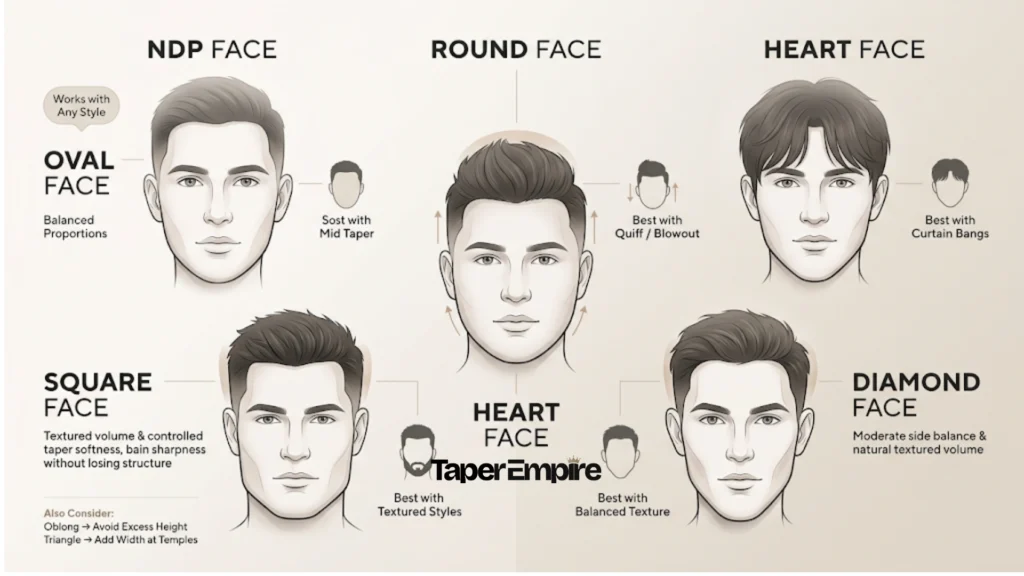
You now know your face shape and which styles work best for it, but picking the single best match from 25 options is still guesswork. Upload a photo and get your top 3 mid-taper styles ranked by how well they fit your actual face geometry in about 60 seconds.
Mid Taper Fade for Thin vs Thick Straight Hair: Key Differences
Not all straight hair is the same, and your approach to the mid taper fade should reflect your actual hair density.
Thin Straight Hair: What to Do Differently
With thin, straight hair, scalp exposure is the primary concern. A skin fade on fine hair exposes the scalp at the base, which looks patchy and draws attention to thinness rather than away from it. Ask your barber to keep a minimum #1 guard at the base of the fade rather than going to the skin. Keep the top length at least 3-4 inches to create the illusion of density.
Product choices should focus on adding volume and body with a volumizing mousse before blow-drying, and on texture powder at the roots after drying. Style choices that create the most convincing illusion of thickness are the messy and textured fringes, where the layered, choppy movement suggests volume even when the hair itself is fine. For men exploring all their options at this density, the low taper fade straight hair guide covers a more conservative alternative worth considering.
Thick Straight Hair: What to Do Differently
Thick, straight hair is the most forgiving canvas for the mid-taper fade. The density creates bold fade lines, reliably holds shape between visits, and naturally supports volume-forward styles like the blowout taper and pompadour. The main consideration is removing bulk from the top — ask your barber to use texturizing scissors or point-cutting through the top section so the hair moves freely rather than sitting in a dense, heavy block. Strong-hold products like Hanz de Fuko Claymation work best here the density of thick straight hair will overpower lighter products.
How to Ask Your Barber for a Mid Taper Fade on Straight Hair
Barber communication is 50% of the result. The most talented barber in your city still needs accurate direction from you especially for straight hair, where precision is non-negotiable.
Say exactly this:
“I’d like a mid taper fade starting at my temples, using a #1 at the base blending up to a #3, keeping [X inches] of length on top, and styled [forward / swept back / textured / slick].”
Here’s what each part of that phrase does:
- “Mid taper fade” — tells the barber the fade height immediately
- “Starting at my temples” — confirms mid height and removes any ambiguity
- “#1 at the base blending to #3” — gives the exact clipper guard progression
- “Keeping [X inches] on top” — gives your barber a concrete length to work toward
- “Styled forward / swept back / textured” — gives styling direction so the cut is shaped to work with your preferred look
Always bring a reference photo. Bring two if possible one from the front and one from the side. Specify whether you want an exact match or just the fade height, and tell your barber about your hair texture (thick, thin, fine, dense) so they adjust their technique accordingly.
Questions to ask your barber during the consultation:‘
- “Have you done mid-taper fades on straight hair specifically?”
- “What guard progression will you use for my hair thickness?”
- “How short do you recommend going on top for my face shape?”
- “How often should I come back for touch-ups?”
- “What product would you recommend for my hair type?”
That script gets you most of the way there, but your barber still needs exact guard numbers, blend points, and a maintenance plan. The tool generates a printable brief with all of that in under a minute, so you walk in with a complete spec sheet instead of just a phrase.
Red flags to watch for:
A barber who skips the consultation and goes straight to cutting, doesn’t ask about your preferred length, rushes through the blending process, or can’t describe their clipper guard progression clearly. A good mid-taper on straight hair takes time, typically 30 to 45 minutes for the full cut.
Mid Taper Fade Maintenance Schedule and Growth Timeline
Understanding what happens to your mid-taper fade as it grows is essential for managing expectations and knowing when to book your next appointment.
Professional Touch-Up Schedule
- Every 2 weeks: Maximum sharpness maintained — fade lines crisp, edges clean
- Every 2–3 weeks: The sweet spot for most men — still clean and professional
- Every 3–4 weeks: Minimum recommended interval — fade starts softening noticeably
- Beyond 4 weeks: Fade lines blur significantly; requires a full re-cut, not just a touch-up
According to the American Academy of Dermatology, human scalp hair grows at an average rate of approximately 0.5 inches per month, which translates to about 6 inches per year. That means in three weeks, you’ve gained roughly 3/8 of an inch, enough to meaningfully blur the clean gradient of a mid taper fade on straight hair.
For a detailed breakdown of maintaining your fade between visits, the how to maintain a mid taper fade guide covers the key strategies that keep the cut looking intentional for longer.
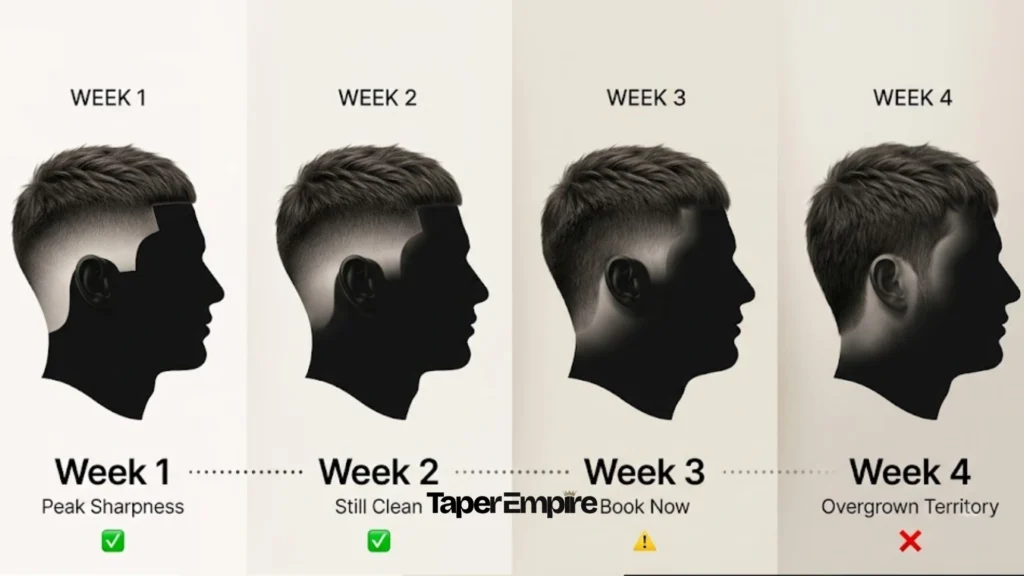
Week-by-Week Growth Timeline
Week 1 (Days 1–7) — Peak Sharpness This is your haircut at its best. The fade gradient is crisp, the transition zones are defined, and the top length is exactly right. Maximum contrast, maximum definition.
Week 2 (Days 8–14) — Still Sharp A slight softening begins at the lower fade, and the top gains about 1/8 inch of length. Still clean, still professional, still sharp. Most people look their best in this window.
Week 3 (Days 15–21) — Noticeable Growth. The fade gradient is beginning to blur. The top is longer than intended. The cut is still wearable, but you’re approaching the point where a touch-up is genuinely needed.
Week 4 (Days 22–28) — Overgrown Territory. The fade lines are significantly blurred. Straight hair’s uniform, flat growth makes every extra millimeter visible in a way curly hair simply doesn’t. This is no longer a touch-up situation; you need a full re-cut.
Between-Visit Home Maintenance
You can extend the quality of your mid-taper fade between professional visits with a few simple home habits:
- Neckline cleanup: A basic electric trimmer ($25–$40) lets you maintain neckline cleanness without touching the fade itself
- Consistent daily styling: Regular styling with the right products prevents buildup that dulls the overall appearance of the cut
- Clarifying shampoo once per week: Removes styling product residue from straight hair, which builds up faster than on textured hair types
- What not to do: Never attempt to trim the fade line yourself; leave this entirely to your barber. A home fade attempt almost always results in uneven blending that requires extra work to fix at your next appointment
Common Mistakes to Avoid with Mid Taper Fade on Straight Hair
Mistake 1 — Going Skin Fade on Thin Straight Hair A skin fade on fine or thin straight hair exposes too much scalp at the base and looks patchy as it grows. Keep a minimum #1 guard at the base to preserve density at the fade’s starting point.
Mistake 2 — Choosing the Wrong Fade Height Without Thinking It Through Going too high (above the temples) creates an aggressive look that requires very frequent maintenance. Going too low defeats the visual impact of the mid taper. If you’re uncertain, start at mid height and adjust from there.
Mistake 3 — Using Heavy, Petroleum-Based Pomades Heavy pomades coat straight hair rather than holding it, leaving it looking flat, greasy, and shapeless. Switch to a water-based matte clay or lightweight styling cream for dramatically better results.
Mistake 4 — Skipping Product Entirely Straight hair without any product loses its shape and direction within the first hour of the day. A minimal amount of lightweight styling cream is all you need — but you need something.
Mistake 5 — Waiting Too Long Between Touch-Ups Because straight hair grows uniformly and lays flat, even a few extra days of growth is more visible than on curly hair. Respect the 2–3 week schedule to keep your cut looking intentional.
Mistake 6 — Over-Applying Product. More product does not mean better hold on straight hair. It means heavy, greasy, unnatural-looking hair. Pea-to-dime size only build gradually if you feel you need more coverage.
Mistake 7 — Not Bringing Reference Photos to the Barber Verbal descriptions are ambiguous. “A bit shorter on the sides” means something different to every barber. A front and side photo removes guesswork and gets you the result you’re actually looking for.
How Much Does a Mid Taper Fade for Straight Hair Cost?
| Service | Price Range | What’s Included |
|---|---|---|
| Basic barbershop | $25–$40 | Cut and fade |
| Mid-range barbershop | $40–$60 | Cut, fade, and styling |
| Premium salon/barbershop | $60–$100+ | Full consultation, cut, product |
| Touch-up visit | $20–$35 | Fade refresh, and neckline |
| Monthly maintenance (2 visits) | $50–$100 | Regular upkeep budget |
Time-wise: expect 5–10 minutes for the consultation, 30–45 minutes for the full cut and fade, and 20–30 minutes for touch-up visits. Daily styling at home runs about 5–10 minutes once you’ve developed your routine.
The investment is worth it. Grooming has cemented its place as an emblem of confidence and social currency whether it’s a date, a job interview, or a public gathering, men want to put their best selves forward by looking polished and well-groomed. A clean, well-maintained mid taper fade on straight hair delivers exactly that.
Frequently Asked Questions
Is a mid-taper fade good for straight hair?
Yes, it’s arguably ideal for straight hair. The smooth, flat texture showcases the gradual blend and clean fade lines more sharply than almost any other hair type. Straight hair produces maximum precision visibility, making the gradient look crisper and more defined at every stage of growth.
How often should I get a mid-taper fade touched up?
Every 2–3 weeks is the optimal interval for maintaining sharp, clean fade lines on straight hair. Because straight hair grows uniformly and lies flat, growth is highly visible along the fade gradient. Beyond 3 weeks, the blending begins to blur noticeably.
What products work best for a mid taper fade on straight hair?
Matte clay (Hanz de Fuko Claymation) for thick straight hair, lightweight styling cream (Layrite Matte Cream) for fine hair, and Moroccanoil Volumizing Mousse before blow-drying for flat, lifeless straight hair. Avoid petroleum-based pomades that weigh down straight hair.
What’s the difference between a mid taper and a low taper for straight hair?
A low taper starts just above the ear and creates subtle, conservative contrast. A mid taper starts at the temples and creates a more visible, moderate-to-bold gradient. On straight hair, the mid taper produces a more dramatic, sharper-looking result; the low taper reads more conservative and professional. For a full comparison, the low taper vs mid taper vs high taper breakdown covers all the differences in detail.
What face shapes suit a mid taper fade best?
Mid taper fade suits all face shapes but works best on oval, round, and heart shapes. Oval faces have full creative freedom with any style variation. Round faces benefit from height-adding styles like quiffs and blowout tapers. Heart faces suit curtain bangs and messy fringe. For more about how different taper fade types interact with face shape, the taper fade types guide covers the key relationships.
Can I get a mid taper fade on thin straight hair?
Absolutely with adjustments. Request a minimum #1 guard at the base rather than a skin fade, keep more length on top (3–4 inches), and use volumizing products. Choose the textured fringe or messy fringe on top to create the illusion of thickness. The low taper fade straight hair is also worth considering as an alternative for very fine textures.
How do I style a mid taper fade for volume on straight hair?
Apply volumizing mousse to damp hair, then blow-dry upward with a round brush from root to tip for lift. Finish with texture powder or light matte clay. The blowout taper variation is specifically designed to combat straight hair’s natural flatness and creates dramatic height against the clean, tapered sides.
What exactly do I say to my barber?
Say: “I’d like a mid taper fade starting at my temples, blending from a #1 at the base to a #3, keeping [X inches] of length on top, styled [your preferred direction].” Always bring a front and side reference photo.
Will a mid-taper fade look good as it grows out on straight hair?
It stays clean and sharp for about 2–3 weeks. After Week 3, the gradient begins to soften. Unlike curly hair where growth blends naturally into the fade, straight hair shows growth more uniformly meaning regular maintenance is more important for consistently polished results.
What’s the difference between a taper and a fade for straight hair?
A taper reduces length gradually from top to bottom but doesn’t necessarily blend to skin. A fade blends to a much shorter length sometimes to skin and uses clipper guard progressions to create a seamless gradient. The mid taper fade combines both: a graduated taper with a faded, blended finish. For a complete explanation, the taper vs fade breakdown covers every distinction clearly.