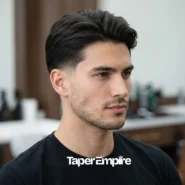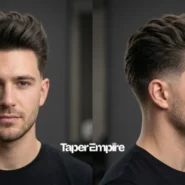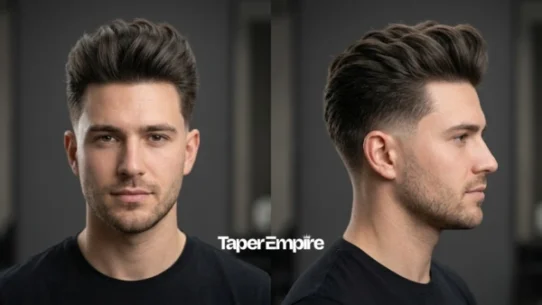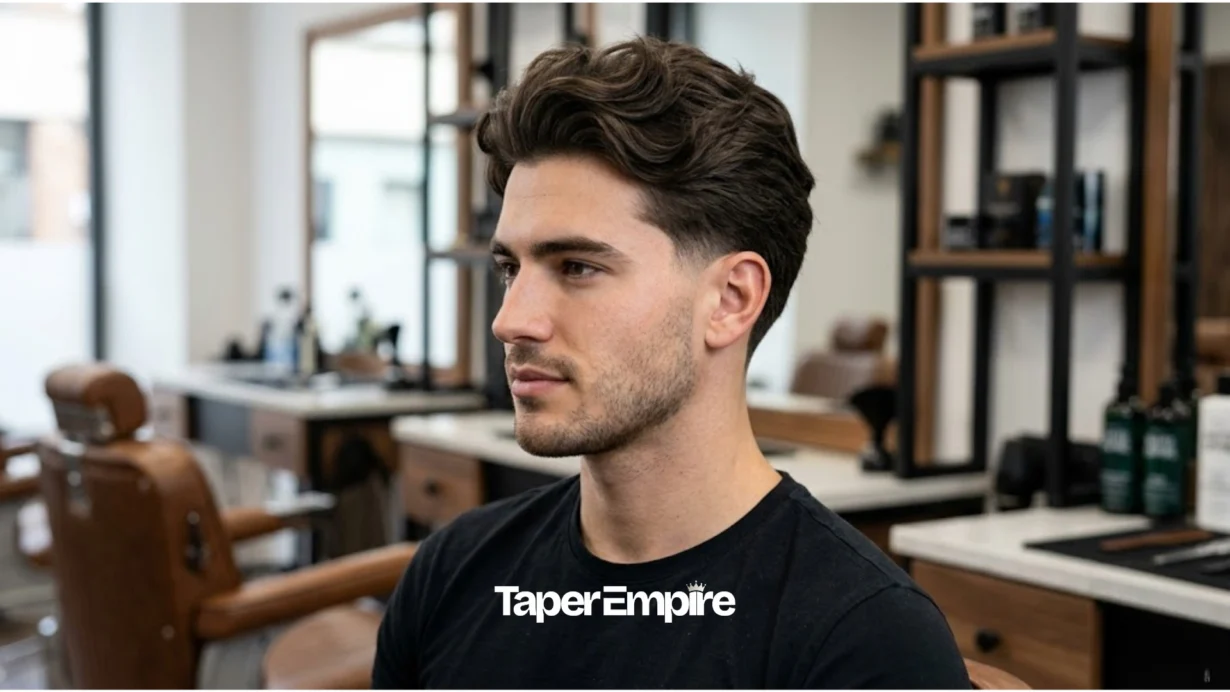

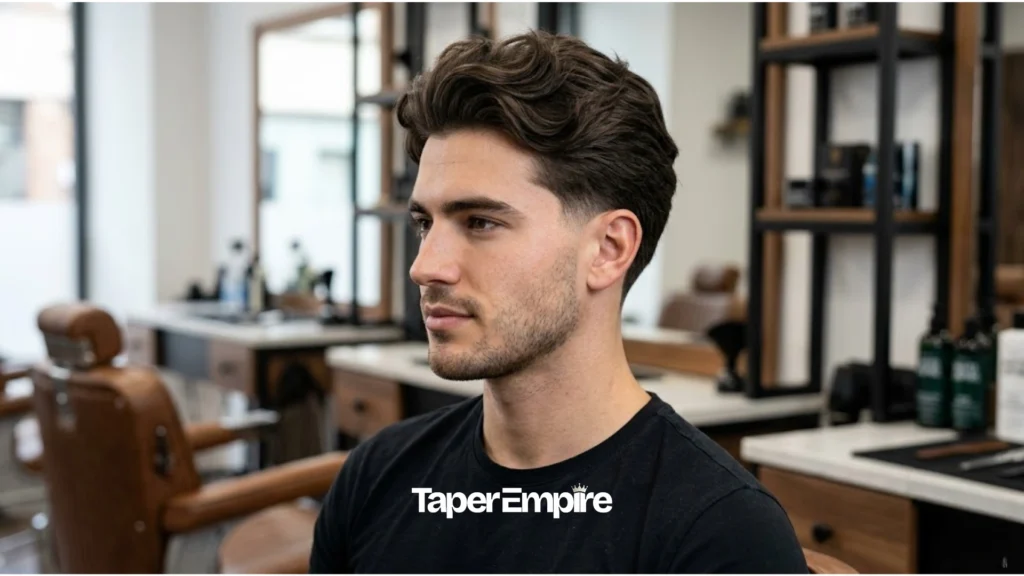
A mid-blowout taper starts the taper at the temple, wraps cleanly around the ear and neckline, and leaves enough length on top for a blow dryer to lift into real volume. It sits between the subtle low taper and the bolder high taper, which is why it works for more face shapes and hair types than either extreme.
This guide breaks down what the cut looks like, how it changes across straight, wavy, curly, and coily hair, and what to say when you sit down in the barber’s chair. You’ll also find the grow-out timeline, the products that match each texture, and the mistakes that turn a clean mid blowout taper into a messy one.
What Is a Mid Blowout Taper?
A mid blowout taper is a men’s haircut where the taper starts at the temple and blends into the neckline, while the top stays long enough to blow-dry into volume. It sits between the subtler low taper and the bolder high taper.
Key Points
- Taper begins at the temple, not the ear
- Top needs 3 to 5 inches of length
- Works on straight, wavy, curly, and coily hair
- Sits between low and high taper heights
Table of Contents
What Is a Mid Blowout Taper?
A mid blowout taper combines a temple-height taper on the sides with a longer, blown-out top that a blow-dryer lifts into volume. The taper handles the sides and back. The blowout handles the top. Together, they create a cut that looks structured without looking severe.
This differs from the wider blowout taper family, which also includes low and high versions. It also differs from a general mid taper, which can be paired with a flat top, a comb-over, or any number of styles that don’t rely on blow-dried volume at all. The blowout is what makes this specific version stand out.
Many people confuse “taper” and “fade,” and the confusion is fair. A taper gradually shortens hair within a narrow band near the temples, ears, and neckline while the rest of the sides stay at a wearable length. A fade takes the entire side of the head down to a short gradient, often to skin. A taper grows out more evenly because less hair gets removed overall.
Where Does the Taper Actually Start?
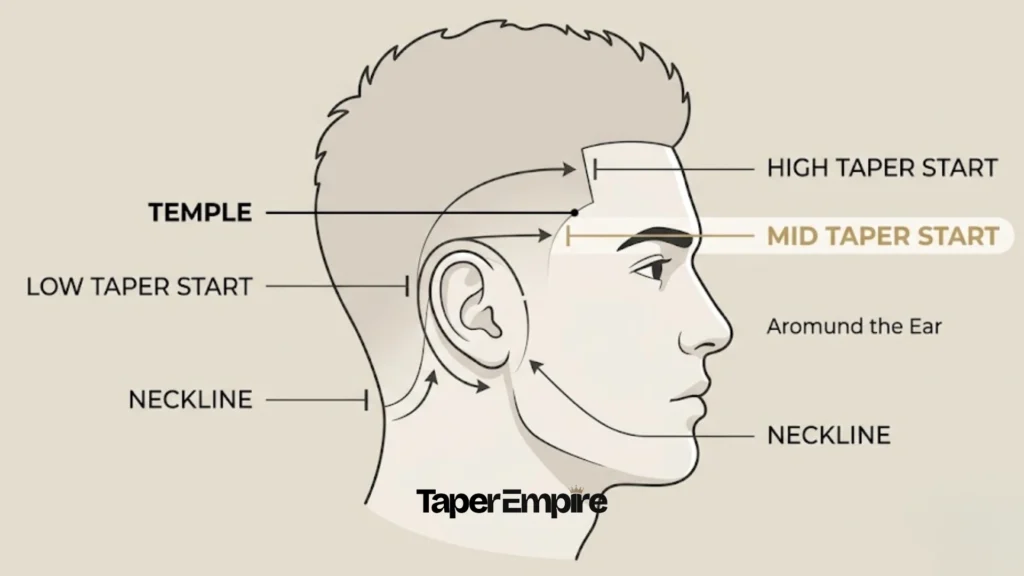
The mid taper starts at the temple, which is the halfway point on the side of your head between your hairline and your ear. From there, it follows a clear path:
- Temple — the taper begins here, at the widest part of your head above the ear.
- In front of the ear — the taper continues down, staying tight against the hairline.
- Behind the ear and sideburn — the taper blends into the sideburn area.
- Neckline — the taper finishes with a clean neckline cleanup.
This path is what separates “mid” from a low taper, which starts near the top of the ear, or a high taper, which starts above the temple.
What Does a Mid Blowout Taper Look Like?
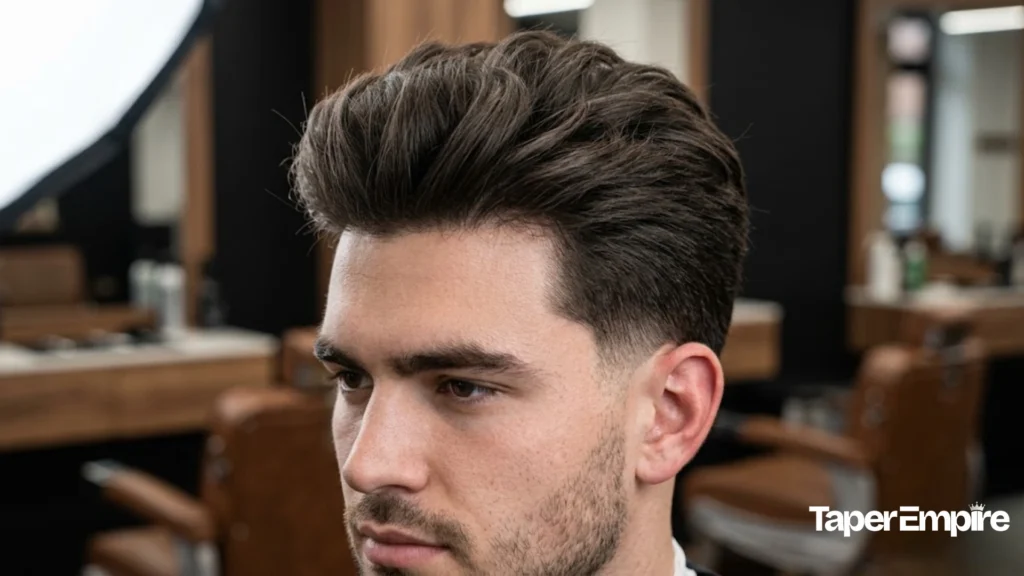
A mid blowout taper shows a soft, textured top with natural volume that catches light and movement, sitting above a taper that fades evenly from the temple down through the ear and into the neckline. The contrast between the fuller top and the tighter sides gives the cut its clean, put-together look.
The top doesn’t sit flat. It has lift, especially at the front and crown, and it moves when you touch it or when wind hits it. The sides stay tight enough that the cut reads as intentional rather than just “grown out.” This balance is what makes the mid version so common in barbershops right now; it looks fresh without looking overdone.
What Are the Mid Blowout Taper Variations?
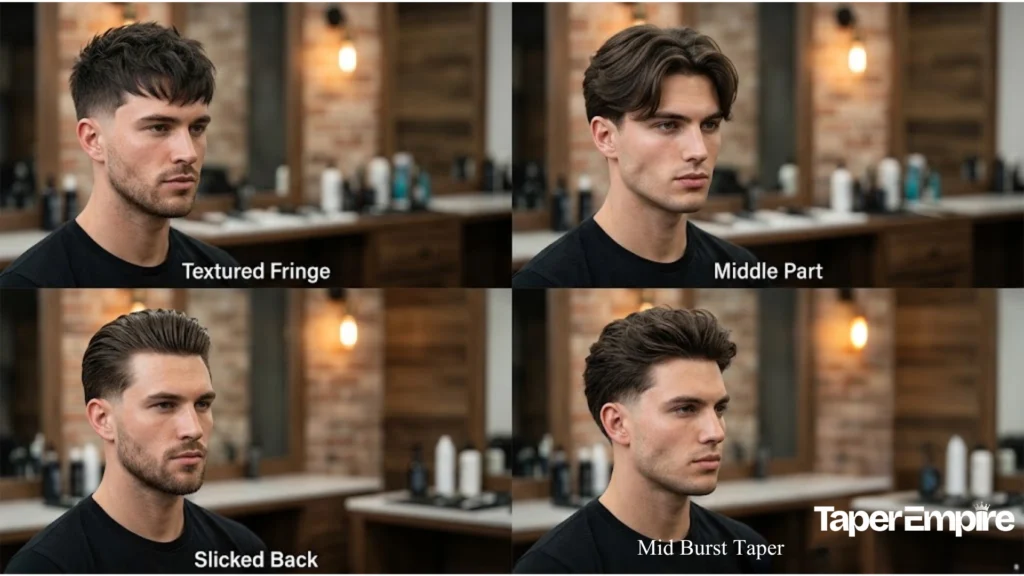
The core mid blowout taper works as a base for several front-and-top styling choices. Each one changes the finished look without changing the taper itself.
Adding a Textured Fringe
A textured fringe pushes the front section forward in a piecey, broken-up finish instead of a straight bowl line. It needs enough length up front, usually 3 to 4 inches for the blow-dryer to create separation instead of a flat sheet of hair. This pairs the mid taper’s clean sides with a front that looks deliberately undone.
Adding a Middle Part
A middle part splits the top down the center and blow-dries each side outward and slightly up. It works best on hair with some natural texture, since fully straight hair can look too flat down the middle without added volume underneath.
The Slicked-Back Version
Slicking the top straight back creates a sharper, more formal look. It pairs well with the mid taper because the tight sides keep the overall silhouette clean instead of bulky. A light-hold product keeps the shine natural rather than wet-looking throughout the day.
The Burst Taper Variation
A burst taper curves the taper around the ear instead of running in a straight line, creating a rounded shape at the base of the sideburn. This differs from a standard drop fade or burst fade, which typically drops lower and blends further into the neckline. The mid burst version keeps most of that curved detail higher on the head.
If your hair hasn’t grown out enough yet for the full blowout volume, a shorter mid taper still has plenty of styling options while you wait for length. Once your top hair passes the 4-to-5-inch mark, you’ll find more advanced long-hair mid taper looks open up beyond the blowout treatment alone.
How Do You Ask Your Barber for This Cut?
Tell your barber the exact taper height, the top length you want, and how you plan to style it — vague requests like “clean it up” lead to inconsistent results. Barbers interpret “taper” differently from shop to shop, so specific language matters more than the haircut’s name alone.
Here’s language that works in most barbershops:
“Mid blowout taper: start the taper at the temple, wrap it clean around the ear and neckline, and keep the top long enough with texture so I can blow it out. Nothing below a one at the edges.”
Guard numbers help remove ambiguity. According to Wahl USA’s official guide to comb specifications, clippers run from a #0 (1/16″) or bare blade at the tightest edges up to a #2 (1/4″) in the blend zone, with scissor work handling the top section. Naming a guard range gives your barber a concrete starting point instead of a vague description.
Top length matters just as much as the taper height. Ask for at least 3 inches on top; anything shorter doesn’t give a blow-dryer enough hair to lift into real volume.
Quick Tip:
Not sure exactly how this cut will look on your face shape before you commit? Taper Empire’s AI haircut tool lets you preview the mid blowout taper on your own photo and generates a barber-ready brief with taper geometry and the exact language to bring to your appointment.
Bringing a reference photo alongside your verbal script removes almost all remaining ambiguity. Even a precise description leaves room for interpretation, and a photo closes that gap. Some barbershops also offer a dedicated terminology guide with back-view reference photos, which helps when the neckline and taper blend need extra clarity that a front-facing photo can’t show.
Natural Edge or Sharp Edge-Up?
A sharp edge-up creates a crisp, geometric hairline that looks precise right after the cut but grows out noticeably within about a week. A natural edge looks softer from day one and holds its appearance longer with less frequent touch-ups needed. Pick the sharp edge-up if you have an event coming up. Pick the natural edge if you want lower maintenance day to day.
Consultation or Walk-In?
A first-time mid blowout taper benefits from a short consultation, since taper height, top length, and hairline style all need confirming before the clippers start. Returning clients with an established cut can typically walk in and reference their last appointment by name or photo.
Does This Haircut Work With Your Hair Type?
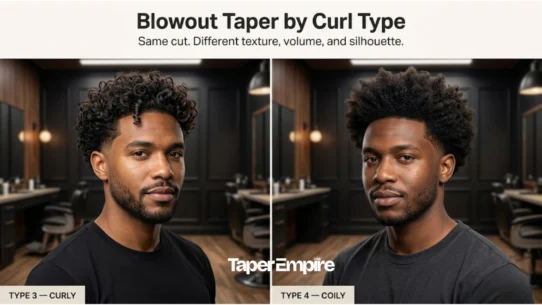
A mid-blowout taper works across every major hair type, though the cutting technique and styling routine shift depending on your texture. Here’s how it plays out for each one.
Straight Hair
Straight hair needs texture cut into the top, or the blow-dryer has nothing to grip and the hair lays flat regardless of effort. Ask your barber to point-cut or razor the top section instead of cutting it blunt straight across.
Barber script for straight hair: “Mid blowout taper point-cut the top so it’s not blunt. I need texture for the blow-dry to hold volume.”
For more style options built specifically around straight hair texture, a dedicated straight-hair mid taper guide covers looks beyond the blowout treatment alone.
Wavy Hair
Wavy hair’s natural movement enhances the blowout effect with less styling effort than straight hair needs. A light sea salt spray or curl cream applied to damp hair, followed by diffuser drying, preserves the wave pattern while still lifting the top.
Curly Hair
Curly hair holds vertical volume naturally, often needing less product than straight hair to keep the top lifted. Curls also shrink noticeably as they dry, anywhere from 20% to 75% depending on curl pattern and porosity, which means cutting curly hair while it’s soaking wet can result in a much shorter final length than expected. The cut should be done dry, or on stretched hair, so your barber can judge the true finished length.
Barber script for curly hair: “Mid blowout taper — cut the top dry or stretched, not soaking wet, so we don’t lose length to shrinkage. Point-cut for texture, keep at least four inches when stretched.”
A full range of mid taper looks built for curly hair goes deeper into styling beyond this specific script.
Coily Hair
Coily hair holds a lifted, structured shape at the crown better than any other texture, often needing the least daily styling effort to maintain volume. The same dry-or-stretched cutting principle that applies to curly hair applies here too, since coily strands shrink the most dramatically of any texture type. For dedicated style coverage built around coily and textured hair, texture-specific guidance goes further than a general blowout guide can.
Fine or Thin Hair
Fine or thin hair works best with a low or mid taper rather than a high taper. A higher taper exposes more of the sides, where density differences between the top and sides become more visible. Keeping the taper at mid height maintains the volume illusion on top while limiting exposed scalp area at the sides.
How Do You Style This Cut at Home?
Styling a mid blowout taper at home comes down to matching your product to your hair type and using the right blow-drying technique. The blowout half of this cut happens at your bathroom sink, not at the barbershop.
Match Your Product to Your Hair Type
| Hair Type | Product Type | Why It Works | When to Apply |
|---|---|---|---|
| Fine or straight | Volumizing mousse | Lightweight lift without weighing hair down | Damp hair, before blow-drying |
| Thick or straight | Texture clay | Medium hold and separation without heavy shine | Dry hair, after blow-drying |
| Wavy | Sea salt spray | Enhances natural separation and texture | Damp hair, before diffusing |
| Curly | Curl cream | Defines curl pattern and controls frizz | Wet or soaking-wet hair |
| Coily | Curl cream plus diffuser | Controls shrinkage-related frizz, holds shape | Wet hair |
A simple check tells you when you’ve used enough product: run your fingers through the top. If you feel clumps or buildup, you’ve used too much. Volume collapses faster when product sits on top of the hair instead of working through it evenly.
How Long Between Touch-Ups?
Grow-out speed depends on your hair type. Straight hair shows taper grow-out fastest because the sides lay flat, making the blended edge visible sooner. Curly and coily hair’s texture partially disguises grow-out, stretching the “fresh” window by a few extra days.
| Hair Type | Edge & Neckline Touch-Up | Full Cut |
|---|---|---|
| Straight | About 2 weeks | 3 to 4 weeks |
| Wavy | About 2 weeks | 3 to 4 weeks |
| Curly / Coily | About 2.5 to 3 weeks | 3 to 4 weeks |
These windows line up with the general pace of human hair growth, which according to the American Academy of Dermatology averages roughly half an inch per month. For the complete upkeep routine between cuts, including trimming tips and daily styling habits, a dedicated mid taper maintenance guide covers the full schedule in more depth.
Mid vs. Low vs. High Taper: Which Wins?
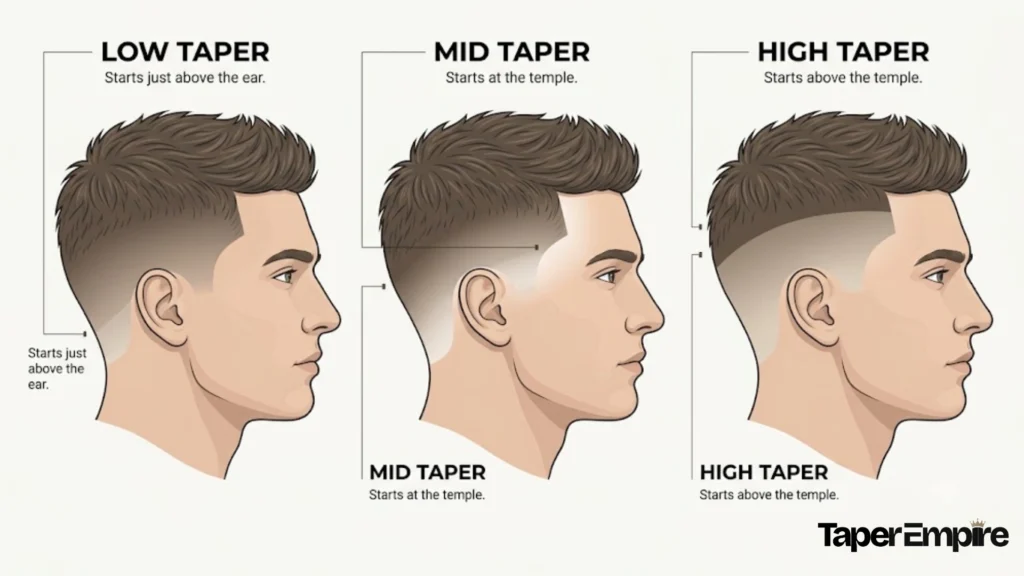
The mid taper sits between the low taper’s subtlety and the high taper’s boldness, making it the most versatile height for most face shapes and workplace settings. It holds its silhouette longer than a low taper because more weight gets removed at the sides, while avoiding the width-exposing effect a high taper can create on round faces.
| Attribute | Low Taper | Mid Taper | High Taper |
|---|---|---|---|
| Taper start point | Just above the ear | At the temple | Above the temple |
| Visual contrast | Subtle | Balanced | Bold |
| Grow-out visibility | Blends into hair fastest | Holds shape longer than low | Most visible as it grows |
| Best face shapes | Works for most shapes | Round, square, longer faces | Oval, shorter faces needing height |
| Workplace fit | Most conservative | Professional-friendly | Least conservative |
If the mid version feels too subtle for what you want, a full breakdown of low, mid, and high taper heights walks through the tradeoffs in more depth. Readers leaning toward more understatement can explore the low taper haircut category directly, while anyone wanting maximum contrast can look at the high taper haircut category instead.
Quick Tip
Deciding between low, mid, and high can be tough without seeing it on your own face shape. Taper Empire’s AI haircut tool analyzes your face structure and matches you to the taper height that fits best, in about a minute.
Common Mid Blowout Taper Mistakes to Avoid
A handful of predictable mistakes account for most disappointing results with this cut. Knowing them ahead of time helps you avoid a redo appointment.
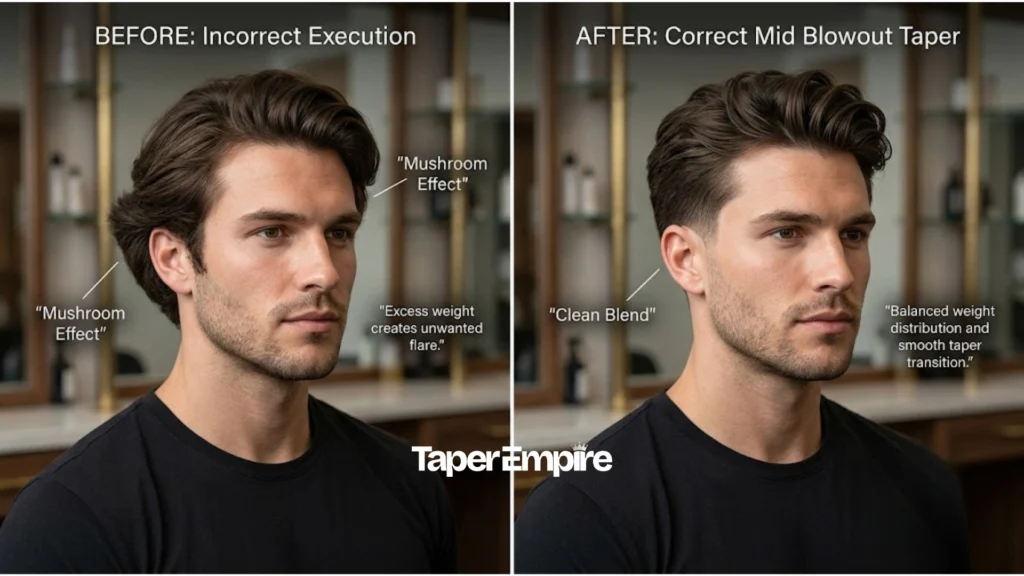
- The “mushroom” effect. This happens when the taper gets set too high on straight hair without enough weight removed from the sides, causing the sides to flare outward instead of blending into the top. Prevention: confirm the taper starts at the temple, not above it, and ask your barber to remove weight, not just length.
- Volume collapses by afternoon. Usually caused by too much product or too little top length for the blow-dry to build real structure. Prevention: keep at least 3 inches on top and use only enough product to work through the hair without leaving residue.
- The taper starts looking like a fade. This happens when the barber removes too much hair in the taper band, eliminating the narrow, gradual quality that separates a taper from a fade. Prevention: reference the temple-to-neckline path directly with your barber before the clippers start.
- Curly hair comes out shorter than expected. Caused by cutting soaking-wet curls to the intended dry length without accounting for shrinkage. Prevention: request the cut be done dry or on stretched hair, not wet.
Frequently Asked Questions
What’s the difference between a mid blowout taper and a mid taper fade?
A mid-blowout taper uses a true taper, a narrow band of gradual shortening near the temple, ear, and neckline, while “mid-taper fade” often describes the same cut using fade terminology loosely. The technique and finished look are typically the same in most barbershops.
How long should hair be on top for a mid blowout taper to work?
Most barbers recommend at least 3 inches of length on top. Anything shorter doesn’t give a blow-dryer enough hair to lift into real volume, resulting in a flat finish no matter what product or technique you use.
Does a mid blowout taper work with thin or fine hair?
Yes, though a mid or low taper is usually better than a high taper for fine hair. The mid height exposes less of the sides, where density differences between the top and sides show up more, keeping visual focus on the voluminous top instead.
How often does a mid blowout taper need a touch-up?
Most people need an edge and neckline touch-up every 2 to 3 weeks and a full cut every 3 to 4 weeks. Curly and coily hair can often stretch slightly longer between touch-ups since texture disguises grow-out better than straight hair does.
Should you ask for a natural edge or a sharp edge-up with this cut?
A sharp edge-up gives maximum crispness right after the cut but grows out more visibly within about a week. A natural edge looks softer from day one and holds its appearance longer, with less frequent touch-up needed in between visits.
How much should you tip for a blowout taper haircut?
According to the Emily Post Institute, standard US barbershop tipping generally falls in the 15 to 20 percent range, though this can vary by region, shop type, and how happy you are with the final result.
Key Takeaways
A mid-blowout taper works because it splits the decision into two clear parts: a temple-height taper on the sides and enough length on top for real, blow-dried volume. Getting it right comes down to three things naming the exact taper height and top length to your barber, matching your styling routine to your specific hair type, and sticking to a realistic touch-up schedule.
If you’re still deciding between the low, mid, and high versions, or you want to see how the mid-blowout taper will actually look on your face before you commit, Taper Empire’s AI haircut tool can generate a preview and a barber-ready brief in about a minute so you walk into your next appointment with a clear plan instead of a guess.