

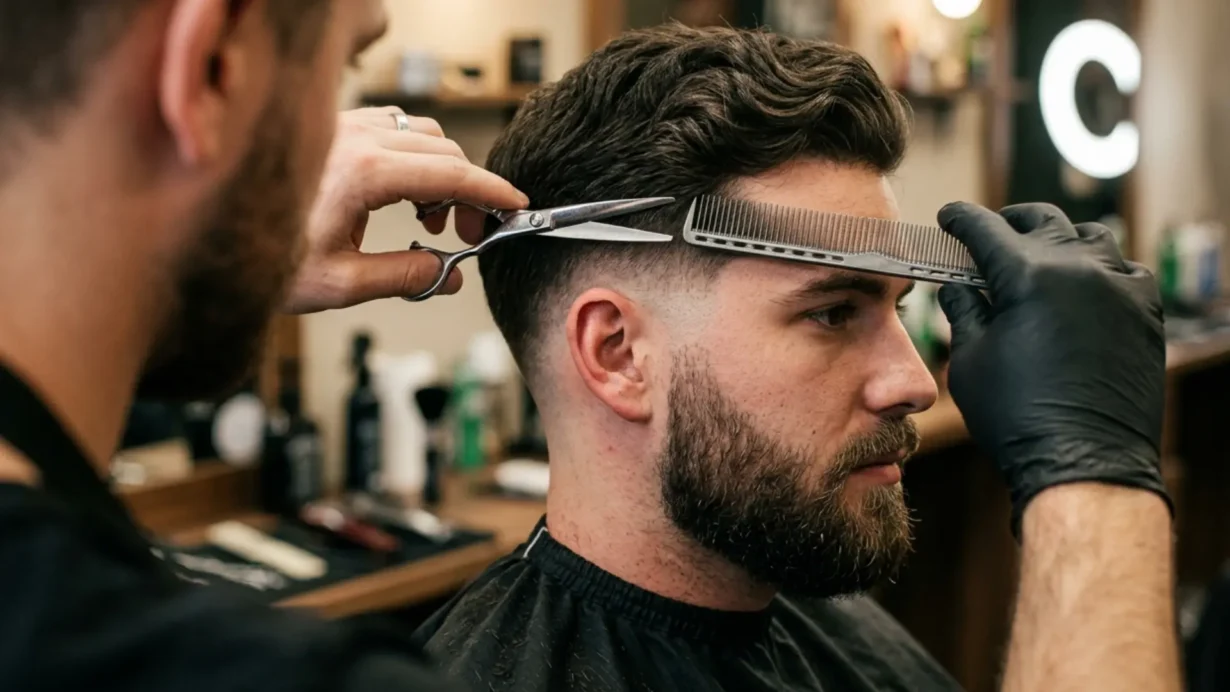

A taper gradually shortens hair around the sideburns and neckline while maintaining visible length throughout. A fade creates dramatic contrast by blending hair down to skin level. A taper fade combines both techniques: a gradual taper that ends in a fade to skin at the bottom. The confusion between these styles stems from differences in regional terminology and their visual similarities. However, understanding the distinction changes your entire look.
Tapers offer a subtle professionalism that requires touch-ups every 3-4 weeks. Fades deliver bold, modern statements needing maintenance every 1-2 weeks. Taper fades balance both approaches with 2-3 week maintenance cycles.
By the end of this guide, you’ll know exactly which style suits your face shape, what each one actually costs annually, and precisely what to tell your barber to get the cut you want on the first try. No more guessing, no more disappointing results.
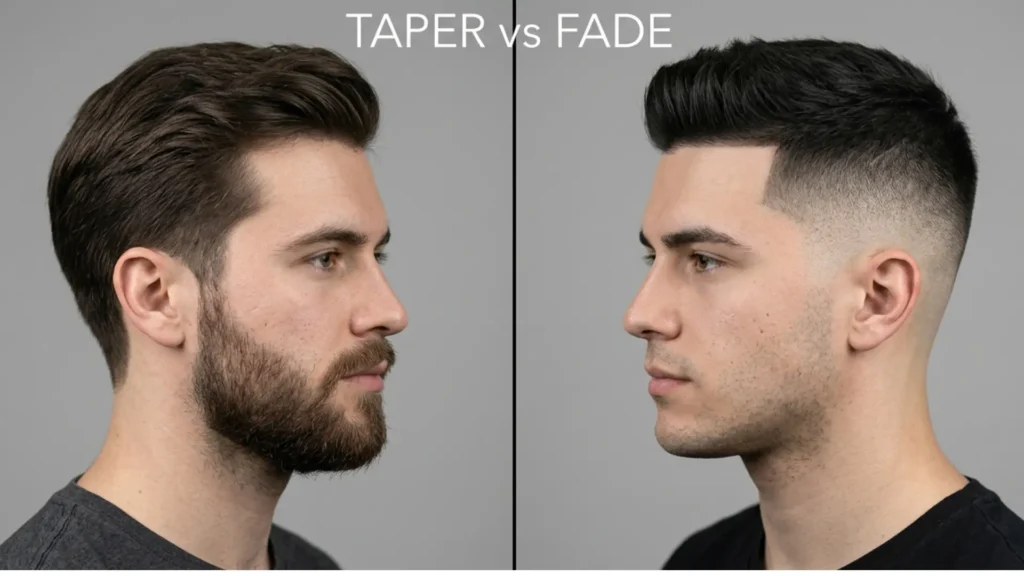
What Is the Difference Between a Taper, Fade, and Taper Fade?
A taper gradually shortens hair while keeping visible length at the edges. A fade blends hair down to the bare skin for a bolder contrast. A taper fade combines both with a gradual blend on top and a clean fade to skin at the bottom. Your best pick depends on your lifestyle, budget, and grooming routine.
KEY POINTS:
– Tapers last 3–4 weeks, while fades need a touch-up every 1–2 weeks
– Taper fades blend both styles and suit most professional settings
– Fades cost nearly double annually due to more frequent visits
– Start with a low taper or low taper fade if you are a beginner
Table of Contents
Taper or fade—which one actually fits your face shape and hair type?
The Taper Style Tool takes your face shape, hair texture, and maintenance preference and tells you which cut works in your favor.
Quick Comparison: Taper vs Fade vs Taper Fade
Before diving into the details, here’s a side-by-side snapshot of how tapers, fades, and taper fades compare across key factors. This table provides a quick reference for contrast level, maintenance, cost, and professional suitability.
| Feature | Taper | Fade | Taper Fade |
|---|---|---|---|
| Blend Style | Gradual, subtle | Sharp, dramatic | Progressive contrast |
| Length at Bottom | Visible hair (#2 guard min) | Blends to skin (#0 or razor) | Fades to skin at base |
| Scalp Visibility | Never exposed | Exposed at the bottom | Exposed only at the base |
| Maintenance Frequency | 3–4 weeks | 1–2 weeks | 2–3 weeks |
| Annual Barbershop Visits | 12–15 times | 24–30 times | 18–24 times |
| Clipper Guards Used | #2–#4 primarily | #0–#2 primarily | Full range #0 to #4 |
| Professional Settings | Always appropriate | Depends on the workplace | Generally acceptable |
| Annual Cost (Average) | $420–525 | $1,080–1,350 | $756–1,008 |
| Best For | Conservative, refined | Bold, modern | Versatile, adaptable |
Still not sure whether taper vs. fade vs. taper fade is right for your face? Instead of flipping a coin, upload a photo and see the exact top style score highest for your face shape and straight hair texture.
What Is a Taper Haircut?
A taper creates a clean, natural gradient in which hair gradually thins from the crown to the neckline without exposing the scalp. Starting just above the ears (approximately 1 inch), the cut typically progresses from a #4 clipper guard (1/2 inch) down to a #2 guard (1/4 inch) at the bottom edges.
Barbers execute tapers through three core techniques: edging (hairline definition), siding (blending sides and back using clipper-over-comb at 45-degree angles), and topping (managing length and texture through point cutting and layering). The entire process takes 20-30 minutes.
Types of Taper Haircuts
Low Taper: Begins just above the ears, creating refined outlines that enhance natural hairlines. Best suited for round faces, thick hair, professional environments, and men new to tapered styles. Maintenance every 3-4 weeks.
Mid Taper: Initiates at temple area (midpoint of head’s side profile), blending from #4 through #3, #2, and sometimes #1 near the bottom. Ideal for oval and square faces, wavy or curly textures, and creative professionals. Maintenance every 2-3 weeks.
High Taper: starts near the crown or upper temple region (2-3 inches above the ears), creating maximum contrast to emphasize top styling. Works best for diamond and heart-shaped faces, fine hair, fashion-forward environments, and younger demographics. Maintenance every 10-14 days.
Classic Taper: Traditional approach, maintaining 2-3 inches on top, reducing to 1/2 inch at the edges, using primarily the scissor-over-comb technique. Timeless style suitable for all face shapes, corporate executives, and formal occasions. Maintenance every 3-4 weeks.
Temple Taper: Concentrates graduation around the temple region and sideburns while maintaining fuller back coverage. Creates sharp profile views, ideal for oblong faces and men with full beards. Maintenance every 2-3 weeks.
Drop Taper: follows a curved line that dips lower behind the ears, creating a unique arc that follows the natural head contour. Suits round faces and creative styles. Maintenance every 2-3 weeks.
Skin Taper: blends down to nearly bare skin at the very bottom edges while maintaining the taper’s characteristic subtlety throughout most of the transition. Works for sharp facial features and bold personal styles. Maintenance weekly.
What Is a Fade Haircut?
A fade transitions from longer lengths on top to extremely short hair or bare skin on sides and back, creating high-contrast looks that wrap around the entire head. The style requires 30-45 minutes using 4-7 different clipper guard transitions to achieve flawless, invisible blend lines.
Barbers create fades by starting with longer guards (#3 or #4), then using progressively shorter guards (#2, #1.5, #1, #0.5, and finally no guard for skin level). The magic lies in invisible transition lines achieved through multiple passes with each guard, using rocking or flicking motions to blend lengths.
The fade gained mainstream popularity in the 1980s and 1990s, driven by hip-hop culture and Black barbershop innovation, becoming a symbol of style and cultural identity.
Types of Fade Haircuts
Low Fade: Starts just above the ears with moderate contrast. Perfect for first-time fade wearers and professional settings wanting modern style without extreme boldness. Maintenance every 2 weeks.
Mid Fade begins around the temple level (halfway up the side of the head), creating a balanced, modern look. The most popular fade variation has high, noticeable contrast. Maintenance every 1-2 weeks.
High Fade Begins near the crown with maximum contrast between the top and sides. Eye-catching statement haircut requiring maintenance every 1-2 weeks.
Skin Fade (Bald Fade) Blends hair completely to bare skin, creating the sharpest possible fade. Shows growth quickly, requiring weekly to 1.5-week maintenance.
Drop Fade Curves down behind the ears, following the natural head contour. Especially popular with textured or curly hair on top. Maintenance every 1-2 weeks.
Burst Fade creates a semi-circular burst pattern around the ears without continuing to the back of the head. Works great with mohawks and creative looks. Maintenance every 1.5-2 weeks.
Temple Fade Fades only the temple and front hairline areas. Extremely popular in Black and Latino communities for clean edge-ups. Maintenance every 1-2 weeks.
Undercut Fade Combines disconnected undercut with faded edges for dramatic contrast. Fashion-forward look requiring maintenance every 1.5-2 weeks.
What Is a Taper Fade?
Taper fade is a legitimate hybrid that combines gradual tapering in the upper sections with a sharp fade finish (often to the skin) in the lower sections. This most commonly requested men’s haircut style offers a professional transition that is most visible while maintaining modern, sharp edges at the bottom.
Types of Taper Fades
Low Taper Fade: Starts at ear level, fades into the skin in the lower area. Most conservative option perfect for professional environments.
Mid Taper Fade: Begins at temple level, fades to skin in mid-to-low area. Most popular variation offering a balanced, versatile look.
High Taper Fade: Starts high on the head, fades to skin in the mid area. More dramatic and modern while remaining professional.
Choosing Based on Hair Type & Texture
Your natural hair texture directly affects how a taper or fade looks, holds shape, and grows out over time. This section walks through each hair type from straight to coily with specific taper and fade recommendations for each.
Straight Hair (Type 1)
Both tapers and fades showcase clean lines and precision. Low and mid tapers prevent flat “helmet” effects. Add texture with sea salt spray or texture powder, then finish with matte clay for natural control.
Wavy Hair (Type 2A–2C)
Natural movement works with all taper heights, though drop tapers uniquely complement wave flow. Apply lightweight styling cream on damp hair, scrunch, and air-dry for a relaxed, polished finish.
Curly Hair (Type 3A–3C)
Mid and high tapers or fades work best, cleaning sides while allowing curls to stand out. Use curl-defining cream on damp hair, diffuse on low heat or air-dry. Drop fades specifically complement natural curl patterns. Temple tapers refine edges without reducing fullness.
Coily/Afro-Textured Hair (Type 4A–4C)
Fades dominate for their versatility, low tapers maintain maximum volume, while skin fades create sharp contrast. Keep hair hydrated with leave-in conditioner and twist cream. Precise edge work elevates the entire cut. Fade culture represents a deep tradition in Black barbershops, with specialized techniques passed down through generations.
Thick/Coarse Hair
Mid and high fades reduce bulk on sides while preserving top styling options. Thinning shears at the crown help manage density.
Fine/Thin Hair
Classic tapers, low tapers, or subtle low taper fades preserve fullness without exposing the scalp. High fades and skin fades can make thinning more noticeable.
Choosing Based on Face Shape
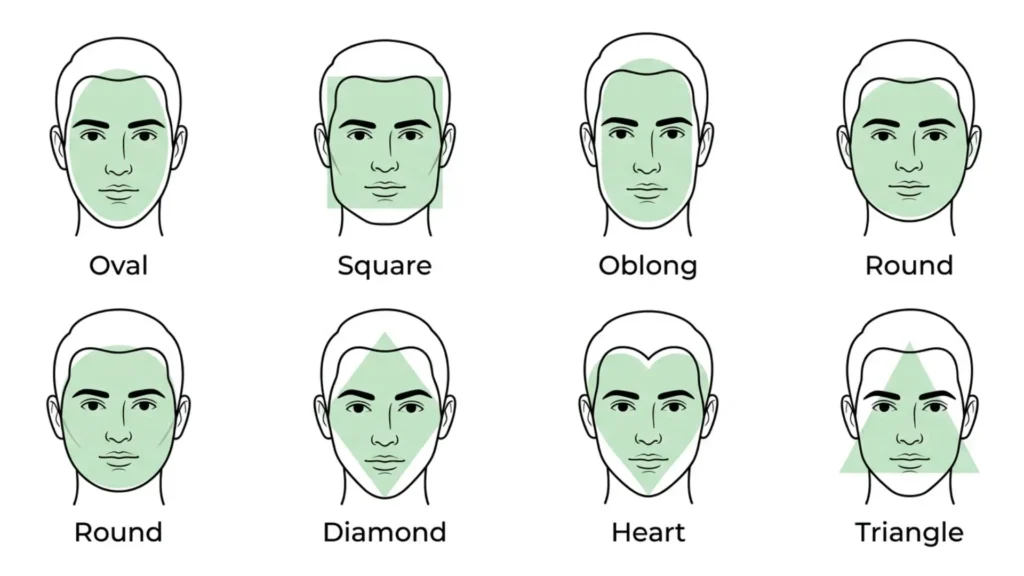
The right taper or fade can enhance your facial proportions by adding structure, reducing width, or softening strong features. Here’s how each face shape pairs with different taper and fade heights for the most balanced result.
Round Face: High taper or temple taper adds vertical structure and elongation. Avoid low tapers that preserve fullness around the widest part of the face.
Square Face: Low tapers or classic tapers soften strong angles. High tapers can emphasize boxiness.
Oval Face: Most versatile shape, all taper and fade styles work well. Choose based on personal style and hair texture.
Heart-Shaped Face: Mid taper or drop taper balances a wider forehead with a narrower chin. Very high tapers accentuate forehead width.
Diamond Face: High taper paired with top volume balances prominent cheekbones. Avoid mid-tapers, highlighting the widest face point.
Oblong/Long Face: Low taper keeps side volume, reducing the appearance of length. High tapers further elongate the face.
Professional Barbering Technique
Understanding how barbers actually execute tapers and fades helps you appreciate the craft and communicate more effectively during your appointment. This section covers clipper guard sizes and neckline shapes, the technical details behind every quality cut.
Clipper Guard Sizes
| Guard # | Length | Typical Use in Taper |
|---|---|---|
| #0 | 1/16" (1.5mm) | Skin taper bottom edge only |
| #1 | 1/8" (3mm) | High taper bottom, tight edges |
| #2 | 1/4" (6mm) | Standard taper bottom |
| #3 | 3/8" (10mm) | Mid-taper blend zone |
| #4 | 1/2" (13mm) | Low taper starting point |
| #5 – #6 | 5/8" – 3/4" | Conservative taper top |
Professional barbers use half-guard sizes (#0.5, #1.5, #2.5) to achieve smoother, seamless blends, which are crucial for invisible transition lines.
Neckline Shapes
Blocked (Square): Straight horizontal line across neck. Best for narrow necks, adds width perception.
Rounded: Follows natural hairline curve. Most versatile and flattering for all neck types.
Tapered (Pointed): Gradually narrows to a subtle point. Ideal for thick necks or creating elongation.
Styling Products by Desired Finish
The right product can completely transform how your taper or fade looks and holds throughout the day. From matte textures to high-shine finishes, here’s how to match your product choice to your desired style.
Natural Matte Look: Texture clay or matte paste creates definition without shine. Apply to dry hair for textured crops and messy styles.
Sleek Shine Finish: Water-based or oil-based pomades provide a smooth, glossy appearance. Apply to damp hair for slick-backs and side parts.
Flexible Hold: Molding paste or styling cream allows reshaping throughout the day. Work through towel-dried hair for natural movement.
Maximum Volume: Texture powder or volumizing mousse applied to roots before blow-drying creates lift for pompadours and quiffs.
Daily Hair Styling Routine (5-7 Minutes)
A consistent styling routine keeps your cut looking sharp without overcomplicating your mornings. These five steps cover everything from preparation to finishing, giving you a polished result in under seven minutes.
Preparation: Start with clean, towel-dried hair. Apply heat protectant if using heat tools.
Pre-Styling: Add texture powder to roots for grip and volume, or sea salt spray for relaxed texture.
Blow-Drying (Optional): Use medium heat, lifting roots and directing airflow for the desired shape.
Product Application: Start with a dime-sized amount, warm between palms, work back to front for balanced distribution.
Finishing: Shape with fingers or brush, add minimal product for detailing, finish with light hairspray if needed.

2026 Trending Taper Styles
Taper styles in 2026 are pushing beyond traditional templates toward more expressive, personalized cuts. These are the standout trends defining the year each blending structure with individuality.
The Textured Taper: Heavy texture on top, with clean, tapered sides, emphasizing natural movement over rigid styling.
The Burst Taper Mullet: Burst taper around ears with length at back creating contrast of clean sides and fuller rear.
The Wave Taper: Natural waves defined on top with a tight taper on the sides, focusing on enhancing texture rather than controlling it.
The Sustainable Taper: Designed to grow out cleanly over 3-4 weeks, reducing frequent barber visits.
The Hybrid Taper: Blends two or more taper heights into seamless, customized cuts.
Maintenance Between Cuts
Getting a great cut is only half the equation; how you maintain it between visits determines how long it stays sharp. This section covers maintenance schedules, at-home care tips, and how to grow out each style gracefully.
Taper Maintenance (Every 3-4 Weeks)
Use a detail trimmer to clean up the neckline, maintaining sideburn length without reshaping. Wash 2-3 times weekly with sulfate-free shampoo, always conditioning. Style daily with appropriate products. Invest in a quality detail trimmer ($25-40) for 5-minute home edge maintenance, extending barbershop visits by 1-2 weeks.
Fade Maintenance (Every 1-2 Weeks)
Skin fades need weekly maintenance; regular fades every 1.5-2 weeks. Clean front hairline, temples, and neckline with a detail trimmer. Moisturize the exposed scalp with a light, non-greasy moisturizer to prevent dryness and irritation. Use a durag or a wave cap for textured hair to protect the fade and maintain wave patterns. Book the next appointment before leaving the barbershop to secure standing time slots and potential package discounts.
Growing Out Gracefully
Tapers: Grow naturally with no awkward phases, remaining neat 4-6 weeks. Simply let it grow with occasional top trims.
Fades: Week 2-3 enters awkward phase as skin areas show patchy stubble. Gradually leave more length each visit, transitioning fade → taper fade → taper over 2-3 cuts (3-4 month timeline). Plan grow-outs during fall/winter when hats are natural.
Taper Fades: Transition to a regular taper over 1-2 visits, then grow naturally (2-3-month timeline).
How to Communicate with Your Barber
Clear communication is the single most effective way to get the exact haircut you want. This section provides exact phrases, essential questions, and reference photo tips to eliminate guesswork at the barbershop.
Exact Phrases to Use
For Tapers:
- “I’d like a low taper, blended down to a #1 at my neckline with no skin showing.”
- “Can I get a mid taper with scissors on top?”
For Fades:
- “I’d like a low fade down to skin, starting just above my ears.”
- “Can you give me a mid fade starting around temple level?”
For Taper Fades:
- “I’d like a low taper fade, gradual blending that fades to skin at the very bottom.”
Essential Questions to Ask
Before the cut: “Based on my face shape and hair type, would you recommend a taper or fade?” and “How often will I need to come back to maintain this?”
During the cut: “Can I see the progress?” Don’t hesitate to request mirror checks.
After the cut: “What products do you recommend?” and “When should I book my next appointment?”
Communication Best Practices
Bring 2-3 reference photos showing different angles, with realistic examples that match your hair texture. Be specific about the starting point (“Start the fade just above my ears”) and endpoint (“Fade it down to skin” or “Keep visible length at the bottom, no skin”). Show photos of what you don’t want for clarity.
Do not want to memorise the full script? Let the Taper Empire tool generate a barber‑ready taper brief for your face and hair in under a minute.
Common Mistakes and How to Avoid Them
Even a well-executed taper or fade can fall short when common mistakes go unnoticed. From wrong height selection to poor barber communication, here’s what to watch for and how to prevent each issue.
Wrong Height Selection: Start conservative, increase height gradually. Low tapers and low fades work universally.
Ignoring Growth Patterns: Work with your barber to identify and accommodate natural cowlicks and swirls.
Product Overload: Start with a pea-sized amount, build as needed. Too much creates a greasy, heavy appearance.
DIY Neck Cleanup: Only clean obvious strays between professional visits. Raising a natural neckline or creating uneven lines requires professional correction.
Delayed Maintenance: Book next appointment before leaving barbershop to maintain shape and definition.
Poor Communication: Use specific terminology, show references, and speak up during the cut if something doesn’t look right.
Lifestyle-Based Recommendations
Your daily routine, career, and budget should all factor into your style choice. This section matches taper and fade recommendations to specific lifestyles, professions, and age ranges.
Corporate Professional: Classic taper, low taper, or low taper fade. Conservative, polished, universally appropriate, with 3-4-week maintenance that fits busy schedules.
Creative Professional: Any style is very popular. Mid fades, high fades, and undercut fades embrace self-expression.
Student (Budget-Conscious): Taper requires fewer cuts. Fade if prioritizing style over budget.
Athlete: Low-maintenance skin fade stays fresh during physical activity without interference.
Busy Parent/Professional: Taper easily goes 4+ weeks between cuts, remaining presentable even if missing ideal cut dates.
Age Considerations: Teens-20s often prefer bold fades; 30s-40s favor taper fades and mid fades; 50s+ typically choose classic tapers and low fades. However, fades work at any age it’s about confidence and personal style, not a number.
Final Decision Framework
With all the details covered, it’s time to make your choice. Use this framework to match your lifestyle, preferences, and grooming priorities to the style that fits you best.
Choose a TAPER if you:
- Work in conservative or corporate environments
- Prefer low-maintenance grooming (3-4 week cycles)
- Want budget-friendly long-term costs
- Like classic, timeless styles
- Have unpredictable schedules
- Are you trying short hair for the first time
Choose a FADE if you:
- Want bold, modern statements
- Don’t mind frequent barbershop visits (every 1-2 weeks)
- Work in creative or casual environments
- Have thick hair needing bulk reduction
- Have curly or coily hair (fades showcase texture)
- Appreciate barbering as art form
Choose a TAPER FADE if you:
- Want professional appropriateness with a modern edge
- Can commit to moderate maintenance (every 2-3 weeks)
- Like versatility in your style
- Are transitioning between styles
Start with a low taper or low taper fade, the most versatile, forgiving options working in almost any setting. You can always progress to bolder styles. Hair grows back, so experiment until finding what makes you feel confident and fits your lifestyle.
Frequently Asked Questions
1. What’s the main difference between a taper and a fade?
A taper gradually shortens hair while keeping visible length throughout. A fade creates a dramatic transition, often blending to skin level with sharper, more noticeable contrast.
2. Which lasts longer without a touch-up?
Tapers last 3-4 weeks. Fades need touch-ups every 1-2 weeks because the dramatic contrast makes growth more noticeable, with skin-level areas showing visible stubble within days.
3. Which is more professional?
Tapers are universally professional and safe for traditional corporate environments. Low and mid fades are increasingly accepted in most professional settings, especially modern offices and tech companies.
4. Can I get a taper fade?
Yes, the taper fade is the most commonly requested men’s haircut. It combines gradual taper blending with a sharp fade finish at the bottom, offering the best of both worlds.
5. Which haircut is better for curly hair?
Fades work especially well with curly hair, creating beautiful contrast while reducing bulk on sides. Drop fades specifically complement curly textures by following the natural head shape.
6. How much does a taper cost vs. a fade?
Per-cut costs are similar (taper: $25- $ 45; fade: $30- $ 60), but annual costs differ significantly. Tapers cost $420-525/year (12-15 cuts) while fades cost $1,080-1,350/year (24-30 cuts).
7. Can older men wear fades?
Absolutely. Fades work for men of all ages. Start with a low fade or low-taper fade for a refined, age-appropriate modern style.
8. What’s a low taper vs. a low fade?
Both start just above the ears. Low taper gradually reduces length, keeping visible hair with a subtle blend. Low fade creates a sharper blend, often going to skin with more contrast, requiring frequent maintenance.
9. Which fade is best for beginners?
Low fade or low taper fade. Most conservative, versatile for most settings, grows out more gracefully, and allows progression to higher fades later.
10. Can you do a taper fade yourself?
No, never attempt a taper fade yourself; it requires professional training and equipment. You can trim your neckline at home, but attempting a full fade will result in uneven patches that require professional correction.
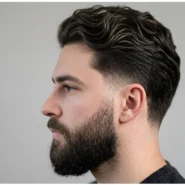
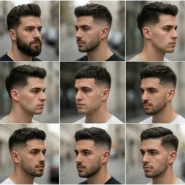
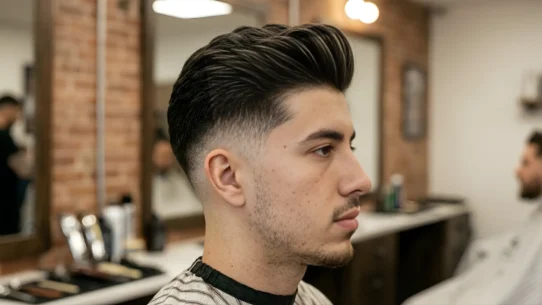
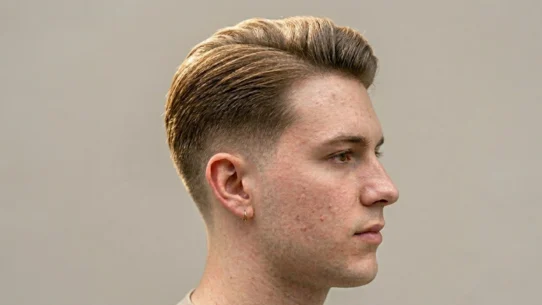
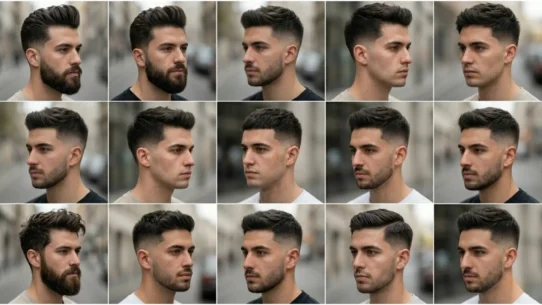
[…] still getting comfortable with taper terminology in general, it helps to understand the basic difference between a taper and a fade before diving into fringe-specific […]
[…] If you want the full breakdown of how these two terms diverge outside the blowout context, the distinction between a taper and a fade holds true across every haircut style, not just this […]