

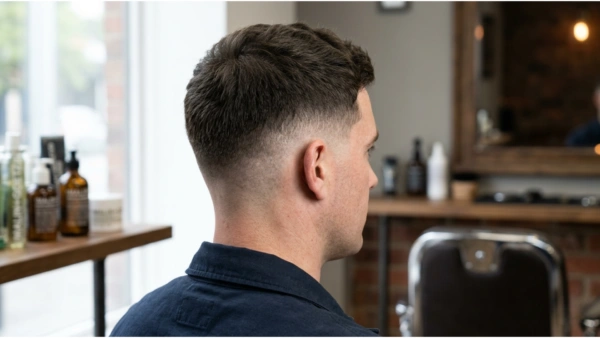

A low taper fade is one of the most versatile men’s haircuts you can get in 2025. It starts just above your ears and gradually blends shorter toward the neckline, creating a clean, professional look that works for almost any occasion. The problem? Most guys walk into a barbershop without knowing exactly how to ask for it, which style variation suits their face shape, or how to maintain it properly.
This complete guide covers 55 different low taper fade styles, step-by-step barber communication scripts, face shape matching advice, styling techniques, product recommendations, and maintenance schedules. Whether you’re getting your first fade or your fiftieth, you’ll find everything you need to get the exact cut you want.
Let’s start with the basics.
What Is a Low Taper Fade and Why Is It So Popular Right Now?
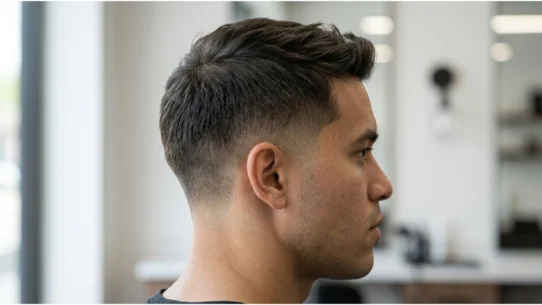
A low taper fade starts just above the ears and gradually blends shorter toward the neckline without ever reaching bare skin. It’s the most requested fade in American barbershops because it’s clean enough for the office and stylish enough for any occasion. It works on every hair type and flatters nearly every face shape.
KEY POINTS:
- The fade starts about 1 inch above the ears and follows your natural neckline
- Uses guard sizes from #3 down to #1 for a smooth, gradual blend
- Keeps hair length at the bottom and never exposes bare skin
- Needs a barber visit every 3 to 4 weeks to stay sharp
- Works on straight, wavy, curly, coily, thick, and fine hair
Table of Contents
55 low taper fade styles: find the right one for your barber appointment before you scroll.
The Taper Style Tool matches your face shape and hair type to the low taper fade variations that suit you specifically so you walk into the barbershop knowing exactly what to ask for.
What Is a Low Taper Fade?
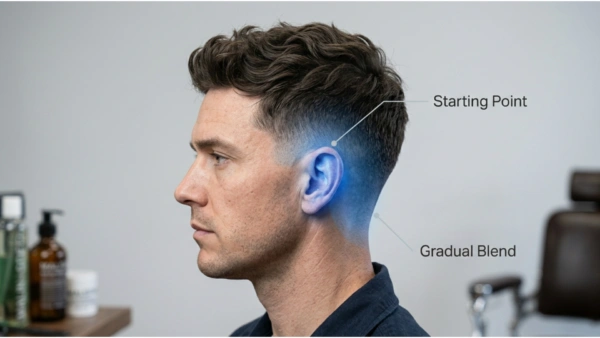
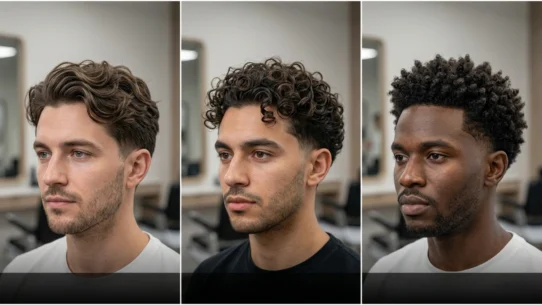
A low taper fade is a men’s haircut where the hair gradually shortens low on the sides and back, starting just above the ears and neckline. Barbers typically begin with a #2 or #3 guard (6–10mm) and blend downward into shorter lengths without reaching bare skin.
That’s the simple answer. But let me break it down a little more.
When you get a low taper fade, your barber is creating a smooth transition from longer hair on top to shorter hair on the sides and back. The word “low” means the fade starts low on your head about an inch above your ears and following your natural neckline. It doesn’t climb up high toward your temples like a mid fade or high fade would.
The word “taper” means the hair gradually gets shorter as it moves down. And “fade” means the transition is smooth and blended—there are no harsh lines or choppy sections.
Unlike a skin fade (sometimes called a bald fade), a low taper fade doesn’t go all the way down to bare skin. You’ll still have some hair at the base. This makes it more subtle and easier to grow out gracefully.
Key Characteristics of a Low Taper Fade
Here are the six most important things you need to know about this haircut:
1. Starting Point
The fade begins about 1 inch above your ears and follows the curve of your natural neckline. This is lower than a mid fade (which starts at temple height) and much lower than a high fade (which starts above your temples).
2. Guard Sizes
Most barbers use a #3 guard at the top of the fade zone, then blend down using a #2, #1, and sometimes a #0.5 guard. These clipper guard numbers control how much hair is left behind. A #3 leaves about 10mm (⅜ inch) of hair, while a #1 leaves only 3mm (⅛ inch).
3. Contrast Level
Low taper fades create subtle contrast not too dramatic, not too invisible. You get clean sides without the bold, high-contrast look of a skin fade.
4. Skin Exposure
This is a big one: Low taper fades do NOT fade to bare skin. You’ll always have some hair left at the bottom. If your barber takes it down to skin, that’s technically a low skin fade, not a low taper fade.
5. Blend Zone
The transition from long to short happens over about 1 to 2 inches. This creates that smooth, gradual look that makes the fade almost invisible like the hair just naturally gets shorter.
6. Maintenance Frequency
You’ll need touch-ups every 3 to 4 weeks to keep the fade looking crisp and fresh. If you let it go longer, it’ll still look decent just softer and less defined.
Industry Insight (National Barbers Association, 2025 Trend Report):
Low taper fades account for 38% of men’s haircut requests in 2025, making them the single most popular fade style. About 72% of clients report that low tapers are easier to maintain than high fades, which need more frequent touch-ups.
Low Taper Fade vs. Regular Taper Fade: What’s the Difference?
A lot of guys get confused here, so let me clear it up.
A regular taper fade (sometimes just called a “taper”) is even more subtle than a low taper fade. It starts at your natural sideburns and neckline basically at the very bottom of your hairline and creates an extremely gradual transition. There’s almost no visible fade line. It’s the most conservative option, perfect for older guys or very formal workplaces.
A low taper fade sits right in the middle. It starts higher than a regular taper (about an inch above your ears instead of at your hairline), so you get more contrast and a more modern look. But it’s still way more subtle than a mid or high fade.
Here’s a quick comparison table:
| Feature | Low Taper Fade | Regular Taper Fade |
|---|---|---|
| Starting Point | Just above ears (~1 inch) | Sideburns and natural neckline |
| Contrast Level | Subtle to moderate | Very subtle, minimal |
| Skin Exposure | None | Minimal to none |
| Maintenance | Every 3–4 weeks | Every 4–6 weeks |
| Best For | Modern, versatile looks | Conservative, formal styles |
| Grow-Out Period | Looks good for 5–6 weeks | Looks good for 6–8 weeks |
The bottom line: If you work in a corporate office, both will work fine. But if you want something that feels a little more current and stylish without being too bold, the low taper fade is your move.
Master Barber Insight:
“How does a low taper fade stack up against other fades? The main difference is where the fade starts. A high taper fade begins higher up on the head, around the temples. A mid taper fade starts in the middle. The low taper is the most conservative of the bunch less about making a statement and more about keeping things clean and versatile.”
— Antonio Martinez, 15-year licensed barber
The Cultural Phenomenon: Why Everyone’s Searching for the Low Taper Fade in 2026
If you’ve been on TikTok or Instagram lately, you’ve probably seen the low taper fade everywhere. It’s not just a haircut anymore it’s a full-blown cultural moment.
Here’s why it’s exploding right now:
The Ninja Meme
In early 2024, a streamer named Ericdoa was talking about his grandfather during an emotional stream. To lighten the mood and keep from crying, he blurted out, “Imagine if Ninja got a low taper fade.” The comment was completely random, but it caught on. Fortnite streamer Ninja himself started referencing it in his streams, and it became a running joke across the internet. Suddenly, everyone was talking about low taper fades.
TikTok Tutorials
Barbers started posting before-and-after videos of low taper fades on TikTok, often with satisfying close-ups of the blending process. These videos racked up millions of views. People saw how clean the cut looked and wanted it for themselves.
NBA Influence
Professional basketball players have been rocking low fades for years, but in 2024 and 2025, it became almost universal. When guys see their favorite players looking sharp with a low taper fade, they want the same style.
Hip-Hop Roots
The fade itself has deep roots in Black barbershop culture and hip-hop style from the 1980s and 90s. The low taper fade is a modern update on that classic look clean, sharp, and timeless.
Google Trends Data:
Searches for “low taper fade” increased 200% from 2024 to 2026, with peak interest in January (New Year’s resolutions) and August (back-to-school season). The term consistently ranks as one of the top 10 most-searched men’s haircuts in the United States.
55 Best Low Taper Fade Haircuts for Men
Alright, here’s the main event 55 different low taper fade styles, organized by category so you can find exactly what you’re looking for.
Each style includes:
- A description of the look
- Styling instructions
- Best hair type and face shape
- Product recommendations
Let’s dive in.
CATEGORY: CLASSIC LOW TAPER FADE STYLES
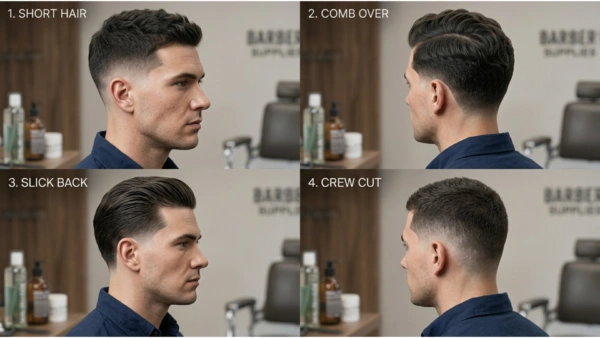
These are the timeless, never-go-out-of-style options. They work for almost any occasion work, casual weekends, formal events and they’re easy to maintain.
1. Low Taper Fade Short Hair
This is the go-to cut for guys who want something clean and simple. The top stays short usually 1 to 2 inches with just enough texture to add some interest. The sides taper down smoothly around your ears and neckline, creating a fresh shape without looking too dramatic.
It’s perfect for school, office work, or just everyday life. You don’t need a lot of time or effort to make it look good.
How to style it:
After you shower, towel-dry your hair. Then blow-dry it forward or slightly upward using just your fingers no comb needed. Once it’s dry, rub a small amount of matte clay or texture powder between your palms and work it through the top. Scrunch and shape it with your fingertips until you get that natural, textured look.
Best for:
Straight, wavy, or thick hair
Oval, square, or round faces
Professional settings, casual wear, everyday use
Product: Matte clay or texture powder
Maintenance: Every 3–4 weeks
2. Low Taper Fade Wavy Hair
If you’ve got natural waves, this style is made for you. It keeps your waves on top while the low taper removes bulk from the sides, giving you that clean, modern shape. The waves add movement and volume, so your hair never looks flat or boring.
How to style it:
Apply a sea salt spray or curl cream to damp hair. Scrunch it with your hands while blow-drying with a diffuser attachment (this keeps the waves from getting frizzy). Once it’s dry, use a tiny bit of texture powder at the roots for extra lift.
Best for:
Natural wavy hair
All face shapes (especially round adds width)
Casual, laid-back styles
Product: Sea salt spray + curl cream
Maintenance: Every 4–5 weeks (wavy hair hides grow-out better than straight hair)
3. Low Taper Fade Straight Hair
Straight hair shows fade lines more clearly than any other texture, which means you get crisp, sharp edges. But it can also look flat if you’re not careful. The key is adding texture and layers on top to create volume.
Ask your barber to cut the top with choppy layers instead of one uniform length. This makes straight hair look thicker and more interesting.
How to style it:
Blow-dry with a round brush to lift the roots. Then apply a matte clay to add grip and definition. Use your fingers to mess it up a little—perfectly smooth straight hair can look too formal.
Best for:
Straight hair (obviously)
Square, oval faces
Modern, professional looks
Product: Matte clay or texture powder
Maintenance: Every 3–4 weeks
4. Low Taper Fade Comb Over
This is a classic gentleman’s cut. The hair on top is 2 to 3 inches long and swept to one side from a deep side part. The low taper keeps the sides clean and sharp, which makes the comb over on top stand out even more.
It’s perfect for guys who want to look polished and put-together without being too flashy.
How to style it:
Start with damp hair. Apply a medium-hold pomade and use a fine-tooth comb to create a clean part on one side (usually the left). Then comb the hair over to the opposite side, adding a little lift at the roots. Finish with a light hairspray if you need extra hold.
Best for:
Straight or wavy hair
Oval, square, or long faces
Professional, formal occasions
Product: Medium-hold pomade
Maintenance: Every 3–4 weeks
5. Low Taper Fade Side Part
Similar to the comb over, but a little more casual. The side part creates a clean line that lets the hair fall naturally to one side. You get volume and flow without looking overly styled.
How to style it:
Blow-dry your hair to the side you want it to fall, using a comb to guide it. Apply a light pomade or styling cream for hold without stiffness. This style should look effortless, not forced.
Best for:
All hair types
Most face shapes
Versatile works for work and weekends
Product: Light pomade or styling cream
Maintenance: Every 3–4 weeks
6. Low Taper Fade Slick Back
This is the ultimate smooth, sophisticated style. All the hair on top is brushed straight back from the forehead, creating a sleek, polished look. It works especially well for formal events weddings, dinners, job interviews.
How to style it:
Apply a high-shine pomade or gel to damp hair. Use a comb to brush everything straight back, keeping it smooth and flat. If you want extra hold, finish with a strong-hold hairspray.
Best for:
Straight or wavy hair
Oval, square faces
Formal events, mature men
Product: High-shine pomade or gel
Maintenance: Every 3–4 weeks
7. Low Taper Fade Brush Back
Similar to the slick back, but with more texture and less shine. Instead of combing it perfectly smooth, you brush it back loosely and let it stay a little messy. This gives you a more modern, relaxed vibe.
How to style it:
Apply a matte pomade or wax to damp hair. Use your hands (not a comb) to brush it back, leaving some texture and separation. Don’t make it too perfect a little messiness is the point.
Best for:
Wavy or slightly curly hair
Square, oval faces
Modern, stylish looks
Product: Matte pomade or wax
Maintenance: Every 3–4 weeks
8. Low Taper Fade Brush Up
This style adds height and volume at the front of your head. The hair is brushed upward from the forehead, creating a lifted, confident look. It’s bold without being over-the-top.
How to style it:
Blow-dry your hair upward at the front, using a round brush to create lift. Once it’s dry, apply a strong-hold pomade or wax to lock the shape in place. You want it to stand up but still look natural not like a helmet.
Best for:
Thick hair
Round faces (height elongates the face)
Modern, youthful styles
Product: Strong-hold pomade or wax
Maintenance: Every 3–4 weeks
9. Low Taper Fade Crew Cut
The crew cut is about as classic as it gets. The hair on top is short usually cut with clippers using a #3 or #4 guard and styled with a slight lift at the front. It’s low-maintenance, masculine, and always looks sharp.
How to style it:
Honestly, you barely need to style this one. After you shower, just towel-dry and go. If you want a little extra polish, use a tiny amount of light pomade and brush the front upward.
Best for:
Straight or thick hair
Oval, square faces
Active guys, low-maintenance lifestyles
Product: Light pomade (optional)
Maintenance: Every 3–4 weeks
CATEGORY: TEXTURED & MODERN LOW TAPER FADES
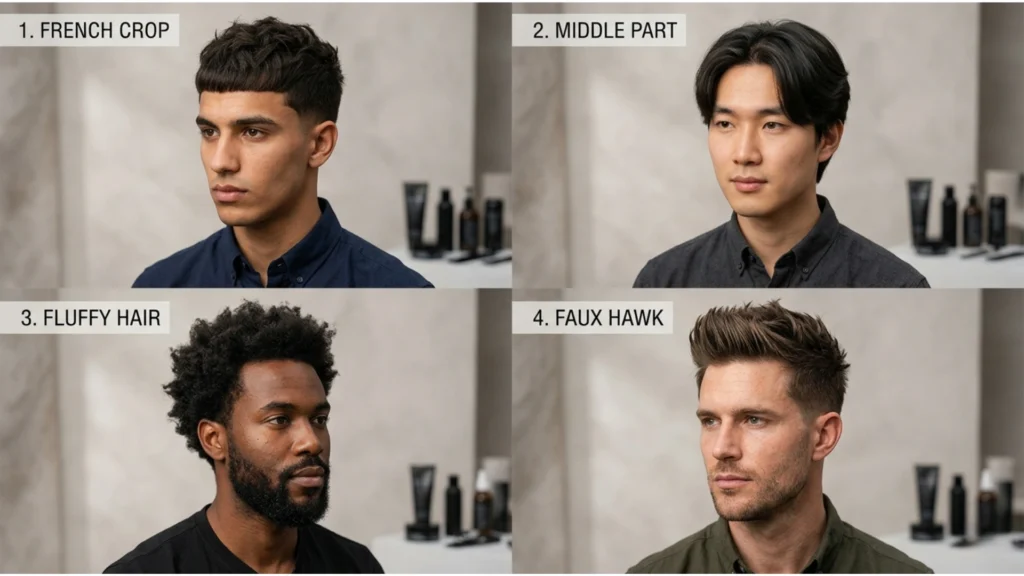
These styles emphasize texture, layers, and movement. They’re perfect if you want something a little more interesting than a basic cut.
10. Low Taper Fade French Crop
The French crop is one of the most popular modern haircuts right now. It features short, choppy layers on top with a blunt fringe that sits just above your eyebrows. The low taper keeps the sides clean and sharp, making the textured top stand out.
How to style it:
Apply a molding paste or matte clay to damp hair. Use your fingers to push the fringe forward and create separation in the layers. Don’t comb it you want it to look messy and textured.
Best for:
Straight or wavy hair
Oval, round faces
Modern, youthful styles
Product: Molding paste or matte clay
Maintenance: Every 3–4 weeks
11. Low Taper Fade Textured Crop
Similar to the French crop, but with a little more length on top and a softer, less blunt fringe. This gives you more flexibility in how you style it you can push it forward, to the side, or mess it up completely.
How to style it:
Work a texture powder through damp hair, then blow-dry while scrunching with your fingers. Finish with a small amount of matte clay for hold.
Best for:
All hair types
Most face shapes
Versatile, modern looks
Product: Texture powder + matte clay
Maintenance: Every 3–4 weeks
12. Low Taper Fade Middle Part
The middle part is having a major comeback, especially with younger guys. The hair is parted straight down the center, with both sides falling forward in soft, symmetrical curves. It’s clean, balanced, and very current.
How to style it:
Blow-dry your hair forward while using a comb to create the center part. Apply a lightweight styling cream to keep it in place without making it stiff or greasy.
Best for:
Straight or wavy hair
Oval, heart-shaped faces
Trendy, Gen Z aesthetic
Product: Lightweight styling cream
Maintenance: Every 3–4 weeks
13. Low Taper Fade Fluffy Hair
This style is all about soft, airy volume. The top is cut with lots of layers and blown out to create a fluffy, tousled look. It’s youthful and approachable perfect if you want to look friendly and relaxed.
How to style it:
Apply a texture powder to damp hair at the roots. Blow-dry with a diffuser or just your hands, scrunching as you go to build volume. Don’t flatten it the fluffier, the better.
Best for:
Thick, naturally voluminous hair
Round, oval faces
Casual, youthful styles
Product: Texture powder
Maintenance: Every 4–5 weeks
14. Low Taper Fade Spiky Hair
This is an edgy, bold style where the hair on top is cut short and styled into spikes using gel or wax. It’s not for everyone, but if you want to make a statement, this is the way to do it.
How to style it:
Apply a strong-hold gel or wax to damp hair. Use your fingers to pull small sections upward, twisting them into spikes. The more product you use, the sharper and more defined the spikes will be.
Best for:
Straight or thick hair
Square, oval faces
Bold, trendy personalities
Product: Strong-hold gel or wax
Maintenance: Every 3–4 weeks (and daily styling)
CATEGORY: CURLY & WAVY LOW TAPER FADES
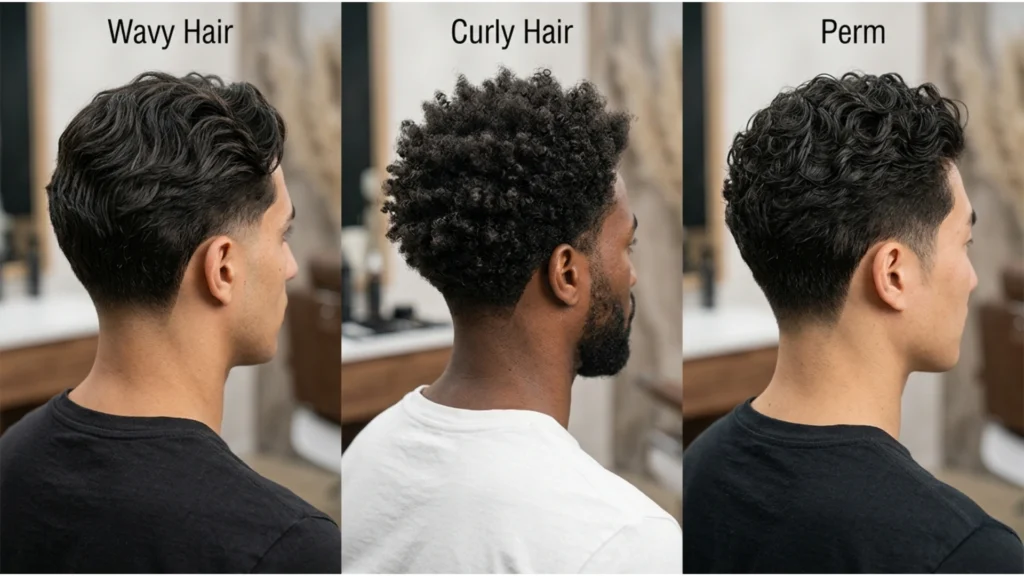
If you have natural curls or waves, these styles are designed to work with your texture, not against it.
15. Low Taper Fade Curly Hair
This is one of my favorite cuts to do as a barber. It keeps your natural curls on top while removing the bulk from the sides. The result is clean, structured, and full of personality.
When I cut curly hair, I always cut it dry not wet. Wet curls stretch out, so if I cut them wet, they’ll spring up way shorter than you expect when they dry. Cutting dry lets me see the natural curl pattern and shape it properly.
How to style it:
Apply a curl-defining cream to damp hair. Scrunch it gently with your hands, then let it air-dry or use a diffuser on low heat. Don’t touch it while it dries that causes frizz.
Best for:
Natural curly hair (tight or loose curls)
All face shapes
Modern, expressive styles
Product: Curl-defining cream + diffuser
Maintenance: Every 3–4 weeks
Curl Science (International Association of Trichologists):
Curly taper fades are trending because they combine natural texture with a modern fade style. The low taper fade remains the most versatile men’s haircut of 2025, especially for curly-haired clients who want structure without losing their curl pattern.
16. Low Taper Fade Wavy Hair
We already covered this one earlier, but it’s worth repeating: if you have waves, this cut is perfect. The low taper removes weight from the sides while your waves add movement and body on top.
Best for:
Natural wavy hair
All face shapes
Casual, effortless styles
Product: Sea salt spray + curl cream
Maintenance: Every 4–5 weeks
17. Low Taper with Curly Top
This variation keeps even more length on top usually 3 to 5 inches so your curls can really shine. The contrast between the clean-tapered sides and the full, bouncy curls on top is striking.
How to style it:
Use a leave-in conditioner and curl cream on damp hair. Scrunch and diffuse. That’s it. The curls do all the work for you.
Best for:
Tight, well-defined curls
Oval, round faces
Bold, expressive styles
Product: Leave-in conditioner + curl cream
Maintenance: Every 3–4 weeks
18. Low Taper Fade Perm
If you don’t have natural curls but you want them, a perm is an option. Your stylist uses chemicals to permanently curl your hair. Once it’s permed, you can pair it with a low taper fade for a bold, voluminous look.
Perms require a lot of upkeep you’ll need deep conditioning treatments weekly and a perm touch-up every 3 to 4 months.
Best for:
Guys who want curls but don’t have them naturally
Thick, healthy hair (don’t perm damaged hair)
Bold, fashion-forward personalities
Product: Curl-enhancing cream
Maintenance: Every 3–4 weeks for the fade, every 3–4 months for the perm
CATEGORY: NATURAL TEXTURE & AFRO LOW TAPER FADES
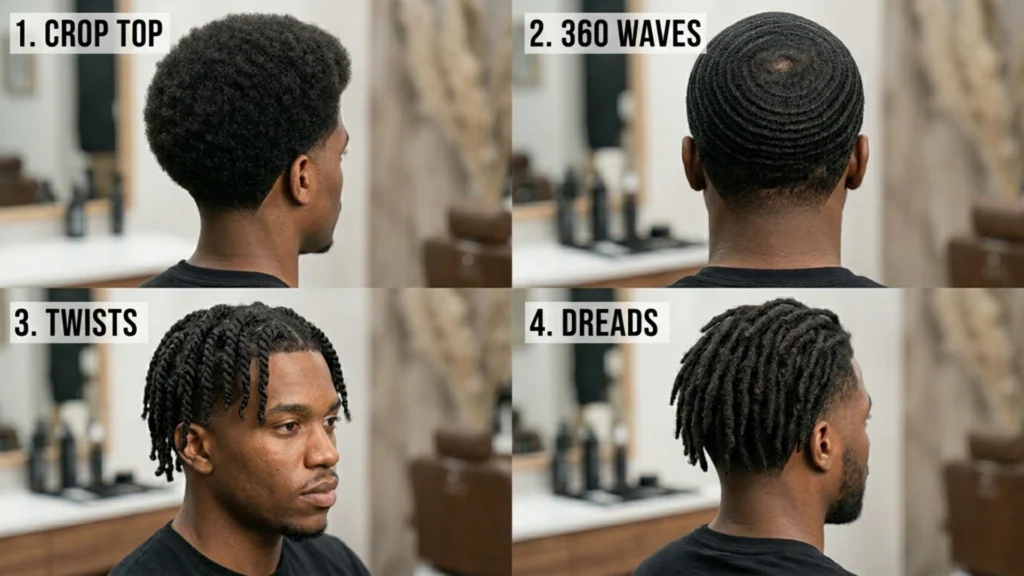
These styles celebrate Black hair culture and natural textures like afros, coils, twists, and dreads.
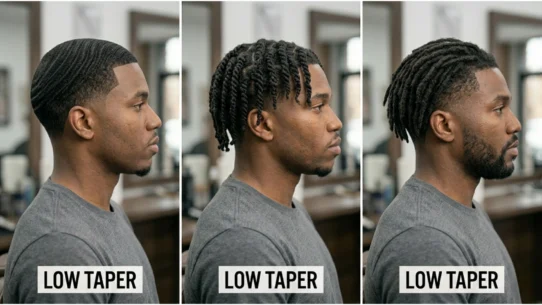
19. Low Taper Fade Afro
The low taper fade afro is a classic in Black barbershops. It keeps your afro full and rounded on top while the tapered sides add clean structure. The result is bold, confident, and deeply rooted in cultural history.
How to style it:
Use a curl sponge to shape and define your afro. Apply a moisturizing cream daily to keep the hair soft and prevent dryness in the tapered areas. If you want extra shine, use a few drops of argan oil.
Best for:
Natural afro-textured hair
All face shapes
Cultural expression, bold style
Product: Curl sponge + moisturizing cream
Maintenance: Every 3–4 weeks for the fade, daily moisturizing
20. High Top with Low Taper Fade
The high top is a retro style from the 90s that’s making a comeback. The hair on top is grown out tall and shaped into a boxy, flat-top silhouette. The low taper keeps the sides clean, which makes the height on top look even more dramatic.
Best for:
Thick, coily hair
Guys who want a bold, statement-making style
Cultural and nostalgic appeal
Product: Strong-hold styling gel
Maintenance: Every 2–3 weeks (the high top needs regular shaping)
21. Low Taper Coils with Beard
This style features tight coils on top with a clean low taper on the sides. It’s paired with a shaped, well-groomed beard that connects to the hairline for a seamless, masculine look.
How to style it:
Use a curl sponge or your fingers to define the coils. Keep your beard trimmed and lined up so it flows naturally into the fade.
Best for:
Coily, 4C hair
Square, oval faces
Mature, confident men
Product: Curl sponge + beard oil
Maintenance: Every 2–3 weeks (including beard trims)
22. Low Taper Fade Twists
Twists are a protective style where sections of hair are twisted together into rope-like strands. They can be worn loose or pulled back, and they pair beautifully with a low taper fade.
How to style it:
Apply twist cream or gel to damp hair, then twist small sections from root to tip. Let them air-dry or sit under a dryer. The low taper keeps the sides fresh while the twists add texture and cultural flair.
Best for:
Natural Black hair
Guys who want a protective style
Cultural expression
Product: Twist cream or gel
Maintenance: Every 3–4 weeks for the fade, re-twist every 2–3 weeks
23. Low Taper Fade Dreads
Dreadlocks (locs) are a long-term commitment, but when paired with a low taper fade, they look incredibly sharp. The fade keeps the sides clean while the dreads on top add length and personality.
How to style it:
Use a loc moisturizer to keep your dreads healthy. You can wear them down, pulled back, or styled into a bun. The fade adds structure and keeps the look polished.
Best for:
Medium to long dreadlocks
All face shapes
Cultural, spiritual, or personal expression
Product: Loc moisturizer
Maintenance: Every 3–4 weeks for the fade, retwist locs every 4–6 weeks
24. Low Taper Fade 360 Waves
360 waves are a brushed wave pattern that circles around your entire head. Getting waves takes dedication you have to brush your hair every day and wear a durag at night to train the pattern.
The low taper fade adds clean edges and makes the wave pattern stand out even more.
How to style it:
Brush your hair daily in the direction of your wave pattern. Use a wave pomade to hold the pattern and add shine. Wear a durag overnight to lock it in.
Best for:
Short, coarse Black hair
Guys willing to commit to daily brushing
Classic, iconic Black male style
Product: Wave pomade + durag
Maintenance: Every 3–4 weeks for the fade, daily brushing
CATEGORY: BOLD & TRENDY LOW TAPER FADES
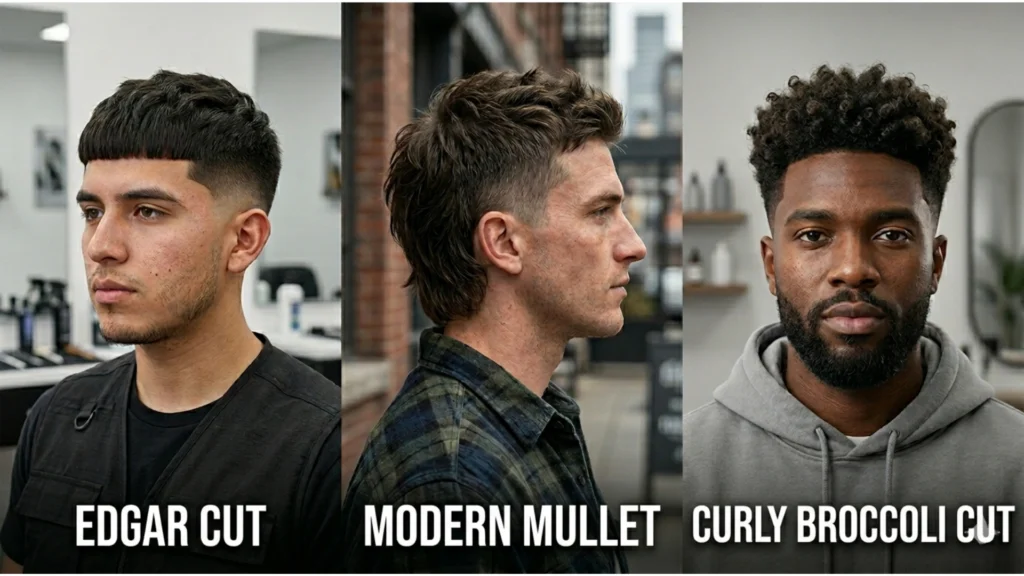
These styles push boundaries and make a statement. They’re for guys who aren’t afraid to stand out.
25. Low Taper Fade Edgar
The Edgar cut (also called the “Edgar fade” or “Takuache haircut”) features a blunt, straight-across fringe that sits low on the forehead. It’s paired with sharp, angular edges and a low taper on the sides.
This style originated in Latino communities and has become hugely popular on TikTok and Instagram.
Best for:
Straight hair
Bold, fashion-forward personalities
Gen Z guys
Product: Matte paste for texture
Maintenance: Every 3–4 weeks (the fringe needs regular trimming)
26. Low Taper Fade Mullet
Yes, the mullet is back. But it’s not the 80s mullet your dad had this is a modern, cleaned-up version. The front and sides are short and tapered, while the back is left longer (usually touching the collar or even longer).
The low taper keeps the sides sharp, which makes the length in the back look intentional instead of messy.
How to style it:
Use a matte cream on the longer back section to add texture and separation. Keep the front and sides clean.
Best for:
Straight or wavy hair
Guys who want a retro-modern vibe
Casual, creative lifestyles
Product: Matte cream
Maintenance: Every 3–4 weeks for the fade, every 6–8 weeks for the back
Barber Insight:
“The mullet with low taper fade is back in 2025. The taper fade softens the sides, while the mullet keeps that bold, edgy vibe. Ideal for men who like modern taper haircuts with attitude.”
— Marcus Thompson, Master Barber
27. Low Taper Fade Blowout
A blowout is all about volume. The hair on top is blown out with a round brush to create lift and fullness, while the low taper keeps the sides sleek. It’s a great option if you have thick hair and want to show off your natural volume.
How to style it:
Blow-dry your hair with a round brush, pulling it upward and outward. Finish with a matte clay to hold the shape without weighing it down.
Best for:
Thick, wavy hair
Oval, round faces
Youthful, energetic styles
Product: Matte clay
Maintenance: Every 3–4 weeks
28. Broccoli Style with Low Taper Fade
The “broccoli haircut” went viral on TikTok in 2024. It’s named after the vegetable because the top looks like a head of broccoli rounded, curly, and full of texture.
To get this look, you need natural curls or a perm, and the top is left long (3 to 5 inches) and shaped into a rounded dome. The low taper keeps the sides clean and makes the curly top stand out even more.
Best for:
Natural curly hair or permed hair
Younger guys (teens, early 20s)
TikTok-inspired trendy styles
Product: Curl cream + diffuser
Maintenance: Every 3–4 weeks
29. Low Taper Fade Faux Hawk
A faux hawk (or “fohawk”) gives you the edgy look of a mohawk without actually shaving the sides of your head. The center strip of hair is longer and styled upward, while the low taper keeps the sides short and clean.
How to style it:
Apply a strong-hold gel or wax to the center section. Use your fingers to push it upward and toward the center, creating a ridge of hair that runs from your forehead to your crown.
Best for:
Thick hair
Square, oval faces
Bold, rebellious personalities
Product: Strong-hold gel or wax
Maintenance: Every 3–4 weeks
CATEGORY: POMPADOUR & VOLUME LOW TAPER FADES
These styles emphasize height and volume on top. They’re confident, bold, and demand attention.
30. Modern Pompadour with Low Taper Fade
The pompadour is a classic style that never goes out of fashion. The hair in the front is brushed upward and back, creating height and volume. The low taper keeps the sides sharp and clean, which makes the pompadour on top stand out even more.
How to style it:
Blow-dry your hair upward and back using a round brush. Once it’s dry, apply a strong-hold pomade to lock the shape in place. Finish with hairspray if you need extra hold.
This style takes time to perfect, but once you get it down, it’s one of the sharpest looks you can pull off.
Best for:
Thick hair
Oval, square faces
Confident, stylish guys
Product: Strong-hold pomade + hairspray
Maintenance: Every 3–4 weeks
31. Low Taper Fade Quiff
The quiff is similar to the pompadour, but instead of brushing the hair straight back, you push it forward and upward. It’s a little more modern and a little less formal.
How to style it:
Blow-dry the front section upward and slightly forward. Apply a medium-hold pomade to keep the shape without making it stiff.
Best for:
Wavy or thick hair
Oval, long faces
Modern, youthful styles
Product: Medium-hold pomade
Maintenance: Every 3–4 weeks
CATEGORY: UNDERCUT & DISCONNECTED LOW TAPER FADES
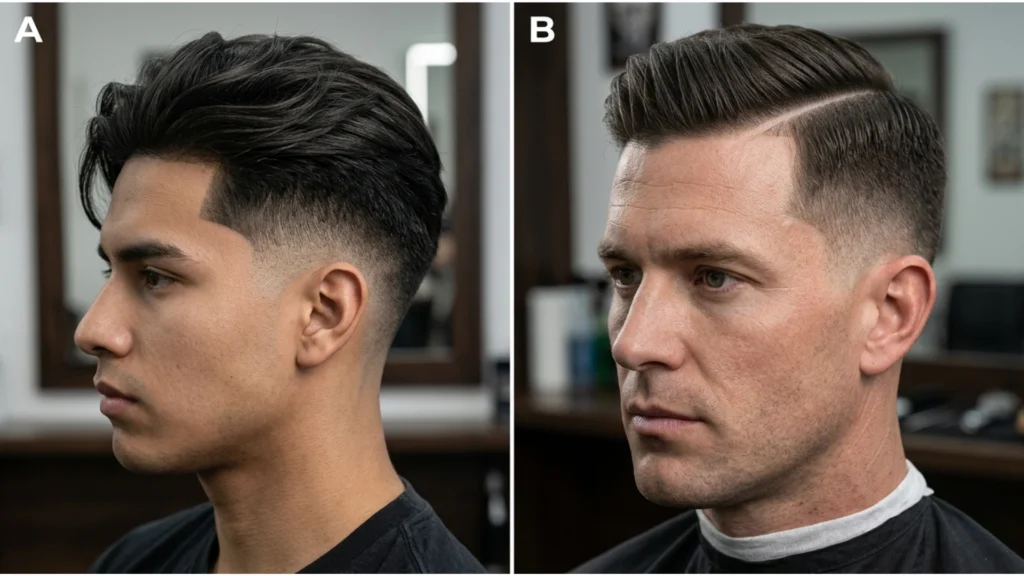
These styles feature a sharp disconnect between the top and sides no gradual blending. It’s bold, high-contrast, and very modern.
32. Low Taper Faded Undercut
An undercut means the sides are cut very short (or even shaved) with no blending into the top. There’s a clear line where the short sides meet the longer top. When you add a low taper to an undercut, you soften that line just a little while still keeping the contrast.
Best for:
Thick hair
Oval, square faces
Fashion-forward, bold personalities
Product: Pomade or wax
Maintenance: Every 2–3 weeks (undercuts grow out fast)
33. Hard Part with Low Taper
A hard part is a shaved line in your hair that creates a defined part. It adds sharpness and precision to any style. When paired with a low taper fade, it creates a clean, structured look.
How to style it:
Your barber will shave a thin line (about ⅛ inch wide) on one side of your head. From there, you can comb your hair over to the opposite side, creating a sharp, clean part.
Best for:
Straight or wavy hair
Square, oval faces
Structured, polished styles
Product: Pomade for sleek finish
Maintenance: Every 3–4 weeks (the hard part needs regular touch-ups)
CATEGORY: LONG HAIR LOW TAPER FADES
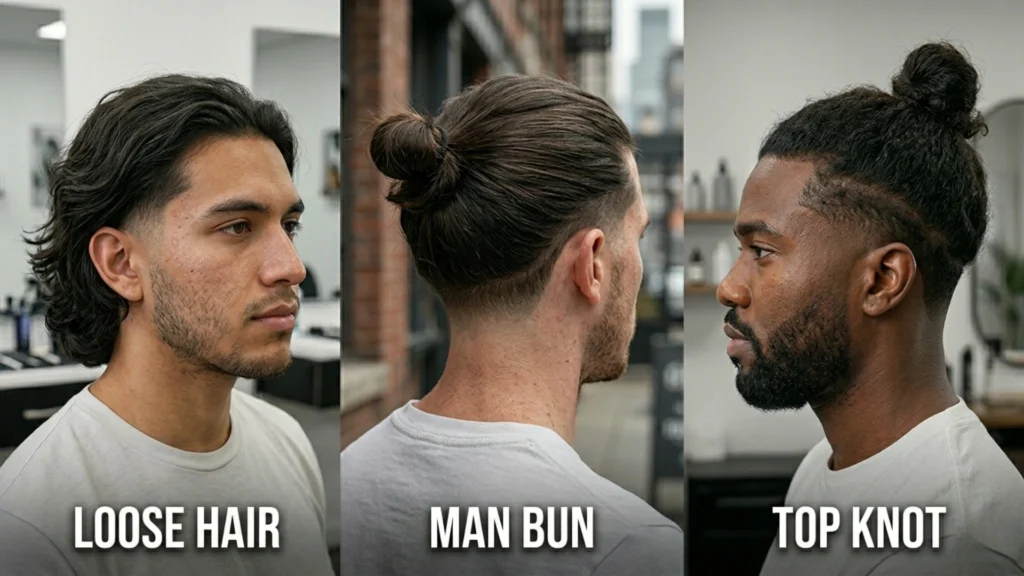
Who says you can’t have long hair and a fade? These styles combine length on top with clean, tapered sides.
34. Long Hair with Low Taper Fade
If you’re growing your hair out, a low taper fade keeps you looking sharp during the awkward in-between stages. The sides stay short and clean while the top grows longer 4 inches, 6 inches, even 10 inches or more.
You can wear it down, brush it back, or tie it up in a bun.
Best for:
All hair types
Guys growing out their hair
Versatile, flexible styling
Product: Leave-in conditioner + styling cream
Maintenance: Every 4–5 weeks for the fade, trim the top every 8–12 weeks
35. Man Bun with Low Taper Fade
The man bun is a practical, stylish option for guys with long hair. You pull your hair back into a bun at the crown or back of your head, and the low taper keeps the sides fresh and clean.
Best for:
Hair at least 6 inches long
Active guys (keeps hair out of your face)
Modern, laid-back styles
Product: Hair tie + optional styling cream
Maintenance: Every 4–5 weeks for the fade
36. Top Knot with Low Taper Fade
Similar to the man bun, but the knot sits higher on your head right at the crown. It’s a little more dramatic and fashion-forward.
Best for:
Long hair (6+ inches)
Trendy, confident personalities
Modern, edgy styles
Product: Hair tie
Maintenance: Every 4–5 weeks
CATEGORY: SPECIALTY & VARIATION LOW TAPER FADES
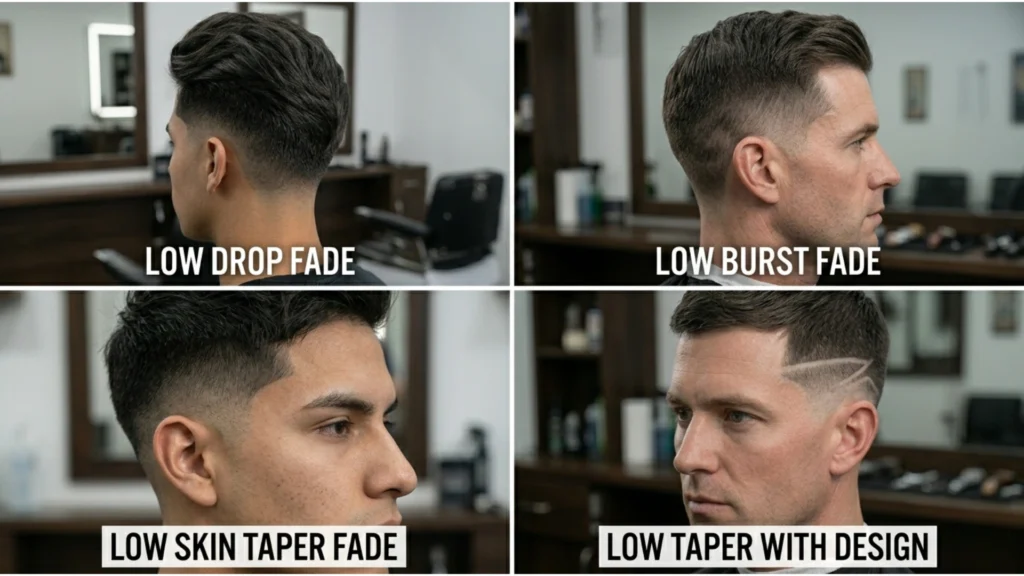
These are unique fade variations that add extra dimension or creativity to the standard low taper.
37. Low Drop Taper Fade
A drop fade curves down behind your ear instead of following a straight line. This creates a more natural, head-hugging shape. It’s subtle but makes a big difference in how the fade flows with your head shape.
Best for:
All hair types
Oval, round faces
Modern, dimensional styles
Maintenance: Every 3–4 weeks
38. Low Burst Fade
A burst fade creates a semi-circular shape around your ear. Instead of the fade going straight across, it “bursts” outward in a curve. It’s often paired with mohawks, faux hawks, or pompadours.
Best for:
Thick hair
Bold, creative styles
Guys who want something unique
Maintenance: Every 3–4 weeks
39. Low Temple Taper Fade
A temple fade (also called a “Brooklyn fade”) focuses the taper specifically around your temples and sideburns. The back and lower sides stay a little longer. It’s clean and precise without being too dramatic.
Best for:
All hair types
Urban, modern styles
Guys who want subtle contrast
Maintenance: Every 3–4 weeks
40. Low Skin Taper Fade
This is a hybrid between a low taper fade and a skin fade. It uses the low starting point of a taper fade but takes the hair down to bare skin at the very bottom. It creates more contrast than a standard low taper but less than a full skin fade.
Best for:
Dark hair (shows the fade line more clearly)
Guys who want a sharper look
Bold, modern styles
Maintenance: Every 2–3 weeks (skin fades grow out faster)
41. Low Taper Fade with Design
This is where your barber gets creative. Designs can include shaved lines, patterns, shapes, symbols anything you can imagine. Common designs include lightning bolts, zig-zags, stars, or simple straight lines.
The designs are shaved into the fade zone on the sides or back.
Best for:
Guys who want to express personality
Special occasions (like parties or events)
Bold, creative personalities
Maintenance: Every 2–3 weeks (designs fade as hair grows)
CATEGORY: DEMOGRAPHIC-SPECIFIC LOW TAPER FADES
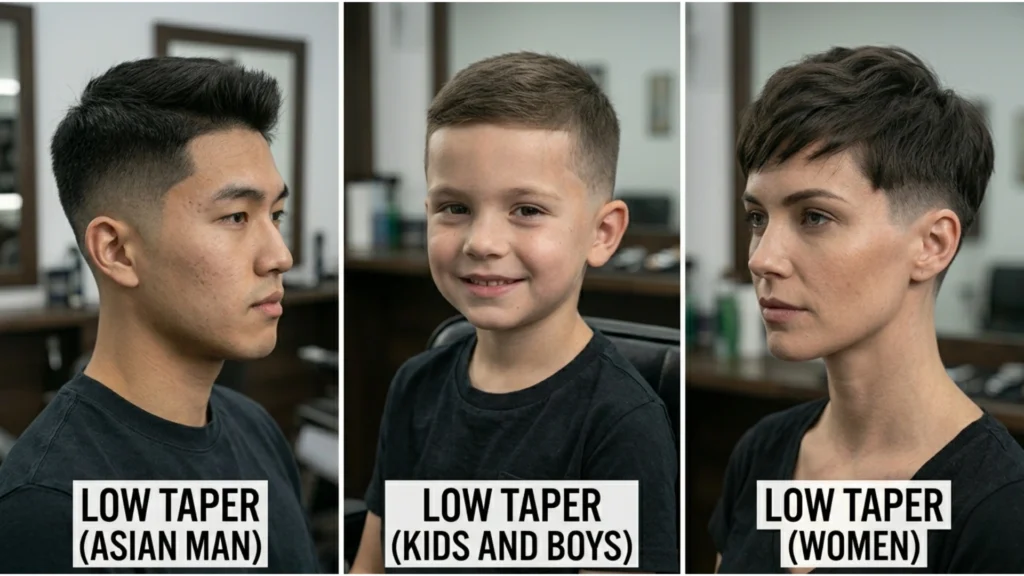
These styles are tailored to specific groups age, ethnicity, or gender.
42. Low Taper Fade for Black Men
The low taper fade is a cultural staple in Black barbershops. It works beautifully with coily, textured, and 4C hair types. The fade creates clean structure without over-exposing the scalp, which is especially important for Black men who want to maintain coverage.
Common styles include afros, 360 waves, high tops, twists, dreads, and coils.
Barber Technique Note:
Most Black barbers cut dry, not wet. Coily hair shrinks significantly when it dries, so cutting it wet can lead to unexpected results.
Maintenance:
- Moisturize tapered areas daily to prevent dryness
- Shape-ups (line-ups/edge-ups) every 2 weeks for crisp edges
- Deep condition weekly
Best for:
Coily, afro-textured, 4C hair
Cultural expression and tradition
All face shapes
Cultural Context (International Association of Trichologists):
The low taper fade became a cultural icon in the 80s–90s thanks to hip-hop legends. Today, innovations like sharp angular edge styles dominate barber battles and hair expos. It’s more than just a haircut it’s a form of cultural and personal expression.
43. Low Taper Fade for Asian Men
Asian hair is typically straight, thick, and coarse, which makes it perfect for clean, sharp fades. The natural black color creates beautiful contrast with the tapered sides.
Popular styles include textured crops, side-swept cuts, middle parts, and spiky tops.
Best for:
Straight, thick Asian hair
Modern, clean styles
All face shapes
Product: Matte clay for texture
Maintenance: Every 3–4 weeks
44. Low Taper Fade for Kids and Boys
Parents love low taper fades for their kids because they’re low-maintenance, school-appropriate, and grow out neatly.
The best styles for kids are simple and soft crew cuts, textured crops, short wavy tops, and buzz cuts with a soft taper. Avoid anything too bold like skin fades or hard parts unless your kid specifically asks for it.
Barber Tip for Parents:
Ask for a “soft taper” or “shadow fade” these are gentler and less dramatic, perfect for kids who are new to fades.
Maintenance:
Every 4–5 weeks (kids’ hair grows fast, but low tapers grow out gracefully)
Best for:
Active kids
School settings
Parents who want easy maintenance
45. Low Taper Fade for Women
Low taper fades aren’t just for men women are increasingly embracing the style for its bold, androgynous aesthetic.
Common styles include pixie cuts with tapered sides, undercuts with longer tops, curly afros with clean sides, and shaved sides with long tops.
Best for:
Confident, fashion-forward women
Short to medium hair
Bold, non-traditional styles
Maintenance: Every 3–4 weeks
ADDITIONAL STYLES
I’m going to speed through the final 10 styles to round out our list of 55. Each of these is a variation or combination of styles we’ve already covered.
46. Low Taper Fade Back (Back View Focus)
This style emphasizes the clean neckline and taper precision at the back of the head. It’s important when you’re showing reference photos to your barber—they need to see the back view.
47. Low Taper Fade Blonde
Any low taper fade with blonde hair (natural or dyed). Lighter hair shows the fade more subtly than dark hair.
48. Low Taper Fade with Beard
Any low taper fade paired with a full beard, goatee, or stubble. The fade can connect seamlessly into the beard for a cohesive look.
49. Classy Low Taper Fade with Longer Hair on Top
A refined, polished style with 3 to 5 inches on top, styled back or to the side. Perfect for mature, professional men.
50. Cropped Afro with Low Taper
A shorter, tightly cropped afro paired with a clean low taper. Less volume than a full afro, but still textured and bold.
51. Textured French Crop with Low Taper Fade
A French crop with extra texture and choppy layers on top. Very modern and trendy.
52. Brush Back with Taper Fade and Line-Up
Hair brushed straight back with a sharp line-up at the hairline. Clean, polished, and masculine.
53. Short Blonde Waves with Taper Faded Sides
Bleached blonde waves on top with a clean taper on the sides. Bold and eye-catching.
54. Side-Swept Short Hair with Low Taper
A classic side-swept Ivy League style paired with a low taper. Timeless and professional.
55. Fringe with Low Taper Fade
A messy, forward-swept fringe that covers part of the forehead. Youthful and trendy.
Fifty-five styles is a lot to choose from. If you’d rather skip the scroll and get a personalized recommendation, TaperMatch scans your facial geometry and hair texture then returns the specific variation built for your face, not a list of options.
Understanding Low Taper Fade Variations: Low vs. Mid vs. High
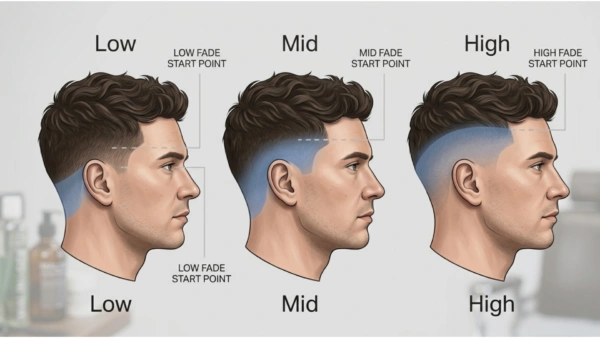
Now that you’ve seen all 55 styles, let’s talk about how the low taper fade compares to other fades. This is important because when you sit down in the barber chair, you need to know exactly which fade you want.
Here’s a complete comparison table:
| Fade Type | Starting Point | Contrast Level | Skin Exposure | Maintenance | Best Face Shape | Grow-Out Period | Lifestyle Fit |
|---|---|---|---|---|---|---|---|
| Low Taper Fade | Just above ears (~1″) | Subtle | None | Every 3-4 weeks | Square, oval | 5-6 weeks | Corporate + casual |
| Regular Taper Fade | Sideburns/neckline | Very subtle | Minimal | Every 4-6 weeks | Long, narrow | 6-8 weeks | Corporate, formal |
| Mid Taper Fade | Temple height | Moderate | Possible | Every 2-3 weeks | Round, oval | 3-4 weeks | Versatile |
| High Taper Fade | Above temples | High | Yes | Every 1-2 weeks | Round, diamond | 2-3 weeks | Creative, casual |
| Skin Fade | Ear to skin | Maximum | Full (bare skin) | Every 2-3 weeks | All shapes | 2-3 weeks | Bold, fashion |
| Drop Fade | Curves behind ear | Moderate-high | Varies | Every 2-3 weeks | Oval, round | 3-4 weeks | Modern, trendy |
| Burst Fade | Semi-circle at ear | Moderate | Possible | Every 3-4 weeks | All shapes | 3-4 weeks | Creative, unique |
Low Taper Fade vs. Mid Taper Fade
The main difference is height.
A mid taper fade starts around your temples about halfway up the side of your head. This creates more contrast and makes the fade more visible. It’s bolder and more modern than a low taper.
A low taper fade starts about an inch above your ears. It’s more conservative and subtle.
When to choose a mid taper:
- You have a round face (the higher fade adds length)
- You want more contrast and a bolder look
- You don’t mind going to the barber every 2–3 weeks
When to choose a low taper:
- You work in a professional environment
- You want something versatile that works for any occasion
- You prefer low-maintenance cuts
Low Taper Fade vs. High Taper Fade
A high taper fade starts above your temples almost at the very top of your head. It creates dramatic contrast and a lot of visual height. It’s the boldest of the three taper fades.
When to choose a high taper:
- You have a round face and want to elongate it
- You want a statement-making, trendy look
- You’re comfortable with frequent barber visits (every 1–2 weeks)
When to choose a low taper:
- You want something more subtle and versatile
- You prefer a classic, timeless look
Low Taper Fade vs. Skin Fade
Unlike a skin fade, which blends all the way down to bare skin, a low taper fade retains some hair length at the bottom.
A skin fade (also called a bald fade) is sharp, dramatic, and high-contrast. It looks amazing for about two weeks, then it starts to grow out and lose its edge.
A low taper fade is softer and grows out more gracefully. You can go 5–6 weeks before it starts to look grown out.
When to choose a skin fade:
- You want maximum contrast
- You have dark hair (skin fades show up best on dark hair)
- You’re willing to visit the barber every 2–3 weeks
When to choose a low taper:
- You want something that lasts longer between cuts
- You prefer a more subtle, classic look
Master Barber Insight:
“If your hairline is uneven or your hair grows fast, a low taper will age better than a low fade. Low fades look amazing for two weeks. Low tapers look good for five or six.”
— Marcus Thompson, 15+ years experience
Low-Low Taper Fade & Lower Taper Fade: The Ultra-Subtle Variations
These are specialized terms that describe even more subtle versions of the low taper fade.
Low-Low Taper Fade (also called an extra-low taper):
This starts even lower than a standard low taper just 0.5 to 1 inch above the ear, sitting almost at your natural hairline. It’s the most subtle fade you can get while still having a fade at all.
Who should get it:
- First-time fade wearers who are nervous about commitment
- Men in ultra-conservative workplaces
- Anyone who wants the fade look with minimal change
How to ask for it:
“I’d like a low taper fade starting as close to my natural hairline as possible about half an inch above my ears. Keep the blend zone tight and subtle.”
Lower Taper Fade:
This isn’t a technical term it’s descriptive language that people use when they’re trying to tell their barber to go lower than they usually would.
If you say “I want a lower taper fade,” your barber will understand that you want the starting point to sit lower on your head than a typical low fade.
Low Taper Fade for Every Hair Type
One of the best things about the low taper fade is that it works with virtually every hair texture. But the technique, product, and styling approach changes depending on your hair type.
Let me break it down for you.
Low Taper Fade for Straight Hair
Hair Characteristics: Flat, smooth, no natural wave or curl
Challenge: Straight hair can look flat and lifeless if you don’t add texture and volume.
Solution: Ask your barber to cut the top with choppy layers instead of one uniform length. This creates movement and makes your hair look thicker.
Best Length on Top: 2–3 inches to avoid a flat appearance
Styling Technique:
Blow-dry with a round brush to lift the roots. Then apply a matte clay or texture powder to add grip and definition. Use your fingers to mess it up a little—straight hair that’s too perfect looks unnatural.
Common Styles: Comb over, side part, textured crop, brush back
Pro Tip:
“Straight hair shows fade lines most clearly, so ask your barber for extra blending to avoid harsh lines.”
Low Taper Fade for Wavy Hair
Hair Characteristics: Natural S-shaped waves, movement, body
Advantage: Waves disguise grow-out beautifully. Even at 5–6 weeks, a wavy low taper fade still looks intentional.
Best Length on Top: 2–4 inches to showcase the wave pattern
Styling Technique:
Apply a sea salt spray to damp hair, then scrunch while blow-drying with a diffuser. Finish with a tiny bit of curl cream for definition.
Common Styles: Messy top, textured crop, modern pompadour, wavy fringe
Pro Tip:
“Wavy hair is the most forgiving texture for fades. You can go longer between cuts than guys with straight or curly hair.”
Low Taper Fade for Curly Hair
Hair Characteristics: Ringlets, bounce, natural volume
Challenge: Curls add bulk, which can make the sides look too heavy.
Solution: The low taper removes weight from the sides while preserving your curl pattern on top.
Best Length on Top: 3–5 inches for defined ringlets
Cut Technique: Your barber should cut curls DRY, not wet. Wet curls stretch out, so if they’re cut wet, they’ll spring up way shorter than you expect when they dry.
Styling Technique:
Apply a curl-defining cream and leave-in conditioner to damp hair. Scrunch gently with your hands, then let it air-dry or use a diffuser on low heat. Don’t touch it while it dries that causes frizz.
Common Styles: Curly top with low fade, broccoli cut, messy curls, defined ringlets
Curl Science (International Association of Trichologists):
Curly taper fades are trending in recent years because they combine natural texture with a modern fade style. The low taper fade remains the most versatile men’s haircut of 2025.
Low Taper Fade for Coily/4C Hair
Hair Characteristics: Tight, dense coils with high shrinkage
Cultural Significance: This is a classic cut in Black barbershops afros, high tops, twists, coils, and 360 waves all pair beautifully with a low taper fade.
Moisture is Key: Use moisturizing cream daily to prevent dryness in the tapered areas. Coily hair tends to be drier than other textures, so keeping it hydrated is essential.
Tools: Curl sponge for texture, edge brush for line-ups
Common Styles: Afro with low taper, high top, coils, twists, 360 waves
Maintenance: Shape-ups every 2 weeks to keep edges crisp
Barber Insight (Man of Many, licensed barber contributor):
“Men with naturally curly, coil-like, or kinky hair textures are perhaps the most suited to taper fade haircuts. This style accentuates the contrast between the sideburns and nape while celebrating natural texture on top.”
Low Taper Fade for Thick Hair
Hair Characteristics: High density, lots of hair per square inch
Benefit: The taper removes bulk and weight from the sides without needing thinning shears.
Best Length on Top: 2–4 inches with layering to reduce heaviness
Styling Technique:
Use a strong-hold pomade or clay to manage density. Ask your barber to “thin out the top with point-cutting or texturizing shears” to reduce weight.
Common Styles: Pompadour, quiff, brush up, textured crop
Pro Tip:
“Thick hair holds shape well, so you can go a little longer between cuts without losing structure.”
Low Taper Fade for Thin/Fine Hair
Hair Characteristics: Low density, less hair per square inch, can look limp
Challenge: Avoid fades that expose too much scalp this emphasizes thinning.
Solution: Keep the taper gradual and soft. Ask for a “shadow taper” instead of a hard fade. This creates definition without harsh contrast.
Best Length on Top: 1.5–3 inches to maintain coverage
Styling Technique:
Use lightweight styling cream or mousse for volume without weight. Avoid heavy pomades that flatten hair and make thinning more visible.
Common Styles: Textured crop, short wavy top, French crop, buzz cut with soft taper
Pro Tip:
“Ask for a ‘shadow taper’ instead of a hard fade it creates definition without harsh contrast.”
Low Taper Fade for Every Face Shape
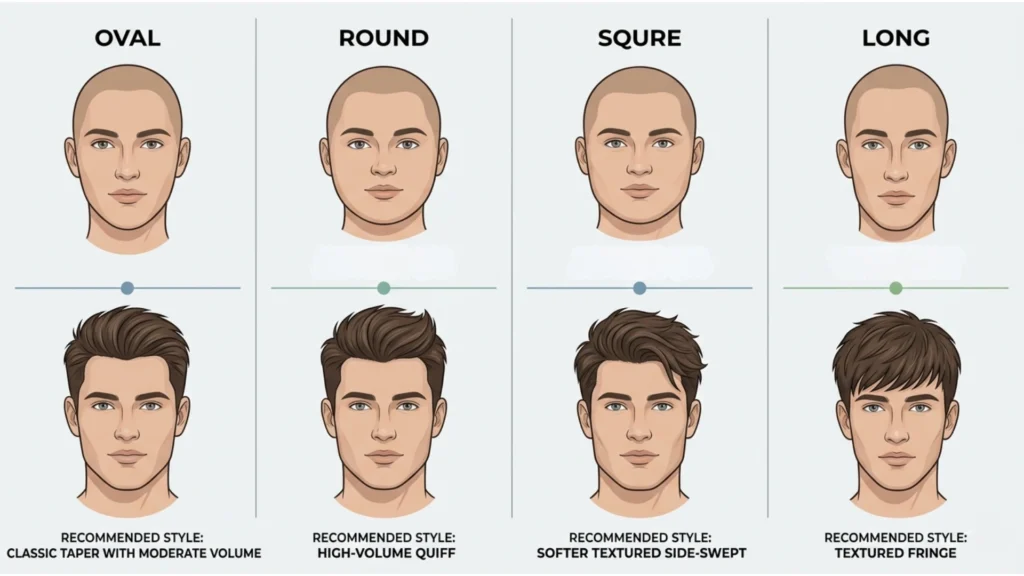
Even the perfect fade can look off if it doesn’t match your face shape. The low taper fade is versatile enough to suit almost everyone, but small adjustments in top length, volume, and styling direction can make the difference between “good” and “exceptional.”
Here’s how to match your low taper fade to your face shape for maximum impact.
Low Taper Fade for Oval Face Shape
Face Characteristics: Balanced proportions, slightly longer than wide, no dominant features
Why Low Taper Works:
Oval faces are the gold standard they work with virtually any fade type. The low taper enhances your natural balance without adding or reducing height.
Best Styles:
- Classic comb over
- Side part
- Textured crop
- Messy wavy top
- Slick back
Styling Recommendation:
Keep 2–3 inches on top for versatility. You can go shorter or longer without compromising balance.
What to Avoid:
Nothing oval faces are universally compatible.
Low Taper Fade for Round Face Shape
Face Characteristics: Width and length roughly equal, soft curves, full cheeks
Why Low Taper Works:
The low taper is subtle enough not to add too much width, but you need height on top to elongate your face visually.
Best Styles:
- Pompadour (adds vertical height)
- Brush up
- Quiff
- Spiky top
- Textured crop with lifted fringe
Styling Recommendation:
Keep 2.5–4 inches on top and style upward or back (never flat). This adds visual length.
What to Avoid:
- Flat, brushed-down styles
- Buzz cuts (emphasize roundness)
- Middle parts (widen face)
Low Taper Fade for Square Face Shape
Face Characteristics: Strong, angular jawline, forehead and jaw similar width
Why Low Taper Works:
The soft, gradual fade of a low taper balances the strong angles of a square jaw, preventing the cut from looking too harsh.
Best Styles:
- Side-swept styles (soften angles)
- Textured messy top
- Wavy or curly styles
- Brush back
- Low taper with beard (frames jawline)
Styling Recommendation:
Add texture and slight messiness to offset sharp facial structure. Pair with a full beard for masculine definition.
What to Avoid:
- Overly structured, sharp styles (too much geometry)
- Flat-top buzz cuts
Pro Tip:
“A square face + low taper + full beard = peak masculine aesthetic.”
Low Taper Fade for Long/Oblong Face Shape
Face Characteristics: Length significantly greater than width, can appear narrow
Why Low Taper Works:
Avoid high fades, which add even more visual height. A low or mid fade keeps width at the sides and balances your face.
Best Styles:
- Styles with volume at sides (not just top)
- Wavy or curly styles (add width)
- Fringe that covers forehead (shortens face)
- Textured crop with forward fringe
Styling Recommendation:
Keep top length moderate (2–3 inches max). Add width through texture, not height.
What to Avoid:
- High fades (make face look longer)
- Tall pompadours or quiffs
- Slicked-back styles that expose full forehead
Low Taper Fade for Diamond Face Shape
Face Characteristics: Narrow forehead and chin, wide cheekbones
Why Low Taper Works:
Tapering reduces focus on cheekbones and creates softer overall proportions.
Best Styles:
- Side part (adds width at forehead)
- Textured fringe
- Messy top with volume
- Comb over
Styling Recommendation:
Add volume at the forehead and temples to balance cheekbone width.
What to Avoid:
- Styles that add height at crown (emphasizes cheekbones)
Low Taper Fade for Heart-Shaped Face
Face Characteristics: Wide forehead, narrow chin, pointed jawline
Why Low Taper Works:
The taper adds structure at the sides without adding bulk at the top, balancing a wider forehead.
Best Styles:
- Side-swept styles
- Textured crop
- Fringe styles (cover forehead width)
Styling Recommendation:
Avoid adding too much width at temples. Keep styling soft and natural.
Not sure which face shape category you fall into? TaperMatch uses a structural biometric scan to map your jaw angle, facial width, and symmetry then matches your geometry to the right low taper variation automatically. No guessing required.
How to Tell Your Barber You Want a Low Taper Fade (Step-by-Step Communication Guide)
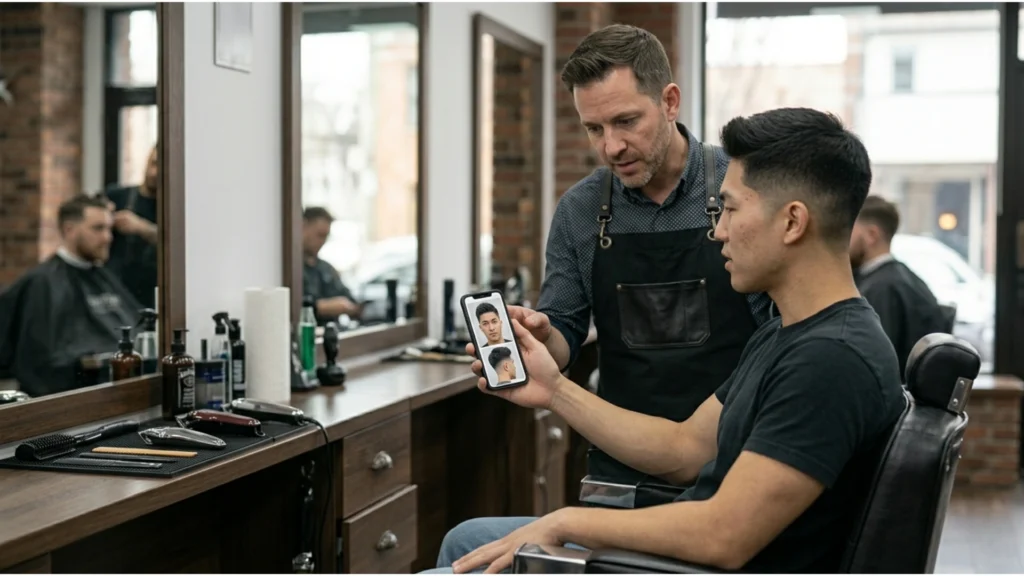
This is where most guys mess up.
You can have a perfect vision in your head, but if you can’t communicate it to your barber, you’re not going to get what you want.
Here’s exactly how to explain it word for word.
Step 1: Bring Reference Photos (Front, Side, AND Back)
Why This Matters:
One front-facing pic won’t capture the fade you actually want. Your barber needs to see the starting height, blend zone, and neckline finish.
How to Do It Right:
- Save 2–3 photos: one front view, one side profile, one back view
- Screenshots from Instagram, Pinterest, or TikTok work perfectly
- Show the EXACT fade height and blend you want
What to Say:
“I brought some reference photos showing the exact fade height and blend I’m looking for. This is the starting point I want on the sides, and this is how I want the back to look.”
Mistake to Avoid:
Don’t just describe it verbally. Words like “low” mean different things to different barbers.
Step 2: Specify Your Fade Height in Inches (Not Just “Low”)
The Problem:
“Low” means different things at different shops. One barber’s “low” might be another’s “mid.”
The Solution:
Use specific measurements.
What to Say:
“I’d like a low taper fade starting about 1 inch above my ears, blended gradually into [specify your top length: 2 inches, 3 inches, etc.].”
Barber Script Template:
“I want a low taper fade that starts [X inches] above my ears and blends into [Y inches] on top. Please use [guard numbers: #3 to #2 to #1] and keep the blend smooth and gradual. I do NOT want it to fade to skin leave some hair at the base.”
Additional Details to Specify:
- Neckline preference: Natural curve, squared, or tapered?
- Sideburn length: Trimmed short, medium, or natural?
- Temple preference: Sharp line-up or natural hairline?
- Top styling: Textured, slicked, brushed back?
Step 3: Confirm Clipper Guard Numbers
Why This Matters:
A #1 guard at one shop might be a #2 at another. Always confirm.
What to Say:
“What guard sizes do you use for a low taper fade? I’m thinking #3 on top of the fade zone, blending down to #2 and #1. Does that sound right?”
Pro Tip:
Most professional barbers use Andis or Wahl clippers their guard sizes are standardized. But cheaper clippers can vary.
Step 4: Describe Your Neckline Preference
Three Main Options:
- Natural Neckline: Follows your natural hairline curve most common
- Squared/Blocked Neckline: Straight horizontal line sharper, more formal
- Tapered Neckline: Gradually blends into skin at the nape cleanest finish
What to Say:
“For the neckline, I’d like a [natural curve / squared / tapered] finish.”
Most Popular Choice:
Natural curve for everyday wear, squared for formal occasions.
Step 5: Mention Any Design Elements
If You Want:
- Hard part (shaved line)
- Shaved designs (lines, patterns)
- Line-up/shape-up at hairline
- Beard fade connection
What to Say:
“I’d also like a hard part on the [left/right] side, about [1–2 inches] long.”
“Can you connect the fade into my beard for a seamless transition?”
Common Mistakes to Avoid
Mistake #1: Being Too Vague
❌ “Just give me a fade.”
✅ “I want a low taper fade starting 1 inch above my ears, blending into 3 inches on top.”
Mistake #2: Not Explaining the Top
The fade is only half the haircut. Always specify top length and style.
Mistake #3: Assuming Your Barber Remembers
Even if you’re a regular, re-explain every time. Barbers see 20+ clients a day.
Mistake #4: Not Speaking Up During the Cut
If it doesn’t look right mid-cut, say something immediately. It’s easier to fix before it’s finished.
Mistake #5: Skipping the Consultation
Always do a quick consultation before the barber starts cutting.
Every mistake on that list disappears when you walk in with a Barber-Ready Brief. TaperMatch generates one from your face scan with your exact fade height, guard progression, neckline preference, and a verbatim phrase to read aloud at the chair.
How to Style Your Low Taper Fade (Products, Techniques & Daily Routine)
Alright, you got the cut. Now you need to know how to make it look good every day.
Here’s everything you need to know about styling products, techniques, and daily routines.
Best Styling Products for Low Taper Fades
| Product Type | Hold Level | Finish | Best For | How to Apply |
|---|---|---|---|---|
| Matte Pomade | Medium-Strong | Natural matte | Professional styles, comb overs, side parts | Apply to damp hair, comb into place |
| Matte Clay | Strong | Matte, textured | Messy styles, textured crops, spiky hair | Rub between palms, work through dry hair |
| Texture Powder | Light-Medium | Matte, voluminous | Fine hair, adding volume, pre-styling | Sprinkle on roots, scrunch |
| Hair Wax | Medium-Strong | Semi-matte | Defined styles, spikes, structure | Warm in hands, shape into hair |
| Styling Gel | Strong | High shine (wet look) | Slick backs, formal styles, waves | Apply to damp hair, comb smooth |
| Curl Cream | Light-Medium | Natural, defined | Curly hair, wavy hair, natural texture | Apply to damp hair, scrunch, diffuse |
| Sea Salt Spray | Light | Matte, textured | Wavy hair, beachy texture, pre-styling | Spray on damp hair, scrunch or diffuse |
| Pomade (High Shine) | Medium-Strong | Glossy, wet | Classic pompadours, slick backs | Apply to damp hair, comb back |
| Styling Cream | Light-Medium | Natural | Fine hair, soft styles, flexible hold | Apply to damp or dry hair |
| Molding Paste | Medium | Semi-matte | Flexible styles, reworkable hold | Rub in hands, style, reshape as needed |
Top 5 Recommended Products
1. Matte Clay for Textured Styles
Matte clay delivers strong hold with a natural, non-shiny finish perfect for messy tops, textured crops, and tousled styles. It works best on dry hair and can be restyled throughout the day.
2. Texture Powder for Volume
Lightweight and invisible, texture powder instantly boosts volume at the roots. Ideal for fine or thin hair that needs body without weight. Sprinkle on dry hair, scrunch, and style.
3. Curl Cream for Natural Curls
Curl-defining cream enhances your natural curl pattern, reduces frizz, and adds moisture. Apply to damp hair, scrunch gently, and diffuse on low heat for bouncy, defined curls.
4. Pomade for Classic Styles
Pomade offers medium to strong hold with a sleek finish ideal for comb overs, side parts, and slick backs. Water-based formulas wash out easily and allow restyling.
5. Sea Salt Spray for Wavy Texture
Sea salt spray adds grit, texture, and volume to wavy hair, creating an effortless, beachy look. Spray on damp hair before blow-drying or air-drying.
Daily Styling Routine for Low Taper Fade
Morning Routine (5 Steps):
Step 1: Start with Clean or Lightly Damp Hair
Wash your hair 2–3 times per week (not daily—overwashing strips natural oils). On non-wash days, lightly dampen with water.
Step 2: Apply Product to Damp Hair
Most products work best on damp (not soaking wet) hair. Towel-dry first, then apply.
Step 3: Blow-Dry with Technique
- For volume: Blow-dry upward from roots using a round brush
- For smooth styles: Blow-dry in the direction you want hair to fall
- For curly styles: Use a diffuser on low heat
Step 4: Apply Finishing Product
After blow-drying, apply a small amount of matte clay, wax, or powder to add texture and lock in the style.
Step 5: Final Touches
Use your fingers or a comb to refine the shape. Don’t overwork it natural is better.
Time Required:
- Minimal styling: 2–3 minutes (texture powder + finger tousle)
- Moderate styling: 5–7 minutes (blow-dry + product)
- High-effort styling: 10–15 minutes (pompadour, slick back)
Pro Tips:
Less is More: Start with a dime-sized amount of product. You can always add more.
Work Product Through Evenly: Rub product between palms first, then distribute through hair from roots to ends.
Don’t Apply Product to Wet Hair: Damp is ideal wet dilutes the product.
How to Add Texture and Volume
Technique 1: Pre-Styling with Sea Salt Spray
Spray on damp hair before blow-drying to create instant grit and lift at the roots.
Technique 2: Blow-Dry Against the Grain
Blow-dry hair in the opposite direction of its natural fall, then style it back into place. This builds volume.
Technique 3: Use Texture Powder on Dry Hair
Sprinkle powder directly onto roots, then scrunch and tousle with fingers for instant thickness.
Technique 4: Finger-Tousle Instead of Combing
Combs flatten hair. Use your fingers to create separation and lift.
Technique 5: Layer Products
Apply sea salt spray first (on damp hair), blow-dry, then finish with matte clay for maximum texture.
Common Mistake:
Using too much product, which weighs hair down and eliminates volume.
How to Maintain a Low Taper Fade (Trimming Schedule, Touch-Ups & Care)
Getting the fade is step one. Keeping it looking fresh is step two.
Here’s exactly how to maintain your low taper fade so it always looks sharp.
How Long Does a Low Taper Fade Last?
A low taper fade typically lasts 4–6 weeks before needing a trim, but it maintains a sharp, fresh look for about 12–16 days.
After that, the fade line becomes softer and less defined as hair grows out.
Timeline Breakdown:
| Days After Haircut | Fade Appearance | Action Needed |
|---|---|---|
| Days 1–12 | Sharp, crisp, fresh | None enjoy it |
| Days 13–21 | Still clean, fade softening | Optional touch-up for perfectionists |
| Days 22–28 | Noticeably grown, fade fading | Recommended barber visit |
| Days 29–42 | Fully grown out, needs refresh | Definite trim needed |
Factors That Affect How Long It Lasts:
- Hair Growth Speed: Fast growers need trims every 3 weeks; slow growers can go 5–6 weeks
- Hair Color: Darker hair shows grow-out faster than lighter shades
- Contrast Level: Sharper fades (closer to skin) show grow-out sooner
- Personal Preference: Some men like the softened, grown-out look
Fact (National Barbers Association, 2025):
Most low taper fades maintain a sharp look for 12–16 days. The grow-out becomes noticeable when the faded area reaches ¼ inch length, the neckline becomes fuzzy, or the contrast between top and sides diminishes.
Recommended Trimming Frequency
For Low Taper Fade:
Every 3–4 weeks for optimal sharpness
For Skin Fades:
Every 2–3 weeks (more contrast = faster visible grow-out)
For Classic Tapers (No Fade):
Every 4–6 weeks
Maintenance Schedule by Lifestyle:
| Lifestyle | Recommended Frequency | Why |
|---|---|---|
| Corporate Professional | Every 3 weeks | Clean appearance matters |
| Creative/Casual | Every 4–5 weeks | Grown-out look is acceptable |
| Active/Gym-Focused | Every 3–4 weeks | Sweat/washing accelerates need |
| Budget-Conscious | Every 5–6 weeks | Stretch between cuts |
Between-Visit Maintenance:
Use a precision trimmer to clean up your neckline and sideburns at home every 2 weeks. This extends the fresh look without a full barber visit.
What to Ask for at Touch-Ups:
“Just clean up the fade and neckline don’t touch the top unless I ask.”
Daily Hair Care Routine for Low Taper Fades
Washing Schedule:
Wash your hair 2–3 times per week not daily. Overwashing strips natural oils, leading to dryness and scalp irritation.
On Wash Days:
- Use a gentle, sulfate-free shampoo
- Apply conditioner to top (not faded sides)
- Rinse thoroughly with cool water (seals hair cuticle)
- Towel-dry gently don’t rub aggressively
On Non-Wash Days:
- Rinse with water only
- Apply leave-in conditioner or a few drops of argan oil
- Style as usual
For Curly/Coily Hair:
- Use moisturizing cream daily on tapered areas to prevent dryness
- Deep condition weekly
- Never brush dry curly hair (use wide-tooth comb on wet hair only)
For Straight/Wavy Hair:
- Use lightweight styling cream for hold
- Avoid heavy oils (they make straight hair look greasy)
Scalp Care:
Keep your scalp clean and moisturized. The tapered sides expose more scalp, so use a gentle scalp moisturizer if you experience dryness.
At-Home Touch-Up Guide (Between Barber Visits)
What You Can Safely Do at Home:
- Clean Up Neckline: Use a precision trimmer to follow the natural fade line
- Trim Sideburns: Keep them even and neat
- Edge Up Hairline: Carefully shape the front hairline (only if confident)
What You Should NEVER Do at Home:
- Attempt to re-fade the sides (high risk of uneven results)
- Cut the top without experience
- Use clippers on your own head without a mirror setup
Tools You Need:
- Precision trimmer with adjustable guards
- Handheld mirror + wall mirror (to see back of head)
- Steady hand and good lighting
Step-by-Step Neckline Touch-Up:
- Stand with your back to a wall mirror, hold a handheld mirror to see the neckline
- Use trimmer with no guard (or #0.5 guard for safety)
- Follow the existing fade line don’t create a new shape
- Make small, gentle passes
- Check frequently in the mirror
Pro Tip:
If you’re unsure, leave it to the barber. A bad DIY fix can take weeks to grow out.
How Much Does a Low Taper Fade Cost? (Pricing Guide by Region & Barber Type)
Let’s talk money. How much should you expect to pay?
Average Low Taper Fade Prices by Region
| Location Type | Average Price Range | What’s Included |
|---|---|---|
| Small Towns/Rural Areas | $20–$35 | Basic cut, fade, cleanup |
| Suburban Areas | $30–$50 | Cut, fade, shampoo, hot towel optional |
| Urban/City Centers | $40–$60 | Full service, consultation, styling |
| High-End Salons/Major Cities | $70–$120+ | Premium service, luxury products, extras |
| Chain Barbershops | $25–$40 | Standardized service, quick turnaround |
| Independent Barbers | $35–$65 | Personalized service, relationship building |
Regional Breakdown:
Lowest Prices (Under $30):
- Small-town barbershops
- Chain salons (Great Clips, Sport Clips)
- Barber schools (discounted student cuts)
Mid-Range ($30–$50):
- Suburban independent barbers
- Established barbershops in mid-sized cities
Highest Prices ($70+):
- Major metropolitan areas (NYC, LA, Chicago, San Francisco)
- Celebrity barbers
- High-end men’s grooming salons
Barbershop vs. Salon: What’s the Price Difference?
Barbershops:
- Average Price: $30–$50
- Service: Faster cuts, focused on fades and classic men’s styles
- Vibe: Traditional, masculine, community-oriented
- Add-Ons: Hot towel shave, beard trim
Salons:
- Average Price: $50–$80
- Service: Slower, more detailed, includes scalp massage, wash, and styling consultation
- Vibe: Upscale, relaxing, spa-like
- Add-Ons: Deep conditioning, blow-dry styling, luxury products
Which Should You Choose?
Choose a barbershop if:
- You want a quick, efficient fade
- You prefer the traditional barber experience
- Budget is a priority
Choose a salon if:
- You want extra pampering
- You value a full grooming experience
- You’re willing to pay for premium service
What You Get for the Price
Standard Service Includes:
- Consultation (discussing fade height, style, etc.)
- Clipper fade on sides and back
- Scissor work or clipper cut on top
- Blending and detailing
- Neckline and sideburn cleanup
- Final styling and product application
Premium Services May Include:
- Shampoo and scalp massage
- Hot towel treatment
- Beard trim and shaping
- Straight razor edge-up
- Take-home styling tips
Tip Recommendation:
15–20% of service cost for good service. $5–$10 tip on a $30–$40 cut is standard.
Frequently Asked Questions
What guard number is a low taper fade?
Most barbers use a #3 guard (10mm) at the starting point of a low taper fade, blending down to #2 (6mm), #1 (3mm), and sometimes #0.5 (1.5mm) near the neckline.
The exact guards depend on your hair texture, desired contrast, and barber preference. Always confirm guard numbers with your barber to ensure consistency.
Is a low taper fade good for curly hair?
Yes the low taper fade is excellent for curly hair. It removes bulk from the sides while preserving your natural curl pattern on top. The taper creates clean structure without fighting your texture.
For best results, ask your barber to cut curls DRY (to see natural spring), and use curl-defining cream or leave-in conditioner for styling. Popular curly styles include curly tops, broccoli cuts, and messy textured crops.
Can I get a low taper fade with thin hair?
Yes, but request a “soft taper” or “shadow fade” instead of a sharp skin fade. These gradual blends avoid exposing too much scalp, which can emphasize thinning.
Keep 2–3 inches on top and use lightweight styling products like mousse or texture powder to add volume. Avoid heavy pomades that flatten hair and make thinning more visible.
What face shapes work best with a low taper fade?
Low taper fades suit almost all face shapes.
- Oval and square faces look naturally balanced
- Round faces should add height on top to elongate
- Long faces should avoid excessive height
- Heart-shaped and diamond faces benefit from soft, textured tops
The key is adjusting top length and styling direction to complement your unique proportions.
How much does a low taper fade cost?
Low taper fade prices range from $20–$35 in small towns, $30–$50 in suburban areas, and $40–$70+ in major cities.
High-end salons can charge $80–$120. Barbershops are generally cheaper than salons. Expect to pay more for experienced barbers, luxury services, and major metropolitan areas. Always tip 15–20% for good service.
What is a low-low taper fade?
A low-low taper fade (also called extra-low taper) starts even lower than a standard low taper—just 0.5 to 1 inch above the ear, almost at the natural hairline.
It’s the most subtle fade possible, ideal for first-timers, conservative workplaces, or men who want minimal change. It grows out gracefully and requires less frequent touch-ups.
Can women get a low taper fade?
Absolutely. Low taper fades are increasingly popular among women seeking bold, androgynous styles.
Common styles include pixie cuts with tapered sides, undercuts with longer tops, and shaved sides with curly or wavy tops. The style works best for confident, fashion-forward women who embrace non-traditional haircuts.
What’s the best product for styling a low taper fade?
The best product depends on your hair type and desired style.
- For textured, messy looks: matte clay
- For volume on fine hair: texture powder
- For curly hair: curl cream
- For classic slick backs: high-shine pomade
- For wavy beachy styles: sea salt spray
Always start with a small amount and add more as needed.
Can I do a low taper fade at home?
While possible, it’s NOT recommended unless you have professional clippers, mirrors to see all angles, and significant practice.
Fades require precision blending that’s extremely difficult to do on yourself. You can safely touch up your neckline and sideburns at home, but leave the actual fade to a trained barber to avoid uneven, patchy results.
What’s the difference between a taper and a fade?
The difference between a taper and a fade is how short the hair gets and how fast it blends.
A taper keeps hair gradually shorter near the neck and sides but leaves some length. A fade blends hair down to very short or skin level for sharper contrast. Tapers are softer; fades are bolder.
[…] retro predecessor, the modern mullet avoids bulky or disconnected sides. Instead, it incorporates a low taper fade or skin fade, ensuring a clean and polished appearance that blends seamlessly into the longer […]