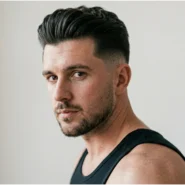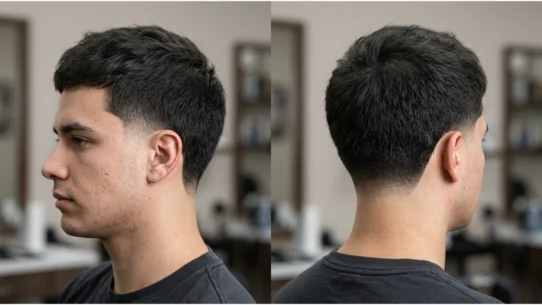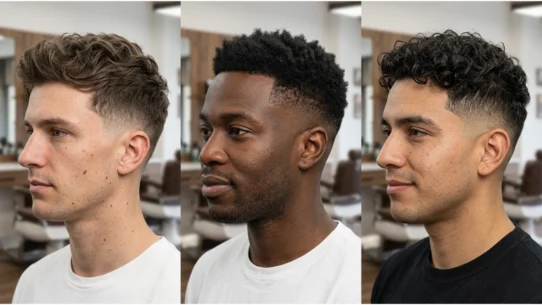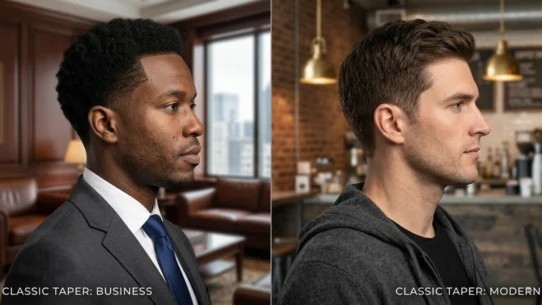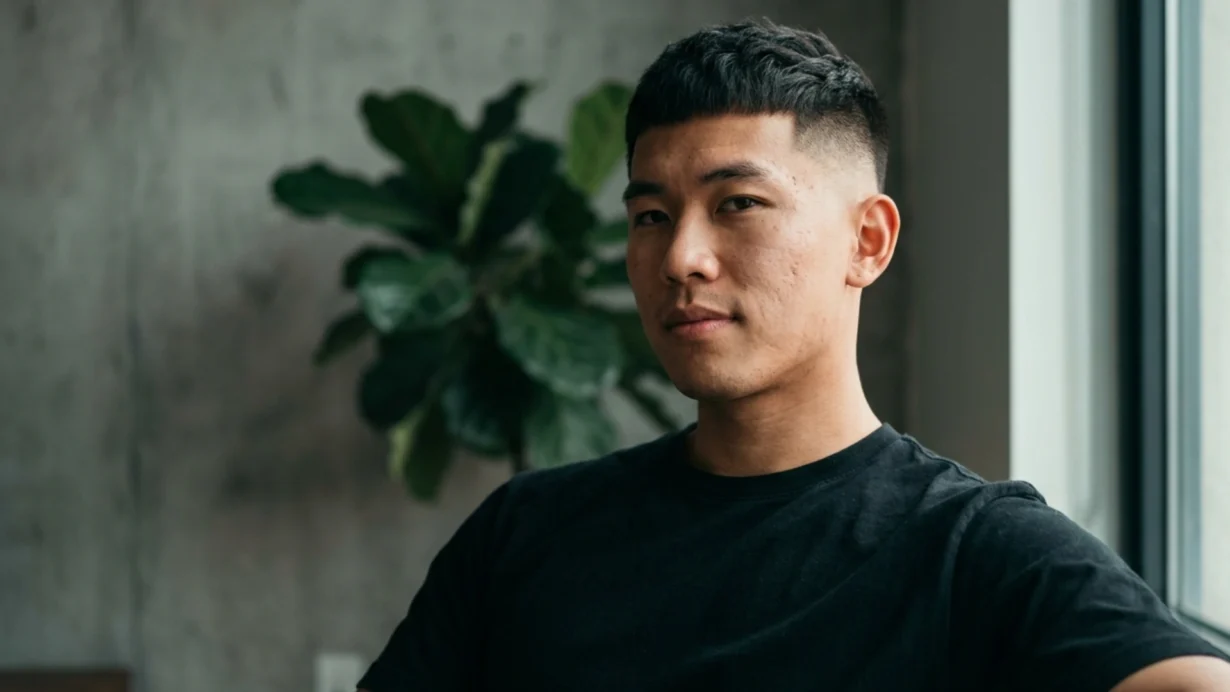

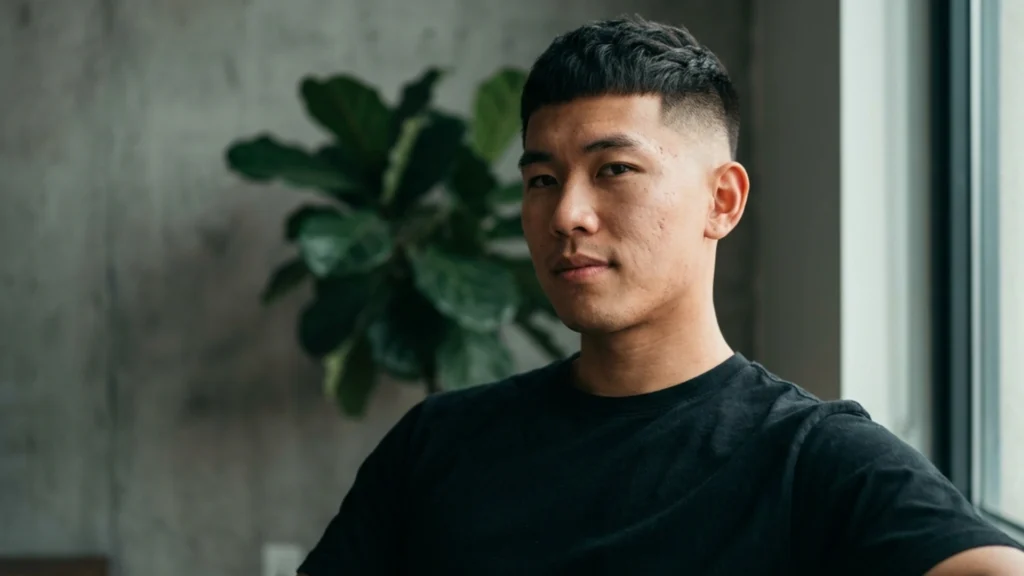
A taper fade haircut is a men’s hairstyle where the hair gradually shortens from the top down through the sides, blending into a fade that reaches the skin at the neckline and around the ears. It merges the subtle graduation of a taper with the sharp, clean-to-skin finish of a fade, giving you the best of both worlds in one cut.
This style works with every hair type, straight, wavy, curly, or coily, and flatters nearly every face shape. But not every taper fade suits every person. The difference between looking sharp and looking disappointed comes down to understanding the types, matching one to your features, and communicating clearly with your barber.
This guide breaks all of that down, from every type of taper fade to the exact words you should say when you sit in that chair.
What Is a Taper Fade Haircut and Which Type Should You Get?
A taper fade haircut gradually shortens the hair from the top down, blending into a clean fade that reaches the skin at the sides and neckline. It combines the natural taper graduation with the sharp, skin-level finish of a fade. The right type, low, mid, or high, depends on your face shape, hair texture, and how often you visit the barber.
KEY POINTS:
– Low fades start just above the ears and are the easiest to maintain at 3–4 weeks
– Mid-fades begin at the temple and are the most versatile type for all face shapes
– High fades start near the crown and create the boldest contrast and visual height
– Round faces benefit most from a high or mid fade to add length and definition
-Skin fades blend all the way to bare skin and need a touch-up every 7–10 days
Table of Contents
45+ styles is a lot to go through; find the ones that suit your face shape first.
The Taper Style Tool filters by face shape, hair type, and fade height so you spend less time browsing and more time knowing which taper fade is actually right for you.
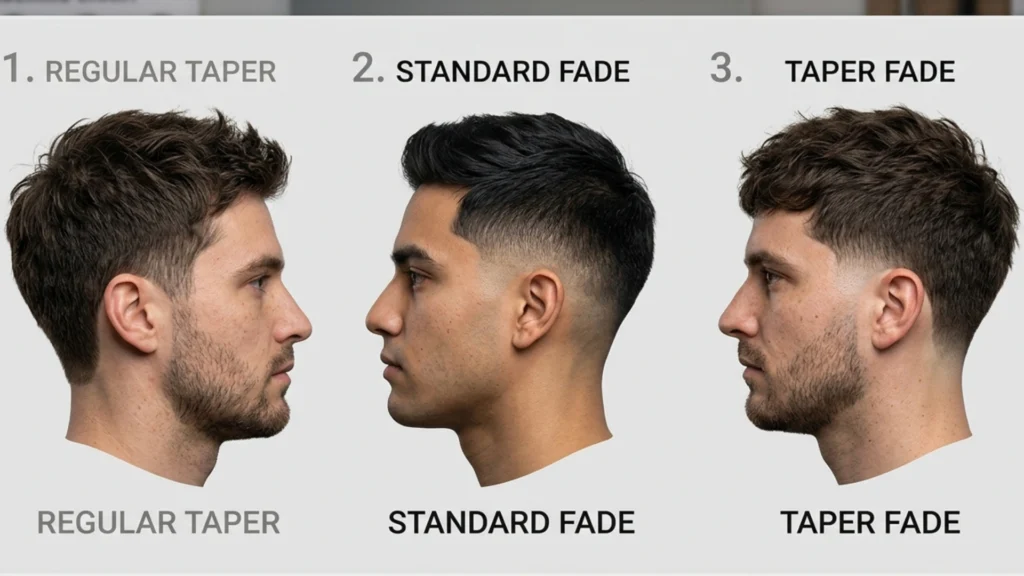
What Makes a Taper Fade Different from a Regular Taper or a Standard Fade?
The confusion between tapers, fades, and taper fades is real. Even barbers sometimes use these terms differently depending on where they trained. So let us set the record straight with a simple breakdown.
A taper gradually shortens the hair from top to bottom while keeping the hair visible at every point. The shortest length is usually around a #2 guard (¼ inch), and you never see bare skin. It is conservative, subtle, and grows out gracefully.
A fade takes that transition further, blending the hair all the way down to the skin using progressively shorter clipper guards until there is little to no hair at the bottom. The result is a sharper, bolder contrast between the longer top and the faded sides.
A taper fade merges these two techniques into one seamless cut. The upper portion of the sides maintains the gradual, tapered graduation you would expect from a classic taper. But as the blend moves downward toward the neckline and ears; it transitions into a true fade that reaches the skin. The result is a progressive gradient, soft and natural on top, sharp and clean at the bottom
| Regular Taper | Standard Fade | Taper Fade | |
|---|---|---|---|
| Bottom edge | Visible hair (#2 guard minimum) | Blends to bare skin | Skin at base, gradual blend above |
| Overall contrast | Subtle, conservative | Bold, high-contrast | Balanced, progressive |
| Grow-out pattern | Very graceful, natural | A noticeable line appears within days | Moderate: clean for 2–3 weeks |
| Professional suitability | Excellent for all settings | Depends on workplace culture | Versatile: works almost everywhere |
| Maintenance cycle | Every 3–4 weeks | Every 1–2 weeks | Every 2–3 weeks |
Key Point: Every fade is technically a type of taper because it involves graduated shortening. But not every taper is a fade. The taper fade sits right in the middle, giving you a polished gradient that reads as sharp but not aggressive.
If your existing knowledge of the standard taper haircut needs refreshing, including the full breakdown of taper-only types, the barbering technique behind edging, siding, and topping, and clipper guard details, our complete taper haircut guide covers that foundation in depth.
Types of Taper Fades by Placement
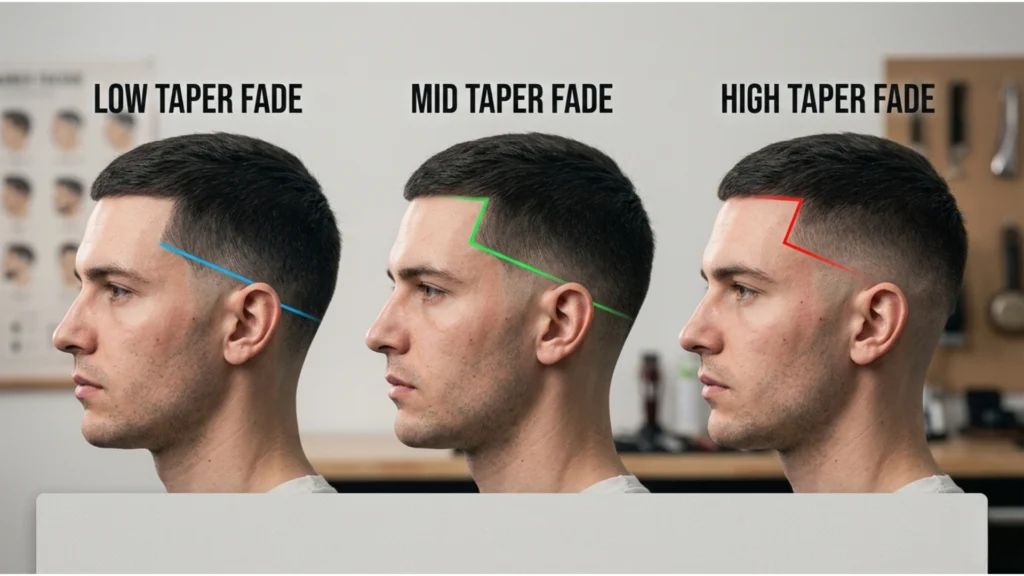
The single most important decision when getting a taper fade is where on your head the fade begins. This placement, low, mid, or high, determines how dramatic the cut looks, how fast it grows out, and how much maintenance it needs.
Here are all the major taper fade types, explained clearly so you know exactly what you are asking for.
Low Taper Fade
The low taper fade starts just above the ears, roughly one inch up, and fades down to the skin at the neckline and around the ears. This is the least aggressive taper fade and the most universally flattering variation.
Because the blend sits so low, the transition from longer hair on top to faded sides is gentle and natural-looking. You still get the clean, sharp finish of a fade at the bottom edges, but the overall effect is subtle rather than dramatic. This is the variation that grows out the most gracefully, which means you can stretch your barber visits to every 3–4 weeks without the cut looking messy.
The low taper fade pairs beautifully with a textured fringe, a clean side part, natural curls on top, or a full beard blend. It works with all hair types and nearly every face shape, making it the safest first choice if you have never tried a taper fade before.
Best for: Round faces (adds subtle vertical structure), oval faces, professional and corporate environments, all hair types, first-timers
Barber Script: “I would like a low taper fade. Start the blend just above my ears and fade to skin at the neckline. Keep the top at [your preferred length or style]. Natural tapered neckline, please. And a clean line-up.“
Maintenance: Every 3–4 weeks, the most forgiving grow-out of all taper fades
Mid Taper Fade
The mid taper fade starts around the temple area, roughly at the midpoint of the head’s side profile. This creates a noticeably more defined contrast than the low version while staying balanced enough for both professional and casual settings.
The mid-taper fade is often called the “sweet spot” because it delivers visible impact without going too extreme. The blend usually progresses from a #3 or #4 guard at the starting point down through #2, #1, and finally skin at the lowest edge. This creates a clear gradient that is easy to spot but never overwhelming.
According to Forte Series, “the mid taper fade haircut is one of the most versatile, modern men’s styles” and it “works with any hair type and face shape”. It pairs especially well with a pompadour, textured crop, French crop, faux hawk, or comb over.
Best for: Oval faces, square faces, heart-shaped faces, wavy or curly hair, creative professionals who want polish with personality
Barber Script: “I would like a mid taper fade. Start the blend at my temple, fade to skin at the bottom. On top, I want [your preferred style]. I want good contrast between the sides and top. Clean line-up.”
Maintenance: Every 2–3 weeks
Fact: Mid taper fades flatter oval, square, and heart-shaped faces by adding sharp structure, visual balance, and definition to the jawline and cheekbones
High Taper Fade
The high taper fade starts approximately 2 inches above the ears, near the upper temple or crown. This is the boldest standard taper fade; it creates maximum contrast between the longer top and the tightly faded sides, making whatever style you have on top the center of attention.
The dramatic gradient works best with darker hair colors, where the transition from full hair to skin is highly visible. On lighter or blond hair, the contrast may not be as clear because the difference between the hair and scalp is less pronounced.
High taper fades pair naturally with a quiff, buzz cut, textured spikes, or slicked-back styles. They add significant vertical emphasis, which is why they are particularly effective for round and diamond face shapes where you want to create a longer, leaner silhouette.
Best for: Diamond and heart-shaped faces, fine or thin hair (creates the illusion of density by concentrating volume on top), fashion-forward environments, and darker hair colors
Who should be cautious: Men with oblong or long faces (the high fade removes side volume and can make the face appear even longer), men with very light blond hair (insufficient contrast)
Barber Script: “I want a high taper fade. Start the blend about two inches above my ears and fade to skin. Keep the top [your preferred style]. I want a strong contrast and a sharp line-up.”
Maintenance: Every 10–14 days for a crisp look, this is the highest-maintenance standard taper fade
Tip: If you have a round face, a high taper fade paired with a pompadour or textured quiff is one of the best combinations. Shaving the hair close on the sides removes bulk and slims the face, while a higher top stretches out the facial structure
Skin Taper Fade (Bald Taper Fade)
The skin taper fade takes the concept to its cleanest extreme; the bottom edges blend all the way down to completely bare skin using a straight razor or a #0 guard (1/16 inch). Unlike a standard skin fade, where the transition can be abrupt, the taper fade version maintains gradual graduation through the upper portion before reaching the skin at the very bottom.
The result is a sharp, fresh look that reads as intentional and precise. It is favored by men who want minimal visual noise on the sides, just smooth skin transitioning into hair.
Best for: Oval, square, and triangular face shapes, summer months, athletic lifestyles, men who want the cleanest possible finish
Barber Script: “I want a skin taper fade that blends gradually from the top, but takes it all the way down to skin at the bottom. Razor-clean edges, please.”
Maintenance: Weekly to every 10 days, skin regrowth is immediately visible, so this variation demands the most frequent upkeep of any taper fade type
Key Point: The difference between a skin taper fade and a full skin fade is the graduation above the skin line. A skin taper fade maintains a visible, gradual blend throughout the mid and upper sections. A skin fade can start at any height and go straight to the skin with a less progressive transition.
Burst Taper Fade
The burst taper fade is one of the most distinctive variations. Instead of fading in a straight horizontal or vertical line, the burst taper creates a semicircle-shaped arc that radiates around the ear. The hair behind the ear lasts longer, while the area directly around the ear fades to skin tone, creating a “burst” effect.
This cut requires a highly skilled barber because the curved fade line must be perfectly symmetrical on both sides. When executed well, it creates visual movement and a fashion-forward silhouette that stands apart from standard fades.
Best for: Men wanting a unique, non-traditional fade shape, round faces (the curved arc creates visual movement), medium to long styles on top
Style Pairings: Burst taper fade + mullet, burst taper fade + mohawk, burst taper fade + curly top
Barber Script: “I would like a burst taper fade, the fade should arc around my ears in a semicircle, keeping more length at the back.”
Maintenance: Every 2–3 weeks
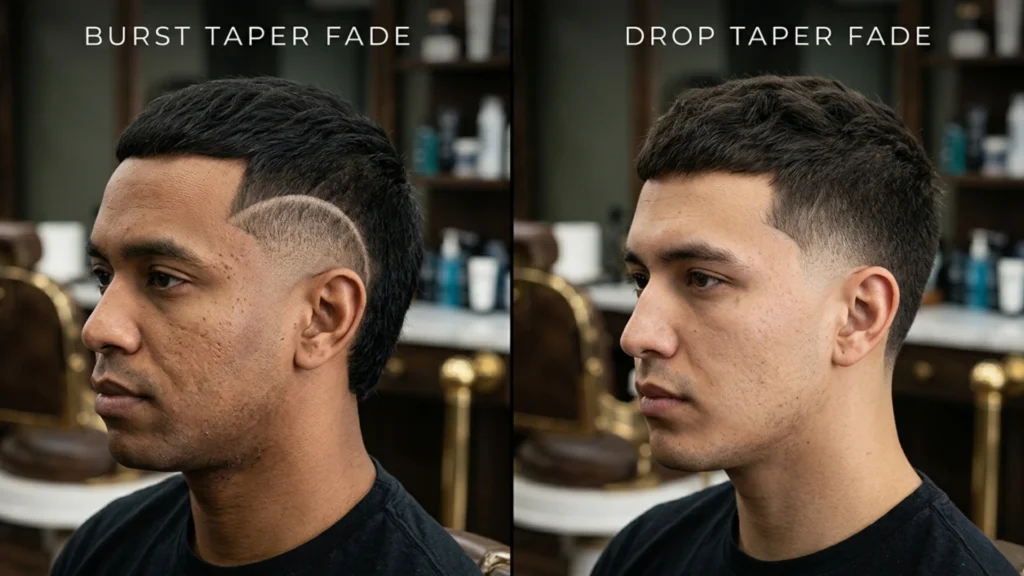
Drop Taper Fade
The drop taper fade gets its name from the way the fade line “drops” lower behind the ears rather than staying at a consistent horizontal level. This creates a curved arc that follows the natural shape of the skull, adding a subtle but distinctive twist to the standard taper fade.
The drop line is especially flattering on curly and coily hair because it follows the head’s contours rather than fighting against the natural curl pattern. It also adds modern flair without being as bold as a burst fade.
Best for: Curly and coily hair types, round faces (the curved drop line adds dimension), men who want subtle uniqueness without extreme boldness
Barber Script: “I want a drop taper fade, have the fade line drop lower behind my ears instead of staying straight across.”
Maintenance: Every 2–3 weeks
Temple Taper Fade (Temp Fade)
The temple taper fade focuses the graduation on the temple region and sideburns, while keeping the back and lower sides fuller. This is a targeted approach you get a sharpened profile view and cleaner look around the face without committing to a full perimeter fade.
This variation is particularly effective for men with full beards because it creates a seamless sideburn-to-beard transition. The barber blends the temple fade through the sideburn area into the beard line, creating a continuous, polished gradient from the scalp to the jawline.
Best for: Men with beards (clean temple-to-beard blending), oblong faces (keeps back volume while sharpening temples), men growing out longer hairstyles who want temporary sharpness at the temples
Barber Script: “I want a temple taper fade focus the fade around my temples and sideburns, but keep the back fuller. Blend it into my beard line.”
Maintenance: Every 2–3 weeks
Seven types, each suited to a different face shape, hair texture, and lifestyle. If narrowing it down still feels overwhelming, TaperMatch does the matching for you scanning your facial geometry and returning your top three fits with a barber brief already written.
Best Taper Fade for Your Face Shape
Choosing the right taper fade is not just about which style looks cool; it is about which variation creates visual balance with your specific face shape. The goal is either to add structure where your face is round, soften areas where it is angular, or maintain harmony where it is already balanced.
Here is a quick-reference guide, followed by detailed reasoning for each face shape:
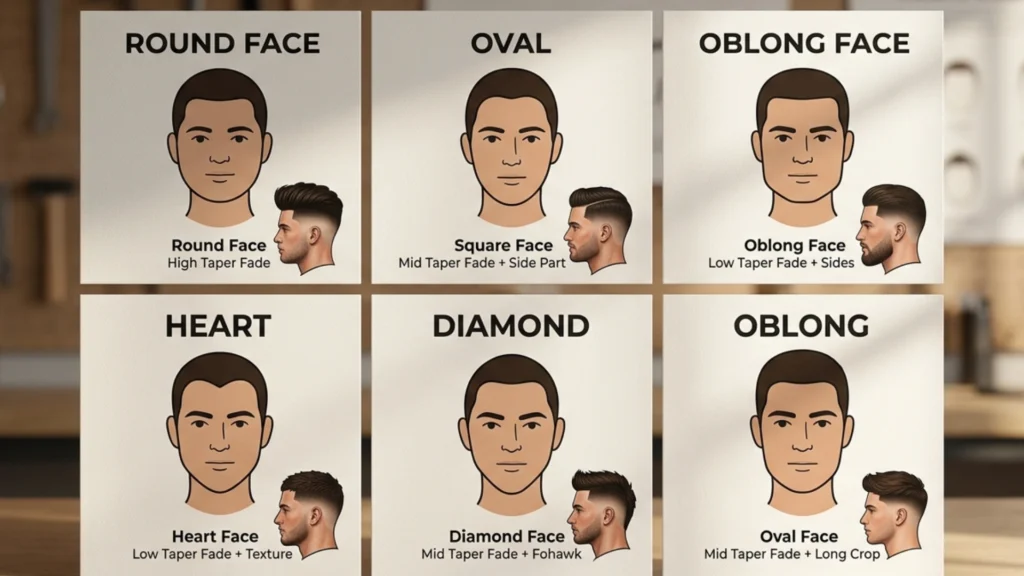
| Face Shape | Best Taper Fade | Avoid | Why |
|---|---|---|---|
| Round | High taper fade, mid taper fade | Low taper fade | Removes side bulk, adds vertical height |
| Oval | Any variation | None | Most balanced: all styles work |
| Square | Low taper fade, classic taper fade | Extremely high fade | Softens angular jawline without adding boxiness |
| Heart | Low taper fade, mid taper fade | High taper fade | Balances wider forehead without broadening it further |
| Diamond | High taper fade with top volume | Mid taper fade alone | Draws attention upward, away from cheekbones |
| Oblong / Long | Low taper fade | High taper fade | Maintains side fullness, prevents elongation |
Round Face
A round face is approximately as wide as it is long, with soft, curved lines and no sharp angles. The objective with any haircut here is to create a sense of length and definition.
If you have a round face, a mid- or high-taper fade is your best choice. Shaving the hair close on the sides takes away bulk, slims the face, and creates the appearance of length. Pair it with a higher top style like a pompadour or a textured quiff to actually stretch out the facial structure. A low taper would add too much weight to the sides, working against your objective
Recommended: High taper fade + quiff, mid taper fade + pompadour, mid taper fade + textured crop
Avoid: Low taper fades that keep fullness at the widest part of the face
Oval Face
An oval face is naturally well-proportioned slightly longer than it is wide, with gently rounded contours. This is the most versatile face shape for taper fades because virtually any variation works.
A clean taper will look remarkably sharp and cohesive, while a more dramatic fade will beautifully set off the well-balanced face. The decision here is purely one of personal style and maintenance preference.
Recommended: Anything low, mid, high, burst, drop, temple. Pick based on lifestyle and maintenance tolerance.
Square Face
A square face has a strong jawline, defined angles, and a forehead that is roughly the same width as the jaw. The strength is already built into the bone structure, so the haircut’s role is to complement without adding boxiness.
A clean fade will define the angular jawline and add a sharp, high-fashion look. In contrast, a classic taper or low taper fade softens the edges for a more understated, refined appearance. Both approaches work it depends on whether you want to lean into the sharpness or soften it.
Recommended: Low taper fade + side part, low taper fade + brushed-back style, mid taper fade + textured crop
Avoid: Very high fades can make the face look more boxy by emphasizing the squared-off shape
Heart-Shaped Face
A heart-shaped face features a wider forehead tapering down to a narrower, sometimes pointed chin. The goal is to draw attention away from the forehead and toward the chin, creating visual balance.
A low taper fade is an excellent choice because it does not bulk out the crown of the head, which would make the forehead look wider. It creates a tidy, well-balanced border around the face. A high fade may visually broaden the forehead, so it is best avoided.
Recommended: Low taper fade, mid taper fade, drop taper fade all keep proportions balanced
Avoid: High taper fades that accentuate forehead width
Diamond Face
A diamond face has prominent cheekbones as the widest point, with both the forehead and jawline narrower. The aim is to shift visual attention away from the middle of the face.
A high taper fade paired with volume on top works effectively because it draws the eye upward, creating a more balanced overall silhouette. The side reduction at the cheekbone level minimizes emphasis on width. Subtle texture on top prevents the face from looking too angular.
Recommended: High taper fade + textured top, mid-to-high taper fade + quiff
Avoid: Mid taper fades alone (without top volume) can highlight the widest point of the face
Oblong / Long Face
An oblong face is noticeably longer than it is wide. The priority is to add width and avoid making the face look even longer.
A low taper fade is the best compromise because it keeps some weight and fullness on the sides. This provides width that balances out the length. A fade that cuts the sides right up to the skin causes the face to look elongated. Avoid cuts with too much height at the top, and ask your barber to leave the sides a bit fuller.
Recommended: Low taper fade with moderate top length, low taper fade + side-swept fringe
Avoid: High taper fades, excessive height on top
Not sure where your face lands on that chart? TaperMatch runs a structural biometric scan of jaw width, symmetry, and facial proportions and maps your geometry to the right fade automatically. No mirror guesswork required.
Best Taper Fade for Your Hair Type
Your hair texture affects how a taper fade looks when it is freshly cut, how it behaves as it grows out, and what products you need to keep it looking sharp. Here is how each hair type interacts with the taper fade, and what works best for each.
| Hair Type | Best Taper Fade | Best Styling Products | Maintenance Cycle |
|---|---|---|---|
| Straight | Low or mid taper fade | Matte clay, texture powder, sea salt spray | Every 3–4 weeks |
| Wavy | Mid taper fade, drop fade | Lightweight styling cream, sea salt spray | Every 3–4 weeks |
| Curly (3A–3C) | Mid or low taper fade | Curl-defining cream, mousse | Every 2–3 weeks |
| Coily / Afro (4A–4C) | Low taper fade, skin taper fade | Leave-in conditioner, twist cream | Every 2–3 weeks |
| Thick | Mid or high taper fade | Matte paste, pomade | Every 2–3 weeks |
| Fine / Thin | Low taper fade | Volumizing mousse, texture powder | Every 3–4 weeks |
Straight Hair
Straight hair naturally showcases the precision of a taper fade more clearly than any other texture. Every clipper line, every guard transition, and every blending detail is visible which means the cut needs to be technically excellent.
A low or mid taper fade tends to work best with straight hair because it prevents the sides from sitting too flat against the head, which can sometimes create a “helmet” effect. Adding texture through a sea salt spray or texture powder introduces movement and dimension that straight hair often lacks on its own. Finish with a matte clay for a natural, controlled look without shine or greasiness.
Tip: Avoid high-shine pomades on straight hair with a taper fade unless you specifically want a slicked-back look. Matte products create better visual texture.
Wavy Hair
Wavy hair adds natural movement to any taper fade, which means even a simple cut can look more dynamic and well-styled with minimal effort. The natural bends and curves of wavy hair create visual interest on top that contrasts attractively with clean, faded sides.
A mid-taper fade or drop-taper fade complements the natural flow of waves beautifully. The drop fade in particular follows the head shape in a way that echoes the wave pattern rather than fighting it. Apply a lightweight styling cream on damp hair and scrunch gently. This enhances the natural wave definition without weighing it down. Let it air-dry when possible.
Bonus: Wavy hair disguises grow-out better than any other texture, meaning you can go longer between cuts without the fade looking obviously grown out.
Curly Hair
Curly hair and taper fades are one of the strongest combinations in men’s grooming. The natural volume and texture of curls on top creates striking contrast with the clean, faded sides the tighter and more defined your curls, the more dramatic the visual effect.
A mid- or low-taper fade keeps the curls full and defined on top while creating a structured perimeter. According to Latest Hairstyles, a textured taper fade with a curly top “adds volume and movement, ideal for those” with curly or wavy hair types, and “the gradual fade on the sides enhances the clean, sharp look”.
Use a curl-defining cream on damp hair to retain moisture and reduce frizz. Diffuse on low heat or air-dry to preserve the natural curl pattern. A temple taper fade can further refine the look by keeping the edges neat without reducing the fullness of the top curls.
Coily / Afro-Textured Hair (Type 4A–4C)
Men with coily, afro-textured hair are arguably the most natural fit for taper fade haircuts. The contrast between the densely textured top and the clean, faded sides creates a defined silhouette that highlights facial structure. If you have strong cheekbones, this is the type of haircut that shows them off.
A low taper fade maintains maximum volume on top, while a skin taper fade creates a sharper, bolder contrast. Both approaches work the choice depends on how dramatic you want the difference between top and sides.
Keeping coily hair hydrated is essential. Apply a leave-in conditioner along with a twist cream to retain moisture and enhance natural texture. Pay special attention to edge work clean, precise lines around the hairline, temples, and neckline elevate the entire haircut from good to excellent.
Key Point: Finding a barber with specific experience working on your hair type is critical for coily and afro-textured hair. The cutting techniques, tool angles, and blending approach differ significantly from straight-hair barbering.
Thick Hair
Thick hair benefits from mid or high taper fades because they remove bulk from the sides while preserving plenty of styling options on top. The density creates a naturally more dramatic contrast at the fade line, which means even a mid fade on thick hair can look as impactful as a high fade on finer textures.
If the crown area feels too heavy or puffy, ask your barber about thinning shears or texturizing techniques to reduce weight without sacrificing shape.
Fine / Thin Hair
Fine hair requires a more careful approach with taper fades. Low taper fades work best because they avoid over-exposing the scalp on the sides, which can make already thin hair appear even sparser.
Volumizing mousse applied to the roots before blow-drying adds perceived thickness and lift. Light-hold products are essential heavy waxes and pomades weigh fine strands down and make them look flat against the head. Texture powder is a particularly useful tool for fine hair because it adds grip and body without any visible residue.
Avoid: High-taper fades on fine hair the extreme contrast between a bare-skin fade and thin hair on top can make sparse areas more noticeable.
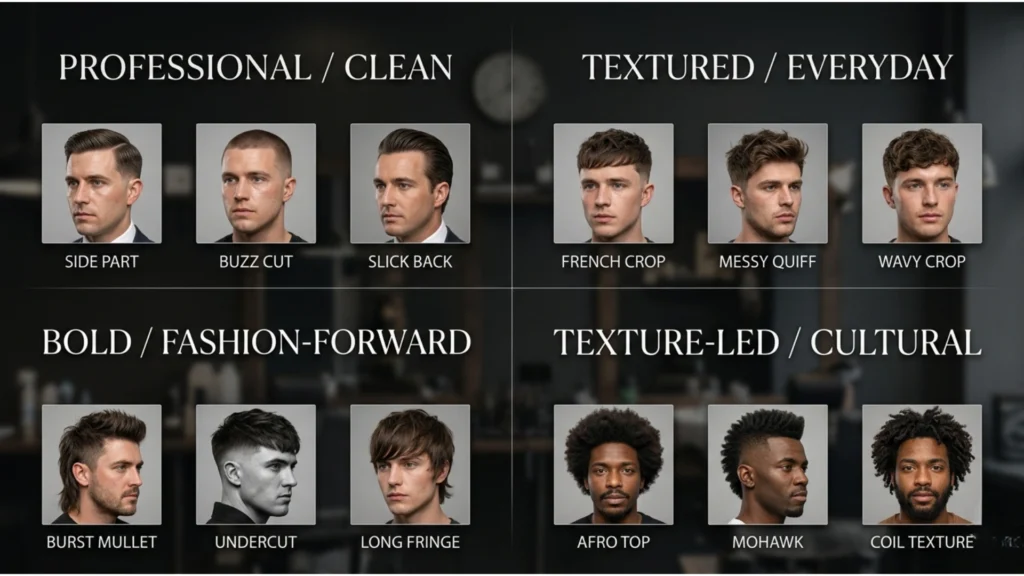
45+ Taper Fade Styles and Combinations
Now that you understand the types, face shapes, and hair textures, here is an inspiration gallery of over 45 specific taper-fade style combinations, organized by pairing. Save the ones that match your profile and show them to your barber.
Low Taper Fade + Textured Fringe
A forward-styled, choppy fringe sitting over a low taper fade is one of the most wearable everyday combinations. The textured, piece-y movement of the fringe adds casual energy while the low fade keeps the sides clean and structured. This style works with minimal morning effort. A dime-sized amount of matte paste worked through towel-dried hair is all it takes.
Best for: Oval and rectangular faces, wavy and thick hair, casual everyday wear
Low Taper Fade + Side Part
The classic side part paired with a low taper fade is modern professionalism in its purest form. The natural part line adds structure and direction, while the low fade sharpens the perimeter without being aggressive. This is the style that transitions seamlessly from the office to dinner.
Best for: All face shapes, corporate environments, straight or wavy hair
Low Taper Fade + Curly Top
Full, defined curls on top contrasted with a clean low fade on the sides this is the combination that dominates Instagram barbershop feeds for good reason. The rounded shape of the curls adds natural height and movement. Enhanced with curl-defining cream or mousse for a soft, voluminous finish.
Best for: Curly hair (Type 3A–3C), round and oval faces
Low Taper Fade + Beard Blend
The low taper fade transitions seamlessly into a full beard, creating a continuous gradient from hair to facial hair without a hard line. The low placement ensures a smooth, natural sideburn-to-beard connection. This requires a barber who understands both hair fading and beard shaping.
Best for: Men with full beards, square and oval faces
Mid Taper Fade + Pompadour
The pompadour’s volume, paired with a mid taper fade creates dramatic vertical emphasis height on top, clean structure on the sides. Blow-dry back and upward for maximum lift, then set the shape with a medium-hold pomade or molding paste.
Best for: Round faces (adds significant height), thick straight or wavy hair
Mid Taper Fade + French Crop
The French crop’s forward-pushed, textured fringe meets a mid-fade for a sharp, European-inspired look. The contrast between the structured fringe and the clean mid fade creates a modern silhouette that looks intentional without being overdone. Finish with texture clay for matte definition.
Best for: Oval and square faces, all hair types
Mid Taper Fade + Comb Over
A classic comb over updated with a mid taper fade bridges traditional and contemporary grooming. The side-swept top adds sophistication while the mid fade provides a modern edge that the standard comb over lacks.
Best for: Professional settings, straight or wavy hair, oval and oblong faces
Mid Taper Fade + Faux Hawk
The faux hawk’s central ridge of height paired with a mid taper fade delivers attitude with structure. Less extreme than a full mohawk but equally attention-grabbing, this combination works for men who want to stand out without going all-in.
Best for: Oval and diamond faces, thick hair, younger demographics
High Taper Fade + Quiff
The quiff’s lifted front, combined with a high taper fade, is one of the boldest standard taper fade styles. The high fade removes nearly all side weight, directing every ounce of visual focus to the voluminous, swept-back top. This is a head-turner.
Best for: Round and oval faces, thick hair, fashion-forward contexts
High Taper Fade + Buzz Cut
Minimal length on top meets a dramatic high fade on the sides. This is the ultimate low-effort, high-impact combination: ultra-clean, universally sharp, and requires virtually no daily styling. Just wake up and go.
Best for: All face shapes (especially square and oval), active lifestyles, hot climates, and athletes
High Taper Fade + Slick Back
Slicked-back hair with a high taper fade creates a powerful, confident silhouette. The extreme side contrast makes the top appear even more voluminous and the overall look more polished. Use a high-shine pomade for the classic wet look or a matte paste for a modern, drier finish.
Best for: Oval and square faces, straight or wavy hair, formal events
High Taper Fade + Textured Crop
Short, textured top hair with a high taper fade creates an athletic, modern look that is trending heavily in 2026. The layered texture adds movement without needing significant length, and the high fade provides structural sharpness.
Best for: Round and diamond faces, all hair types, active men
Skin Taper Fade + Afro Top
A skin taper fade beneath a full, shaped afro creates one of the highest-contrast combinations in men’s barbering. The bare skin on the sides makes the afro volume on top look even more prominent and sculptural.
Best for: Coily and afro-textured hair (Type 4A–4C), round and oval faces
Skin Taper Fade + 360 Waves
360 waves on top paired with a skin taper fade on the sides is a classic combination deeply rooted in Black barbering culture. The wave pattern provides mesmerizing visual texture against the clean, bald sides. Maintain with wave cream, a medium brush, and a durag overnight.
Best for: Coily hair, men who maintain a disciplined wave routine
Burst Taper Fade + Mullet
The burst fade’s semicircular arc around the ears combined with a longer back creates the modern mullet — arguably the most polarizing and most talked-about hairstyle of 2026. Sharp in the front, flow in the back. Tousled volume and a textured fringe on top keep it fresh.
The burst fade mullet is one of the most talked-about fade ideas right now, with bold, dramatic appeal.
Best for: Bold, trend-setting personalities, medium to thick hair
Burst Taper Fade + Mohawk
A central strip of height with the burst fade’s curved arc on each side. More dramatic than a faux hawk, this style demands attention and precision from both the barber and the wearer.
Best for: Diamond and oval faces, thick hair, adventurous style preferences
Drop Taper Fade + Natural Curls
The drop fade’s curved line follows the head shape naturally, making it one of the best fade choices for curly hair. The curved transition mirrors the organic shape of the curls rather than cutting against them with a harsh straight line.
Best for: Curly hair (Type 3A–4A), round and heart-shaped faces
Low Taper Fade + Slicked-Back Undercut
A slicked-back top with a low taper fade instead of a harsh undercut line creates a softer, more blended version of the disconnected look. Sophisticated with a modern edge — the taper fade transition adds refinement that a standard undercut lacks.
Best for: Oval and square faces, straight or wavy hair, evening events
Taper Fade + Dreads, Twists, or Braids
Protective styles like dreads, twists, or braids on top paired with a taper fade on the sides create a striking contrast between textured length and clean edges. The fade cleans up the perimeter while the protective style adds personality, cultural expression, and visual depth.
Best for: Coily and afro-textured hair, all face shapes
Taper Fade + Fluffy Textured Volume
Airy, voluminous top hair paired with a clean taper fade creates an appealing softness-meets-sharpness dynamic. The fluffy texture adds youthful energy while the fade provides structure. Popular among teens and young adults in 2026.
Best for: Straight to wavy hair, oval and heart-shaped faces, casual settings
Low Taper Fade + Brushed-Back Flow
Hair blown back with natural movement, not slicked, not stiff, just flowing, paired with a low taper fade. This is the “effortlessly cool” look that social media has popularized. Apply sea salt spray for texture, blow-dry back with your fingers, and finish with a light cream.
Best for: Wavy hair, all face shapes, men who prefer minimal product and relaxed styling
Mid Taper Fade + Spiky Top
Short, texturized spikes on top with a mid taper fade for a youthful, energetic silhouette. The spikes add vertical dimension while the mid fade provides enough contrast to make the style pop.
Best for: Round and square faces, thick straight hair
Taper Fade + Full Beard Integration
This is not just a hairstyle, it is a complete head-and-face system. The taper fade connects through the sideburns into a beard of any length (stubble, short, full, or long). The transition zone between the faded sideburn and the beard line is the make-or-break detail. Your barber needs to blend both seamlessly.
Best for: All face shapes (the beard adds jawline definition), men who maintain their beards regularly
Fringe Crop + Taper Fade
The fringe crop paired with a taper fade gives a youthful but edgy look. The crop on top is kept textured and choppy while the taper fade keeps the sides neat and clean. This is a great choice for men who like low-maintenance hair since the crop style does not require heavy styling every day.
Best for: Oval and round faces, all hair types, daily ease
Blowout Taper Fade
The blowout taper is one of the most talked-about styles right now. It has a bold, dramatic vibe because of the volume on top. The fade is kept lower, blending into the sides, while the top is styled to stand tall and give that blowout effect. Blow-dry upward and outward, then set with a volumizing mousse.
Best for: Round and oval faces, thick or wavy hair, men who want maximum presence
Taper Fade + Messy Fringe
A deliberately tousled, messy fringe falling forward over a clean taper fade. The contrast between the organized sides and the carefree top is the whole point structured rebellion.
Best for: Oval and heart-shaped faces, wavy or straight hair, casual and creative settings
Taper Fade + Flat Top
The flat top is a statement cut that has seen a major resurgence. Paired with a taper fade on the sides, the geometric precision of the flat top becomes even more pronounced. Requires a barber skilled in shaping and a commitment to regular maintenance.
Best for: Coily and afro-textured hair, square and oval faces, bold personal style
Taper Fade + Hard Part (Line Design)
A razor-etched hard part line combined with a taper fade adds an extra element of precision and design. The line creates a clear visual boundary between the top section and the faded sides. Can be straight, curved, or multiple lines for more artistic expression.
Best for: All face shapes, all hair types, men who want a distinctive accent detail
Taper Fade + Color Highlights
Adding color blonde, auburn, honey, platinum, or frosted tips to the top section while keeping the faded sides natural creates a bold, modern look. The taper fade acts as a neutral frame that makes the color pop.
Best for: Fashion-forward men, all face shapes, medium to thick hair that can handle color processing
Taper Fade + Two-Block Cut
Popular in East Asian styling, the two-block haircut paired with a low taper fade creates a fresh, internationally influenced look. The top section is kept longer and styled with volume or texture while the sides and back are neatly faded down. The low taper fade keeps the haircut balanced and clean.
Best for: Straight or wavy hair, all face shapes, K-style influenced aesthetics
Taper Fade for Receding Hairline
A taper fade can actually complement a receding hairline rather than exposing it. A mid-taper fade with a textured crop or forward-styled fringe draws attention to the overall shape of the cut rather than the hairline specifically. The key is keeping enough length and texture on top to create coverage without looking like you are trying to hide anything.
Best for: Men experiencing early-stage hair thinning, all face shapes
Taper Fade for Boys and Teens
The taper fade is one of the most popular haircuts for younger males school-appropriate, low-maintenance, and stylish without being extreme. Low and mid taper fades are the most common choices for this age group, often paired with a textured crop or natural flow on top.
Best for: Ages 8–17, school environments, active lifestyles
Low Taper Fade + Middle Part
A center-parted style with a low taper fade is a clean, symmetrical look that has gained traction through social media and K-pop influence. The middle part adds a relaxed, modern aesthetic while the low fade provides structure on the sides. Best suited for men with symmetrical facial features and oval or diamond-shaped faces.
Best for: Oval and diamond faces, straight or wavy hair, trend-conscious men
Taper Fade + Man Bun Transition
For men growing their hair out, a taper fade on the sides during the transition phase keeps the look intentional rather than unkempt. The faded sides maintain structure while the top grows to tying length.
Best for: Men in the growing-out phase, all face shapes, all hair types
Taper Fade + Natural Flow
Hair is left to fall naturally with minimal product while the taper fade keeps the perimeter clean. This is the “I woke up like this” aesthetic the natural flow style works because the fade does all the structural work so the top does not need to be over-managed.
Best for: Wavy or curly hair, oval faces, men who prefer effortless styling
Mid Taper Fade + Warrior Cut
The warrior cut features swept-back volume with intentional ruggedness. Paired with a mid taper fade, the structure comes from the sides while the top stays bold and slightly untamed. Popular in 2026 as a modern interpretation of traditional masculine styling.
Best for: Diamond and oval faces, thick wavy hair, bold personal style
Taper Fade + Edgar Cut
The Edgar cut characterized by a straight, blunt fringe across the forehead paired with a taper fade creates a clean, angular look that has strong roots in Latino barbering culture. The precision of the straight fringe against the graduated fade creates a high-impact geometric silhouette.
Best for: Oval and square faces, straight or thick hair, men who prefer sharp, defined lines
Taper Fade + Curly Fringe
Short curls styled forward as a fringe over a mid taper fade. The combination adds texture and movement to the front of the face while the fade keeps the profile clean. Works beautifully on Type 2C–3B hair.
Best for: Wavy to curly hair, round and oval faces
High Taper Fade + Design Etching
Combining a high taper fade with geometric patterns, lines, or custom designs etched into the fade zone. This turns the haircut into wearable art. Requires a barber with strong freehand razor skills.
Best for: Creative personalities, all face shapes, statement occasions
Low Taper Fade + Ivy League
The Ivy League a longer crew cut with enough length on top to part or brush to the side, paired with a low taper fade, creates the quintessential American gentleman’s cut updated for 2026. Conservative enough for any boardroom, sharp enough for any evening event.
Best for: All face shapes, all hair types, professional environments
Taper Fade + Disconnected Top
A clear disconnect between the longer top section and the faded sides no blending in the transition zone. The taper fade softens the disconnect slightly compared to a full undercut while still creating the dramatic contrast.
Best for: Fashion-forward environments, thick hair, men who want visible contrast
Taper Fade + Curtain Bangs
Center-parted curtain bangs with a taper fade create a soft, relaxed frame around the face. The longer curtain pieces add width across the forehead, while the fade keeps the sides from getting heavy. This style has crossed over from a primarily K-pop-influenced style to mainstream Western grooming in 2026.
Best for: Heart and diamond faces, straight or wavy hair
Taper Fade + Afro Taper
An afro that is shaped and tapered with a gradual fade around the sides. The afro volume is maintained on top and the sides transition smoothly into the skin. Keeping the afro shaped regularly ensures the silhouette stays rounded and intentional.
Best for: Coily hair (Type 4A–4C), round and oval faces
Mid Taper Fade + Messy Slick Back
A relaxed version of the slicked-back look hair pushed back with fingers rather than a comb, maintaining some texture and movement rather than a flat, plastered finish. The mid taper fade gives the sides enough contrast to make the back-swept top look deliberate.
Best for: Oval and square faces, wavy hair, casual to smart-casual settings
Taper Fade + Crew Cut
A classic crew cut with tapered, faded sides is one of the cleanest, lowest-effort styles available. The slightly longer front that tapers to shorter at the crown provides just enough shape to feel styled without requiring products or tools.
Best for: All face shapes, active lifestyles, minimalist grooming preferences
How to Ask Your Barber for a Taper Fade
Getting the taper fade you actually want starts long before the clippers turn on. It starts with preparation and clear communication. The most common reason men walk out disappointed is not a bad barber, it is a communication breakdown between what the client envisioned and what the barber understood.
Here is how to make sure you and your barber are on the same page every single time.
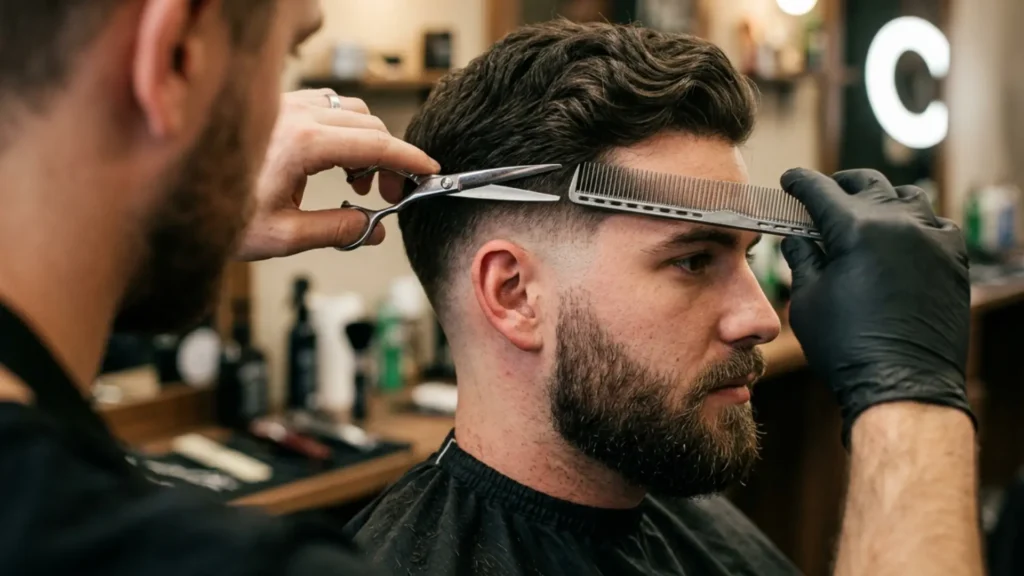
Before Your Appointment: Preparation Checklist
- Save 2–3 reference photos from multiple angles front, side, and back. Photos are the single most effective communication tool you can bring. Even the best verbal description can be interpreted differently; a photo eliminates guesswork.
- Know your three key decisions before you sit down:
- Fade height — low, mid, or high?
- Bottom finish — skin (razor/bald), shadow (#0.5), or a specific guard number?
- Top style — what do you want on top? Length, texture, direction?
- Consider your maintenance tolerance — be honest with your barber about how often you realistically visit. If you only come every 4 weeks, a skin high taper fade is not the right choice because it will look grown out within 10 days.
- If it is a new barber, check their social media portfolio or ask to see examples of their taper-fade work, especially for your hair type.
The Taper Fade Request Script
These are ready-to-use scripts. Adjust the bracketed portions to match your preference.
Script 1 — Low Taper Fade: “I would like a low taper fade. Start the blend just above my ears and fade to skin at the neckline. Keep the top at [X inches / current length / specific style name]. I want a natural, tapered neckline — not blocked. Clean line-up at the front.”
Script 2 — Mid Taper Fade: “Can I get a mid taper fade? Start the fade around my temple area, and go to the skin at the bottom. On top, I want [style]. Keep a good contrast between the sides and top.”
Script 3 — High Taper Fade: “I want a high taper fade, start the blend about two inches above my ears, fade to skin. Keep the top [style]. I want a strong contrast. Sharp line-up.”
Script 4 — Taper Fade with Beard: “I would like a [low/mid/high] taper fade that blends into my beard. Can you connect the fade through my sideburns into my beard line? I want a smooth transition, no hard line between the hair and beard.”
Script 5 — Skin Taper Fade: “I want a skin taper fade blend that gradually blends from the top but takes it all the way to bare skin at the bottom. Razor-clean edges.”
Pro Tip: After the barber finishes but before you leave the chair, check the cut from all angles using the hand mirror. If something needs adjustment, now is the time not after you get home.
Key Terminology Your Barber Understands
Knowing these terms helps you speak your barber’s language:
- Blend point — where the maximum hair length transitions into the tapered/faded section
- Guard number — the clipper attachment size (#0 = 1/16 inch, closest to skin; #4 = ½ inch, longest standard guard)
- Line-up / shape-up — razor-defined hairline at the forehead, temples, and sideburns
- Tapered neckline — gradually narrows to a natural point at the back (versus blocked = straight horizontal line)
- Shadow fade — fade stops just short of skin, leaving a very faint shadow of hair rather than going completely bald
- Lever open / lever closed — a setting on the clipper that adjusts the blade to cut slightly longer (open) or shorter (closed) between guard sizes
- Disconnect — no blending between top and sides; a visible line separates them (the opposite of what you want in a taper fade)
Communication Mistakes That Lead to the Wrong Cut
- Saying “just give me a fade” without specifying height, bottom length, or top style — this leaves everything to interpretation
- Forgetting to mention the top — the fade is only the sides and back; you also need to tell the barber what you want on top
- Saying “short on the sides” without being specific — “short” means #1 guard to one barber and #3 to another
- Not mentioning your neckline preference — blocked, tapered, and rounded necklines all look different
- Assuming all barbers define “taper fade” identically — terminology varies by region, training, and shop culture. Photos solve this instantly.
Every mistake on that list disappears when you walk in with a Barber-Ready Brief. TaperMatch generates one from your face scan’s exact guard numbers, blend point, neckline preference, and a verbatim phrase to read aloud at the chair.
How to Maintain Your Taper Fade Between Barber Visits
A great taper fade looks its sharpest the day you get it. After that, maintenance determines whether it still looks intentional at week two or messy at week one. Here is how to keep yours crisp for as long as possible.
Maintenance Schedule by Taper Fade Type
| Taper Fade Type | Optimal Touch-Up | Maximum Before Reshape | Why |
|---|---|---|---|
| Low taper fade | 3–4 weeks | 5 weeks | Grows out naturally and gracefully |
| Mid taper fade | 2–3 weeks | 4 weeks | Moderate grow-out visibility |
| High taper fade | Every 2 weeks | 3 weeks | Noticeable contrast line appears quickly |
| Skin taper fade | Weekly to 10 days | 2 weeks | Skin regrowth is immediately visible |
Tip: Book your next appointment before you leave the barbershop. This keeps you on schedule and ensures you get your preferred time slot.
Daily At-Home Care Routine
- Brushing or combing daily fades look clean because they are controlled. A soft brush or wide-tooth comb keeps the top section neat and distributes natural oils evenly.
- Moisturize your scalp and hair, especially important with skin fades or very short cuts where the scalp is exposed. A lightweight moisturizer or leave-in conditioner prevents dryness and flaking that makes the fade look unkempt.
- Use the right product, the right way — matte clay for natural texture, pomade for shine and control, sea salt spray for volume without greasiness. Start with a small amount (pea- to dime-sized), warm it between your palms, and work it through from back to front.
- Protect your hair at night — a satin or silk pillowcase reduces friction and prevents breakage that degrades the fade shape over time. For curly and coily hair, a silk bonnet or durag offers even more protection.
What You CAN Touch Up at Home vs. What You Should Not
Safe to do yourself:
- Remove obvious stray hairs at the back of the neck
- Sharpen sideburns with a precision trimmer
- Clean up stray hairs around the ears
Do NOT attempt at home:
- Blending or fading even experienced barbers use mirrors, guards, and angles that are extremely difficult to replicate on yourself. One wrong pass can create a visible line that only a professional reset can fix.
- Raising or reshaping the neckline — once you cut too high, it is irreversible without a full reset from your barber.
- Fixing uneven spots — attempting self-corrections often makes the problem worse.
Products That Extend Your Fade’s Lifespan
- Quality shampoo and conditioner suited to your hair type washing 2–3 times per week removes excess oil and product buildup without stripping natural moisture
- Leave-in conditioner keeps the hair between washes hydrated, manageable, and easier to style
- Blow-dryer using a blow dryer on medium heat to style the hair in the direction of the fade adds polish, volume, and a more intentional appearance
Fact: Over-washing hair (daily with harsh shampoo) strips natural oils and accelerates the dry, unkempt appearance that makes fades look grown out faster. Most hair types do best with 2–3 washes per week.
Why Taper Fades Are Dominating in 2026
The taper fade has been a staple of men’s barbering for decades, but its current popularity is at an all-time high and the reasons go beyond just looking good.
Social media amplified the style explosively. Barber showcase reels on TikTok and Instagram turned the taper fade into visual entertainment. Before-and-after transformation videos regularly rack up millions of views, exposing the style to audiences who may never have set foot in a traditional barbershop. The viral “low taper fade” meme that originated on Twitch and spread across TikTok in 2024 introduced the haircut to an entire generation of young men as a cultural reference point.
Celebrity influence keeps it relevant. Athletes, musicians, and actors across every genre have made specific taper fade variations part of their public identity. When tens of millions of people see the same clean, faded silhouette on their favorite players and performers week after week, it normalizes the style as a default rather than a trend.
The taper fade’s versatility matches modern life. Men in 2026 need haircuts that work in multiple contexts Zoom calls, gym sessions, date nights, office meetings. The taper fade adapts to all of these without requiring a different hairstyle for each. A low taper fade with a textured top is as appropriate in a startup office as it is at a rooftop bar.
2026 innovations include:
- Hybrid tapers — blending two or more taper heights into one seamless cut for a customized, less template-driven look
- Sustainable tapers — designed to grow out cleanly over 3–4 weeks, reducing the need for frequent barber visits
- Textured and wave tapers — emphasizing natural hair texture and movement rather than fighting against it
- Burst fade mullets — sharp in the front, flow in the back, with the burst taper’s curved arc creating a signature shape around the ears
Frequently Asked Questions
What is a taper fade haircut?
A taper fade haircut is a men’s hairstyle in which the hair gradually shortens from a longer length on top, blending smoothly into a fade that reaches bare skin at the neckline and around the ears. It merges the subtle graduation of a taper with the sharp, clean finish of a fade, creating a progressive gradient that is cleaner than a standard taper but less aggressive than a full skin fade.
Is a taper fade good for professional settings?
Yes. The taper fade, especially the low taper fade, is widely considered appropriate for corporate and professional environments. It maintains a clean, structured appearance while looking modern and well-groomed. The low variation in particular offers a conservative enough silhouette that it reads as polished in banking, law, consulting, or any other formal workplace.
How often should I get a taper fade touched up?
It depends on the type. A low taper fade stays sharp for 3–4 weeks. A mid-taper fade needs attention every 2–3 weeks. A high taper fade looks best with visits every 2 weeks. A skin taper fade requires the most frequent upkeep weekly to every 10 days because skin regrowth is immediately visible.
Can I get a taper fade with curly hair?
Curly hair is actually one of the best textures for a taper fade. The natural volume and texture of curls on top create a striking contrast with clean, faded sides. A textured taper fade with a curly top adds volume and movement, and the gradual fade on the sides enhances the clean, sharp look. Mid- and low-taper fades tend to work best because they let the curls shine without removing too much side volume.
What is the difference between a taper fade and a skin fade?
A taper fade transitions gradually from longer hair to skin, maintaining a visible, progressive gradient through most of the cut. A skin fade goes directly to bare skin and the transition can be more abrupt. The taper fade is the more graduated, subtler version the graduation above the skin line is what distinguishes it from a standard skin fade.
Which taper fade is best for a round face?
A high taper fade or mid taper fade works best for round faces. Shaving the hair close on the sides removes bulk, slims the face, and creates a sense of length. Pair it with a higher top style like a pompadour or textured quiff to stretch out the facial structure. A low taper adds too much weight to the sides, working against the goal of elongation.
What should I tell my barber to get a taper fade?
Be specific about three things: (1) the height low, mid, or high; (2) the bottom finish skin, shadow, or a specific guard number; (3) what you want on top the style, length, and texture. Bring 2–3 reference photos showing the style from multiple angles. Specify your neckline preference (tapered, blocked, or rounded) and whether you want a line-up at the front.
Does a taper fade work with a beard?
Yes a taper fade paired with a beard is one of the most popular combinations in modern men’s grooming. The key is having your barber blend the taper fade through the sideburns into the beard line for a seamless transition. Low and mid taper fades generally connect into beards most smoothly because the gradual transition matches the beard’s natural growth pattern.
What is the lowest maintenance taper fade?
The low taper fade requires the least maintenance. It grows out the most gracefully of all taper fade types and can go 3–4 weeks between cuts without looking messy. The subtle gradient does not create a noticeable harsh line as it grows out unlike high or skin fades, which show growth within days.
Can a taper fade work with a receding hairline?
Yes. A taper fade can actually complement a receding hairline by creating structure around existing hair and balancing proportions. A mid taper fade with a textured crop or forward-styled fringe draws attention to the overall shape of the haircut rather than the hairline specifically. The contrast created by the fade gives the impression of density and intention.