

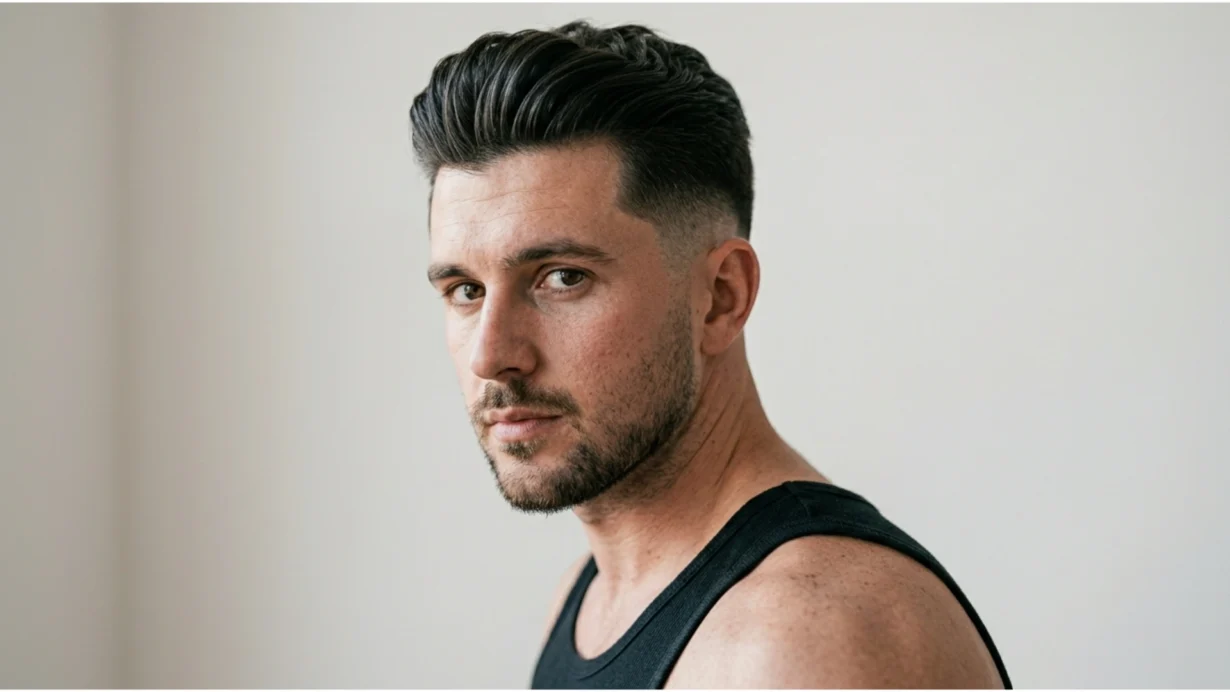

The high taper haircut has dominated men’s grooming trends since 2018. Google searches for this style shot up by 320% as celebrities like Michael B. Jordan and Timothée Chalamet made it a cultural statement. Today, it’s one of the top three most-requested men’s haircuts in barbershops across America.
What makes the high taper so special? It works on every hair type: straight, wavy, curly, or coily. It fits every setting from Wall Street boardrooms to coffee shop hangouts. And it looks sharp on nearly every face shape when done right.
This guide covers everything you need to know about the high taper haircut. You’ll discover 35 different style variations, learn exactly what to say to your barber, find out which styles match your face shape and hair type, and get expert maintenance tips that keep your cut looking fresh between appointments.
What Is a High Taper Haircut, and Who Is It Best For?
A high taper haircut is a men’s cut where the hair gradually shortens starting above the temples, higher up than a low or mid-taper. This creates bold contrast, sharp lines, and vertical height. It works on all hair types and face shapes, making it one of the most versatile cuts in barbershops today.
KEY POINTS:
- Starts above the temples, about 2 inches from the crown
- Best for round, oval, square, and diamond face shapes
- Works on straight, wavy, curly, coily, thick, and fine hair
- Needs a barber visit every 2–3 weeks to stay sharp
- Keeps hair visible throughout, unlike a fade that blends to skin
Table of Contents
A high taper is one of the sharpest cuts available, but it doesn’t suit every face shape.
The Taper Style Tool checks your face shape and hair type against the high taper’s proportions before you commit to one of the highest-maintenance cuts on this list.
High Taper Haircut vs High Taper Fade: What’s the Difference?
Here’s where things get confusing. Many people, including some barbers, use “taper” and “fade” as if they mean the same thing. They don’t.
A high taper haircut gradually shortens hair from above the temples down to the neckline, while keeping hair visible throughout. A high taper fade blends the hair down to the skin, exposing the scalp at the lowest point for a more dramatic, high-contrast finish.
Let’s break down the key differences:
| Feature | High Taper Haircut | High Taper Fade |
|---|---|---|
| Skin Exposure | No—retains hair at all points | Yes—blends to skin at neckline/sides |
| Contrast Level | Moderate to bold | Very bold, dramatic |
| Maintenance Frequency | Every 3–4 weeks | Every 2–3 weeks |
| Visual Effect | Clean outline, conservative edge | Design statement, fashion-forward |
| Professional Setting | Universally appropriate | Appropriate but bolder |
Think of it this way: a taper is like turning down the volume gradually. A fade is like hitting the mute button at the bottom of the hair disappears completely into your skin.
Understanding High Taper Placement: Sides, Back & All Around
This is the section that almost nobody talks about. But understanding where the taper happens on your head is crucial for getting the exact look you want.
What Does “High Taper on the Sides” Mean?
The sides are the main event in a high taper. They’re the area from your temples down to above your ears.
Here’s what happens on the sides:
The high taper begins its blend above the temples. This creates that signature vertical height and sharp temple definition that makes the cut so recognizable.
Visual Effect: This high starting point elongates your face and draws the eye upward. If you have a round face, this is your secret weapon. It makes your face appear longer and more defined instead of wider.
Tip: When you’re at the barber, ask them to start the taper “high at the temples” or “2 inches from the top.” That’s clearer than just saying “high taper” because “high” can mean different things to different barbers.
Comparison: A low taper on the sides starts near your ear. A mid taper starts at the midpoint between your ear and temple. A high taper starts way up near the top—that’s the dramatic difference.
Key Facts:
- Fact: The high taper begins its blend above the temples, creating vertical height and sharp temple definition according to professional barbering technique from Rush Salons)
- Key Point: This high starting point is what makes round faces appear more oval by adding visual length to your face shape.
What Does “High Taper Back” Look Like?
The back of your head matters just as much as the sides even if you can’t see it without a mirror.
The high taper back refers to how the taper behaves at your neckline and nape.
Here’s what you need to know: At the back, the taper can finish in three different ways. Your choice affects how your haircut looks from behind and how it grows out over time.
The Three Neckline Options:
- Tapered Neckline (Natural fade-out): The hair gradually fades into your natural hairline at the neck with no hard edge. This is the most natural-looking option.
- Blocked Neckline (Square-cut edge): Your barber cuts a sharp horizontal line across the back. This creates a very clean, defined look but it also grows out with a visible line that needs frequent touch-ups.
- Rounded Neckline (Curved finish): The neckline follows a gentle arch shape. It’s softer than a blocked neckline but more defined than a tapered one.
Which should you choose?
Tip: Choose a tapered neckline for the neatest grow-out. Since there’s no hard blocking line, your haircut blends naturally into your hairline as it grows. You can go an extra week between cuts without looking sloppy.
Visual Effect: A high taper at the back creates a slimmer-looking neck. It keeps your overall silhouette clean from behind, which matters more than you think—especially in professional photos or video calls.
Barber Communication: Say “tapered neckline” if you want natural grow-out, or “blocked” if you prefer a sharp horizontal line. Don’t assume your barber knows which one you want.
| Neckline Type | Description | Grow-Out Behavior |
|---|---|---|
| Tapered | Natural fade into hairline | Grows out neatly, stays fresh longer |
| Blocked | Sharp horizontal cutoff | Grows out with visible line, needs frequent touch-ups |
| Rounded | Curved arch finish | Moderate grow-out, softer than blocked |
High Taper vs Other Taper Fades: Complete Comparison
Let’s clear up the confusion once and for all. Here’s how the high taper stacks up against every other taper and fade variation.
High Taper vs Low Taper Fade
When comparing high taper vs low taper, the difference lies in where the taper begins. A high taper starts above the temples for bold contrast and vertical height, while a low taper starts just above the ears near the neckline for a subtle, conservative, polished look.
| Feature | High Taper | Low Taper |
|---|---|---|
| Starting Point | Above temples, 2 inches from crown | Just above ears, near neckline |
| Contrast Level | Bold, dramatic | Subtle, conservative |
| Face Elongation | Yes—adds vertical height | Minimal |
| Professional Suitability | Both corporate & casual | Universally safe, traditional |
| Maintenance | Every 2–3 weeks | Every 3–4 weeks |
Fact: Low tapers are applied to the bottom of the hairline; high tapers start near the crown, creating a height difference of approximately 2–3 inches (illustrated by barber measurement standards from Forte Series).
Tip: Choose a high taper if you have a round face and want to elongate it. Choose a low taper if you prefer minimal change and maximum versatility.
High Taper vs Mid Taper Fade
A mid-taper fade strikes a clean balance between the boldness of a high taper and the subtlety of a low taper, starting around the temples.
| Feature | High Taper | Mid Taper |
|---|---|---|
| Starting Point | Above temples | Midway between ears and temples |
| Contrast | Maximum | Balanced—middle ground |
| Best For | Bold statements, round/square faces | Versatile—suits all face shapes |
Fact: Mid tapers are the most requested taper type in US barbershops because they offer versatility without extreme contrast (barbershop trend data from Men Deserve)
Tip: If you’re unsure which taper height to choose, start with a mid taper. You can always go higher or lower on your next visit.
High Taper vs High Fade (Skin Fade)
A high fade blends hair down to the skin much higher up the head than a high taper—often reaching near the crown. It’s more extreme.
| Feature | High Taper | High Fade (Skin Fade) |
|---|---|---|
| Skin Exposure | Minimal to none | Significant—blends to scalp |
| Starting Point | Above temples | Can reach near crown |
| Maintenance | Every 2–3 weeks | Every 1–2 weeks |
| Contrast | Bold | Ultra-bold, extreme |
| Best Top Styles | Medium to long tops | Very short tops |
Fact: High fades require touch-ups every 1–2 weeks to maintain sharp skin exposure; high tapers last 2–3 weeks ( men’s grooming terminology from Forte Series)
Tip: If you want maximum drama and don’t mind frequent barber visits, choose a high fade. If you want bold contrast with easier maintenance, choose a high taper.
35 Best High Taper Haircut Styles for Men (2026)
Now for the main event, the style gallery you came here for.
The beauty of a high taper fade lies in its versatility and style combinations. This classic cut provides the perfect foundation for various styles on top. Each offers its own aesthetic and unique look.
From curly tops that burst with texture to sleek pompadours and edgy mohawks, the high taper adapts to your personality, hair type, and lifestyle.
Below are 35 of the best high taper haircut styles for men in 2026, organized by hair type and aesthetic. Find your favorite, save the photo, and show it to your barber.
High Taper Styles for Curly & Coily Hair
1. High Taper Fade Curly Top
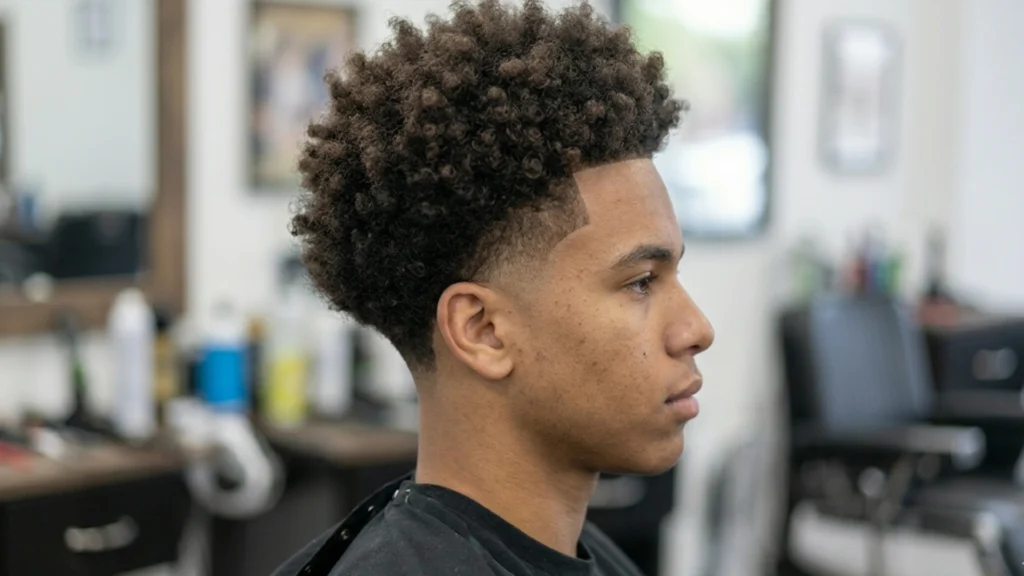
The top stays long and full, allowing natural curls to sit high and wide with bold volume and bounce. The high taper fade cleans up the sides and neckline for fresh, modern contrast.
Best For: Oval, round, and diamond face shapes | Naturally curly or wavy hair
Styling Tip: Apply curl-enhancing cream to damp hair, then air-dry or use a diffuser on low heat to preserve curl definition without frizz.
2. High Taper Fade Afro
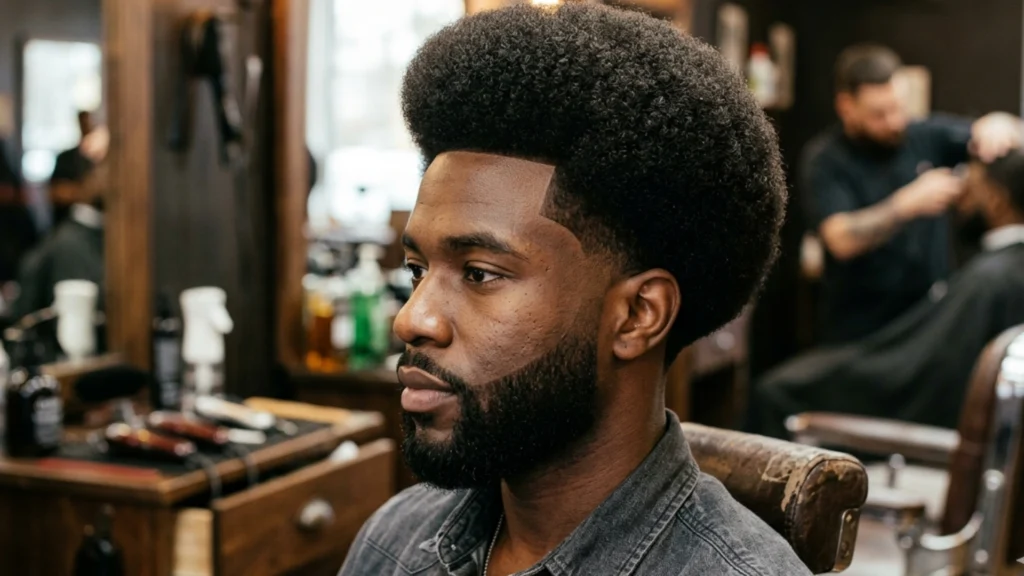
Full, round afro on top with a sharp, high-taper fade that blends into defined edges. Bold volume meets clean precision.
Best For: Round, oval, heart-shaped faces | Coily, Afro-textured hair
Styling Tip: Pick out curls while damp to maximize volume, then shape with your fingers using curl-enhancing cream to reduce frizz.
3. High Taper Fade Waves
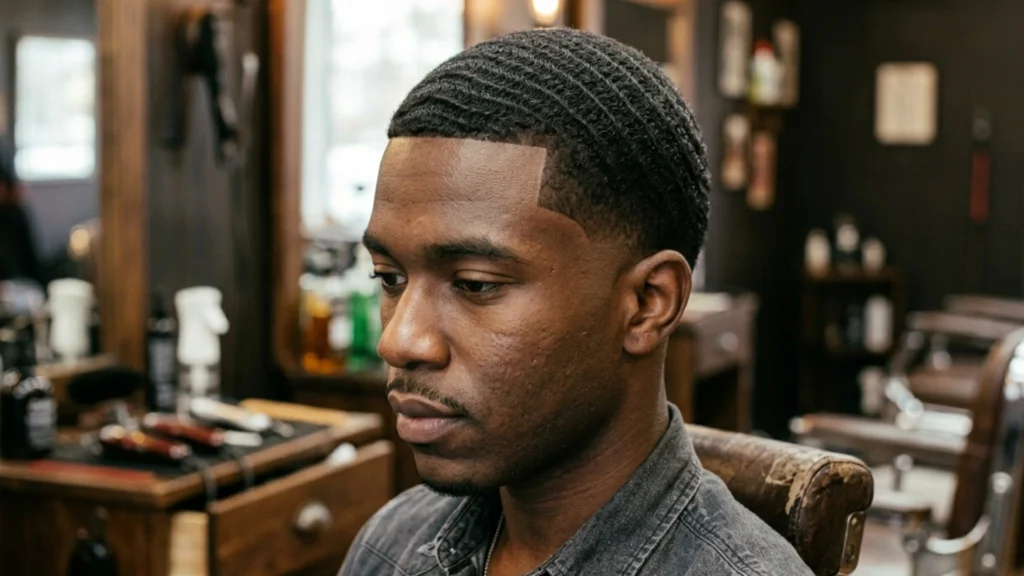
Glossy 360 waves on top, with a tight high fade around the temples and neckline. Smooth texture meets sharp edges.
Best For: Oval, square faces | Naturally wavy hair or trained wave patterns
Styling Tip: Brush daily with a wave brush, apply styling cream, then durag overnight to lock in the wave pattern.
4. High Taper Fade Blowout
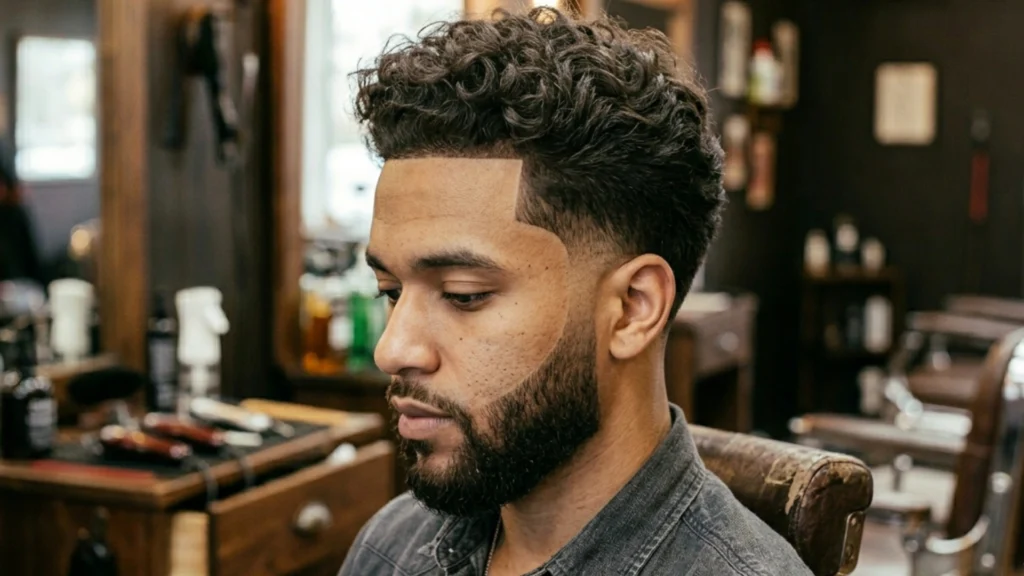
Gravity-defying curls explode with volume at the crown while the high taper keeps sides tight. Controlled chaos aesthetic.
Best For: Oval, round faces | Tight curls or coily hair
Styling Tip: Blow-dry with a diffuser on low heat while scrunching curls upward, then finish with texture clay for hold.
5. High Taper Fade Dreads

Full dreadlocks on top with sharp, high taper around temples and neckline. Bold cultural style with clean edges.
Best For: Oval, diamond, square faces | Locked or loc’d hair
Styling Tip: Keep dreads hydrated with argan oil and maintain the fade every 2 weeks for crisp contrast.
6. High Taper Fade Fluffy Hair
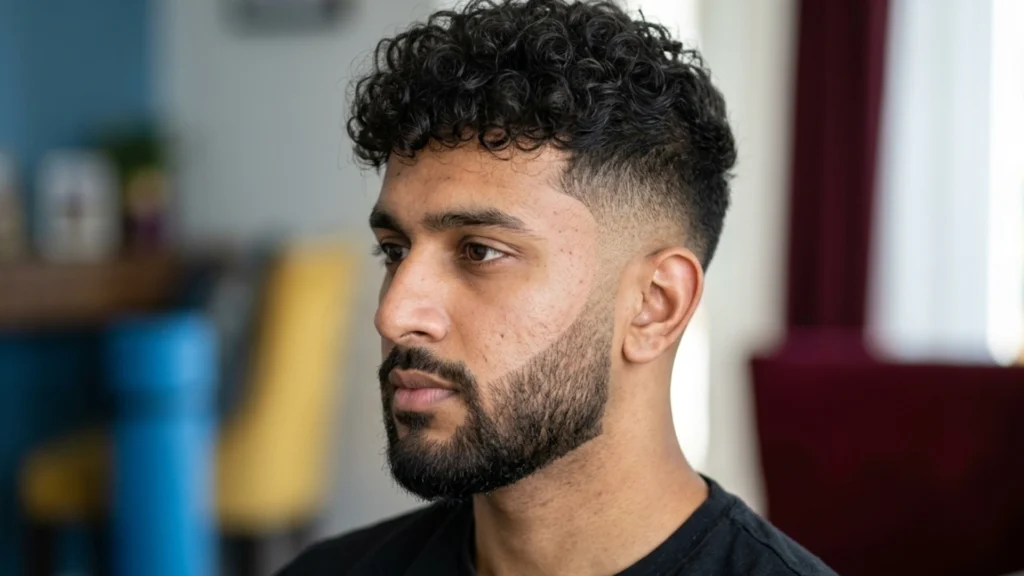
Soft, voluminous curls with airy lift and a clean taper for an approachable yet standout style. The goal is controlled fluff, not bed-head chaos.
Best For: Round, heart, square faces | Naturally curly or wavy hair
Styling Tip: Blow-dry while finger-shaping for volume, apply texture clay without weighing it down, then finish with texture powder for extra lift.
7. High Taper Fade with Textured Fringe (Curly)
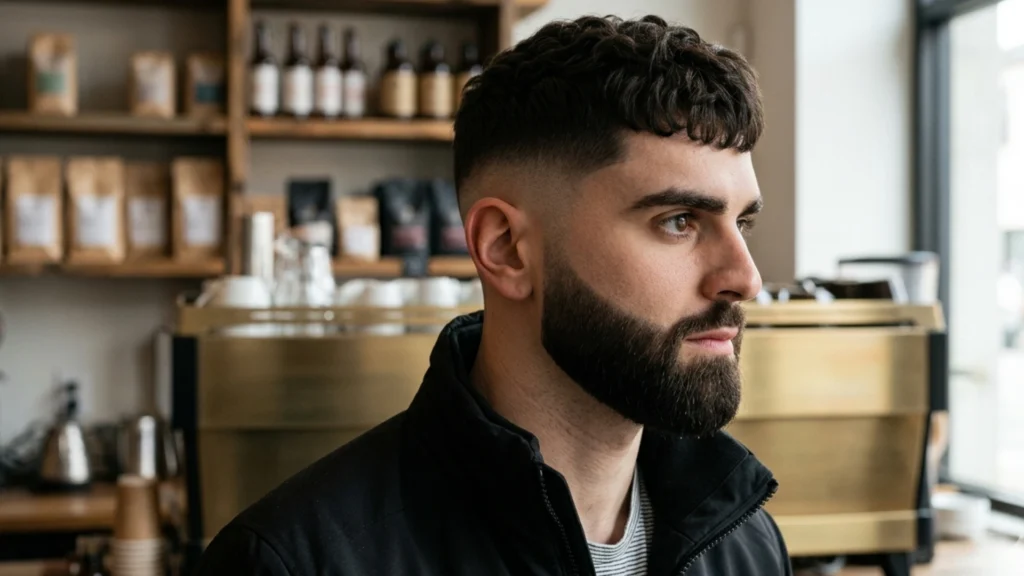
Choppy, curly fringe frames the face, while the high taper fade adds a modern edge and clean structure. This is what the kids are wearing right now.
Best For: Oval, square faces | Curly or wavy hair with natural movement
Styling Tip: Blow-dry fringe forward using texture clay to define curls and separate individual strands for better definition.
8. High Taper Fade Black Male (Classic)
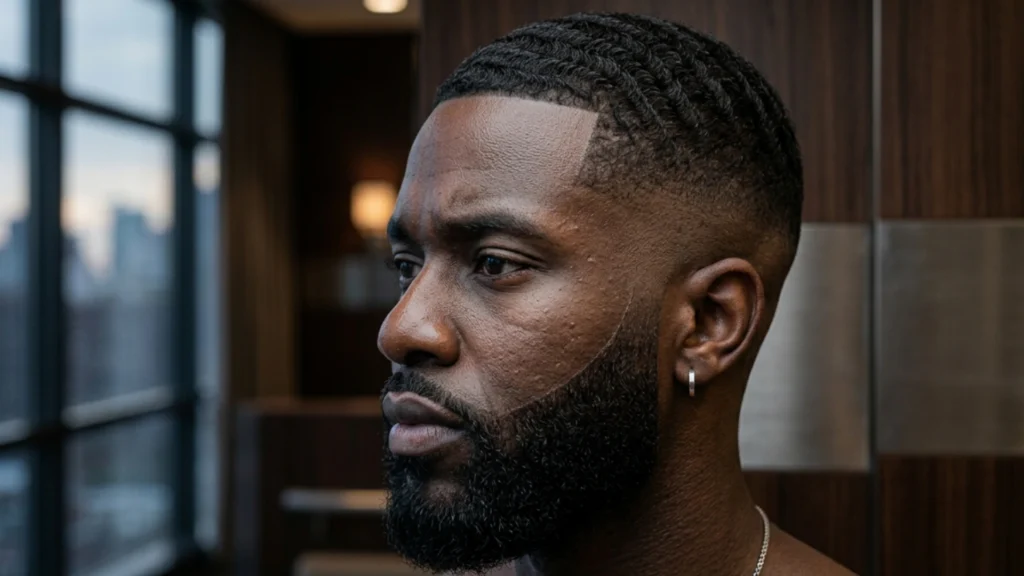
Tightly coiled curls burst with volume and movement while the high taper fade delivers a flawless blend into the skin. This is the definitive modern Black male cut.
Best For: Oval, square faces | Coily, tightly curled hair
Styling Tip: Finger-shape curls using styling cream, then finish with argan oil for a healthy sheen. Don’t use a comb.
High Taper Styles for Straight & Fine Hair
9. High Taper Fade Straight Hair
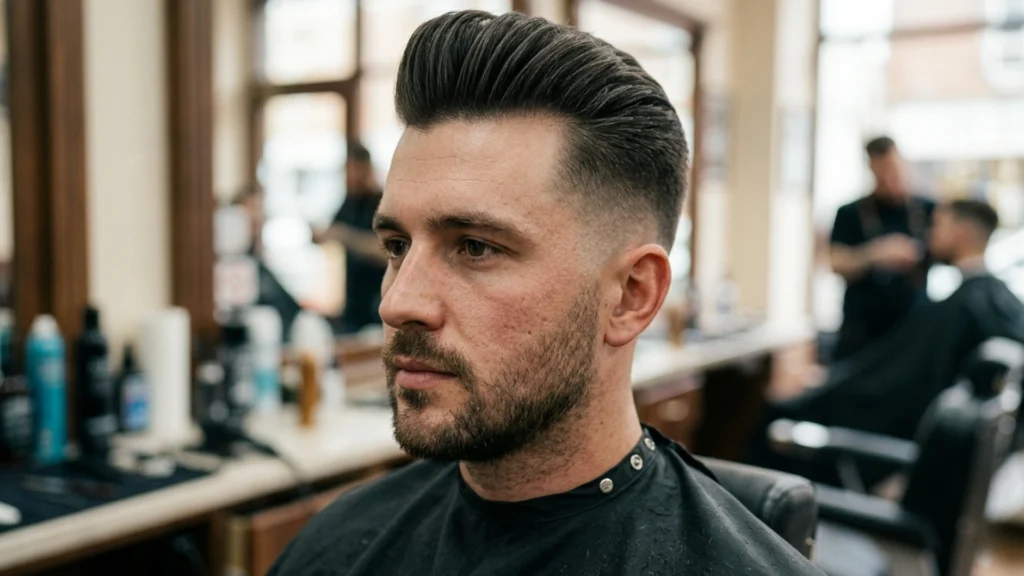
Sleek, high-volume look with a sharp fade and a naturally straight texture, brushed back with smooth lift and flow. The round brush is what creates that lifted, pushed-back look.
Best For: Square, oval faces | Straight hair
Styling Tip: Use texture clay for volume and styling cream for control, then blow-dry with a round brush to shape the top.
10. High Taper Fade Side Part
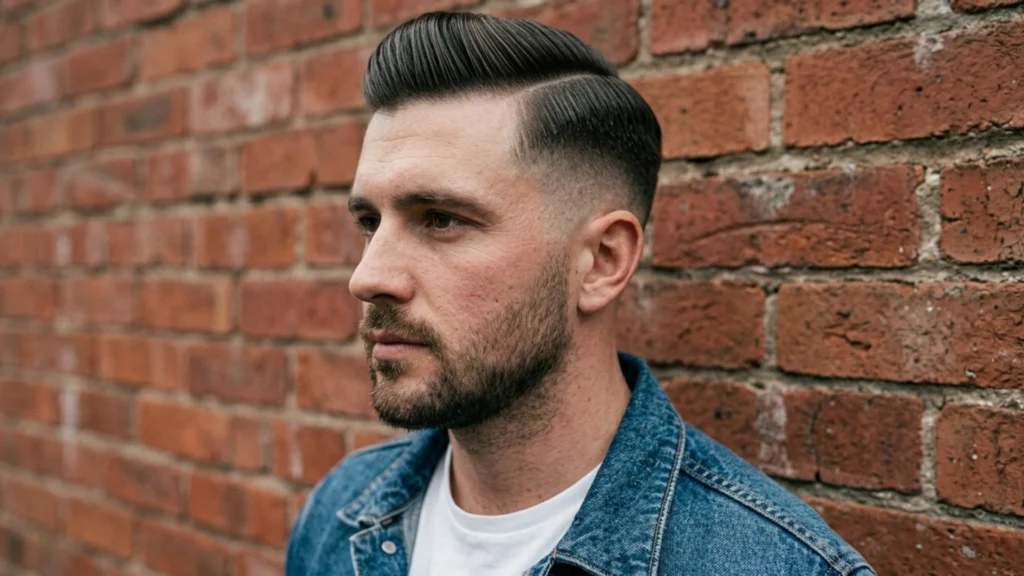
Longer top neatly combed to one side with a clear, sharp part. Very short tapered sides create a confident, structured look.
Best For: All face shapes | Straight or wavy hair
Styling Tip: Blow-dry in the part direction for shape, then finish with pomade for smooth hold and light shine all day.
11. High Taper Fade Slick Back
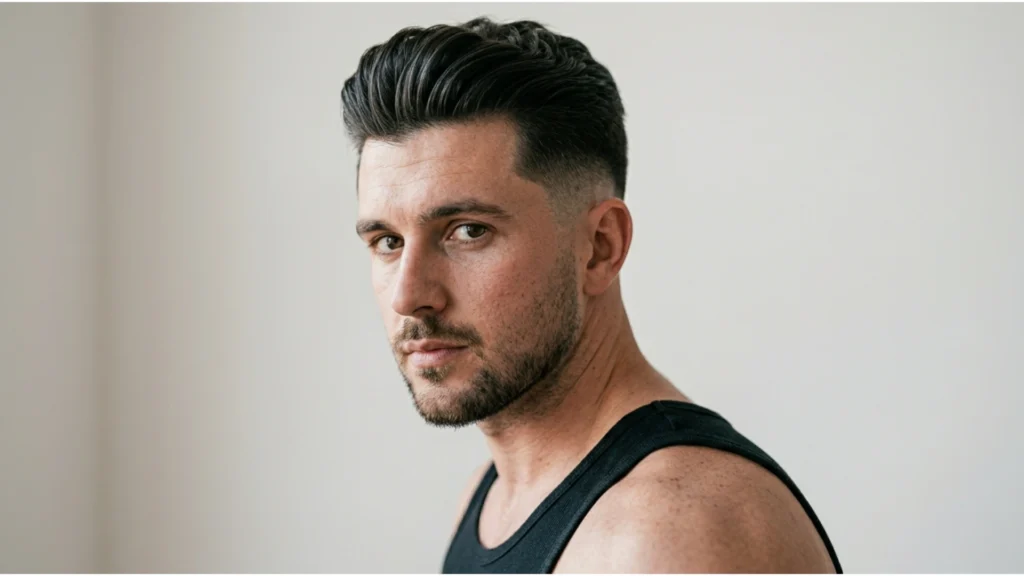
Hair brushed smoothly toward the crown, with high-taper sculpting on the sides and a clean neckline. Effortless flow meets sharp contrast.
Best For: Oval, diamond, rectangular faces | Straight or wavy hair
Styling Tip: Apply styling cream for control, blow-dry backward with a round brush, then finish with texture clay for natural shine.
12. High Taper Fade Comb Over
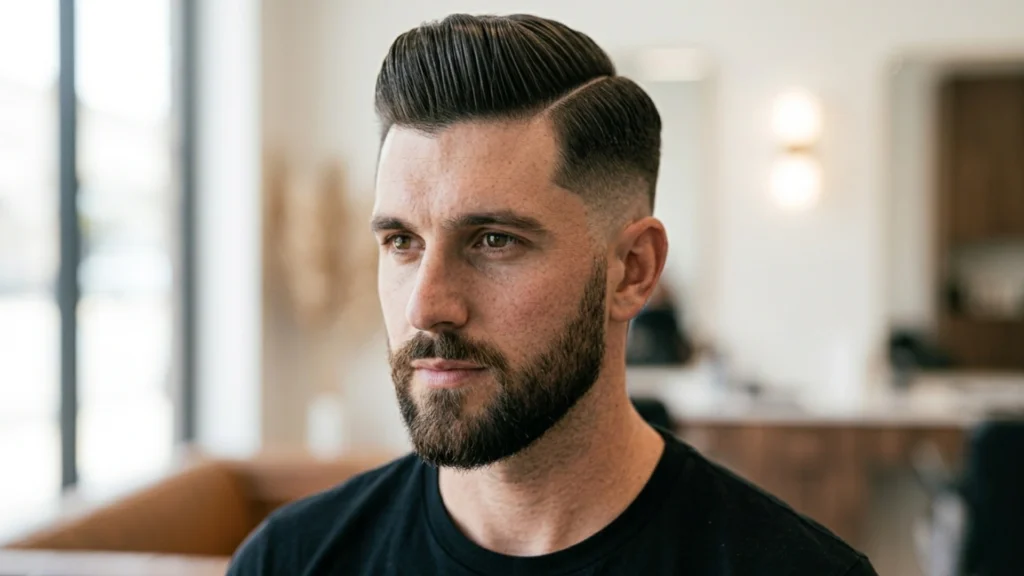
Side-combed top with blow-dried lift, clean separation, and high taper fade, sharpening the silhouette. Timeless class meets bold edge.
Best For: Oval, square, heart-shaped faces | Straight or fine hair
Styling Tip: Use styling cream for structure, then finish with texture powder to boost volume and hold perfectly for fine hair.
13. High Taper Fade Buzz Cut
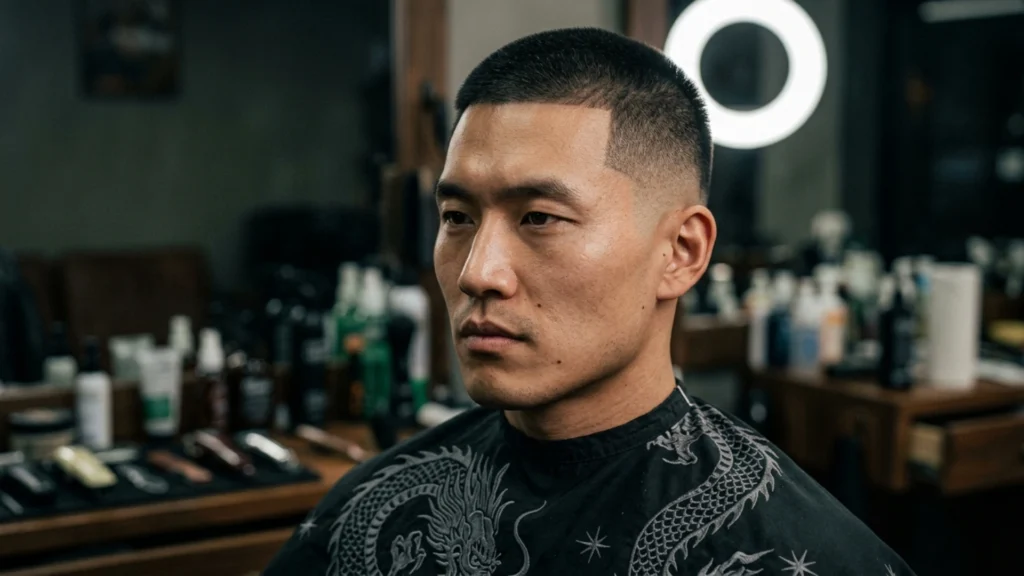
Uniform short top with high-taper fading that seamlessly fades into skin. Clean lines with a sharp, high-contrast finish.
Best For: Square, oval faces | All hair types
Styling Tip: Use molding paste for light control and natural texture even short hair benefits from a little product definition.
14. High Taper Fade Fringe (Straight)
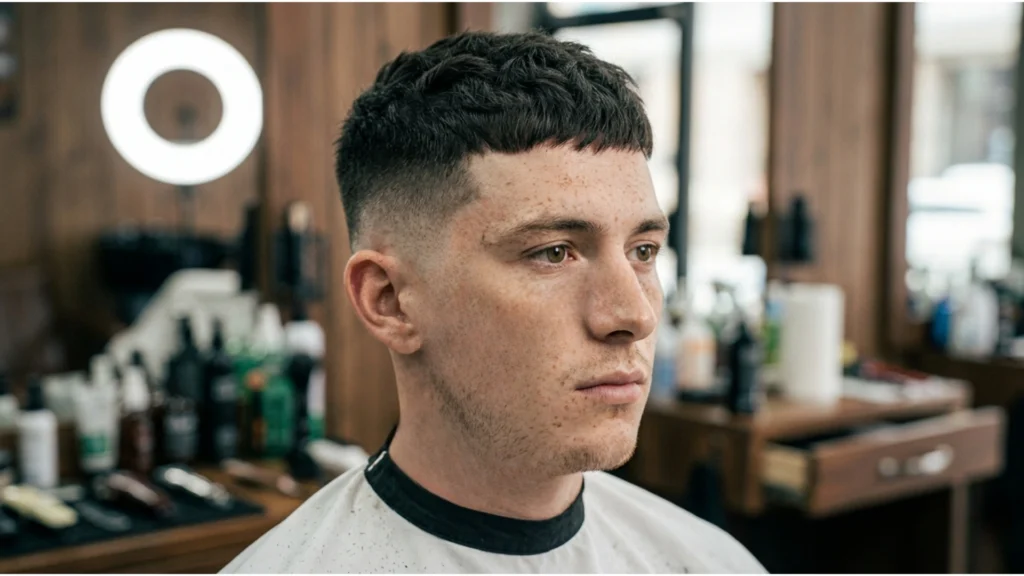
Bold forward fringe with a tousled texture and a clean high taper. Youthful attitude with modern polish.
Best For: Round, oval, diamond faces | Straight or fine hair
Styling Tip: Blow-dry forward, using texture clay to define the fringe, then lock the shape with texture powder for an airy lift.
15. High Taper Fade Blonde
Soft, textured blonde top with skin-tight taper around ears and neckline for clean, modern definition. Blonde hair shows the fade gradient beautifully.
Best For: Oval, square faces | Light-colored or dyed hair
Styling Tip: Use molding paste to define movement while retaining a natural finish, then blow-dry with fingers for a lifted texture.
High Taper Styles with Bold Statements
16. High Taper Fade Mohawk
Longer central strip from front to back stands up with rough texture while very short tapered sides create a bold, edgy shape. This is not a corporate haircut.
Best For: Oval, square faces | Thick or textured hair
Styling Tip: Blow-dry upward, pinch the center with your fingers for lift, then finish with texture clay for a strong grip and matte look.
17. High Taper Fade Mullet
Short tapered sides meet long, voluminous back flow. Sharp contrast meets bold individuality.
Best For: Oval, diamond faces | All hair types
Styling Tip: Use texture clay for hold and definition, finger-shape for a natural finish the back should flow, not stick out awkwardly.
18. High Taper Fade Pompadour
Voluminous quiff swept upward and back with a high fade, creating a clean, defined base. Vintage flair meets modern sharpness.
Best For: Oval, square, rectangular faces | Thick or wavy hair
Styling Tip: Blow-dry with a round brush for lift, then apply pomade for hold and shine. You need at least 4 inches on top.
19. High Taper Fade Quiff
Lifted front with textured volume plus tapered sides for a structured yet natural finish. It’s a young, energetic look.
Best For: All face shapes | Medium-length hair
Styling Tip: Apply styling cream, blow-dry forward and upward, then finish with texture powder the quiff should sweep up and slightly back.
20. High Taper Fade Edgar
Thick, blunt fringe plus sharp high taper fade with textured top. Edgy cut with bold definition and streetwear influence.
Best For: Oval, round faces | Thick straight hair
Styling Tip: Use texture clay for control and separation, finger-style for natural lift the fringe should be blunt and intentional, not wispy.
21. High Taper Fade with Design
Custom razor designs carved into faded edges with full, soft top for styling flexibility. Artistic flair meets youthful energy.
Best For: Oval, diamond faces | All hair types
Styling Tip: Use styling cream to define texture without stiffness, then blow-dry with a diffuser for volume designs fade as hair grows, so refresh every 1–2 weeks.
22. High Taper Fade Asian
Textured top with crisp tapered sides highlighting natural volume around temples. Brings bold contrast and movement.
Best For: Oval, heart-shaped faces | Straight Asian hair texture
Styling Tip: Apply texture clay for grip and separation without weighing hair down, then blow-dry with finger shaping for a windswept effect.
23. High Taper Fade with Beard
Low-texture, precisely lined crop with full, shaped beard creating bold definition and striking contrast. Your beard line should connect seamlessly to the taper.
Best For: Oval, diamond faces | Works with all hair types
Styling Tip: Use styling cream to keep the top smooth and controlled, then finish with molding paste to define edges.
24. High Top Taper Fade
Tall, structured top stands high with a thick, natural texture, while sides fade tightly into the skin. Bold height meets clean definition
.
Best For: Oval, square, round faces | Thick, coily, or curly hair
Styling Tip: Shape the top with a blow-dryer, control frizz using texture clay for firm hold and matte finish. The top should stand at least 3–4 inches tall.
25. High Taper Fade Long Hair
Long top with flow, volume, and movement, plus crisp tapered sides keeping it fresh. Perfect for confident trendsetters.
Best For: Oval, diamond faces | All hair types
Styling Tip: Tie into a man bun or wear loose with control using styling cream to enhance shine and reduce frizz.
High Taper Styles with Texture & Detail
26. Textured High Taper Fade
Tousled, layered volume on top with tight high taper for modern, low-maintenance youthful energy and movement. Don’t comb this style; finger-styling creates better texture.
Best For: Oval, round, diamond faces | Wavy or straight hair
Styling Tip: Apply texture powder for volume, then use styling cream to easily shape curls with your fingers.
27. Short High Taper Fade
Short, even length on top, with a high taper fade that tightens above the ears and neckline. Clean, sharp, low-maintenance.
Best For: Round, diamond faces | All hair types
Styling Tip: Use styling cream for light control or molding paste for a textured edge; even short hair benefits from a little product.
28. High Taper Fade Haircut (Classic)
Bold, sharp style blending high fade into thick, textured top layers with blunt fringe for clean, edgy finish. Works in both casual and semi-professional settings.
Best For: Oval, round faces | Medium to thick hair
Styling Tip: Use texture clay to enhance definition or molding paste for controlled styling.
29. High Taper Fade Crop
Short, textured top with choppy layers and a high taper for a structured yet effortless aesthetic. This is a throw-it-together style that still looks intentional.
Best For: All face shapes | Fine to medium hair
Styling Tip: Apply sea salt spray to damp hair, blow-dry with your hands, then finish with matte clay.
30. High Taper Fade with Braids
Crisp braids on top, with a high-taper fade sharpening the sides and clean, skin-tight gradients. Bold precision meets street-savvy attitude.
Best For: Square, oval faces | Medium to long hair
Styling Tip: Use hydrating argan oil to keep braids healthy, texture clay for neat edges. This is a style with deep cultural roots.
31. High Taper Fade Man Bun
Long hair tied back into a bun with tapered sides, creating contrast between loose top and sharp perimeter. The bun should sit at the crown, not the nape.
Best For: Oval, rectangular faces | Long, thick hair
Styling Tip: Apply styling cream before tying to control flyaways, increasingly accepted in creative industries and tech startups.
32. High Taper with Textured Fringe
Forward-swept choppy fringe with layered movement plus high taper for youthful, edgy vibe. This style exploded on TikTok in 2024–2025.
Best For: Oval, square faces | Fine to medium hair
Styling Tip: Blow-dry forward, use texture clay to sculpt separation and enhance movement, finger-style for a casual tousled vibe.
33. High Taper Fade Spiked
Short spikes on top with high taper creating vertical height and a structured silhouette. Modern versions are subtler and more textured than the frosted-tips era.
Best For: Round faces (adds vertical height) | Short to medium hair
Styling Tip: Apply strong-hold pomade or gel, blow-dry upward while shaping spikes with your fingers. The spikes should be textured, not rigid.
34. High Taper Fade Brushed Forward
Top brushed toward forehead with textured layers plus high taper for a modern Caesar-inspired look. Minimizes the appearance of thinning or receding temples.
Best For: Receding hairlines (draws focus forward) | All face shapes
Styling Tip: Blow-dry forward with a vent brush, apply molding paste for hold.
35. High Taper Business Professional
Conservative length on top with subtle texture, high taper kept tight and polished. Maximum workplace professionalism.
Best For: All face shapes | Corporate environments
Styling Tip: Use lightweight pomade for natural shine and hold without stiffness ideal for law firms, finance, consulting, and traditional corporate roles.
With so many ways to wear a high taper, the hardest part is picking the right one. You can use TaperMatch to scan your facial geometry and hair texture it’ll narrow these 35 styles down to the top 3 that actually fit your structure.
How to Choose the Right High Taper Haircut for You
The high taper works with nearly every face shape and hair type, but because it starts higher than a low or mid taper above the temples, about 2 inches from the crown it creates bold contrast and sharp visual lines. Certain variations can make the cut even more flattering for your specific features.
Here’s the breakdown by face shape and hair type.
Which Face Shape Suits a High Taper Best?
High Taper for Round Face
Round faces are wider, with fuller cheeks and less defined jawlines. The high taper is actually one of the best cuts for round faces because the high starting point adds vertical height and sharp angles, making your face appear longer and more defined.
Recommended styles: Pompadour, quiff, textured crop with height, curly top, afro, high top.
Styling tip: Blow-dry your hair upward and backward to create maximum lift. Use volumizing mousse before blow-drying and texture powder at the roots for extra height that lasts all day.
High Taper for Oval Face
Oval faces are naturally balanced and symmetrical. You can wear any high taper variation—the cut complements your proportions without needing to compensate for width or length. You have total freedom to experiment.
Recommended styles: Literally anything textured crop, quiff, slick back, side part, curly top, pompadour, buzz cut, fringe, mohawk.
Styling tip: Use the high taper to highlight your natural symmetry. Try different top styles to match your personality. Oval faces handle both bold and understated equally well.
High Taper for Square Face
Square faces have strong, angular features, a wide jaw, a broad forehead, and defined cheekbones. A high taper highlights that natural structure. Pair it with a beard to soften strong jawlines and create facial harmony.
Recommended styles: High taper with beard, textured crop, wavy styles, messy fringe, slick-back, side-part.
Styling tip: Use medium-hold pomade or matte clay depending on your desired finish. A high taper with a well-groomed beard is especially powerful on square faces. The seamless fade-to-beard blend creates a structured, masculine frame.
High Taper for Heart-Shaped Face
Heart-shaped faces are wider at the forehead and narrower at the chin. The goal is to balance those proportions by keeping the volume on top moderate and avoiding excessive width at the forehead.
Recommended styles: Textured fringe, side part, quiff (moderate height), textured crop, French crop.
Styling tip: Keep the top moderate in height and focus volume toward the crown rather than the front. A textured fringe works especially well because it covers part of the forehead and naturally balances proportions.
High Taper for Diamond Face
Diamond faces have prominent cheekbones, a narrower forehead, and a narrower chin. The high taper adds definition around temples and frames your best feature, those cheekbones.
Recommended styles: Curly top, textured fringe, pompadour, quiff, slick back.
Styling tip: Use medium-hold products and keep the styling natural with some movement. Textured tops work better than rigidly structured styles; the movement softens angular features.
High Taper for Rectangular/Oblong Face
Rectangular faces are longer than they are wide. Avoid adding extra height on top, as it can make your face look even longer.
Recommended styles: Textured fringe, short crop, buzz cut, French crop, side-swept hair, short wavy styles.
Styling tip: Avoid pompadours or tall quiffs. Keep styling relaxed with horizontal flow. A fringe that covers part of the forehead can visually shorten the face and create better proportions.
If you’re having trouble identifying your face shape in the mirror, let our grooming intelligence platform handle it. It uses a structural biometric scan to map your jawline and symmetry, ensuring your taper height is face-optimized.
High Taper for Different Hair Types
Your hair type determines how your high taper looks, grows out, and styles. Here’s how the high taper works with each texture.
High Taper for Straight Hair
Straight hair gives the cleanest, sharpest high taper results. The blend is visible, lines are crisp, and the contrast between the longer top and faded sides is very clear.
What works well: Slick back, side part, comb over, fringe, buzz cut, textured crop, French crop.
Products to use: Lightweight pomade for sleek looks, matte clay for texture, styling cream for natural hold.
Styling tip: Straight hair holds shape well with minimal product. Start with a dime-sized amount; over-applying makes straight hair look greasy fast.
High Taper for Curly Hair
Curly hair with a high taper is one of the most popular combinations right now. The high taper removes bulk from the sides, letting your natural curl pattern shine on top.
What works well: Curly top, afro, blowout, textured fringe, curly quiff.
Products to use: Curl cream, curl-enhancing cream, leave-in conditioner, diffuser, and argan oil.
Styling tip: Apply curl cream to soaking wet hair right after washing. Scrunch upward with your fingers, then air-dry or use a diffuser on low heat. Once dry, don’t touch them; that’s when frizz happens.
High Taper for Coily Hair (Type 4)
Natural, coily hair benefits hugely from a high taper. The high starting point removes excess bulk from the sides while the coils on top create beautiful texture and shape.
What works well: Afro, high top, waves, dreads, twists, box braids, sponge twists.
Products to use: Curl sponge, twist cream, leave-in conditioner, natural oils (jojoba, coconut), edge control.
Styling tip: Moisture is everything with coily hair. Use leave-in conditioner daily and seal with natural oil. Use a curl sponge or pick to shape and define. Keep your scalp moisturized; a dry scalp leads to brittle hair.
High Taper for Thick Hair
Thick hair can get bulky fast. A high taper is one of the best cuts for thick hair because it removes that extra weight and creates a clean, sculpted silhouette.
What works well: Textured crop, pompadour, slick back, comb over, buzz cut, quiff.
Products to use: Texture clay, strong-hold pomade, matte paste, molding paste.
Styling tip: Use strong-hold products to control thickness on top. The high taper handles the sides, but you need firm products to keep the top from getting unruly.
High Taper for Fine/Thin Hair
Fine or thin hair can look flat without the right cut. A high taper adds structure and makes the top look fuller by creating visual contrast. The short sides make the top appear thicker.
What works well: Textured crop, quiff, brushed forward, short fringe, pompadour (moderate height).
Products to use: Texture powder, volumizing mousse, lightweight styling cream, sea salt spray.
Styling tip: Texture powder at the roots is your secret weapon. Blow-dry with your fingers to create lift before applying powder. Avoid heavy pomades, they flatten fine hair immediately.
How to Ask Your Barber for a High Taper Haircut
Getting the haircut you want starts with clear communication. Vague requests like “clean me up” or “just a fade” almost always lead to disappointment. Here’s exactly how to ask for a high taper so you walk out looking exactly how you pictured.
The Golden Rule of Barber Communication
Don’t leave anything to chance. Here’s what you should do every single time:
- Be specific, not vague. Say “high taper fade” instead of “just a fade.” The word “high” tells your barber exactly where to start.
- Show photos from 3 angles. Bring reference photos on your phone showing front, side, and back. One photo from one angle isn’t enough. Choose photos of people with your hair type for the most accurate reference.
- Specify fade height. Tell your barber: “I want the fade to start above my temples, about 2 inches from the crown.” This prevents confusion between low, mid, and high placement.
- Mention guard numbers. Say “I’d like a #1 or #2 on the sides” for precise communication. If you’re unsure, start with #2. You can always go shorter next time.
- Communicate top length. Tell them how much length to leave on top, specify in inches if you can. Say “keep about 3-4 inches on top with texture” or “keep the top as-is.”
- Specify neckline preference. Say “tapered neckline” for natural grow-out, or “blocked” for sharp edges. Don’t assume your barber will default to your preference.
- Specify skin exposure. Say “close but not to skin” if you want some stubble remaining, or “fade it all the way to the skin” if you want a skin fade.
- Ask for feedback. A good barber will tell you if something won’t work with your hair type. Listen to them they see heads all day and know what works.
Instead of trying to explain these technical details from memory, you can generate a “Barber-Ready Brief.” It gives you the exact guard numbers, blend points, and verbatim language to show your barber directly from your phone.
Clipper Guard Numbers Explained: High Taper Edition
Understanding clipper guards gives you precise control over your cut. Each guard number corresponds to a specific length.
| Guard Number | Length | Visual Result | Best For |
|---|---|---|---|
| #0 (No Guard) | 1/16 inch | Near-skin, minimal hair visible | Ultra-bold high skin fades |
| #0.5 | ~1.5mm | Very close, scalp visible | High bald fades, sharp contrast |
| #1 | 1/8 inch (3mm) | Very short, visible hair | Bold high tapers, clean edges |
| #1.5 | ~4.5mm | Short, moderate visibility | Balanced high tapers |
| #2 | 1/4 inch (6mm) | Standard short side | Classic high tapers are a safe choice |
| #3 | 3/8 inch (9mm) | Slightly longer | Softer high tapers, professional |
Key Points:
- Most high tapers use guards #1 through #2 on the sides
- High fades often start with #0 or no guard for skin exposure
- If you’re getting a high taper for the first time, start with #2
- Barbers use multiple guards (#0.5, #1, #1.5, #2) to create seamless blending
How to Style a High Taper Haircut at Home
Here’s your daily routine for keeping your high taper looking sharp.
4-Step Daily Styling Process
Step 1: Prep Your Hair
Wash and towel-dry to remove product buildup. While still damp (about 70% dry), apply sea salt spray for grip, volume, and texture. Wash hair 2-3 times per week, not daily—daily washing strips natural oils.
Step 2: Apply Styling Product
Choose the right product for your style:
- Curly tops: Curl-enhancing cream
- Slick backs: Pomade
- Textured styles: Texture clay
- Volume styles: Texture powder
Rub a dime-sized amount between palms, then work through the top with your fingers. Start small, you can always add more.
Step 3: Blow Dry
Use medium heat, low speed. Technique by style:
- Pompadour/Quiff: Round brush, blow-dry upward and back
- Side Part: Blow-dry in the part direction
- Textured/Messy: Fingers to tousle while drying
- Curly: Diffuser attachment on low heat
Keep the dryer moving to avoid heat damage. Takes 3-5 minutes for most styles.
Step 4: Finish and Lock
Lock in the look with texture powder or light clay for hold and separation. Optional: Use argan oil on fingertips to smooth flyaways. Reapply texture powder midday if volume drops.
Key Styling Tips:
- Less product is more start small and build up
- Blow-dry in the opposite direction first, then flip back for maximum volume
- For curly hair, never rub with a towel—squeeze or pat dry
- Consistent routine trains your hair to hold the style more easily over time
How to Maintain a High Taper Haircut
A great high taper needs consistent care. Here’s how to keep it fresh.
Barber Visit Frequency
| Taper Type | Recommended Frequency | Why |
|---|---|---|
| High Taper (no skin fade) | Every 2–3 weeks | Maintains clean lines, prevents overgrowth |
| High Taper Fade (skin fade) | Every 1.5–2 weeks | Skin exposure grows out fastest |
| High Taper with Design | Every 1–2 weeks | Razor designs fade quickly |
Key Facts:
- At $20–$60 per cut, budget $40–$120/month for maintenance
- Schedule standing appointments every 2 weeks to lock in consistent timing
- After 3 weeks without a trim, the taper loses definition
- Some barbers offer “shape-up” services (edge-ups and neckline touch-ups) for $10–$15 between full cuts
At-Home Maintenance Between Cuts
Scalp Care: Use clarifying shampoo once per week to remove product buildup. Apply scalp moisturizer 2-3 times per week, especially if you have a skin fade.
Neckline Edge-Ups: Carefully trim stray hairs at the neckline with small scissors or an electric trimmer. Never attempt to re-taper the sides yourself; leave blending to professionals.
Product Rotation: Don’t use the same styling product every day. Rotate between clay, cream, and powder to prevent buildup.
Sleep Protection: If you have waves or curls, wear a durag or silk cap overnight. Sleep on a silk or satin pillowcase to reduce friction and frizz.
Hydration: Drink water and moisturize hair regularly. Use hydrating conditioner 2-3 times per week.
What to Do If Your Taper Grows Out
Option 1: Embrace the Grow-Out — High tapers naturally grow into mid tapers after 3-4 weeks. Continue styling the top; the sides will just look softer.
Option 2: DIY Edge-Up (Neckline Only) — Use electric trimmers to clean up the neckline and sideburns. Never attempt to re-fade the sides yourself.
Option 3: Get a Shape-Up — Many barbers offer quick edge-up services for $10–$15, taking 10–15 minutes and extending your cut’s life by 1-2 weeks.
Best Hair Products for High Taper Haircuts
The right products make the difference between a style that falls flat and one that stays sharp all day.
Styling Products
Texture Clay — High hold, matte finish. Best for thick hair, textured styles, and mohawks. Apply to damp or dry hair for a strong grip and a natural look.
Molding Paste — Flexible hold, soft separation. Best for side parts, comb-overs. Can restyle throughout the day without reapplying.
Styling Cream — Smooths frizz, defines texture. Best for curly hair and wavy hair. Apply to damp hair before blow-drying for a lightweight finish.
Pomade — Strong hold, mirror shine. Best for slick backs, side parts, and formal styles. Water-based (easy wash) vs. oil-based (stronger hold).
Texture Powder — Boosts root lift instantly. Best for fine/thin hair, volume boost. Sprinkle at roots, massage through for matte, voluminous finish.
Sea Salt Spray — Light grit and volume. Best for pre-styling prep, beachy texture. Spray on damp hair before blow-drying or air-drying.
Hair Care Products
Hydrating Argan Oil — Deeply hydrates dry hair. Apply 2-3 drops to the fingertips, then work through the mid-lengths and ends (avoid the roots). Reduces frizz, adds shine, protects from heat.
Clarifying Shampoo — Removes product buildup. Use once per week in place of regular shampoo. Always follow with conditioner it can be drying.
Hydrating Conditioner — Restores moisture and softness. Use 2-3 times per week (or every wash for dry hair). Focus on mid-lengths and ends.
Curl Enhancing Cream — Defines curls, reduces frizz. Apply to damp hair, scrunch upward, air-dry, or use a diffuser. Keeps curls soft and touchable.
Frequently Asked Questions
What is the difference between a high taper and a low taper?
The primary difference lies in where the taper begins. A high taper starts above the temples, approximately 2 inches from the crown, creating bold contrast and a sense of vertical height. A low taper starts just above the ears near the neckline for a subtle, conservative look. High tapers are fashion-forward; low tapers are classic and understated.
How often should I get a high taper haircut?
Maintain your high taper with barber trims every 2–3 weeks to keep sharp lines and prevent overgrowth. If you have a high taper fade with skin exposure, visit every 1.5–2 weeks since skin fades grow out fastest. After 3+ weeks without a trim, the taper loses definition and starts looking sloppy.
How much does a high taper haircut cost?
The cost of a high taper haircut ranges from $20 to $60, depending on the barber’s experience, geographic location, and style complexity. Urban areas and experienced barbers charge more. Expect to budget $40–$120 per month for maintenance with visits every 2–3 weeks.
Is a high taper fade suitable for formal settings?
Yes, a high taper fade offers a clean, structured look that fits both professional environments and casual styles, making it versatile and workplace-appropriate. For traditional corporate settings like law and finance, opt for a taper without a full skin fade. Creative industries embrace all high taper variations, including bold skin fades.
Can a high taper fade help with a receding hairline?
Yes, a high taper fade can visually reduce the appearance of a receding hairline by creating clean edges and redirecting focus upward. The sharp temple lines draw attention to the top styling rather than the hairline. Best styles include brushed-forward cuts (Caesar-inspired), textured crops, or side parts with hair swept across the temples.
What face shapes suit a high taper fade best?
High taper fades work best for round, oval, square, and diamond face shapes. Round faces benefit from added vertical height that elongates the face. Oval faces suit almost all variations thanks to balanced proportions. Square faces look great with blended fades paired with beards to soften jawlines. Diamond faces gain temple definition and balanced proportions.
Which hair types work best with high-taper haircuts?
High taper haircuts work on all hair types: straight, wavy, curly, and coily. Thick hair benefits from bulk removal on the sides, making it easier to manage. Curly hair shines with natural texture framed by tapered edges. Straight hair lends itself to sleek, polished styles. Fine hair gains volume, focus on top, while sides stay clean and structured.
Can I combine a high taper fade with longer styles on top?
Yes, high taper fades pair perfectly with longer top styles, including pompadours, fringes, curls, man buns, and mullets. The high taper creates a sharp contrast, making longer tops stand out even more. This versatility is why the high taper is one of the most popular men’s cuts, as it adapts to any top style.
Which styling products work best with high-taper haircuts?
Best products depend on your style: texture clay for textured styles and strong hold; pomade for sleek shine and side parts; styling cream for curly hair and frizz control; texture powder for volume and fine hair; and sea salt spray for pre-styling grip. Use clarifying shampoo weekly to remove product buildup.
How do I explain my desired high taper to a barber?
Show a clear reference photo of your desired style from multiple angles. Specify “I’d like a high taper starting above my temples, fading down to a #1 or #2 on the sides, with about 3 inches on top styled with texture.” Mention your preferred neckline finish: tapered for natural grow-out or blocked for sharp edges. Ask your barber to show you how to style it before you leave.
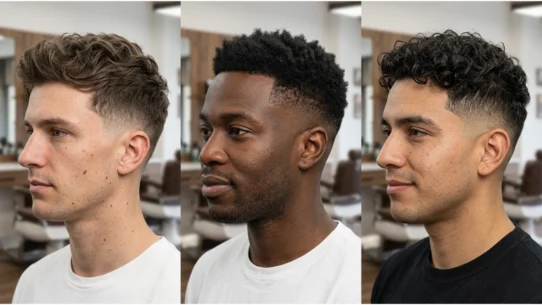
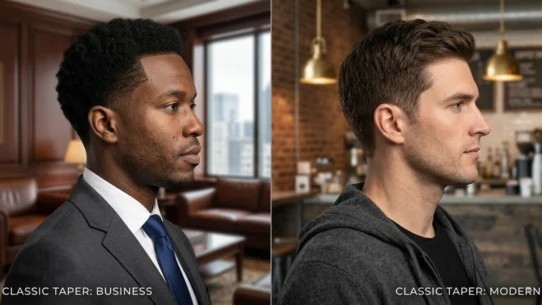
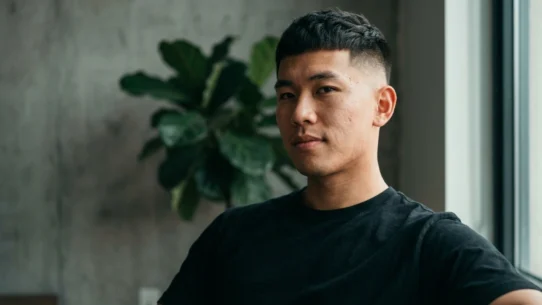
[…] distinction matters at the barbershop. If you ask for a high taper without mentioning the blowout element, you may end up with a shorter, flatter top than you […]
[…] High Taper starts above your ears, right at temple level. It gives you more definition than low or mid tapers, but it still looks natural. Best for people who want some definition without going full fade. Maintain every 3 weeks. Works with textured styles, modern quiffs, and disconnected undercuts. […]