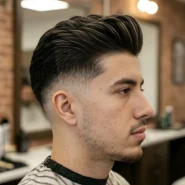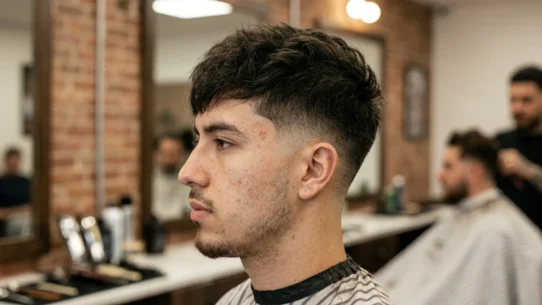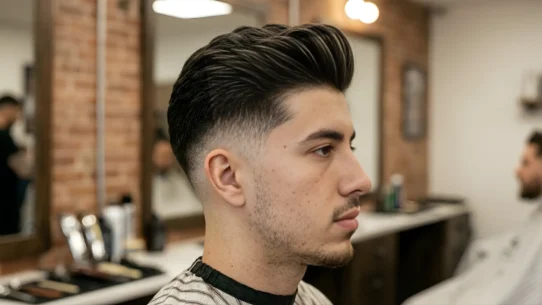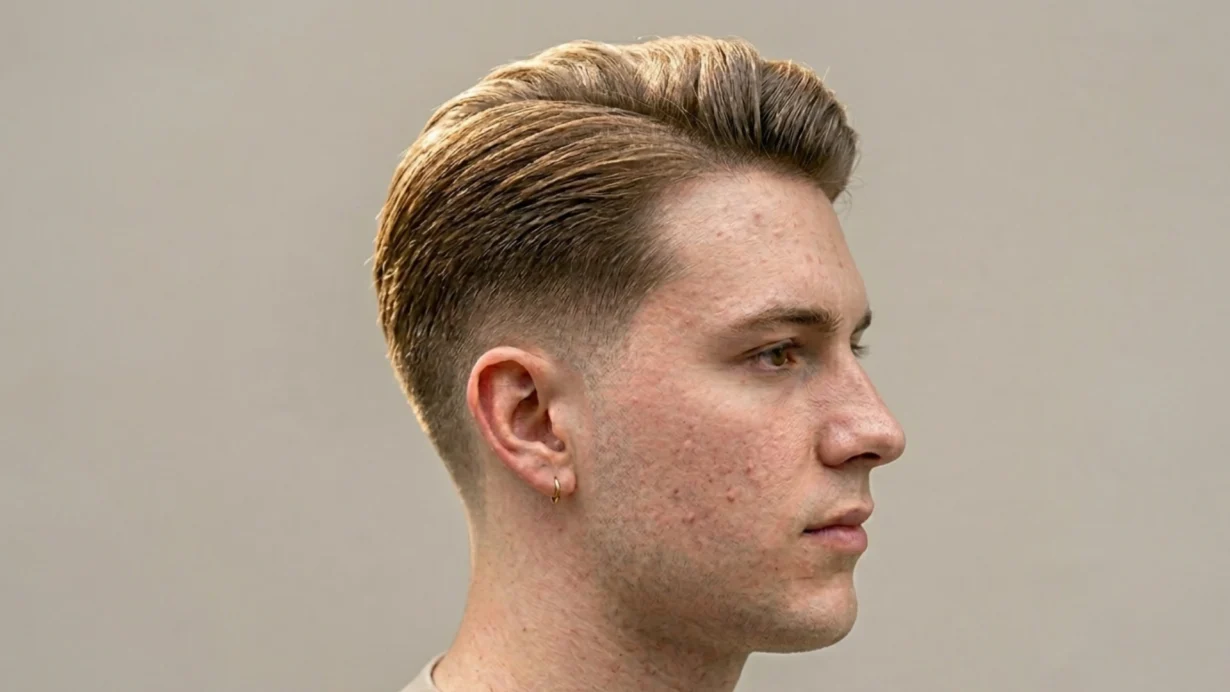

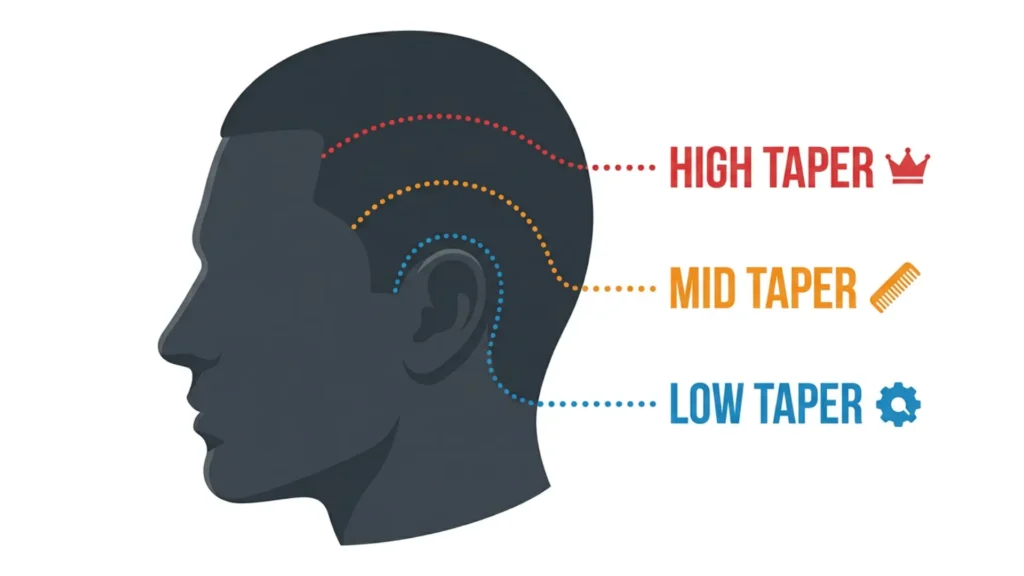
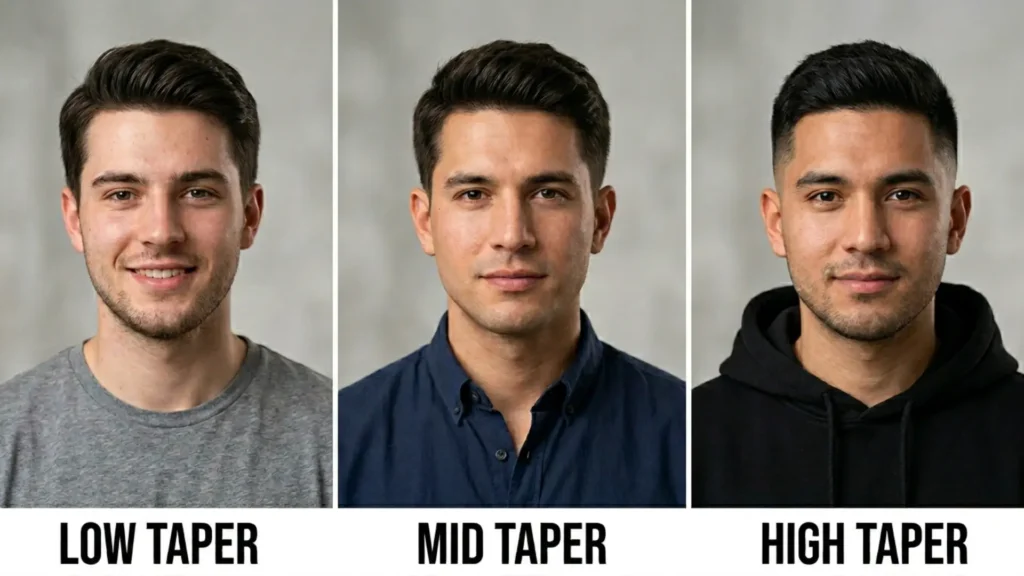
The difference between a low taper, mid taper, and high taper comes down to one thing: where the fade starts on your head. A low taper begins just above your ears, a mid taper starts at temple level, and a high taper begins near the crown.
That starting point determines your contrast level, maintenance frequency, and which face shapes each suits best. Whether you need a professional look or a bold statement, choosing the right taper height changes everything. Here’s exactly how to decide, explained simply.
What Is a Taper Fade? (Understanding the Foundation)
A taper fade is a men’s haircut where the hair gradually transitions from longer on top to shorter on the sides and back. It’s clean, sharp, and works with almost any style.
But here’s where people get confused: taper and fade aren’t the same thing.
- Taper: The hair gradually shortens, leaving some length at the bottom. It focuses mainly on the sideburns and neckline.
- Fade: The hair blends all the way down to the skin or very short stubble. It’s more dramatic and bold.
- Taper Fade: This is a hybrid. It combines the gradual tapering of a classic taper with the clean, skin-tight finish of a fade at the neckline and sideburns.
Think of a fade as a gradient like watching hair color fade from dark to light until it disappears into your skin.
What Makes a Taper “Low,” “Mid,” or “High”?
It’s all about the starting point, where the blend from longer to shorter hair begins on your head.
- A low taper starts just above your ears.
- A mid-taper starts around your temples (at about eyebrow height).
- A high taper starts near the crown of your head.
That starting point determines how much contrast your haircut has, how sharp it looks, and how often you’ll need to visit the barber.
Why Does the Starting Point Matter?
Because it affects three big things:
- How dramatic your haircut looks (subtle vs. bold)
- How often you need touch-ups (low maintenance vs. frequent visits)
- Which face shapes and hair types it work best with
Pro Tip #1: If you’ve had a previous haircut and want something different, telling your barber to “start the fade higher” or “keep it lower” is the clearest way to communicate.
Key Fact: Professional barbers use clipper guards numbered #0 (skin level) through #4 (1/2 inch) to create the smooth gradient effect in a fade. The guard number indicates how much hair remains after the cut.
Now that you know the basics, let’s dive into each taper type.
What Is a Low Taper Fade?
A low taper fade starts just above the ears and curves down toward the neckline. It’s the most subtle and conservative of all three taper heights.
What Does It Look Like?
The fade begins very close to where your hair naturally meets your skin. Most of your side hair stays intact, creating a fuller, more natural look. There’s minimal skin showing, and the contrast between your top and sides is soft and gentle.
Barbers often talk about something called the “C-cup.” This is the C-shaped line that runs from your temple, curves around your ear, and continues down to your beard line on your cheek. In a low taper, this C-cup is the longest and most visible of all three taper types.
Key Characteristics of a Low Taper Fade
- Starting Point: Just above the ears and at the natural neckline
- Contrast Level: Subtle and soft, minimal skin exposure
- Hair Retention: Keeps the most hair on the sides
- Professional Vibe: Timeless, office-appropriate, understated
- Maintenance Frequency: Every 3-4 weeks
- Grow-Out Behavior: The most forgiving, it looks clean for longer as it grows out
Why Choose a Low Taper?
The low taper is perfect if you want a polished, professional look that doesn’t scream for attention. It’s the haircut equivalent of a well-tailored suit nothing flashy, but undeniably sharp.
Pro Tip #2: If you work in a conservative environment like law, finance, or corporate management, a low taper gives you a sharp, clean look without drawing unwanted attention.
Key Fact: The low taper works exceptionally well with textured tops, slick backs, and side parts hairstyles that need some weight on the sides to balance the volume on top
Clipper Guard Info
Low tapers typically use a #3 or #4 guard on the sides, blending down to a #1 or #2 guard at the neckline. This creates that smooth, gradual transition.
Who Should Get a Low Taper?
- Men with oval, long, or diamond-shaped faces
- Guys with straight or wavy hair
- Anyone working in professional or conservative settings
- Men who prefer a classic, understated style
- First-timers trying a taper fade for the first time
Popular Styles That Pair with a Low Taper
- Low Taper + Textured Crop
- Low Taper + Slick Back
- Low Taper + Classic Side Part
- Low Taper + Curly Top
What Is a Mid Taper Fade?
A mid-taper fade begins at the temple level roughly at eyebrow height. It creates a balanced blend that’s neither too subtle nor too bold.
What Does It Look Like?
The fade starts around the middle of your head’s vertical profile, right where your temples sit. This creates noticeable contrast while still looking clean and versatile. You’ll see more skin on the sides than a low taper, but it’s not as dramatic as a high taper.
The “Goldilocks” Taper
The mid-taper is often called the “Goldilocks fade”; it’s right in the middle. Not too conservative, not too bold. Just right.
That’s why it’s the most universally flattering taper height. It works for the widest range of face shapes, hair types, and lifestyles.
Key Characteristics of a Mid Taper Fade
- Starting Point: Temple level (approximately eyebrow height)
- Contrast Level: Balanced noticeable but not dramatic
- Hair Retention: Moderate more skin visible than low, less than high
- Professional + Casual: Works seamlessly in both settings
- Maintenance Frequency: Every 2-3 weeks
- Grow-Out Behavior: Moderate needs touch-ups sooner than low taper but not as fast as high
Why Choose a Mid Taper?
The mid taper delivers impact without extremes. It’s perfect if you want people to notice your haircut but you don’t want it to be the loudest thing about you.
Pro Tip #3: If you’re unsure which taper to start with, the mid taper is the safest choice. It delivers style and impact without committing to an extreme look.
Key Fact: The mid-taper fade works particularly well for men with medium-length hair and thick or wavy hair. It reduces bulk on the sides while keeping enough structure for easy styling
Clipper Guard Info
Mid tapers typically use a #2 or #3 guard on the sides, blending down to a #0.5 or #1 guard at the fade line.
Who Should Get a Mid Taper?
- Men with round or square face shapes
- Guys with curly or thick hair
- Creative professionals or those in versatile work environments
- Men who want a balance between casual and formal
- Anyone looking for the most universally flattering option
Popular Styles That Pair with a Mid Taper
- Mid Taper + Pompadour
- Mid Taper + French Crop
- Mid Taper + Textured Quiff
- Mid Taper + Curly Top
What Is a High Taper Fade?
A high taper fade begins near the crown of the head or above the temples. It creates the most dramatic contrast and the boldest visual statement among the three taper types.
What Does It Look Like?
The fade starts high up on your head, sometimes 2 to 3 inches above your ear. This leaves the sides and back with maximum skin exposure, creating a sharp, modern, high-contrast look.
The Statement Maker
If the low taper whispers sophistication and the mid taper speaks balance, the high taper shouts confidence. It’s a bold, fashion-forward choice that demands attention.
Key Characteristics of a High Taper Fade
- Starting Point: Near the crown, well above the temples
- Contrast Level: Maximum sharp, dramatic, high-impact
- Hair Retention: Minimal, most skin exposure on sides and back
- Professional Suitability: Best for creative, casual, or fashion industries
- Maintenance Frequency: Every 1-2 weeks (most frequent of all tapers)
- Grow-Out Behavior: Fastest to look overgrown due to the sharp contrast
Why Choose a High Taper?
The high taper is for men who want to make a statement. It’s modern, edgy, and unapologetically bold. If you’re confident in your style and don’t mind frequent barber visits, the high taper delivers maximum impact.
Pro Tip #4: A high taper is ideal if you wear high-volume styles like afros, pompadours, or faux hawks. The dramatic sides balance the volume on top and create essential shape.
Key Fact: According to barbering forums like BarberEVO, high tapers require the most skill to execute cleanly because there’s less “fade area” to blend. Mistakes are more visible, so choose an experienced barber.
Clipper Guard Info
High tapers typically use a #1 or #2 guard on the sides, blending down to skin level (#0) very quickly. This creates that sharp, dramatic contrast.
Who Should Get a High Taper?
- Men with round or heart-shaped faces
- Guys with thick, coily, or very curly hair (especially 4A-4C curl patterns)
- Creative professionals and fashion-forward individuals
- Men who want a bold, modern statement
- Anyone comfortable with frequent barber visits
Popular Styles That Pair with a High Taper
- High Taper + Buzz Cut
- High Taper + Afro
- High Taper + Faux Hawk
- High Taper + Blowout
- High Taper + Short Textured Top
Low Taper vs Mid Taper vs High Taper: Side-by-Side Comparison
Here’s everything you need to know about how low, mid, and high tapers compare structured for quick decision-making.
| Feature | Low Taper | Mid Taper | High Taper |
|---|---|---|---|
| Starting Point | Just above ears | Temple level (eyebrow height) | Near crown, above temples |
| Contrast Level | Subtle, soft | Balanced, moderate | Bold, dramatic |
| Skin Exposure | Minimal | Moderate | Maximum |
| Professional Suitability | Excellent (corporate-friendly) | Excellent (versatile) | Good (creative industries) |
| Maintenance Frequency | Every 3–4 weeks | Every 2–3 weeks | Every 1–2 weeks |
| Grow-Out Behavior | Most forgiving | Moderate | Fastest to look unkempt |
| Best Face Shapes | Oval, long, diamond | Round, square, oval | Round, heart, oval |
| Best Hair Types | Straight, wavy, fine | Thick, wavy, curly | Very thick, coily, curly |
| Style Vibe | Classic, understated | Versatile, balanced | Modern, edgy |
| Beginner-Friendly | Yes (safest choice) | Yes | No (requires confidence) |
Quick Decision Guide
- Choose Low Taper if: You want a professional, timeless look that grows out gracefully and requires minimal maintenance.
- Choose Mid Taper if: You want the best of both worlds noticeable style with versatility across settings.
- Choose High Taper if: You want a bold, modern statement and don’t mind frequent barber visits.
Pro Tip #5: Many men alternate between taper heights seasonally. Low tapers in winter keep you warmer and fuller. High tapers in summer feel cooler and look sharper.
Low Taper vs Mid Taper: Which Should You Choose?
The choice between a low taper and a mid taper is the most common decision men face in barbershops. Here’s how to decide.
The Core Difference
A low taper keeps the fade tight to the hairline just above the ears for a subtle, conservative finish. A mid-taper pushes the gradient higher to temple level, exposing more skin for a sharper, higher-contrast look.
When Low Taper Wins
1. Professional Environments
If you work in law, finance, government, or any conservative field, the low taper offers polish without drawing attention. It’s respectful, timeless, and always appropriate.
2. Long or Oval Faces
The low taper keeps width on the sides, preventing your face from looking too narrow. It creates horizontal balance.
3. Low-Maintenance Lifestyle
If you can only visit the barber once a month, the low taper stays sharp the longest. Its subtle gradient grows out gracefully.
4. First-Time Fade
If you’ve never had a taper before, start low. You can always go higher on your next visit, but you can’t add hair back.
When Mid Taper Wins
1. Round or Square Faces
The mid taper removes bulk from the sides, creating vertical lines. This makes your face appear longer and slimmer. It’s perfect for adding definition.
2. Thick or Curly Hair
If you have excess volume, the mid-taper reduces it dramatically while retaining enough hair for structure and styling.
3. Versatile Lifestyle
If you need a haircut that works equally well in the office Monday through Friday and at social events on weekends, the mid taper is unmatched.
4. Balanced Contrast
If you want your haircut to be noticed but not dominate your appearance, the mid taper hits the sweet spot.
Real-World Scenarios
Scenario 1: You’re a 28-year-old accountant with straight hair and an oval face. You prefer classic, timeless style.
Choose: Low taper.
Scenario 2: You’re a 22-year-old graphic designer with thick, wavy hair and a round face. You want a modern look that stands out.
Choose: Mid taper.
Pro Tip #6: If you’re torn between the two, ask your barber for a “low-to-mid taper,” a custom blend that starts low but transitions slightly higher than a pure low taper. Many skilled barbers can adjust the starting point by half an inch to suit your preference perfectly.
Low Taper vs High Taper: The Two Extremes
Choosing between a low taper and a high taper means choosing between the two ends of the fade spectrum: subtle sophistication and bold statement.
The Core Difference
The main comparison boils down to a single factor: where on your head the sides start to fade.
- A low taper begins right around the ear and neckline.
- A high taper begins higher, typically around the temples or crown, creating a striking, high-contrast look.
The Contrast Factor
The difference in visual impact is dramatic. A low taper whispers. A high taper shouts.
If you appreciate nuance and don’t want your haircut to be the first thing people notice, go low. If you want heads to turn, go high.
When Low Taper Wins Over High
1. Conservative Settings
In corporate offices, government jobs, legal professions, anywhere a bold look might feel out of place, the low taper delivers.
2. Long or Narrow Faces
A high taper adds vertical lines, which can elongate your face even further. A low taper adds balance and keeps proportions natural.
3. Low Maintenance
The grow-out phase of a low taper is 2-3 times longer than a high taper. You’ll save time and money.
4. First-Time Fade
High tapers are visually bold. If you’re experimenting with fades for the first time, start low and work your way up.
When High Taper Wins Over Low
1. Maximum Impact
If you want your haircut to be a focal point of your personal style, the high taper delivers unmatched boldness.
2. Thick, High-Volume Hair
Afros, pompadours, blowouts these styles need dramatic sides to create balance and shape. Without a high fade, they can look too wide.
3. Round Faces
The high taper adds vertical lines and height, slimming the appearance of your face and creating definition.
4. Fashion-Forward Lifestyle
Creative industries, streetwear culture, social media influencers the high taper fits perfectly into modern, bold aesthetics.
The Middle Ground
If you’re torn between low and high, remember: the mid taper exists precisely for this reason. It gives you noticeable style without the extreme commitment of a high fade.
Pro Tip #7: If you have a receding hairline, a low or mid taper is generally more flattering than a high taper. The high fade draws attention upward toward the hairline, while the low and mid keep visual focus balanced.
Mid Taper vs High Taper: Finding Your Bold Level
If you’ve already decided against a low taper, you’re choosing between balance and boldness. Here’s how mid- and high-tapers compare.
The Core Difference
The choice between a mid-taper and a high-taper comes down to how much contrast you want.
- A mid-taper blends smoothly at the temples for a clean, versatile look.
- A high taper cuts higher near the crown for extra contrast and edge.
When Mid Taper Wins
1. Versatility
If your lifestyle demands you look professional Monday through Friday and stylish on weekends, the mid taper handles both seamlessly.
2. Square Faces
The mid-taper softens angles without elongating your face too much. It’s the perfect balance for strong jawlines.
3. Thick, Wavy Hair
The mid-taper removes bulk while preserving enough structure for easy styling and a natural texture.
4. Moderate Maintenance
Every 2-3 weeks is manageable for most men. Every 1-2 weeks (required for high tapers) can feel burdensome over time.
When High Taper Wins
1. Maximum Contrast
If you want the sharpest, most defined look possible, the high taper delivers clean, dramatic lines.
2. Very Thick or Coily Hair (4A-4C Curl Patterns)
If your hair is extremely dense, the high taper creates essential shape and manageability. It prevents your hair from looking too wide.
3. Buzz Cuts or Very Short Tops
Pairing a high fade with a very short top prevents the “tennis ball” effect. The contrast is necessary for balance.
4. Bold Personal Style
If your wardrobe, accessories, and overall aesthetic lean edgy and fashion-forward, the high taper completes the look.
The Professional Divide
The mid taper is generally considered the safer choice for professional or conservative settings. Its gradual fade blends seamlessly with business attire, making it suitable for corporate jobs and formal events.
The high taper is edgier and bolder. While still clean and polished, it fits better in creative fields, casual workplaces, and fashion-forward settings.
Pro Tip #8: If you’re trying a taper fade for the first time and want a noticeable style, start with a mid-taper. You can always go higher on your next visit if you want more contrast. It’s easier to remove hair than to add it back.
Which Taper Fade Is Best for Your Face Shape?
Your face shape is one of the most important factors in choosing the right taper height. The goal is to create balance, adding height where needed, softening angles, or adding width depending on your natural structure.
The Face Shape Principle
- If you have a round or square face, you want to add vertical lines and height.
- If you have a long or narrow face, you want to add width and avoid extra length.
- Oval faces are naturally balanced and work with all taper types.
Let’s break it down by face shape.
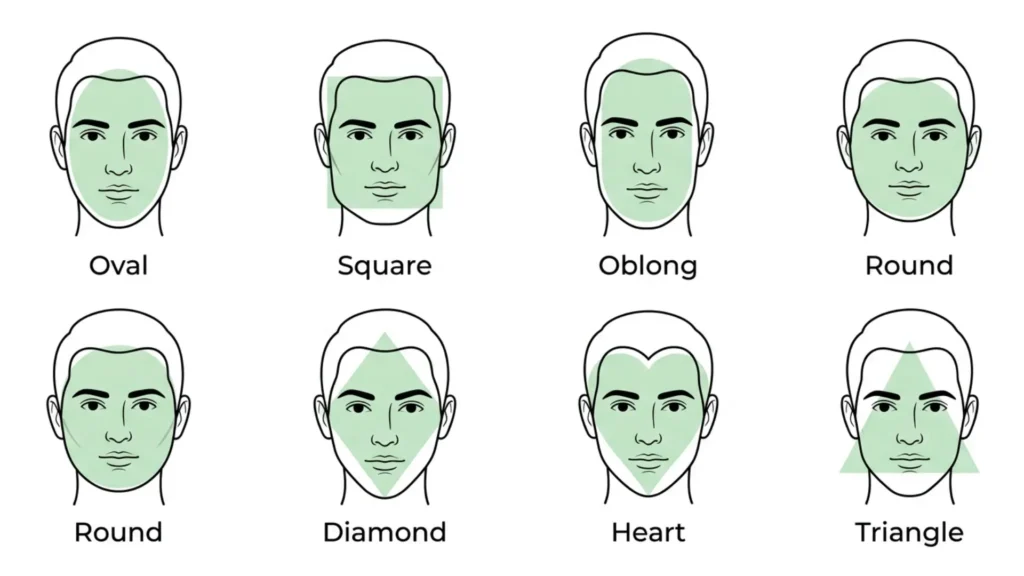
Round Face Shape
Best Taper: Mid or High Taper
Why: A mid or high fade removes bulk from the sides, creating vertical lines that elongate your face and add definition.
Avoid: Low taper it keeps too much width on the sides, which can emphasize roundness.
Visual Effect: Makes your face appear longer and slimmer.
Styling Tip: Pair your mid- or high-taper with volume on top, like a pompadour, quiff, or textured crop. This maximizes the lengthening effect.
Oval Face Shape
Best Taper: All three work beautifully
Why: Oval is the most balanced face shape. It naturally accommodates any taper height.
Recommendation: Choose based on your lifestyle and personal style preference rather than face shape necessity.
Key Fact: According to hairstylists, oval is considered the “ideal” face shape because it requires no corrective styling. You can focus purely on the aesthetic you want
Square Face Shape
Best Taper: Low or Mid Taper
Why: A low taper softens the strong angles of a square jawline, creating a more balanced, less angular look. A mid taper also works if you want a bit more contrast.
Avoid: High taper it can emphasize the angularity and make your jawline look even more pronounced.
Visual Effect: Softens and rounds out harsh angles.
Styling Tip: Pair with textured, messy tops rather than slicked-back styles. This further softens the overall look and creates a relaxed vibe.
Long/Oblong Face Shape
Best Taper: Low Taper
Why: A low taper keeps width and volume on the sides, preventing your face from looking even longer. It creates horizontal balance.
Avoid: High taper, it adds vertical lines and can make your face appear longer.
Visual Effect: Adds width and proportion, making your face appear shorter and more balanced.
Styling Tip: Avoid excessive volume on top. Go for flatter, wider styles like textured crops or side parts to keep things balanced.
Heart-Shaped Face
Best Taper: Mid Taper
Why: A mid-taper balances a wider forehead with a narrow chin by adding moderate width at the sides while keeping clean lines.
Avoid: High taper, it can make the forehead appear even wider.
Visual Effect: Creates balance between the upper and lower parts of your face.
Diamond Face Shape
Best Taper: Low or Mid Taper
Why: Diamond faces have a narrow forehead and chin with wide cheekbones. Keeping some width on the sides with a low or mid taper balances the cheekbones.
Avoid: High taper it can overemphasize cheekbone width.
Key Fact: A 2023 study published in the Journal of Cosmetic Dermatology found that hairstyles accounting for face shape increased perceived attractiveness ratings by an average of 18%
Pro Tip #9: If you’re unsure of your face shape, take a straight-on selfie and trace the outline of your face on your phone screen. The shape that emerges, round, oval, square, long, heart, or diamond, will guide you to the right taper choice.
Which Taper Fade Is Best for Your Hair Type?
Your hair’s natural texture, density, and curl pattern dramatically affect which taper height works best. Here’s how to match your taper to your hair type.
The Hair Type Principle
- Thick, coarse, or very curly hair benefits from higher tapers that remove bulk and create shape.
- Fine, straight, or thinning hair benefits from lower tapers that preserve coverage and avoid exposing too much scalp.
Let’s break it down by hair type.
Straight Hair
Best Taper: All types work well
Why: Straight hair creates the cleanest, sharpest fade lines. It’s ideal for any taper height.
Special Consideration: Very thick straight hair can create a “mushroom” effect with a low taper if not blended perfectly. A mid-taper often looks sharper on thick, straight hair.
Styling Tip: Straight hair pairs beautifully with slick backs, side parts, and pompadours.
Wavy Hair (2A-2C Curl Pattern)
Best Taper: Low or Mid Taper
Why: Wavy hair adds natural texture and volume. A low or mid taper keeps enough hair on the sides to balance the texture without creating bulk.
Avoid: High taper can sometimes create an imbalanced “triangle” shape if the top is very wavy and voluminous.
Styling Tip: Let your natural waves flow with sea-salt spray or a light texturizing cream. Don’t fight the texture, embrace it.
Curly Hair (3A-3C Curl Pattern)
Best Taper: Mid Taper
Why: Curly hair has significant volume. A mid taper removes excess bulk on the sides while leaving enough curl structure to look natural.
Benefit: The contrast between tight sides and a curly top creates a striking, modern look.
Key Fact: Barbers specializing in textured hair report that mid tapers are the most requested fade for loose to medium curls because they “frame the curls perfectly”
Styling Tip: Use curl-defining cream and avoid brushing. Let your curls form naturally for the best definition and bounce.
Coily Hair (4A-4C Curl Pattern)
Best Taper: High Taper
Why: Coily, dense hair creates maximum volume. A high taper is often necessary to create shape, reduce bulk, and prevent the sides from appearing too wide.
Benefit: The sharp contrast of a high fade with a full afro or twist-out on top is a signature modern look that’s been a cultural staple for decades.
Key Fact: In Black barbershop culture, the high taper fade (often called a “high top fade” when paired with an afro) has been a staple since the 1980s and remains dominant in 2025
Styling Tip: Maintain moisture with leave-in conditioner and define coils with styling cream. Hydration is key for coily hair.
Thick Hair
Best Taper: Mid or High Taper
Why: Thick hair creates bulk. Removing weight on the sides through a mid or high fade makes hair easier to manage and style.
Benefit: Reduces the heavy feeling that can make thick hair hard to shape and control.
Thin/Fine Hair
Best Taper: Low Taper
Why: Thin or fine hair benefits from keeping more coverage on the sides. A low taper avoids exposing too much scalp and maintains a fuller appearance.
Avoid: High taper can make thinning more noticeable and draw attention to sparse areas.
Key Fact: Dermatologists note that a low taper with textured styling on top can create the illusion of thicker, fuller hair by adding visual volume and dimension
Thinning Hair or Receding Hairline
Best Taper: Low or Mid Taper
Why: A low or mid taper keeps the visual focus balanced and doesn’t draw attention upward toward the hairline. A high taper can emphasize receding areas.
Key Fact: Barbers specializing in mature men’s haircuts report that low tapers paired with textured tops or short buzz cuts are the most flattering for receding hairlines.
Pro Tip #10: Pair your low or mid taper with textured styling on top to create the illusion of thickness and volume. Avoid slick, flat styles that can make thinning more obvious.
Pro Tip #11: If you have cowlicks or unusual growth patterns, communicate this to your barber before they start cutting. They can adjust the fade line to work with, not against, your natural growth direction.
Taper Fade Maintenance: How Often Do You Need a Barber Visit?
One of the most overlooked factors when choosing a taper height is maintenance. Here’s what to expect for each type.
Maintenance Frequency Breakdown
| Taper Type | Maintenance Frequency | Why |
| Low Taper | Every 3-4 weeks | Subtle fade grows out gracefully; longest-lasting |
| Mid Taper | Every 2-3 weeks | Moderate contrast becomes noticeable as it grows |
| High Taper | Every 1-2 weeks | Sharp contrast loses definition quickly |
Why Higher Tapers Need More Maintenance
The sharper the contrast, the faster it becomes visible as your hair grows out.
A high taper that looks crisp on day 1 can start looking fuzzy and less defined by day 10-12.
That’s because the gradient loses its precision as new hair fills in the faded areas.
A low taper, on the other hand, has such a subtle gradient that it simply looks like a slightly longer version of itself as it grows. There’s rarely an awkward phase.
How a Low Taper Grows Out
A low taper transitions so subtly that as it grows, it just looks like a fuller version of the same haircut. There’s no dramatic shift.
Timeline:
- Weeks 1-2: Perfect and sharp
- Weeks 3-4: Still clean and professional
- Week 5+: Time for a trim, but not urgent
How a Mid Taper Grows Out
A mid-taper maintains its shape for about 10-14 days. After that, the contrast softens, and the fade line becomes less defined.
Timeline:
- Weeks 1-2: Sharp and noticeable
- Week 3: Noticeably softer, but still acceptable
- Week 4: Definitely needs a touch-up
How a High Taper Grows Out
A high taper loses its sharpness fastest. By week 2, the dramatic contrast is already blending out. By week 3, it can start to look unkempt.
Timeline:
- Week 1: Perfect and bold
- Week 2: Softening and losing contrast
- Week 3+: Looks overgrown and needs immediate attention
Best Hairstyles to Pair with Each Taper Height
The taper height you choose should complement the style on top. Here are the best pairings and why they work.
Best Hairstyles for Low Taper Fade
1. Textured Crop + Low Taper
Why: The low taper keeps volume on the sides, balancing the messy, textured top for a cohesive look. It doesn’t look top-heavy.
2. Slick Back + Low Taper
Why: Slicked-back styles need weight on the sides to avoid looking unbalanced. The low taper provides that solid base.
3. Classic Side Part + Low Taper
Why: The low taper’s conservative nature perfectly complements the timeless elegance of a side part. It’s a gentleman’s combination.
4. Mullet + Low Taper
Why: The low taper cleans up the sides just enough while letting the length in back flow naturally. It’s the perfect “business front, party back” aesthetic.
5. Curly Top + Low Taper
Why: For men with natural curls, the low taper frames the curls without removing too much of the supporting structure. Your curls stay full and defined.
Best Hairstyles for Mid Taper Fade
1. Pompadour + Mid Taper
Why: The mid-taper’s moderate contrast creates clean sides that don’t compete with the top volume. It lets the pompadour shine without distraction.
2. French Crop + Mid Taper
Why: The sharp sides of a mid taper contrast beautifully with the short, textured fringe of a French crop. It’s a modern, minimalist look.
3. Quiff + Mid Taper
Why: The mid taper provides structure and definition, making the quiff’s upward sweep look intentional and polished.
4. Textured Fringe + Mid Taper
Why: The balance of a mid fade complements the messy, forward-swept fringe without overwhelming it. It’s effortlessly stylish.
Best Hairstyles for High Taper Fade
1. Buzz Cut + High Taper
Why: A short buzz cut needs dramatic sides to avoid the “tennis ball” effect. The high taper creates essential contrast and shape.
2. Afro + High Taper
Why: High-volume styles like afros need sharp, clean sides to create shape and prevent the hair from looking too wide. The high taper provides that definition.
3. Faux Hawk + High Taper
Why: The high taper’s bold sides amplify the center-focused volume of a faux hawk, creating maximum visual impact.
4. Blowout + High Taper
Why: The trending blowout style (lifted, voluminous front) needs dramatic sides to balance the height and create that signature silhouette.
5. Short Textured Top + High Taper
Why: For men who want an ultra-low-maintenance top, the high fade adds all the style and definition to the haircut. The sides do the talking.
Pro Tip #15: When choosing your top style, bring a reference photo to your barber and ask, “What taper height would work best with this?” Professional barbers can visualize the pairing instantly and adjust for your face shape and hair type.
How to Communicate Your Taper Choice to Your Barber
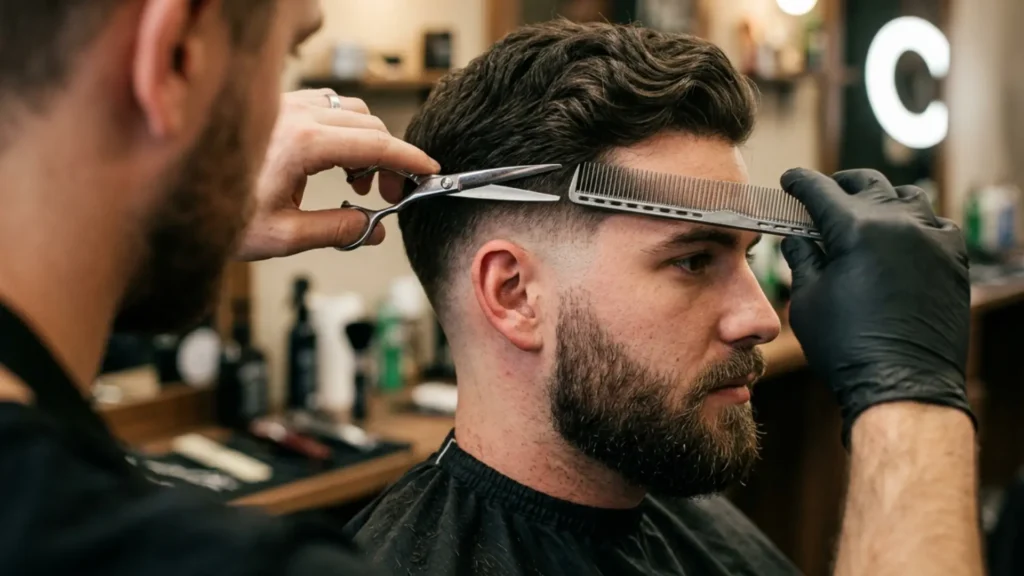
Knowing the difference between taper heights is only half the battle. You also need to communicate clearly with your barber.
The Golden Rule
The clearer and more specific you are, the better your result. Never say “just clean it up” or “make it look good.” Give your barber a clear starting point.
Quick Communication Guide
For Low Taper: “I want a low taper fade starting just above my ears.”
For Mid Taper: “Give me a mid taper starting at temple level.”
For High Taper: “I want a high taper fade above my temples sharp and bold.”
What Else to Mention
- Top Length: Specify how much length you want on top. Use your fingers to show the barber.
- Fade to Skin or Stubble: Mention if you want a skin fade (#0) or prefer to leave some stubble (#0.5 or #1).
- Neckline Preference: Tell your barber whether you want your neckline squared, rounded, or naturally tapered.
Frequently Asked Questions (FAQs)
1. What is the main difference between a low taper and a mid taper?
A low taper starts just above the ears for a subtle, conservative look. A mid taper begins at temple level (around eyebrow height) for more noticeable contrast. The mid taper exposes more skin on the sides and creates a sharper, more modern aesthetic, while the low taper keeps more hair, resulting in a fuller, timeless appearance.
2. Which taper fade lasts the longest without a touch-up?
The low taper lasts 3-4 weeks because its subtle gradient grows out gracefully. Mid tapers need touch-ups every 2-3 weeks, and high tapers require maintenance every 1-2 weeks due to their sharp contrast losing definition quickly.
3. Can I switch between taper heights?
Yes, absolutely. Many men switch between taper heights based on season, lifestyle changes, or personal preference. Start with your desired height and adjust on your next visit. Going from low to mid to high is easier than going in reverse.
4. What clipper guards are used for each taper?
- Low tapers typically use #3-4 guards blending to #1-2.
- Mid tapers use #2-3 guards blending to #0.5-1.
- High tapers use #1-2 guards blending quickly to skin (#0).
Your barber may adjust based on your hair density and desired finish.
5. Is a high taper good for thin hair?
Generally, no. High tapers expose more scalp, which can emphasize thinning. Low tapers are better for thin or thinning hair because they preserve coverage on the sides and create a fuller appearance. Pair with textured styling on top for best results.
6. Which taper is best for a round face?
Mid or high tapers work best for round faces. They remove bulk from the sides and create vertical lines that elongate your face, making it appear longer and slimmer. Avoid low tapers, which can keep too much width and emphasize roundness.
7. How do I know if my barber did the taper correctly?
A well-executed taper has a smooth, seamless gradient with no visible lines or “steps.” The blend should look natural from every angle, the neckline should be clean and symmetrical, and the fade should start exactly where you requested (low, mid, or high).
8. Can I get a taper fade with long hair on top?
Absolutely. Taper fades work with any top length from buzz cuts to shoulder-length hair. The taper only affects the sides and back, so your top can be as long or short as you want. Many men pair long, flowing tops with clean tapered sides for a striking contrast.
9. What’s the difference between a taper fade and a skin fade?
A skin fade (also called a bald fade) blends all the way down to bare skin using a #0 clipper. A taper fade can end at skin or leave slight stubble. All skin fades are taper fades, but not all taper fades are skin fades. It depends on how short you want the bottom to go.
10. Which taper is most professional?
The low taper is considered the most professional because it’s understated and conservative perfect for corporate, legal, and government settings. Mid tapers also work well in most professional environments and offer more versatility between office and social settings.