

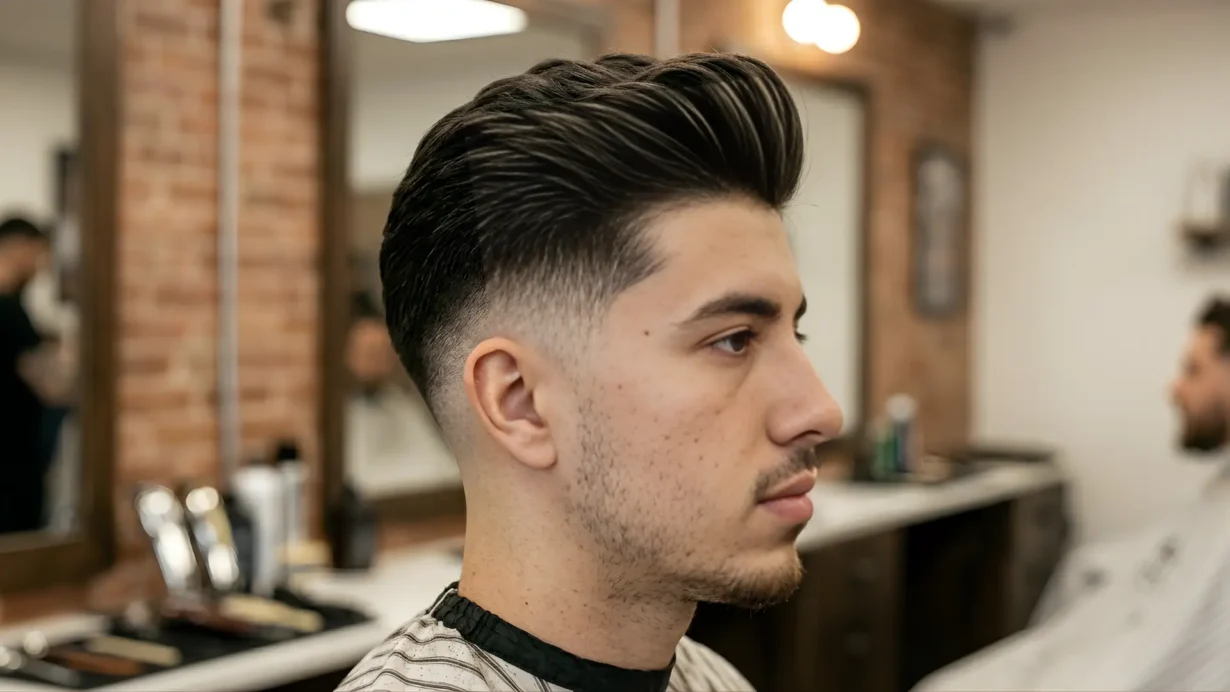

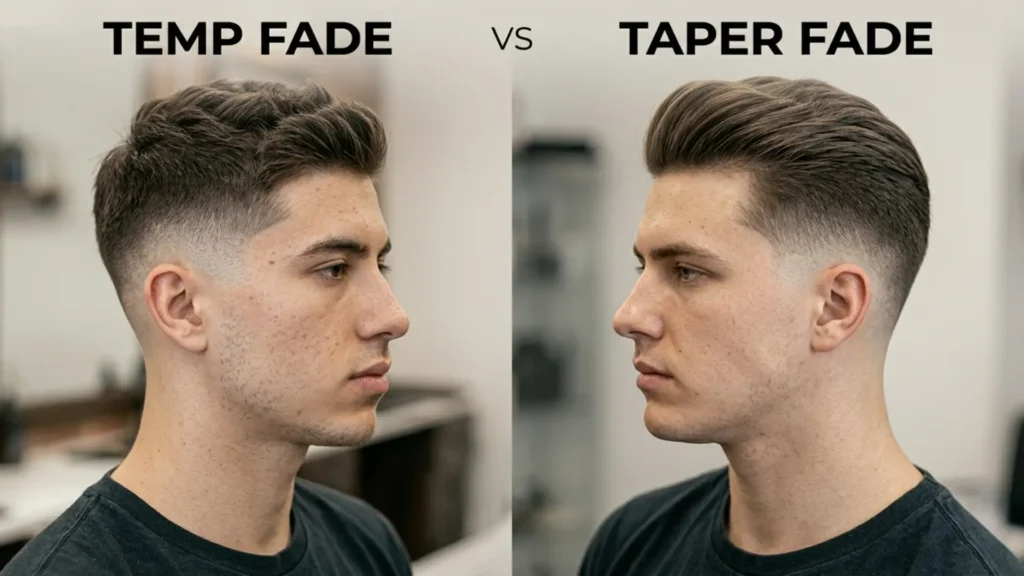
A temp fade, taper, and taper fade are three distinct haircut styles that many people confuse. A temp fade (temple fade) creates sharp, dramatic transitions around your temples and front hairline.
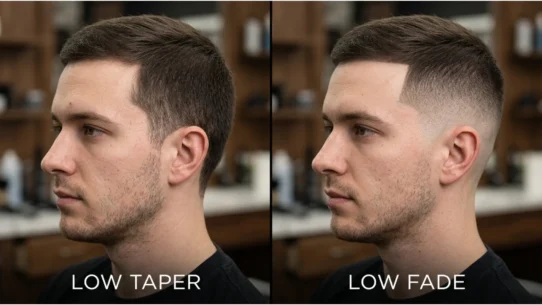
A taper gradually shortens hair along the sides and back with smooth, natural blending. A taper fade combines both approaches, tapering your hair while adding fade-level contrast for a versatile hybrid look.
This guide breaks down every difference so you can confidently walk into your barbershop and get exactly what you want.
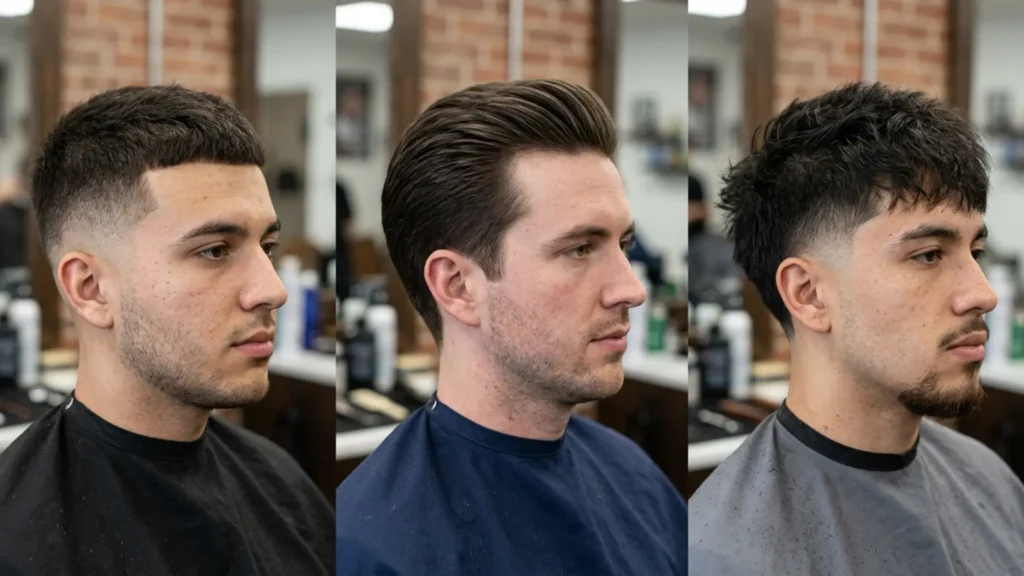
What’s the Difference Between a Temp Fade, Taper, and Taper Fade?
A temp fade targets only the temple area with a sharp, dramatic contrast that often fades to the skin. A taper gradually shortens hair along the entire side and back with a smooth, natural blend. A taper fade is a hybrid that uses gradual tapering with added fade-level contrast at the bottom. Each style differs in placement, boldness, and maintenance needs.
KEY POINTS:
– Temp fades focus on temples only, while tapers blend the full perimeter
– Tapers last 3–4 weeks, but temp fades; need touch-ups every 2–3 weeks
– Taper fades combine both techniques for a versatile middle ground
– Always bring reference photos to your barber for the best results
Table of Contents
Three cuts, three different results — which one is actually right for you?
Once you know the difference, the Taper Style Tool matches your face shape and hair type to the right cut so you know exactly what to ask for at the barbershop.
Difference Between Temp Fade, Taper, and Taper Fade?
A temp fade (temple fade) creates sharp, dramatic transitions specifically around your temples and front hairline. A taper gradually shortens your hair along the sides and back with smooth, natural blending. A taper fade combines both approaches; it tapers your hair while adding fade-level contrast for a versatile, hybrid look.
The biggest difference is where they happen and how dramatic they look. Temp fades target your temporal region, that’s the area around your temples and sideburns with high contrast that often fades down to skin for super clean edges. Tapers work on your entire sides and back, keeping more length overall and creating smooth transitions that follow your natural hairline.
Taper fades mix these two styles together: they taper your hair but add fade techniques to create a sharper contrast than a regular taper while still covering more area than a full fade.
At-a-Glance Comparison
| Feature | Temp Fade | Taper | Taper Fade |
|---|---|---|---|
| Where It Happens | Temple area, front hairline | Sides and back, all around | Sides and back with fade contrast |
| How It Looks | Sharp, dramatic, often shows skin | Gradual, subtle, natural | In between—sharper than taper, softer than fade |
| Skin Shows? | Yes, especially in high temp fades | Rarely—keeps more length | Sometimes at the bottom |
| How Often to Cut | Every 2–3 weeks | Every 3–4 weeks | Every 3 weeks |
| Best For | Bold, modern looks; clean temple lines | Classic, professional styles | Works almost anywhere |
| Other Names | Temple fade, Brooklyn fade, temporal fade | Classic taper, traditional taper | Tapered fade, fade taper |
Still not sure which column is yours? TaperMatch reads your actual face geometry and hair texture, then tells you which of these three directions fits you, no self-diagnosis required.
What Is a Temp Fade? (Definition, Technique & Characteristics)
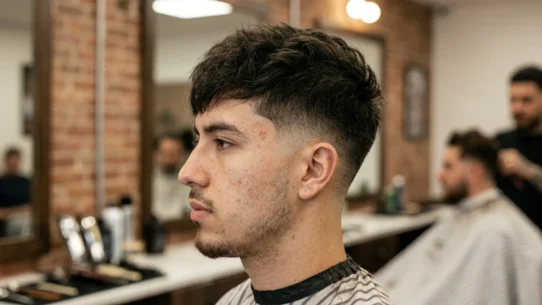
A temp fade, short for “temple fade” or “temporal fade,” is a haircut where your barber gradually fades your hair specifically around your temple area and front hairline. It creates sharp, clean lines with dramatic contrast, and it often fades all the way down to your skin.
The temp fade focuses just on your temporal region, which is basically the area above and around your ears that extends to your sideburns and front hairline. Here’s what makes it different from other fades: instead of blending hair all around your entire head, temp fades only target this specific zone. Your back and top can be left longer or styled completely differently.
You’ll also hear people call this cut by different names: temple fade (the most common name), Brooklyn fade (this is what people called it in New York), temporal fade (the technical, anatomy-based name), and blowout (when you pair it with a big, voluminous style on top).
Here’s how barbers do it: They use precise clipper work and blending skills to create a gradual transition from your longer hair at the top of your temple down to very short hair and often a skin fade or bald fade right at your sideburn and front hairline. This creates what’s called a “fade line” that’s intentionally sharp and visible, adding serious definition to your whole hairstyle.
KEY FACT #1: The temp fade originated in New York City barbershops, especially in Brooklyn, during the late 1990s and early 2000s. It became super popular in African American, Italian American, and Hispanic American communities as a bold twist on traditional fade haircuts.
KEY FACT #2: The name “temporal fade” actually comes from the temporal bone, which is the skull bone that forms the temple region of your head.
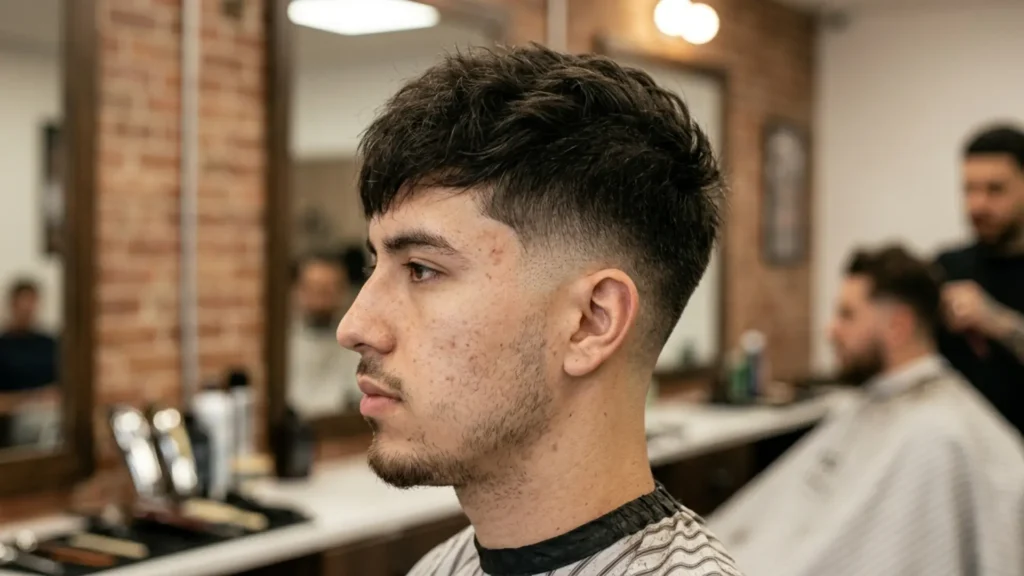
How Is a Temp Fade Created? (Barbering Technique)
Creating a professional temp fade takes great skill. Your barber needs to master the clipper-over-comb technique, know how to transition between guard lengths, and nail the lineup precision.
The Process: Your barber starts by defining your front hairline and temple corners with a trimmer or outliner, creating super-sharp, clean edges. Starting with a longer guard (usually a #3 or #4), they cut the temple area, then progressively switch to shorter guards (#2, #1, sometimes #0.5) as they move down toward your sideburn and hairline. Using lever positions (when they adjust the clipper blade from open to closed) and flicking motions, your barber seamlessly blends each guard length.
For the most dramatic temp fades, barbers use a foil shaver or zero-gap clippers to fade the very bottom section all the way down to bare skin. Final touches include refining edges with trimmers, ensuring symmetry between both temples, and cleaning up stray hairs.
KEY FACT #3: Professional barbers typically use guard lengths from #4 (that’s ½ inch) at the top of the fade down to #0 (1/16 inch) or bare skin at the bottom. They’ll create about 4–5 distinct length transitions to get that seamless blend.
KEY TIP #1: When you’re getting a temp fade, tell your barber, “I want my temples tapered with a skin fade at the sideburn” for clarity. Better yet, show them pictures on your phone you’ll both be looking at the exact same thing.
Temp Fade Variations: Low, Mid, and High
Temp fades come in three main types based on fade height, basically, where the fade starts on your head.
Low Temp Fade starts just above your sideburn, right around the top of your ear. It’s the most subtle version with understated, professional contrast. Best for conservative jobs or for those with a round or heart-shaped face. Maintain every 2.5–3 weeks. Pairs well with side parts, comb-overs, and classic pompadour styles.
Mid Temp Fade starts right at temple level, about halfway up your ear. It’s balanced—you’ll definitely notice it, but it’s not extreme. Best for most settings and works especially well if you have an oval or square face. Maintain every 2–3 weeks. Works with tons of styles—textured crops, quiffs, curly tops, slick backs.
High Temp Fade starts well above your temples, near the upper sides of your head (the parietal region). It creates the most dramatic look with maximum visual impact. Best for creative jobs and for those with a long or oblong face (it helps add visual height). Maintain every 2 weeks. Pairs perfectly with afros, high-volume pompadours, faux hawks, and buzz cuts.
KEY FACT #4: High-temp fades actually create the illusion that your face is taller, which is perfect if you have a round face and want to make it look longer. Low-temp fades keep more hair on your sides, which helps balance out long or angular face shapes by adding width.
What Is a Taper? (Definition, Technique & Characteristics)
A taper is a classic haircut technique where your hair gradually gets shorter from the top of your head down to your sides and back. It creates a natural, subtle transition that keeps your hairline looking natural no dramatic contrast or skin showing.
The taper is seriously one of the most timeless haircuts out there. Unlike fades that create sharp, dramatic changes and often go all the way down to the skin, tapers keep things gradual and smooth while maintaining more length. The technique works on your entire perimeter that means your sides, back, and neckline rather than focusing on a single spot.
Barbers can create tapers using scissors (the traditional scissor-over-comb method) or clippers with progressively shorter guards. The key thing about tapers is they preserve your natural hairline—they follow and work with your existing hair growth pattern instead of changing it with sharp edges or exposing your skin.
Classic taper characteristics: gradual length reduction (no abrupt changes), natural hairline maintained, more length retained overall compared to fades, grows out gracefully over 3–4 weeks, professional polished appearance, and works for both men and women.
KEY FACT #5: The classic taper has its roots in military haircuts and old Hollywood grooming from the Golden Age. Actors like Cary Grant and Clark Gable made tapered styles super popular back in the 1940s and 1950s. It became the go-to haircut for sophisticated, well-groomed men.
How Is a Taper Created? (Barbering Technique)
Professional tapers need serious blending skills and a good understanding of how your hair naturally grows. With the scissor-over-comb technique, your barber lifts up sections of your hair with a comb and trims the ends at progressively shorter lengths as they move down your head, creating that seamless, gradual transition.
Most barbers today use multiple clipper guards (#4, #3, #2, #1) and work from the top down, blending each section with the clipper-over-comb technique and lever adjustments. Unlike fades, tapers usually don’t go below a #1 guard (that’s ⅛ inch). Tapers end with tapered necklines (where the hair gradually shortens toward your neck) or natural necklines (following your natural hairline).
KEY FACT #6: A really good taper shouldn’t have any visible “lines” or places where the length suddenly changes. The mark of a skilled barber is creating a smooth gradient that appears to flow naturally from longer to shorter hair.
KEY TIP #2: Tapers grow out way more gracefully than fades because they keep more length overall. You can usually wait 3–4 weeks between haircuts without looking shaggy, which makes tapers the most low-maintenance option of the three.
Taper Variations: Low, Mid, and High
Low Taper starts near your neckline, around the bottom of your ears. It’s the most subtle taper with minimal, almost imperceptible transition. Best for ultra-conservative work environments, older professionals, or if you want to keep maximum length. Maintain every 4–5 weeks. Works great with longer styles on top, Ivy League cuts, and side parts.
Mid Taper starts at mid-ear level. It’s moderate but still looks pretty subtle overall. Best for most professional jobs and everyday wear. Maintain every 3–4 weeks. Pairs well with classic cuts, crew cuts, Caesar cuts, and pompadours.
High Taper starts above your ears, right at temple level. It gives you more definition than low or mid tapers, but it still looks natural. Best for people who want some definition without going full fade. Maintain every 3 weeks. Works with textured styles, modern quiffs, and disconnected undercuts.
KEY TIP #3: If you can’t decide between a taper or fade, start with a mid taper. It gives you a clean, polished look that works pretty much anywhere, and you can always ask your barber to make it into a fade next time if you want more contrast.
What Is a Taper Fade?
A taper fade is a hybrid haircut that combines the gradual length reduction of a taper with the sharper contrast and (sometimes) skin exposure of a fade. But here’s the thing: “taper fade” is often just a catch-all term barbers use when clients mix up tapers and fades.
Let’s be real about “taper fade” for a second: it’s not always one specific, standardized haircut. The term popped up because barbers and clients kept getting confused about the difference between “taper” and “fade.”
Here are three ways people use it:
1. A real hybrid style that starts with a taper’s gradual approach but adds fade techniques for more contrast
2. Regional slang where “taper fade” just means “fade”
3. A safe middle-ground term when barbers aren’t sure what you’re asking for hey’ll give you something between a full taper and a dramatic fade.
KEY FACT #7: According to barbering schools and training programs, “taper fade” became really popular in the 1990s and 2000s as fade culture spread beyond urban communities. The term helped bridge the gap between old-school taper terminology and modern fade techniques.
KEY TIP #4: Never assume your barber’s definition of “taper fade” is the same as yours. Always bring pictures on your phone showing exactly what you want, front, side, and back views. Visual references eliminate like 90% of haircut miscommunication disasters.
What you can typically expect from a taper fade: gradual shortening along your sides and back (like a taper), more contrast than a classic taper, maybe some skin showing at the very bottom (like a fade), and clean, defined edges with a line-up.
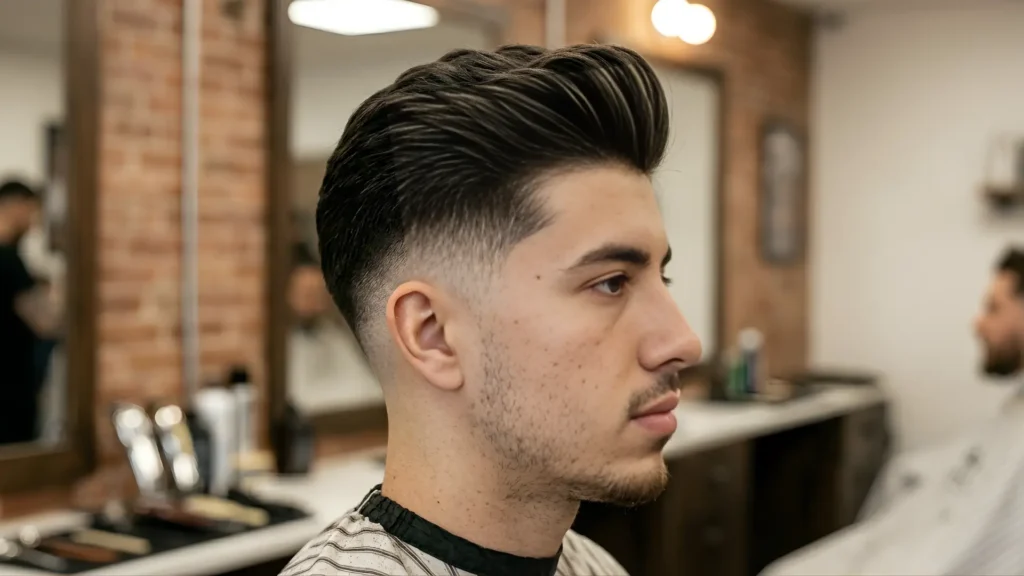
Low, Mid, and High Taper Fades
Low Taper Fade starts just above your ears with professional-friendly, subtle contrast. It might fade to the skin only in the very bottom section. Best for business environments and conservative style preferences. Maintain every 3 weeks.
Mid Taper Fade starts at the temple or mid-ear level. This is hands-down the most popular variation, it’s got balanced contrast and works for almost everyone. Best for most face shapes and lifestyles. Maintain every 2.5–3 weeks.
High Taper Fade starts well above your ears. It’s bold and modern, creating significant contrast. Best for fashion-forward people and creative jobs. Maintain every 2–3 weeks.
Temp Fade vs Taper: Direct Side-by-Side Comparison
What Are the Key Differences Between Temp Fade and Taper?
The main differences come down to where they happen, the technique used, and how dramatic they look. Temp fades focus only on your temples with dramatic contrast. Tapers work on your entire sides and back with smooth, gradual transitions.
| What We’re Comparing | Temp Fade | Taper |
|---|---|---|
| Where It Happens | Temple area, front hairline, sideburns only | Entire sides, back, and neckline |
| How They Blend | Sharp, dramatic, often down to the skin | Gradual, natural, subtle transitions |
| Can You See Skin? | Yes, especially with high-temp fades | Rarely—keeps its length throughout |
| Your Natural Hairline | Often changed with sharp line-ups | Kept natural and enhanced |
| How Much Hair Do You Keep | Very little at fade zones, normal elsewhere | More length kept overall |
| How It Looks | Bold, edgy, makes a statement | Polished, classic, understated |
| Professional Jobs? | Might be too bold for conservative offices | Works everywhere |
| How Often to Cut | Every 2–3 weeks | Every 3–4 weeks |
| Growing It Out | Needs regular touch-ups to stay sharp | Grows out gracefully |
| Tools Used | Mostly clipper work | Can use scissors or clippers |
Location is the biggest difference. A temp fade is focused on one spot; it dramatically fades your temple area while leaving your back and top alone. A taper is all-around coverage; it affects the entire perimeter of your head, shortening gradually around the perimeter. The contrast is totally different.
Temp fades go for drama, sharp lines, skin showing, and bold definition. Tapers keep things subtle with smooth, natural transitions. Where you work matters. If you’ve got a conservative corporate job, a classic taper is pretty much always safe. A high-temp fade with skin exposure might turn heads in traditional offices, but thrives in creative industries and casual workplaces.
Maintenance is different. Temp fades need more frequent barber visits (every 2–3 weeks) to keep those crisp edges looking sharp. Tapers grow out way more gracefully, so you can wait 3–4 weeks between cuts.
KEY TIP #5: If you’ve never tried either style before, go with a low-temp fade or mid-taper first. These moderate versions let you test out what each style feels like without committing to anything super extreme.
Temp Fade vs Taper Fade: How Do They Differ?
Key Distinctions Between Temp Fade and Taper Fade
A temp fade focuses specifically on your temple area with localized fading. A taper fade affects your entire sides and back. Temp fades create contrast only at your temples. Taper fades blend your full perimeter with fade-level sharpness.
Where They Happen: Temp fade is temple-specific (just the front corners of your head). A taper fade covers your entire sides and back. How Much Area They Cover: Temp fade is a localized treatment for temples only; the rest of your head gets styled separately. Taper fade is comprehensive; your entire perimeter gets faded. Visual Focus: Temp fade draws your eye to the front and temple definition. Taper fade creates a balanced look all the way around your head.
When to Pick Which: Go with a temp fade if you want bold temple definition, plan to pair it with a specific top style (like an afro, curls, or pompadour), or want that front-focused impact. Go with a taper fade if you want a balanced cut all around, need something versatile, or want one complete haircut solution.
KEY FACT #8: Many modern hairstyles combine a temp fade at the temples with a separate taper or fade at the back and sides. This “temp fade + low taper” combo gives you maximum versatility and has become super popular in modern barbering.
Taper vs Taper Fade: Understanding the Difference
How Does a Taper Differ From a Taper Fade?
A classic taper keeps things gradual and subtle with no dramatic contrast or skin showing. A taper fade uses that same gradual taper approach but adds fade techniques sharper contrast, possible skin exposure, and more defined edges for a bolder result.
Contrast Level: Taper is subtle with a natural gradient. Taper fade is more dramatic and definitely noticeable. Skin Exposure: The Taper rarely shows skin, usually stops at a #1 or #2 guard length. Taper fade commonly shows skin at the lowest sections (often fades to #0 or skin). Edge Definition: Taper preserves your natural hairline. Taper fade usually includes a line-up or shape-up for super defined edges. Overall Vibe: Taper is classic, timeless, and understated. Taper fade is modern, sharper, and more contemporary. Think of it like this: a taper is a gentle slope. A taper fade is a steep hill.
Which Haircut Is Right for You?
Best Haircut for Your Face Shape
Your face shape is one of the most important factors to consider when choosing among temp fade, taper, and taper fade.
Round Face: Add length and create angles with high temp fade or mid-to-high taper fade. Cutting sides short removes bulk and creates vertical lines. Pair with height on top like a pompadour or quiff. Avoid low tapers that add width.
Oval Face: Most versatile, any style works. Pick based on your job and lifestyle rather than face shape constraints.
Square Face: Soften angular features with temp fade or taper fade (low to mid). Faded sides soften that strong jawline while maintaining masculine structure. Avoid super high fades.
Heart-Shaped Face: Balance proportions with a low-temp fade or a mid-taper. Keep some fullness on the sides to balance a narrower chin. Avoid high fades.
Long/Oblong Face: Add width with a low-taper or low-taper fade. Keeping length on the sides adds fullness and counteracts elongation. Keep the top relatively flat. Avoid high fades that remove side volume.
Diamond Face: Balanced proportions work well with a mid-taper fade or a classic taper. Even fading doesn’t emphasize any particular feature.
KEY TIP #6: Talk about your face shape during your barber consultation. Say something like, “I’ve got a round face, and I’m trying to add some length. Would a high-temp fade work for me?” Most good barbers appreciate when clients understand their own facial proportions.
Not confident about your face shape? TaperMatch runs a structural read of your facial geometry, width, jaw angle, and symmetry and maps it to the right cut automatically. Takes about 60 seconds.
Best Haircut for Your Hair Type and Texture
Your hair type makes a huge difference in how these cuts look and behave.
Straight Hair (Type 1): Best with temp fade or taper fade. Straight hair shows clean fade lines beautifully. Pairs well with side parts, slick-backs, comb-overs, and Ivy League cuts.
Wavy Hair (Type 2): Best with taper fade or classic taper. Waves add natural texture that complements gradual blending. Works with textured crops, messy quiffs, and modern pompadours.
Curly Hair (Type 3): Best with a temp fade and curls on top (an extremely popular modern style). The temp fade creates a sharp contrast while curls add volume and personality. Use curl cream and leave-in conditioner. Pairs with curly tops, afros, curly fringes.
Coily/Kinky Hair (Type 4): Best with temp fade (Brooklyn fade heritage). The temp fade has deep roots in Black barbering culture and works exceptionally well with coily textures. Use leave-in conditioners, hair oils, and edge control. Pairs with 360 waves, high-tops, afros, twists, and dreads.
KEY FACT #9: Temp fades became hugely popular in Black barbering culture specifically because they look amazing with coily, textured hair. That contrast between tight curls or waves on top and clean-faded temples creates a signature look that’s influenced hairstyling trends all over the world.
Thick/Coarse Hair: Best with fade styles (temp fade, taper fade). Fades reduce bulk on the sides, making thick hair more manageable.
Fine/Thin Hair: Best with a classic taper or low-taper fade. Tapers keep more length and density, creating the illusion of fuller hair. Avoid high skin fades.
KEY TIP #7: If you have curly or coily hair, find a barber who specializes in your texture. Look for barbers whose Instagram shows tons of examples of textured hair.
Best Haircut for Your Lifestyle and Profession
Corporate/Professional Environment: Best with a classic taper or low-taper fade. These communicate professionalism and are universally accepted in law, finance, medicine, and corporate settings. Avoid high-temp fades with skin exposure.
Creative/Casual Environment: Best with temp fade (any height) or mid-to-high taper fade. Creative industries embrace personal expression. Experiment with high fades and skin fades.
Active Lifestyle (Gym, Sports): Best with a short-temp fade or a low-taper fade. Shorter styles dry quickly, need minimal styling, and look good with minimal effort. More frequent cuts but less daily styling time.
Low-Maintenance Preference: Best with classic taper (low to mid). Tapers grow out gracefully over 3–4 weeks. Avoid skin fades and high-temp fades that lose definition quickly.
High-Maintenance Willingness: Best with high-temp fade, skin fade, or bald fade. These look incredible when fresh, but demand regular upkeep every 2–3 weeks.
KEY TIP #8: Calculate your annual haircut cost. A temp fade every 2 weeks at $40/cut = $1,040/year. A taper at 4-week intervals = $520/year. Factor this into your decision.
What to Say to Your Barber (Communication Scripts)
Clear communication prevents disappointing haircuts. Here’s what to say when requesting each style.
For a Temp Fade: “I’d like a [low/mid/high] temp fade that starts [just above my sideburns / at temple level / well above my temples]. Please fade it down to skin at the sideburn.” OR “Keep it at a #1 guard at the lowest point no skin exposure.” Add: “For the back, I’d like [a low taper / a separate fade / it left longer]. Please include a line-up for sharp edges on my front hairline. On top, I’m keeping [length for curls / a pompadour / a buzz cut].”
For a Taper: “I’d like a [low/mid/high] taper starting [near my neckline / at mid-ear / above my ears]. Please use [scissors/clipper] for the taper. For my neckline, I prefer it [tapered / natural / slightly blocked]. On top, please leave [2 inches / 3 inches / enough for a side part].”
For a Taper Fade: “I know ‘taper fade’ can mean different things. I want a gradual taper on my sides and back, but with more contrast than a classic taper. I’d like it to [go down to skin at the bottom / stop at a #0.5 guard]. Please include a line-up for clean edges.”
KEY TIP #9: Always bring reference photos from Instagram, Pinterest, or Google Images. Show 2–3 images from different angles (front, side, back). Search specific terms like “mid-temp fade curly hair” or “low-temp fade black men” to find styles matching your hair type.
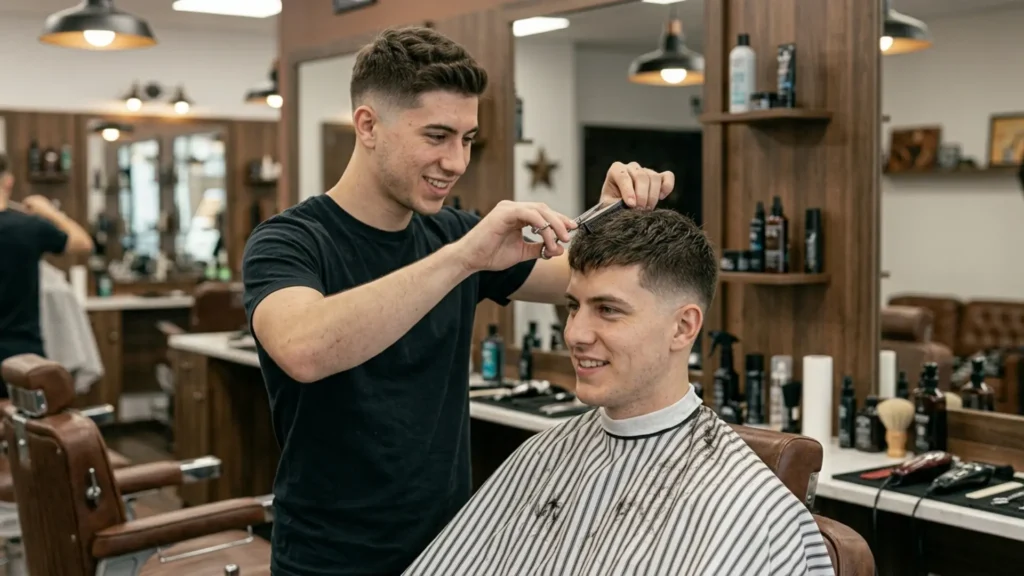
Or let TaperMatch write the brief for you. It generates a verbatim script with exact guard numbers, blend points, and neckline preference based on your face and hair, ready to show your barber directly from your phone.
Styling and Maintenance Guide
Best Styling Products for Each Cut
For Temp Fades: Use pomade for slick styles and pompadours (high shine, strong hold on damp hair). Use texture cream for curly or textured hair (defines curls and adds moisture). Use edge control to keep sharp-temp fade lines crisp between visits (essential for Black hair and coily textures). Use a leave-in conditioner for Type 3-4 hair (to maintain moisture and prevent dryness). Use hair oil for shine and scalp health (e.g., argan oil, jojoba oil).
For Tapers: Use molding paste for textured, matte styles (medium hold, natural finish). Use light pomade or cream for side parts and comb-overs (for a subtle shine and controlled hold).
KEY TIP #10: Less is more with styling products. Start with a dime-sized amount and only add more if needed. Too much makes hair look greasy.
Maintenance Schedules and Touch-Up Tips
Temp Fade Maintenance: Every 2–3 weeks for optimal sharpness (can stretch to 3–4 weeks if okay with softer edges). Use edge control daily. Signs you need a cut: fade line becomes visible, temple edges lose definition, sideburns grow out.
Taper Maintenance: Every 3–4 weeks (can stretch to 5–6 weeks). Minimal at-home care—just regular washing and conditioning. Signs you need a cut: the sides and back look bulky, the neckline appears shaggy, and the overall shape loses definition.
Taper Fade Maintenance: Every 2.5–3 weeks (can stretch to 4 weeks). Edge control helps if the line-up is included. Signs you need a cut: lower fade sections grow out, and contrast diminishes.
Between-Visit Tips: Wash straight hair daily; curly/coily hair 1–2x/week. Condition regularly, especially faded sections. Use a silk/satin pillowcase or a durag at night (to protect waves and curls). Moisturize with a daily leave-in conditioner or hair oil for textured hair. Avoid over-touching hair.
Cultural History and Evolution
Where Did the Temp Fade (Brooklyn Fade) Originate?
The temp fade, also called the Brooklyn fade or temple fade, has deep cultural roots in New York City’s barbershop scene, especially in Brooklyn neighborhoods during the late 1990s and early 2000s.
The style emerged as a variation of the bald fade within African American, Italian American, and Hispanic American communities. Barbers in Brooklyn began focusing their fade techniques on the temple area rather than doing full-head fades, resulting in a distinctive look that offered both boldness and versatility.
Hip-hop culture played a massive role in making the temp fade popular. As rap music and urban fashion gained mainstream attention throughout the 1990s, the Brooklyn fade became a signature look associated with authenticity, street style, and cultural pride. Pauly D from Jersey Shore brought the blowout, a high-volume hairstyle paired with a temple fade to mainstream audiences in the late 2000s, introducing the temp fade to suburban areas and international markets.
KEY FACT #10: The term “Brooklyn fade” still gets used in barbershops as a way to honor where the style came from, even though barbers all over the world now do this cut. In some areas, asking for a “Brooklyn fade” signals that you want a traditional, authentic temp fade execution.
Frequently Asked Questions
1. Can women get tapers or temp fades?
Yes, absolutely. Tapers and temp fades aren’t just for guys—they’re haircut techniques that work for anyone. Women with short hair, pixie cuts, undercuts, or androgynous styles often ask for tapers to get clean, polished edges. Temp fades add edgy definition to women’s short styles or create dramatic contrast when you keep the top longer.
2. How much does a temp fade or taper cost?
Pricing varies based on location, barber experience, and shop prestige. Budget barbershops charge $15–$25, mid-range barbershops charge $30–$50, and high-end specialty barbers charge $60–$100 or more. Urban areas like NYC, LA, and Chicago typically charge more than suburban spots. Budget 15–20% gratuity on top for quality work.
3. Will a fade or taper work with thinning hair or a receding hairline?
Yes, but be strategic. For thinning hair, tapers work better than aggressive skin fades because they retain more length and density. For receding hairlines, temp fades can work if your barber is skilled the sharp line-up can redefine a receding hairline into an intentional, clean edge. Consult your barber about the most flattering approach for your specific situation.
4. How do I find a barber skilled in temp fades and tapers?
Search Instagram hashtags like #tempfade, #brooklynfade, #barbershop plus your city name and look at portfolios. Read Google Reviews mentioning “fade” or “taper” from people with your hair type. Ask people with great fades where they got it. For textured/curly/coily hair (Type 3-4), find barbers who specialize in Black hair and diverse textures check their portfolio for examples.
5. Can I do a temp fade or taper at home?
Tapers are hard but possible with patience, good clippers, and practice—expect a learning curve. Temp fades are extremely difficult to do on yourself because the temple area is hard to see and requires precise clipper work. Professional cuts are worth the investment. If you want to try DIY, invest in quality clippers (Wahl, Andis, Oster) and start with simple tapers on willing friends before attempting fades.
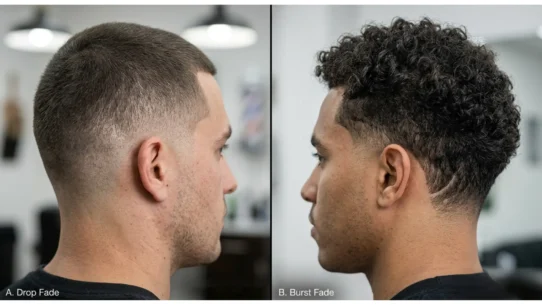
6. What’s the difference between a temp fade and a burst fade?
A temp fade focuses on your temple area and front hairline with a vertical or diagonal pattern and works with most top styles. A burst fade creates a semi-circular “bursting” pattern around your ear, usually paired with mohawks or faux hawks, and the fade curves behind your ear rather than running straight down.
7. How long does it take to get a temp fade or taper?
Temp fades take 30–45 minutes (includes line-up and blending). Tapers take 20–35 minutes (simpler and faster). Taper fades take 35–50 minutes (combines both techniques). Time increases with barber meticulousness, hair thickness, additional services (beard trim, designs), and first-time consultations.
[…] temple fade (also called a “Brooklyn fade”) focuses the taper specifically around your temples and […]
[…] temple fade also called a Brooklyn fade or temp fade, isolates the taper to just the temple area and nape, leaving the hair over and behind your ears at […]
[…] skin fade (also called a bald fade) blends all the way down to bare skin using a #0 clipper. A taper fade can […]